
Devices, systems and methods for the treatment of sleep apnea
a technology for sleep apnea and devices, applied in the field of devices, systems and methods for the treatment of sleep apnea, can solve the problems of hypersomnolent sleep apnea patients at risk of excessive mortality, potentially severe degrees of oxyhemoglobin unsaturation, and reduced arterial oxygen tension
Patent Information
- Authority / Receiving Office
- US · United States
- Patent Type
- Patents(United States)
- Current Assignee / Owner
- Publication Date
- 2015-09-15
Smart Images
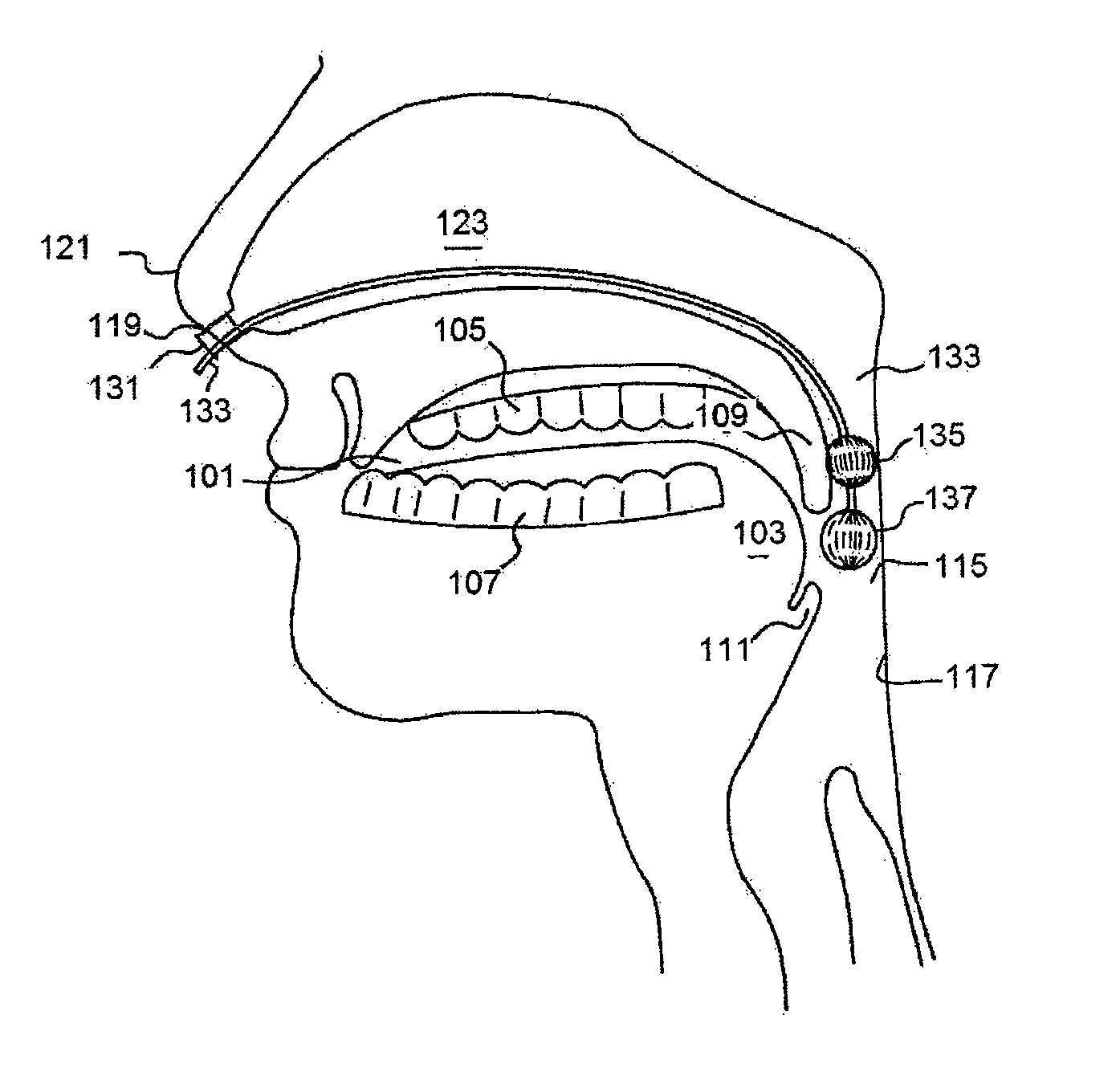
Figure 1 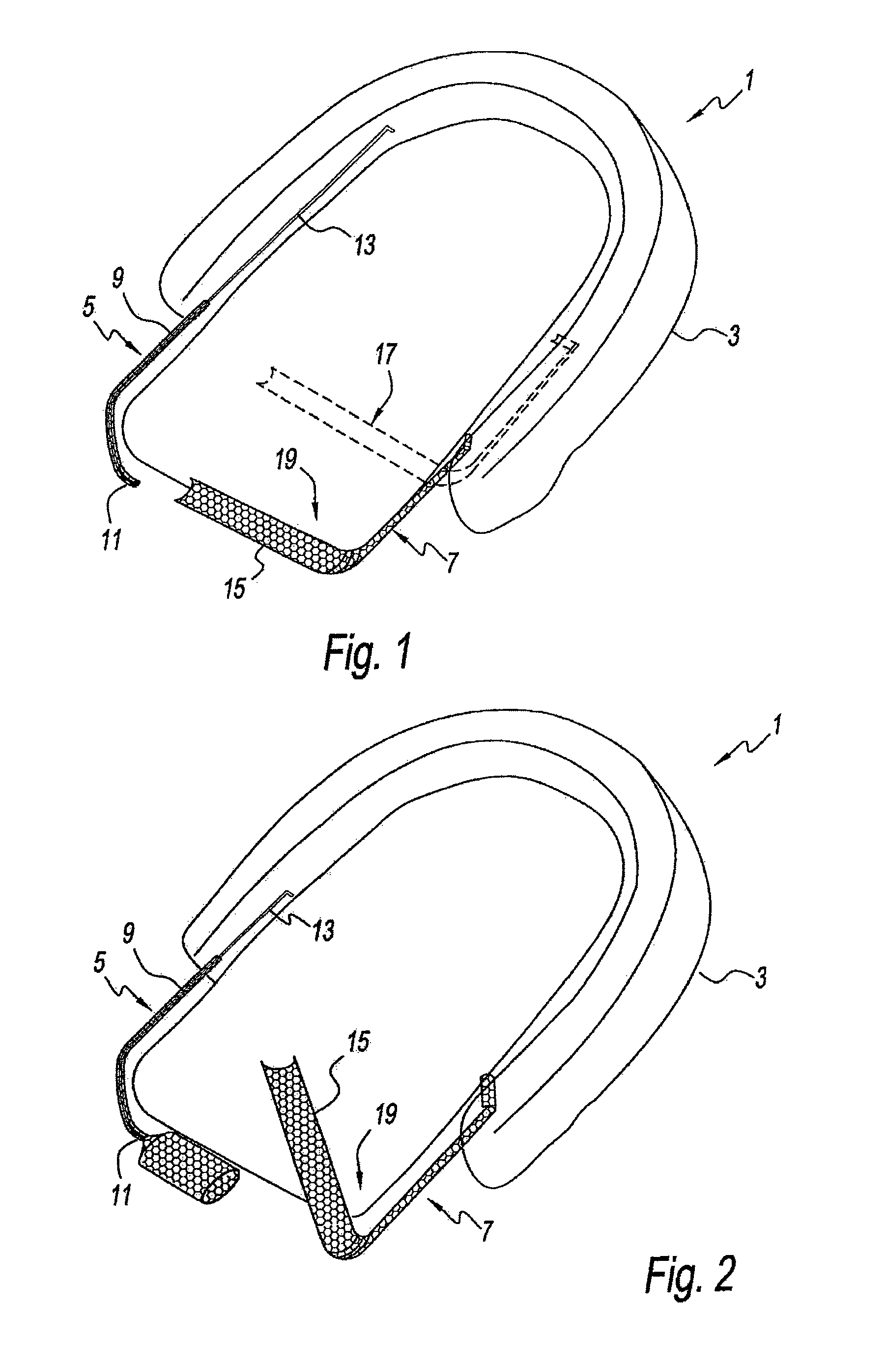
Figure 2 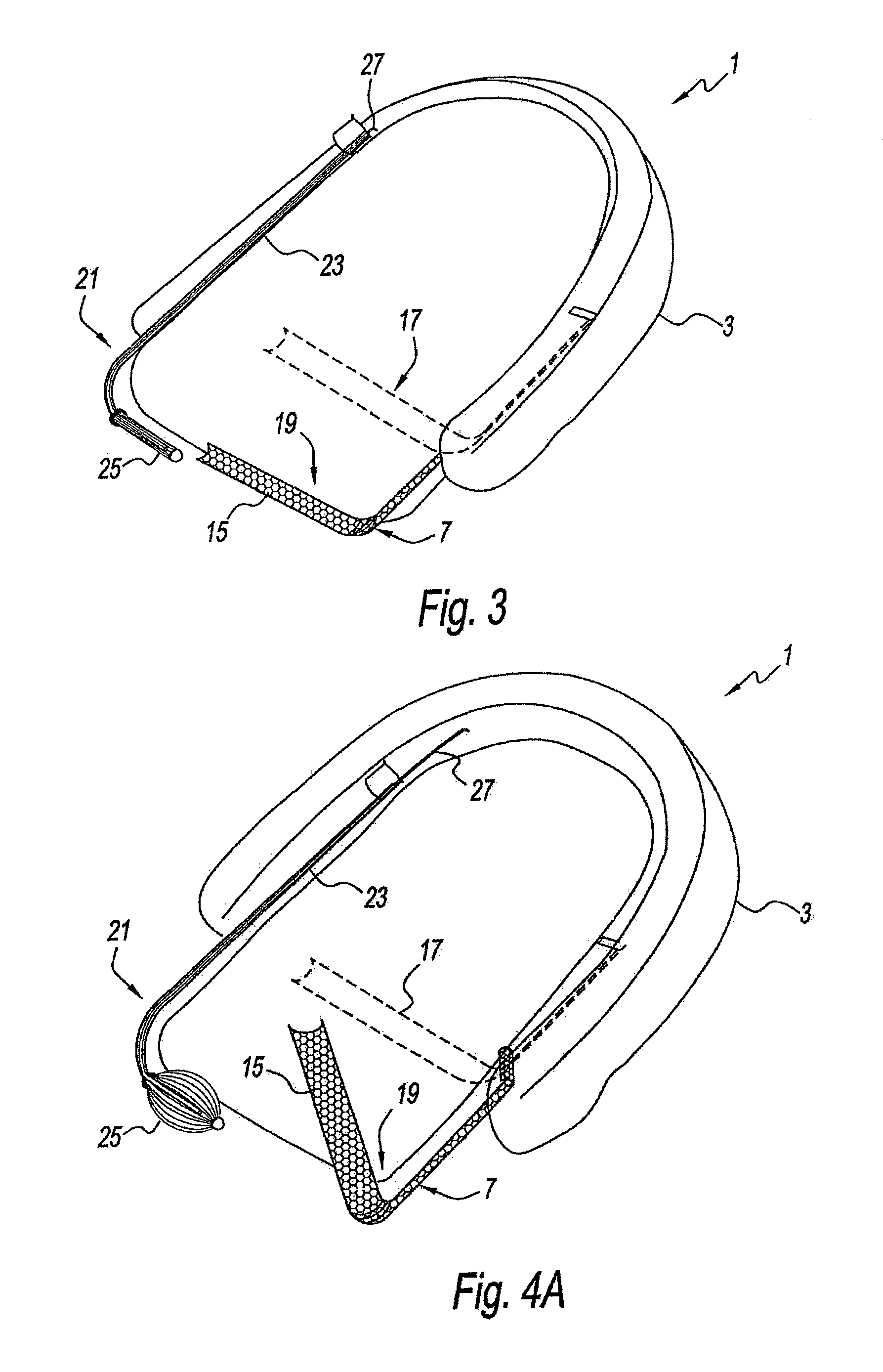
Figure 3
Abstract
Description
CROSS-REFERENCED APPLICATIONS
[0001] This application is a national stage application of PCT Application No. PCT / US09 / 65923, filed on Nov. 25, 2009, and claims priority to US Provisional Patent Application Nos. 61 / 200,172, filed on Nov. 25, 2008, 61 / 203,758, filed on Dec. 29, 2008, and 61 / 209,635, filed on Mar. 9, 2009, all of which are incorporated herein in their entirety by reference thereto.BACKGROUND
[0002] 1. Field
[0003] The present disclosure relates generally to the use of nasally and orally inserted devices for the treatment of patients with one or more sleep disorders, such as sleep apnea or severe snoring. The devices are configured to provide a biasing force to the soft palate or the tongue, such that continuous airflow can be achieved while the patient sleeps.
[0004] 2. Discussion of the Background Art
[0005] The sleep apnea syndrome, and in particular obstructive sleep apnea, afflicts an estimated 2-5% of the general population and is due to episodic upper airway obstruction du...
Examples
Embodiment Construction
[0101]The present disclosure can best be described by referring to the figures, wherein FIG. 23 shows a cross-section of a patient's oral cavity 1. Oral cavity 1 includes a tongue 3, upper jaw 5, lower jaw 7, soft palate 9, and epiglottis 11, as well as the nasopharynx region 13, oropharynx region 15 and laryngopharynx region 17. In addition, nasal valve 19 and nose 21 having a nasal passageway 23 to connect nasal valve 19 with nasopharynx region 13.
[0102]Referring now to FIG. 1, an oral appliance 1 according to a first embodiment of the present disclosure is disclosed, comprising a molded retainer 3 which is designed to fix securely about a patient's teeth in the lower jaw, thereby securing appliance 1 to the patient's jaw. Alternatively, retainer 3 can be designed such that it is only disposed about a portion of the teeth rather than the entire lower or upper jaws.
[0103]For example, one side of the jaw could hold a retainer with a device aimed at supporting the soft palate and the...