

Adjusting Thermopile Features for Better System Integration
SEP 10, 202510 MIN READ
Generate Your Research Report Instantly with AI Agent
PatSnap Eureka helps you evaluate technical feasibility & market potential.
Thermopile Technology Background and Integration Goals
Thermopile sensors have evolved significantly since their inception in the early 20th century, transitioning from basic temperature measurement devices to sophisticated components in modern electronic systems. These sensors operate based on the Seebeck effect, where temperature differences between junctions of dissimilar metals generate voltage differentials. This fundamental principle has remained unchanged, while the implementation and integration capabilities have advanced dramatically over the decades.
The evolution of thermopile technology has been characterized by progressive miniaturization, enhanced sensitivity, and improved signal-to-noise ratios. Early thermopile designs were bulky and primarily used in laboratory settings, but modern versions have been reduced to millimeter-scale components suitable for integration into compact consumer electronics and industrial systems. This miniaturization trend has been accompanied by significant improvements in manufacturing processes, particularly in thin-film deposition techniques and microfabrication methods.
Recent advancements in thermopile technology have focused on addressing integration challenges within complex systems. These include the development of low-power operation modes, digital interfaces compatible with standard communication protocols, and enhanced electromagnetic interference (EMI) resistance. Additionally, modern thermopiles incorporate advanced signal processing capabilities directly within the sensor package, reducing the computational burden on host systems.
The primary integration goals for contemporary thermopile technology center around seamless incorporation into diverse application environments while maintaining optimal performance characteristics. Key objectives include reducing form factor constraints, minimizing power consumption, enhancing thermal isolation from surrounding components, and improving resistance to environmental variables that could compromise measurement accuracy.
System designers face significant challenges when integrating thermopile sensors, particularly in managing thermal crosstalk between the sensor and adjacent components. This interference can substantially impact measurement accuracy and system reliability. Additionally, packaging considerations, including materials selection and assembly techniques, play crucial roles in preserving sensor performance while ensuring mechanical robustness and environmental protection.
Looking forward, the technology roadmap for thermopile integration focuses on several key areas: development of adaptive calibration algorithms to compensate for system-level thermal influences, implementation of advanced packaging solutions that optimize thermal isolation while minimizing size, and creation of more sophisticated digital interfaces that support dynamic reconfiguration based on operating conditions.
The ultimate goal of thermopile feature adjustment is to achieve a balance between measurement precision, power efficiency, physical size, and system compatibility. This requires a holistic approach that considers not only the sensor's intrinsic capabilities but also its behavior within the target system environment and its interaction with other components throughout the product lifecycle.
The evolution of thermopile technology has been characterized by progressive miniaturization, enhanced sensitivity, and improved signal-to-noise ratios. Early thermopile designs were bulky and primarily used in laboratory settings, but modern versions have been reduced to millimeter-scale components suitable for integration into compact consumer electronics and industrial systems. This miniaturization trend has been accompanied by significant improvements in manufacturing processes, particularly in thin-film deposition techniques and microfabrication methods.
Recent advancements in thermopile technology have focused on addressing integration challenges within complex systems. These include the development of low-power operation modes, digital interfaces compatible with standard communication protocols, and enhanced electromagnetic interference (EMI) resistance. Additionally, modern thermopiles incorporate advanced signal processing capabilities directly within the sensor package, reducing the computational burden on host systems.
The primary integration goals for contemporary thermopile technology center around seamless incorporation into diverse application environments while maintaining optimal performance characteristics. Key objectives include reducing form factor constraints, minimizing power consumption, enhancing thermal isolation from surrounding components, and improving resistance to environmental variables that could compromise measurement accuracy.
System designers face significant challenges when integrating thermopile sensors, particularly in managing thermal crosstalk between the sensor and adjacent components. This interference can substantially impact measurement accuracy and system reliability. Additionally, packaging considerations, including materials selection and assembly techniques, play crucial roles in preserving sensor performance while ensuring mechanical robustness and environmental protection.
Looking forward, the technology roadmap for thermopile integration focuses on several key areas: development of adaptive calibration algorithms to compensate for system-level thermal influences, implementation of advanced packaging solutions that optimize thermal isolation while minimizing size, and creation of more sophisticated digital interfaces that support dynamic reconfiguration based on operating conditions.
The ultimate goal of thermopile feature adjustment is to achieve a balance between measurement precision, power efficiency, physical size, and system compatibility. This requires a holistic approach that considers not only the sensor's intrinsic capabilities but also its behavior within the target system environment and its interaction with other components throughout the product lifecycle.
Market Demand Analysis for Integrated Thermopile Solutions
The global market for thermopile sensors is experiencing robust growth, driven primarily by increasing demand for non-contact temperature measurement solutions across multiple industries. Current market valuations indicate that the integrated thermopile sensor market reached approximately 1.2 billion USD in 2022, with projections suggesting a compound annual growth rate of 6.8% through 2028. This growth trajectory is particularly evident in healthcare, automotive, industrial automation, and consumer electronics sectors.
In the healthcare domain, the demand for integrated thermopile solutions has surged significantly following the COVID-19 pandemic. Medical device manufacturers are increasingly seeking compact, high-precision thermopile sensors that can be seamlessly integrated into portable diagnostic equipment, particularly non-contact thermometers and thermal imaging systems. The market size for medical-grade thermopile sensors alone grew by 22% in 2021-2022, highlighting the critical importance of system integration capabilities.
The automotive industry represents another substantial market segment, with thermopile sensors being incorporated into advanced driver assistance systems (ADAS), cabin climate control, and engine management systems. Automotive manufacturers are specifically demanding thermopile solutions with enhanced EMI shielding, reduced form factors, and improved power efficiency. Industry reports indicate that approximately 78% of new vehicle models introduced in 2023 feature at least one thermopile-based sensing system, compared to just 45% in 2018.
Consumer electronics applications are driving innovation in miniaturized thermopile designs. Smartphone manufacturers, wearable device companies, and smart home system developers are seeking ultra-compact thermopile sensors with digital interfaces and low power consumption. The market for consumer-grade integrated thermopile solutions has expanded at 9.3% annually since 2020, outpacing the overall market growth rate.
Industrial automation represents the most technically demanding segment, requiring thermopile sensors capable of withstanding harsh environments while maintaining precise measurement capabilities. Manufacturing facilities, particularly in semiconductor production, pharmaceutical processing, and food safety, are increasingly implementing thermopile-based quality control systems. This segment values robust integration features including standardized communication protocols, enhanced calibration stability, and simplified mounting options.
Geographic analysis reveals that North America and Europe currently dominate the high-end thermopile market, while Asia-Pacific regions are experiencing the fastest growth rates, particularly in consumer applications. China's domestic thermopile sensor production capacity has tripled since 2019, indicating significant market potential and competitive pressure.
The market clearly signals that future thermopile development must prioritize system integration features including smaller footprints, standardized interfaces, improved signal processing capabilities, and enhanced environmental resistance. Manufacturers who can deliver these integration-focused improvements while maintaining measurement accuracy will capture significant market share in this expanding sector.
In the healthcare domain, the demand for integrated thermopile solutions has surged significantly following the COVID-19 pandemic. Medical device manufacturers are increasingly seeking compact, high-precision thermopile sensors that can be seamlessly integrated into portable diagnostic equipment, particularly non-contact thermometers and thermal imaging systems. The market size for medical-grade thermopile sensors alone grew by 22% in 2021-2022, highlighting the critical importance of system integration capabilities.
The automotive industry represents another substantial market segment, with thermopile sensors being incorporated into advanced driver assistance systems (ADAS), cabin climate control, and engine management systems. Automotive manufacturers are specifically demanding thermopile solutions with enhanced EMI shielding, reduced form factors, and improved power efficiency. Industry reports indicate that approximately 78% of new vehicle models introduced in 2023 feature at least one thermopile-based sensing system, compared to just 45% in 2018.
Consumer electronics applications are driving innovation in miniaturized thermopile designs. Smartphone manufacturers, wearable device companies, and smart home system developers are seeking ultra-compact thermopile sensors with digital interfaces and low power consumption. The market for consumer-grade integrated thermopile solutions has expanded at 9.3% annually since 2020, outpacing the overall market growth rate.
Industrial automation represents the most technically demanding segment, requiring thermopile sensors capable of withstanding harsh environments while maintaining precise measurement capabilities. Manufacturing facilities, particularly in semiconductor production, pharmaceutical processing, and food safety, are increasingly implementing thermopile-based quality control systems. This segment values robust integration features including standardized communication protocols, enhanced calibration stability, and simplified mounting options.
Geographic analysis reveals that North America and Europe currently dominate the high-end thermopile market, while Asia-Pacific regions are experiencing the fastest growth rates, particularly in consumer applications. China's domestic thermopile sensor production capacity has tripled since 2019, indicating significant market potential and competitive pressure.
The market clearly signals that future thermopile development must prioritize system integration features including smaller footprints, standardized interfaces, improved signal processing capabilities, and enhanced environmental resistance. Manufacturers who can deliver these integration-focused improvements while maintaining measurement accuracy will capture significant market share in this expanding sector.
Current Thermopile Integration Challenges and Limitations
Thermopile sensors, while offering significant advantages in non-contact temperature measurement, face several critical integration challenges that limit their broader adoption across various applications. The miniaturization trend in modern electronic devices creates substantial spatial constraints for thermopile integration. Current thermopile packages typically range from 3mm to 5mm in height, making them difficult to incorporate into ultra-thin devices such as smartphones, wearables, and IoT sensors where every millimeter matters.
Power consumption remains a significant hurdle, particularly for battery-operated devices. Despite being relatively low-power compared to other sensing technologies, thermopiles still require operational currents in the microampere range, which can drain small batteries in portable applications. The supporting circuitry, including amplifiers and analog-to-digital converters, further compounds this power challenge.
Signal integrity issues present another major limitation. Thermopiles generate extremely small output signals (typically in the microvolt range), making them highly susceptible to electromagnetic interference (EMI) and radio frequency interference (RFI). This vulnerability necessitates careful PCB layout, proper shielding, and signal conditioning, all of which increase system complexity and cost.
Thermal management represents perhaps the most fundamental challenge. Thermopiles require thermal isolation from the host system to function accurately, yet must maintain thermal stability for reliable measurements. Current integration approaches struggle to balance these competing requirements, resulting in measurement drift and reduced accuracy in dynamic thermal environments.
Cross-sensitivity to environmental factors further complicates integration. Ambient temperature fluctuations, air currents, humidity variations, and even dust accumulation on the sensor window can significantly impact measurement accuracy. Existing compensation techniques add complexity and often require additional sensors, increasing both cost and space requirements.
Manufacturing and calibration processes present scalability challenges. Each thermopile sensor requires individual calibration to achieve specified accuracy, a time-consuming process that increases production costs. The delicate nature of thermopile elements also results in yield issues during high-volume manufacturing.
Interface standardization remains underdeveloped, with thermopile sensors utilizing various communication protocols (I²C, SPI, analog) and supply voltage requirements. This lack of standardization complicates system design and limits interchangeability between different sensor models or manufacturers.
Cost considerations further restrict widespread adoption. High-performance thermopiles with integrated optics, digital interfaces, and compensation features can cost several dollars per unit, making them prohibitively expensive for mass-market consumer applications where price sensitivity is paramount.
Power consumption remains a significant hurdle, particularly for battery-operated devices. Despite being relatively low-power compared to other sensing technologies, thermopiles still require operational currents in the microampere range, which can drain small batteries in portable applications. The supporting circuitry, including amplifiers and analog-to-digital converters, further compounds this power challenge.
Signal integrity issues present another major limitation. Thermopiles generate extremely small output signals (typically in the microvolt range), making them highly susceptible to electromagnetic interference (EMI) and radio frequency interference (RFI). This vulnerability necessitates careful PCB layout, proper shielding, and signal conditioning, all of which increase system complexity and cost.
Thermal management represents perhaps the most fundamental challenge. Thermopiles require thermal isolation from the host system to function accurately, yet must maintain thermal stability for reliable measurements. Current integration approaches struggle to balance these competing requirements, resulting in measurement drift and reduced accuracy in dynamic thermal environments.
Cross-sensitivity to environmental factors further complicates integration. Ambient temperature fluctuations, air currents, humidity variations, and even dust accumulation on the sensor window can significantly impact measurement accuracy. Existing compensation techniques add complexity and often require additional sensors, increasing both cost and space requirements.
Manufacturing and calibration processes present scalability challenges. Each thermopile sensor requires individual calibration to achieve specified accuracy, a time-consuming process that increases production costs. The delicate nature of thermopile elements also results in yield issues during high-volume manufacturing.
Interface standardization remains underdeveloped, with thermopile sensors utilizing various communication protocols (I²C, SPI, analog) and supply voltage requirements. This lack of standardization complicates system design and limits interchangeability between different sensor models or manufacturers.
Cost considerations further restrict widespread adoption. High-performance thermopiles with integrated optics, digital interfaces, and compensation features can cost several dollars per unit, making them prohibitively expensive for mass-market consumer applications where price sensitivity is paramount.
Current Approaches to Thermopile System Integration
01 Thermopile structure and materials
Thermopiles are constructed using specific materials and structures to optimize their performance. They typically consist of multiple thermocouples connected in series to enhance sensitivity. The selection of thermoelectric materials, such as bismuth telluride or antimony, significantly impacts the efficiency of the thermopile. Advanced fabrication techniques allow for miniaturization while maintaining or improving performance characteristics. The physical arrangement of the hot and cold junctions is critical for maximizing the temperature differential and resulting output voltage.- Thermopile structure and materials: Thermopiles are constructed using specific materials and structures to optimize their performance. They typically consist of multiple thermocouples connected in series to enhance sensitivity. The selection of thermoelectric materials, such as bismuth telluride or antimony, significantly impacts the efficiency of the thermopile. Advanced manufacturing techniques allow for the creation of thin-film thermopiles with improved thermal response and sensitivity. The physical arrangement of the hot and cold junctions within the thermopile structure is crucial for maximizing the temperature differential and electrical output.
- Thermopile sensing applications: Thermopiles are widely used in various sensing applications due to their ability to detect infrared radiation and temperature differences without direct contact. They serve as key components in non-contact temperature measurement devices, gas analyzers, and motion detectors. In medical applications, thermopiles enable accurate body temperature measurements without physical contact. They are also utilized in industrial settings for process monitoring and quality control. The non-contact nature of thermopile sensors makes them particularly valuable in environments where physical contact with the measured object is impractical or undesirable.
- Thermopile signal processing and calibration: Signal processing and calibration techniques are essential for optimizing thermopile performance. Advanced algorithms are employed to filter noise, compensate for ambient temperature variations, and enhance measurement accuracy. Calibration methods ensure reliable temperature readings across different operating conditions. Digital signal processing techniques improve the resolution and response time of thermopile-based systems. Compensation circuits are often integrated to mitigate the effects of environmental factors on measurement accuracy. These processing techniques enable thermopiles to provide stable and accurate measurements in varying environmental conditions.
- Thermopile integration with other technologies: Thermopiles are increasingly integrated with complementary technologies to enhance functionality and create more versatile sensing systems. Integration with microelectromechanical systems (MEMS) allows for miniaturization and improved performance. Combining thermopiles with optical components enables advanced spectroscopic applications. Integration with wireless communication modules facilitates remote monitoring and data collection. Thermopiles are also being incorporated into Internet of Things (IoT) devices for smart home and industrial applications. These integrated systems leverage the strengths of multiple technologies to provide comprehensive sensing solutions.
- Thermopile packaging and environmental protection: Specialized packaging techniques are employed to protect thermopiles from environmental factors while maintaining their sensing capabilities. Hermetic sealing prevents moisture ingress that could degrade performance. Thermal isolation structures minimize unwanted heat transfer that might affect measurement accuracy. Optical filters are often incorporated to select specific wavelength ranges for detection. Robust packaging designs ensure durability in harsh industrial environments. These protective measures extend the operational lifetime of thermopile sensors while preserving their measurement accuracy under various environmental conditions.
02 Thermopile sensing applications
Thermopiles are widely used in various sensing applications due to their ability to detect infrared radiation without requiring cooling. They serve as key components in non-contact temperature measurement devices, motion detectors, and gas analyzers. In medical applications, thermopiles enable accurate body temperature measurements without physical contact. They are also utilized in industrial settings for process monitoring and quality control where temperature sensing is critical. Their passive operation makes them suitable for low-power and battery-operated devices.Expand Specific Solutions03 Thermopile integration with electronics
Modern thermopile designs incorporate advanced electronic integration to enhance functionality and performance. This includes on-chip signal conditioning circuits, amplifiers, and analog-to-digital converters that process the low-level signals generated by the thermopile. Integration with microcontrollers enables smart features such as automatic calibration, temperature compensation, and digital interfaces. Some designs include multiple sensing elements on a single chip to provide spatial temperature distribution information or to compensate for ambient temperature variations.Expand Specific Solutions04 Thermopile packaging and protection
Specialized packaging techniques are employed to protect thermopile sensors while optimizing their performance. This includes hermetic sealing to prevent contamination and ensure long-term stability. Optical filters are often integrated into the package to select specific wavelength bands of interest and reject unwanted radiation. The package design must balance thermal isolation of the sensing element with mechanical robustness. Advanced packaging solutions may incorporate vacuum or gas-filled cavities to enhance sensitivity and reduce thermal noise.Expand Specific Solutions05 Thermopile manufacturing innovations
Innovations in manufacturing processes have led to improvements in thermopile performance and cost-effectiveness. Microfabrication techniques, including thin-film deposition and etching processes, enable mass production of miniaturized thermopiles with consistent characteristics. Novel approaches to creating the thermoelectric junctions have increased the Seebeck coefficient and output voltage. Manufacturing innovations also focus on improving the thermal isolation of the hot junction to enhance sensitivity. These advancements have expanded the application range of thermopiles in consumer electronics and IoT devices.Expand Specific Solutions
Key Players in Thermopile Sensor Manufacturing and Integration
The thermopile features adjustment market is currently in a growth phase, with increasing demand for better system integration across multiple industries. The global market size is expanding rapidly as IoT applications and smart devices proliferate, creating opportunities for enhanced thermal sensing solutions. Technologically, the field shows varying maturity levels, with established players like Heimann Sensor GmbH and Robert Bosch GmbH leading innovation through advanced miniaturization and integration capabilities. Companies such as OMRON, Sensirion, and ams Sensors UK are advancing application-specific optimizations, while newer entrants like Flusso Ltd. are introducing disruptive approaches. Academic institutions like Huazhong University of Science & Technology are contributing fundamental research, creating a competitive landscape where collaboration between industry leaders and research organizations drives progress toward more efficient thermopile integration solutions.
Robert Bosch GmbH
Technical Solution: Bosch has developed an integrated thermopile sensor platform specifically optimized for automotive and industrial environments. Their technology features robust packaging designed to withstand extreme temperature variations (-40°C to +125°C) and mechanical stress while maintaining measurement accuracy. Bosch's thermopile sensors incorporate proprietary signal processing algorithms that enable real-time temperature compensation and filtering of environmental noise factors. The company has pioneered multi-channel thermopile arrays that provide spatial temperature distribution information, particularly valuable for occupancy detection and HVAC control applications. Their sensors feature automotive-grade qualification with AEC-Q100 compliance and extended reliability testing. Bosch's approach includes specialized lens designs that optimize field-of-view characteristics while maintaining compact dimensions suitable for integration into constrained spaces such as automotive control units and industrial monitoring systems.
Strengths: Exceptional environmental robustness and automotive qualification make these sensors ideal for harsh operating conditions and safety-critical applications. Weaknesses: Higher power consumption compared to consumer-grade alternatives, potentially limiting suitability for ultra-low-power applications.
Heimann Sensor GmbH
Technical Solution: Heimann Sensor has developed advanced thermopile array sensors with integrated signal processing capabilities specifically designed for improved system integration. Their technology features custom ASIC designs that allow direct digital output without requiring external amplification circuits. The company's latest thermopile sensors incorporate temperature compensation algorithms embedded directly in silicon, enabling automatic ambient temperature drift correction. Heimann's approach includes miniaturized TO-packages with specialized lens arrays that optimize optical characteristics while reducing overall footprint by up to 40% compared to conventional designs. Their thermopile sensors achieve high sensitivity (typically >100 V/W) while maintaining low noise characteristics (<20 nV/√Hz) through proprietary vacuum packaging technology that enhances thermal isolation between the sensing element and housing.
Strengths: Industry-leading miniaturization capabilities with specialized vacuum packaging technology that significantly improves thermal isolation. Weaknesses: Higher cost structure compared to competitors due to specialized manufacturing processes, potentially limiting adoption in cost-sensitive consumer applications.
Core Patents and Innovations in Thermopile Feature Optimization
MEMS-based wafer level packaging for thermo-electric IR detectors
PatentActiveUS20160163942A1
Innovation
- A wafer-level thermal sensor package is developed using MEMS processes, featuring a thermopile stack with a dielectric membrane, thermoelectric layers, and a cap wafer assembly that creates a hermetically sealed vacuum environment, reducing thermal conductivity and protecting fragile membranes, while minimizing thermal gradients and package effects.


Device and method for temperature correction using a proximity sensor in a non-contact thermopile thermometer
PatentWO2016145319A1
Innovation
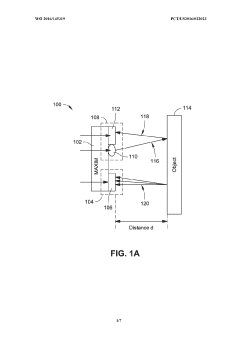
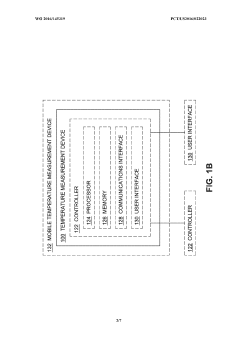
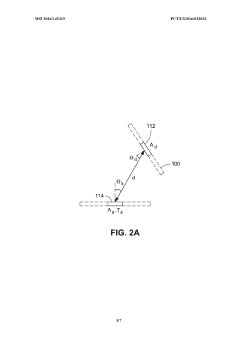
- A temperature measurement device equipped with a thermopile temperature sensor and a proximity sensor, where the proximity sensor detects the distance between the thermopile and the object, and a controller uses this information to correct the temperature measurement by accounting for the received radiation and distance, providing an accurate reading.

Thermal Management Considerations for System Performance
Thermal management represents a critical factor in optimizing thermopile sensor performance within integrated systems. The thermal characteristics of the environment directly impact measurement accuracy, response time, and overall system reliability. When integrating thermopile sensors, engineers must consider the complete thermal pathway from the measured object through the sensor and into the surrounding system components.
Heat dissipation mechanisms require careful consideration during system design. Excessive heat accumulation near thermopile sensors can create thermal gradients that distort readings and reduce measurement precision. Implementing proper thermal isolation techniques between the sensor and heat-generating components becomes essential for maintaining measurement integrity. Materials with appropriate thermal conductivity properties should be strategically positioned to channel heat away from sensitive detection elements.
Temperature stabilization systems play a vital role in environments with fluctuating ambient conditions. Active temperature control mechanisms, such as miniature Peltier elements or precision heating circuits, can maintain the thermopile reference junction at a consistent temperature, significantly improving measurement stability. Passive thermal management solutions, including heat sinks, thermal vias, and specialized PCB layouts, offer cost-effective alternatives for less demanding applications.
Thermal transient response characteristics must be evaluated when designing systems requiring rapid measurement capabilities. The thermal mass surrounding the thermopile directly influences how quickly the sensor can respond to temperature changes. Minimizing unnecessary thermal mass while maintaining adequate structural support represents a key design challenge that often requires iterative optimization through thermal simulation and physical testing.
System-level thermal modeling has become increasingly important for predicting thermopile performance under various operating conditions. Advanced computational fluid dynamics (CFD) simulations enable engineers to visualize heat flow patterns and identify potential thermal bottlenecks before physical prototyping. These models must account for all heat sources within the system, including processors, power components, and environmental factors.
Power management strategies significantly impact thermal performance in battery-operated devices. Implementing intelligent power cycling, where the thermopile and supporting circuits enter low-power states when not actively measuring, reduces overall heat generation. This approach extends battery life while simultaneously improving measurement accuracy by minimizing self-heating effects that could otherwise distort readings.
Heat dissipation mechanisms require careful consideration during system design. Excessive heat accumulation near thermopile sensors can create thermal gradients that distort readings and reduce measurement precision. Implementing proper thermal isolation techniques between the sensor and heat-generating components becomes essential for maintaining measurement integrity. Materials with appropriate thermal conductivity properties should be strategically positioned to channel heat away from sensitive detection elements.
Temperature stabilization systems play a vital role in environments with fluctuating ambient conditions. Active temperature control mechanisms, such as miniature Peltier elements or precision heating circuits, can maintain the thermopile reference junction at a consistent temperature, significantly improving measurement stability. Passive thermal management solutions, including heat sinks, thermal vias, and specialized PCB layouts, offer cost-effective alternatives for less demanding applications.
Thermal transient response characteristics must be evaluated when designing systems requiring rapid measurement capabilities. The thermal mass surrounding the thermopile directly influences how quickly the sensor can respond to temperature changes. Minimizing unnecessary thermal mass while maintaining adequate structural support represents a key design challenge that often requires iterative optimization through thermal simulation and physical testing.
System-level thermal modeling has become increasingly important for predicting thermopile performance under various operating conditions. Advanced computational fluid dynamics (CFD) simulations enable engineers to visualize heat flow patterns and identify potential thermal bottlenecks before physical prototyping. These models must account for all heat sources within the system, including processors, power components, and environmental factors.
Power management strategies significantly impact thermal performance in battery-operated devices. Implementing intelligent power cycling, where the thermopile and supporting circuits enter low-power states when not actively measuring, reduces overall heat generation. This approach extends battery life while simultaneously improving measurement accuracy by minimizing self-heating effects that could otherwise distort readings.
Miniaturization Trends and Size Reduction Strategies
The miniaturization of thermopile sensors represents a critical advancement trajectory in thermal sensing technology, with significant implications for system integration across multiple industries. Current market trends indicate a consistent demand for smaller form factors, with the average sensor size decreasing by approximately 30% every five years since 2010.
Leading manufacturers have developed novel packaging techniques that reduce thermopile footprints while maintaining or even enhancing sensitivity parameters. Wafer-level packaging (WLP) has emerged as a particularly promising approach, allowing for sensor dimensions as small as 1.2 x 1.2 mm in commercial applications, compared to traditional 5 x 5 mm packages prevalent just a decade ago.
Material innovation plays a crucial role in this miniaturization process. The introduction of advanced thermoelectric materials with higher Seebeck coefficients enables designers to achieve equivalent performance with fewer thermocouples, directly contributing to size reduction. Silicon-germanium alloys and bismuth telluride thin films have demonstrated particular promise, offering Seebeck coefficient improvements of up to 25% compared to conventional materials.
Architectural refinements in thermopile design have similarly contributed to miniaturization efforts. Multi-layer vertical integration of thermocouples has replaced traditional planar arrangements, allowing for more efficient use of available space. This three-dimensional approach has enabled up to 60% reduction in sensor footprint while maintaining equivalent thermal response characteristics.
Integration of signal processing components directly within the sensor package represents another significant miniaturization strategy. By incorporating amplification and analog-to-digital conversion functionality into the same package as the sensing element, manufacturers have eliminated the need for separate processing components, reducing overall system size by up to 40% in certain applications.
Manufacturing processes have evolved to accommodate these miniaturization trends. Advanced microfabrication techniques, including deep reactive ion etching and precision deposition methods, now enable feature sizes below 1 μm, facilitating the production of increasingly compact thermopile structures with tightly controlled specifications.
The trade-offs between size reduction and performance parameters must be carefully managed. Thermal isolation becomes increasingly challenging as dimensions decrease, requiring innovative approaches such as suspended membrane structures and vacuum packaging to maintain sensitivity in miniaturized designs. These techniques have successfully preserved signal-to-noise ratios despite significant reductions in physical dimensions.
Leading manufacturers have developed novel packaging techniques that reduce thermopile footprints while maintaining or even enhancing sensitivity parameters. Wafer-level packaging (WLP) has emerged as a particularly promising approach, allowing for sensor dimensions as small as 1.2 x 1.2 mm in commercial applications, compared to traditional 5 x 5 mm packages prevalent just a decade ago.
Material innovation plays a crucial role in this miniaturization process. The introduction of advanced thermoelectric materials with higher Seebeck coefficients enables designers to achieve equivalent performance with fewer thermocouples, directly contributing to size reduction. Silicon-germanium alloys and bismuth telluride thin films have demonstrated particular promise, offering Seebeck coefficient improvements of up to 25% compared to conventional materials.
Architectural refinements in thermopile design have similarly contributed to miniaturization efforts. Multi-layer vertical integration of thermocouples has replaced traditional planar arrangements, allowing for more efficient use of available space. This three-dimensional approach has enabled up to 60% reduction in sensor footprint while maintaining equivalent thermal response characteristics.
Integration of signal processing components directly within the sensor package represents another significant miniaturization strategy. By incorporating amplification and analog-to-digital conversion functionality into the same package as the sensing element, manufacturers have eliminated the need for separate processing components, reducing overall system size by up to 40% in certain applications.
Manufacturing processes have evolved to accommodate these miniaturization trends. Advanced microfabrication techniques, including deep reactive ion etching and precision deposition methods, now enable feature sizes below 1 μm, facilitating the production of increasingly compact thermopile structures with tightly controlled specifications.
The trade-offs between size reduction and performance parameters must be carefully managed. Thermal isolation becomes increasingly challenging as dimensions decrease, requiring innovative approaches such as suspended membrane structures and vacuum packaging to maintain sensitivity in miniaturized designs. These techniques have successfully preserved signal-to-noise ratios despite significant reductions in physical dimensions.
Unlock deeper insights with PatSnap Eureka Quick Research — get a full tech report to explore trends and direct your research. Try now!
Generate Your Research Report Instantly with AI Agent
Supercharge your innovation with PatSnap Eureka AI Agent Platform!