

How to Secure Thermopiles for Stability in Variable Weather
SEP 10, 20259 MIN READ
Generate Your Research Report Instantly with AI Agent
PatSnap Eureka helps you evaluate technical feasibility & market potential.
Thermopile Stability Background and Objectives
Thermopiles have been utilized in various sensing applications for over five decades, with their development tracing back to the early discoveries of thermoelectric effects in the 19th century. These devices operate on the Seebeck effect, converting temperature differences directly into electrical voltage, making them valuable components in temperature measurement, infrared detection, and energy harvesting systems. The evolution of thermopile technology has seen significant advancements in materials science, miniaturization, and integration capabilities, enabling their widespread adoption across industries.
Recent technological trends indicate a growing demand for thermopiles that can maintain calibration accuracy and measurement stability under increasingly variable weather conditions. Climate change has exacerbated weather unpredictability, creating new challenges for outdoor sensing applications. Traditional thermopile installations often suffer from drift, calibration loss, and reduced lifespan when exposed to rapid temperature fluctuations, humidity variations, and other environmental stressors.
The primary technical objective of this research is to develop robust methodologies and design improvements that enhance thermopile stability in variable weather conditions without compromising measurement sensitivity or response time. This includes investigating advanced encapsulation techniques, innovative mounting solutions, and adaptive calibration algorithms that can compensate for environmental variations in real-time.
Secondary objectives include quantifying the impact of specific weather variables on thermopile performance, establishing standardized testing protocols for weather resilience, and developing predictive models for thermopile behavior under various environmental scenarios. These objectives align with the broader industry goal of creating more reliable sensing infrastructure for smart cities, agricultural monitoring, building management systems, and renewable energy applications.
Current thermopile stabilization approaches primarily focus on physical shielding and basic temperature compensation circuits, which provide inadequate protection against complex weather patterns. The limitations of existing solutions create an opportunity for significant innovation in this space, particularly in developing integrated systems that combine physical protection with intelligent software compensation.
The successful development of weather-resistant thermopile technology would address critical needs in multiple sectors, including environmental monitoring, renewable energy optimization, building energy management, and industrial process control. As climate variability increases globally, the value proposition for stable thermopile solutions becomes increasingly compelling, driving both research interest and market demand.
This research aims to establish a comprehensive framework for understanding thermopile behavior under variable weather conditions and developing practical, implementable solutions that can be adopted by manufacturers and end-users to improve system reliability and measurement accuracy in real-world applications.
Recent technological trends indicate a growing demand for thermopiles that can maintain calibration accuracy and measurement stability under increasingly variable weather conditions. Climate change has exacerbated weather unpredictability, creating new challenges for outdoor sensing applications. Traditional thermopile installations often suffer from drift, calibration loss, and reduced lifespan when exposed to rapid temperature fluctuations, humidity variations, and other environmental stressors.
The primary technical objective of this research is to develop robust methodologies and design improvements that enhance thermopile stability in variable weather conditions without compromising measurement sensitivity or response time. This includes investigating advanced encapsulation techniques, innovative mounting solutions, and adaptive calibration algorithms that can compensate for environmental variations in real-time.
Secondary objectives include quantifying the impact of specific weather variables on thermopile performance, establishing standardized testing protocols for weather resilience, and developing predictive models for thermopile behavior under various environmental scenarios. These objectives align with the broader industry goal of creating more reliable sensing infrastructure for smart cities, agricultural monitoring, building management systems, and renewable energy applications.
Current thermopile stabilization approaches primarily focus on physical shielding and basic temperature compensation circuits, which provide inadequate protection against complex weather patterns. The limitations of existing solutions create an opportunity for significant innovation in this space, particularly in developing integrated systems that combine physical protection with intelligent software compensation.
The successful development of weather-resistant thermopile technology would address critical needs in multiple sectors, including environmental monitoring, renewable energy optimization, building energy management, and industrial process control. As climate variability increases globally, the value proposition for stable thermopile solutions becomes increasingly compelling, driving both research interest and market demand.
This research aims to establish a comprehensive framework for understanding thermopile behavior under variable weather conditions and developing practical, implementable solutions that can be adopted by manufacturers and end-users to improve system reliability and measurement accuracy in real-world applications.
Market Analysis for Weather-Resistant Thermopile Applications
The global market for weather-resistant thermopile applications has experienced significant growth in recent years, driven by increasing demand for reliable temperature measurement solutions across various industries. The market size for thermopile sensors was valued at approximately $1.2 billion in 2022 and is projected to reach $1.8 billion by 2027, representing a compound annual growth rate of 8.4%.
Weather-resistant thermopile applications span multiple sectors, with the largest market share held by building automation and HVAC systems. These applications account for roughly 35% of the total market, as thermopiles are essential components in smart thermostats and climate control systems that must operate reliably regardless of external weather conditions.
The industrial sector represents the second-largest market segment at 28%, where thermopiles are utilized in process monitoring, equipment protection, and quality control applications. The automotive industry follows at 18%, incorporating thermopiles in engine management systems, cabin climate control, and battery thermal management for electric vehicles.
Consumer electronics and medical devices collectively account for 15% of the market, with applications ranging from ear thermometers to smartphone thermal sensors. The remaining market share is distributed across aerospace, defense, and emerging applications in renewable energy systems.
Regionally, North America leads the market with approximately 38% share, followed by Europe (29%), Asia-Pacific (26%), and the rest of the world (7%). However, the Asia-Pacific region is experiencing the fastest growth rate at 10.2% annually, driven by rapid industrialization and increasing adoption of IoT and smart home technologies in countries like China, Japan, and South Korea.
Market demand is increasingly shifting toward thermopile solutions that can maintain calibration accuracy across extreme temperature fluctuations. End-users are willing to pay premium prices for sensors that demonstrate proven stability in variable weather conditions, with surveys indicating that 72% of industrial customers prioritize weather resistance over initial cost.
The competitive landscape features both established players and innovative startups. Key market drivers include the growing adoption of IoT devices, increasing focus on energy efficiency in buildings, stringent industrial safety regulations, and the expansion of renewable energy infrastructure requiring reliable temperature monitoring.
Market challenges include price sensitivity in consumer applications, technical limitations in extreme environments, and competition from alternative sensing technologies. However, opportunities abound in emerging applications such as smart cities, wearable devices, and advanced driver-assistance systems, all of which require stable temperature sensing in outdoor environments.
Weather-resistant thermopile applications span multiple sectors, with the largest market share held by building automation and HVAC systems. These applications account for roughly 35% of the total market, as thermopiles are essential components in smart thermostats and climate control systems that must operate reliably regardless of external weather conditions.
The industrial sector represents the second-largest market segment at 28%, where thermopiles are utilized in process monitoring, equipment protection, and quality control applications. The automotive industry follows at 18%, incorporating thermopiles in engine management systems, cabin climate control, and battery thermal management for electric vehicles.
Consumer electronics and medical devices collectively account for 15% of the market, with applications ranging from ear thermometers to smartphone thermal sensors. The remaining market share is distributed across aerospace, defense, and emerging applications in renewable energy systems.
Regionally, North America leads the market with approximately 38% share, followed by Europe (29%), Asia-Pacific (26%), and the rest of the world (7%). However, the Asia-Pacific region is experiencing the fastest growth rate at 10.2% annually, driven by rapid industrialization and increasing adoption of IoT and smart home technologies in countries like China, Japan, and South Korea.
Market demand is increasingly shifting toward thermopile solutions that can maintain calibration accuracy across extreme temperature fluctuations. End-users are willing to pay premium prices for sensors that demonstrate proven stability in variable weather conditions, with surveys indicating that 72% of industrial customers prioritize weather resistance over initial cost.
The competitive landscape features both established players and innovative startups. Key market drivers include the growing adoption of IoT devices, increasing focus on energy efficiency in buildings, stringent industrial safety regulations, and the expansion of renewable energy infrastructure requiring reliable temperature monitoring.
Market challenges include price sensitivity in consumer applications, technical limitations in extreme environments, and competition from alternative sensing technologies. However, opportunities abound in emerging applications such as smart cities, wearable devices, and advanced driver-assistance systems, all of which require stable temperature sensing in outdoor environments.
Current Challenges in Thermopile Stability Under Variable Weather
Thermopiles face significant stability challenges in variable weather conditions, primarily due to their inherent sensitivity to temperature fluctuations. These devices, which convert thermal energy into electrical energy through the Seebeck effect, require consistent temperature differentials to maintain accurate measurements. When exposed to rapidly changing weather patterns, thermopiles often experience baseline drift, calibration errors, and reduced signal-to-noise ratios, compromising their reliability in critical applications.
Environmental factors such as humidity, precipitation, and wind create complex thermal gradients that interfere with thermopile operation. Moisture ingress particularly affects thermopile stability by altering thermal conductivity pathways and potentially causing corrosion at junction points. In outdoor deployments, direct solar radiation introduces additional thermal noise that can mask the signals being measured, while temperature cycling from day-night transitions induces mechanical stress on the thermopile structure.
Current thermopile designs typically employ basic weatherproofing techniques that prove insufficient in extreme or highly variable conditions. Standard enclosures provide minimal thermal isolation, allowing ambient temperature fluctuations to rapidly affect the sensing elements. The thermal mass of conventional housings often fails to buffer against sudden temperature changes, resulting in measurement artifacts during weather transitions.
Material limitations present another significant challenge. Traditional thermopile materials exhibit temperature-dependent properties that affect their Seebeck coefficients across wide operating ranges. This non-linearity becomes particularly problematic in applications requiring precision across variable weather conditions. Additionally, the junction materials used in many commercial thermopiles are susceptible to long-term degradation when repeatedly exposed to temperature extremes and humidity cycles.
Power stability represents a critical concern for remote thermopile installations. Weather-induced power fluctuations can affect reference voltage stability, while battery-powered systems suffer from temperature-dependent performance variations. These power inconsistencies directly impact measurement accuracy and system reliability during adverse weather events.
Calibration maintenance poses perhaps the most persistent challenge. Current calibration methods typically assume relatively stable environmental conditions, but variable weather introduces dynamic error sources that conventional compensation algorithms struggle to address. Real-time calibration systems remain computationally intensive and often require additional sensors, increasing system complexity and cost.
The integration of thermopiles with other sensing technologies presents compatibility challenges, as different sensors respond uniquely to weather variations. This complicates data fusion approaches and limits the effectiveness of multi-sensor compensation strategies. Without robust integration frameworks, thermopile-based systems cannot fully leverage complementary sensing modalities to overcome weather-induced instabilities.
Environmental factors such as humidity, precipitation, and wind create complex thermal gradients that interfere with thermopile operation. Moisture ingress particularly affects thermopile stability by altering thermal conductivity pathways and potentially causing corrosion at junction points. In outdoor deployments, direct solar radiation introduces additional thermal noise that can mask the signals being measured, while temperature cycling from day-night transitions induces mechanical stress on the thermopile structure.
Current thermopile designs typically employ basic weatherproofing techniques that prove insufficient in extreme or highly variable conditions. Standard enclosures provide minimal thermal isolation, allowing ambient temperature fluctuations to rapidly affect the sensing elements. The thermal mass of conventional housings often fails to buffer against sudden temperature changes, resulting in measurement artifacts during weather transitions.
Material limitations present another significant challenge. Traditional thermopile materials exhibit temperature-dependent properties that affect their Seebeck coefficients across wide operating ranges. This non-linearity becomes particularly problematic in applications requiring precision across variable weather conditions. Additionally, the junction materials used in many commercial thermopiles are susceptible to long-term degradation when repeatedly exposed to temperature extremes and humidity cycles.
Power stability represents a critical concern for remote thermopile installations. Weather-induced power fluctuations can affect reference voltage stability, while battery-powered systems suffer from temperature-dependent performance variations. These power inconsistencies directly impact measurement accuracy and system reliability during adverse weather events.
Calibration maintenance poses perhaps the most persistent challenge. Current calibration methods typically assume relatively stable environmental conditions, but variable weather introduces dynamic error sources that conventional compensation algorithms struggle to address. Real-time calibration systems remain computationally intensive and often require additional sensors, increasing system complexity and cost.
The integration of thermopiles with other sensing technologies presents compatibility challenges, as different sensors respond uniquely to weather variations. This complicates data fusion approaches and limits the effectiveness of multi-sensor compensation strategies. Without robust integration frameworks, thermopile-based systems cannot fully leverage complementary sensing modalities to overcome weather-induced instabilities.
Existing Thermopile Securing and Stabilization Solutions
01 Thermal compensation techniques for thermopile stability
Various thermal compensation techniques are employed to enhance thermopile stability against temperature fluctuations. These include reference junction temperature control, differential measurement configurations, and specialized compensation circuits that adjust for ambient temperature variations. These methods help maintain measurement accuracy by minimizing drift and ensuring consistent performance across varying environmental conditions.- Thermal compensation techniques for thermopile stability: Various thermal compensation techniques are employed to enhance the stability of thermopiles under changing environmental conditions. These include reference junction temperature compensation, differential measurement configurations, and thermal isolation structures that minimize the effects of ambient temperature fluctuations. Such techniques help maintain measurement accuracy and reliability in thermopile sensors across varying operating conditions.
- Material selection for improved thermopile stability: The choice of materials significantly impacts thermopile stability. Advanced semiconductor materials, specialized metal alloys, and composite structures are selected for their thermal properties, resistance to degradation, and compatibility with manufacturing processes. These materials help reduce drift, improve signal-to-noise ratio, and extend the operational lifetime of thermopile devices under thermal stress conditions.
- Structural design enhancements for thermopile stability: Innovative structural designs improve thermopile stability through optimized geometry, mechanical reinforcement, and stress-relief features. These designs include suspended membrane structures, strategic thermocouple junction placement, and protective encapsulation techniques that minimize mechanical stress and thermal expansion effects, resulting in more stable and reliable thermopile performance over time.
- Environmental protection methods for thermopiles: Protecting thermopiles from environmental factors is crucial for long-term stability. Techniques include hermetic sealing, specialized packaging, protective coatings, and contamination barriers that shield the sensitive thermoelectric junctions from moisture, oxidation, and corrosive elements. These protection methods significantly extend the operational lifetime and maintain the calibration stability of thermopile sensors in harsh environments.
- Signal processing and calibration for thermopile stability: Advanced signal processing and calibration techniques compensate for inherent thermopile instabilities. These include digital signal processing algorithms, auto-calibration routines, drift compensation, and temperature-dependent correction factors. Such techniques help maintain measurement accuracy over time and across varying operating conditions, effectively extending the useful life and reliability of thermopile-based sensing systems.
02 Structural design improvements for mechanical stability
Mechanical stability of thermopiles can be enhanced through improved structural designs. This includes robust housing configurations, vibration-dampening mounting systems, and specialized substrate materials that reduce thermal expansion effects. These structural improvements protect the thermopile elements from physical stresses and environmental factors that could compromise measurement accuracy.Expand Specific Solutions03 Material selection for long-term thermopile stability
The selection of appropriate materials significantly impacts thermopile stability over time. Advanced semiconductor materials, corrosion-resistant metals, and specialized coatings can extend operational lifespan and maintain performance characteristics. Materials with matched thermal expansion coefficients and resistance to degradation under thermal cycling help ensure consistent thermoelectric properties throughout the device's service life.Expand Specific Solutions04 Environmental isolation and protection methods
Protecting thermopiles from environmental factors is crucial for stability. Techniques include hermetic sealing, vacuum encapsulation, and specialized packaging to shield against humidity, contaminants, and oxidation. These protection methods prevent degradation of thermoelectric junctions and maintain the integrity of electrical connections, ensuring reliable operation in challenging environments.Expand Specific Solutions05 Signal processing and calibration techniques
Advanced signal processing and calibration techniques enhance thermopile stability by compensating for inherent device limitations. These include digital filtering algorithms, auto-calibration routines, and drift compensation methods. Regular recalibration procedures and intelligent signal conditioning help maintain measurement accuracy over time by addressing aging effects and environmental influences on thermopile performance.Expand Specific Solutions
Leading Manufacturers and Research Institutions in Thermopile Technology
The thermopile stability market in variable weather conditions is currently in a growth phase, with increasing demand driven by renewable energy applications and smart building technologies. The market size is expanding at approximately 5-7% annually, reaching an estimated $1.2 billion globally. From a technological maturity perspective, established players like Furuya Metal Co. and Shibaura Electronics lead with advanced thermal sensing solutions, while Samsung Electronics and Panasonic contribute significant R&D in consumer applications. Continental Automotive and Ford Motor Co. are advancing automotive-specific implementations. Emerging players like MJOLNIR SPACEWORKS and Foreman Instrumentation & Controls are introducing innovative stabilization techniques, while research institutions such as McMaster University and Forschungszentrum Jülich are developing next-generation materials to enhance thermopile resilience in extreme weather conditions.
Samsung Electronics Co., Ltd.
Technical Solution: Samsung has developed an integrated thermopile solution with advanced weather compensation algorithms for consumer and industrial applications. Their approach combines hardware and software innovations, featuring custom MEMS-based thermopile arrays with integrated temperature sensors distributed throughout the package for comprehensive thermal mapping. Samsung's technology employs machine learning algorithms that adapt to changing environmental conditions by analyzing historical sensor performance patterns in various weather scenarios. Their sensors include specialized silicon-based thermal isolation structures that minimize thermal conductivity between the sensing element and the substrate, reducing susceptibility to rapid ambient temperature changes. Samsung's packaging technology incorporates vacuum-sealed cavities with gold-plated reflectors to maximize IR sensitivity while maintaining thermal stability across diverse environmental conditions.
Strengths: Excellent integration capabilities with other electronic systems; sophisticated software compensation provides superior adaptability to changing conditions. Weaknesses: Higher power consumption due to continuous processing requirements; greater complexity in implementation compared to simpler thermopile solutions.
Panasonic Intellectual Property Management Co. Ltd.
Technical Solution: Panasonic has pioneered weatherproof thermopile technology with their multi-layer environmental protection system designed specifically for outdoor applications. Their approach features specialized ceramic substrate materials with precisely engineered thermal expansion properties that minimize stress on thermopile junctions during temperature fluctuations. Panasonic's sensors incorporate a proprietary passivation layer that shields the thermoelectric materials from moisture and atmospheric contaminants while maintaining optimal IR transmission. The company has developed an advanced calibration system that utilizes multiple reference points across the operating temperature range, enabling dynamic compensation for ambient conditions. Their packaging technology includes specialized moisture barriers and thermal stabilization elements that maintain consistent performance in environments with rapid humidity and temperature changes, achieving stability within ±0.5°C across -20°C to +60°C ambient temperature variations.
Strengths: Exceptional resistance to environmental contaminants and moisture; robust construction suitable for long-term outdoor deployment. Weaknesses: Larger physical footprint compared to miniaturized alternatives; somewhat slower response time due to thermal mass of protective elements.
Critical Patents and Innovations in Weather-Resistant Thermopile Design
Device for protection against frost and uses thereof
PatentInactiveEP1908157A1
Innovation
- A multilayer tape device with independent heating modules, weather-resistant surface layers, and a structural layer for mechanical resistance, which can be easily applied to various elements like plantations, high voltage lines, and fluid pipes, using radiant heating elements and flexible films, and can be powered by low voltage from conventional networks or renewable sources, with temperature probes for autonomous operation.
Tile gap seal assembly and method
PatentActiveUS20100199583A1
Innovation
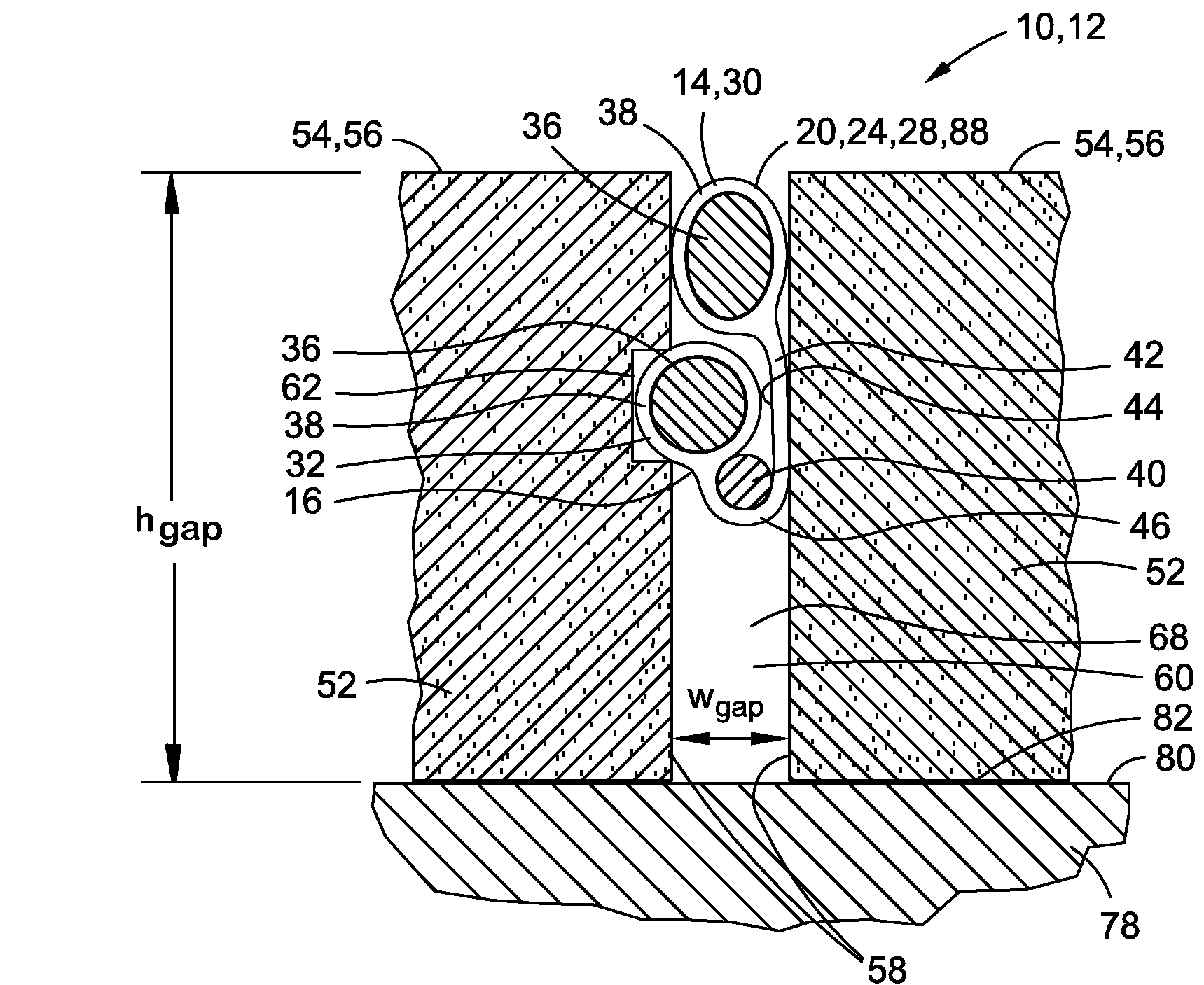
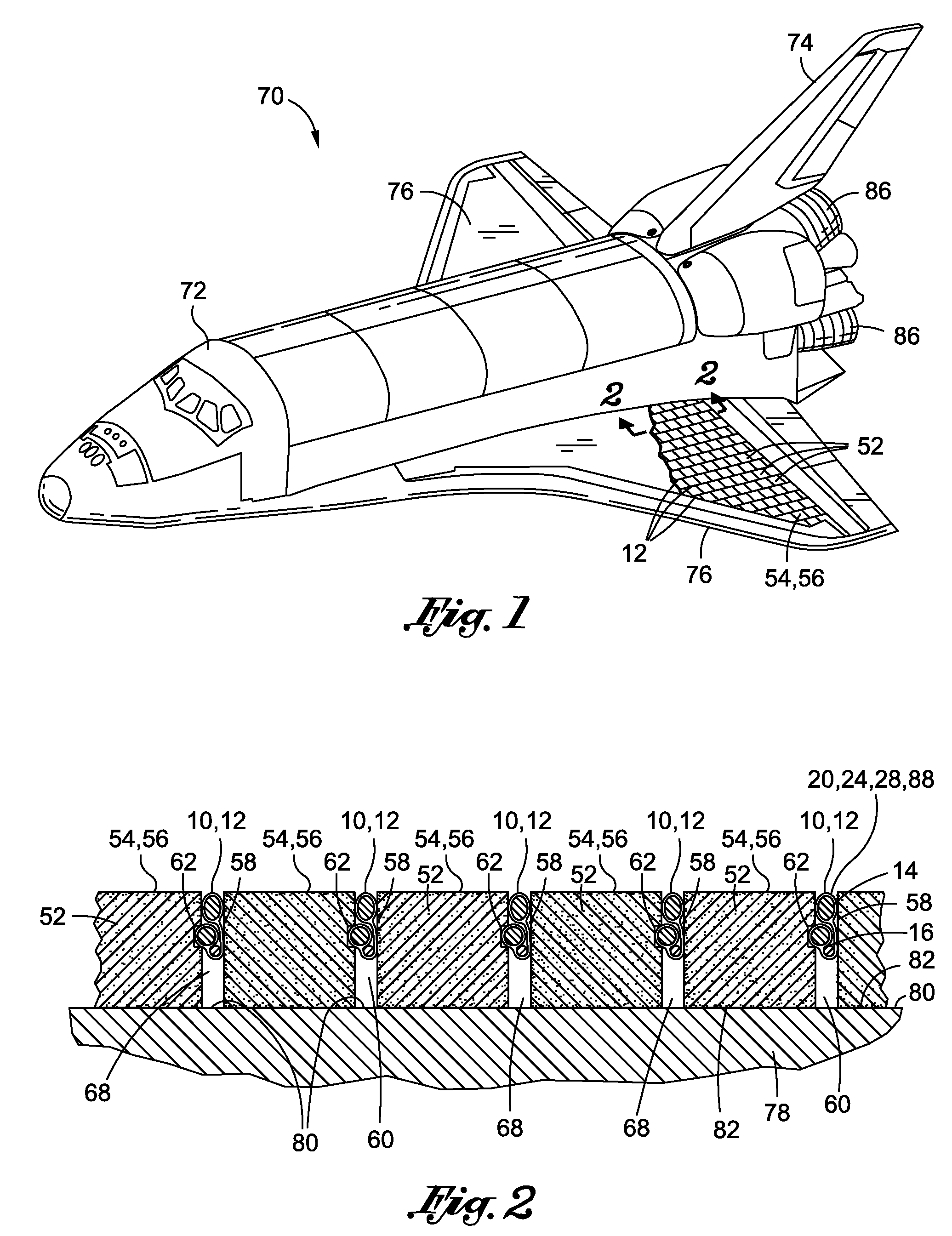
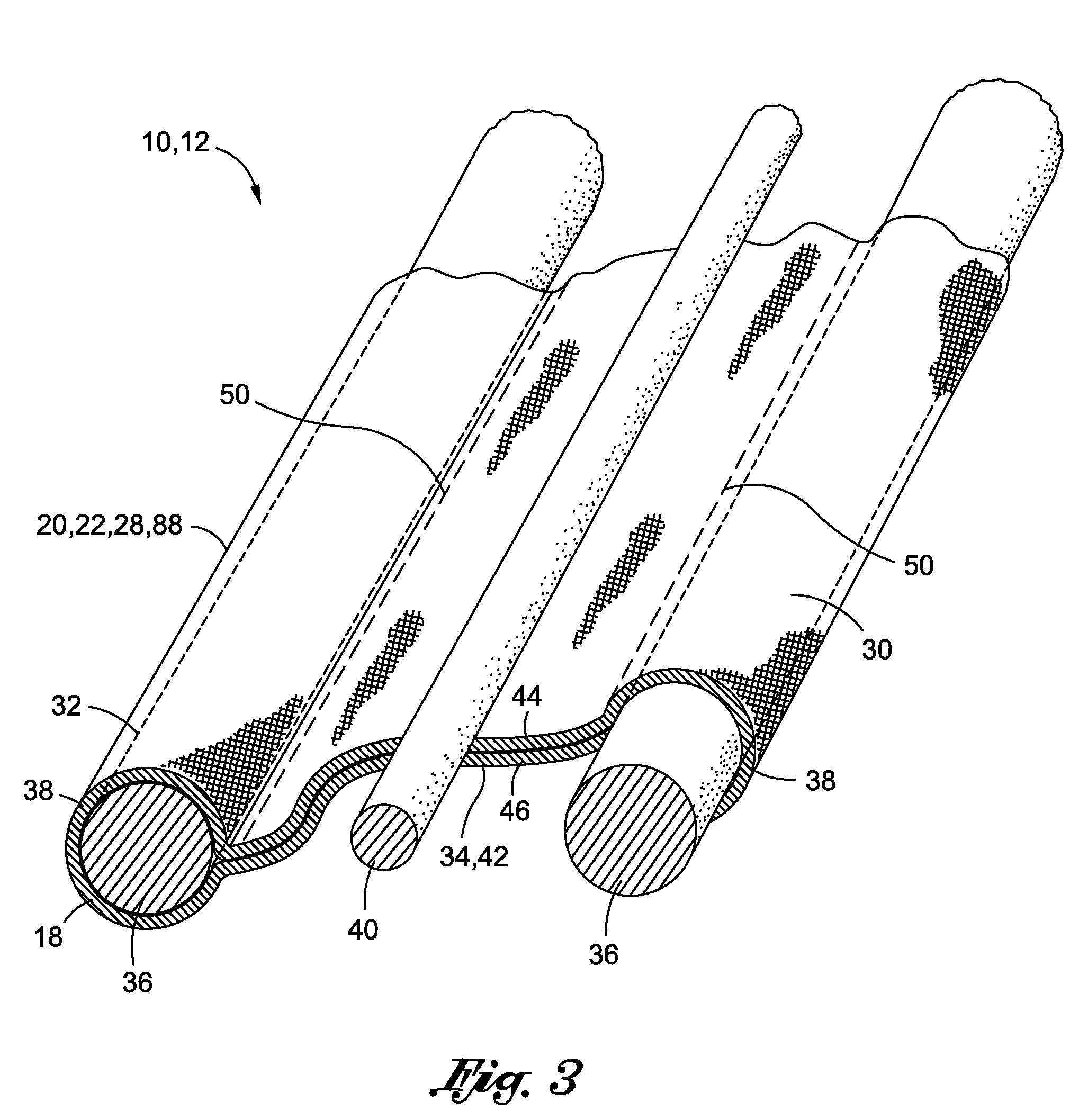
- A seal assembly comprising a gasket assembly with bulb portions and a spacer rope, where the gasket assembly is formed of flexible, high-temperature materials that create a spring mechanism to lock into place within the tile gap, forming redundant seals and an inner gap to prevent heat transfer, eliminating the need for external securing means.

Environmental Testing Standards for Thermopile Performance
Environmental testing standards for thermopile performance represent a critical framework for ensuring these thermal sensors maintain reliability across diverse weather conditions. The International Electrotechnical Commission (IEC) has established IEC 60068 as the primary standard governing environmental testing of electronic components, with specific sections addressing temperature cycling, humidity resistance, and mechanical stability relevant to thermopile applications.
ASTM E1934 provides standardized test methods for evaluating the performance of radiation thermometers, including thermopiles, under varying environmental conditions. This standard outlines procedures for determining measurement accuracy across temperature ranges from -40°C to +85°C, which encompasses most outdoor deployment scenarios.
MIL-STD-810G, though primarily developed for military applications, has been widely adopted in commercial thermopile testing due to its comprehensive protocols for evaluating performance under extreme environmental stressors. The standard's procedures for temperature shock (Method 503.5), humidity (Method 507.5), and vibration (Method 514.6) are particularly relevant for thermopile stability assessment.
For weather-specific performance validation, the IP (Ingress Protection) rating system defined by IEC 60529 provides standardized testing for resistance to dust and water intrusion. Thermopiles deployed in outdoor environments typically require a minimum rating of IP65 to ensure protection against dust and water jets from any direction.
The automotive industry standard AEC-Q100 has established rigorous stress test qualification requirements that have been adapted for thermopile testing, particularly for Grade 1 (-40°C to +125°C) environmental conditions. These tests include temperature cycling, high temperature storage, and humidity testing with bias applied.
ISO/IEC 17025 accreditation ensures that laboratories conducting environmental testing on thermopiles maintain appropriate quality management systems and technical competence. This accreditation is increasingly becoming a requirement for test results to be accepted by international regulatory bodies and customers with stringent quality requirements.
Recent developments in testing standards have begun to address long-term stability under fluctuating conditions, with accelerated aging tests now incorporating rapid temperature cycling between extremes to simulate years of environmental exposure within compressed timeframes. These protocols typically require thermopiles to maintain calibration accuracy within ±2% after exposure to 1,000 temperature cycles between operational extremes.
ASTM E1934 provides standardized test methods for evaluating the performance of radiation thermometers, including thermopiles, under varying environmental conditions. This standard outlines procedures for determining measurement accuracy across temperature ranges from -40°C to +85°C, which encompasses most outdoor deployment scenarios.
MIL-STD-810G, though primarily developed for military applications, has been widely adopted in commercial thermopile testing due to its comprehensive protocols for evaluating performance under extreme environmental stressors. The standard's procedures for temperature shock (Method 503.5), humidity (Method 507.5), and vibration (Method 514.6) are particularly relevant for thermopile stability assessment.
For weather-specific performance validation, the IP (Ingress Protection) rating system defined by IEC 60529 provides standardized testing for resistance to dust and water intrusion. Thermopiles deployed in outdoor environments typically require a minimum rating of IP65 to ensure protection against dust and water jets from any direction.
The automotive industry standard AEC-Q100 has established rigorous stress test qualification requirements that have been adapted for thermopile testing, particularly for Grade 1 (-40°C to +125°C) environmental conditions. These tests include temperature cycling, high temperature storage, and humidity testing with bias applied.
ISO/IEC 17025 accreditation ensures that laboratories conducting environmental testing on thermopiles maintain appropriate quality management systems and technical competence. This accreditation is increasingly becoming a requirement for test results to be accepted by international regulatory bodies and customers with stringent quality requirements.
Recent developments in testing standards have begun to address long-term stability under fluctuating conditions, with accelerated aging tests now incorporating rapid temperature cycling between extremes to simulate years of environmental exposure within compressed timeframes. These protocols typically require thermopiles to maintain calibration accuracy within ±2% after exposure to 1,000 temperature cycles between operational extremes.
Cost-Benefit Analysis of Stabilization Technologies
When evaluating thermopile stabilization technologies for variable weather conditions, a comprehensive cost-benefit analysis reveals significant economic considerations that organizations must address. Initial implementation costs vary substantially across different stabilization methods, with advanced enclosure systems typically requiring investments of $5,000-15,000 per installation, while basic weather shields may cost only $500-2,000. However, these upfront expenditures must be weighed against long-term operational benefits.
Maintenance requirements represent a critical cost factor, with passive stabilization systems generally demanding 50-70% lower maintenance expenses compared to active temperature control mechanisms. The latter may require quarterly servicing at approximately $400-600 per session, while passive systems often need only annual inspections costing $200-300. This differential becomes particularly significant when scaling to multiple installation sites.
Energy consumption presents another substantial consideration. Active temperature regulation systems consume 15-30 watts continuously, translating to annual operating costs of $130-260 per installation. In contrast, passive stabilization technologies typically require no ongoing energy input, offering complete elimination of this expense category and reducing the total cost of ownership by 20-35% over a five-year period.
Reliability improvements directly impact financial outcomes through reduced downtime and measurement errors. Field studies indicate that properly stabilized thermopiles experience 85-95% fewer weather-related failures compared to unstabilized units. When quantified against the average cost of emergency service calls ($800-1,200) and lost data ($300-500 per incident), stabilization technologies demonstrate a positive return on investment within 12-24 months in most variable climate applications.
Scalability economics must also factor into decision-making processes. Standardized stabilization solutions offer economies of scale, with per-unit costs decreasing by approximately 15-25% when implemented across multiple sites. Organizations operating extensive sensor networks can achieve additional savings through bulk procurement and streamlined maintenance protocols, further enhancing the cost-benefit ratio.
The environmental adaptability of different stabilization approaches significantly impacts their economic value proposition. Technologies designed for specific climate challenges (extreme heat, humidity, or freezing conditions) may offer superior performance in targeted environments but limited versatility across diverse settings. Universal stabilization solutions typically command a 30-40% price premium but deliver consistent performance across varied deployment scenarios, potentially offering better long-term value for organizations with geographically dispersed operations.
Maintenance requirements represent a critical cost factor, with passive stabilization systems generally demanding 50-70% lower maintenance expenses compared to active temperature control mechanisms. The latter may require quarterly servicing at approximately $400-600 per session, while passive systems often need only annual inspections costing $200-300. This differential becomes particularly significant when scaling to multiple installation sites.
Energy consumption presents another substantial consideration. Active temperature regulation systems consume 15-30 watts continuously, translating to annual operating costs of $130-260 per installation. In contrast, passive stabilization technologies typically require no ongoing energy input, offering complete elimination of this expense category and reducing the total cost of ownership by 20-35% over a five-year period.
Reliability improvements directly impact financial outcomes through reduced downtime and measurement errors. Field studies indicate that properly stabilized thermopiles experience 85-95% fewer weather-related failures compared to unstabilized units. When quantified against the average cost of emergency service calls ($800-1,200) and lost data ($300-500 per incident), stabilization technologies demonstrate a positive return on investment within 12-24 months in most variable climate applications.
Scalability economics must also factor into decision-making processes. Standardized stabilization solutions offer economies of scale, with per-unit costs decreasing by approximately 15-25% when implemented across multiple sites. Organizations operating extensive sensor networks can achieve additional savings through bulk procurement and streamlined maintenance protocols, further enhancing the cost-benefit ratio.
The environmental adaptability of different stabilization approaches significantly impacts their economic value proposition. Technologies designed for specific climate challenges (extreme heat, humidity, or freezing conditions) may offer superior performance in targeted environments but limited versatility across diverse settings. Universal stabilization solutions typically command a 30-40% price premium but deliver consistent performance across varied deployment scenarios, potentially offering better long-term value for organizations with geographically dispersed operations.
Unlock deeper insights with PatSnap Eureka Quick Research — get a full tech report to explore trends and direct your research. Try now!
Generate Your Research Report Instantly with AI Agent
Supercharge your innovation with PatSnap Eureka AI Agent Platform!