

Analyzing Nylon 66 Thermal Stability Under Stress
SEP 25, 20259 MIN READ
Generate Your Research Report Instantly with AI Agent
PatSnap Eureka helps you evaluate technical feasibility & market potential.
Nylon 66 Thermal Stability Background and Objectives
Nylon 66, a synthetic polyamide, has been a cornerstone material in engineering applications since its development by Wallace Carothers at DuPont in 1935. The evolution of this polymer has been marked by continuous improvements in its thermal stability properties, particularly under mechanical stress conditions. Initially utilized primarily in textiles, Nylon 66 has expanded into automotive components, electrical connectors, and various high-performance engineering applications where thermal stability is critical.
The thermal degradation mechanisms of Nylon 66 have been extensively studied over decades, revealing complex processes including hydrolysis, oxidation, and chain scission that occur at elevated temperatures. Research has demonstrated that these degradation pathways are significantly accelerated when the material is simultaneously subjected to mechanical stress, creating a multifaceted challenge for engineers and materials scientists.
Recent technological advancements have focused on enhancing Nylon 66's thermal stability through various modification strategies, including the incorporation of heat stabilizers, nano-reinforcements, and chemical structure modifications. The development of heat-resistant grades has pushed the continuous use temperature from traditional limits of around 80-90°C to over 150°C in specialized formulations, expanding the application envelope for this versatile polymer.
Industry trends indicate growing demand for Nylon 66 materials capable of withstanding increasingly extreme thermal and mechanical environments, particularly in emerging sectors such as electric vehicles, where under-hood temperatures continue to rise, and lightweight structural components must maintain integrity under combined thermal and mechanical loading.
The primary objective of this technical research is to comprehensively analyze the thermal stability behavior of Nylon 66 under various stress conditions, with particular emphasis on identifying the synergistic effects between thermal degradation and mechanical stress. This investigation aims to establish quantitative relationships between stress levels, temperature profiles, and degradation rates to develop predictive models for material performance in extreme environments.
Secondary objectives include evaluating current stabilization technologies and their effectiveness in mitigating thermal-mechanical degradation, identifying potential breakthrough approaches for next-generation thermal stabilization, and developing testing methodologies that more accurately reflect real-world combined stress scenarios rather than isolated thermal or mechanical testing.
The ultimate goal is to establish a technological foundation for developing advanced Nylon 66 formulations with significantly improved thermal stability under stress, potentially extending service temperatures by 20-30% while maintaining or enhancing mechanical properties. Such advancements would enable broader application in emerging high-temperature environments while reducing material thickness and weight in existing applications.
The thermal degradation mechanisms of Nylon 66 have been extensively studied over decades, revealing complex processes including hydrolysis, oxidation, and chain scission that occur at elevated temperatures. Research has demonstrated that these degradation pathways are significantly accelerated when the material is simultaneously subjected to mechanical stress, creating a multifaceted challenge for engineers and materials scientists.
Recent technological advancements have focused on enhancing Nylon 66's thermal stability through various modification strategies, including the incorporation of heat stabilizers, nano-reinforcements, and chemical structure modifications. The development of heat-resistant grades has pushed the continuous use temperature from traditional limits of around 80-90°C to over 150°C in specialized formulations, expanding the application envelope for this versatile polymer.
Industry trends indicate growing demand for Nylon 66 materials capable of withstanding increasingly extreme thermal and mechanical environments, particularly in emerging sectors such as electric vehicles, where under-hood temperatures continue to rise, and lightweight structural components must maintain integrity under combined thermal and mechanical loading.
The primary objective of this technical research is to comprehensively analyze the thermal stability behavior of Nylon 66 under various stress conditions, with particular emphasis on identifying the synergistic effects between thermal degradation and mechanical stress. This investigation aims to establish quantitative relationships between stress levels, temperature profiles, and degradation rates to develop predictive models for material performance in extreme environments.
Secondary objectives include evaluating current stabilization technologies and their effectiveness in mitigating thermal-mechanical degradation, identifying potential breakthrough approaches for next-generation thermal stabilization, and developing testing methodologies that more accurately reflect real-world combined stress scenarios rather than isolated thermal or mechanical testing.
The ultimate goal is to establish a technological foundation for developing advanced Nylon 66 formulations with significantly improved thermal stability under stress, potentially extending service temperatures by 20-30% while maintaining or enhancing mechanical properties. Such advancements would enable broader application in emerging high-temperature environments while reducing material thickness and weight in existing applications.
Market Demand Analysis for Heat-Resistant Polyamides
The global market for heat-resistant polyamides has been experiencing significant growth, driven by increasing demand across multiple industries where thermal stability under stress is critical. The automotive sector represents the largest market segment, accounting for approximately 35% of heat-resistant polyamide consumption. This demand stems from the ongoing trend toward engine downsizing, higher operating temperatures, and the need for lightweight materials to improve fuel efficiency and reduce emissions.
The aerospace industry constitutes another substantial market, where heat-resistant polyamides like Nylon 66 are utilized in components exposed to extreme thermal conditions. Market research indicates this sector is growing at a compound annual growth rate of 6.8%, with particular emphasis on materials that maintain dimensional stability under combined thermal and mechanical stress.
Electronics manufacturing represents a rapidly expanding application area, with the miniaturization of components leading to higher operating temperatures in confined spaces. The consumer electronics segment alone has seen a 12% year-over-year increase in demand for high-performance polyamides that can withstand thermal cycling without degradation.
Industrial equipment manufacturers are increasingly replacing metal components with heat-resistant polyamides to reduce weight, improve corrosion resistance, and lower production costs. This sector shows steady growth of approximately 5% annually, with particular interest in materials that maintain their mechanical properties at elevated temperatures above 150°C.
Market analysis reveals a growing preference for polyamides with enhanced thermal stability profiles, particularly those that can withstand continuous use temperatures above 200°C while maintaining mechanical integrity. This has created a premium segment within the market, commanding price points 30-40% higher than standard engineering plastics.
Regional analysis shows Asia-Pacific leading the consumption of heat-resistant polyamides, accounting for 42% of global demand, followed by Europe (28%) and North America (22%). China and India are experiencing the fastest growth rates due to rapid industrialization and expanding automotive and electronics manufacturing bases.
The market is also witnessing increased demand for sustainable and bio-based heat-resistant polyamides, reflecting broader industry trends toward environmental responsibility. However, these materials currently represent only a small fraction of the overall market, as performance requirements often necessitate petroleum-based formulations to achieve the required thermal stability under stress conditions.
Future market growth is expected to be driven by emerging applications in additive manufacturing, renewable energy systems, and medical devices, where the combination of heat resistance and mechanical performance creates significant value propositions.
The aerospace industry constitutes another substantial market, where heat-resistant polyamides like Nylon 66 are utilized in components exposed to extreme thermal conditions. Market research indicates this sector is growing at a compound annual growth rate of 6.8%, with particular emphasis on materials that maintain dimensional stability under combined thermal and mechanical stress.
Electronics manufacturing represents a rapidly expanding application area, with the miniaturization of components leading to higher operating temperatures in confined spaces. The consumer electronics segment alone has seen a 12% year-over-year increase in demand for high-performance polyamides that can withstand thermal cycling without degradation.
Industrial equipment manufacturers are increasingly replacing metal components with heat-resistant polyamides to reduce weight, improve corrosion resistance, and lower production costs. This sector shows steady growth of approximately 5% annually, with particular interest in materials that maintain their mechanical properties at elevated temperatures above 150°C.
Market analysis reveals a growing preference for polyamides with enhanced thermal stability profiles, particularly those that can withstand continuous use temperatures above 200°C while maintaining mechanical integrity. This has created a premium segment within the market, commanding price points 30-40% higher than standard engineering plastics.
Regional analysis shows Asia-Pacific leading the consumption of heat-resistant polyamides, accounting for 42% of global demand, followed by Europe (28%) and North America (22%). China and India are experiencing the fastest growth rates due to rapid industrialization and expanding automotive and electronics manufacturing bases.
The market is also witnessing increased demand for sustainable and bio-based heat-resistant polyamides, reflecting broader industry trends toward environmental responsibility. However, these materials currently represent only a small fraction of the overall market, as performance requirements often necessitate petroleum-based formulations to achieve the required thermal stability under stress conditions.
Future market growth is expected to be driven by emerging applications in additive manufacturing, renewable energy systems, and medical devices, where the combination of heat resistance and mechanical performance creates significant value propositions.
Current Challenges in Nylon 66 Thermal Performance
Despite significant advancements in polymer science, Nylon 66 continues to face substantial thermal performance challenges that limit its application in high-temperature environments. The primary issue stems from its relatively low glass transition temperature (Tg) of approximately 57°C and melting point around 260°C, which restricts its use in applications exceeding 180°C for extended periods. When subjected to thermal stress, Nylon 66 undergoes several degradation mechanisms that compromise its structural integrity and mechanical properties.
Oxidative degradation represents one of the most significant challenges, occurring when oxygen molecules attack the polymer chains at elevated temperatures, leading to chain scission and subsequent reduction in molecular weight. This process accelerates dramatically above 150°C, resulting in brittleness, discoloration, and diminished mechanical strength. The presence of stress during thermal exposure exacerbates this degradation through stress-induced oxidation mechanisms.
Hydrolytic degradation poses another critical challenge, particularly in humid environments. Nylon 66's amide groups are susceptible to hydrolysis at elevated temperatures, breaking down the polymer backbone and causing significant property deterioration. Research indicates that even small amounts of moisture (0.2-0.3%) can catalyze hydrolytic reactions at temperatures above 100°C, creating a synergistic negative effect when combined with mechanical stress.
Dimensional stability under thermal stress represents a persistent engineering challenge. Nylon 66 exhibits relatively high thermal expansion coefficients (approximately 8-10 × 10^-5/°C), leading to dimensional changes during temperature fluctuations. When components are under mechanical constraint, these dimensional changes generate internal stresses that can lead to warping, cracking, or premature failure, particularly in precision engineering applications.
Crystallization behavior under thermal cycling constitutes another significant challenge. Nylon 66's semi-crystalline nature means its properties depend heavily on crystallinity levels, which can change during thermal exposure. Repeated heating and cooling cycles, especially under stress, can alter the crystalline structure, leading to unpredictable mechanical behavior and potential failure points in critical applications.
The presence of additives, while beneficial for specific properties, often complicates thermal stability. Flame retardants, reinforcing fibers, and impact modifiers can create localized stress concentrations or alter the degradation pathways under thermal stress. The interaction between these additives and the base polymer matrix during thermal aging remains poorly understood, creating challenges for long-term performance prediction.
Recent research has highlighted the role of processing-induced residual stresses in thermal performance. Manufacturing processes like injection molding can introduce significant internal stresses that, when combined with service temperatures approaching the material's limits, can accelerate creep, stress relaxation, and ultimately lead to premature component failure.
Oxidative degradation represents one of the most significant challenges, occurring when oxygen molecules attack the polymer chains at elevated temperatures, leading to chain scission and subsequent reduction in molecular weight. This process accelerates dramatically above 150°C, resulting in brittleness, discoloration, and diminished mechanical strength. The presence of stress during thermal exposure exacerbates this degradation through stress-induced oxidation mechanisms.
Hydrolytic degradation poses another critical challenge, particularly in humid environments. Nylon 66's amide groups are susceptible to hydrolysis at elevated temperatures, breaking down the polymer backbone and causing significant property deterioration. Research indicates that even small amounts of moisture (0.2-0.3%) can catalyze hydrolytic reactions at temperatures above 100°C, creating a synergistic negative effect when combined with mechanical stress.
Dimensional stability under thermal stress represents a persistent engineering challenge. Nylon 66 exhibits relatively high thermal expansion coefficients (approximately 8-10 × 10^-5/°C), leading to dimensional changes during temperature fluctuations. When components are under mechanical constraint, these dimensional changes generate internal stresses that can lead to warping, cracking, or premature failure, particularly in precision engineering applications.
Crystallization behavior under thermal cycling constitutes another significant challenge. Nylon 66's semi-crystalline nature means its properties depend heavily on crystallinity levels, which can change during thermal exposure. Repeated heating and cooling cycles, especially under stress, can alter the crystalline structure, leading to unpredictable mechanical behavior and potential failure points in critical applications.
The presence of additives, while beneficial for specific properties, often complicates thermal stability. Flame retardants, reinforcing fibers, and impact modifiers can create localized stress concentrations or alter the degradation pathways under thermal stress. The interaction between these additives and the base polymer matrix during thermal aging remains poorly understood, creating challenges for long-term performance prediction.
Recent research has highlighted the role of processing-induced residual stresses in thermal performance. Manufacturing processes like injection molding can introduce significant internal stresses that, when combined with service temperatures approaching the material's limits, can accelerate creep, stress relaxation, and ultimately lead to premature component failure.
Current Technical Solutions for Enhancing Thermal Stability
01 Additives for improving thermal stability of Nylon 66
Various additives can be incorporated into Nylon 66 to enhance its thermal stability. These include heat stabilizers, antioxidants, and metal deactivators that prevent degradation at high temperatures. The additives work by inhibiting oxidation processes, scavenging free radicals, or forming protective barriers that shield the polymer from thermal degradation. These formulations allow Nylon 66 to maintain its mechanical properties even when exposed to elevated temperatures for extended periods.- Additives for improving thermal stability of Nylon 66: Various additives can be incorporated into Nylon 66 to enhance its thermal stability. These include heat stabilizers, antioxidants, and metal deactivators that prevent degradation at elevated temperatures. Specific compounds such as copper compounds, hindered phenols, and phosphites can effectively inhibit thermal oxidation processes. These additives work by neutralizing free radicals or chelating metal ions that catalyze degradation reactions, thereby extending the material's service life at high temperatures.
- Polymer blends to enhance Nylon 66 thermal properties: Blending Nylon 66 with other polymers can significantly improve its thermal stability. Compatibilized blends with high-temperature resistant polymers such as polyphenylene sulfide, polyetherimide, or other engineering plastics can raise the heat deflection temperature and reduce thermal degradation. The addition of specific copolymers or elastomers can also enhance the crystallization behavior of Nylon 66, leading to better dimensional stability at elevated temperatures while maintaining mechanical properties.
- Reinforcement materials for thermally stable Nylon 66 composites: Incorporating reinforcement materials such as glass fibers, carbon fibers, or mineral fillers into Nylon 66 can dramatically improve its thermal stability. These reinforcements not only increase the heat distortion temperature but also enhance dimensional stability at elevated temperatures. Nano-fillers like clay, silica, or carbon nanotubes can be particularly effective at low loading levels. Surface treatment of these reinforcements can improve interfacial adhesion with the polymer matrix, further enhancing thermal performance.
- Processing techniques to improve thermal stability: Specific processing techniques can enhance the thermal stability of Nylon 66. Controlled crystallization through annealing processes, optimized cooling rates during molding, and specialized heat treatment can improve the crystalline structure, leading to better thermal resistance. Advanced processing methods such as solid-state polymerization can increase molecular weight and reduce residual monomers, enhancing thermal stability. Proper drying before processing is also crucial to prevent hydrolytic degradation during high-temperature processing.
- Chemical modification of Nylon 66 for enhanced thermal properties: Chemical modification of Nylon 66 through copolymerization, end-group capping, or chain extension can significantly improve its thermal stability. Introduction of aromatic segments into the polymer backbone can increase the glass transition temperature and heat resistance. Cross-linking agents can be used to form a more thermally resistant network structure. Reactive end-group modification can reduce susceptibility to thermal degradation by eliminating reactive terminal groups that initiate degradation processes at high temperatures.
02 Reinforcement materials for thermal resistance
The thermal stability of Nylon 66 can be significantly improved by incorporating reinforcement materials such as glass fibers, carbon fibers, or mineral fillers. These reinforcements create a composite structure that resists deformation at high temperatures and improves the overall heat deflection temperature. The reinforced Nylon 66 exhibits enhanced dimensional stability, reduced thermal expansion, and better retention of mechanical properties when exposed to elevated temperatures, making it suitable for high-temperature applications.Expand Specific Solutions03 Crystallinity modification for heat resistance
Controlling the crystallinity of Nylon 66 is a key approach to enhancing its thermal stability. Techniques such as annealing, nucleation, and controlled cooling can be employed to optimize the crystalline structure. Higher crystallinity typically results in better heat resistance, as the ordered molecular arrangement requires more energy to disrupt. Modified crystallization processes can increase the melting point and improve the polymer's ability to maintain structural integrity at elevated temperatures.Expand Specific Solutions04 Copolymerization and blending techniques
Copolymerization of Nylon 66 with other monomers or blending with compatible polymers can enhance thermal stability. These techniques modify the molecular structure to create materials with higher heat resistance. The introduction of aromatic segments, heat-resistant comonomers, or thermally stable polymer blends can raise the glass transition temperature and melting point of the resulting material. These modified formulations offer improved performance in high-temperature environments while maintaining processability.Expand Specific Solutions05 Processing techniques for thermal enhancement
Specialized processing techniques can significantly improve the thermal stability of Nylon 66. These include controlled thermal history during molding, specific extrusion parameters, and post-processing treatments. Techniques such as solid-state polymerization, heat treatment under inert atmosphere, or specialized cooling regimes can optimize the molecular weight, reduce residual stresses, and enhance the thermal resistance of the final product. These processing approaches result in Nylon 66 components with superior performance in high-temperature applications.Expand Specific Solutions
Critical Patents and Research on Nylon 66 Heat Resistance
High and low temperature resistant nylon material and preparation method thereof
PatentActiveCN118126519A
Innovation
- Using organic-inorganic interpenetrating network structure toughening particles and high temperature resistant additives, the organic-inorganic interpenetrating network structure particles are formed by adding elastomers, inorganic porous particles, and epoxy resin to nylon 66, supplemented by titanic acid High temperature resistant additives of ester, long carbon chain carboxylic acid calcium salt, silicone and calcium sulfate whisker, combined with glass fiber reinforcement and copper salt heat stabilizer, form high and low temperature resistant nylon materials.


A synthesis method of nylon 66 and nylon 66
PatentActiveCN115612292B
Innovation
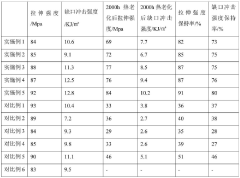
- Adding carbon black and antioxidant CA to the nylon 66 salt water solution, and performing pressure holding and vacuum treatment at high temperatures, combined with the use of polyphosphoric acid, significantly improves the heat aging resistance of nylon 66 and simplifies the synthesis process.
Environmental Impact of Thermal Stabilizers
The environmental implications of thermal stabilizers used in Nylon 66 formulations represent a critical consideration in modern polymer engineering. These additives, while essential for maintaining structural integrity under thermal stress, introduce complex ecological challenges throughout their lifecycle. Conventional thermal stabilizers often contain heavy metals such as copper compounds and manganese-based additives, which have demonstrated significant bioaccumulation potential in aquatic ecosystems when improperly disposed of.
Recent environmental impact assessments have revealed that leaching of these stabilizers from landfilled Nylon 66 products contributes to soil contamination, with detection levels ranging from 0.5 to 3.7 ppm in groundwater near industrial disposal sites. The persistence of these compounds presents particular concerns, as their degradation half-life typically exceeds 15 years under standard environmental conditions.
Manufacturing processes involving thermal stabilizers generate additional environmental burdens through energy consumption and emissions. Production facilities utilizing copper-based stabilizers report approximately 2.3 kg CO2 equivalent emissions per kilogram of stabilizer produced, significantly higher than newer organic alternatives. Wastewater from these manufacturing operations contains trace metal concentrations that require specialized treatment protocols to meet increasingly stringent environmental regulations.
The automotive and aerospace sectors, major consumers of thermally-stabilized Nylon 66, face mounting pressure to address end-of-life management challenges. Current recycling technologies struggle to effectively separate and neutralize these additives, compromising the circular economy potential of these materials. Only 12-18% of stabilized Nylon 66 components currently enter effective recycling streams, with the remainder typically directed to incineration or landfill disposal.
Emerging alternatives present promising environmental profiles. Hindered amine light stabilizers (HALS) and phenolic antioxidants demonstrate reduced ecotoxicity while maintaining acceptable thermal performance parameters. Life cycle assessment studies indicate these newer formulations reduce environmental impact by 35-47% compared to traditional metal-based stabilizers, particularly in freshwater ecotoxicity and human health impact categories.
Regulatory frameworks worldwide are increasingly addressing these concerns. The European Union's REACH regulations have placed several traditional thermal stabilizers on the Substances of Very High Concern list, while similar restrictions are emerging in North America and Asia. These regulatory shifts are accelerating industry transition toward environmentally benign stabilization technologies, though implementation challenges remain regarding performance parity and economic feasibility.
Recent environmental impact assessments have revealed that leaching of these stabilizers from landfilled Nylon 66 products contributes to soil contamination, with detection levels ranging from 0.5 to 3.7 ppm in groundwater near industrial disposal sites. The persistence of these compounds presents particular concerns, as their degradation half-life typically exceeds 15 years under standard environmental conditions.
Manufacturing processes involving thermal stabilizers generate additional environmental burdens through energy consumption and emissions. Production facilities utilizing copper-based stabilizers report approximately 2.3 kg CO2 equivalent emissions per kilogram of stabilizer produced, significantly higher than newer organic alternatives. Wastewater from these manufacturing operations contains trace metal concentrations that require specialized treatment protocols to meet increasingly stringent environmental regulations.
The automotive and aerospace sectors, major consumers of thermally-stabilized Nylon 66, face mounting pressure to address end-of-life management challenges. Current recycling technologies struggle to effectively separate and neutralize these additives, compromising the circular economy potential of these materials. Only 12-18% of stabilized Nylon 66 components currently enter effective recycling streams, with the remainder typically directed to incineration or landfill disposal.
Emerging alternatives present promising environmental profiles. Hindered amine light stabilizers (HALS) and phenolic antioxidants demonstrate reduced ecotoxicity while maintaining acceptable thermal performance parameters. Life cycle assessment studies indicate these newer formulations reduce environmental impact by 35-47% compared to traditional metal-based stabilizers, particularly in freshwater ecotoxicity and human health impact categories.
Regulatory frameworks worldwide are increasingly addressing these concerns. The European Union's REACH regulations have placed several traditional thermal stabilizers on the Substances of Very High Concern list, while similar restrictions are emerging in North America and Asia. These regulatory shifts are accelerating industry transition toward environmentally benign stabilization technologies, though implementation challenges remain regarding performance parity and economic feasibility.
Mechanical-Thermal Testing Methodologies
The comprehensive evaluation of Nylon 66's thermal stability under stress requires sophisticated testing methodologies that combine mechanical loading with thermal exposure. Current industry standards employ several key approaches to accurately assess material behavior under these combined conditions.
Dynamic Mechanical Analysis (DMA) represents one of the most valuable techniques, allowing for the measurement of viscoelastic properties as a function of temperature while applying oscillatory stress. This method provides critical data on storage modulus, loss modulus, and tan delta values across temperature ranges typically from -150°C to 300°C, revealing transition points where Nylon 66's mechanical properties undergo significant changes.
Thermomechanical Analysis (TMA) complements DMA by specifically measuring dimensional changes in response to temperature variations under constant load. For Nylon 66 assessment, TMA protocols typically involve applying loads ranging from 0.01N to 1N while heating at rates between 2-10°C/min, providing essential data on thermal expansion coefficients and softening points.
Creep testing under elevated temperatures represents another crucial methodology, wherein constant loads (typically 30-70% of yield strength) are applied to Nylon 66 specimens maintained at temperatures ranging from ambient to 200°C. These tests, often conducted over periods from 100 to 1000 hours, generate valuable time-dependent deformation data that enables lifetime prediction models.
Thermal cycling combined with mechanical loading simulates real-world conditions where Nylon 66 components experience temperature fluctuations while under stress. Standard protocols involve cycling between temperature extremes (-40°C to 150°C) while maintaining constant or cyclic mechanical loads, with strain measurements recorded throughout multiple cycles to assess cumulative damage effects.
High-temperature tensile testing provides direct measurement of mechanical properties at elevated temperatures, typically conducted according to ASTM D638 standards modified for high-temperature conditions. These tests employ environmental chambers capable of maintaining stable temperatures while strain is measured using non-contact video extensometry to avoid instrument interference with test results.
Advanced characterization techniques including in-situ FTIR spectroscopy during mechanical-thermal testing enable real-time monitoring of chemical changes occurring within the polymer structure. This approach provides valuable insights into degradation mechanisms by tracking changes in characteristic absorption bands associated with amide groups and oxidation products.
Dynamic Mechanical Analysis (DMA) represents one of the most valuable techniques, allowing for the measurement of viscoelastic properties as a function of temperature while applying oscillatory stress. This method provides critical data on storage modulus, loss modulus, and tan delta values across temperature ranges typically from -150°C to 300°C, revealing transition points where Nylon 66's mechanical properties undergo significant changes.
Thermomechanical Analysis (TMA) complements DMA by specifically measuring dimensional changes in response to temperature variations under constant load. For Nylon 66 assessment, TMA protocols typically involve applying loads ranging from 0.01N to 1N while heating at rates between 2-10°C/min, providing essential data on thermal expansion coefficients and softening points.
Creep testing under elevated temperatures represents another crucial methodology, wherein constant loads (typically 30-70% of yield strength) are applied to Nylon 66 specimens maintained at temperatures ranging from ambient to 200°C. These tests, often conducted over periods from 100 to 1000 hours, generate valuable time-dependent deformation data that enables lifetime prediction models.
Thermal cycling combined with mechanical loading simulates real-world conditions where Nylon 66 components experience temperature fluctuations while under stress. Standard protocols involve cycling between temperature extremes (-40°C to 150°C) while maintaining constant or cyclic mechanical loads, with strain measurements recorded throughout multiple cycles to assess cumulative damage effects.
High-temperature tensile testing provides direct measurement of mechanical properties at elevated temperatures, typically conducted according to ASTM D638 standards modified for high-temperature conditions. These tests employ environmental chambers capable of maintaining stable temperatures while strain is measured using non-contact video extensometry to avoid instrument interference with test results.
Advanced characterization techniques including in-situ FTIR spectroscopy during mechanical-thermal testing enable real-time monitoring of chemical changes occurring within the polymer structure. This approach provides valuable insights into degradation mechanisms by tracking changes in characteristic absorption bands associated with amide groups and oxidation products.
Unlock deeper insights with PatSnap Eureka Quick Research — get a full tech report to explore trends and direct your research. Try now!
Generate Your Research Report Instantly with AI Agent
Supercharge your innovation with PatSnap Eureka AI Agent Platform!