

Assessing Service Quality in Fixed Satellite Broadcasting
MAR 18, 202610 MIN READ
Generate Your Research Report Instantly with AI Agent
PatSnap Eureka helps you evaluate technical feasibility & market potential.
Satellite Broadcasting Technology Background and Objectives
Fixed satellite broadcasting technology has evolved significantly since its inception in the 1960s, transforming from experimental communication systems to sophisticated global broadcasting networks. The technology leverages geostationary satellites positioned approximately 35,786 kilometers above Earth's equator to deliver television, radio, and data services to fixed receiving stations across vast geographical areas. This orbital positioning enables satellites to maintain constant coverage over specific regions, making them ideal for broadcasting applications.
The fundamental principle of fixed satellite broadcasting involves uplink transmission from terrestrial stations to satellites, signal amplification and frequency conversion aboard the spacecraft, and subsequent downlink transmission to ground-based receivers. Modern systems operate primarily in C-band, Ku-band, and Ka-band frequencies, each offering distinct advantages in terms of coverage area, signal quality, and atmospheric interference resistance.
Contemporary satellite broadcasting systems face increasing demands for higher service quality standards driven by consumer expectations for ultra-high-definition content, minimal latency, and reliable signal availability. The proliferation of streaming services and on-demand content has intensified competition, necessitating robust quality assessment methodologies to maintain competitive advantage and regulatory compliance.
The primary objective of service quality assessment in fixed satellite broadcasting centers on establishing comprehensive evaluation frameworks that encompass technical performance metrics, user experience indicators, and operational reliability measures. These assessments must address signal strength consistency, bit error rates, availability percentages, and subjective quality factors that directly impact viewer satisfaction.
Technical objectives include developing standardized measurement protocols for evaluating transmission quality across diverse atmospheric conditions, interference scenarios, and equipment configurations. This involves implementing real-time monitoring systems capable of detecting and quantifying service degradation before it significantly impacts end-user experience.
Strategic objectives encompass creating predictive quality models that enable proactive service optimization and resource allocation. These models must integrate satellite health telemetry, ground station performance data, and environmental factors to forecast potential service disruptions and facilitate preventive maintenance scheduling.
The evolution toward next-generation satellite broadcasting systems, including high-throughput satellites and software-defined payloads, demands adaptive quality assessment methodologies that can accommodate dynamic beam forming, frequency reuse patterns, and variable modulation schemes while maintaining consistent service quality standards across all coverage areas.
The fundamental principle of fixed satellite broadcasting involves uplink transmission from terrestrial stations to satellites, signal amplification and frequency conversion aboard the spacecraft, and subsequent downlink transmission to ground-based receivers. Modern systems operate primarily in C-band, Ku-band, and Ka-band frequencies, each offering distinct advantages in terms of coverage area, signal quality, and atmospheric interference resistance.
Contemporary satellite broadcasting systems face increasing demands for higher service quality standards driven by consumer expectations for ultra-high-definition content, minimal latency, and reliable signal availability. The proliferation of streaming services and on-demand content has intensified competition, necessitating robust quality assessment methodologies to maintain competitive advantage and regulatory compliance.
The primary objective of service quality assessment in fixed satellite broadcasting centers on establishing comprehensive evaluation frameworks that encompass technical performance metrics, user experience indicators, and operational reliability measures. These assessments must address signal strength consistency, bit error rates, availability percentages, and subjective quality factors that directly impact viewer satisfaction.
Technical objectives include developing standardized measurement protocols for evaluating transmission quality across diverse atmospheric conditions, interference scenarios, and equipment configurations. This involves implementing real-time monitoring systems capable of detecting and quantifying service degradation before it significantly impacts end-user experience.
Strategic objectives encompass creating predictive quality models that enable proactive service optimization and resource allocation. These models must integrate satellite health telemetry, ground station performance data, and environmental factors to forecast potential service disruptions and facilitate preventive maintenance scheduling.
The evolution toward next-generation satellite broadcasting systems, including high-throughput satellites and software-defined payloads, demands adaptive quality assessment methodologies that can accommodate dynamic beam forming, frequency reuse patterns, and variable modulation schemes while maintaining consistent service quality standards across all coverage areas.
Market Demand for Fixed Satellite Broadcasting Services
The global fixed satellite broadcasting market demonstrates robust demand driven by the persistent need for reliable, wide-coverage communication services across diverse geographical regions. Traditional broadcasting remains a cornerstone application, with satellite operators serving television and radio content distributors who require consistent signal quality and extensive territorial reach that terrestrial infrastructure cannot economically provide.
Enterprise communications represent a significant demand segment, particularly for organizations operating in remote locations or requiring backup communication channels. Oil and gas companies, mining operations, maritime vessels, and aviation sectors rely heavily on fixed satellite services for critical data transmission, voice communications, and operational coordination. These industries prioritize service reliability and consistent performance metrics over cost considerations.
Government and defense applications constitute another substantial market driver, with agencies requiring secure, independent communication channels for national security, emergency response, and diplomatic operations. The demand from this sector emphasizes stringent quality requirements and specialized service level agreements that commercial operators must accommodate through enhanced monitoring and assessment capabilities.
The emergence of hybrid network architectures has created new demand patterns, where fixed satellite services complement terrestrial broadband and cellular networks. Internet service providers increasingly utilize satellite capacity to extend coverage to underserved rural areas, creating demand for services that can seamlessly integrate with existing network infrastructure while maintaining consistent quality standards.
Educational and healthcare sectors drive demand for reliable satellite connectivity in remote regions, particularly in developing countries where terrestrial infrastructure remains limited. Distance learning initiatives and telemedicine applications require stable, high-quality connections that can support real-time video communications and data transfer without significant latency variations.
Market demand increasingly emphasizes service quality transparency and measurable performance indicators. Customers now expect detailed quality metrics, real-time monitoring capabilities, and proactive service management rather than traditional best-effort delivery models. This shift necessitates sophisticated quality assessment frameworks that can provide granular performance data and predictive maintenance insights.
The competitive landscape intensifies demand for differentiated service offerings based on quality parameters rather than capacity alone. Satellite operators must demonstrate superior service quality through comprehensive assessment methodologies to maintain market position and justify premium pricing structures in an increasingly commoditized connectivity market.
Enterprise communications represent a significant demand segment, particularly for organizations operating in remote locations or requiring backup communication channels. Oil and gas companies, mining operations, maritime vessels, and aviation sectors rely heavily on fixed satellite services for critical data transmission, voice communications, and operational coordination. These industries prioritize service reliability and consistent performance metrics over cost considerations.
Government and defense applications constitute another substantial market driver, with agencies requiring secure, independent communication channels for national security, emergency response, and diplomatic operations. The demand from this sector emphasizes stringent quality requirements and specialized service level agreements that commercial operators must accommodate through enhanced monitoring and assessment capabilities.
The emergence of hybrid network architectures has created new demand patterns, where fixed satellite services complement terrestrial broadband and cellular networks. Internet service providers increasingly utilize satellite capacity to extend coverage to underserved rural areas, creating demand for services that can seamlessly integrate with existing network infrastructure while maintaining consistent quality standards.
Educational and healthcare sectors drive demand for reliable satellite connectivity in remote regions, particularly in developing countries where terrestrial infrastructure remains limited. Distance learning initiatives and telemedicine applications require stable, high-quality connections that can support real-time video communications and data transfer without significant latency variations.
Market demand increasingly emphasizes service quality transparency and measurable performance indicators. Customers now expect detailed quality metrics, real-time monitoring capabilities, and proactive service management rather than traditional best-effort delivery models. This shift necessitates sophisticated quality assessment frameworks that can provide granular performance data and predictive maintenance insights.
The competitive landscape intensifies demand for differentiated service offerings based on quality parameters rather than capacity alone. Satellite operators must demonstrate superior service quality through comprehensive assessment methodologies to maintain market position and justify premium pricing structures in an increasingly commoditized connectivity market.
Current State and Challenges in Satellite Service Quality Assessment
Fixed satellite broadcasting service quality assessment has evolved significantly over the past two decades, driven by increasing consumer expectations and technological advancements. Current assessment methodologies primarily rely on traditional metrics such as signal strength, bit error rates, and availability measurements. However, these conventional approaches often fail to capture the complete user experience, particularly in modern multimedia broadcasting environments where quality perception extends beyond basic signal parameters.
The global landscape of satellite service quality assessment reveals substantial disparities between developed and developing regions. European and North American markets have established comprehensive regulatory frameworks with standardized measurement protocols, while emerging markets in Asia-Pacific and Africa still rely on fragmented assessment approaches. This geographical imbalance creates challenges for satellite operators serving multiple regions with varying quality standards and measurement requirements.
Contemporary assessment systems face significant technical limitations in real-time monitoring capabilities. Most existing solutions operate on periodic sampling rather than continuous monitoring, creating blind spots during critical service degradation events. The integration of multiple satellite transponders and ground station networks further complicates unified quality measurement, as different network segments may exhibit varying performance characteristics that are difficult to correlate systematically.
Emerging broadcasting technologies, including Ultra High Definition content and interactive services, have introduced new quality dimensions that traditional assessment frameworks struggle to accommodate. These advanced services require more sophisticated metrics encompassing video compression artifacts, latency variations, and service responsiveness. Current measurement systems often lack the granularity needed to evaluate these complex quality parameters effectively.
The proliferation of hybrid satellite-terrestrial networks presents additional assessment challenges. Service quality evaluation must now account for seamless handovers between satellite and terrestrial segments, requiring integrated measurement approaches that can track quality consistency across different transmission mediums. This complexity is further amplified by the increasing adoption of software-defined networking technologies in satellite infrastructure.
Regulatory compliance represents another significant challenge, as different jurisdictions maintain distinct quality standards and reporting requirements. Satellite operators must navigate multiple regulatory frameworks simultaneously, often requiring customized assessment methodologies for each market. This regulatory fragmentation increases operational complexity and limits the development of standardized global assessment practices.
Data processing and analytics capabilities remain constrained by legacy infrastructure limitations. Many satellite operators still rely on outdated monitoring systems that cannot handle the volume and velocity of modern quality data streams. The lack of advanced analytics capabilities prevents operators from implementing predictive quality management and proactive service optimization strategies.
The global landscape of satellite service quality assessment reveals substantial disparities between developed and developing regions. European and North American markets have established comprehensive regulatory frameworks with standardized measurement protocols, while emerging markets in Asia-Pacific and Africa still rely on fragmented assessment approaches. This geographical imbalance creates challenges for satellite operators serving multiple regions with varying quality standards and measurement requirements.
Contemporary assessment systems face significant technical limitations in real-time monitoring capabilities. Most existing solutions operate on periodic sampling rather than continuous monitoring, creating blind spots during critical service degradation events. The integration of multiple satellite transponders and ground station networks further complicates unified quality measurement, as different network segments may exhibit varying performance characteristics that are difficult to correlate systematically.
Emerging broadcasting technologies, including Ultra High Definition content and interactive services, have introduced new quality dimensions that traditional assessment frameworks struggle to accommodate. These advanced services require more sophisticated metrics encompassing video compression artifacts, latency variations, and service responsiveness. Current measurement systems often lack the granularity needed to evaluate these complex quality parameters effectively.
The proliferation of hybrid satellite-terrestrial networks presents additional assessment challenges. Service quality evaluation must now account for seamless handovers between satellite and terrestrial segments, requiring integrated measurement approaches that can track quality consistency across different transmission mediums. This complexity is further amplified by the increasing adoption of software-defined networking technologies in satellite infrastructure.
Regulatory compliance represents another significant challenge, as different jurisdictions maintain distinct quality standards and reporting requirements. Satellite operators must navigate multiple regulatory frameworks simultaneously, often requiring customized assessment methodologies for each market. This regulatory fragmentation increases operational complexity and limits the development of standardized global assessment practices.
Data processing and analytics capabilities remain constrained by legacy infrastructure limitations. Many satellite operators still rely on outdated monitoring systems that cannot handle the volume and velocity of modern quality data streams. The lack of advanced analytics capabilities prevents operators from implementing predictive quality management and proactive service optimization strategies.
Existing Solutions for Satellite Service Quality Evaluation
01 Signal quality monitoring and measurement systems
Technologies for monitoring and measuring the quality of satellite broadcasting signals in real-time. These systems can detect signal degradation, interference, and transmission errors to ensure consistent service quality. The monitoring includes parameters such as signal strength, bit error rate, and carrier-to-noise ratio to maintain optimal broadcasting performance.- Signal quality monitoring and measurement systems: Technologies for monitoring and measuring the quality of satellite broadcasting signals in real-time. These systems can detect signal degradation, interference, and transmission errors to ensure consistent service quality. The monitoring includes parameters such as signal strength, bit error rate, and carrier-to-noise ratio to maintain optimal broadcasting performance.
- Error correction and signal processing techniques: Methods for implementing error correction codes and advanced signal processing algorithms to improve the reliability of satellite broadcasting transmissions. These techniques help recover data from corrupted signals and reduce the impact of noise and interference on broadcast quality. The approaches include forward error correction, interleaving, and adaptive modulation schemes.
- Bandwidth optimization and resource allocation: Systems for efficient allocation of satellite bandwidth and transmission resources to maximize service quality while accommodating multiple channels and users. These solutions involve dynamic bandwidth management, multiplexing techniques, and intelligent resource scheduling to prevent congestion and ensure stable broadcasting performance across different service tiers.
- Receiver equipment and demodulation technology: Advanced receiver designs and demodulation technologies that enhance the ability to capture and decode satellite broadcast signals with high fidelity. These innovations include improved tuner sensitivity, adaptive equalization, and robust demodulation algorithms that maintain signal quality even under challenging reception conditions such as weather interference or weak signal areas.
- Quality of service management and control systems: Comprehensive management frameworks for controlling and maintaining service quality across satellite broadcasting networks. These systems provide end-to-end quality assurance through automated monitoring, fault detection, performance optimization, and service level management. They enable operators to proactively address quality issues and ensure compliance with broadcasting standards.
02 Error correction and signal processing techniques
Methods for implementing error correction codes and advanced signal processing algorithms to improve the reliability of satellite broadcasting transmissions. These techniques help recover data from corrupted signals and reduce the impact of noise and interference on broadcast quality. The systems employ various modulation and coding schemes to enhance signal robustness.Expand Specific Solutions03 Satellite transponder and bandwidth optimization
Technologies for optimizing the use of satellite transponder resources and bandwidth allocation to maximize service quality. These methods include dynamic bandwidth management, frequency planning, and power control to ensure efficient utilization of satellite capacity while maintaining signal quality across multiple channels and services.Expand Specific Solutions04 Reception equipment and antenna systems
Improvements in satellite reception equipment including antenna design, low-noise amplifiers, and receiver configurations to enhance signal reception quality. These systems focus on maximizing signal capture efficiency, reducing interference from adjacent satellites, and maintaining stable reception under various environmental conditions.Expand Specific Solutions05 Quality of service management and control systems
Comprehensive systems for managing and controlling the overall quality of satellite broadcasting services. These include automated control mechanisms, service level monitoring, and adaptive transmission techniques that adjust parameters based on channel conditions. The systems ensure consistent delivery of high-quality content to end users through intelligent resource management and fault detection.Expand Specific Solutions
Key Players in Satellite Broadcasting and Quality Assessment Industry
The fixed satellite broadcasting service quality assessment market represents a mature yet evolving sector within the broader telecommunications landscape. The industry has reached a consolidation phase, with established players like Hughes Network Systems, ViaSat, and DIRECTV dominating satellite service delivery, while technology giants such as Samsung Electronics, Sony Group, and Qualcomm drive innovation in broadcasting equipment and chipset solutions. Market size continues expanding due to growing demand for high-quality satellite services globally. Technology maturity varies across segments - traditional broadcasting technologies are well-established, while next-generation quality assessment methodologies incorporating AI and advanced analytics remain in development phases. Companies like Alcatel-Lucent, ZTE, and Huawei (through partnerships) contribute networking infrastructure, while research institutions including Chongqing University of Posts & Telecommunications advance theoretical frameworks. The competitive landscape shows increasing convergence between satellite operators, equipment manufacturers, and software developers, creating integrated solutions for comprehensive service quality monitoring and optimization.
QUALCOMM, Inc.
Technical Solution: QUALCOMM provides service quality assessment solutions for satellite broadcasting through their advanced chipset technologies and signal processing capabilities. Their approach focuses on receiver-side quality monitoring and assessment, implementing sophisticated algorithms for signal acquisition, demodulation performance evaluation, and error correction effectiveness measurement. QUALCOMM's quality assessment framework leverages their expertise in wireless communication technologies to develop comprehensive metrics for satellite signal quality, including phase noise analysis, frequency stability monitoring, and adaptive equalization performance. The company's solutions incorporate machine learning techniques for predictive quality assessment and automatic parameter optimization to maintain optimal reception performance under varying channel conditions and interference scenarios.
Strengths: Leading expertise in wireless communication chipsets with advanced signal processing capabilities and strong R&D capabilities for innovative quality assessment techniques. Weaknesses: Primarily component-level focus rather than system-wide service quality assessment, with limited direct satellite broadcasting operational experience.
Hughes Network Systems
Technical Solution: Hughes Network Systems develops comprehensive satellite service quality assessment solutions through their HughesNet platform, implementing advanced Quality of Service (QoS) monitoring systems that continuously track key performance indicators including signal strength, latency, throughput, and packet loss rates. Their technology utilizes adaptive coding and modulation techniques combined with real-time network optimization algorithms to maintain service quality standards. The company employs sophisticated beam management systems and ground-based monitoring infrastructure to assess and ensure consistent service delivery across their satellite coverage areas. Their quality assessment framework includes automated fault detection, performance analytics, and predictive maintenance capabilities to proactively address service degradation issues.
Strengths: Extensive experience in satellite broadband services with proven large-scale deployment capabilities and comprehensive end-to-end quality monitoring systems. Weaknesses: Primarily focused on broadband services rather than broadcasting, with limited coverage in certain geographical regions.
Core Innovations in Satellite Broadcasting Quality Metrics
Method for automatically sensing quality of experience of Chinese users on satellite constellations
PatentActiveCN111786715A
Innovation
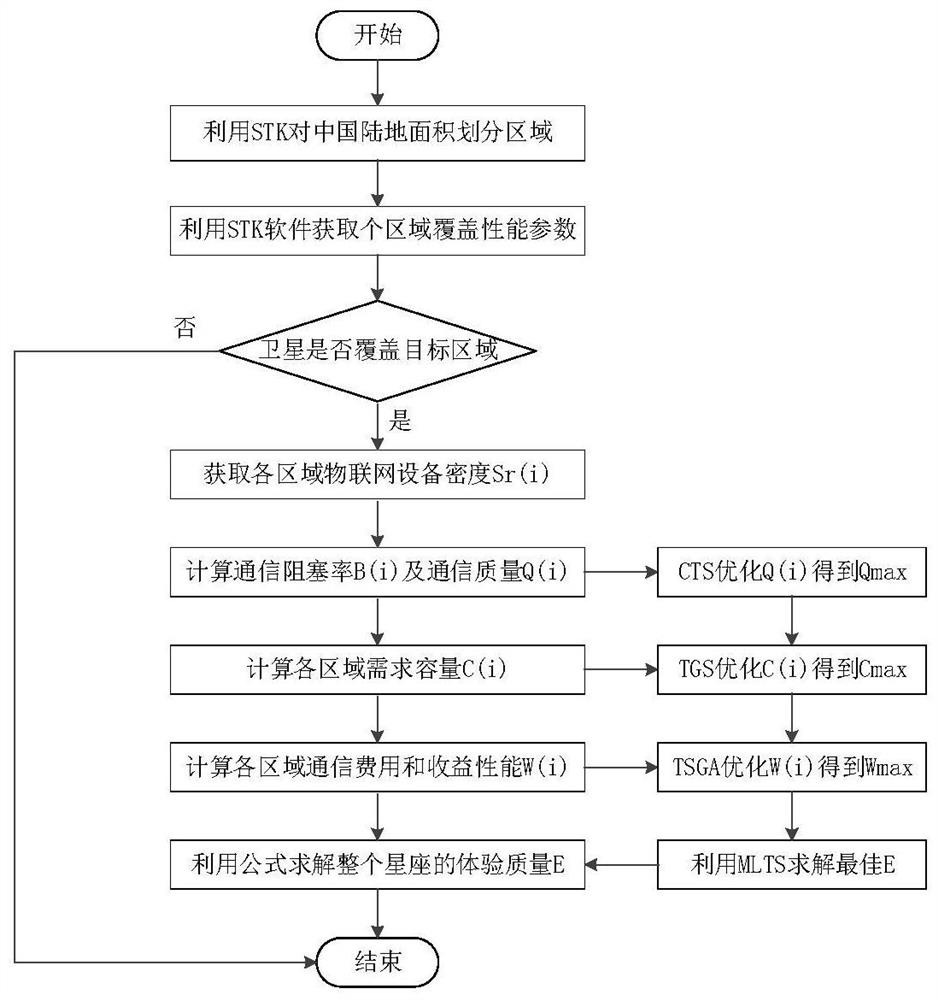
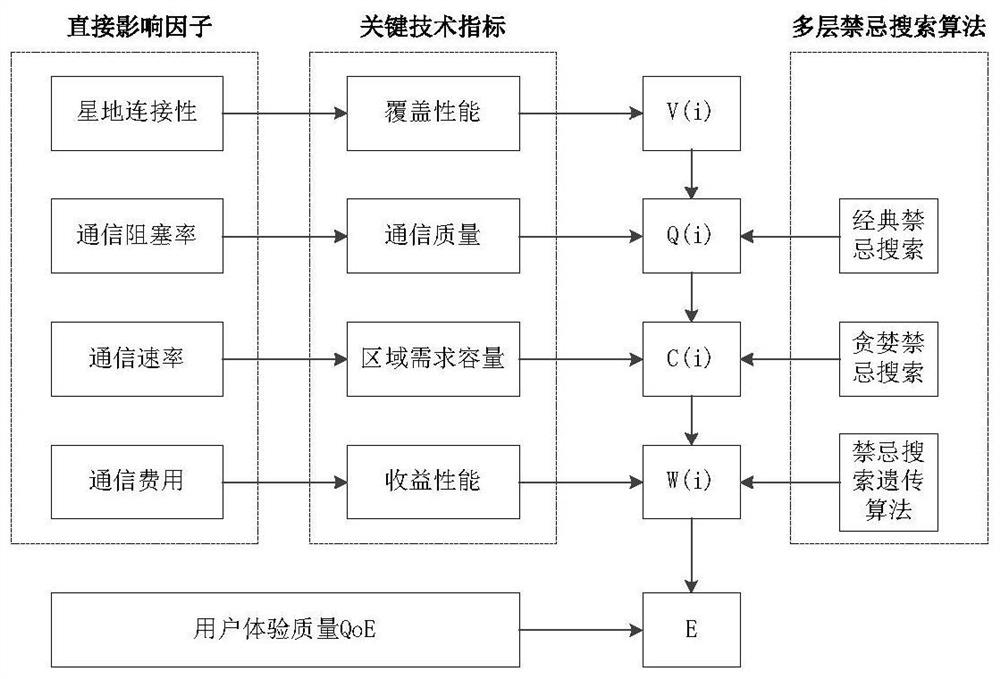
- This paper proposes a method to automatically perceive the quality of experience of Chinese users on satellite constellations. By establishing an SIoT system model including LEO satellite constellations and ground IoT devices, a multi-layer tabu search algorithm (MLTS) is used, combined with the classic tabu search algorithm (CTS), Greedy Tabu Search Algorithm (GTS) and Tabu Search Genetic Algorithm (TSGA) optimize coverage performance, communication quality, regional demand capability and profitability, and automatically generate quality of experience performance indicators.


Measuring quality of service of broadcast multimedia signals using digital watermark analyses
PatentInactiveUS7277468B2
Innovation
- The method employs fragile digital watermarks embedded in broadcast media signals, using frequency domain transformations and calibration signals to assess signal quality by comparing extracted watermarks with reference watermarks, and evaluates signal peaks to determine the extent of degradation.


Regulatory Standards for Satellite Broadcasting Quality
The regulatory landscape for satellite broadcasting quality is governed by a complex framework of international, regional, and national standards that ensure consistent service delivery across different jurisdictions. The International Telecommunication Union (ITU) serves as the primary global authority, establishing fundamental technical parameters through ITU-R recommendations that define signal quality thresholds, interference limits, and spectrum allocation protocols for fixed satellite services.
Regional regulatory bodies complement ITU standards with more specific requirements tailored to local market conditions. The European Telecommunications Standards Institute (ETSI) has developed comprehensive guidelines for digital video broadcasting via satellite (DVB-S/S2), establishing minimum carrier-to-noise ratios, bit error rate thresholds, and availability requirements that operators must maintain. Similarly, the Federal Communications Commission (FCC) in the United States enforces stringent quality metrics including signal strength standards and service reliability benchmarks.
National regulatory frameworks typically incorporate international standards while adding country-specific requirements for consumer protection and service quality assurance. These regulations often mandate minimum service availability percentages, typically ranging from 99.5% to 99.9% annually, and establish clear protocols for quality monitoring and reporting. Operators must demonstrate compliance through continuous measurement systems that track key performance indicators such as signal degradation, outage duration, and customer complaint resolution times.
Quality assessment methodologies prescribed by regulatory standards encompass both objective technical measurements and subjective user experience evaluations. Technical parameters include carrier-to-interference ratios, modulation error ratios, and constellation diagram analysis, while subjective assessments focus on picture quality ratings and audio clarity metrics. Regulatory bodies increasingly emphasize end-to-end quality monitoring, requiring operators to implement automated measurement systems that provide real-time visibility into service performance across their entire distribution network.
Compliance enforcement mechanisms vary significantly across jurisdictions but generally include regular auditing procedures, penalty structures for non-compliance, and mandatory public reporting of quality metrics. Many regulators now require operators to publish quarterly service quality reports, creating transparency and enabling comparative analysis across different service providers within the same market.
Regional regulatory bodies complement ITU standards with more specific requirements tailored to local market conditions. The European Telecommunications Standards Institute (ETSI) has developed comprehensive guidelines for digital video broadcasting via satellite (DVB-S/S2), establishing minimum carrier-to-noise ratios, bit error rate thresholds, and availability requirements that operators must maintain. Similarly, the Federal Communications Commission (FCC) in the United States enforces stringent quality metrics including signal strength standards and service reliability benchmarks.
National regulatory frameworks typically incorporate international standards while adding country-specific requirements for consumer protection and service quality assurance. These regulations often mandate minimum service availability percentages, typically ranging from 99.5% to 99.9% annually, and establish clear protocols for quality monitoring and reporting. Operators must demonstrate compliance through continuous measurement systems that track key performance indicators such as signal degradation, outage duration, and customer complaint resolution times.
Quality assessment methodologies prescribed by regulatory standards encompass both objective technical measurements and subjective user experience evaluations. Technical parameters include carrier-to-interference ratios, modulation error ratios, and constellation diagram analysis, while subjective assessments focus on picture quality ratings and audio clarity metrics. Regulatory bodies increasingly emphasize end-to-end quality monitoring, requiring operators to implement automated measurement systems that provide real-time visibility into service performance across their entire distribution network.
Compliance enforcement mechanisms vary significantly across jurisdictions but generally include regular auditing procedures, penalty structures for non-compliance, and mandatory public reporting of quality metrics. Many regulators now require operators to publish quarterly service quality reports, creating transparency and enabling comparative analysis across different service providers within the same market.
AI-Driven Quality Monitoring and Predictive Analytics
Artificial intelligence has emerged as a transformative force in satellite broadcasting quality monitoring, offering unprecedented capabilities for real-time assessment and predictive maintenance. Modern AI-driven systems leverage machine learning algorithms to continuously analyze signal parameters, transmission quality metrics, and network performance indicators across satellite communication links. These intelligent monitoring platforms can process vast amounts of telemetry data from satellite transponders, ground stations, and user terminals to provide comprehensive quality assessments that surpass traditional threshold-based monitoring approaches.
Deep learning neural networks have proven particularly effective in identifying subtle patterns and anomalies in satellite signal characteristics that may indicate impending service degradation. Convolutional neural networks excel at analyzing spectral data and signal constellation patterns, while recurrent neural networks demonstrate superior performance in temporal analysis of quality metrics such as signal-to-noise ratio fluctuations, bit error rates, and packet loss patterns. These AI models can detect quality degradation hours or even days before traditional monitoring systems would trigger alerts.
Predictive analytics capabilities represent a significant advancement in satellite broadcasting operations, enabling proactive maintenance strategies that minimize service interruptions. Machine learning algorithms analyze historical performance data, weather patterns, equipment aging characteristics, and operational parameters to forecast potential failures or quality degradation events. This predictive approach allows operators to schedule maintenance activities during planned downtime windows rather than responding to emergency outages.
Advanced AI systems integrate multiple data sources including satellite health telemetry, atmospheric conditions, solar activity indices, and ground equipment status to create comprehensive predictive models. These models can anticipate rain fade events, predict transponder performance degradation, and identify optimal beam switching strategies to maintain service quality during adverse conditions. The integration of edge computing capabilities enables real-time decision-making at distributed ground stations, reducing latency in quality adjustment responses.
The implementation of AI-driven quality monitoring systems has demonstrated significant improvements in service availability and customer satisfaction metrics. Automated quality optimization algorithms can dynamically adjust transmission parameters, implement adaptive coding and modulation schemes, and redistribute traffic loads across available satellite resources to maintain optimal service quality under varying operational conditions.
Deep learning neural networks have proven particularly effective in identifying subtle patterns and anomalies in satellite signal characteristics that may indicate impending service degradation. Convolutional neural networks excel at analyzing spectral data and signal constellation patterns, while recurrent neural networks demonstrate superior performance in temporal analysis of quality metrics such as signal-to-noise ratio fluctuations, bit error rates, and packet loss patterns. These AI models can detect quality degradation hours or even days before traditional monitoring systems would trigger alerts.
Predictive analytics capabilities represent a significant advancement in satellite broadcasting operations, enabling proactive maintenance strategies that minimize service interruptions. Machine learning algorithms analyze historical performance data, weather patterns, equipment aging characteristics, and operational parameters to forecast potential failures or quality degradation events. This predictive approach allows operators to schedule maintenance activities during planned downtime windows rather than responding to emergency outages.
Advanced AI systems integrate multiple data sources including satellite health telemetry, atmospheric conditions, solar activity indices, and ground equipment status to create comprehensive predictive models. These models can anticipate rain fade events, predict transponder performance degradation, and identify optimal beam switching strategies to maintain service quality during adverse conditions. The integration of edge computing capabilities enables real-time decision-making at distributed ground stations, reducing latency in quality adjustment responses.
The implementation of AI-driven quality monitoring systems has demonstrated significant improvements in service availability and customer satisfaction metrics. Automated quality optimization algorithms can dynamically adjust transmission parameters, implement adaptive coding and modulation schemes, and redistribute traffic loads across available satellite resources to maintain optimal service quality under varying operational conditions.
Unlock deeper insights with PatSnap Eureka Quick Research — get a full tech report to explore trends and direct your research. Try now!
Generate Your Research Report Instantly with AI Agent
Supercharge your innovation with PatSnap Eureka AI Agent Platform!