Borosilicate Glass Performance under Hostile Environments
JUL 3, 20259 MIN READ
Generate Your Research Report Instantly with AI Agent
Patsnap Eureka helps you evaluate technical feasibility & market potential.
Borosilicate Glass Evolution and Objectives
Borosilicate glass has a rich history dating back to its invention in the late 19th century by German glassmaker Otto Schott. Initially developed for laboratory glassware due to its superior thermal and chemical resistance, borosilicate glass has since evolved to find applications in various hostile environments. The evolution of this material has been driven by the increasing demands of industries such as nuclear waste storage, high-temperature processing, and aerospace.
The primary objective in the development of borosilicate glass for hostile environments has been to enhance its performance under extreme conditions. This includes improving its resistance to thermal shock, chemical corrosion, and radiation damage. Over the years, researchers have focused on optimizing the composition and manufacturing processes to achieve these goals.
One of the key milestones in the evolution of borosilicate glass was its adoption in the nuclear industry for the vitrification of radioactive waste. This application required the glass to maintain its integrity over extremely long periods while exposed to high levels of radiation and heat. The development of specialized compositions for this purpose has led to significant advancements in the overall performance of borosilicate glass in hostile environments.
In recent decades, the focus has shifted towards developing borosilicate glass compositions with even higher temperature resistance and mechanical strength. This has been driven by the needs of industries such as aerospace and high-temperature processing, where materials are subjected to extreme thermal and mechanical stresses.
The current technological objectives for borosilicate glass in hostile environments include further improving its resistance to chemical attack, especially in highly acidic or alkaline conditions. There is also a push to enhance its radiation resistance for advanced nuclear applications and to develop compositions that can withstand higher temperatures without deformation or loss of properties.
Another important goal is to improve the manufacturability of complex shapes and large-scale components while maintaining the superior properties of borosilicate glass. This is particularly relevant for applications in industrial processing equipment and specialized scientific instruments.
As we look to the future, the evolution of borosilicate glass is likely to continue in the direction of tailored compositions for specific hostile environments. This may involve the incorporation of new additives or the development of novel manufacturing techniques to achieve previously unattainable combinations of properties. The ultimate objective remains to create a material that can reliably perform under the most challenging conditions, pushing the boundaries of what is possible in materials science and engineering.
The primary objective in the development of borosilicate glass for hostile environments has been to enhance its performance under extreme conditions. This includes improving its resistance to thermal shock, chemical corrosion, and radiation damage. Over the years, researchers have focused on optimizing the composition and manufacturing processes to achieve these goals.
One of the key milestones in the evolution of borosilicate glass was its adoption in the nuclear industry for the vitrification of radioactive waste. This application required the glass to maintain its integrity over extremely long periods while exposed to high levels of radiation and heat. The development of specialized compositions for this purpose has led to significant advancements in the overall performance of borosilicate glass in hostile environments.
In recent decades, the focus has shifted towards developing borosilicate glass compositions with even higher temperature resistance and mechanical strength. This has been driven by the needs of industries such as aerospace and high-temperature processing, where materials are subjected to extreme thermal and mechanical stresses.
The current technological objectives for borosilicate glass in hostile environments include further improving its resistance to chemical attack, especially in highly acidic or alkaline conditions. There is also a push to enhance its radiation resistance for advanced nuclear applications and to develop compositions that can withstand higher temperatures without deformation or loss of properties.
Another important goal is to improve the manufacturability of complex shapes and large-scale components while maintaining the superior properties of borosilicate glass. This is particularly relevant for applications in industrial processing equipment and specialized scientific instruments.
As we look to the future, the evolution of borosilicate glass is likely to continue in the direction of tailored compositions for specific hostile environments. This may involve the incorporation of new additives or the development of novel manufacturing techniques to achieve previously unattainable combinations of properties. The ultimate objective remains to create a material that can reliably perform under the most challenging conditions, pushing the boundaries of what is possible in materials science and engineering.
Market Demand Analysis for High-Performance Glass
The market demand for high-performance glass, particularly borosilicate glass capable of withstanding hostile environments, has been steadily increasing across various industries. This growth is driven by the expanding applications in sectors such as aerospace, nuclear energy, chemical processing, and advanced manufacturing.
In the aerospace industry, there is a growing need for glass materials that can withstand extreme temperatures and pressure differentials. Borosilicate glass, with its low thermal expansion coefficient and high chemical resistance, is becoming increasingly crucial for spacecraft windows, optical systems, and sensor housings. The global space industry, valued at over $400 billion, is expected to grow significantly in the coming years, further driving demand for high-performance glass.
The nuclear energy sector represents another significant market for borosilicate glass. As countries worldwide invest in nuclear power to meet clean energy goals, the demand for radiation-resistant materials is rising. Borosilicate glass is extensively used in nuclear waste vitrification processes and as a material for containment vessels. The global nuclear waste management market, currently valued at several billion dollars, is projected to expand, creating sustained demand for high-performance glass solutions.
In the chemical processing industry, borosilicate glass is prized for its exceptional resistance to corrosion and thermal shock. As the chemical industry continues to grow and diversify, the need for reliable, durable glass equipment increases. This includes reaction vessels, distillation columns, and piping systems capable of handling aggressive chemicals and extreme temperature fluctuations.
The pharmaceutical and biotechnology sectors also contribute significantly to the market demand for high-performance glass. Borosilicate glass is widely used in laboratory equipment, drug packaging, and bioreactors due to its chemical inertness and thermal stability. With the global pharmaceutical market expected to exceed $1.5 trillion by 2023, the demand for specialized glass products is set to rise correspondingly.
Emerging technologies and research fields, such as quantum computing and advanced materials science, are opening new avenues for high-performance glass applications. These sectors require materials with precise optical properties and extreme environmental resistance, further expanding the potential market for borosilicate and other specialized glass formulations.
The automotive industry is another growing market for high-performance glass, particularly in the development of electric and autonomous vehicles. Advanced glass materials are needed for sensors, displays, and battery enclosures, all of which must withstand varied environmental conditions and provide excellent durability.
In the aerospace industry, there is a growing need for glass materials that can withstand extreme temperatures and pressure differentials. Borosilicate glass, with its low thermal expansion coefficient and high chemical resistance, is becoming increasingly crucial for spacecraft windows, optical systems, and sensor housings. The global space industry, valued at over $400 billion, is expected to grow significantly in the coming years, further driving demand for high-performance glass.
The nuclear energy sector represents another significant market for borosilicate glass. As countries worldwide invest in nuclear power to meet clean energy goals, the demand for radiation-resistant materials is rising. Borosilicate glass is extensively used in nuclear waste vitrification processes and as a material for containment vessels. The global nuclear waste management market, currently valued at several billion dollars, is projected to expand, creating sustained demand for high-performance glass solutions.
In the chemical processing industry, borosilicate glass is prized for its exceptional resistance to corrosion and thermal shock. As the chemical industry continues to grow and diversify, the need for reliable, durable glass equipment increases. This includes reaction vessels, distillation columns, and piping systems capable of handling aggressive chemicals and extreme temperature fluctuations.
The pharmaceutical and biotechnology sectors also contribute significantly to the market demand for high-performance glass. Borosilicate glass is widely used in laboratory equipment, drug packaging, and bioreactors due to its chemical inertness and thermal stability. With the global pharmaceutical market expected to exceed $1.5 trillion by 2023, the demand for specialized glass products is set to rise correspondingly.
Emerging technologies and research fields, such as quantum computing and advanced materials science, are opening new avenues for high-performance glass applications. These sectors require materials with precise optical properties and extreme environmental resistance, further expanding the potential market for borosilicate and other specialized glass formulations.
The automotive industry is another growing market for high-performance glass, particularly in the development of electric and autonomous vehicles. Advanced glass materials are needed for sensors, displays, and battery enclosures, all of which must withstand varied environmental conditions and provide excellent durability.
Current Challenges in Hostile Environment Applications
Borosilicate glass faces significant challenges when exposed to hostile environments, particularly in high-temperature and corrosive settings. One of the primary issues is thermal shock resistance. While borosilicate glass has a lower coefficient of thermal expansion compared to soda-lime glass, it can still experience stress and potential failure when subjected to rapid temperature changes in extreme environments.
Corrosion resistance is another critical challenge. In highly acidic or alkaline environments, borosilicate glass may undergo chemical attack, leading to surface etching, leaching of components, or even structural degradation over time. This is particularly problematic in industrial applications where the glass is exposed to aggressive chemicals or in nuclear waste storage facilities where long-term stability is crucial.
Mechanical strength under hostile conditions is also a concern. High-temperature environments can cause softening and deformation of the glass, potentially compromising its structural integrity. Additionally, in applications involving high pressure or mechanical stress, such as deep-sea exploration or aerospace, the glass may be susceptible to cracking or shattering.
Radiation resistance poses another challenge, especially in nuclear applications. While borosilicate glass is often used for nuclear waste vitrification, prolonged exposure to high levels of radiation can lead to changes in its physical and chemical properties, potentially affecting its long-term performance and containment capabilities.
The formation of surface defects and microcracks under hostile conditions is a significant issue. These imperfections can act as stress concentrators, reducing the overall strength and durability of the glass. In environments with abrasive particles or high-velocity fluids, erosion of the glass surface can exacerbate this problem.
Another challenge lies in maintaining optical clarity and transparency in extreme conditions. Hostile environments can cause surface degradation, leading to increased light scattering and reduced transmittance. This is particularly problematic in applications requiring high optical performance, such as in specialized scientific instruments or high-temperature viewing windows.
Lastly, the long-term stability and predictability of borosilicate glass performance in hostile environments remain areas of concern. The cumulative effects of prolonged exposure to extreme conditions are not always fully understood, making it challenging to accurately predict the lifespan and reliability of glass components in critical applications.
Corrosion resistance is another critical challenge. In highly acidic or alkaline environments, borosilicate glass may undergo chemical attack, leading to surface etching, leaching of components, or even structural degradation over time. This is particularly problematic in industrial applications where the glass is exposed to aggressive chemicals or in nuclear waste storage facilities where long-term stability is crucial.
Mechanical strength under hostile conditions is also a concern. High-temperature environments can cause softening and deformation of the glass, potentially compromising its structural integrity. Additionally, in applications involving high pressure or mechanical stress, such as deep-sea exploration or aerospace, the glass may be susceptible to cracking or shattering.
Radiation resistance poses another challenge, especially in nuclear applications. While borosilicate glass is often used for nuclear waste vitrification, prolonged exposure to high levels of radiation can lead to changes in its physical and chemical properties, potentially affecting its long-term performance and containment capabilities.
The formation of surface defects and microcracks under hostile conditions is a significant issue. These imperfections can act as stress concentrators, reducing the overall strength and durability of the glass. In environments with abrasive particles or high-velocity fluids, erosion of the glass surface can exacerbate this problem.
Another challenge lies in maintaining optical clarity and transparency in extreme conditions. Hostile environments can cause surface degradation, leading to increased light scattering and reduced transmittance. This is particularly problematic in applications requiring high optical performance, such as in specialized scientific instruments or high-temperature viewing windows.
Lastly, the long-term stability and predictability of borosilicate glass performance in hostile environments remain areas of concern. The cumulative effects of prolonged exposure to extreme conditions are not always fully understood, making it challenging to accurately predict the lifespan and reliability of glass components in critical applications.
Existing Solutions for Hostile Environment Resistance
01 Thermal properties and resistance
Borosilicate glass exhibits excellent thermal properties, including low thermal expansion and high resistance to thermal shock. This makes it suitable for applications involving rapid temperature changes or extreme heat conditions. The glass composition allows for improved durability and stability under various thermal stresses.- Thermal properties of borosilicate glass: Borosilicate glass exhibits excellent thermal shock resistance and low thermal expansion, making it suitable for applications involving rapid temperature changes. Its composition, typically containing boron oxide, contributes to its superior thermal performance compared to conventional soda-lime glass.
- Chemical durability of borosilicate glass: Borosilicate glass demonstrates high resistance to chemical corrosion and weathering. This property makes it ideal for laboratory glassware, pharmaceutical packaging, and other applications where chemical inertness is crucial. The glass composition can be optimized to enhance its resistance to specific chemical environments.
- Optical properties of borosilicate glass: Borosilicate glass offers excellent optical clarity and transparency across a wide range of wavelengths. It can be engineered to have specific refractive indices and dispersion characteristics, making it suitable for various optical applications, including lenses, prisms, and optical fibers.
- Mechanical strength of borosilicate glass: Borosilicate glass exhibits high mechanical strength and durability. Its composition allows for improved resistance to impact, scratching, and abrasion compared to standard glass types. This property makes it suitable for use in demanding applications such as cookware, laboratory equipment, and architectural glazing.
- Specialized applications of borosilicate glass: Borosilicate glass can be tailored for specific applications by modifying its composition or surface treatments. These modifications can enhance properties such as electrical insulation, radiation shielding, or biocompatibility. Examples include its use in solar collectors, nuclear waste storage, and medical implants.
02 Chemical resistance and durability
Borosilicate glass demonstrates superior chemical resistance compared to conventional glass types. It is highly resistant to corrosion, acids, and other aggressive chemicals, making it ideal for laboratory equipment and industrial applications. The glass composition also contributes to its overall durability and longevity.Expand Specific Solutions03 Optical properties and transparency
Borosilicate glass offers excellent optical properties, including high transparency and low refractive index. These characteristics make it suitable for various optical applications, such as lenses, mirrors, and scientific instruments. The glass can be engineered to maintain its optical performance under different environmental conditions.Expand Specific Solutions04 Mechanical strength and impact resistance
Borosilicate glass exhibits improved mechanical strength and impact resistance compared to standard glass types. Its composition allows for enhanced toughness and resistance to breakage, making it suitable for applications requiring durability and safety. The glass can be further strengthened through various treatments to improve its performance under mechanical stress.Expand Specific Solutions05 Specialized applications and modifications
Borosilicate glass can be modified and tailored for specific applications, such as radiation shielding, electrical insulation, or biomedical uses. By adjusting the composition or incorporating additional elements, the glass properties can be fine-tuned to meet specific performance requirements in various industries and technological fields.Expand Specific Solutions
Key Players in Specialty Glass Industry
The competitive landscape for borosilicate glass performance under hostile environments is characterized by a mature market with established players and ongoing technological advancements. The industry is in a growth phase, driven by increasing demand in sectors such as pharmaceuticals, electronics, and aerospace. Key players like SCHOTT AG, Corning, Inc., and AGC, Inc. dominate the market, leveraging their extensive R&D capabilities and global presence. These companies are continuously innovating to enhance glass properties for extreme conditions, focusing on improved thermal resistance, chemical durability, and mechanical strength. The market size is expanding, with emerging applications in advanced technologies and sustainable solutions driving further growth and competition.
SCHOTT AG
Technical Solution: SCHOTT AG has developed advanced borosilicate glass solutions for hostile environments, particularly focusing on high-temperature and corrosive applications. Their DURAN® borosilicate glass offers exceptional thermal shock resistance, withstanding temperature differences up to 100°C[1]. SCHOTT's borosilicate glass formulations incorporate specific additives to enhance chemical durability, making them resistant to acids, alkalis, and organic substances[2]. For nuclear waste containment, SCHOTT has engineered specialized borosilicate glass compositions that can immobilize radioactive elements for thousands of years[3]. Their glass-to-metal sealing technology enables the creation of hermetic seals that maintain integrity under extreme conditions, crucial for applications in aerospace and defense industries[4].
Strengths: Superior thermal and chemical resistance, versatility across industries. Weaknesses: Higher production costs compared to standard glass, limited flexibility in certain applications.
Corning, Inc.
Technical Solution: Corning's approach to borosilicate glass performance in hostile environments centers on their proprietary fusion draw process, which produces glass with exceptional surface quality and dimensional consistency[1]. Their Valor® Glass, designed for pharmaceutical packaging, demonstrates superior chemical durability and strength, reducing the risk of breakage and particulate contamination in aggressive environments[2]. Corning has also developed specialized borosilicate compositions for high-temperature applications, such as their Pyrex® brand, which maintains stability at temperatures up to 500°C[3]. For extreme chemical environments, Corning's borosilicate formulations incorporate additional elements like aluminum to enhance resistance against hydrofluoric acid and other corrosive substances[4]. Their advanced manufacturing techniques allow for the production of ultra-thin borosilicate glass sheets with high flexibility, opening new possibilities for use in flexible electronics and displays exposed to harsh conditions[5].
Strengths: Innovative manufacturing processes, wide range of specialized formulations. Weaknesses: Higher cost for specialized products, potential limitations in extreme radiation environments.
Core Innovations in Borosilicate Glass Composition
Borosilicate glass of high chemical resistance and its application
PatentInactiveEP0992462A1
Innovation
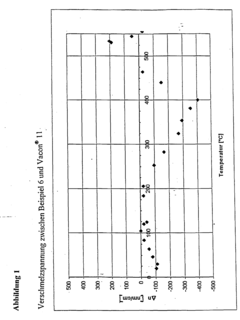
- A borosilicate glass composition with a low SiO2 content (71-73% by weight), high Al2O3 content (5.5-9% by weight), moderate B2O3 content (7-10% by weight), and controlled Li2O and ZrO2 content, which balances chemical resistance, thermal expansion, and processing temperature, ensuring a thermal expansion coefficient between 5.2 and 5.7 x 10^-6/K, thereby preventing tensile stresses and promoting compressive stresses for a hermetic seal.
Borosilicate glass compositions and uses thereof
PatentWO2004050575A1
Innovation
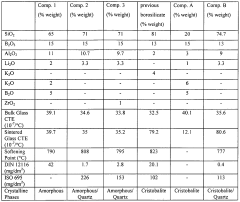
- A borosilicate glass composition with silicon dioxide, boric oxide, aluminum oxide, and at least one alkali oxide, which resists devitrification without the addition of inhibitor oxides, maintaining a suitable coefficient of thermal expansion and mechanical strength.
Environmental Impact and Sustainability Considerations
The environmental impact and sustainability considerations of borosilicate glass performance under hostile environments are crucial aspects that warrant thorough examination. Borosilicate glass, known for its exceptional thermal and chemical resistance, plays a significant role in various industries, including nuclear waste management, chemical processing, and high-temperature applications. However, its production and use have both positive and negative environmental implications.
From a sustainability perspective, borosilicate glass offers several advantages. Its durability and resistance to corrosion contribute to extended product lifespans, reducing the need for frequent replacements and minimizing waste generation. This longevity is particularly valuable in applications involving hazardous materials containment, where material failure could lead to severe environmental consequences. Additionally, borosilicate glass is fully recyclable, allowing for the conservation of raw materials and energy in the production process.
Despite these benefits, the manufacturing of borosilicate glass presents environmental challenges. The production process requires high temperatures, typically around 1,500°C, resulting in substantial energy consumption and associated greenhouse gas emissions. The extraction and processing of raw materials, such as silica sand and boron compounds, can also have ecological impacts, including habitat disruption and water pollution if not managed responsibly.
In hostile environments, the performance of borosilicate glass can have direct environmental implications. For instance, in nuclear waste storage applications, the glass's ability to withstand radiation and prevent leaching of radioactive materials is critical for long-term environmental protection. Any degradation or failure of the glass matrix could lead to the release of hazardous substances into the environment, potentially causing severe ecological damage.
To address these environmental concerns, ongoing research focuses on improving the sustainability of borosilicate glass production and enhancing its performance in hostile environments. Efforts include developing more energy-efficient manufacturing processes, exploring alternative raw materials with lower environmental footprints, and optimizing glass compositions for specific applications to maximize durability and minimize potential environmental risks.
Furthermore, life cycle assessments are increasingly being conducted to evaluate the overall environmental impact of borosilicate glass products, from raw material extraction to end-of-life disposal or recycling. These assessments help identify areas for improvement and guide the development of more sustainable practices throughout the product lifecycle.
As environmental regulations become more stringent, the borosilicate glass industry is adapting by implementing cleaner production technologies and exploring innovative recycling methods. These efforts aim to reduce the environmental footprint of borosilicate glass while maintaining its exceptional performance characteristics in hostile environments, ensuring its continued role in critical applications while aligning with global sustainability goals.
From a sustainability perspective, borosilicate glass offers several advantages. Its durability and resistance to corrosion contribute to extended product lifespans, reducing the need for frequent replacements and minimizing waste generation. This longevity is particularly valuable in applications involving hazardous materials containment, where material failure could lead to severe environmental consequences. Additionally, borosilicate glass is fully recyclable, allowing for the conservation of raw materials and energy in the production process.
Despite these benefits, the manufacturing of borosilicate glass presents environmental challenges. The production process requires high temperatures, typically around 1,500°C, resulting in substantial energy consumption and associated greenhouse gas emissions. The extraction and processing of raw materials, such as silica sand and boron compounds, can also have ecological impacts, including habitat disruption and water pollution if not managed responsibly.
In hostile environments, the performance of borosilicate glass can have direct environmental implications. For instance, in nuclear waste storage applications, the glass's ability to withstand radiation and prevent leaching of radioactive materials is critical for long-term environmental protection. Any degradation or failure of the glass matrix could lead to the release of hazardous substances into the environment, potentially causing severe ecological damage.
To address these environmental concerns, ongoing research focuses on improving the sustainability of borosilicate glass production and enhancing its performance in hostile environments. Efforts include developing more energy-efficient manufacturing processes, exploring alternative raw materials with lower environmental footprints, and optimizing glass compositions for specific applications to maximize durability and minimize potential environmental risks.
Furthermore, life cycle assessments are increasingly being conducted to evaluate the overall environmental impact of borosilicate glass products, from raw material extraction to end-of-life disposal or recycling. These assessments help identify areas for improvement and guide the development of more sustainable practices throughout the product lifecycle.
As environmental regulations become more stringent, the borosilicate glass industry is adapting by implementing cleaner production technologies and exploring innovative recycling methods. These efforts aim to reduce the environmental footprint of borosilicate glass while maintaining its exceptional performance characteristics in hostile environments, ensuring its continued role in critical applications while aligning with global sustainability goals.
Safety Standards and Regulatory Compliance
The performance of borosilicate glass in hostile environments is subject to stringent safety standards and regulatory compliance requirements. These standards are designed to ensure the material's reliability and safety in various applications, particularly in industries where exposure to extreme conditions is common. Regulatory bodies such as the International Organization for Standardization (ISO) and the American Society for Testing and Materials (ASTM) have established comprehensive guidelines for testing and certifying borosilicate glass products.
One of the primary safety standards for borosilicate glass is ASTM C1036, which outlines the specifications for flat glass. This standard covers the quality requirements, sampling procedures, and test methods for evaluating the physical and optical properties of borosilicate glass. Additionally, ISO 3585 provides international standards for borosilicate glass 3.3 properties, including its chemical composition, physical characteristics, and thermal endurance.
In hostile environments, such as those found in chemical processing plants or nuclear facilities, borosilicate glass must comply with more specialized regulations. For instance, the Nuclear Regulatory Commission (NRC) in the United States has specific guidelines for materials used in nuclear applications, including borosilicate glass used for waste vitrification. These regulations address radiation resistance, chemical durability, and long-term stability under extreme conditions.
The European Union's REACH (Registration, Evaluation, Authorization, and Restriction of Chemicals) regulation also impacts the use of borosilicate glass in certain applications. Manufacturers must ensure that their products do not contain restricted substances and comply with the registration requirements for chemical substances used in production.
For applications in the pharmaceutical and biotechnology industries, borosilicate glass must meet the standards set by the United States Pharmacopeia (USP) and the European Pharmacopoeia (Ph. Eur.). These standards focus on the chemical resistance, durability, and cleanliness of glass containers used for drug storage and delivery.
Compliance with these safety standards and regulations often requires rigorous testing protocols. For example, hydrolytic resistance tests are conducted to assess the glass's chemical durability, while thermal shock resistance tests evaluate its ability to withstand sudden temperature changes. Manufacturers must also provide detailed documentation of their production processes, quality control measures, and test results to demonstrate compliance.
As the applications for borosilicate glass in hostile environments continue to expand, regulatory bodies are continuously updating their standards to address new challenges and technological advancements. This ongoing evolution of safety standards ensures that borosilicate glass remains a reliable and safe material for use in the most demanding industrial and scientific applications.
One of the primary safety standards for borosilicate glass is ASTM C1036, which outlines the specifications for flat glass. This standard covers the quality requirements, sampling procedures, and test methods for evaluating the physical and optical properties of borosilicate glass. Additionally, ISO 3585 provides international standards for borosilicate glass 3.3 properties, including its chemical composition, physical characteristics, and thermal endurance.
In hostile environments, such as those found in chemical processing plants or nuclear facilities, borosilicate glass must comply with more specialized regulations. For instance, the Nuclear Regulatory Commission (NRC) in the United States has specific guidelines for materials used in nuclear applications, including borosilicate glass used for waste vitrification. These regulations address radiation resistance, chemical durability, and long-term stability under extreme conditions.
The European Union's REACH (Registration, Evaluation, Authorization, and Restriction of Chemicals) regulation also impacts the use of borosilicate glass in certain applications. Manufacturers must ensure that their products do not contain restricted substances and comply with the registration requirements for chemical substances used in production.
For applications in the pharmaceutical and biotechnology industries, borosilicate glass must meet the standards set by the United States Pharmacopeia (USP) and the European Pharmacopoeia (Ph. Eur.). These standards focus on the chemical resistance, durability, and cleanliness of glass containers used for drug storage and delivery.
Compliance with these safety standards and regulations often requires rigorous testing protocols. For example, hydrolytic resistance tests are conducted to assess the glass's chemical durability, while thermal shock resistance tests evaluate its ability to withstand sudden temperature changes. Manufacturers must also provide detailed documentation of their production processes, quality control measures, and test results to demonstrate compliance.
As the applications for borosilicate glass in hostile environments continue to expand, regulatory bodies are continuously updating their standards to address new challenges and technological advancements. This ongoing evolution of safety standards ensures that borosilicate glass remains a reliable and safe material for use in the most demanding industrial and scientific applications.
Unlock deeper insights with Patsnap Eureka Quick Research — get a full tech report to explore trends and direct your research. Try now!
Generate Your Research Report Instantly with AI Agent
Supercharge your innovation with Patsnap Eureka AI Agent Platform!