

Carbon footprint reduction via lepidolite mining technologies
AUG 19, 20259 MIN READ
Generate Your Research Report Instantly with AI Agent
PatSnap Eureka helps you evaluate technical feasibility & market potential.
Lepidolite Mining Carbon Reduction Goals
Lepidolite mining, a crucial process in lithium extraction, has garnered significant attention due to its potential to contribute to carbon footprint reduction in the broader context of sustainable energy solutions. The primary goal in this sector is to develop and implement technologies that minimize the environmental impact of mining operations while maximizing lithium yield. This objective aligns with global efforts to transition towards cleaner energy sources and reduce greenhouse gas emissions.
One of the key targets in lepidolite mining carbon reduction is to optimize energy consumption throughout the extraction and processing stages. This involves the integration of renewable energy sources, such as solar and wind power, into mining operations to decrease reliance on fossil fuels. Additionally, there is a strong focus on improving the efficiency of mining equipment and processes to reduce overall energy requirements.
Water management is another critical aspect of carbon reduction goals in lepidolite mining. The industry aims to develop closed-loop water systems and advanced water treatment technologies to minimize freshwater consumption and reduce the carbon footprint associated with water pumping and treatment. This approach not only conserves water resources but also reduces the energy required for water-related processes.
Waste reduction and management form an integral part of the carbon reduction strategy in lepidolite mining. The sector is working towards developing innovative methods for repurposing and recycling mining waste, thereby minimizing the need for landfills and reducing methane emissions associated with waste decomposition. Furthermore, there is a growing emphasis on implementing more efficient ore sorting and processing techniques to reduce the volume of waste generated.
Transportation and logistics optimization is another key goal in reducing the carbon footprint of lepidolite mining. This includes the adoption of electric vehicles for on-site transportation, the implementation of more efficient ore transportation systems, and the exploration of alternative, low-carbon transportation methods for product distribution.
Lastly, the industry is setting ambitious targets for overall carbon neutrality in lepidolite mining operations. This comprehensive approach involves a combination of emission reduction strategies, carbon offsetting initiatives, and the potential implementation of carbon capture and storage technologies. By setting clear, measurable goals for carbon reduction, the lepidolite mining sector aims to contribute significantly to global climate change mitigation efforts while meeting the growing demand for lithium in clean energy technologies.
One of the key targets in lepidolite mining carbon reduction is to optimize energy consumption throughout the extraction and processing stages. This involves the integration of renewable energy sources, such as solar and wind power, into mining operations to decrease reliance on fossil fuels. Additionally, there is a strong focus on improving the efficiency of mining equipment and processes to reduce overall energy requirements.
Water management is another critical aspect of carbon reduction goals in lepidolite mining. The industry aims to develop closed-loop water systems and advanced water treatment technologies to minimize freshwater consumption and reduce the carbon footprint associated with water pumping and treatment. This approach not only conserves water resources but also reduces the energy required for water-related processes.
Waste reduction and management form an integral part of the carbon reduction strategy in lepidolite mining. The sector is working towards developing innovative methods for repurposing and recycling mining waste, thereby minimizing the need for landfills and reducing methane emissions associated with waste decomposition. Furthermore, there is a growing emphasis on implementing more efficient ore sorting and processing techniques to reduce the volume of waste generated.
Transportation and logistics optimization is another key goal in reducing the carbon footprint of lepidolite mining. This includes the adoption of electric vehicles for on-site transportation, the implementation of more efficient ore transportation systems, and the exploration of alternative, low-carbon transportation methods for product distribution.
Lastly, the industry is setting ambitious targets for overall carbon neutrality in lepidolite mining operations. This comprehensive approach involves a combination of emission reduction strategies, carbon offsetting initiatives, and the potential implementation of carbon capture and storage technologies. By setting clear, measurable goals for carbon reduction, the lepidolite mining sector aims to contribute significantly to global climate change mitigation efforts while meeting the growing demand for lithium in clean energy technologies.
Market Demand for Green Lithium Production
The global demand for lithium has been steadily increasing, driven by the rapid growth of the electric vehicle (EV) market and the expanding energy storage sector. This surge in demand has led to a heightened focus on sustainable lithium production methods, particularly those that can reduce carbon footprints. Green lithium production from lepidolite mining has emerged as a promising solution to meet this market need.
The EV industry, a primary driver of lithium demand, is experiencing unprecedented growth. Major automotive manufacturers are committing to electrifying their fleets, with some pledging to phase out internal combustion engines entirely within the next decade. This transition is creating a substantial and long-term demand for lithium-ion batteries, which in turn fuels the need for environmentally responsible lithium production.
Energy storage systems for renewable energy sources such as wind and solar power are another significant market driver for green lithium. As countries worldwide strive to meet their carbon reduction targets, the integration of these intermittent energy sources into power grids necessitates advanced energy storage solutions, further boosting the demand for sustainably produced lithium.
The market is also influenced by increasing consumer awareness and preference for environmentally friendly products. End-users are becoming more conscious of the environmental impact of their purchases, including the carbon footprint associated with the production of materials used in their devices and vehicles. This shift in consumer behavior is pressuring manufacturers to source materials from suppliers with demonstrably lower environmental impacts.
Regulatory pressures are playing a crucial role in shaping the market demand for green lithium production. Governments worldwide are implementing stricter environmental regulations and incentives to promote sustainable mining practices. These policies are creating a favorable market environment for lepidolite mining technologies that can offer reduced carbon emissions compared to traditional lithium extraction methods.
The financial sector is also contributing to the demand for green lithium, with investors increasingly considering Environmental, Social, and Governance (ESG) factors in their decision-making processes. Companies that can demonstrate sustainable production methods are more likely to attract investment, further driving the adoption of low-carbon mining technologies.
As the global lithium supply chain faces scrutiny for its environmental impact, there is a growing market opportunity for technologies that can address these concerns. Lepidolite mining, when coupled with innovative carbon reduction technologies, has the potential to meet this demand by offering a more sustainable alternative to conventional lithium production methods.
The EV industry, a primary driver of lithium demand, is experiencing unprecedented growth. Major automotive manufacturers are committing to electrifying their fleets, with some pledging to phase out internal combustion engines entirely within the next decade. This transition is creating a substantial and long-term demand for lithium-ion batteries, which in turn fuels the need for environmentally responsible lithium production.
Energy storage systems for renewable energy sources such as wind and solar power are another significant market driver for green lithium. As countries worldwide strive to meet their carbon reduction targets, the integration of these intermittent energy sources into power grids necessitates advanced energy storage solutions, further boosting the demand for sustainably produced lithium.
The market is also influenced by increasing consumer awareness and preference for environmentally friendly products. End-users are becoming more conscious of the environmental impact of their purchases, including the carbon footprint associated with the production of materials used in their devices and vehicles. This shift in consumer behavior is pressuring manufacturers to source materials from suppliers with demonstrably lower environmental impacts.
Regulatory pressures are playing a crucial role in shaping the market demand for green lithium production. Governments worldwide are implementing stricter environmental regulations and incentives to promote sustainable mining practices. These policies are creating a favorable market environment for lepidolite mining technologies that can offer reduced carbon emissions compared to traditional lithium extraction methods.
The financial sector is also contributing to the demand for green lithium, with investors increasingly considering Environmental, Social, and Governance (ESG) factors in their decision-making processes. Companies that can demonstrate sustainable production methods are more likely to attract investment, further driving the adoption of low-carbon mining technologies.
As the global lithium supply chain faces scrutiny for its environmental impact, there is a growing market opportunity for technologies that can address these concerns. Lepidolite mining, when coupled with innovative carbon reduction technologies, has the potential to meet this demand by offering a more sustainable alternative to conventional lithium production methods.
Current Challenges in Eco-Friendly Lepidolite Extraction
The extraction of lepidolite, a lithium-rich mica mineral, faces significant challenges in achieving eco-friendly practices. Traditional mining methods often result in substantial environmental impacts, including high carbon emissions, water pollution, and land degradation. As the demand for lithium continues to surge due to the growing electric vehicle and energy storage markets, the pressure to develop sustainable extraction techniques has intensified.
One of the primary challenges in eco-friendly lepidolite extraction is the energy-intensive nature of the mining and processing operations. Conventional methods rely heavily on fossil fuels for powering machinery and processing equipment, contributing to a large carbon footprint. The transition to renewable energy sources for mining operations presents logistical and economic hurdles, particularly in remote locations where lepidolite deposits are often found.
Water management poses another significant challenge. Lepidolite extraction typically requires large volumes of water for mineral separation and processing. In many arid regions where lepidolite is mined, water scarcity is a critical issue. Developing closed-loop water systems and improving water recycling technologies are essential but complex tasks that require substantial investment and innovation.
The extraction process itself generates considerable waste material, including tailings and overburden. Managing these waste products in an environmentally responsible manner is challenging, as they can contain potentially harmful substances and pose risks to local ecosystems. Developing effective methods for waste reduction, reuse, and safe disposal is crucial for minimizing the environmental impact of lepidolite mining.
Chemical processing of lepidolite to extract lithium often involves the use of strong acids and other reagents, which can be environmentally hazardous if not properly managed. Finding greener alternatives to these chemicals or developing more efficient extraction methods that reduce chemical usage is a significant technical challenge facing the industry.
Land rehabilitation after mining activities is another area of concern. Restoring mined areas to their original state or converting them to productive use requires careful planning, significant resources, and long-term commitment. The challenge lies in developing cost-effective and ecologically sound rehabilitation techniques that can be successfully implemented across diverse geographical and climatic conditions.
Biodiversity conservation in mining areas presents additional challenges. Lepidolite deposits often occur in ecologically sensitive regions, and mining activities can disrupt local flora and fauna. Balancing the need for mineral extraction with biodiversity protection requires innovative approaches to mine planning, operation, and closure.
As the industry strives to address these challenges, there is a growing focus on developing new technologies and practices that can significantly reduce the environmental impact of lepidolite mining. This includes exploring alternative extraction methods, such as in-situ leaching, which could potentially minimize surface disturbance and reduce water usage. However, these novel approaches are still in early stages of development and face their own set of technical and environmental challenges.
One of the primary challenges in eco-friendly lepidolite extraction is the energy-intensive nature of the mining and processing operations. Conventional methods rely heavily on fossil fuels for powering machinery and processing equipment, contributing to a large carbon footprint. The transition to renewable energy sources for mining operations presents logistical and economic hurdles, particularly in remote locations where lepidolite deposits are often found.
Water management poses another significant challenge. Lepidolite extraction typically requires large volumes of water for mineral separation and processing. In many arid regions where lepidolite is mined, water scarcity is a critical issue. Developing closed-loop water systems and improving water recycling technologies are essential but complex tasks that require substantial investment and innovation.
The extraction process itself generates considerable waste material, including tailings and overburden. Managing these waste products in an environmentally responsible manner is challenging, as they can contain potentially harmful substances and pose risks to local ecosystems. Developing effective methods for waste reduction, reuse, and safe disposal is crucial for minimizing the environmental impact of lepidolite mining.
Chemical processing of lepidolite to extract lithium often involves the use of strong acids and other reagents, which can be environmentally hazardous if not properly managed. Finding greener alternatives to these chemicals or developing more efficient extraction methods that reduce chemical usage is a significant technical challenge facing the industry.
Land rehabilitation after mining activities is another area of concern. Restoring mined areas to their original state or converting them to productive use requires careful planning, significant resources, and long-term commitment. The challenge lies in developing cost-effective and ecologically sound rehabilitation techniques that can be successfully implemented across diverse geographical and climatic conditions.
Biodiversity conservation in mining areas presents additional challenges. Lepidolite deposits often occur in ecologically sensitive regions, and mining activities can disrupt local flora and fauna. Balancing the need for mineral extraction with biodiversity protection requires innovative approaches to mine planning, operation, and closure.
As the industry strives to address these challenges, there is a growing focus on developing new technologies and practices that can significantly reduce the environmental impact of lepidolite mining. This includes exploring alternative extraction methods, such as in-situ leaching, which could potentially minimize surface disturbance and reduce water usage. However, these novel approaches are still in early stages of development and face their own set of technical and environmental challenges.
Existing Low-Carbon Lepidolite Mining Solutions
01 Carbon footprint reduction in lepidolite mining
Innovative technologies are being developed to reduce the carbon footprint of lepidolite mining operations. These include optimizing energy consumption, implementing renewable energy sources, and improving mining processes to minimize greenhouse gas emissions. Such advancements aim to make lepidolite extraction more environmentally sustainable.- Carbon footprint reduction in lepidolite mining: Innovative technologies are being developed to reduce the carbon footprint of lepidolite mining operations. These include optimizing energy consumption, implementing renewable energy sources, and improving mining processes to minimize greenhouse gas emissions. Such advancements aim to make lepidolite extraction more environmentally sustainable.
- Sustainable lepidolite extraction methods: New extraction methods are being explored to enhance the sustainability of lepidolite mining. These techniques focus on minimizing environmental impact, reducing water usage, and improving resource efficiency. Advanced sorting and separation technologies are also being employed to maximize ore recovery while minimizing waste.
- Life cycle assessment of lepidolite mining: Comprehensive life cycle assessments are being conducted to evaluate the environmental impact of lepidolite mining from extraction to end-use. These assessments consider factors such as energy consumption, water usage, and emissions throughout the entire production chain, helping to identify areas for improvement in reducing the overall carbon footprint.
- Carbon capture and utilization in lepidolite mining: Innovative carbon capture and utilization technologies are being integrated into lepidolite mining operations. These systems aim to capture CO2 emissions from mining activities and either store them safely or convert them into useful products, thereby reducing the net carbon footprint of the mining process.
- Smart mining technologies for lepidolite extraction: Advanced smart mining technologies are being developed and implemented in lepidolite extraction processes. These include AI-driven optimization, IoT sensors for real-time monitoring, and automated systems that enhance efficiency and reduce energy consumption. By minimizing resource waste and improving operational efficiency, these technologies contribute to reducing the overall carbon footprint of lepidolite mining.
02 Sustainable lepidolite extraction methods
New extraction methods are being explored to enhance the sustainability of lepidolite mining. These techniques focus on minimizing environmental impact, reducing water usage, and improving resource efficiency. Advanced sorting and separation technologies are also being employed to maximize yield while minimizing waste.Expand Specific Solutions03 Life cycle assessment of lepidolite mining
Comprehensive life cycle assessments are being conducted to evaluate the environmental impact of lepidolite mining from extraction to end-use. These assessments help identify areas for improvement in the mining process, enabling the development of strategies to reduce overall carbon emissions and environmental footprint throughout the supply chain.Expand Specific Solutions04 Carbon capture and storage in lepidolite mining
Integration of carbon capture and storage technologies in lepidolite mining operations is being explored to mitigate greenhouse gas emissions. These technologies aim to capture CO2 emissions from mining activities and either store them underground or utilize them in other industrial processes, thereby reducing the overall carbon footprint of lepidolite extraction.Expand Specific Solutions05 Eco-friendly processing of lepidolite ore
Development of environmentally friendly processing techniques for lepidolite ore is underway. These methods focus on reducing chemical usage, minimizing waste generation, and improving energy efficiency in the refining process. Advanced technologies such as bioleaching and green solvents are being investigated to make lepidolite processing more sustainable and less carbon-intensive.Expand Specific Solutions
Key Players in Green Lepidolite Mining Industry
The carbon footprint reduction via lepidolite mining technologies market is in its early growth stage, with increasing interest due to the global push for sustainable practices. The market size is expanding, driven by the rising demand for lithium in electric vehicle batteries and energy storage systems. Technologically, the field is evolving rapidly, with companies like Jiangxi Nanshi Lithium New Material Co., Ltd., Ganfeng Lithium Group Co., Ltd., and Jiangxi Yongxing Special Steel New Energy Technology Co., Ltd. leading innovation in lepidolite processing. These firms are developing more efficient and environmentally friendly extraction methods, although the technology is not yet fully mature. Academic institutions such as Central South University and the University of Southern California are contributing to research advancements, indicating a collaborative effort between industry and academia to improve the sustainability of lepidolite mining.
Jiangxi Nanshi Lithium New Material Co., Ltd.
Technical Solution: Jiangxi Nanshi has developed a low-carbon lepidolite processing technology that combines mechanical activation with hydrometallurgical extraction. This process involves fine grinding of lepidolite ore followed by a series of leaching and purification steps at lower temperatures than traditional methods[5]. The company claims that their technology reduces energy consumption by 30% and CO2 emissions by 40% compared to conventional roasting processes[6]. Jiangxi Nanshi has also implemented an advanced waste heat recovery system that captures and reuses thermal energy from various stages of the production process, further improving energy efficiency[7]. Additionally, they have developed a proprietary method for recycling and reusing process water, which has led to a 70% reduction in freshwater consumption[8].
Strengths: Lower energy consumption and CO2 emissions, improved water efficiency, and potential for cost savings in the long term. Weaknesses: Possible limitations in processing high-grade lepidolite ores, and the need for specialized equipment and expertise.
Central South University
Technical Solution: Researchers at Central South University have developed a novel microwave-assisted leaching process for lepidolite, which significantly reduces carbon emissions. This method uses microwave energy to selectively heat the lepidolite particles, enhancing the leaching kinetics and reducing the overall energy requirements[9]. The process operates at lower temperatures (around 100°C) compared to traditional roasting methods (800-900°C), resulting in a 60% reduction in energy consumption[10]. Additionally, the researchers have integrated a CO2 capture and utilization system that converts captured CO2 into valuable by-products, such as sodium bicarbonate, further reducing the carbon footprint of the mining process[11]. The university has also developed a machine learning algorithm to optimize the microwave-assisted leaching parameters, improving lithium recovery rates and minimizing reagent consumption[12].
Strengths: Significant reduction in energy consumption and CO2 emissions, potential for valuable by-product generation, and improved process efficiency through AI optimization. Weaknesses: Limited large-scale implementation data and potential challenges in scaling up the technology for industrial use.
Innovative Carbon Reduction Techniques in Mining
Carbon dioxide sequestration using alkaline earth metal-bearing minerals
PatentActiveUS20050180910A1
Innovation
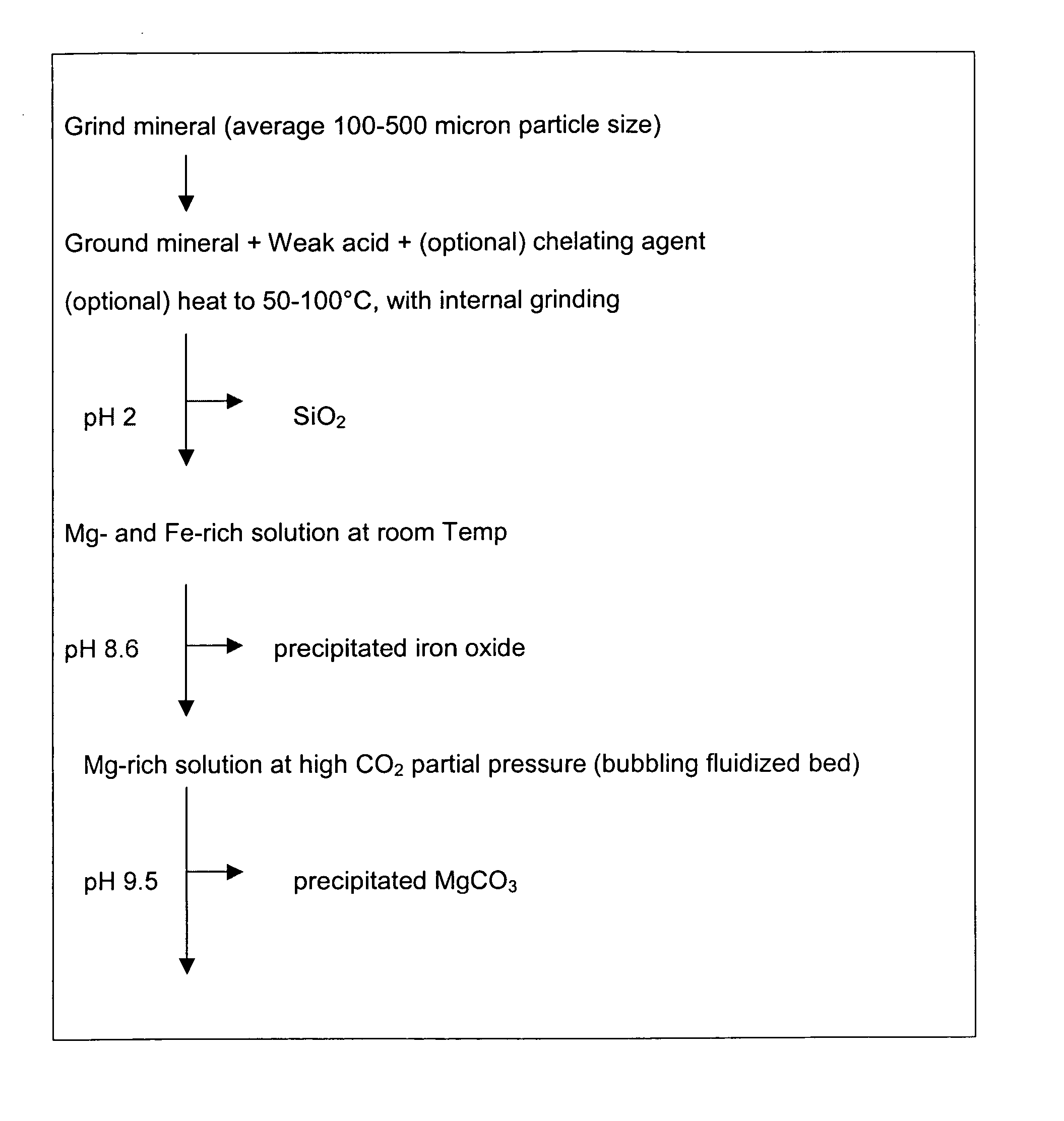
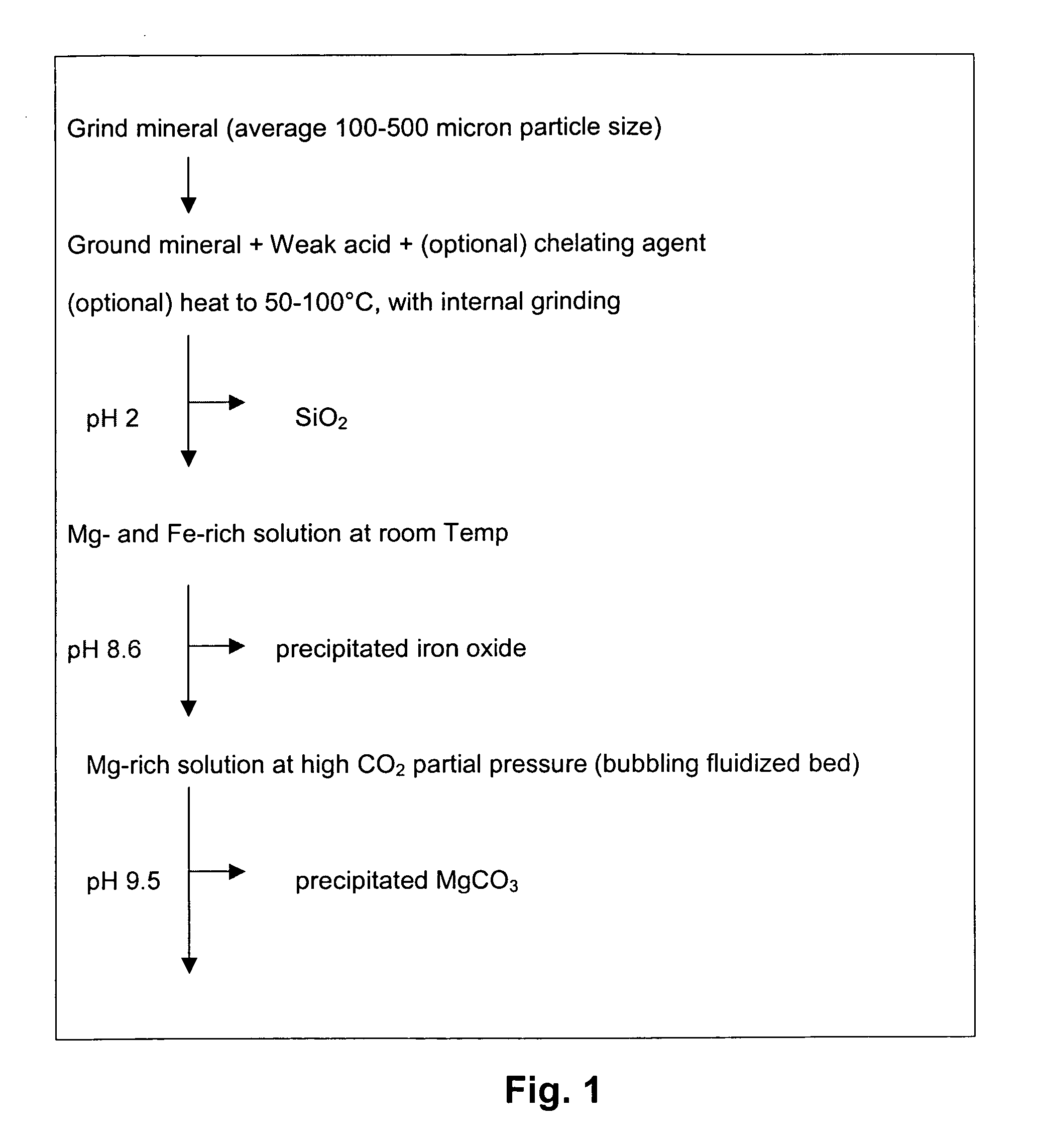
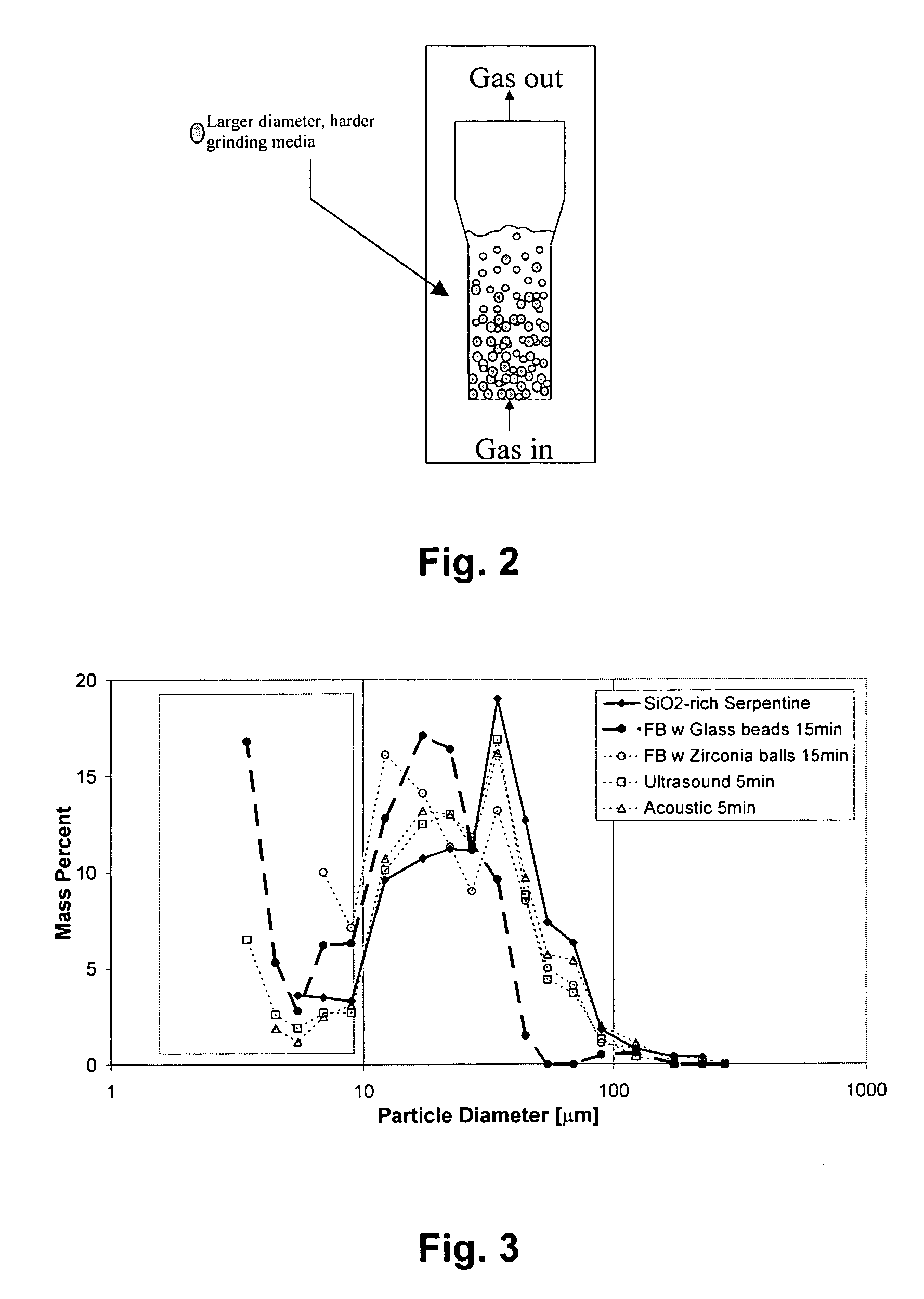
- A method that combines chemical and physical activation of magnesium-containing minerals with a weak acid and chelating agents to enhance mineral dissolution, followed by pH adjustment to precipitate magnesium carbonate, allowing for efficient sequestration of CO2 and sulfur oxides in a single operation, using a pH swing process and internal grinding media to reduce energy consumption.

Carbonation of metal silicates for long-term CO2 sequestration
PatentInactiveUS20040213705A1
Innovation
- A process involving the reaction of metal silicates with caustic alkali-metal hydroxides to produce hydroxides, followed by reaction with CO2 to form carbonates, which can be conducted at lower pressures and without heat pretreatment, using abundant silicate minerals like olivine and serpentine, and calcium-rich silicates like wollastonite, to efficiently convert CO2 into stable carbonate compounds.


Environmental Regulations in Lithium Mining
Environmental regulations play a crucial role in shaping the landscape of lithium mining, particularly in the context of lepidolite extraction. As the global demand for lithium continues to surge, driven by the growing electric vehicle market and renewable energy storage systems, regulatory frameworks have evolved to address the environmental impacts associated with mining activities.
In many jurisdictions, environmental impact assessments (EIAs) are mandatory before the commencement of any mining operations. These assessments evaluate the potential effects of lepidolite mining on local ecosystems, water resources, air quality, and biodiversity. Regulatory bodies often require mining companies to implement comprehensive environmental management plans that outline strategies for minimizing ecological disruption and restoring affected areas post-mining.
Water management is a critical aspect of environmental regulations in lithium mining. Lepidolite extraction processes typically involve significant water usage, which can strain local water resources. Regulatory frameworks often mandate strict water conservation measures, including recycling and treatment of process water, as well as monitoring of groundwater quality to prevent contamination.
Air quality regulations are another key consideration in lepidolite mining. Dust emissions from mining activities can have detrimental effects on surrounding communities and ecosystems. Environmental regulations typically require the implementation of dust suppression techniques, such as water spraying and covered conveyor systems, to mitigate these impacts.
Waste management is also heavily regulated in the lithium mining sector. Tailings and other mining waste must be properly disposed of to prevent soil and water contamination. Many jurisdictions require mining companies to develop comprehensive waste management plans that include measures for safe storage, treatment, and disposal of mining residues.
Biodiversity conservation is increasingly becoming a focus of environmental regulations in lithium mining. Mining companies are often required to conduct thorough biodiversity surveys and implement conservation strategies to protect endangered species and sensitive habitats in the vicinity of mining operations.
As the global focus on carbon footprint reduction intensifies, environmental regulations are evolving to address greenhouse gas emissions associated with mining activities. This includes requirements for energy-efficient equipment, the use of renewable energy sources in mining operations, and the implementation of carbon offset programs.
Compliance with these environmental regulations is typically monitored through regular audits and inspections by regulatory authorities. Non-compliance can result in significant penalties, including fines and potential suspension of mining licenses. As such, mining companies are increasingly investing in advanced technologies and sustainable practices to ensure adherence to environmental standards while maintaining operational efficiency.
In many jurisdictions, environmental impact assessments (EIAs) are mandatory before the commencement of any mining operations. These assessments evaluate the potential effects of lepidolite mining on local ecosystems, water resources, air quality, and biodiversity. Regulatory bodies often require mining companies to implement comprehensive environmental management plans that outline strategies for minimizing ecological disruption and restoring affected areas post-mining.
Water management is a critical aspect of environmental regulations in lithium mining. Lepidolite extraction processes typically involve significant water usage, which can strain local water resources. Regulatory frameworks often mandate strict water conservation measures, including recycling and treatment of process water, as well as monitoring of groundwater quality to prevent contamination.
Air quality regulations are another key consideration in lepidolite mining. Dust emissions from mining activities can have detrimental effects on surrounding communities and ecosystems. Environmental regulations typically require the implementation of dust suppression techniques, such as water spraying and covered conveyor systems, to mitigate these impacts.
Waste management is also heavily regulated in the lithium mining sector. Tailings and other mining waste must be properly disposed of to prevent soil and water contamination. Many jurisdictions require mining companies to develop comprehensive waste management plans that include measures for safe storage, treatment, and disposal of mining residues.
Biodiversity conservation is increasingly becoming a focus of environmental regulations in lithium mining. Mining companies are often required to conduct thorough biodiversity surveys and implement conservation strategies to protect endangered species and sensitive habitats in the vicinity of mining operations.
As the global focus on carbon footprint reduction intensifies, environmental regulations are evolving to address greenhouse gas emissions associated with mining activities. This includes requirements for energy-efficient equipment, the use of renewable energy sources in mining operations, and the implementation of carbon offset programs.
Compliance with these environmental regulations is typically monitored through regular audits and inspections by regulatory authorities. Non-compliance can result in significant penalties, including fines and potential suspension of mining licenses. As such, mining companies are increasingly investing in advanced technologies and sustainable practices to ensure adherence to environmental standards while maintaining operational efficiency.
Life Cycle Assessment of Lepidolite Mining Processes
Life Cycle Assessment (LCA) is a crucial tool for evaluating the environmental impacts of lepidolite mining processes, particularly in the context of carbon footprint reduction. This comprehensive approach examines the entire lifecycle of lepidolite extraction, from exploration and mining to processing and eventual site rehabilitation.
The assessment begins with the exploration phase, where geological surveys and prospecting activities are conducted. These initial steps, while relatively low in environmental impact, set the stage for subsequent mining operations. The carbon footprint at this stage primarily stems from transportation and equipment use.
Mining operations form the core of the LCA, encompassing extraction methods such as open-pit mining or underground mining. Each method presents distinct environmental challenges and carbon emission profiles. Open-pit mining, while often more economically viable, typically results in higher carbon emissions due to extensive earth moving and vegetation clearing. Underground mining, though potentially less disruptive to surface ecosystems, may require more energy-intensive equipment and ventilation systems.
The processing stage of lepidolite involves crushing, grinding, and separation techniques to extract lithium and other valuable minerals. This phase is often the most energy-intensive, contributing significantly to the overall carbon footprint. Innovations in processing technology, such as more efficient flotation methods or the use of renewable energy sources, can substantially reduce emissions at this stage.
Transportation of raw materials and processed lepidolite also factors into the LCA. The distance between mining sites and processing facilities, as well as the modes of transport used, directly impact the carbon footprint. Optimizing logistics and transitioning to low-emission vehicles can mitigate these impacts.
Water usage and management throughout the mining process are critical considerations in the LCA. Water-intensive operations not only affect local ecosystems but also contribute to the overall environmental impact through energy use in pumping and treatment processes.
The end-of-life phase, including mine closure and land rehabilitation, is an often overlooked but essential component of the LCA. Proper site restoration can help offset some of the carbon emissions through reforestation or other carbon sequestration methods.
By conducting a thorough LCA, mining companies can identify key areas for carbon footprint reduction and implement targeted strategies to minimize environmental impact. This holistic approach not only aids in regulatory compliance but also drives innovation in sustainable mining practices, ultimately contributing to the broader goal of carbon footprint reduction in the lepidolite mining industry.
The assessment begins with the exploration phase, where geological surveys and prospecting activities are conducted. These initial steps, while relatively low in environmental impact, set the stage for subsequent mining operations. The carbon footprint at this stage primarily stems from transportation and equipment use.
Mining operations form the core of the LCA, encompassing extraction methods such as open-pit mining or underground mining. Each method presents distinct environmental challenges and carbon emission profiles. Open-pit mining, while often more economically viable, typically results in higher carbon emissions due to extensive earth moving and vegetation clearing. Underground mining, though potentially less disruptive to surface ecosystems, may require more energy-intensive equipment and ventilation systems.
The processing stage of lepidolite involves crushing, grinding, and separation techniques to extract lithium and other valuable minerals. This phase is often the most energy-intensive, contributing significantly to the overall carbon footprint. Innovations in processing technology, such as more efficient flotation methods or the use of renewable energy sources, can substantially reduce emissions at this stage.
Transportation of raw materials and processed lepidolite also factors into the LCA. The distance between mining sites and processing facilities, as well as the modes of transport used, directly impact the carbon footprint. Optimizing logistics and transitioning to low-emission vehicles can mitigate these impacts.
Water usage and management throughout the mining process are critical considerations in the LCA. Water-intensive operations not only affect local ecosystems but also contribute to the overall environmental impact through energy use in pumping and treatment processes.
The end-of-life phase, including mine closure and land rehabilitation, is an often overlooked but essential component of the LCA. Proper site restoration can help offset some of the carbon emissions through reforestation or other carbon sequestration methods.
By conducting a thorough LCA, mining companies can identify key areas for carbon footprint reduction and implement targeted strategies to minimize environmental impact. This holistic approach not only aids in regulatory compliance but also drives innovation in sustainable mining practices, ultimately contributing to the broader goal of carbon footprint reduction in the lepidolite mining industry.
Unlock deeper insights with PatSnap Eureka Quick Research — get a full tech report to explore trends and direct your research. Try now!
Generate Your Research Report Instantly with AI Agent
Supercharge your innovation with PatSnap Eureka AI Agent Platform!