Comparing Fixed Satellite Different Orbit Types Performance
MAR 18, 20268 MIN READ
Generate Your Research Report Instantly with AI Agent
Patsnap Eureka helps you evaluate technical feasibility & market potential.
Satellite Orbit Technology Background and Objectives
Satellite orbit technology has undergone remarkable evolution since the launch of Sputnik 1 in 1957, fundamentally transforming global communications, navigation, Earth observation, and scientific research. The development trajectory spans from early experimental satellites in Low Earth Orbit to sophisticated constellations operating across multiple orbital regimes, each offering distinct advantages for specific mission requirements.
The classification of satellite orbits primarily encompasses three major categories: Low Earth Orbit (LEO) ranging from 160 to 2,000 kilometers altitude, Medium Earth Orbit (MEO) extending from 2,000 to 35,786 kilometers, and Geostationary Earth Orbit (GEO) positioned at approximately 35,786 kilometers above the equator. Each orbital type presents unique characteristics in terms of coverage area, signal latency, launch costs, and operational complexity.
Historical development reveals a strategic shift from single-satellite missions to large-scale constellation deployments. Early geostationary satellites dominated telecommunications due to their fixed position relative to Earth's surface, enabling continuous coverage with minimal ground infrastructure. However, the emergence of LEO mega-constellations has revolutionized the industry by offering reduced latency and global coverage through coordinated satellite networks.
The primary objective of comparing fixed satellite performance across different orbit types centers on optimizing mission-specific parameters including coverage efficiency, signal quality, operational lifespan, and cost-effectiveness. This analysis becomes increasingly critical as satellite applications expand into emerging sectors such as Internet of Things connectivity, autonomous vehicle navigation, and real-time Earth monitoring systems.
Contemporary technological advancement focuses on addressing fundamental trade-offs between orbital altitude and performance metrics. Lower orbits provide reduced signal propagation delays and require less powerful ground equipment but necessitate larger satellite constellations and more frequent orbital maintenance. Conversely, higher orbits offer extended coverage areas and longer operational periods while introducing increased latency and higher deployment costs.
The strategic importance of orbit selection has intensified with the proliferation of commercial space ventures and the democratization of satellite technology. Modern satellite operators must navigate complex decision matrices involving regulatory constraints, spectrum allocation, orbital debris considerations, and evolving user requirements to determine optimal orbital configurations for their specific applications and business models.
The classification of satellite orbits primarily encompasses three major categories: Low Earth Orbit (LEO) ranging from 160 to 2,000 kilometers altitude, Medium Earth Orbit (MEO) extending from 2,000 to 35,786 kilometers, and Geostationary Earth Orbit (GEO) positioned at approximately 35,786 kilometers above the equator. Each orbital type presents unique characteristics in terms of coverage area, signal latency, launch costs, and operational complexity.
Historical development reveals a strategic shift from single-satellite missions to large-scale constellation deployments. Early geostationary satellites dominated telecommunications due to their fixed position relative to Earth's surface, enabling continuous coverage with minimal ground infrastructure. However, the emergence of LEO mega-constellations has revolutionized the industry by offering reduced latency and global coverage through coordinated satellite networks.
The primary objective of comparing fixed satellite performance across different orbit types centers on optimizing mission-specific parameters including coverage efficiency, signal quality, operational lifespan, and cost-effectiveness. This analysis becomes increasingly critical as satellite applications expand into emerging sectors such as Internet of Things connectivity, autonomous vehicle navigation, and real-time Earth monitoring systems.
Contemporary technological advancement focuses on addressing fundamental trade-offs between orbital altitude and performance metrics. Lower orbits provide reduced signal propagation delays and require less powerful ground equipment but necessitate larger satellite constellations and more frequent orbital maintenance. Conversely, higher orbits offer extended coverage areas and longer operational periods while introducing increased latency and higher deployment costs.
The strategic importance of orbit selection has intensified with the proliferation of commercial space ventures and the democratization of satellite technology. Modern satellite operators must navigate complex decision matrices involving regulatory constraints, spectrum allocation, orbital debris considerations, and evolving user requirements to determine optimal orbital configurations for their specific applications and business models.
Market Demand for Fixed Satellite Services
The global fixed satellite services market demonstrates robust growth driven by increasing demand for reliable, wide-area coverage communications across multiple sectors. Traditional telecommunications applications remain the largest market segment, with service providers leveraging satellite infrastructure to extend terrestrial networks into remote and underserved regions where fiber optic deployment proves economically unfeasible.
Enterprise connectivity represents a rapidly expanding market segment, particularly for multinational corporations requiring consistent communication capabilities across geographically dispersed operations. Industries such as oil and gas, mining, maritime, and aviation rely heavily on satellite services for mission-critical communications, data transmission, and operational coordination in remote locations where terrestrial infrastructure is unavailable or unreliable.
Government and defense applications constitute a significant portion of market demand, encompassing military communications, intelligence gathering, disaster response coordination, and national security operations. These applications typically require high-reliability, secure communication channels with global coverage capabilities, driving demand for specialized satellite services with enhanced security features and guaranteed availability.
The broadcasting and media distribution sector continues to represent substantial market demand, despite competition from terrestrial and internet-based distribution methods. Direct-to-home television services, radio broadcasting, and content distribution to cable headends maintain steady demand for satellite capacity, particularly in regions with limited terrestrial broadcasting infrastructure.
Emerging applications are creating new market opportunities, including Internet of Things connectivity for remote monitoring and control systems, emergency communications for disaster response, and backup connectivity for critical infrastructure. The growing adoption of cloud-based services and remote work arrangements has intensified demand for reliable satellite internet services in rural and remote areas.
Maritime and aviation sectors drive specialized market segments requiring mobile satellite services for passenger connectivity, operational communications, and safety systems. The increasing expectation for continuous connectivity during travel has expanded market demand for high-throughput satellite services capable of supporting bandwidth-intensive applications.
Regional market dynamics vary significantly, with developing nations showing strong growth potential due to limited terrestrial infrastructure, while developed markets focus on high-value applications and next-generation services requiring enhanced performance characteristics.
Enterprise connectivity represents a rapidly expanding market segment, particularly for multinational corporations requiring consistent communication capabilities across geographically dispersed operations. Industries such as oil and gas, mining, maritime, and aviation rely heavily on satellite services for mission-critical communications, data transmission, and operational coordination in remote locations where terrestrial infrastructure is unavailable or unreliable.
Government and defense applications constitute a significant portion of market demand, encompassing military communications, intelligence gathering, disaster response coordination, and national security operations. These applications typically require high-reliability, secure communication channels with global coverage capabilities, driving demand for specialized satellite services with enhanced security features and guaranteed availability.
The broadcasting and media distribution sector continues to represent substantial market demand, despite competition from terrestrial and internet-based distribution methods. Direct-to-home television services, radio broadcasting, and content distribution to cable headends maintain steady demand for satellite capacity, particularly in regions with limited terrestrial broadcasting infrastructure.
Emerging applications are creating new market opportunities, including Internet of Things connectivity for remote monitoring and control systems, emergency communications for disaster response, and backup connectivity for critical infrastructure. The growing adoption of cloud-based services and remote work arrangements has intensified demand for reliable satellite internet services in rural and remote areas.
Maritime and aviation sectors drive specialized market segments requiring mobile satellite services for passenger connectivity, operational communications, and safety systems. The increasing expectation for continuous connectivity during travel has expanded market demand for high-throughput satellite services capable of supporting bandwidth-intensive applications.
Regional market dynamics vary significantly, with developing nations showing strong growth potential due to limited terrestrial infrastructure, while developed markets focus on high-value applications and next-generation services requiring enhanced performance characteristics.
Current Orbital Technology Status and Challenges
The current landscape of orbital satellite technology presents a complex ecosystem where different orbit types serve distinct operational requirements and face unique technological challenges. Low Earth Orbit (LEO) satellites, operating between 160-2,000 kilometers altitude, have emerged as the dominant force in modern satellite constellations due to their low latency characteristics and reduced power requirements. However, LEO systems face significant challenges including atmospheric drag necessitating frequent orbital corrections, limited coverage footprint requiring extensive constellation sizes, and complex handover mechanisms as satellites rapidly traverse the sky.
Medium Earth Orbit (MEO) satellites, positioned between 2,000-35,786 kilometers, represent a compromise solution that balances coverage area with latency performance. Current MEO implementations, particularly in Global Navigation Satellite Systems (GNSS), demonstrate mature technology with proven reliability. The primary challenges for MEO systems include higher radiation exposure compared to LEO, increased signal path loss, and more complex orbital mechanics requiring sophisticated station-keeping algorithms.
Geostationary Earth Orbit (GEO) satellites at 35,786 kilometers altitude continue to dominate traditional broadcasting and telecommunications services due to their fixed position relative to Earth's surface. Modern GEO technology has achieved remarkable advances in power efficiency and payload capacity, with current generation satellites supporting multi-beam coverage and frequency reuse techniques. Nevertheless, GEO systems face inherent limitations including significant propagation delay of approximately 250 milliseconds round-trip, making them unsuitable for real-time applications.
The technological maturity varies significantly across orbit types. LEO technology has experienced rapid advancement driven by commercial space companies, with innovations in miniaturization, mass production techniques, and autonomous operations. MEO systems benefit from decades of GNSS development, resulting in highly reliable and precise positioning capabilities. GEO technology represents the most mature segment with established manufacturing processes and operational procedures.
Current challenges span multiple domains including space debris mitigation, spectrum management, and inter-satellite communication protocols. The proliferation of LEO mega-constellations has intensified concerns about orbital congestion and collision avoidance. Additionally, the integration of different orbit types within unified communication networks presents significant technical challenges in terms of seamless handover, network synchronization, and quality of service maintenance across heterogeneous satellite systems.
Medium Earth Orbit (MEO) satellites, positioned between 2,000-35,786 kilometers, represent a compromise solution that balances coverage area with latency performance. Current MEO implementations, particularly in Global Navigation Satellite Systems (GNSS), demonstrate mature technology with proven reliability. The primary challenges for MEO systems include higher radiation exposure compared to LEO, increased signal path loss, and more complex orbital mechanics requiring sophisticated station-keeping algorithms.
Geostationary Earth Orbit (GEO) satellites at 35,786 kilometers altitude continue to dominate traditional broadcasting and telecommunications services due to their fixed position relative to Earth's surface. Modern GEO technology has achieved remarkable advances in power efficiency and payload capacity, with current generation satellites supporting multi-beam coverage and frequency reuse techniques. Nevertheless, GEO systems face inherent limitations including significant propagation delay of approximately 250 milliseconds round-trip, making them unsuitable for real-time applications.
The technological maturity varies significantly across orbit types. LEO technology has experienced rapid advancement driven by commercial space companies, with innovations in miniaturization, mass production techniques, and autonomous operations. MEO systems benefit from decades of GNSS development, resulting in highly reliable and precise positioning capabilities. GEO technology represents the most mature segment with established manufacturing processes and operational procedures.
Current challenges span multiple domains including space debris mitigation, spectrum management, and inter-satellite communication protocols. The proliferation of LEO mega-constellations has intensified concerns about orbital congestion and collision avoidance. Additionally, the integration of different orbit types within unified communication networks presents significant technical challenges in terms of seamless handover, network synchronization, and quality of service maintenance across heterogeneous satellite systems.
Current Orbit Selection Solutions
01 Geostationary orbit (GEO) satellite systems and performance optimization
Geostationary orbit satellites maintain a fixed position relative to Earth's surface, typically at approximately 35,786 km altitude. This orbit type enables continuous coverage of specific geographic regions and is particularly suitable for broadcasting and communication services. Performance characteristics include constant visibility from ground stations, minimal Doppler shift, and simplified tracking requirements. However, this orbit type experiences higher signal propagation delays and requires more powerful transmitters due to the greater distance from Earth.- Geostationary orbit (GEO) satellite systems and performance optimization: Geostationary orbit satellites maintain a fixed position relative to Earth's surface, typically at approximately 35,786 km altitude. This orbit type enables continuous coverage of specific geographic regions and is particularly suitable for broadcasting and communication services. Performance characteristics include constant visibility from ground stations, minimal Doppler shift, and simplified tracking requirements. However, this orbit type experiences higher signal propagation delays and requires more powerful transmitters due to the greater distance from Earth.
- Low Earth orbit (LEO) satellite constellation performance: Low Earth orbit satellites operate at altitudes typically between 500 to 2,000 km, offering advantages such as reduced signal latency, lower power requirements, and improved signal strength compared to higher orbits. Performance benefits include faster data transmission rates and reduced propagation delays. LEO constellations require multiple satellites to provide continuous global coverage due to their limited field of view and faster orbital periods. The systems must address challenges including frequent handovers between satellites and more complex tracking mechanisms.
- Medium Earth orbit (MEO) satellite systems: Medium Earth orbit satellites operate at altitudes between LEO and GEO, typically around 8,000 to 20,000 km. This orbit type provides a balance between coverage area and signal latency, offering better performance characteristics than GEO for certain applications while requiring fewer satellites than LEO constellations for global coverage. MEO systems demonstrate advantages in navigation and positioning services, with moderate propagation delays and reasonable power requirements. The orbital period allows for predictable satellite visibility patterns.
- Highly elliptical orbit (HEO) satellite configurations: Highly elliptical orbits feature significant eccentricity, allowing satellites to spend extended periods over specific high-latitude regions during apogee while moving quickly through perigee. This orbit type is particularly effective for providing coverage to polar and high-latitude areas that are difficult to serve with geostationary satellites. Performance characteristics include variable signal strength and coverage duration depending on orbital position, with optimized dwell time over target regions. The systems require careful planning for handover procedures as satellites transition between visibility periods.
- Hybrid and multi-orbit satellite network architectures: Advanced satellite systems utilize combinations of different orbit types to optimize overall network performance, leveraging the strengths of each orbital configuration. These hybrid architectures can integrate GEO, MEO, and LEO satellites to provide enhanced coverage, reduced latency, and improved service reliability. Performance optimization involves intelligent routing, dynamic resource allocation, and seamless handover mechanisms between satellites in different orbits. Such systems can adapt to varying traffic demands and provide redundancy for critical communications.
02 Low Earth orbit (LEO) satellite constellation performance
Low Earth orbit satellites operate at altitudes typically between 500 to 2,000 km, offering advantages such as reduced signal latency, lower power requirements, and improved signal strength compared to higher orbits. LEO constellations require multiple satellites to provide continuous global coverage due to their limited field of view and faster orbital periods. Performance benefits include enhanced data throughput, reduced propagation delay, and cost-effective launch options. Challenges include frequent handovers between satellites and the need for sophisticated tracking systems.Expand Specific Solutions03 Medium Earth orbit (MEO) satellite systems
Medium Earth orbit satellites operate at altitudes between LEO and GEO, typically around 8,000 to 20,000 km. This orbit type provides a balance between coverage area and signal latency, requiring fewer satellites than LEO constellations while offering better performance than GEO systems in terms of latency and signal strength. MEO satellites are commonly used for navigation systems and regional communication services. Performance characteristics include moderate propagation delays, reasonable coverage footprints, and balanced power requirements.Expand Specific Solutions04 Highly elliptical orbit (HEO) satellite configurations
Highly elliptical orbit satellites follow elongated orbital paths that provide extended dwell time over specific regions, particularly high-latitude areas that are difficult to serve with geostationary satellites. This orbit type features varying altitude throughout the orbital period, with apogee points offering prolonged coverage of target regions. Performance advantages include enhanced coverage of polar and sub-polar regions, flexible service duration over specific areas, and complementary capabilities to other orbit types for comprehensive global coverage.Expand Specific Solutions05 Hybrid and multi-orbit satellite network architectures
Advanced satellite systems employ combinations of different orbit types to optimize overall network performance and coverage. These hybrid architectures leverage the strengths of each orbit type, such as combining GEO satellites for continuous regional coverage with LEO constellations for low-latency services. Multi-orbit systems enable enhanced redundancy, improved service quality, flexible resource allocation, and comprehensive global coverage. Performance optimization involves coordinated handovers, inter-satellite links, and intelligent routing between different orbital layers.Expand Specific Solutions
Major Players in Satellite Industry
The satellite communication industry comparing fixed satellite orbit types is experiencing rapid evolution across multiple development stages. The market demonstrates significant scale with established players like Boeing, Lockheed Martin, and Thales leading traditional aerospace segments, while emerging companies like ViaSat and Skeyeon drive innovation in broadband services. Technology maturity varies considerably across orbit types - GEO satellites represent mature technology with companies like Mitsubishi Electric and Israel Aerospace Industries offering proven solutions, while LEO constellations show emerging maturity through players like Huawei and China Academy of Space Technology. The competitive landscape spans from defense contractors (Northrop Grumman, Ericsson) to specialized satellite operators (spaceopal), with strong academic contributions from institutions like Northwestern Polytechnical University and Beihang University advancing next-generation orbital performance optimization technologies.
The Boeing Co.
Technical Solution: Boeing has developed comprehensive satellite constellation solutions across multiple orbit types, including their 702 series satellites for GEO applications and advanced LEO constellation technologies. Their approach focuses on optimizing satellite performance based on orbital characteristics, with GEO satellites providing continuous coverage over specific regions with higher latency but requiring fewer satellites, while their LEO solutions offer reduced latency and global coverage through distributed constellation architectures. Boeing's orbital performance analysis includes detailed studies on link budgets, coverage patterns, and handover mechanisms across different altitude ranges, enabling optimized mission planning for various applications from broadband communications to Earth observation.
Strengths: Extensive experience in both GEO and LEO satellite systems with proven track record in large-scale deployments. Weaknesses: Higher development costs and longer deployment timelines compared to newer commercial players.
ViaSat, Inc.
Technical Solution: ViaSat specializes in high-capacity satellite systems with particular expertise in GEO satellite performance optimization. Their approach to comparing orbital performance focuses on throughput capacity, coverage efficiency, and cost-per-bit analysis across different orbital altitudes. ViaSat's technical solutions include advanced beamforming technologies that adapt to orbital mechanics, with their GEO satellites achieving over 1 Tbps capacity while their emerging LEO strategies focus on reducing latency below 50ms. Their performance comparison methodologies evaluate factors such as atmospheric attenuation, Doppler effects, and constellation management complexity across MEO and LEO orbits versus traditional GEO deployments.
Strengths: Leading expertise in high-throughput satellite technology and proven GEO performance optimization. Weaknesses: Limited operational experience with LEO constellations compared to established GEO operations.
Core Orbital Performance Analysis Technologies
Satellite constellation system
PatentInactiveUS6868316B1
Innovation
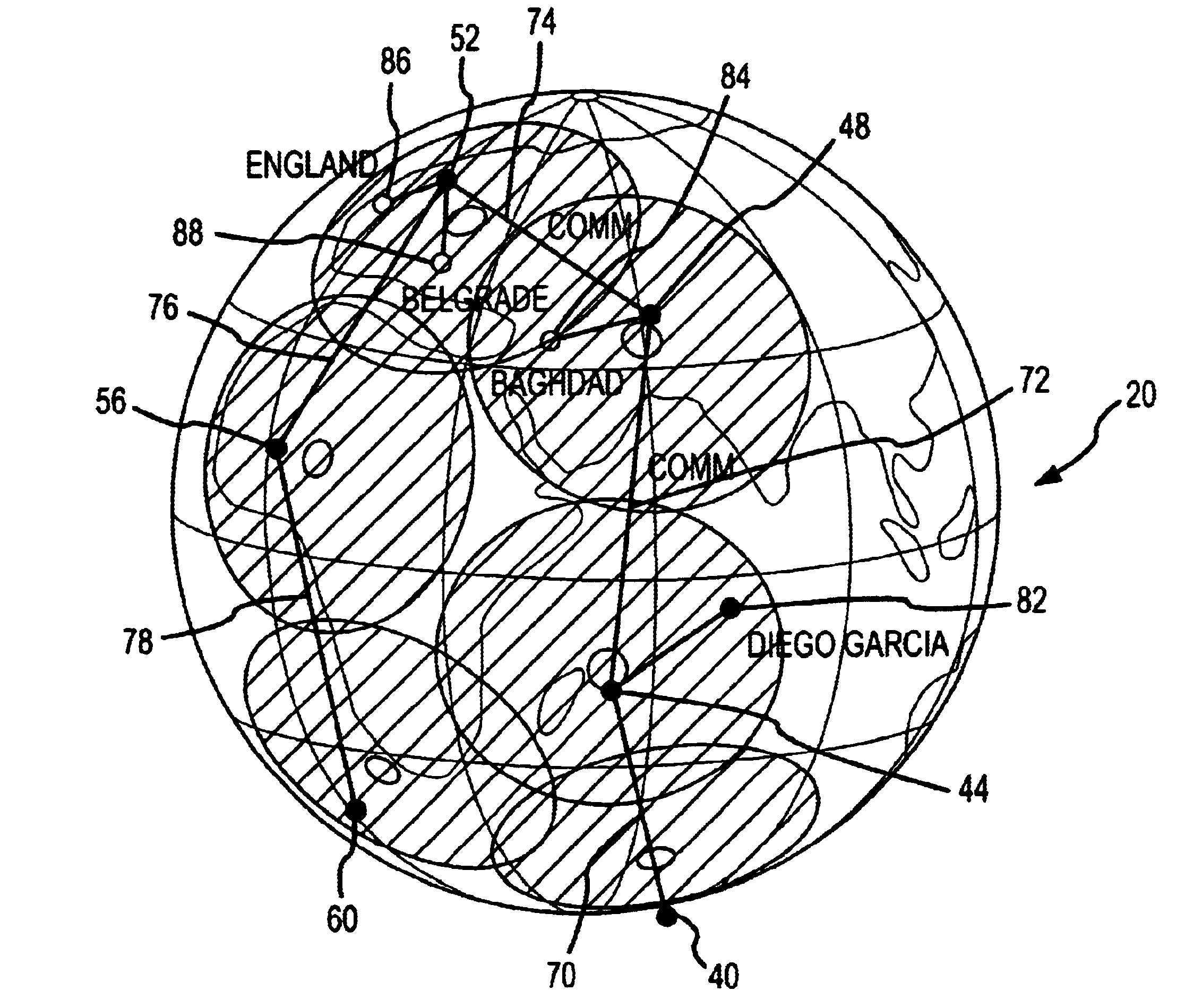
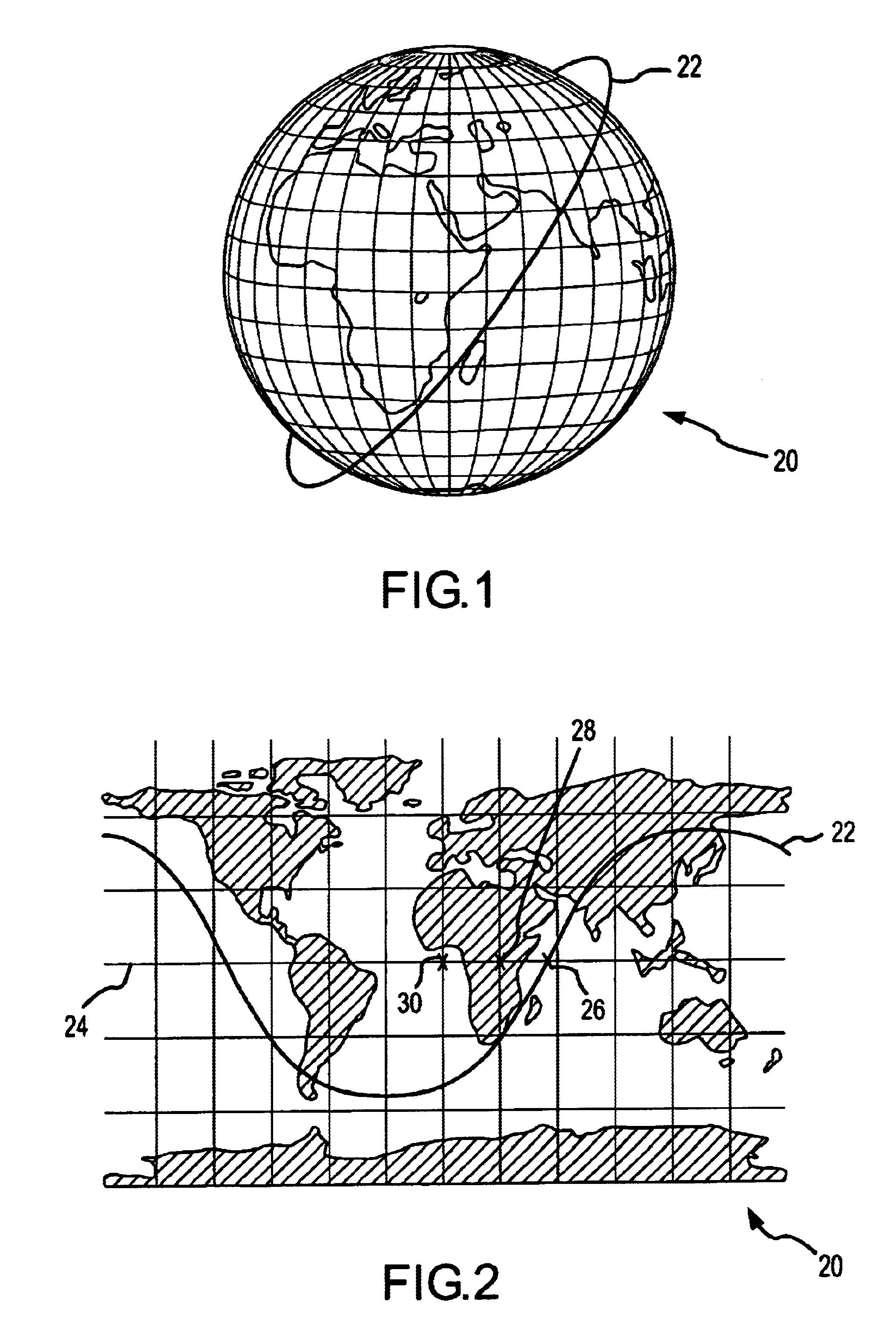
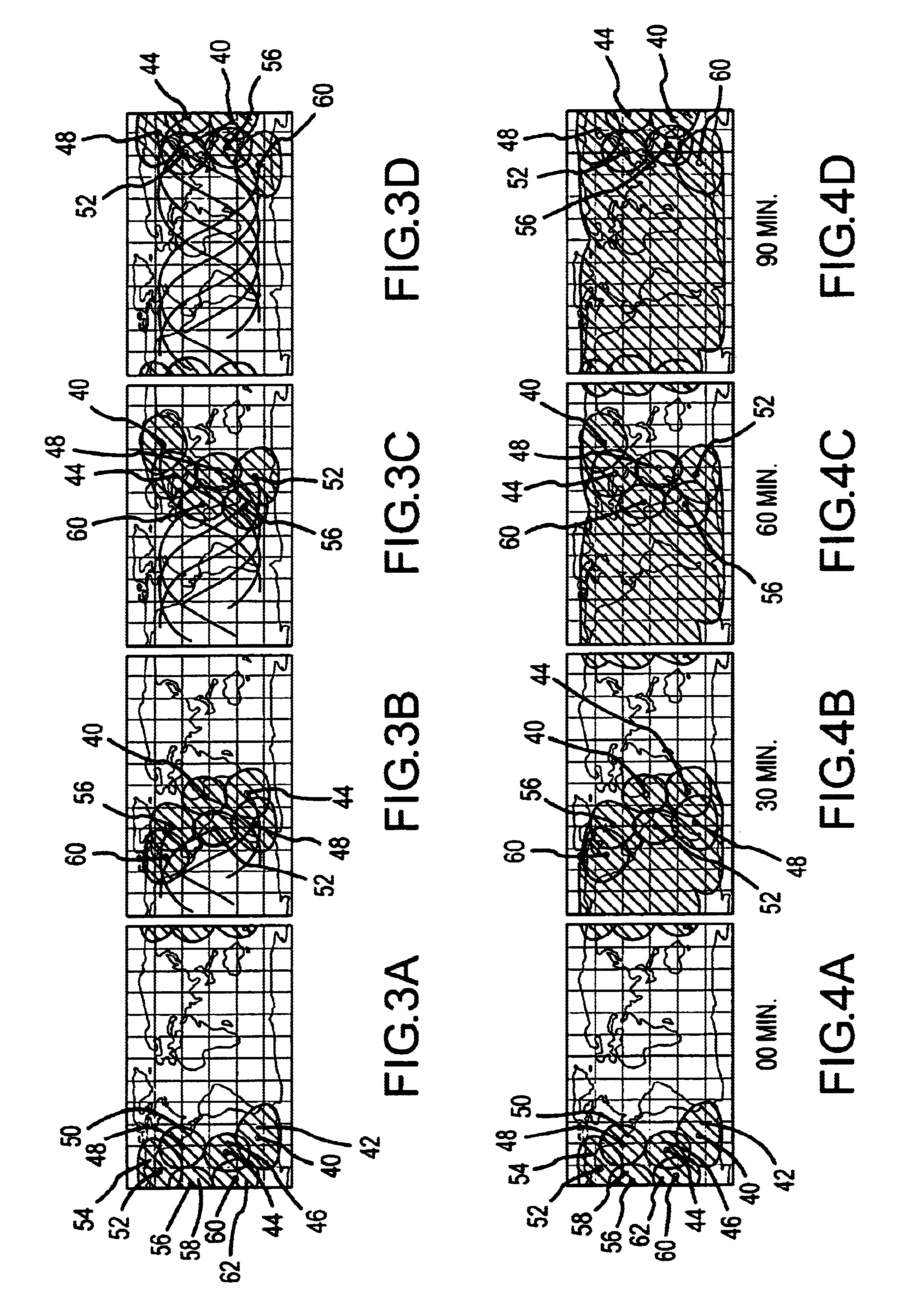
- An asymmetrical satellite constellation with a serpentine pattern of satellites in different orbits, each with incremental true anomaly offsets, allowing for extended continuous access and communication over a celestial body, maintaining line-of-sight between satellites and ground points, thereby increasing contiguous access time with a smaller number of satellites.

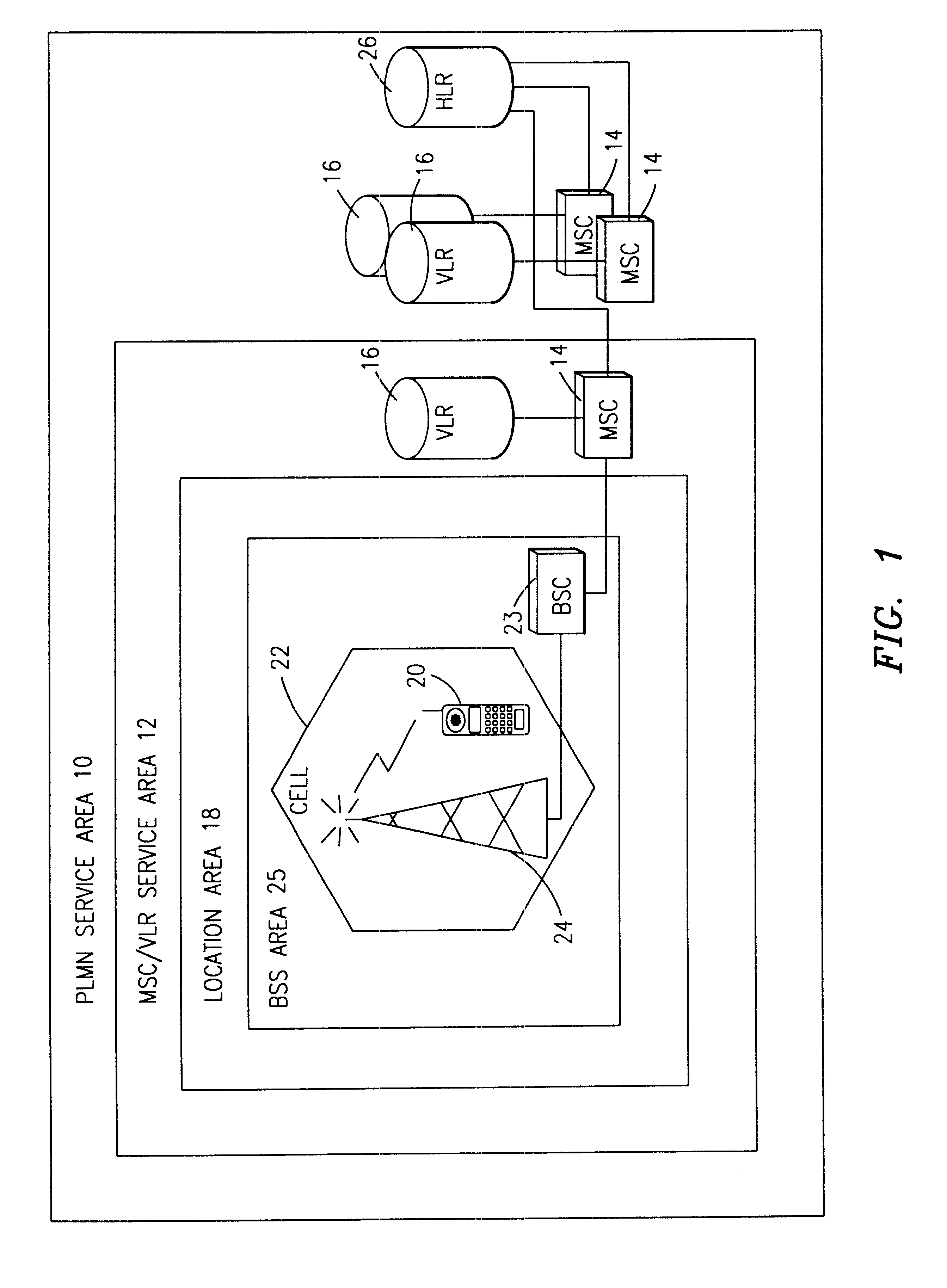
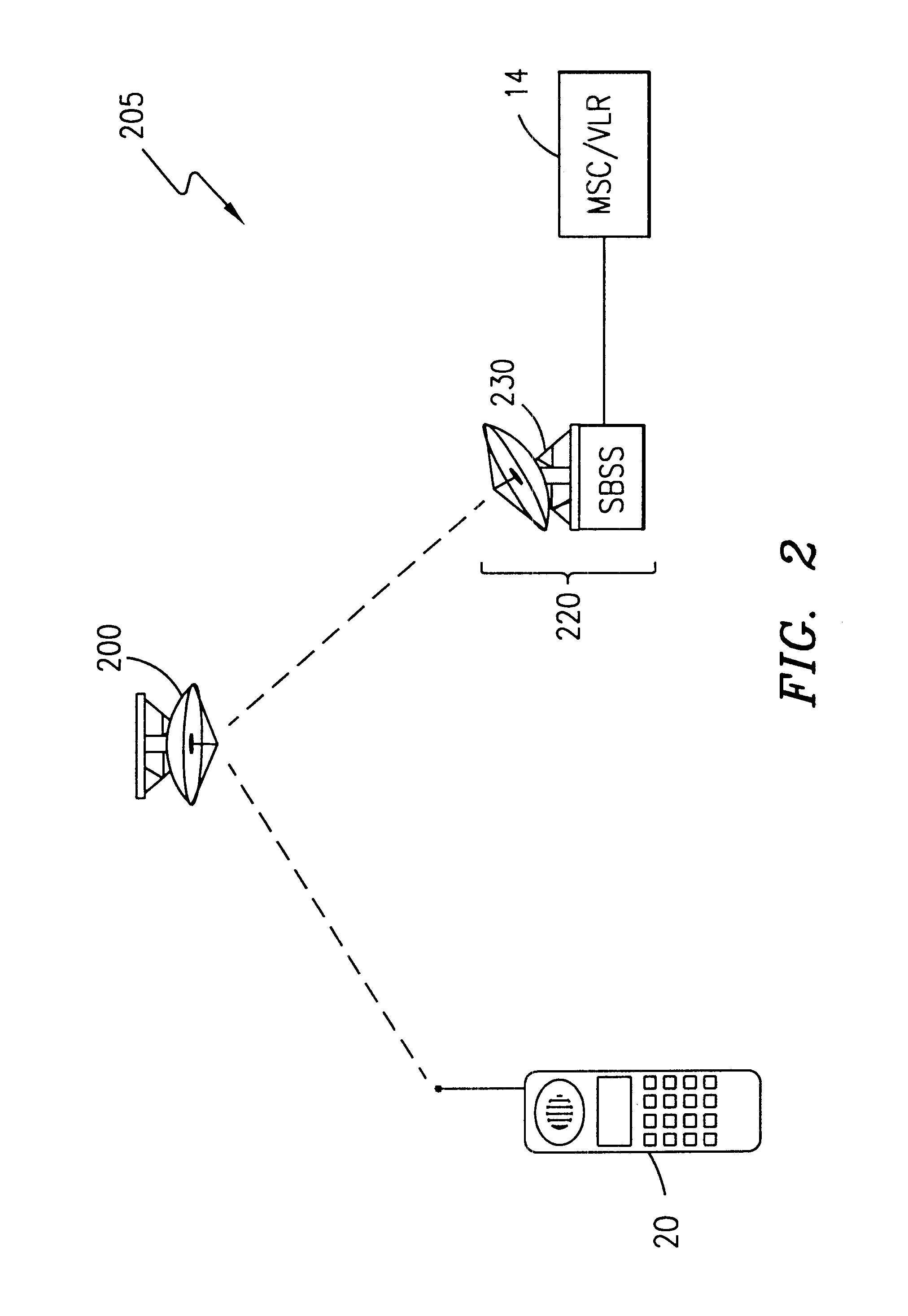
System and method for modification of satellite hop counter to reflect orbit type
PatentInactiveUS6449478B1
Innovation
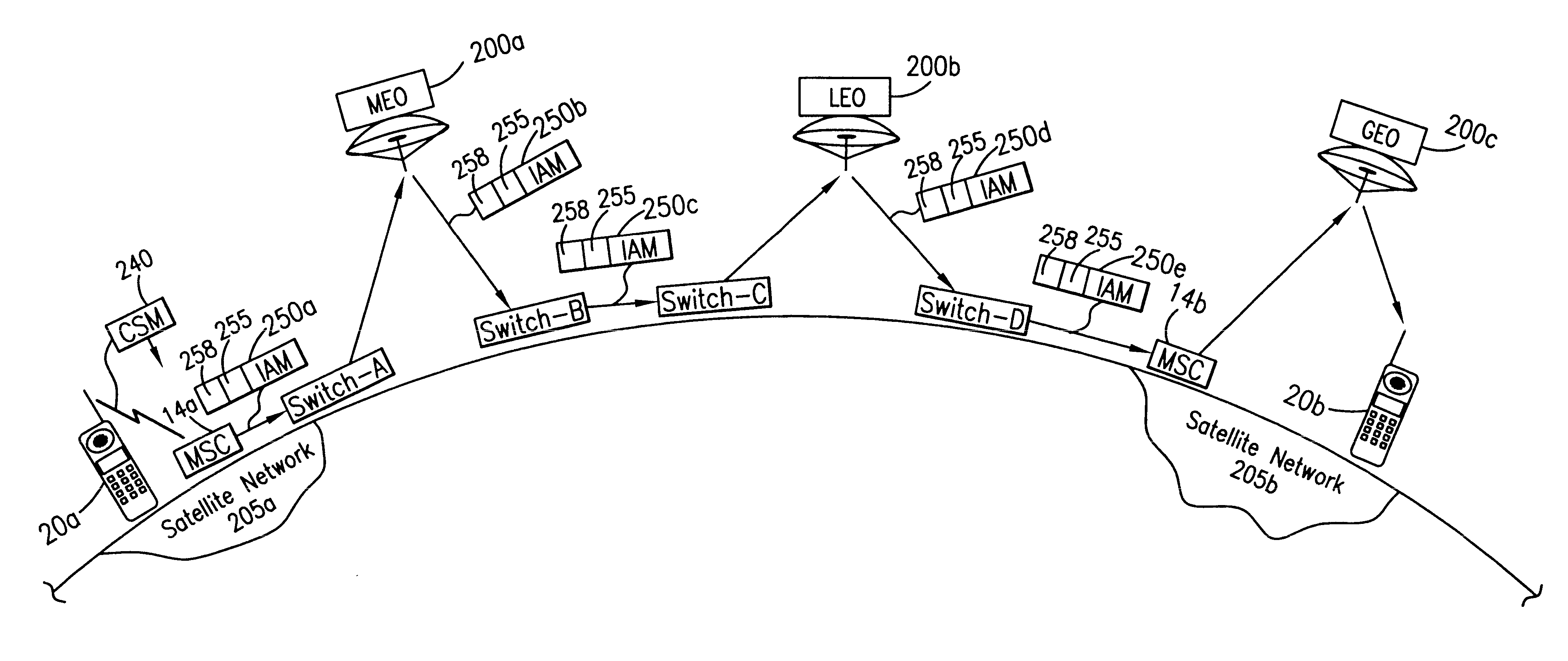
- The ISUP satellite hop counter field is expanded to include separate fields for GEO, MEO, and LEO satellite hops, or a cumulative delay value in milliseconds, to provide accurate delay information for switches to make informed routing decisions.

Space Regulatory and Policy Framework
The regulatory landscape governing satellite operations varies significantly across different orbital regimes, creating distinct compliance requirements and operational constraints for each orbit type. The International Telecommunication Union (ITU) serves as the primary global coordinator for satellite frequency allocations and orbital slot assignments, with particular emphasis on geostationary orbit coordination due to its limited capacity and high commercial value.
Geostationary Earth Orbit (GEO) satellites face the most stringent regulatory framework, requiring extensive coordination procedures through the ITU's Radio Regulations. The geostationary arc represents a finite resource with only 360 degrees of orbital positions, necessitating precise slot allocation and interference mitigation protocols. National space agencies must file detailed coordination requests years in advance, including technical specifications for antenna patterns, power levels, and frequency usage plans.
Medium Earth Orbit (MEO) systems operate under more flexible regulatory structures, though they still require comprehensive frequency coordination across multiple ITU regions due to their global coverage patterns. The regulatory framework for MEO constellations has evolved to accommodate navigation systems like GPS, GLONASS, and Galileo, establishing precedents for spectrum sharing and interference protection criteria.
Low Earth Orbit (LEO) regulatory frameworks have undergone significant transformation to address the emergence of large-scale constellation deployments. Recent policy developments have streamlined licensing processes while introducing new requirements for orbital debris mitigation, end-of-life disposal, and collision avoidance capabilities. The Federal Communications Commission and other national regulators have implemented milestone-based deployment schedules to prevent spectrum warehousing.
Cross-orbital coordination presents increasingly complex challenges as satellite populations grow across all altitude regimes. Regulatory bodies are developing new frameworks for managing interference between different orbit types, particularly addressing potential conflicts between LEO constellations and GEO satellite operations. These evolving policies directly impact system design choices, operational costs, and deployment timelines for satellite operators across all orbital categories.
Geostationary Earth Orbit (GEO) satellites face the most stringent regulatory framework, requiring extensive coordination procedures through the ITU's Radio Regulations. The geostationary arc represents a finite resource with only 360 degrees of orbital positions, necessitating precise slot allocation and interference mitigation protocols. National space agencies must file detailed coordination requests years in advance, including technical specifications for antenna patterns, power levels, and frequency usage plans.
Medium Earth Orbit (MEO) systems operate under more flexible regulatory structures, though they still require comprehensive frequency coordination across multiple ITU regions due to their global coverage patterns. The regulatory framework for MEO constellations has evolved to accommodate navigation systems like GPS, GLONASS, and Galileo, establishing precedents for spectrum sharing and interference protection criteria.
Low Earth Orbit (LEO) regulatory frameworks have undergone significant transformation to address the emergence of large-scale constellation deployments. Recent policy developments have streamlined licensing processes while introducing new requirements for orbital debris mitigation, end-of-life disposal, and collision avoidance capabilities. The Federal Communications Commission and other national regulators have implemented milestone-based deployment schedules to prevent spectrum warehousing.
Cross-orbital coordination presents increasingly complex challenges as satellite populations grow across all altitude regimes. Regulatory bodies are developing new frameworks for managing interference between different orbit types, particularly addressing potential conflicts between LEO constellations and GEO satellite operations. These evolving policies directly impact system design choices, operational costs, and deployment timelines for satellite operators across all orbital categories.
Orbital Debris and Sustainability Considerations
The proliferation of satellites across different orbital regimes has intensified concerns about orbital debris and long-term space sustainability. Each orbit type presents unique challenges and implications for debris generation, collision risks, and environmental stewardship that directly impact operational performance and mission longevity.
Low Earth Orbit satellites face the highest debris density, with over 34,000 tracked objects larger than 10 centimeters currently monitored. The Kessler Syndrome risk is most pronounced in LEO, where collision cascades could render entire orbital shells unusable. However, LEO benefits from natural atmospheric drag that causes debris to deorbit within decades, providing a self-cleaning mechanism absent in higher orbits.
Medium Earth Orbit presents moderate debris risks but lacks the atmospheric cleaning effect of LEO. Debris in MEO can persist for centuries, making collision avoidance and debris mitigation critical for GNSS constellations. The orbital velocity differences in MEO create complex debris interaction patterns that require sophisticated tracking and prediction systems.
Geostationary Earth Orbit faces unique sustainability challenges due to its strategic importance and limited orbital slots. GEO debris remains in orbit indefinitely without active removal, creating permanent hazards. The graveyard orbit concept, where satellites are moved 300 kilometers above GEO at end-of-life, represents current best practice but consumes valuable propellant reserves.
Emerging mega-constellations in LEO are reshaping debris considerations through sheer numbers. While individual satellite failure rates may be low, the statistical probability of debris generation increases proportionally with constellation size. Advanced propulsion systems and autonomous collision avoidance capabilities are becoming essential performance requirements rather than optional features.
International guidelines now mandate 25-year post-mission disposal timelines for LEO satellites and controlled deorbiting capabilities. These sustainability requirements directly influence satellite design, operational costs, and performance trade-offs. Future orbital performance comparisons must integrate debris mitigation costs and end-of-life disposal capabilities as fundamental design parameters rather than secondary considerations.
Low Earth Orbit satellites face the highest debris density, with over 34,000 tracked objects larger than 10 centimeters currently monitored. The Kessler Syndrome risk is most pronounced in LEO, where collision cascades could render entire orbital shells unusable. However, LEO benefits from natural atmospheric drag that causes debris to deorbit within decades, providing a self-cleaning mechanism absent in higher orbits.
Medium Earth Orbit presents moderate debris risks but lacks the atmospheric cleaning effect of LEO. Debris in MEO can persist for centuries, making collision avoidance and debris mitigation critical for GNSS constellations. The orbital velocity differences in MEO create complex debris interaction patterns that require sophisticated tracking and prediction systems.
Geostationary Earth Orbit faces unique sustainability challenges due to its strategic importance and limited orbital slots. GEO debris remains in orbit indefinitely without active removal, creating permanent hazards. The graveyard orbit concept, where satellites are moved 300 kilometers above GEO at end-of-life, represents current best practice but consumes valuable propellant reserves.
Emerging mega-constellations in LEO are reshaping debris considerations through sheer numbers. While individual satellite failure rates may be low, the statistical probability of debris generation increases proportionally with constellation size. Advanced propulsion systems and autonomous collision avoidance capabilities are becoming essential performance requirements rather than optional features.
International guidelines now mandate 25-year post-mission disposal timelines for LEO satellites and controlled deorbiting capabilities. These sustainability requirements directly influence satellite design, operational costs, and performance trade-offs. Future orbital performance comparisons must integrate debris mitigation costs and end-of-life disposal capabilities as fundamental design parameters rather than secondary considerations.
Unlock deeper insights with Patsnap Eureka Quick Research — get a full tech report to explore trends and direct your research. Try now!
Generate Your Research Report Instantly with AI Agent
Supercharge your innovation with Patsnap Eureka AI Agent Platform!