
Comparing Frequency-Locked Loop & Acoustic Resonator: Durability Metrics
MAR 18, 20269 MIN READ
Generate Your Research Report Instantly with AI Agent
Patsnap Eureka helps you evaluate technical feasibility & market potential.
FLL and Acoustic Resonator Technology Background and Objectives
Frequency-Locked Loop (FLL) technology emerged in the 1960s as an evolution of Phase-Locked Loop (PLL) systems, designed to address frequency tracking challenges in communication and timing applications. Unlike PLLs that maintain phase coherence, FLLs focus exclusively on frequency synchronization, making them particularly suitable for applications where phase information is less critical but frequency stability is paramount. The technology gained prominence in satellite communication systems, where Doppler shift compensation and frequency drift correction became essential requirements.
Acoustic resonator technology has its roots in early 20th-century developments in mechanical oscillators and piezoelectric materials. The fundamental principle relies on mechanical vibrations in crystalline structures, typically quartz, to generate highly stable frequency references. These devices evolved from simple tuning forks to sophisticated bulk acoustic wave (BAW) and surface acoustic wave (SAW) resonators, becoming cornerstone components in timing circuits, filters, and frequency control applications.
The convergence of these technologies in modern electronic systems has created unique challenges regarding long-term reliability and operational durability. Both technologies serve critical roles in frequency generation and control, yet they exhibit fundamentally different failure mechanisms and degradation patterns. FLL systems primarily face electronic component aging, thermal cycling stress, and semiconductor junction degradation, while acoustic resonators encounter mechanical fatigue, crystal aging, and environmental contamination effects.
Current technological objectives focus on establishing comprehensive durability metrics that enable accurate lifetime prediction and reliability assessment for both technologies. The primary goal involves developing standardized testing methodologies that can quantify degradation rates under various environmental conditions, including temperature cycling, humidity exposure, mechanical shock, and electromagnetic interference. These metrics must account for the distinct physical phenomena governing each technology's aging process.
Advanced durability assessment aims to create predictive models that correlate accelerated aging test results with real-world operational lifespans. For FLL systems, this involves monitoring frequency drift rates, phase noise degradation, and lock acquisition time variations over extended periods. Acoustic resonator evaluation requires tracking frequency stability changes, quality factor degradation, and spurious mode development throughout operational life cycles.
The ultimate objective encompasses establishing industry-standard durability benchmarks that facilitate informed technology selection for specific applications. This includes developing comparative frameworks that weigh durability performance against other critical parameters such as power consumption, size constraints, and cost considerations, enabling engineers to make data-driven decisions in system design and component selection processes.
Acoustic resonator technology has its roots in early 20th-century developments in mechanical oscillators and piezoelectric materials. The fundamental principle relies on mechanical vibrations in crystalline structures, typically quartz, to generate highly stable frequency references. These devices evolved from simple tuning forks to sophisticated bulk acoustic wave (BAW) and surface acoustic wave (SAW) resonators, becoming cornerstone components in timing circuits, filters, and frequency control applications.
The convergence of these technologies in modern electronic systems has created unique challenges regarding long-term reliability and operational durability. Both technologies serve critical roles in frequency generation and control, yet they exhibit fundamentally different failure mechanisms and degradation patterns. FLL systems primarily face electronic component aging, thermal cycling stress, and semiconductor junction degradation, while acoustic resonators encounter mechanical fatigue, crystal aging, and environmental contamination effects.
Current technological objectives focus on establishing comprehensive durability metrics that enable accurate lifetime prediction and reliability assessment for both technologies. The primary goal involves developing standardized testing methodologies that can quantify degradation rates under various environmental conditions, including temperature cycling, humidity exposure, mechanical shock, and electromagnetic interference. These metrics must account for the distinct physical phenomena governing each technology's aging process.
Advanced durability assessment aims to create predictive models that correlate accelerated aging test results with real-world operational lifespans. For FLL systems, this involves monitoring frequency drift rates, phase noise degradation, and lock acquisition time variations over extended periods. Acoustic resonator evaluation requires tracking frequency stability changes, quality factor degradation, and spurious mode development throughout operational life cycles.
The ultimate objective encompasses establishing industry-standard durability benchmarks that facilitate informed technology selection for specific applications. This includes developing comparative frameworks that weigh durability performance against other critical parameters such as power consumption, size constraints, and cost considerations, enabling engineers to make data-driven decisions in system design and component selection processes.
Market Demand Analysis for High-Durability Frequency Control Components
The global frequency control components market demonstrates robust growth driven by escalating demands for precision timing solutions across multiple industries. Telecommunications infrastructure expansion, particularly with 5G network deployments, creates substantial demand for high-durability frequency control devices capable of maintaining stable performance under harsh environmental conditions. These components must withstand temperature fluctuations, mechanical stress, and electromagnetic interference while delivering consistent frequency stability over extended operational periods.
Automotive electronics represents another significant demand driver, especially with the proliferation of advanced driver assistance systems and autonomous vehicle technologies. Modern vehicles require numerous frequency control components for radar systems, GPS navigation, and communication modules, all demanding exceptional durability to ensure safety-critical operations throughout vehicle lifespans. The automotive qualification standards necessitate components that can endure extreme temperature ranges, vibration, and shock conditions without performance degradation.
Industrial automation and Internet of Things applications generate increasing requirements for long-term reliable frequency control solutions. Manufacturing equipment, smart grid infrastructure, and industrial sensors operate in challenging environments where component replacement is costly and disruptive. These applications prioritize durability metrics including aging stability, phase noise performance over time, and resistance to environmental stressors.
The aerospace and defense sectors maintain consistent demand for ultra-high reliability frequency control components. Military communications, satellite systems, and navigation equipment require components with proven durability under extreme conditions. These applications often specify extended operational lifetimes measured in decades, driving development of advanced packaging technologies and material science innovations.
Consumer electronics markets, while price-sensitive, increasingly value durability as product lifecycles extend and sustainability concerns grow. Smartphones, wearables, and smart home devices require miniaturized frequency control components that maintain performance despite repeated thermal cycling and mechanical stress from daily usage patterns.
Market analysis indicates growing preference for frequency control solutions offering predictable aging characteristics and enhanced environmental resilience. End-users increasingly evaluate total cost of ownership rather than initial component pricing, creating opportunities for premium durability-focused products that reduce maintenance requirements and system downtime across diverse application segments.
Automotive electronics represents another significant demand driver, especially with the proliferation of advanced driver assistance systems and autonomous vehicle technologies. Modern vehicles require numerous frequency control components for radar systems, GPS navigation, and communication modules, all demanding exceptional durability to ensure safety-critical operations throughout vehicle lifespans. The automotive qualification standards necessitate components that can endure extreme temperature ranges, vibration, and shock conditions without performance degradation.
Industrial automation and Internet of Things applications generate increasing requirements for long-term reliable frequency control solutions. Manufacturing equipment, smart grid infrastructure, and industrial sensors operate in challenging environments where component replacement is costly and disruptive. These applications prioritize durability metrics including aging stability, phase noise performance over time, and resistance to environmental stressors.
The aerospace and defense sectors maintain consistent demand for ultra-high reliability frequency control components. Military communications, satellite systems, and navigation equipment require components with proven durability under extreme conditions. These applications often specify extended operational lifetimes measured in decades, driving development of advanced packaging technologies and material science innovations.
Consumer electronics markets, while price-sensitive, increasingly value durability as product lifecycles extend and sustainability concerns grow. Smartphones, wearables, and smart home devices require miniaturized frequency control components that maintain performance despite repeated thermal cycling and mechanical stress from daily usage patterns.
Market analysis indicates growing preference for frequency control solutions offering predictable aging characteristics and enhanced environmental resilience. End-users increasingly evaluate total cost of ownership rather than initial component pricing, creating opportunities for premium durability-focused products that reduce maintenance requirements and system downtime across diverse application segments.
Current Durability Challenges in FLL vs Acoustic Resonator Systems
Frequency-Locked Loop systems face significant durability challenges primarily related to their electronic components and thermal management requirements. The semiconductor elements within FLL circuits are susceptible to degradation from temperature cycling, electromagnetic interference, and voltage fluctuations. Phase noise accumulation over extended operational periods represents a critical concern, as it directly impacts frequency stability and system reliability. Additionally, the active components in FLL systems consume continuous power, generating heat that accelerates component aging and reduces overall system lifespan.
The complexity of FLL control algorithms introduces software-related durability issues, including potential firmware corruption and calibration drift over time. These systems require periodic recalibration to maintain optimal performance, creating maintenance overhead that affects long-term operational costs. Power supply variations and transient events can cause lock loss conditions, potentially leading to system instability and reduced operational reliability.
Acoustic resonator systems encounter fundamentally different durability challenges centered on mechanical and material properties. Crystal aging represents the primary concern, where the resonant frequency gradually shifts due to mass loading, surface contamination, and internal stress relaxation. Temperature-induced mechanical stress can cause micro-fractures in the crystal structure, leading to frequency instability and eventual failure. The hermetic packaging required to protect acoustic resonators from environmental contamination presents potential failure points through seal degradation and moisture ingress.
Vibration and shock sensitivity pose significant challenges for acoustic resonator durability, particularly in mobile or harsh environment applications. Mechanical mounting stress can alter the resonator's frequency characteristics and introduce long-term stability issues. The Q-factor degradation over time affects both frequency stability and power consumption, as the system requires increased drive levels to maintain oscillation.
Manufacturing variations in acoustic resonators create batch-to-batch consistency challenges that impact long-term reliability predictions. Surface finish quality and crystal orientation precision directly influence durability metrics, making quality control critical for achieving specified operational lifespans.
Both technologies face common environmental stressors including humidity, temperature extremes, and chemical exposure, but their failure mechanisms and mitigation strategies differ substantially. FLL systems typically exhibit more predictable electronic failure modes, while acoustic resonators demonstrate superior inherent stability but face irreversible mechanical degradation processes that are more difficult to compensate through system design.
The complexity of FLL control algorithms introduces software-related durability issues, including potential firmware corruption and calibration drift over time. These systems require periodic recalibration to maintain optimal performance, creating maintenance overhead that affects long-term operational costs. Power supply variations and transient events can cause lock loss conditions, potentially leading to system instability and reduced operational reliability.
Acoustic resonator systems encounter fundamentally different durability challenges centered on mechanical and material properties. Crystal aging represents the primary concern, where the resonant frequency gradually shifts due to mass loading, surface contamination, and internal stress relaxation. Temperature-induced mechanical stress can cause micro-fractures in the crystal structure, leading to frequency instability and eventual failure. The hermetic packaging required to protect acoustic resonators from environmental contamination presents potential failure points through seal degradation and moisture ingress.
Vibration and shock sensitivity pose significant challenges for acoustic resonator durability, particularly in mobile or harsh environment applications. Mechanical mounting stress can alter the resonator's frequency characteristics and introduce long-term stability issues. The Q-factor degradation over time affects both frequency stability and power consumption, as the system requires increased drive levels to maintain oscillation.
Manufacturing variations in acoustic resonators create batch-to-batch consistency challenges that impact long-term reliability predictions. Surface finish quality and crystal orientation precision directly influence durability metrics, making quality control critical for achieving specified operational lifespans.
Both technologies face common environmental stressors including humidity, temperature extremes, and chemical exposure, but their failure mechanisms and mitigation strategies differ substantially. FLL systems typically exhibit more predictable electronic failure modes, while acoustic resonators demonstrate superior inherent stability but face irreversible mechanical degradation processes that are more difficult to compensate through system design.
Existing Durability Testing Solutions for Frequency Components
01 Frequency-locked loop circuit design and implementation
Frequency-locked loop (FLL) circuits are designed to maintain synchronization between an input signal and a local oscillator by detecting frequency differences rather than phase differences. These circuits typically include frequency discriminators, loop filters, and voltage-controlled oscillators to achieve stable frequency locking. The implementation focuses on reducing lock time, improving frequency stability, and minimizing power consumption in various applications.- Frequency-locked loop circuit design and implementation: Frequency-locked loop (FLL) circuits are designed to maintain synchronization between an input signal and a local oscillator by detecting frequency differences rather than phase differences. These circuits typically include frequency discriminators, loop filters, and voltage-controlled oscillators to achieve stable frequency locking. The implementation focuses on reducing lock time, improving frequency stability, and minimizing power consumption in various applications.
- Acoustic resonator structure and materials: Acoustic resonators utilize piezoelectric materials and specific structural configurations to achieve desired resonance frequencies. The design includes considerations for electrode placement, substrate materials, and acoustic wave propagation modes. Various resonator types such as bulk acoustic wave (BAW) and surface acoustic wave (SAW) devices are employed based on frequency requirements and application constraints.
- Temperature compensation and stability enhancement: Temperature variations significantly affect the performance of acoustic resonators and frequency-locked loops. Compensation techniques include the use of temperature-coefficient materials, active temperature control circuits, and digital correction algorithms. These methods help maintain frequency stability across operating temperature ranges and improve long-term reliability of the system.
- Durability improvement through packaging and protection: Enhancing the durability of acoustic resonators involves advanced packaging techniques to protect against environmental factors such as moisture, mechanical stress, and thermal cycling. Hermetic sealing, stress-isolation structures, and protective coatings are employed to extend device lifetime. The packaging design also addresses issues related to acoustic energy loss and parasitic effects that can degrade performance over time.
- Quality factor optimization and loss reduction: The quality factor (Q-factor) of acoustic resonators directly impacts their performance and durability. Optimization strategies include minimizing acoustic energy dissipation through improved material selection, optimized electrode design, and reduction of anchor losses. Higher Q-factors result in better frequency selectivity, lower insertion loss, and improved power handling capability, contributing to enhanced long-term stability and durability.
02 Acoustic resonator structure and materials
Acoustic resonators utilize piezoelectric materials and specific structural configurations to achieve desired resonance frequencies. The design includes considerations for electrode placement, substrate selection, and acoustic wave propagation modes. Material choices and layer configurations significantly impact the resonator's quality factor, temperature stability, and frequency characteristics.Expand Specific Solutions03 Durability enhancement through protective layers and packaging
Improving acoustic resonator durability involves implementing protective layers, hermetic sealing, and robust packaging techniques. These methods protect the resonator from environmental factors such as moisture, temperature variations, and mechanical stress. Encapsulation materials and structures are designed to maintain long-term performance while preventing degradation of the piezoelectric and electrode materials.Expand Specific Solutions04 Temperature compensation and stability mechanisms
Temperature compensation techniques are employed to maintain resonator frequency stability across varying operating conditions. These approaches include using temperature-compensating materials, implementing compensation circuits, and designing multi-layer structures with opposing temperature coefficients. The goal is to minimize frequency drift and ensure consistent performance over the device's operational temperature range.Expand Specific Solutions05 Integration with oscillator circuits and frequency control systems
Acoustic resonators are integrated with oscillator circuits and frequency control systems to create stable frequency references. The integration involves impedance matching, feedback network design, and optimization of the resonator-circuit interface. These systems are designed to achieve low phase noise, fast startup, and reliable frequency generation for timing and communication applications.Expand Specific Solutions
Major Players in Frequency Control and Acoustic Resonator Markets
The frequency-locked loop and acoustic resonator technology sector represents a mature yet evolving market characterized by intense competition across multiple application domains. The industry has reached commercial maturity with established players like Murata Manufacturing, AVAGO Technologies, and NEC Corp. dominating traditional markets, while emerging companies such as Q-CTRL and Silicon Microgravity explore advanced applications in quantum sensing and precision measurement. Market segmentation spans telecommunications, consumer electronics, automotive, and defense sectors, with significant growth potential in quantum technologies and IoT applications. Technology maturity varies considerably, with conventional acoustic resonators being well-established while quantum-enhanced frequency control systems remain in early development phases. The competitive landscape includes major semiconductor manufacturers, specialized MEMS companies, and research institutions like Beihang University and Tianjin University driving innovation in next-generation resonator technologies and frequency stabilization methods.
AVAGO TECHNOLOGIES INTERNATIONAL SALES PTE LTD
Technical Solution: Avago (now Broadcom) specializes in frequency-locked loop (FLL) circuits integrated with MEMS resonators for enhanced durability and performance. Their FLL technology employs adaptive loop bandwidth control and phase noise optimization algorithms to maintain lock stability under varying environmental conditions. The systems feature built-in temperature compensation and aging prediction models that extend operational lifetime beyond 20 years. Their FLL implementations include redundant reference paths and automatic failover mechanisms to ensure continuous operation even when primary resonator elements experience degradation or failure.
Strengths: Advanced semiconductor integration capabilities, robust FLL algorithms, strong IP portfolio. Weaknesses: Complex system architecture increases power consumption, requires sophisticated calibration procedures.
NEC Corp.
Technical Solution: NEC develops hybrid timing solutions combining frequency-locked loops with both acoustic resonators and atomic reference standards for ultra-high durability applications. Their systems incorporate machine learning algorithms for predictive maintenance and real-time performance optimization. The technology features multi-layer redundancy with automatic switching between FLL and acoustic resonator modes based on environmental conditions and performance metrics. NEC's solutions achieve Allan deviation specifications better than 1×10^-12 at 1000 seconds averaging time while maintaining operational integrity for over 25 years in telecommunications infrastructure applications.
Strengths: Excellent long-term stability, advanced AI-based optimization, proven telecommunications heritage. Weaknesses: High complexity and cost, requires specialized maintenance expertise, longer development cycles.
Core Durability Patents in FLL and Acoustic Resonator Design
Circuit for measuring the resonant frequency of nanoresonators
PatentActiveUS20140312980A1
Innovation
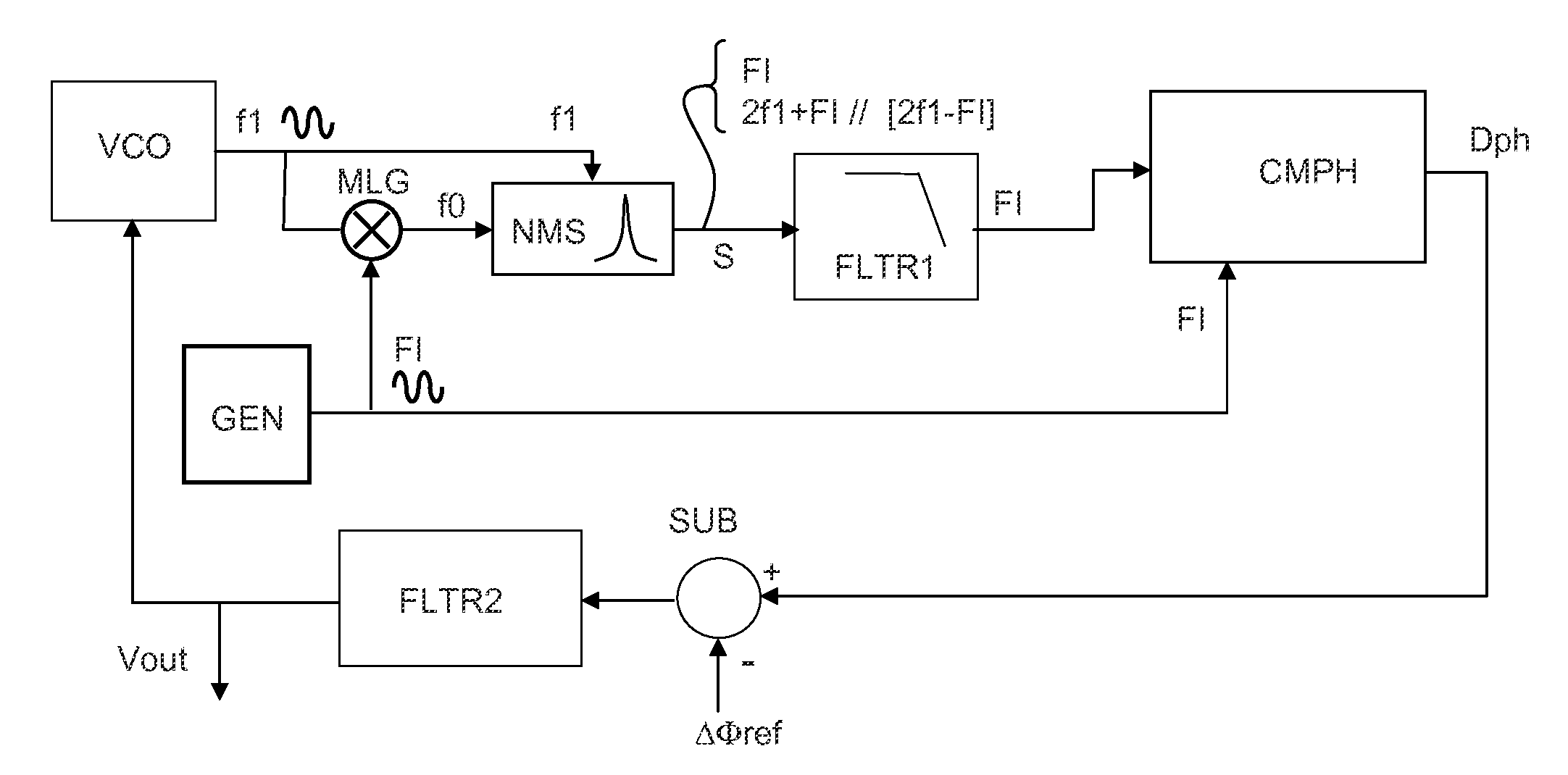
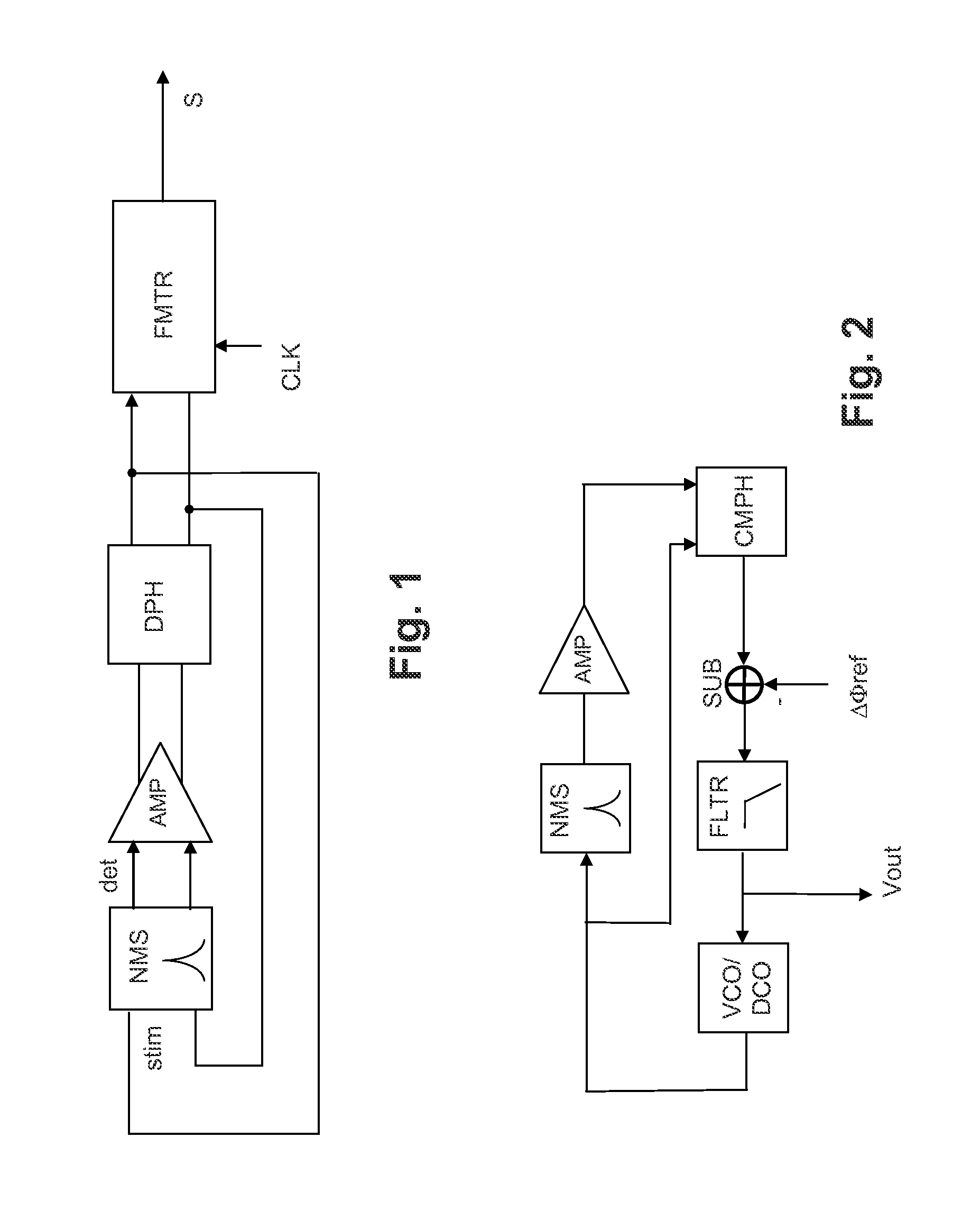
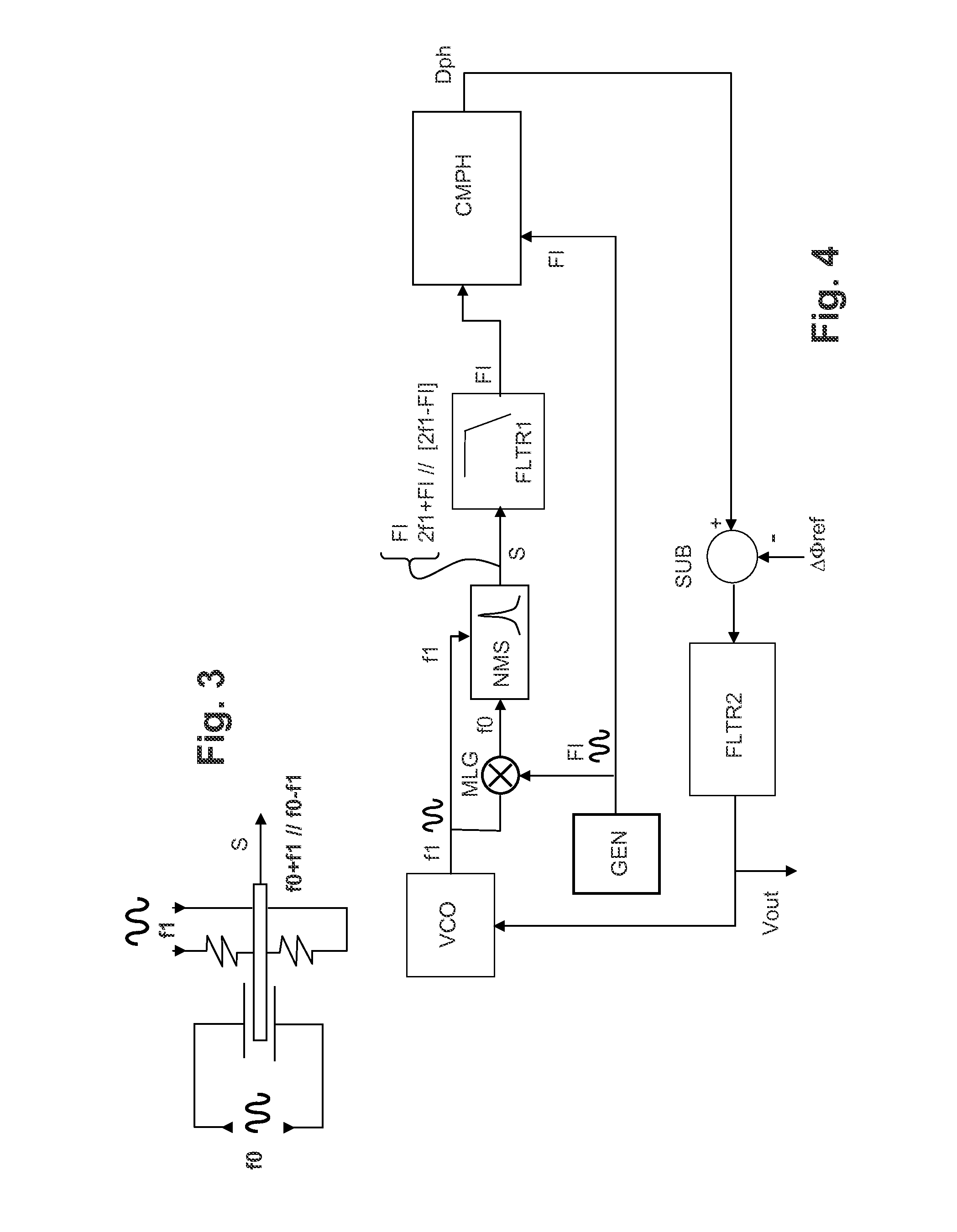
- A circuit design that uses a phase-locked loop with a frequency-controlled oscillator producing the polarization frequency, a mixer generating the excitation frequency as the sum or difference of an intermediate frequency and the polarization frequency, and a phase comparator controlling the oscillator to maintain the excitation frequency at the resonant frequency, eliminating the need for prior pass-band filtering and reducing energy consumption.

Filter device, multiplexer, radio frequency front-end circuit, and communication device
PatentActiveUS20200220522A1
Innovation
- A filter device with a series-arm circuit and a parallel-arm circuit, where at least one of the circuits includes a resonance circuit with a surface acoustic wave resonator and a capacitor having higher electrostatic capacitance per unit area, reducing the size of the capacitor and the connecting lines, and optimizing the fractional bandwidth to maintain filter characteristics.


Environmental Standards for Frequency Control Component Testing
Environmental testing standards for frequency control components have evolved significantly to address the demanding operational requirements of modern electronic systems. These standards establish comprehensive protocols for evaluating the performance and reliability of frequency-locked loops and acoustic resonators under various environmental stresses. The primary objective is to ensure consistent frequency stability and long-term durability across diverse operating conditions.
Temperature cycling represents one of the most critical environmental stress factors affecting frequency control components. Standard test protocols typically involve exposing components to temperature ranges from -55°C to +125°C with controlled ramp rates and dwell times. For frequency-locked loops, particular attention is paid to phase noise degradation and lock acquisition time variations across temperature extremes. Acoustic resonators undergo similar thermal stress testing, with emphasis on frequency drift characteristics and Q-factor stability throughout the temperature cycle.
Humidity and moisture resistance testing follows established procedures such as MIL-STD-202 Method 106, subjecting components to controlled humidity environments typically at 85% relative humidity and elevated temperatures. This testing is particularly crucial for acoustic resonators, as moisture ingress can significantly impact resonant frequency stability and cause long-term drift. Frequency-locked loops are evaluated for circuit stability and phase-locked loop performance degradation under high humidity conditions.
Vibration and shock testing protocols simulate mechanical stresses encountered during transportation and operational deployment. Standard sinusoidal vibration testing covers frequency ranges from 10 Hz to 2000 Hz with specified acceleration levels, while shock testing involves high-g impulse events. Acoustic resonators are especially sensitive to mechanical stress, requiring careful evaluation of frequency shifts and spurious mode activation under vibration conditions.
Thermal shock testing involves rapid temperature transitions to evaluate component resilience to sudden environmental changes. This testing is particularly relevant for applications in aerospace and automotive environments where rapid temperature variations are common. Both frequency-locked loops and acoustic resonators must demonstrate stable operation and minimal frequency deviation during and after thermal shock exposure.
Salt spray and corrosion resistance testing ensures long-term reliability in harsh environmental conditions. Components are exposed to controlled salt fog environments following ASTM B117 standards to evaluate packaging integrity and metallization stability. This testing is essential for applications in marine and industrial environments where corrosive atmospheres may compromise component performance over extended operational periods.
Temperature cycling represents one of the most critical environmental stress factors affecting frequency control components. Standard test protocols typically involve exposing components to temperature ranges from -55°C to +125°C with controlled ramp rates and dwell times. For frequency-locked loops, particular attention is paid to phase noise degradation and lock acquisition time variations across temperature extremes. Acoustic resonators undergo similar thermal stress testing, with emphasis on frequency drift characteristics and Q-factor stability throughout the temperature cycle.
Humidity and moisture resistance testing follows established procedures such as MIL-STD-202 Method 106, subjecting components to controlled humidity environments typically at 85% relative humidity and elevated temperatures. This testing is particularly crucial for acoustic resonators, as moisture ingress can significantly impact resonant frequency stability and cause long-term drift. Frequency-locked loops are evaluated for circuit stability and phase-locked loop performance degradation under high humidity conditions.
Vibration and shock testing protocols simulate mechanical stresses encountered during transportation and operational deployment. Standard sinusoidal vibration testing covers frequency ranges from 10 Hz to 2000 Hz with specified acceleration levels, while shock testing involves high-g impulse events. Acoustic resonators are especially sensitive to mechanical stress, requiring careful evaluation of frequency shifts and spurious mode activation under vibration conditions.
Thermal shock testing involves rapid temperature transitions to evaluate component resilience to sudden environmental changes. This testing is particularly relevant for applications in aerospace and automotive environments where rapid temperature variations are common. Both frequency-locked loops and acoustic resonators must demonstrate stable operation and minimal frequency deviation during and after thermal shock exposure.
Salt spray and corrosion resistance testing ensures long-term reliability in harsh environmental conditions. Components are exposed to controlled salt fog environments following ASTM B117 standards to evaluate packaging integrity and metallization stability. This testing is essential for applications in marine and industrial environments where corrosive atmospheres may compromise component performance over extended operational periods.
Reliability Assessment Methodologies for Frequency Systems
Reliability assessment methodologies for frequency systems encompass a comprehensive framework of standardized testing protocols, statistical analysis techniques, and predictive modeling approaches specifically designed to evaluate the long-term performance characteristics of frequency-locked loops and acoustic resonators. These methodologies integrate both accelerated life testing procedures and real-time monitoring systems to establish quantitative durability metrics that enable accurate comparison between different frequency control technologies.
The foundation of reliability assessment lies in environmental stress screening protocols that subject frequency systems to controlled variations in temperature, humidity, vibration, and electromagnetic interference. For frequency-locked loops, these tests focus on phase noise degradation, lock acquisition time variations, and frequency stability drift under extreme conditions. Acoustic resonator evaluation emphasizes quality factor degradation, resonant frequency shifts, and mechanical stress tolerance through thermal cycling and shock testing procedures.
Statistical reliability modeling employs Weibull distribution analysis, failure mode and effects analysis, and Monte Carlo simulation techniques to predict system lifetime and failure probability distributions. These mathematical frameworks incorporate aging mechanisms specific to each technology, including crystal lattice defects in acoustic resonators and semiconductor junction degradation in frequency-locked loop components.
Accelerated aging methodologies utilize elevated temperature testing, power cycling, and mechanical stress application to compress years of operational lifetime into weeks of laboratory testing. The Arrhenius equation and Eyring model provide extrapolation frameworks to correlate accelerated test results with normal operating condition performance, enabling reliable lifetime predictions for both frequency control architectures.
Real-time health monitoring systems implement continuous parameter tracking through embedded sensors and diagnostic algorithms that detect early indicators of performance degradation. These systems monitor critical parameters such as phase noise spectral density, frequency drift rates, and power consumption variations to establish predictive maintenance schedules and reliability confidence intervals for deployed frequency systems.
The foundation of reliability assessment lies in environmental stress screening protocols that subject frequency systems to controlled variations in temperature, humidity, vibration, and electromagnetic interference. For frequency-locked loops, these tests focus on phase noise degradation, lock acquisition time variations, and frequency stability drift under extreme conditions. Acoustic resonator evaluation emphasizes quality factor degradation, resonant frequency shifts, and mechanical stress tolerance through thermal cycling and shock testing procedures.
Statistical reliability modeling employs Weibull distribution analysis, failure mode and effects analysis, and Monte Carlo simulation techniques to predict system lifetime and failure probability distributions. These mathematical frameworks incorporate aging mechanisms specific to each technology, including crystal lattice defects in acoustic resonators and semiconductor junction degradation in frequency-locked loop components.
Accelerated aging methodologies utilize elevated temperature testing, power cycling, and mechanical stress application to compress years of operational lifetime into weeks of laboratory testing. The Arrhenius equation and Eyring model provide extrapolation frameworks to correlate accelerated test results with normal operating condition performance, enabling reliable lifetime predictions for both frequency control architectures.
Real-time health monitoring systems implement continuous parameter tracking through embedded sensors and diagnostic algorithms that detect early indicators of performance degradation. These systems monitor critical parameters such as phase noise spectral density, frequency drift rates, and power consumption variations to establish predictive maintenance schedules and reliability confidence intervals for deployed frequency systems.
Unlock deeper insights with Patsnap Eureka Quick Research — get a full tech report to explore trends and direct your research. Try now!
Generate Your Research Report Instantly with AI Agent
Supercharge your innovation with Patsnap Eureka AI Agent Platform!