

Solid-State Transformers Vs Low-Voltage: Economic Gains
APR 20, 20269 MIN READ
Generate Your Research Report Instantly with AI Agent
PatSnap Eureka helps you evaluate technical feasibility & market potential.
SST vs LV Systems Economic Background and Objectives
The global power distribution landscape is undergoing a fundamental transformation driven by increasing electrification demands, renewable energy integration, and the pursuit of enhanced grid efficiency. Traditional low-voltage distribution systems, while proven and widely deployed, face mounting challenges in meeting modern power quality requirements and operational flexibility needs. Simultaneously, solid-state transformer technology has emerged as a promising alternative, offering advanced functionalities through power electronics integration.
Economic considerations have become paramount in power system modernization decisions, as utilities and industrial operators seek solutions that deliver superior return on investment while meeting evolving technical requirements. The comparison between SST and conventional LV systems extends beyond initial capital expenditure to encompass operational efficiency, maintenance costs, system reliability, and long-term scalability factors.
SST technology represents a paradigm shift from traditional electromagnetic transformers by incorporating semiconductor-based power conversion stages. This approach enables bidirectional power flow, voltage regulation capabilities, and enhanced grid integration features. However, the economic viability of SST deployment remains a critical evaluation criterion, particularly given the higher initial investment requirements compared to conventional alternatives.
The economic analysis framework must consider multiple value streams including energy efficiency improvements, reduced infrastructure requirements, enhanced power quality benefits, and operational cost reductions. Additionally, the evaluation should account for emerging market drivers such as distributed energy resource integration, electric vehicle charging infrastructure, and smart grid modernization initiatives.
The primary objective of this economic comparison is to establish a comprehensive understanding of the total cost of ownership differences between SST and LV systems across various application scenarios. This analysis aims to identify specific deployment contexts where SST technology delivers superior economic performance, while also recognizing scenarios where conventional LV systems remain more cost-effective.
Furthermore, the evaluation seeks to quantify the economic impact of advanced SST functionalities that have no direct equivalent in traditional systems, such as real-time voltage regulation, harmonic filtering, and grid support services. Understanding these value propositions is essential for accurate economic modeling and investment decision-making processes.
Economic considerations have become paramount in power system modernization decisions, as utilities and industrial operators seek solutions that deliver superior return on investment while meeting evolving technical requirements. The comparison between SST and conventional LV systems extends beyond initial capital expenditure to encompass operational efficiency, maintenance costs, system reliability, and long-term scalability factors.
SST technology represents a paradigm shift from traditional electromagnetic transformers by incorporating semiconductor-based power conversion stages. This approach enables bidirectional power flow, voltage regulation capabilities, and enhanced grid integration features. However, the economic viability of SST deployment remains a critical evaluation criterion, particularly given the higher initial investment requirements compared to conventional alternatives.
The economic analysis framework must consider multiple value streams including energy efficiency improvements, reduced infrastructure requirements, enhanced power quality benefits, and operational cost reductions. Additionally, the evaluation should account for emerging market drivers such as distributed energy resource integration, electric vehicle charging infrastructure, and smart grid modernization initiatives.
The primary objective of this economic comparison is to establish a comprehensive understanding of the total cost of ownership differences between SST and LV systems across various application scenarios. This analysis aims to identify specific deployment contexts where SST technology delivers superior economic performance, while also recognizing scenarios where conventional LV systems remain more cost-effective.
Furthermore, the evaluation seeks to quantify the economic impact of advanced SST functionalities that have no direct equivalent in traditional systems, such as real-time voltage regulation, harmonic filtering, and grid support services. Understanding these value propositions is essential for accurate economic modeling and investment decision-making processes.
Market Demand Analysis for Power Distribution Solutions
The global power distribution market is experiencing unprecedented transformation driven by increasing electricity demand, grid modernization initiatives, and sustainability requirements. Traditional low-voltage distribution systems face mounting pressure to accommodate renewable energy integration, improve efficiency, and enhance grid resilience. This evolving landscape creates substantial opportunities for advanced power distribution technologies.
Industrial and commercial sectors represent the primary demand drivers for sophisticated power distribution solutions. Manufacturing facilities require reliable, high-quality power delivery to maintain operational continuity and protect sensitive equipment. Data centers, with their exponential growth trajectory, demand ultra-reliable power systems with minimal downtime tolerance. Healthcare facilities, critical infrastructure, and smart buildings increasingly prioritize power quality and system flexibility.
The renewable energy integration challenge significantly amplifies market demand for advanced distribution solutions. Solar and wind installations require sophisticated power conditioning and grid interface capabilities that traditional systems struggle to provide efficiently. Energy storage integration further complicates distribution requirements, necessitating bidirectional power flow management and advanced control capabilities.
Grid modernization programs worldwide are accelerating adoption of intelligent distribution technologies. Utilities seek solutions that offer enhanced monitoring, control, and diagnostic capabilities while reducing maintenance requirements and operational costs. The push toward smart grid infrastructure creates substantial market opportunities for technologies that can seamlessly integrate with digital control systems.
Emerging applications in electric vehicle charging infrastructure, microgrids, and distributed energy resources are expanding the addressable market for advanced power distribution solutions. These applications demand high power density, compact form factors, and sophisticated control capabilities that challenge conventional distribution approaches.
Market growth is further supported by increasingly stringent power quality standards and efficiency regulations. Industries face mounting pressure to reduce energy consumption and improve power factor correction, driving demand for solutions that can deliver superior performance metrics compared to traditional systems.
The economic value proposition extends beyond initial capital costs to encompass total cost of ownership considerations including maintenance, reliability, and operational efficiency. Organizations increasingly evaluate distribution solutions based on lifecycle economics rather than upfront investment alone, creating opportunities for technologies that demonstrate superior long-term value despite potentially higher initial costs.
Industrial and commercial sectors represent the primary demand drivers for sophisticated power distribution solutions. Manufacturing facilities require reliable, high-quality power delivery to maintain operational continuity and protect sensitive equipment. Data centers, with their exponential growth trajectory, demand ultra-reliable power systems with minimal downtime tolerance. Healthcare facilities, critical infrastructure, and smart buildings increasingly prioritize power quality and system flexibility.
The renewable energy integration challenge significantly amplifies market demand for advanced distribution solutions. Solar and wind installations require sophisticated power conditioning and grid interface capabilities that traditional systems struggle to provide efficiently. Energy storage integration further complicates distribution requirements, necessitating bidirectional power flow management and advanced control capabilities.
Grid modernization programs worldwide are accelerating adoption of intelligent distribution technologies. Utilities seek solutions that offer enhanced monitoring, control, and diagnostic capabilities while reducing maintenance requirements and operational costs. The push toward smart grid infrastructure creates substantial market opportunities for technologies that can seamlessly integrate with digital control systems.
Emerging applications in electric vehicle charging infrastructure, microgrids, and distributed energy resources are expanding the addressable market for advanced power distribution solutions. These applications demand high power density, compact form factors, and sophisticated control capabilities that challenge conventional distribution approaches.
Market growth is further supported by increasingly stringent power quality standards and efficiency regulations. Industries face mounting pressure to reduce energy consumption and improve power factor correction, driving demand for solutions that can deliver superior performance metrics compared to traditional systems.
The economic value proposition extends beyond initial capital costs to encompass total cost of ownership considerations including maintenance, reliability, and operational efficiency. Organizations increasingly evaluate distribution solutions based on lifecycle economics rather than upfront investment alone, creating opportunities for technologies that demonstrate superior long-term value despite potentially higher initial costs.
Current Economic Performance and Cost Challenges
Solid-State Transformers currently face significant economic challenges that limit their widespread adoption compared to conventional low-voltage systems. The primary cost barrier stems from the high expense of power semiconductor devices, particularly wide-bandgap semiconductors like Silicon Carbide (SiC) and Gallium Nitride (GaN), which can account for 40-60% of the total SST system cost. These components, while offering superior performance characteristics, remain substantially more expensive than traditional silicon-based solutions used in conventional transformers.
Manufacturing complexity represents another critical cost challenge for SSTs. The integration of multiple subsystems including power conversion stages, control electronics, and cooling systems requires sophisticated assembly processes and quality control measures. This complexity translates to higher production costs and longer manufacturing lead times compared to the relatively straightforward construction of conventional transformers. Additionally, the specialized manufacturing equipment and skilled workforce required for SST production contribute to elevated operational expenses.
Current economic performance analysis reveals that SSTs demonstrate superior efficiency rates of 96-98% compared to conventional transformers' 94-96% efficiency. However, this efficiency advantage often fails to offset the substantial initial capital investment difference. The payback period for SST installations typically ranges from 8-12 years, depending on application specifics and energy costs, which exceeds the 3-5 year payback expectations common in industrial applications.
Maintenance and operational costs present a mixed economic picture. While SSTs offer reduced maintenance requirements due to fewer mechanical components and no oil-based insulation systems, the complexity of their electronic systems introduces new failure modes and requires specialized technical expertise for repairs. The limited availability of qualified service technicians and replacement components can result in extended downtime periods and higher service costs.
Scale economics remain unfavorable for SSTs due to limited production volumes. Current global SST production is estimated at fewer than 10,000 units annually across all applications, compared to millions of conventional transformers. This volume disparity prevents SST manufacturers from achieving the cost reductions associated with mass production, perpetuating the price premium that inhibits market adoption.
The economic viability of SSTs shows improvement in specific high-value applications where their advanced capabilities justify the premium cost. Grid integration applications requiring power quality enhancement, renewable energy systems demanding bidirectional power flow, and space-constrained installations where SSTs' compact form factor provides value demonstrate more favorable economic profiles than general-purpose transformer replacement scenarios.
Manufacturing complexity represents another critical cost challenge for SSTs. The integration of multiple subsystems including power conversion stages, control electronics, and cooling systems requires sophisticated assembly processes and quality control measures. This complexity translates to higher production costs and longer manufacturing lead times compared to the relatively straightforward construction of conventional transformers. Additionally, the specialized manufacturing equipment and skilled workforce required for SST production contribute to elevated operational expenses.
Current economic performance analysis reveals that SSTs demonstrate superior efficiency rates of 96-98% compared to conventional transformers' 94-96% efficiency. However, this efficiency advantage often fails to offset the substantial initial capital investment difference. The payback period for SST installations typically ranges from 8-12 years, depending on application specifics and energy costs, which exceeds the 3-5 year payback expectations common in industrial applications.
Maintenance and operational costs present a mixed economic picture. While SSTs offer reduced maintenance requirements due to fewer mechanical components and no oil-based insulation systems, the complexity of their electronic systems introduces new failure modes and requires specialized technical expertise for repairs. The limited availability of qualified service technicians and replacement components can result in extended downtime periods and higher service costs.
Scale economics remain unfavorable for SSTs due to limited production volumes. Current global SST production is estimated at fewer than 10,000 units annually across all applications, compared to millions of conventional transformers. This volume disparity prevents SST manufacturers from achieving the cost reductions associated with mass production, perpetuating the price premium that inhibits market adoption.
The economic viability of SSTs shows improvement in specific high-value applications where their advanced capabilities justify the premium cost. Grid integration applications requiring power quality enhancement, renewable energy systems demanding bidirectional power flow, and space-constrained installations where SSTs' compact form factor provides value demonstrate more favorable economic profiles than general-purpose transformer replacement scenarios.
Current Economic Evaluation Methods for Power Systems
01 Reduced size and weight leading to cost savings
Solid-state transformers utilize high-frequency switching and advanced semiconductor devices, enabling significant reduction in physical size and weight compared to conventional transformers. This miniaturization leads to lower material costs, reduced transportation expenses, and decreased installation costs. The compact design also allows for space savings in substations and distribution systems, providing additional economic benefits through reduced real estate requirements and simplified infrastructure.- Reduced size and weight leading to cost savings: Solid-state transformers utilize high-frequency switching and advanced semiconductor devices, enabling significant reduction in physical size and weight compared to conventional transformers. This miniaturization leads to lower material costs, reduced transportation expenses, and decreased installation costs. The compact design also allows for space savings in substations and distribution systems, providing additional economic benefits through reduced real estate requirements and simplified infrastructure.
- Improved energy efficiency and reduced operational losses: Solid-state transformers achieve higher conversion efficiency through advanced power electronics and control systems, resulting in lower energy losses during operation. The reduction in core losses and improved thermal management translate to decreased electricity consumption and lower operational costs over the transformer's lifetime. These efficiency gains provide substantial economic returns through reduced energy bills and improved overall system performance.
- Enhanced grid integration and smart grid capabilities: Solid-state transformers enable advanced grid management features including real-time monitoring, voltage regulation, and power quality improvement. These capabilities facilitate better integration of renewable energy sources and distributed generation, reducing grid management costs and improving system reliability. The economic benefits include reduced downtime, improved asset utilization, and enhanced revenue opportunities through ancillary services and demand response programs.
- Extended lifespan and reduced maintenance costs: The solid-state design eliminates traditional transformer components prone to degradation, such as oil insulation and mechanical tap changers, resulting in longer operational lifespans and reduced maintenance requirements. The absence of consumable materials and moving parts decreases the frequency of inspections and repairs, leading to lower maintenance costs and reduced system downtime. These factors contribute to improved total cost of ownership and better return on investment.
- Modular design enabling scalability and flexibility: Solid-state transformers feature modular architectures that allow for easy capacity expansion and system reconfiguration without complete replacement. This scalability provides economic advantages through reduced capital expenditure for future upgrades and the ability to match capacity investments with actual demand growth. The modular approach also enables standardization of components, leading to economies of scale in manufacturing and reduced spare parts inventory costs.
02 Improved energy efficiency and reduced operational losses
Solid-state transformers achieve higher conversion efficiency through advanced power electronics and control systems, resulting in lower energy losses during operation. The reduction in core losses and improved thermal management translate to decreased electricity consumption and lower operational costs over the transformer's lifetime. These efficiency gains provide substantial economic benefits through reduced energy bills and improved return on investment for utility companies and industrial users.Expand Specific Solutions03 Enhanced grid integration and power quality management
Solid-state transformers enable advanced grid functionalities including voltage regulation, power factor correction, and harmonic filtering, reducing the need for separate auxiliary equipment. The integrated control capabilities allow for better management of distributed energy resources and renewable energy integration, minimizing grid instability costs. These features provide economic advantages by eliminating redundant equipment, reducing maintenance requirements, and improving overall system reliability.Expand Specific Solutions04 Modular design enabling scalability and maintenance cost reduction
The modular architecture of solid-state transformers allows for flexible capacity expansion and simplified maintenance procedures. Individual modules can be replaced or upgraded without requiring complete system shutdown, minimizing downtime costs and maintenance expenses. This scalability provides economic benefits through reduced initial capital investment, as systems can be sized appropriately and expanded as demand grows, while the ease of maintenance lowers long-term operational costs.Expand Specific Solutions05 Extended lifespan and reduced replacement costs
Solid-state transformers benefit from improved thermal management and absence of oil-based cooling systems, leading to reduced degradation and extended operational lifespan. The elimination of traditional transformer components prone to failure, such as insulating oil and mechanical tap changers, decreases the frequency of replacements and associated costs. The longer service life and improved reliability result in better lifecycle economics, with lower total cost of ownership and reduced frequency of capital expenditures for replacement equipment.Expand Specific Solutions
Major Players in SST and LV System Markets
The solid-state transformer (SST) market is in its early commercialization phase, transitioning from research to practical deployment with significant growth potential driven by smart grid modernization and renewable energy integration. The market remains relatively small compared to conventional transformers but shows promising expansion as utilities seek enhanced grid flexibility and efficiency. Technology maturity varies significantly across key players, with established power electronics companies like ABB Ltd., Delta Electronics, and Hitachi Energy leading development through their extensive experience in power conversion systems. Huawei Digital Power Technologies and Sungrow Power Supply leverage their renewable energy expertise to advance SST applications in solar integration. Traditional grid operators like State Grid Corp. of China are evaluating SST deployment for grid modernization, while semiconductor specialists including Intel Corp. and Power Integrations contribute critical component technologies. Academic institutions such as Xi'an Jiaotong University and Dartmouth College provide fundamental research support. The competitive landscape reflects a convergence of power electronics, grid infrastructure, and semiconductor technologies, with most players still in prototype and pilot project phases rather than full commercial deployment.
Huawei Digital Power Technologies Co Ltd
Technical Solution: Huawei Digital Power has developed intelligent solid-state transformer solutions integrated with AI-driven optimization algorithms for smart grid applications. Their SST systems achieve 97.5% efficiency while providing real-time load balancing and predictive maintenance capabilities. The economic advantage comes from reduced operational expenses through 40% lower maintenance costs and improved grid stability services. Huawei's analysis indicates SSTs can provide 18-22% better return on investment compared to conventional low-voltage systems in high-density urban environments, primarily through space savings, reduced copper losses, and enhanced power quality management that minimizes downtime costs for commercial customers.
Strengths: AI integration, smart grid compatibility, comprehensive digital monitoring. Weaknesses: Relatively new market presence, dependency on digital infrastructure.
ABB Ltd.
Technical Solution: ABB has developed comprehensive solid-state transformer solutions that integrate power conversion, voltage regulation, and grid interface capabilities in a single compact unit. Their SST technology utilizes silicon carbide (SiC) semiconductors to achieve higher efficiency rates of up to 98% compared to conventional transformers at 95-97%. The system incorporates advanced control algorithms for real-time power quality management and bidirectional power flow control. ABB's economic analysis demonstrates that SSTs can reduce total cost of ownership by 15-20% over 20-year lifecycle through reduced maintenance, smaller footprint requirements, and enhanced grid services capabilities including reactive power compensation and harmonic filtering.
Strengths: High efficiency, compact design, advanced grid integration features. Weaknesses: Higher initial capital costs, complex control systems requiring specialized maintenance expertise.
Core Cost-Benefit Analysis Technologies and Patents
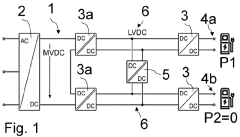
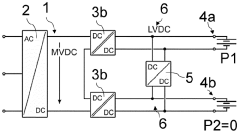
SST system with multiple LVDC outputs
PatentActiveIN202247054943A
Innovation
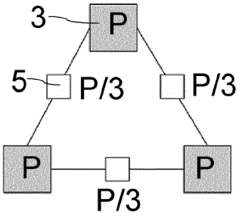
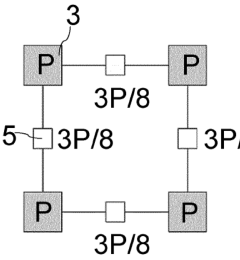
- An electrical interconnection circuit with at least two independent LVDC buses and an interconnecting DC/DC converter that re-routes power to equalize load across MVDC to LVDC converters, reducing the number of conversion stages by using a single interconnecting DC/DC converter to manage power between buses, thereby simplifying the circuit and reducing power ratings.
Power supply unit and loop power supply system
PatentInactiveUS20230253888A9
Innovation
- A redundant power supply system utilizing high-frequency isolating converters, specifically solid-state transformers (SSTs), which convert medium voltage AC inputs into low voltage DC outputs and connect in parallel to provide 2N redundancy, reducing the number of connection lines and enabling modular design for easier maintenance.


Grid Integration Standards and Policy Impact
The integration of Solid-State Transformers (SSTs) into existing electrical grids requires comprehensive adherence to evolving standards and regulatory frameworks that significantly impact their economic viability compared to conventional low-voltage systems. Current grid integration standards, primarily governed by IEEE 1547 series and IEC 61850 protocols, establish fundamental requirements for distributed energy resource interconnection, power quality, and communication interfaces that directly influence deployment costs and operational economics.
Regulatory compliance costs represent a substantial economic factor when comparing SST and traditional transformer implementations. SSTs must meet stringent electromagnetic compatibility standards under IEC 61000 series, requiring additional filtering and shielding components that increase initial capital expenditure by approximately 15-25% compared to conventional systems. However, these same standards enable advanced grid services capabilities, creating revenue opportunities through ancillary services participation that traditional transformers cannot provide.
Policy incentives significantly alter the economic landscape for SST adoption. Many jurisdictions offer accelerated depreciation schedules and tax credits for smart grid technologies, effectively reducing the total cost of ownership for SST installations. The European Union's Green Deal and similar policies in North America provide preferential treatment for technologies enabling renewable energy integration, where SSTs demonstrate superior performance in managing bidirectional power flows and voltage regulation.
Grid codes increasingly mandate advanced functionalities such as fault ride-through capabilities, reactive power support, and real-time monitoring that favor SST deployment. While compliance with these requirements adds complexity and cost to traditional low-voltage systems through external control equipment, SSTs inherently provide these capabilities through their power electronic interfaces, creating a competitive economic advantage in regulated markets.
Emerging standards for cybersecurity, particularly IEC 62351 and NIST frameworks, impose additional compliance burdens that affect both technologies differently. SSTs' digital nature requires robust cybersecurity measures, increasing operational costs, but their advanced monitoring capabilities enable proactive threat detection and automated response systems that reduce long-term security risks and associated economic losses compared to conventional systems with limited monitoring capabilities.
Regulatory compliance costs represent a substantial economic factor when comparing SST and traditional transformer implementations. SSTs must meet stringent electromagnetic compatibility standards under IEC 61000 series, requiring additional filtering and shielding components that increase initial capital expenditure by approximately 15-25% compared to conventional systems. However, these same standards enable advanced grid services capabilities, creating revenue opportunities through ancillary services participation that traditional transformers cannot provide.
Policy incentives significantly alter the economic landscape for SST adoption. Many jurisdictions offer accelerated depreciation schedules and tax credits for smart grid technologies, effectively reducing the total cost of ownership for SST installations. The European Union's Green Deal and similar policies in North America provide preferential treatment for technologies enabling renewable energy integration, where SSTs demonstrate superior performance in managing bidirectional power flows and voltage regulation.
Grid codes increasingly mandate advanced functionalities such as fault ride-through capabilities, reactive power support, and real-time monitoring that favor SST deployment. While compliance with these requirements adds complexity and cost to traditional low-voltage systems through external control equipment, SSTs inherently provide these capabilities through their power electronic interfaces, creating a competitive economic advantage in regulated markets.
Emerging standards for cybersecurity, particularly IEC 62351 and NIST frameworks, impose additional compliance burdens that affect both technologies differently. SSTs' digital nature requires robust cybersecurity measures, increasing operational costs, but their advanced monitoring capabilities enable proactive threat detection and automated response systems that reduce long-term security risks and associated economic losses compared to conventional systems with limited monitoring capabilities.
Lifecycle Cost Assessment Methodologies
Lifecycle cost assessment methodologies for comparing solid-state transformers and low-voltage systems require comprehensive analytical frameworks that capture both direct and indirect economic impacts over extended operational periods. The assessment process typically spans 20-30 years to align with typical infrastructure investment horizons, incorporating time-value considerations through net present value calculations and discounted cash flow analysis.
The primary methodology framework encompasses initial capital expenditure analysis, operational expenditure tracking, maintenance cost modeling, and end-of-life value assessment. Capital expenditure evaluation includes equipment procurement costs, installation expenses, system integration requirements, and necessary infrastructure modifications. For solid-state transformers, this involves higher upfront costs due to advanced semiconductor components and control systems, while low-voltage systems typically demonstrate lower initial investment requirements but may necessitate additional protective equipment and monitoring systems.
Operational expenditure assessment focuses on energy efficiency differentials, with solid-state transformers typically achieving 2-4% higher efficiency ratings compared to conventional low-voltage distribution systems. This efficiency advantage translates to measurable cost savings over the system lifecycle, particularly in high-load applications where energy costs represent significant operational expenses. The methodology incorporates variable energy pricing models and projected utility rate escalations to accurately forecast long-term operational savings.
Maintenance cost modeling represents a critical component where solid-state transformers demonstrate distinct advantages through reduced mechanical wear, elimination of oil-based cooling systems, and advanced diagnostic capabilities enabling predictive maintenance strategies. The assessment methodology quantifies scheduled maintenance intervals, unplanned repair frequencies, component replacement cycles, and associated labor costs. Reliability-centered maintenance principles guide the cost modeling process, incorporating failure rate data and mean-time-between-failure statistics.
Risk-adjusted cost analysis methodologies account for operational uncertainties, technology obsolescence factors, and regulatory compliance requirements. Monte Carlo simulation techniques enable sensitivity analysis across multiple cost variables, providing probabilistic cost distributions rather than deterministic point estimates. This approach facilitates more robust investment decision-making by quantifying potential cost variance ranges and identifying key risk factors affecting economic performance comparisons between competing technologies.
The primary methodology framework encompasses initial capital expenditure analysis, operational expenditure tracking, maintenance cost modeling, and end-of-life value assessment. Capital expenditure evaluation includes equipment procurement costs, installation expenses, system integration requirements, and necessary infrastructure modifications. For solid-state transformers, this involves higher upfront costs due to advanced semiconductor components and control systems, while low-voltage systems typically demonstrate lower initial investment requirements but may necessitate additional protective equipment and monitoring systems.
Operational expenditure assessment focuses on energy efficiency differentials, with solid-state transformers typically achieving 2-4% higher efficiency ratings compared to conventional low-voltage distribution systems. This efficiency advantage translates to measurable cost savings over the system lifecycle, particularly in high-load applications where energy costs represent significant operational expenses. The methodology incorporates variable energy pricing models and projected utility rate escalations to accurately forecast long-term operational savings.
Maintenance cost modeling represents a critical component where solid-state transformers demonstrate distinct advantages through reduced mechanical wear, elimination of oil-based cooling systems, and advanced diagnostic capabilities enabling predictive maintenance strategies. The assessment methodology quantifies scheduled maintenance intervals, unplanned repair frequencies, component replacement cycles, and associated labor costs. Reliability-centered maintenance principles guide the cost modeling process, incorporating failure rate data and mean-time-between-failure statistics.
Risk-adjusted cost analysis methodologies account for operational uncertainties, technology obsolescence factors, and regulatory compliance requirements. Monte Carlo simulation techniques enable sensitivity analysis across multiple cost variables, providing probabilistic cost distributions rather than deterministic point estimates. This approach facilitates more robust investment decision-making by quantifying potential cost variance ranges and identifying key risk factors affecting economic performance comparisons between competing technologies.
Unlock deeper insights with PatSnap Eureka Quick Research — get a full tech report to explore trends and direct your research. Try now!
Generate Your Research Report Instantly with AI Agent
Supercharge your innovation with PatSnap Eureka AI Agent Platform!