

Solid-State Transformers in Developing Regions: Deployment Strategy
APR 20, 202610 MIN READ
Generate Your Research Report Instantly with AI Agent
PatSnap Eureka helps you evaluate technical feasibility & market potential.
SST Technology Background and Regional Deployment Goals
Solid-State Transformers represent a paradigm shift from conventional electromagnetic transformers, utilizing power electronics and semiconductor devices to achieve voltage transformation, isolation, and power conditioning functions. Unlike traditional transformers that rely on magnetic coupling through iron cores, SSTs employ high-frequency switching converters, advanced control algorithms, and intelligent power management systems to deliver enhanced functionality and operational flexibility.
The evolution of SST technology has been driven by the increasing demand for grid modernization, renewable energy integration, and improved power quality management. Early developments in the 1970s focused on basic power electronic converters, while subsequent decades witnessed significant advances in semiconductor materials, particularly silicon carbide and gallium nitride devices, enabling higher switching frequencies and improved efficiency. The integration of digital control systems and communication capabilities has transformed SSTs into intelligent grid assets capable of real-time monitoring, fault detection, and autonomous operation.
Contemporary SST architectures typically incorporate multi-stage conversion topologies, including AC-DC rectification, DC-DC isolation and voltage regulation, and DC-AC inversion stages. Advanced designs feature bidirectional power flow capabilities, harmonic filtering, voltage regulation, and power factor correction functionalities within a single compact unit. The technology has matured to achieve efficiency levels exceeding 95% while providing superior controllability compared to conventional transformers.
Regional deployment goals for SST technology in developing regions center on addressing critical infrastructure challenges including grid stability, power quality improvement, and renewable energy integration. Primary objectives encompass enhancing distribution network reliability, reducing transmission losses, and enabling distributed generation connectivity. SSTs offer particular value in regions with weak grid infrastructure, frequent voltage fluctuations, and limited maintenance capabilities.
Strategic deployment targets include rural electrification programs where SSTs can facilitate microgrid development and islanding capabilities during grid outages. Urban applications focus on improving power quality in industrial zones and commercial districts while supporting electric vehicle charging infrastructure. The technology's compact footprint and reduced maintenance requirements align with resource constraints typical in developing regions.
Long-term regional goals emphasize building local technical expertise, establishing manufacturing capabilities, and creating sustainable deployment models. Success metrics include improved grid reliability indices, reduced power outages, enhanced renewable energy penetration rates, and measurable improvements in economic productivity through reliable electricity access. These objectives require coordinated efforts between technology providers, local utilities, regulatory bodies, and international development organizations to ensure sustainable implementation and operation.
The evolution of SST technology has been driven by the increasing demand for grid modernization, renewable energy integration, and improved power quality management. Early developments in the 1970s focused on basic power electronic converters, while subsequent decades witnessed significant advances in semiconductor materials, particularly silicon carbide and gallium nitride devices, enabling higher switching frequencies and improved efficiency. The integration of digital control systems and communication capabilities has transformed SSTs into intelligent grid assets capable of real-time monitoring, fault detection, and autonomous operation.
Contemporary SST architectures typically incorporate multi-stage conversion topologies, including AC-DC rectification, DC-DC isolation and voltage regulation, and DC-AC inversion stages. Advanced designs feature bidirectional power flow capabilities, harmonic filtering, voltage regulation, and power factor correction functionalities within a single compact unit. The technology has matured to achieve efficiency levels exceeding 95% while providing superior controllability compared to conventional transformers.
Regional deployment goals for SST technology in developing regions center on addressing critical infrastructure challenges including grid stability, power quality improvement, and renewable energy integration. Primary objectives encompass enhancing distribution network reliability, reducing transmission losses, and enabling distributed generation connectivity. SSTs offer particular value in regions with weak grid infrastructure, frequent voltage fluctuations, and limited maintenance capabilities.
Strategic deployment targets include rural electrification programs where SSTs can facilitate microgrid development and islanding capabilities during grid outages. Urban applications focus on improving power quality in industrial zones and commercial districts while supporting electric vehicle charging infrastructure. The technology's compact footprint and reduced maintenance requirements align with resource constraints typical in developing regions.
Long-term regional goals emphasize building local technical expertise, establishing manufacturing capabilities, and creating sustainable deployment models. Success metrics include improved grid reliability indices, reduced power outages, enhanced renewable energy penetration rates, and measurable improvements in economic productivity through reliable electricity access. These objectives require coordinated efforts between technology providers, local utilities, regulatory bodies, and international development organizations to ensure sustainable implementation and operation.
Market Demand Analysis for SSTs in Developing Regions
The deployment of Solid-State Transformers in developing regions is driven by several critical market demands that align with the unique infrastructure challenges and energy transition goals of these economies. The primary demand stems from the urgent need to modernize aging electrical grid infrastructure while simultaneously accommodating rapid urbanization and industrial growth.
Developing regions face significant power quality issues, including voltage fluctuations, harmonic distortions, and frequent outages that severely impact economic productivity. SSTs address these challenges by providing advanced power conditioning capabilities, voltage regulation, and grid stabilization functions that conventional transformers cannot deliver. This creates substantial market demand from utilities seeking to improve service reliability without complete grid overhauls.
The renewable energy integration imperative represents another major demand driver. Many developing countries have committed to ambitious renewable energy targets as part of their climate commitments and energy security strategies. SSTs enable seamless integration of distributed solar, wind, and energy storage systems by providing bidirectional power flow control and advanced grid management capabilities. This functionality is particularly valuable in regions with abundant renewable resources but limited grid flexibility.
Industrial and commercial sectors in developing regions demonstrate strong demand for SSTs due to their compact footprint and enhanced functionality. Space constraints in dense urban areas make the smaller size of SSTs compared to conventional transformers highly attractive. Additionally, the ability to provide multiple voltage levels and power quality enhancement features appeals to manufacturing facilities and data centers requiring reliable, high-quality power supply.
The market potential is further amplified by government initiatives promoting smart grid development and energy efficiency improvements. Many developing nations are implementing policies that incentivize advanced grid technologies as part of their infrastructure modernization programs. These policy frameworks create favorable market conditions for SST adoption by providing financial incentives and regulatory support.
Rural electrification programs represent an emerging demand segment where SSTs can enable more efficient power distribution networks. The technology's ability to operate effectively with renewable energy sources makes it particularly suitable for off-grid and mini-grid applications in remote areas where conventional grid extension is economically unfeasible.
Market demand is also influenced by the growing awareness of total cost of ownership benefits. While initial capital costs remain higher than conventional transformers, the reduced maintenance requirements, improved efficiency, and extended operational lifespan of SSTs create compelling economic value propositions for forward-thinking utilities and industrial users in developing regions.
Developing regions face significant power quality issues, including voltage fluctuations, harmonic distortions, and frequent outages that severely impact economic productivity. SSTs address these challenges by providing advanced power conditioning capabilities, voltage regulation, and grid stabilization functions that conventional transformers cannot deliver. This creates substantial market demand from utilities seeking to improve service reliability without complete grid overhauls.
The renewable energy integration imperative represents another major demand driver. Many developing countries have committed to ambitious renewable energy targets as part of their climate commitments and energy security strategies. SSTs enable seamless integration of distributed solar, wind, and energy storage systems by providing bidirectional power flow control and advanced grid management capabilities. This functionality is particularly valuable in regions with abundant renewable resources but limited grid flexibility.
Industrial and commercial sectors in developing regions demonstrate strong demand for SSTs due to their compact footprint and enhanced functionality. Space constraints in dense urban areas make the smaller size of SSTs compared to conventional transformers highly attractive. Additionally, the ability to provide multiple voltage levels and power quality enhancement features appeals to manufacturing facilities and data centers requiring reliable, high-quality power supply.
The market potential is further amplified by government initiatives promoting smart grid development and energy efficiency improvements. Many developing nations are implementing policies that incentivize advanced grid technologies as part of their infrastructure modernization programs. These policy frameworks create favorable market conditions for SST adoption by providing financial incentives and regulatory support.
Rural electrification programs represent an emerging demand segment where SSTs can enable more efficient power distribution networks. The technology's ability to operate effectively with renewable energy sources makes it particularly suitable for off-grid and mini-grid applications in remote areas where conventional grid extension is economically unfeasible.
Market demand is also influenced by the growing awareness of total cost of ownership benefits. While initial capital costs remain higher than conventional transformers, the reduced maintenance requirements, improved efficiency, and extended operational lifespan of SSTs create compelling economic value propositions for forward-thinking utilities and industrial users in developing regions.
Current SST Status and Infrastructure Challenges
Solid-State Transformers represent an emerging technology in power electronics, currently in the early commercialization phase with limited large-scale deployment worldwide. The technology has progressed from laboratory prototypes to pilot installations, primarily in developed markets with robust electrical infrastructure. Current SST implementations are predominantly found in specialized applications such as data centers, renewable energy integration points, and smart grid demonstration projects.
The manufacturing landscape for SSTs remains concentrated among a handful of specialized power electronics companies, with production volumes significantly lower than conventional transformers. This limited production scale results in substantially higher per-unit costs, creating a significant barrier for widespread adoption in price-sensitive developing markets. Current SST systems typically cost 3-5 times more than equivalent conventional transformers, though this premium is expected to decrease with increased production volumes.
Developing regions face unique infrastructure challenges that both complicate and necessitate SST deployment. Existing electrical grids in these areas often suffer from poor power quality, frequent voltage fluctuations, and inadequate maintenance infrastructure. Traditional transformer installations frequently experience premature failures due to harsh environmental conditions, including extreme temperatures, humidity, dust, and limited access to specialized maintenance personnel.
The grid stability issues prevalent in developing regions create operational challenges for SST deployment. Voltage sags, harmonics, and frequency variations can stress the semiconductor components within SSTs, potentially reducing their operational lifespan. However, these same grid quality issues represent opportunities where SST capabilities for power conditioning and grid stabilization could provide significant value.
Infrastructure limitations extend beyond electrical systems to include inadequate transportation networks, limited skilled workforce availability, and insufficient local technical support capabilities. Many developing regions lack the specialized knowledge base required for SST installation, commissioning, and maintenance, creating dependencies on external technical expertise that can increase operational costs and response times for critical repairs.
The regulatory and standards framework in many developing countries remains underdeveloped for advanced power electronics equipment. This creates uncertainty around certification requirements, safety standards, and grid interconnection protocols for SST deployment. Additionally, financing mechanisms for advanced electrical infrastructure remain limited, with traditional funding sources often favoring proven conventional technologies over innovative solutions.
Despite these challenges, several factors in developing regions create favorable conditions for SST adoption. The need for rapid grid expansion, integration of distributed renewable energy sources, and improvement of power quality align well with SST capabilities. Furthermore, the absence of extensive legacy infrastructure in some areas provides opportunities for leapfrogging to advanced technologies without the constraints of existing conventional transformer installations.
The manufacturing landscape for SSTs remains concentrated among a handful of specialized power electronics companies, with production volumes significantly lower than conventional transformers. This limited production scale results in substantially higher per-unit costs, creating a significant barrier for widespread adoption in price-sensitive developing markets. Current SST systems typically cost 3-5 times more than equivalent conventional transformers, though this premium is expected to decrease with increased production volumes.
Developing regions face unique infrastructure challenges that both complicate and necessitate SST deployment. Existing electrical grids in these areas often suffer from poor power quality, frequent voltage fluctuations, and inadequate maintenance infrastructure. Traditional transformer installations frequently experience premature failures due to harsh environmental conditions, including extreme temperatures, humidity, dust, and limited access to specialized maintenance personnel.
The grid stability issues prevalent in developing regions create operational challenges for SST deployment. Voltage sags, harmonics, and frequency variations can stress the semiconductor components within SSTs, potentially reducing their operational lifespan. However, these same grid quality issues represent opportunities where SST capabilities for power conditioning and grid stabilization could provide significant value.
Infrastructure limitations extend beyond electrical systems to include inadequate transportation networks, limited skilled workforce availability, and insufficient local technical support capabilities. Many developing regions lack the specialized knowledge base required for SST installation, commissioning, and maintenance, creating dependencies on external technical expertise that can increase operational costs and response times for critical repairs.
The regulatory and standards framework in many developing countries remains underdeveloped for advanced power electronics equipment. This creates uncertainty around certification requirements, safety standards, and grid interconnection protocols for SST deployment. Additionally, financing mechanisms for advanced electrical infrastructure remain limited, with traditional funding sources often favoring proven conventional technologies over innovative solutions.
Despite these challenges, several factors in developing regions create favorable conditions for SST adoption. The need for rapid grid expansion, integration of distributed renewable energy sources, and improvement of power quality align well with SST capabilities. Furthermore, the absence of extensive legacy infrastructure in some areas provides opportunities for leapfrogging to advanced technologies without the constraints of existing conventional transformer installations.
Current SST Deployment Solutions and Strategies
01 Power conversion and voltage regulation in solid-state transformers
Solid-state transformers utilize advanced power electronic circuits to perform voltage conversion and regulation functions. These systems employ semiconductor switches and control circuits to achieve efficient AC-AC or AC-DC-AC conversion without traditional magnetic cores. The technology enables precise voltage control, improved power quality, and enhanced grid integration capabilities through digital control algorithms and real-time monitoring systems.- Power conversion and voltage regulation in solid-state transformers: Solid-state transformers utilize advanced power electronic circuits to perform voltage conversion and regulation functions. These systems employ semiconductor switches and control circuits to achieve efficient AC-AC or AC-DC-AC conversion without traditional magnetic cores. The technology enables precise voltage control, improved power quality, and enhanced grid integration capabilities through digital control algorithms and real-time monitoring systems.
- Modular multilevel converter architectures for solid-state transformers: Modular multilevel converter topologies provide scalable solutions for high-voltage solid-state transformer applications. These architectures consist of cascaded converter modules that can be independently controlled to achieve desired voltage levels and waveform quality. The modular approach offers advantages in terms of redundancy, fault tolerance, and ease of maintenance while enabling operation at medium and high voltage levels without requiring series connection of switching devices.
- Thermal management and cooling systems for solid-state transformers: Effective thermal management is critical for solid-state transformer operation due to high power densities and semiconductor heat generation. Advanced cooling solutions incorporate heat sinks, forced air cooling, liquid cooling systems, and phase-change materials to maintain optimal operating temperatures. Thermal design considerations include junction temperature control, thermal interface materials, and heat distribution strategies to ensure reliability and extend component lifetime.
- Control strategies and protection mechanisms for solid-state transformers: Sophisticated control algorithms and protection schemes are essential for safe and efficient solid-state transformer operation. These systems implement real-time monitoring, fault detection, overcurrent protection, and voltage regulation through digital signal processors and microcontrollers. Advanced control methods include model predictive control, adaptive control, and artificial intelligence-based approaches to optimize performance under varying load conditions and grid disturbances.
- Integration with renewable energy sources and smart grid applications: Solid-state transformers serve as key enabling technology for renewable energy integration and smart grid infrastructure. These devices facilitate bidirectional power flow, provide grid support functions, and enable distributed energy resource management. Applications include solar and wind power integration, energy storage system interfaces, electric vehicle charging infrastructure, and microgrid interconnection with enhanced power quality and grid stability features.
02 Modular multilevel converter architectures for solid-state transformers
Modular multilevel converter topologies provide scalable solutions for high-voltage solid-state transformer applications. These architectures consist of cascaded converter modules that can be independently controlled to achieve desired voltage levels and waveform quality. The modular approach offers advantages in terms of redundancy, fault tolerance, and ease of maintenance while enabling operation at medium and high voltage levels without requiring series connection of switching devices.Expand Specific Solutions03 Thermal management and cooling systems for solid-state transformers
Effective thermal management is critical for solid-state transformer operation due to high power densities and semiconductor heat generation. Advanced cooling solutions incorporate heat sinks, liquid cooling systems, and thermal interface materials to maintain optimal operating temperatures. Design considerations include thermal modeling, heat distribution analysis, and integration of temperature monitoring systems to ensure reliable long-term operation and prevent thermal-related failures.Expand Specific Solutions04 Control strategies and protection mechanisms for solid-state transformers
Sophisticated control algorithms and protection schemes are essential for solid-state transformer operation in power systems. These include fault detection and isolation methods, overcurrent protection, voltage regulation control, and grid synchronization techniques. The control systems employ digital signal processors and field-programmable gate arrays to implement real-time control loops, ensuring stable operation under various load conditions and grid disturbances while providing fast response to abnormal conditions.Expand Specific Solutions05 Integration of solid-state transformers with renewable energy systems
Solid-state transformers serve as key interface devices for integrating renewable energy sources into power grids. They provide functionalities such as maximum power point tracking, reactive power compensation, and harmonic filtering. The technology enables bidirectional power flow management, supports distributed generation architectures, and facilitates smart grid applications through advanced communication interfaces and grid support functions including voltage and frequency regulation.Expand Specific Solutions
Major SST Manufacturers and Regional Market Players
The solid-state transformer market for developing regions is in its early commercialization stage, characterized by significant growth potential driven by infrastructure modernization needs and grid stability requirements. The market remains relatively nascent with substantial expansion opportunities as developing economies invest in smart grid technologies. From a technology maturity perspective, the competitive landscape shows varying levels of advancement among key players. Established power electronics companies like Siemens AG and Delta Electronics demonstrate mature SST capabilities with proven deployment experience, while semiconductor leaders such as ON Semiconductor and Fuji Electric provide critical component technologies enabling SST functionality. Chinese state enterprises including State Grid Corp. of China and Guangdong Power Grid represent major deployment drivers with extensive infrastructure reach, though their SST implementation remains in pilot phases. Technology companies like Huawei Digital Power Technologies and ZTE Corp. are advancing digital integration aspects, while research institutions such as Nanyang Technological University contribute to technological advancement, indicating a collaborative ecosystem still developing optimal deployment strategies for cost-effective regional implementation.
State Grid Corp. of China
Technical Solution: State Grid Corporation has developed large-scale solid-state transformer deployment strategies through extensive pilot projects across diverse geographical regions. Their approach integrates SST technology with smart grid infrastructure, featuring centralized control systems and standardized installation procedures. The company focuses on technology transfer programs and local capacity building initiatives, establishing regional maintenance centers and training facilities. Their SST solutions incorporate advanced fault detection and self-healing capabilities designed for grid stability in developing regions.
Strengths: Extensive deployment experience, strong government backing, comprehensive infrastructure development approach. Weaknesses: Technology primarily optimized for Chinese market conditions, limited international presence.
Delta Electronics, Inc.
Technical Solution: Delta Electronics has pioneered cost-effective solid-state transformer solutions utilizing advanced power conversion topologies with integrated energy storage capabilities. Their SST systems feature modular designs that can be easily transported and installed in developing regions with limited infrastructure. The company emphasizes ruggedized construction to withstand harsh environmental conditions, incorporating wide bandgap semiconductors for improved efficiency and reduced cooling requirements. Their deployment strategy includes local training programs and simplified maintenance protocols.
Strengths: Cost-effective solutions, robust environmental tolerance, strong focus on emerging markets. Weaknesses: Limited high-voltage applications, smaller scale compared to major competitors.
Core SST Technologies for Developing Region Applications
Power unit and solid-state transformer
PatentPendingEP4369588A1
Innovation
- A power unit comprising a first subsidiary power supply circuit and a first power circuit, where the first power circuit includes an AC/AC power main circuit and a first control module, and a second power circuit with an AC/DC power main circuit, allowing for voltage adjustment and reliable power delivery to the control modules, with no separate isolation device required.


SST system with multiple LVDC outputs
PatentActiveIN202247054943A
Innovation
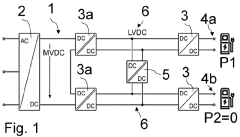
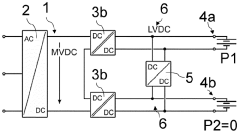
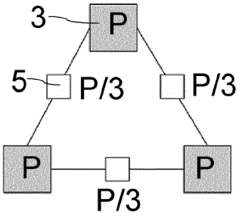
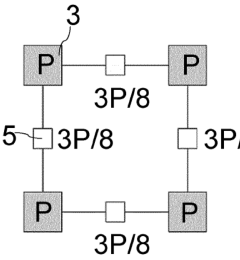
- An electrical interconnection circuit with at least two independent LVDC buses and an interconnecting DC/DC converter that re-routes power to equalize load across MVDC to LVDC converters, reducing the number of conversion stages by using a single interconnecting DC/DC converter to manage power between buses, thereby simplifying the circuit and reducing power ratings.
Policy Framework and Grid Standards in Developing Regions
The deployment of solid-state transformers in developing regions requires a comprehensive policy framework that addresses the unique challenges and opportunities present in these markets. Current regulatory environments in many developing countries lack specific guidelines for advanced power electronics technologies, creating uncertainty for investors and technology providers. Establishing clear regulatory pathways is essential for facilitating SST adoption while ensuring safety and reliability standards.
Grid standards in developing regions often reflect legacy infrastructure requirements rather than modern smart grid capabilities. Many countries still rely on outdated technical specifications that do not accommodate the bidirectional power flow, advanced control features, and communication capabilities inherent in solid-state transformer technology. This misalignment creates barriers to deployment and limits the potential benefits of SST integration.
Policy incentives play a crucial role in accelerating SST adoption in price-sensitive markets. Feed-in tariffs, tax credits, and subsidies specifically designed for advanced grid technologies can help offset the higher initial costs associated with solid-state transformers. Several developing nations have begun implementing technology-neutral policies that support grid modernization investments, though few have targeted SST deployment specifically.
International standards harmonization presents both challenges and opportunities for developing regions. While adopting established IEEE and IEC standards ensures global compatibility, many developing countries lack the technical expertise and testing facilities required for compliance verification. Regional standards organizations are increasingly collaborating to develop simplified certification processes that maintain safety requirements while reducing implementation complexity.
Regulatory capacity building emerges as a critical success factor for SST deployment. Many developing regions require technical assistance to update their grid codes and establish appropriate testing protocols. International development organizations and technology vendors are beginning to provide training programs for local regulators, though these efforts remain limited in scope and geographic coverage.
The integration of renewable energy policies with SST deployment strategies offers significant potential for developing regions. Countries with ambitious renewable energy targets can leverage solid-state transformer capabilities to address grid stability challenges associated with variable generation sources. Policy frameworks that recognize SST contributions to renewable integration can create additional value streams for deployment projects.
Grid standards in developing regions often reflect legacy infrastructure requirements rather than modern smart grid capabilities. Many countries still rely on outdated technical specifications that do not accommodate the bidirectional power flow, advanced control features, and communication capabilities inherent in solid-state transformer technology. This misalignment creates barriers to deployment and limits the potential benefits of SST integration.
Policy incentives play a crucial role in accelerating SST adoption in price-sensitive markets. Feed-in tariffs, tax credits, and subsidies specifically designed for advanced grid technologies can help offset the higher initial costs associated with solid-state transformers. Several developing nations have begun implementing technology-neutral policies that support grid modernization investments, though few have targeted SST deployment specifically.
International standards harmonization presents both challenges and opportunities for developing regions. While adopting established IEEE and IEC standards ensures global compatibility, many developing countries lack the technical expertise and testing facilities required for compliance verification. Regional standards organizations are increasingly collaborating to develop simplified certification processes that maintain safety requirements while reducing implementation complexity.
Regulatory capacity building emerges as a critical success factor for SST deployment. Many developing regions require technical assistance to update their grid codes and establish appropriate testing protocols. International development organizations and technology vendors are beginning to provide training programs for local regulators, though these efforts remain limited in scope and geographic coverage.
The integration of renewable energy policies with SST deployment strategies offers significant potential for developing regions. Countries with ambitious renewable energy targets can leverage solid-state transformer capabilities to address grid stability challenges associated with variable generation sources. Policy frameworks that recognize SST contributions to renewable integration can create additional value streams for deployment projects.
Economic Feasibility and Financing Models for SST Deployment
The economic feasibility of solid-state transformer deployment in developing regions hinges on comprehensive cost-benefit analysis that accounts for unique regional constraints. Initial capital expenditure for SST systems remains significantly higher than conventional transformers, with costs ranging from 3-5 times traditional alternatives. However, the total cost of ownership calculation reveals compelling advantages when factoring in reduced maintenance requirements, extended operational lifespan, and enhanced grid efficiency capabilities that are particularly valuable in regions with limited technical infrastructure.
Financing models for SST deployment must address the capital intensity challenge through innovative approaches tailored to developing market conditions. Blended finance mechanisms combining development finance institution funding with private sector investment have emerged as viable pathways. These structures typically involve concessional loans or grants covering 30-40% of project costs, reducing financial barriers for local utilities and private developers. Green bonds specifically targeting smart grid infrastructure have gained traction, with several successful issuances in emerging markets demonstrating investor appetite for sustainable energy transformation projects.
Public-private partnerships represent another critical financing avenue, particularly for large-scale grid modernization initiatives. These arrangements allow governments to leverage private sector expertise while spreading capital requirements over extended periods. Revenue-sharing models based on efficiency gains and grid reliability improvements provide sustainable cash flows that support long-term financing structures. Additionally, performance-based contracts tied to measurable outcomes such as reduced transmission losses or improved power quality create alignment between stakeholders and project success metrics.
International development funding sources, including multilateral development banks and climate finance facilities, increasingly recognize SST technology as eligible for infrastructure investment programs. The technology's contribution to grid resilience and renewable energy integration aligns with sustainable development objectives, making projects attractive for concessional financing. Carbon credit mechanisms and results-based climate finance can provide additional revenue streams that improve overall project economics and reduce payback periods for SST investments in developing regions.
Financing models for SST deployment must address the capital intensity challenge through innovative approaches tailored to developing market conditions. Blended finance mechanisms combining development finance institution funding with private sector investment have emerged as viable pathways. These structures typically involve concessional loans or grants covering 30-40% of project costs, reducing financial barriers for local utilities and private developers. Green bonds specifically targeting smart grid infrastructure have gained traction, with several successful issuances in emerging markets demonstrating investor appetite for sustainable energy transformation projects.
Public-private partnerships represent another critical financing avenue, particularly for large-scale grid modernization initiatives. These arrangements allow governments to leverage private sector expertise while spreading capital requirements over extended periods. Revenue-sharing models based on efficiency gains and grid reliability improvements provide sustainable cash flows that support long-term financing structures. Additionally, performance-based contracts tied to measurable outcomes such as reduced transmission losses or improved power quality create alignment between stakeholders and project success metrics.
International development funding sources, including multilateral development banks and climate finance facilities, increasingly recognize SST technology as eligible for infrastructure investment programs. The technology's contribution to grid resilience and renewable energy integration aligns with sustainable development objectives, making projects attractive for concessional financing. Carbon credit mechanisms and results-based climate finance can provide additional revenue streams that improve overall project economics and reduce payback periods for SST investments in developing regions.
Unlock deeper insights with PatSnap Eureka Quick Research — get a full tech report to explore trends and direct your research. Try now!
Generate Your Research Report Instantly with AI Agent
Supercharge your innovation with PatSnap Eureka AI Agent Platform!