

Solid-State Transformers in Data Centres: Infrastructure Efficiency
APR 20, 20269 MIN READ
Generate Your Research Report Instantly with AI Agent
PatSnap Eureka helps you evaluate technical feasibility & market potential.
SST Data Center Infrastructure Background and Objectives
The global data center industry has experienced unprecedented growth over the past decade, driven by the exponential increase in digital transformation, cloud computing adoption, and the proliferation of data-intensive applications. Traditional data centers rely heavily on conventional power distribution systems that utilize silicon-based transformers and multiple conversion stages, resulting in significant energy losses and reduced overall efficiency. These legacy systems typically operate at efficiency levels of 85-90%, leaving substantial room for improvement in an industry where energy costs represent 20-30% of total operational expenses.
Solid-State Transformers represent a paradigm shift in power conversion technology, leveraging advanced semiconductor materials and intelligent control systems to achieve superior performance compared to conventional magnetic transformers. SSTs integrate power electronic converters with high-frequency transformers, enabling bidirectional power flow, voltage regulation, and enhanced grid integration capabilities. The technology has evolved from early research concepts in the 1970s to commercially viable solutions in the 2020s, with significant breakthroughs in wide bandgap semiconductors such as silicon carbide and gallium nitride.
The primary objective of implementing SST technology in data center infrastructure is to achieve efficiency levels exceeding 95% while simultaneously reducing physical footprint and improving power quality. This efficiency improvement translates to substantial cost savings and reduced carbon footprint, aligning with global sustainability initiatives and corporate environmental commitments. Additionally, SSTs offer enhanced controllability and monitoring capabilities, enabling real-time optimization of power distribution and improved system reliability.
Current market drivers for SST adoption include increasingly stringent energy efficiency regulations, rising electricity costs, and the growing emphasis on sustainable data center operations. The technology addresses critical challenges in modern data centers, including power density limitations, thermal management issues, and the need for flexible power distribution architectures that can accommodate varying computational loads and renewable energy integration.
The strategic implementation of SSTs in data center infrastructure aims to establish a foundation for next-generation power systems that can support emerging technologies such as artificial intelligence workloads, edge computing deployments, and high-performance computing clusters. These applications demand higher power densities and more sophisticated power management capabilities than traditional data center operations, making SST technology a critical enabler for future infrastructure development.
Solid-State Transformers represent a paradigm shift in power conversion technology, leveraging advanced semiconductor materials and intelligent control systems to achieve superior performance compared to conventional magnetic transformers. SSTs integrate power electronic converters with high-frequency transformers, enabling bidirectional power flow, voltage regulation, and enhanced grid integration capabilities. The technology has evolved from early research concepts in the 1970s to commercially viable solutions in the 2020s, with significant breakthroughs in wide bandgap semiconductors such as silicon carbide and gallium nitride.
The primary objective of implementing SST technology in data center infrastructure is to achieve efficiency levels exceeding 95% while simultaneously reducing physical footprint and improving power quality. This efficiency improvement translates to substantial cost savings and reduced carbon footprint, aligning with global sustainability initiatives and corporate environmental commitments. Additionally, SSTs offer enhanced controllability and monitoring capabilities, enabling real-time optimization of power distribution and improved system reliability.
Current market drivers for SST adoption include increasingly stringent energy efficiency regulations, rising electricity costs, and the growing emphasis on sustainable data center operations. The technology addresses critical challenges in modern data centers, including power density limitations, thermal management issues, and the need for flexible power distribution architectures that can accommodate varying computational loads and renewable energy integration.
The strategic implementation of SSTs in data center infrastructure aims to establish a foundation for next-generation power systems that can support emerging technologies such as artificial intelligence workloads, edge computing deployments, and high-performance computing clusters. These applications demand higher power densities and more sophisticated power management capabilities than traditional data center operations, making SST technology a critical enabler for future infrastructure development.
Market Demand for Efficient Data Center Power Solutions
The global data center industry is experiencing unprecedented growth driven by digital transformation, cloud computing adoption, and the exponential increase in data generation. This surge has created an urgent demand for more efficient power solutions as data centers consume substantial amounts of electricity, with power infrastructure representing one of the largest operational expenses. Traditional power distribution systems in data centers face significant challenges in meeting modern efficiency requirements, creating substantial market opportunities for advanced power technologies.
Energy efficiency has become a critical competitive differentiator for data center operators as electricity costs continue to rise and environmental regulations become more stringent. Hyperscale cloud providers and colocation facilities are actively seeking solutions that can reduce power losses, improve power quality, and enhance overall system reliability. The growing emphasis on sustainability and carbon footprint reduction has intensified the focus on power conversion efficiency, with even marginal improvements translating to significant cost savings and environmental benefits at scale.
The increasing power density requirements of modern computing equipment, including high-performance processors and artificial intelligence accelerators, demand more sophisticated power management solutions. Data centers are transitioning from traditional AC power distribution to more efficient DC architectures, creating demand for advanced power conversion technologies that can handle higher voltages and provide better regulation. This shift requires power solutions capable of managing complex load profiles while maintaining high efficiency across varying operating conditions.
Regulatory pressures and corporate sustainability commitments are driving data center operators to adopt more efficient technologies. Government initiatives promoting energy efficiency and carbon reduction targets have created additional incentives for implementing advanced power solutions. The market demand extends beyond efficiency improvements to include enhanced reliability, reduced maintenance requirements, and improved power quality that can support sensitive computing workloads.
The competitive landscape among data center providers has intensified the focus on operational efficiency as a key differentiator. Facilities with superior power efficiency can offer more competitive pricing while maintaining higher profit margins. This economic pressure has accelerated the adoption timeline for innovative power technologies, with operators willing to invest in advanced solutions that demonstrate clear return on investment through reduced operational costs and improved performance metrics.
Energy efficiency has become a critical competitive differentiator for data center operators as electricity costs continue to rise and environmental regulations become more stringent. Hyperscale cloud providers and colocation facilities are actively seeking solutions that can reduce power losses, improve power quality, and enhance overall system reliability. The growing emphasis on sustainability and carbon footprint reduction has intensified the focus on power conversion efficiency, with even marginal improvements translating to significant cost savings and environmental benefits at scale.
The increasing power density requirements of modern computing equipment, including high-performance processors and artificial intelligence accelerators, demand more sophisticated power management solutions. Data centers are transitioning from traditional AC power distribution to more efficient DC architectures, creating demand for advanced power conversion technologies that can handle higher voltages and provide better regulation. This shift requires power solutions capable of managing complex load profiles while maintaining high efficiency across varying operating conditions.
Regulatory pressures and corporate sustainability commitments are driving data center operators to adopt more efficient technologies. Government initiatives promoting energy efficiency and carbon reduction targets have created additional incentives for implementing advanced power solutions. The market demand extends beyond efficiency improvements to include enhanced reliability, reduced maintenance requirements, and improved power quality that can support sensitive computing workloads.
The competitive landscape among data center providers has intensified the focus on operational efficiency as a key differentiator. Facilities with superior power efficiency can offer more competitive pricing while maintaining higher profit margins. This economic pressure has accelerated the adoption timeline for innovative power technologies, with operators willing to invest in advanced solutions that demonstrate clear return on investment through reduced operational costs and improved performance metrics.
Current SST Technology Status and Implementation Challenges
Solid-State Transformers represent a significant technological advancement in power conversion systems, yet their implementation in data center environments faces considerable technical and economic challenges. Current SST technology has achieved substantial progress in laboratory settings, with prototypes demonstrating efficiency levels exceeding 95% and power densities reaching 10-15 kW/L. However, the transition from research prototypes to commercial deployment reveals critical gaps in reliability, cost-effectiveness, and standardization.
The semiconductor technology underlying SSTs has evolved rapidly, with silicon carbide and gallium nitride devices enabling higher switching frequencies and improved thermal performance. Leading manufacturers have developed SST systems capable of handling power ratings from 100kW to several megawatts, suitable for data center applications. These systems integrate advanced control algorithms, real-time monitoring capabilities, and bidirectional power flow management, positioning them as intelligent grid interface solutions.
Implementation challenges primarily center around thermal management, electromagnetic interference, and system integration complexity. Data center environments demand continuous operation with minimal downtime, yet current SST designs struggle with heat dissipation at high power densities. The multi-stage conversion architecture, while providing flexibility, introduces additional failure points and requires sophisticated fault tolerance mechanisms that are still under development.
Cost remains a significant barrier, with SST systems currently priced 3-5 times higher than conventional transformer solutions. Manufacturing scalability issues, particularly for wide-bandgap semiconductors, contribute to elevated costs. Additionally, the lack of standardized testing protocols and certification procedures creates uncertainty for data center operators considering SST adoption.
Reliability concerns persist due to the complex electronic components and control systems inherent in SST designs. While conventional transformers offer decades of proven service life, SSTs must demonstrate comparable longevity while managing increased component count and thermal stress. Current field trials indicate promising results, but long-term reliability data remains limited, creating hesitation among conservative data center infrastructure managers.
Integration challenges encompass compatibility with existing power distribution architectures, protection coordination, and maintenance requirements. Data centers require seamless integration with uninterruptible power supplies, backup generators, and monitoring systems. SSTs must demonstrate plug-and-play compatibility while providing enhanced functionality without compromising system reliability or requiring extensive infrastructure modifications.
The semiconductor technology underlying SSTs has evolved rapidly, with silicon carbide and gallium nitride devices enabling higher switching frequencies and improved thermal performance. Leading manufacturers have developed SST systems capable of handling power ratings from 100kW to several megawatts, suitable for data center applications. These systems integrate advanced control algorithms, real-time monitoring capabilities, and bidirectional power flow management, positioning them as intelligent grid interface solutions.
Implementation challenges primarily center around thermal management, electromagnetic interference, and system integration complexity. Data center environments demand continuous operation with minimal downtime, yet current SST designs struggle with heat dissipation at high power densities. The multi-stage conversion architecture, while providing flexibility, introduces additional failure points and requires sophisticated fault tolerance mechanisms that are still under development.
Cost remains a significant barrier, with SST systems currently priced 3-5 times higher than conventional transformer solutions. Manufacturing scalability issues, particularly for wide-bandgap semiconductors, contribute to elevated costs. Additionally, the lack of standardized testing protocols and certification procedures creates uncertainty for data center operators considering SST adoption.
Reliability concerns persist due to the complex electronic components and control systems inherent in SST designs. While conventional transformers offer decades of proven service life, SSTs must demonstrate comparable longevity while managing increased component count and thermal stress. Current field trials indicate promising results, but long-term reliability data remains limited, creating hesitation among conservative data center infrastructure managers.
Integration challenges encompass compatibility with existing power distribution architectures, protection coordination, and maintenance requirements. Data centers require seamless integration with uninterruptible power supplies, backup generators, and monitoring systems. SSTs must demonstrate plug-and-play compatibility while providing enhanced functionality without compromising system reliability or requiring extensive infrastructure modifications.
Existing SST Solutions for Data Center Infrastructure
01 Advanced power conversion topologies for solid-state transformers
Solid-state transformers utilize advanced power conversion topologies including multi-level converters, modular multilevel converters, and cascaded H-bridge configurations to achieve high efficiency in power transformation. These topologies enable better voltage regulation, reduced harmonic distortion, and improved power quality. The implementation of sophisticated switching strategies and control algorithms optimizes the conversion process, minimizing switching losses and enhancing overall system efficiency in grid infrastructure applications.- Advanced power conversion topologies for solid-state transformers: Solid-state transformers utilize advanced power conversion topologies including multi-level converters, modular multilevel converters, and cascaded H-bridge configurations to achieve higher efficiency in power transformation. These topologies enable better voltage regulation, reduced harmonic distortion, and improved power quality while minimizing conversion losses. The implementation of sophisticated switching strategies and control algorithms optimizes the power flow and enhances overall system efficiency in grid infrastructure applications.
- High-frequency transformer design and magnetic materials: The efficiency of solid-state transformers is significantly enhanced through the use of high-frequency operation and advanced magnetic materials. Optimized core designs utilizing nanocrystalline, amorphous, or ferrite materials reduce core losses and enable compact transformer construction. High-frequency operation allows for smaller magnetic components while maintaining high power density and efficiency. Thermal management techniques and insulation systems are integrated to ensure reliable operation at elevated frequencies.
- Wide bandgap semiconductor devices integration: Integration of wide bandgap semiconductor devices such as silicon carbide and gallium nitride transistors significantly improves the efficiency of solid-state transformers. These devices offer lower switching losses, higher operating temperatures, and faster switching speeds compared to traditional silicon-based components. The reduced conduction and switching losses directly translate to improved overall system efficiency and enable higher power density designs suitable for modern infrastructure applications.
- Intelligent control and monitoring systems: Advanced control algorithms and real-time monitoring systems optimize the operational efficiency of solid-state transformers in infrastructure applications. Digital signal processors and microcontrollers implement adaptive control strategies that respond to varying load conditions and grid parameters. Predictive maintenance capabilities, fault detection mechanisms, and communication interfaces enable smart grid integration. These intelligent systems maximize efficiency through dynamic optimization of operating parameters and power flow management.
- Modular and scalable architecture designs: Modular architecture designs enable scalable and efficient solid-state transformer implementations for various infrastructure requirements. Redundant module configurations provide fault tolerance and improved reliability while maintaining high efficiency across different load conditions. Standardized building blocks allow for flexible system sizing and simplified maintenance procedures. The modular approach facilitates parallel operation of multiple units, load sharing, and graceful degradation capabilities that enhance overall infrastructure efficiency and availability.
02 Thermal management and cooling systems for efficiency optimization
Effective thermal management is critical for maintaining high efficiency in solid-state transformer operations. Advanced cooling techniques including liquid cooling, heat pipe technology, and optimized heat sink designs are employed to dissipate heat generated by power semiconductor devices. Proper thermal design ensures components operate within optimal temperature ranges, reducing thermal losses and extending equipment lifespan while maintaining peak efficiency levels in infrastructure deployments.Expand Specific Solutions03 Integration of wide bandgap semiconductor devices
The incorporation of wide bandgap semiconductor materials such as silicon carbide and gallium nitride in solid-state transformers significantly enhances infrastructure efficiency. These materials offer superior switching characteristics, higher operating temperatures, and lower conduction losses compared to traditional silicon devices. The use of these advanced semiconductors enables higher switching frequencies, reduced component sizes, and improved power density while achieving better overall energy conversion efficiency.Expand Specific Solutions04 Smart grid integration and control systems
Solid-state transformers incorporate intelligent control systems and communication interfaces for seamless smart grid integration. These systems enable real-time monitoring, adaptive control, and bidirectional power flow management. Advanced algorithms optimize voltage regulation, power factor correction, and load balancing to maximize infrastructure efficiency. The integration capabilities support renewable energy sources, energy storage systems, and demand response functionalities, enhancing overall grid performance and reliability.Expand Specific Solutions05 Modular and scalable architecture design
Modular design approaches in solid-state transformers enable scalable infrastructure solutions with improved efficiency and reliability. The architecture allows for redundancy, fault tolerance, and easy maintenance through hot-swappable modules. Standardized building blocks facilitate customization for different voltage and power ratings while maintaining high efficiency across various operating conditions. This modularity reduces installation complexity, minimizes downtime, and optimizes lifecycle costs in infrastructure applications.Expand Specific Solutions
Major Players in SST and Data Center Power Industry
The solid-state transformer (SST) market for data center infrastructure is in its early commercialization stage, transitioning from research and development to practical deployment. The market represents a significant growth opportunity, driven by increasing demand for energy-efficient data center solutions and the global push toward sustainable computing infrastructure. Current market size remains relatively small but is projected to expand rapidly as hyperscale data centers seek advanced power management technologies. Technology maturity varies significantly across market players, with established power electronics companies like Delta Electronics, Schneider Electric, and Infineon Technologies leading in component-level solutions, while tech giants such as Google, Microsoft, and Huawei are driving system-level integration and deployment. Chinese companies including ZTE and China Unicom are actively pursuing SST implementations for telecommunications infrastructure, while specialized firms like Vertiv focus on data center-specific applications. Academic institutions like Zhejiang University and Nanyang Technological University contribute fundamental research, indicating ongoing technological advancement and knowledge transfer to industry partners.
Huawei Digital Power Technologies Co Ltd
Technical Solution: Huawei has developed advanced solid-state transformer solutions specifically designed for data center applications, featuring high-frequency isolation transformers with silicon carbide (SiC) power semiconductors. Their SST systems operate at frequencies up to 20kHz, achieving power densities exceeding 10kW/L while maintaining efficiency levels above 96%. The technology integrates intelligent power management algorithms that enable real-time load balancing and fault isolation capabilities. Their modular design allows for scalable deployment in hyperscale data centers, with built-in communication interfaces for seamless integration with existing power management systems. The solution includes advanced thermal management and predictive maintenance features.
Strengths: High power density, excellent efficiency, modular scalability, intelligent management features. Weaknesses: Higher initial cost compared to traditional transformers, complex control systems requiring specialized maintenance expertise.
ZTE Corp.
Technical Solution: ZTE has developed solid-state transformer solutions targeting telecommunications and data center markets, with emphasis on 5G infrastructure power requirements. Their SST technology utilizes gallium nitride (GaN) power devices operating at switching frequencies up to 100kHz, enabling compact designs with power densities reaching 15kW/L. The system architecture supports multiple input voltage levels from 3.3kV to 35kV with flexible output configurations for diverse data center loads. ZTE's implementation includes advanced digital control systems with real-time monitoring, fault detection, and automatic reconfiguration capabilities. The technology integrates renewable energy interfaces and energy storage systems for enhanced grid stability and reduced carbon footprint in data center operations.
Strengths: High switching frequency enabling compact design, flexible voltage configurations, strong renewable energy integration, comprehensive digital control. Weaknesses: Limited proven track record in large-scale data center deployments, potential electromagnetic interference issues at high frequencies.
Core SST Technologies for Data Center Efficiency
Cascaded power conversion system and power distribution method thereof
PatentPendingEP4451537A1
Innovation
- The cascaded power conversion system operates DC/DC conversion units in bypass, boost, and hold modes, allowing for low switching and transformer losses, and eliminates the need for high-capacity bus capacitors by immediately outputting DC energy, reducing system cost.


Phase-shift control method for power module, three-phase power module, and power system
PatentActiveUS20220368235A1
Innovation
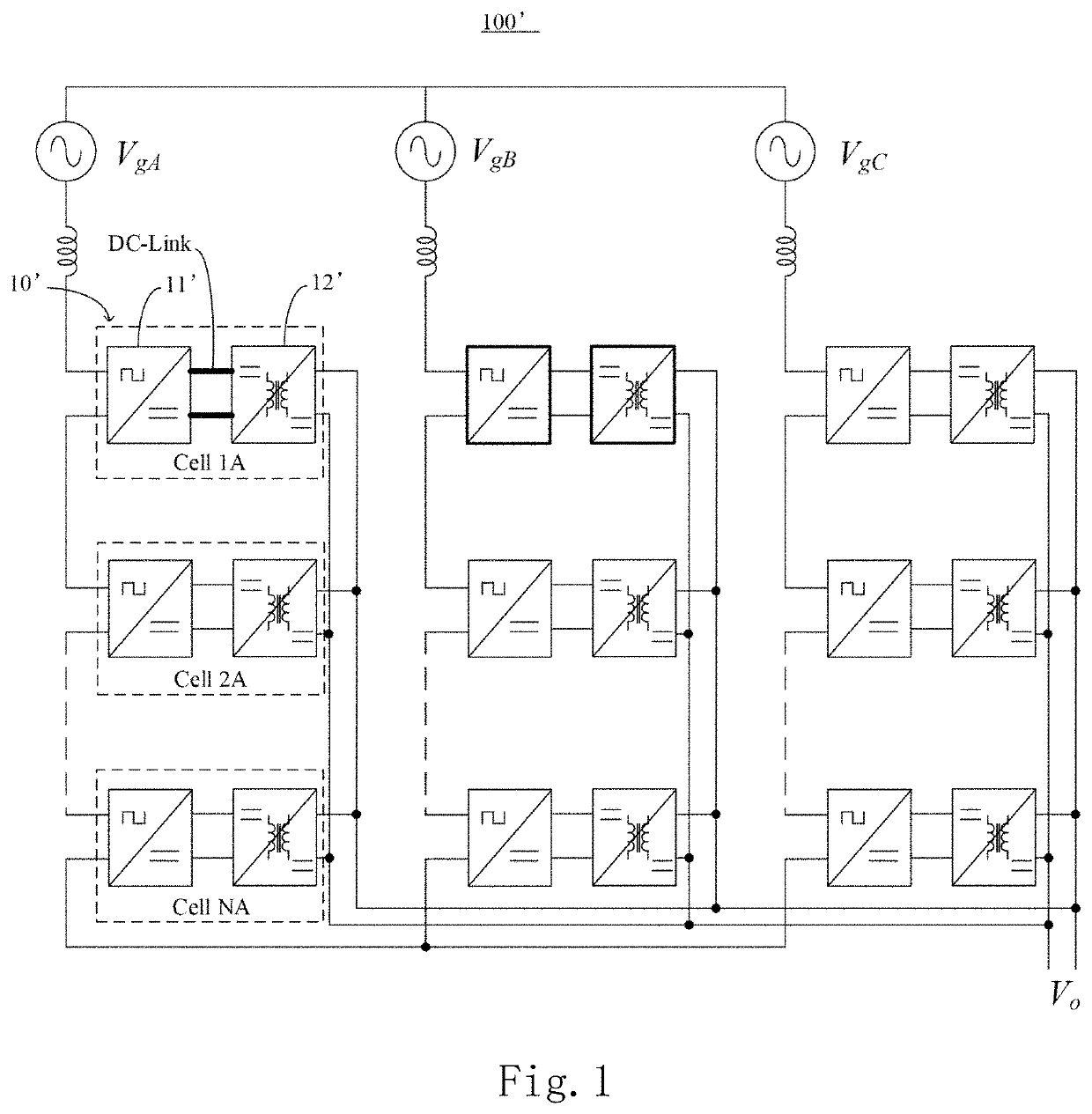
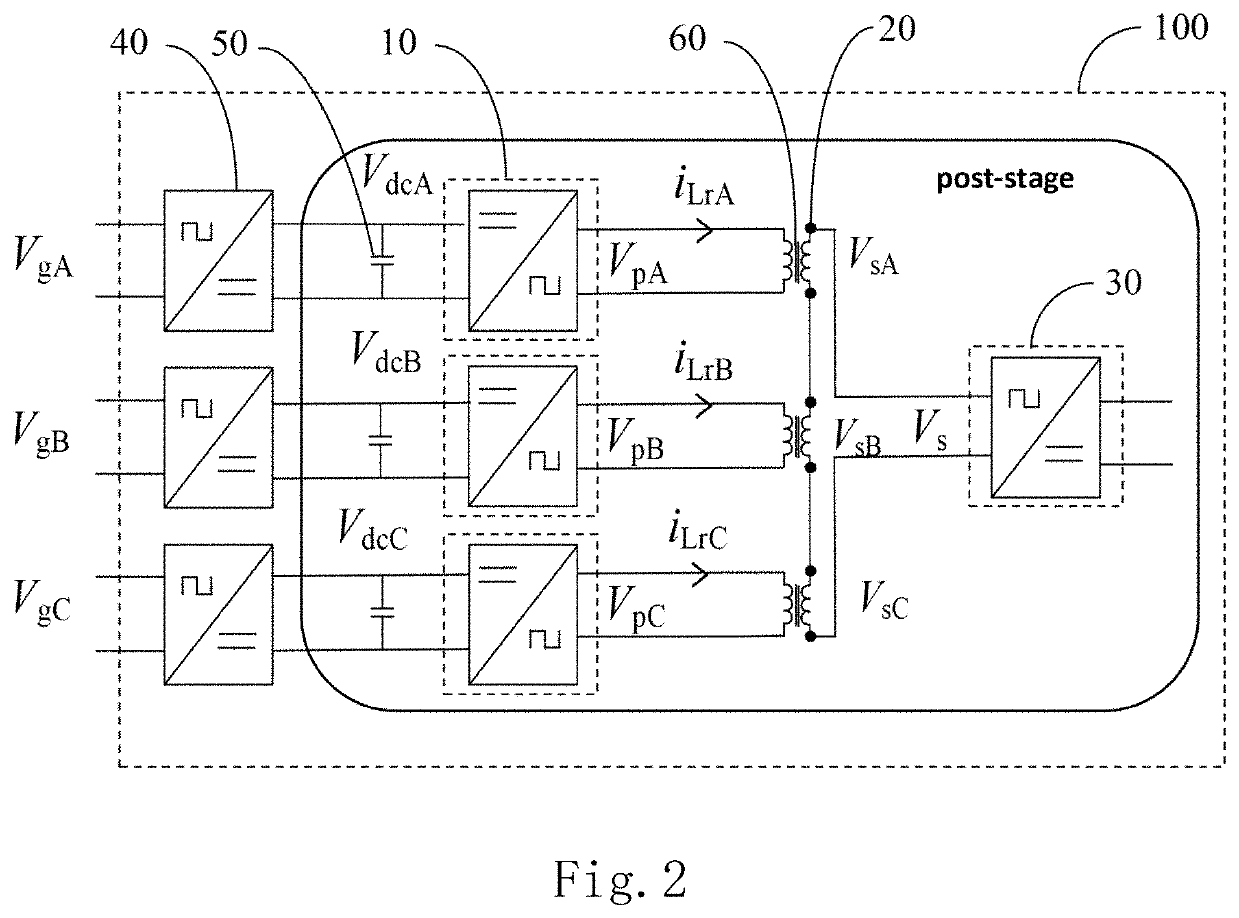
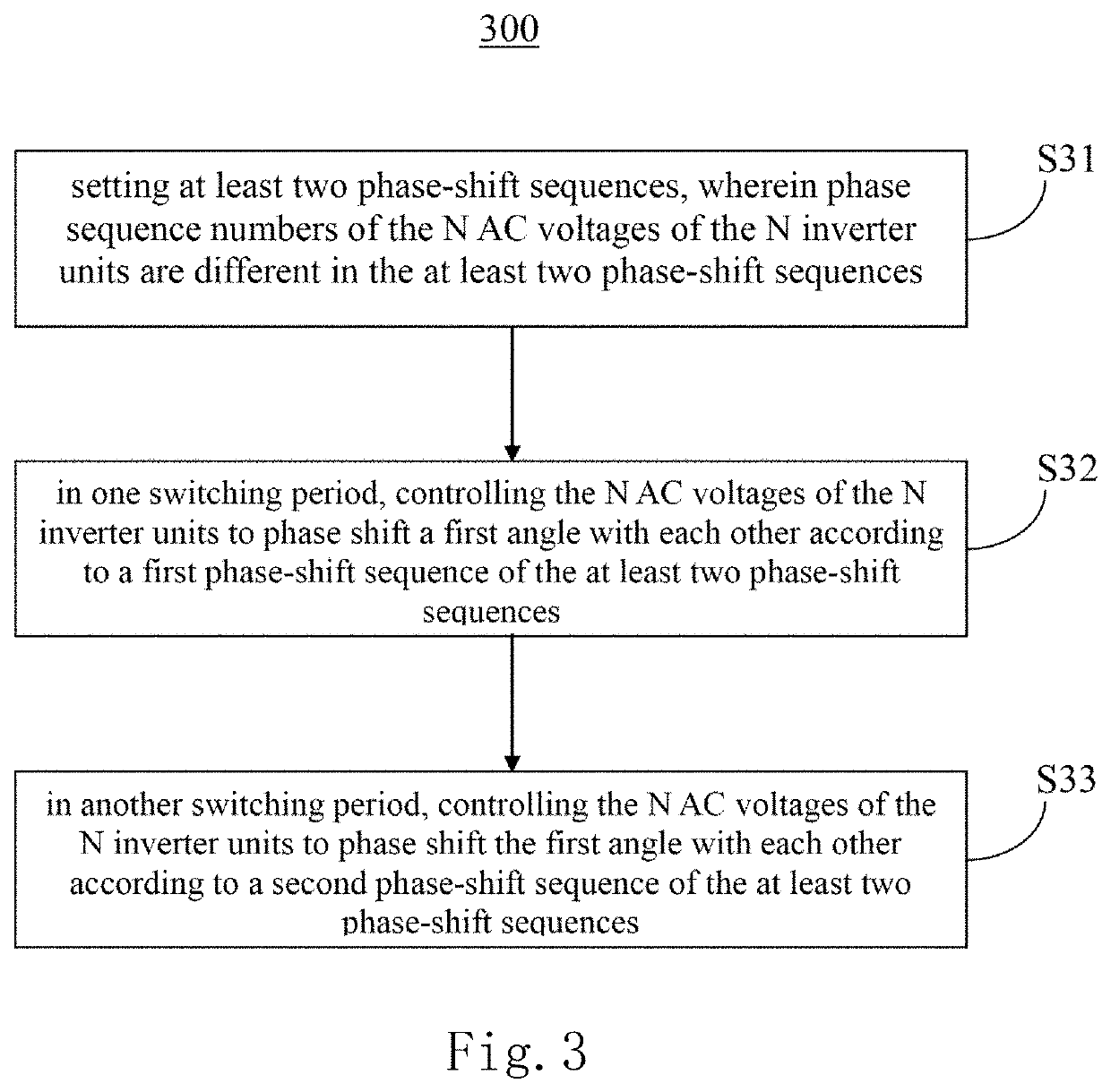
- A phase-shift control method for power modules, where N inverter units output AC voltages that are cascaded and connected to a post-stage rectifier circuit, with at least two phase-shift sequences controlling the AC voltages to phase shift alternately, inhibiting double frequency fluctuations and balancing powers among phases.

Energy Efficiency Standards and Grid Integration Requirements
The deployment of solid-state transformers in data centers must comply with increasingly stringent energy efficiency standards established by international regulatory bodies. The IEEE 1547 standard provides fundamental guidelines for distributed energy resource interconnection, while IEC 61850 defines communication protocols essential for smart grid integration. These standards mandate minimum efficiency thresholds typically exceeding 95% for power conversion systems, driving SST manufacturers to optimize semiconductor materials and control algorithms.
Energy efficiency regulations such as the EU's Energy Efficiency Directive and the US Department of Energy's efficiency standards directly impact SST design requirements. Data centers must demonstrate compliance with Power Usage Effectiveness (PUE) metrics, where SSTs contribute significantly to overall infrastructure efficiency. The California Title 24 energy code and similar regional regulations establish baseline performance criteria that SST systems must meet or exceed to qualify for deployment in commercial facilities.
Grid integration requirements present complex technical challenges for SST implementation in data center environments. Voltage regulation capabilities must maintain output stability within ±2% during grid fluctuations, while harmonic distortion levels must remain below 5% total harmonic distortion (THD) as specified by IEEE 519 standards. SSTs must demonstrate fault ride-through capabilities, maintaining operation during grid disturbances lasting up to 150 milliseconds without interrupting critical data center loads.
Interconnection standards require SSTs to provide advanced grid support functions including reactive power compensation, voltage regulation, and frequency response capabilities. The Federal Energy Regulatory Commission (FERC) Order 2222 emphasizes the importance of distributed energy resources participating in grid services, positioning SSTs as key enablers for data centers to provide ancillary services to utility operators.
Compliance verification processes involve rigorous testing protocols including efficiency measurements across varying load conditions, electromagnetic compatibility assessments, and grid code compliance validation. Third-party certification bodies such as Underwriters Laboratories (UL) and the International Electrotechnical Commission (IEC) provide standardized testing frameworks ensuring SST systems meet both safety and performance requirements before commercial deployment in data center applications.
Energy efficiency regulations such as the EU's Energy Efficiency Directive and the US Department of Energy's efficiency standards directly impact SST design requirements. Data centers must demonstrate compliance with Power Usage Effectiveness (PUE) metrics, where SSTs contribute significantly to overall infrastructure efficiency. The California Title 24 energy code and similar regional regulations establish baseline performance criteria that SST systems must meet or exceed to qualify for deployment in commercial facilities.
Grid integration requirements present complex technical challenges for SST implementation in data center environments. Voltage regulation capabilities must maintain output stability within ±2% during grid fluctuations, while harmonic distortion levels must remain below 5% total harmonic distortion (THD) as specified by IEEE 519 standards. SSTs must demonstrate fault ride-through capabilities, maintaining operation during grid disturbances lasting up to 150 milliseconds without interrupting critical data center loads.
Interconnection standards require SSTs to provide advanced grid support functions including reactive power compensation, voltage regulation, and frequency response capabilities. The Federal Energy Regulatory Commission (FERC) Order 2222 emphasizes the importance of distributed energy resources participating in grid services, positioning SSTs as key enablers for data centers to provide ancillary services to utility operators.
Compliance verification processes involve rigorous testing protocols including efficiency measurements across varying load conditions, electromagnetic compatibility assessments, and grid code compliance validation. Third-party certification bodies such as Underwriters Laboratories (UL) and the International Electrotechnical Commission (IEC) provide standardized testing frameworks ensuring SST systems meet both safety and performance requirements before commercial deployment in data center applications.
Thermal Management and Reliability Considerations for SST
Thermal management represents one of the most critical engineering challenges in solid-state transformer deployment within data center environments. Unlike conventional transformers that rely on oil-based cooling systems, SSTs generate heat through semiconductor switching operations and magnetic core losses, creating concentrated thermal hotspots that require sophisticated cooling strategies. The power density of SSTs, while advantageous for space utilization, intensifies thermal stress on semiconductor devices, particularly wide-bandgap materials like silicon carbide and gallium nitride components.
Advanced cooling architectures for data center SSTs typically employ multi-tier thermal management systems combining forced air convection, liquid cooling loops, and integrated heat sinks. The semiconductor modules within SSTs operate optimally below 150°C junction temperatures, necessitating precise thermal control to maintain efficiency ratings above 95%. Thermal interface materials and advanced packaging techniques become crucial for effective heat dissipation, with some implementations utilizing direct liquid cooling of power modules to achieve thermal resistance values below 0.1°C/W.
Reliability considerations for SST systems extend beyond thermal management to encompass power cycling stress, electromagnetic interference, and component degradation patterns. The semiconductor switches in SSTs experience thermal cycling during load variations, leading to bond wire fatigue and solder joint degradation over operational lifespans. Statistical reliability models indicate that proper thermal management can extend SST operational life from 10 years to over 20 years in data center applications.
Predictive maintenance strategies leverage real-time thermal monitoring and machine learning algorithms to anticipate component failures before critical thresholds are reached. Temperature sensors embedded throughout SST modules provide continuous feedback for dynamic thermal management, enabling load balancing and preventive cooling adjustments. This proactive approach reduces unplanned downtime risks and maintains consistent power quality for data center operations.
The integration of thermal management systems with data center infrastructure requires careful consideration of cooling capacity allocation and redundancy planning. SST thermal loads must be incorporated into overall facility cooling calculations, with backup cooling systems ensuring continued operation during maintenance periods or cooling system failures.
Advanced cooling architectures for data center SSTs typically employ multi-tier thermal management systems combining forced air convection, liquid cooling loops, and integrated heat sinks. The semiconductor modules within SSTs operate optimally below 150°C junction temperatures, necessitating precise thermal control to maintain efficiency ratings above 95%. Thermal interface materials and advanced packaging techniques become crucial for effective heat dissipation, with some implementations utilizing direct liquid cooling of power modules to achieve thermal resistance values below 0.1°C/W.
Reliability considerations for SST systems extend beyond thermal management to encompass power cycling stress, electromagnetic interference, and component degradation patterns. The semiconductor switches in SSTs experience thermal cycling during load variations, leading to bond wire fatigue and solder joint degradation over operational lifespans. Statistical reliability models indicate that proper thermal management can extend SST operational life from 10 years to over 20 years in data center applications.
Predictive maintenance strategies leverage real-time thermal monitoring and machine learning algorithms to anticipate component failures before critical thresholds are reached. Temperature sensors embedded throughout SST modules provide continuous feedback for dynamic thermal management, enabling load balancing and preventive cooling adjustments. This proactive approach reduces unplanned downtime risks and maintains consistent power quality for data center operations.
The integration of thermal management systems with data center infrastructure requires careful consideration of cooling capacity allocation and redundancy planning. SST thermal loads must be incorporated into overall facility cooling calculations, with backup cooling systems ensuring continued operation during maintenance periods or cooling system failures.
Unlock deeper insights with PatSnap Eureka Quick Research — get a full tech report to explore trends and direct your research. Try now!
Generate Your Research Report Instantly with AI Agent
Supercharge your innovation with PatSnap Eureka AI Agent Platform!