Sonication vs Microwave-Assisted Extraction: Efficiency Analyses
MAR 11, 20269 MIN READ
Generate Your Research Report Instantly with AI Agent
Patsnap Eureka helps you evaluate technical feasibility & market potential.
Extraction Technology Background and Efficiency Goals
Extraction technologies have undergone significant evolution since the early 20th century, transitioning from traditional methods such as Soxhlet extraction and maceration to advanced techniques that leverage physical energy sources. The development trajectory has been driven by increasing demands for higher extraction efficiency, reduced processing time, lower solvent consumption, and improved environmental sustainability. Traditional extraction methods, while reliable, often require extended processing times ranging from several hours to days, consume large volumes of organic solvents, and may result in thermal degradation of heat-sensitive compounds.
The emergence of sonication-assisted extraction in the 1980s marked a pivotal advancement in the field. This technology harnesses ultrasonic waves typically operating at frequencies between 20-100 kHz to create cavitation bubbles within the extraction medium. The collapse of these bubbles generates localized high-pressure and high-temperature conditions that facilitate cell wall disruption and mass transfer enhancement. Sonication has demonstrated particular effectiveness in extracting bioactive compounds from plant matrices, essential oils, and pharmaceutical intermediates.
Microwave-assisted extraction represents another revolutionary approach that gained prominence in the 1990s. This method utilizes electromagnetic radiation at frequencies of 2.45 GHz to generate rapid heating through dipolar rotation and ionic conduction mechanisms. The selective heating of polar solvents and moisture within plant cells creates internal pressure that ruptures cell walls, thereby accelerating the release of target compounds. Microwave technology offers precise temperature control and uniform heating distribution, making it suitable for thermolabile compound extraction.
The primary efficiency goals driving the adoption of these advanced extraction technologies encompass multiple performance metrics. Extraction yield optimization remains the fundamental objective, with both sonication and microwave methods demonstrating superior performance compared to conventional techniques. Time efficiency represents another critical goal, as modern industrial processes demand rapid throughput to meet production schedules and economic constraints.
Energy consumption minimization has become increasingly important due to rising operational costs and environmental regulations. Both technologies aim to reduce overall energy requirements while maintaining or improving extraction performance. Solvent usage reduction aligns with green chemistry principles and regulatory compliance requirements, particularly in pharmaceutical and food industries where solvent residues must be minimized.
Quality preservation of extracted compounds constitutes a vital efficiency parameter, especially for applications involving bioactive molecules, natural antioxidants, and pharmaceutical compounds. The goal extends beyond mere quantity extraction to encompass the maintenance of molecular integrity, biological activity, and chemical stability of target compounds throughout the extraction process.
The emergence of sonication-assisted extraction in the 1980s marked a pivotal advancement in the field. This technology harnesses ultrasonic waves typically operating at frequencies between 20-100 kHz to create cavitation bubbles within the extraction medium. The collapse of these bubbles generates localized high-pressure and high-temperature conditions that facilitate cell wall disruption and mass transfer enhancement. Sonication has demonstrated particular effectiveness in extracting bioactive compounds from plant matrices, essential oils, and pharmaceutical intermediates.
Microwave-assisted extraction represents another revolutionary approach that gained prominence in the 1990s. This method utilizes electromagnetic radiation at frequencies of 2.45 GHz to generate rapid heating through dipolar rotation and ionic conduction mechanisms. The selective heating of polar solvents and moisture within plant cells creates internal pressure that ruptures cell walls, thereby accelerating the release of target compounds. Microwave technology offers precise temperature control and uniform heating distribution, making it suitable for thermolabile compound extraction.
The primary efficiency goals driving the adoption of these advanced extraction technologies encompass multiple performance metrics. Extraction yield optimization remains the fundamental objective, with both sonication and microwave methods demonstrating superior performance compared to conventional techniques. Time efficiency represents another critical goal, as modern industrial processes demand rapid throughput to meet production schedules and economic constraints.
Energy consumption minimization has become increasingly important due to rising operational costs and environmental regulations. Both technologies aim to reduce overall energy requirements while maintaining or improving extraction performance. Solvent usage reduction aligns with green chemistry principles and regulatory compliance requirements, particularly in pharmaceutical and food industries where solvent residues must be minimized.
Quality preservation of extracted compounds constitutes a vital efficiency parameter, especially for applications involving bioactive molecules, natural antioxidants, and pharmaceutical compounds. The goal extends beyond mere quantity extraction to encompass the maintenance of molecular integrity, biological activity, and chemical stability of target compounds throughout the extraction process.
Market Demand for Advanced Extraction Methods
The global extraction industry is experiencing unprecedented growth driven by expanding applications across pharmaceutical, nutraceutical, food processing, and biotechnology sectors. Traditional extraction methods are increasingly inadequate to meet modern demands for higher yields, reduced processing times, and improved product quality. This gap has created substantial market opportunities for advanced extraction technologies, particularly sonication and microwave-assisted extraction methods.
Pharmaceutical and nutraceutical industries represent the largest market segments for advanced extraction technologies. The growing consumer preference for natural products and plant-based therapeutics has intensified demand for efficient extraction of bioactive compounds from botanical sources. Companies require methods that can maximize extraction yields while preserving the integrity of sensitive compounds such as polyphenols, alkaloids, and essential oils.
The food and beverage industry constitutes another significant market driver, particularly in the production of natural flavors, colors, and functional ingredients. Regulatory pressures to reduce synthetic additives have compelled manufacturers to seek more efficient natural extraction processes. Advanced extraction methods offer the capability to process larger volumes while maintaining consistent quality standards and reducing energy consumption.
Environmental sustainability concerns are reshaping market preferences toward greener extraction technologies. Both sonication and microwave-assisted extraction methods align with these requirements by reducing solvent consumption, shortening processing times, and minimizing waste generation compared to conventional techniques. This environmental advantage has become a critical factor in technology adoption decisions.
The cosmetics and personal care industry has emerged as a rapidly growing market segment, driven by increasing demand for natural and organic products. Extraction of active ingredients from marine sources, plant materials, and other natural substrates requires precise control over processing parameters to maintain bioactivity and stability.
Market demand is also influenced by the need for scalable solutions that can transition from laboratory to industrial production. Companies seek extraction technologies that offer consistent performance across different scales while maintaining economic viability. The ability to process diverse feedstock materials and adapt to varying extraction requirements has become essential for market competitiveness.
Regulatory compliance requirements in pharmaceutical and food industries further drive demand for validated extraction methods with reproducible results and comprehensive process documentation capabilities.
Pharmaceutical and nutraceutical industries represent the largest market segments for advanced extraction technologies. The growing consumer preference for natural products and plant-based therapeutics has intensified demand for efficient extraction of bioactive compounds from botanical sources. Companies require methods that can maximize extraction yields while preserving the integrity of sensitive compounds such as polyphenols, alkaloids, and essential oils.
The food and beverage industry constitutes another significant market driver, particularly in the production of natural flavors, colors, and functional ingredients. Regulatory pressures to reduce synthetic additives have compelled manufacturers to seek more efficient natural extraction processes. Advanced extraction methods offer the capability to process larger volumes while maintaining consistent quality standards and reducing energy consumption.
Environmental sustainability concerns are reshaping market preferences toward greener extraction technologies. Both sonication and microwave-assisted extraction methods align with these requirements by reducing solvent consumption, shortening processing times, and minimizing waste generation compared to conventional techniques. This environmental advantage has become a critical factor in technology adoption decisions.
The cosmetics and personal care industry has emerged as a rapidly growing market segment, driven by increasing demand for natural and organic products. Extraction of active ingredients from marine sources, plant materials, and other natural substrates requires precise control over processing parameters to maintain bioactivity and stability.
Market demand is also influenced by the need for scalable solutions that can transition from laboratory to industrial production. Companies seek extraction technologies that offer consistent performance across different scales while maintaining economic viability. The ability to process diverse feedstock materials and adapt to varying extraction requirements has become essential for market competitiveness.
Regulatory compliance requirements in pharmaceutical and food industries further drive demand for validated extraction methods with reproducible results and comprehensive process documentation capabilities.
Current State of Sonication vs Microwave Extraction
Sonication and microwave-assisted extraction represent two dominant non-conventional extraction technologies that have gained significant traction in various industries over the past two decades. Both methods have evolved from laboratory-scale applications to industrial implementations, with sonication technology demonstrating maturity in pharmaceutical and food processing sectors, while microwave-assisted extraction has shown particular strength in natural product extraction and analytical chemistry applications.
Current sonication technology operates primarily through ultrasonic frequencies ranging from 20 kHz to 100 kHz, generating cavitation bubbles that mechanically disrupt cellular structures. The technology has achieved standardization in equipment design, with probe-type and bath-type sonicators becoming industry standards. Modern sonication systems incorporate temperature control mechanisms and programmable power settings, addressing earlier limitations related to heat generation and process reproducibility.
Microwave-assisted extraction technology has advanced significantly with the development of focused microwave systems operating at 2.45 GHz frequency. Contemporary microwave extraction equipment features precise temperature and pressure control, automated solvent addition systems, and real-time monitoring capabilities. The technology has overcome initial challenges related to solvent compatibility and scalability through innovations in vessel design and magnetron technology.
The primary technical challenge facing sonication methods involves optimizing cavitation intensity while minimizing thermal degradation of heat-sensitive compounds. Current research focuses on pulsed sonication protocols and multi-frequency systems to enhance extraction selectivity. Equipment manufacturers are addressing scalability issues through the development of flow-through sonication reactors and multi-probe configurations for industrial applications.
Microwave-assisted extraction faces ongoing challenges related to non-uniform heating patterns and solvent penetration limitations in dense matrices. Recent technological developments include rotating microwave systems and hybrid extraction approaches combining microwave heating with mechanical agitation. The integration of artificial intelligence for process optimization represents an emerging trend in both technologies.
Geographically, sonication technology development is concentrated in European and North American markets, with Germany and the United States leading in equipment manufacturing and process innovation. Asian markets, particularly China and Japan, have emerged as significant contributors to microwave-assisted extraction technology advancement, driven by strong pharmaceutical and nutraceutical industries.
Both technologies currently face regulatory standardization challenges, particularly in pharmaceutical and food applications where extraction efficiency must be balanced with product safety requirements. The development of hybrid systems combining both sonication and microwave technologies represents a growing trend, though technical integration challenges remain regarding equipment compatibility and process synchronization.
Current sonication technology operates primarily through ultrasonic frequencies ranging from 20 kHz to 100 kHz, generating cavitation bubbles that mechanically disrupt cellular structures. The technology has achieved standardization in equipment design, with probe-type and bath-type sonicators becoming industry standards. Modern sonication systems incorporate temperature control mechanisms and programmable power settings, addressing earlier limitations related to heat generation and process reproducibility.
Microwave-assisted extraction technology has advanced significantly with the development of focused microwave systems operating at 2.45 GHz frequency. Contemporary microwave extraction equipment features precise temperature and pressure control, automated solvent addition systems, and real-time monitoring capabilities. The technology has overcome initial challenges related to solvent compatibility and scalability through innovations in vessel design and magnetron technology.
The primary technical challenge facing sonication methods involves optimizing cavitation intensity while minimizing thermal degradation of heat-sensitive compounds. Current research focuses on pulsed sonication protocols and multi-frequency systems to enhance extraction selectivity. Equipment manufacturers are addressing scalability issues through the development of flow-through sonication reactors and multi-probe configurations for industrial applications.
Microwave-assisted extraction faces ongoing challenges related to non-uniform heating patterns and solvent penetration limitations in dense matrices. Recent technological developments include rotating microwave systems and hybrid extraction approaches combining microwave heating with mechanical agitation. The integration of artificial intelligence for process optimization represents an emerging trend in both technologies.
Geographically, sonication technology development is concentrated in European and North American markets, with Germany and the United States leading in equipment manufacturing and process innovation. Asian markets, particularly China and Japan, have emerged as significant contributors to microwave-assisted extraction technology advancement, driven by strong pharmaceutical and nutraceutical industries.
Both technologies currently face regulatory standardization challenges, particularly in pharmaceutical and food applications where extraction efficiency must be balanced with product safety requirements. The development of hybrid systems combining both sonication and microwave technologies represents a growing trend, though technical integration challenges remain regarding equipment compatibility and process synchronization.
Existing Sonication and Microwave Solutions
01 Ultrasonic-assisted extraction methods for bioactive compounds
Ultrasonic or sonication-assisted extraction utilizes high-frequency sound waves to disrupt cell walls and enhance the release of bioactive compounds from plant materials. This method improves extraction efficiency by creating cavitation bubbles that facilitate mass transfer and reduce extraction time. The technique can be applied to various natural materials including herbs, fruits, and other botanical sources to obtain higher yields of target compounds compared to conventional extraction methods.- Ultrasonic-assisted extraction methods for bioactive compounds: Ultrasonic or sonication-assisted extraction utilizes high-frequency sound waves to disrupt cell walls and enhance the release of bioactive compounds from plant materials. This method improves extraction efficiency by creating cavitation bubbles that facilitate mass transfer and reduce extraction time. The technique can be applied to various natural products including polyphenols, flavonoids, and essential oils, resulting in higher yields compared to conventional extraction methods.
- Microwave-assisted extraction technology: Microwave-assisted extraction employs electromagnetic radiation to heat solvents and plant materials rapidly and uniformly, leading to enhanced extraction efficiency. The microwave energy causes molecular rotation and ionic conduction, which disrupts cellular structures and accelerates the dissolution of target compounds. This method significantly reduces extraction time and solvent consumption while maintaining or improving the quality of extracted compounds.
- Combined sonication and microwave extraction systems: The integration of ultrasonic and microwave technologies creates a synergistic effect that maximizes extraction efficiency. This combined approach leverages the mechanical disruption from sonication and the thermal effects from microwave irradiation simultaneously, resulting in superior extraction yields and reduced processing time. The dual-method system is particularly effective for extracting heat-sensitive compounds and complex matrices.
- Optimization of extraction parameters for enhanced efficiency: The efficiency of sonication and microwave-assisted extraction depends on various parameters including temperature, time, solvent composition, power intensity, and frequency. Optimization of these parameters through systematic approaches such as response surface methodology or design of experiments can significantly improve extraction yields. Proper parameter control ensures maximum recovery of target compounds while minimizing degradation and energy consumption.
- Application in pharmaceutical and nutraceutical compound extraction: Advanced extraction techniques combining sonication and microwave assistance are widely applied in pharmaceutical and nutraceutical industries for isolating active ingredients from natural sources. These methods enable efficient extraction of medicinal compounds, antioxidants, and nutritional components with improved purity and bioactivity. The technology supports sustainable production processes and enhances the commercial viability of natural product-based formulations.
02 Microwave-assisted extraction technology for enhanced yield
Microwave-assisted extraction employs electromagnetic radiation to heat the solvent and sample material rapidly and uniformly. This heating mechanism causes internal pressure buildup within plant cells, leading to cell rupture and improved release of intracellular compounds. The method significantly reduces extraction time and solvent consumption while achieving higher extraction yields and better quality of extracted compounds compared to traditional methods.Expand Specific Solutions03 Combined sonication and microwave extraction systems
Integrated extraction systems that combine both ultrasonic and microwave technologies provide synergistic effects for enhanced extraction efficiency. The simultaneous or sequential application of these two methods maximizes cell disruption and compound release while minimizing degradation of heat-sensitive components. This combined approach optimizes extraction parameters and achieves superior results in terms of yield, purity, and processing time.Expand Specific Solutions04 Process optimization and parameter control in assisted extraction
Optimization of extraction parameters such as temperature, time, power intensity, solvent type, and solid-to-liquid ratio is critical for maximizing extraction efficiency. Advanced control systems and monitoring techniques enable precise adjustment of operating conditions to achieve optimal extraction performance. Statistical methods and experimental designs are employed to determine the best combination of parameters for specific target compounds and source materials.Expand Specific Solutions05 Applications in pharmaceutical and nutraceutical compound extraction
Sonication and microwave-assisted extraction technologies are widely applied in the pharmaceutical and nutraceutical industries for extracting valuable compounds such as polyphenols, alkaloids, essential oils, and other bioactive substances. These methods enable efficient isolation of therapeutic compounds from natural sources while maintaining their biological activity and chemical integrity. The extracted compounds can be used in various formulations including dietary supplements, functional foods, and pharmaceutical preparations.Expand Specific Solutions
Key Players in Extraction Equipment Industry
The efficiency analysis of sonication versus microwave-assisted extraction methods represents a mature technology sector experiencing steady growth driven by increasing demand for sustainable and efficient extraction processes across pharmaceutical, food, and chemical industries. The market demonstrates significant scale with established players like CEM Holdings Corp. and Bio-Rad Laboratories leading commercial instrumentation development, while companies such as Milestone S.r.l. and Symrise GmbH & Co. KG focus on specialized applications. Technology maturity varies across segments, with microwave-assisted extraction showing advanced commercial readiness through established manufacturers, while sonication technologies continue evolving through research contributions from institutions like Fudan University, Tianjin University, and University of Liège. The competitive landscape features a balanced ecosystem of equipment manufacturers, ingredient suppliers like Gattefossé SAS and BASF SE, and research institutions driving innovation, indicating a well-developed market with ongoing technological advancement opportunities.
CEM Holdings Corp.
Technical Solution: CEM Corporation specializes in microwave-assisted extraction (MAE) technology with their MARS and EDGE systems. Their microwave extraction platforms utilize controlled temperature and pressure conditions to enhance extraction efficiency while reducing solvent consumption and processing time. The company's patented microwave technology enables rapid heating of samples through dielectric heating, achieving extraction temperatures up to 300°C in minutes rather than hours required by conventional methods. Their systems feature advanced pressure and temperature monitoring with automated safety controls, making them suitable for extracting bioactive compounds, essential oils, and pharmaceutical ingredients from various matrices including plant materials, food samples, and environmental specimens.
Strengths: Industry-leading microwave extraction technology with precise temperature control, reduced extraction time, and lower solvent consumption. Weaknesses: High initial equipment cost and limited to microwave-compatible solvents and sample types.
Jiangnan University
Technical Solution: Jiangnan University has conducted extensive research comparing sonication and microwave-assisted extraction methods for bioactive compounds from food materials. Their studies demonstrate that microwave-assisted extraction typically achieves 20-40% higher yields compared to ultrasonic extraction for phenolic compounds and antioxidants. The university's research focuses on optimizing extraction parameters including temperature, time, solvent-to-sample ratio, and power settings for both methods. They have developed hybrid approaches combining both techniques sequentially to maximize extraction efficiency, particularly for complex plant matrices where different compounds respond better to different extraction mechanisms.
Strengths: Comprehensive research expertise in extraction optimization and strong academic foundation in food science applications. Weaknesses: Limited commercial scalability and primarily focused on laboratory-scale research rather than industrial implementation.
Core Innovations in Extraction Efficiency Analysis
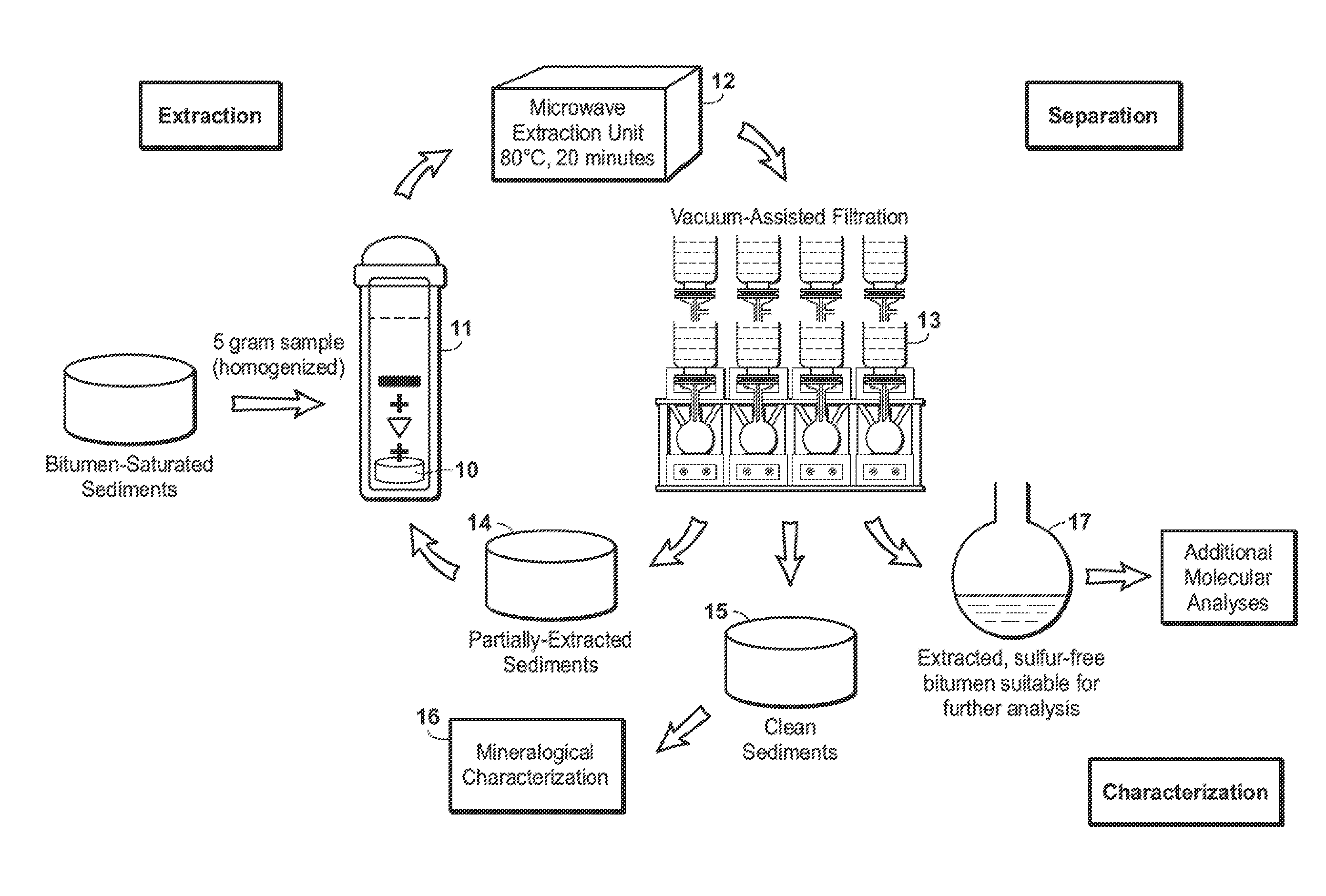
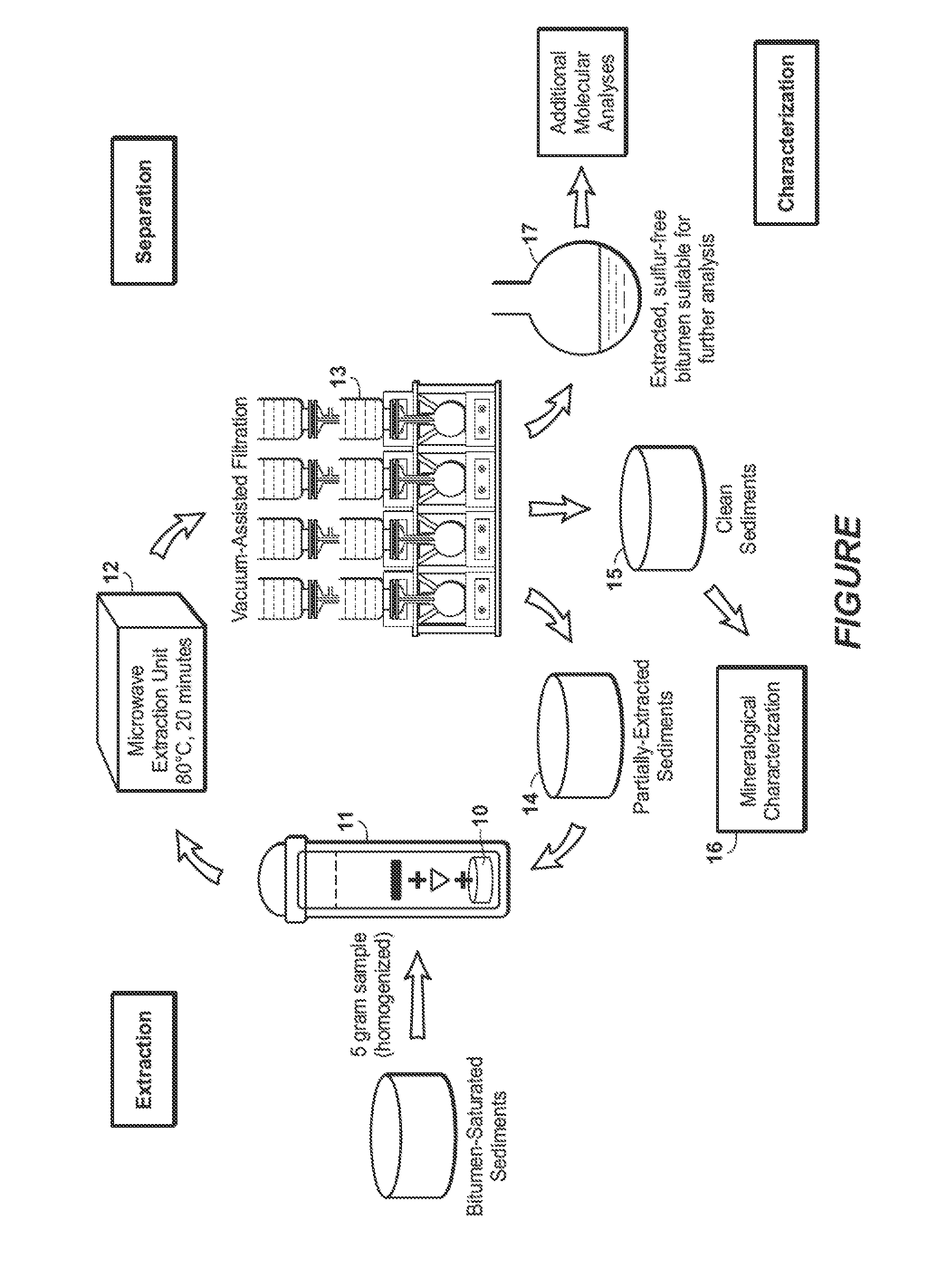
Microwave-Assisted Bitumen Extraction With Vacuum-Assisted Sediment Filtration
PatentInactiveUS20160109340A1
Innovation
- A method combining microwave-assisted extraction and vacuum-assisted sediment filtration to efficiently extract bitumen and sediment from oil sands, using a solvent mixture like dichloromethane and methanol, which allows for elevated temperatures and reduced solvent volumes, while maintaining the integrity of the sample for mineralogical and geochemical characterization.
Comparative analysis of different extraction methods to enhancing the extractive yield of the selected crude drug turmeric rhizome
PatentInactiveIN202111038615A
Innovation
- Sonication extraction method employing ultrasound irradiation to increase solvent penetration into plant cells, optimizing parameters such as duty cycle, temperature, and solvent ratio for improved curcumin yield compared to conventional methods like maceration and Soxhlet extraction.


Environmental Impact of Extraction Technologies
The environmental implications of extraction technologies have become increasingly critical as industries seek sustainable alternatives to conventional solvent-based methods. Traditional extraction processes often rely on large volumes of organic solvents, which pose significant environmental risks through volatile organic compound emissions, toxic waste generation, and potential groundwater contamination. The shift toward green extraction technologies has positioned sonication and microwave-assisted extraction as environmentally favorable alternatives that substantially reduce solvent consumption and minimize ecological footprint.
Sonication-based extraction demonstrates remarkable environmental advantages through its ability to operate at ambient temperatures and reduced solvent volumes. The acoustic cavitation mechanism enables efficient mass transfer without requiring elevated temperatures, thereby reducing energy consumption by approximately 30-50% compared to conventional heating methods. Additionally, the technology facilitates the use of environmentally benign solvents such as water, ethanol, or supercritical fluids, eliminating the need for chlorinated or petroleum-based solvents that contribute to atmospheric pollution and ozone depletion.
Microwave-assisted extraction presents equally compelling environmental benefits through its selective heating mechanism and shortened processing times. The technology reduces extraction duration from hours to minutes, resulting in significant energy savings and decreased carbon emissions. The precise temperature control inherent in microwave systems minimizes solvent degradation and reduces the formation of harmful byproducts that typically occur during prolonged heating cycles.
Both technologies contribute to waste reduction through improved extraction efficiency, which maximizes yield while minimizing raw material consumption. The enhanced selectivity of these methods reduces the need for extensive purification steps, thereby decreasing the overall environmental burden associated with downstream processing. Furthermore, the closed-system operation of both sonication and microwave extraction minimizes solvent evaporation and enables efficient solvent recovery and recycling.
The carbon footprint analysis reveals that implementing these advanced extraction technologies can reduce greenhouse gas emissions by 40-60% compared to traditional methods. This reduction stems from decreased energy requirements, elimination of toxic solvents, and improved process efficiency that collectively contribute to more sustainable manufacturing practices across various industries.
Sonication-based extraction demonstrates remarkable environmental advantages through its ability to operate at ambient temperatures and reduced solvent volumes. The acoustic cavitation mechanism enables efficient mass transfer without requiring elevated temperatures, thereby reducing energy consumption by approximately 30-50% compared to conventional heating methods. Additionally, the technology facilitates the use of environmentally benign solvents such as water, ethanol, or supercritical fluids, eliminating the need for chlorinated or petroleum-based solvents that contribute to atmospheric pollution and ozone depletion.
Microwave-assisted extraction presents equally compelling environmental benefits through its selective heating mechanism and shortened processing times. The technology reduces extraction duration from hours to minutes, resulting in significant energy savings and decreased carbon emissions. The precise temperature control inherent in microwave systems minimizes solvent degradation and reduces the formation of harmful byproducts that typically occur during prolonged heating cycles.
Both technologies contribute to waste reduction through improved extraction efficiency, which maximizes yield while minimizing raw material consumption. The enhanced selectivity of these methods reduces the need for extensive purification steps, thereby decreasing the overall environmental burden associated with downstream processing. Furthermore, the closed-system operation of both sonication and microwave extraction minimizes solvent evaporation and enables efficient solvent recovery and recycling.
The carbon footprint analysis reveals that implementing these advanced extraction technologies can reduce greenhouse gas emissions by 40-60% compared to traditional methods. This reduction stems from decreased energy requirements, elimination of toxic solvents, and improved process efficiency that collectively contribute to more sustainable manufacturing practices across various industries.
Energy Consumption Optimization in Extraction
Energy consumption represents a critical factor in determining the economic viability and environmental sustainability of extraction processes. Both sonication and microwave-assisted extraction methods demonstrate distinct energy utilization patterns that significantly impact their operational efficiency and cost-effectiveness. Understanding these energy dynamics is essential for optimizing extraction protocols and achieving sustainable processing objectives.
Sonication-based extraction systems typically consume energy through piezoelectric transducers that convert electrical energy into mechanical vibrations. The energy efficiency of ultrasonic extraction depends heavily on frequency optimization, power density distribution, and pulse-mode operations. Studies indicate that energy consumption ranges from 0.5 to 5.0 kWh per kilogram of processed material, with significant variations based on target compounds and matrix characteristics. Power optimization strategies, including amplitude modulation and duty cycle adjustments, can reduce energy consumption by 20-40% while maintaining extraction yields.
Microwave-assisted extraction demonstrates different energy consumption profiles, primarily through dielectric heating mechanisms. The energy efficiency is influenced by dielectric properties of the solvent-sample system, microwave frequency selection, and heating uniformity. Typical energy consumption ranges from 0.3 to 2.5 kWh per kilogram, often showing superior energy efficiency compared to conventional heating methods. The rapid heating capability and selective energy transfer to polar molecules contribute to reduced overall energy requirements.
Comparative energy analyses reveal that microwave-assisted extraction generally exhibits 30-50% lower energy consumption than sonication for similar extraction yields. However, the energy optimization potential varies significantly based on process parameters and target applications. Hybrid approaches combining both technologies show promising results in energy reduction, achieving up to 60% energy savings through synergistic effects and optimized processing sequences.
Advanced energy optimization strategies include real-time monitoring systems, adaptive power control algorithms, and process intensification techniques. These approaches enable dynamic adjustment of energy input based on extraction progress, minimizing unnecessary energy expenditure while maximizing extraction efficiency. Implementation of such optimization systems can result in substantial operational cost reductions and improved environmental performance metrics.
Sonication-based extraction systems typically consume energy through piezoelectric transducers that convert electrical energy into mechanical vibrations. The energy efficiency of ultrasonic extraction depends heavily on frequency optimization, power density distribution, and pulse-mode operations. Studies indicate that energy consumption ranges from 0.5 to 5.0 kWh per kilogram of processed material, with significant variations based on target compounds and matrix characteristics. Power optimization strategies, including amplitude modulation and duty cycle adjustments, can reduce energy consumption by 20-40% while maintaining extraction yields.
Microwave-assisted extraction demonstrates different energy consumption profiles, primarily through dielectric heating mechanisms. The energy efficiency is influenced by dielectric properties of the solvent-sample system, microwave frequency selection, and heating uniformity. Typical energy consumption ranges from 0.3 to 2.5 kWh per kilogram, often showing superior energy efficiency compared to conventional heating methods. The rapid heating capability and selective energy transfer to polar molecules contribute to reduced overall energy requirements.
Comparative energy analyses reveal that microwave-assisted extraction generally exhibits 30-50% lower energy consumption than sonication for similar extraction yields. However, the energy optimization potential varies significantly based on process parameters and target applications. Hybrid approaches combining both technologies show promising results in energy reduction, achieving up to 60% energy savings through synergistic effects and optimized processing sequences.
Advanced energy optimization strategies include real-time monitoring systems, adaptive power control algorithms, and process intensification techniques. These approaches enable dynamic adjustment of energy input based on extraction progress, minimizing unnecessary energy expenditure while maximizing extraction efficiency. Implementation of such optimization systems can result in substantial operational cost reductions and improved environmental performance metrics.
Unlock deeper insights with Patsnap Eureka Quick Research — get a full tech report to explore trends and direct your research. Try now!
Generate Your Research Report Instantly with AI Agent
Supercharge your innovation with Patsnap Eureka AI Agent Platform!