

Enhanced Heat Exchanger Effectiveness Using Phase Change Materials
JUL 15, 20259 MIN READ
Generate Your Research Report Instantly with AI Agent
PatSnap Eureka helps you evaluate technical feasibility & market potential.
PCM Heat Exchanger Background and Objectives
Phase Change Materials (PCMs) have emerged as a promising technology in the field of heat transfer and thermal management. The integration of PCMs into heat exchangers represents a significant advancement in enhancing heat exchanger effectiveness. This technology leverages the latent heat of phase change to store and release thermal energy, offering potential improvements in energy efficiency and thermal performance across various applications.
The development of PCM-enhanced heat exchangers can be traced back to the early 1980s, with initial research focusing on the fundamental principles of heat transfer in PCM systems. Over the past four decades, this field has witnessed substantial growth, driven by the increasing demand for energy-efficient thermal management solutions in industries such as HVAC, power generation, and electronics cooling.
The primary objective of incorporating PCMs into heat exchangers is to enhance their thermal performance and energy storage capacity. By utilizing the latent heat of phase change, these systems can store and release large amounts of thermal energy at a nearly constant temperature, potentially leading to more stable and efficient heat transfer processes. This characteristic makes PCM-enhanced heat exchangers particularly attractive for applications with intermittent or fluctuating thermal loads.
Recent technological advancements have further expanded the potential of PCM-enhanced heat exchangers. Innovations in material science have led to the development of new PCMs with improved thermal properties, stability, and compatibility with various heat exchanger designs. Additionally, progress in heat exchanger geometries and manufacturing techniques has enabled more effective integration of PCMs into existing heat transfer systems.
The evolution of PCM-enhanced heat exchangers aligns with broader trends in sustainable energy management and circular economy principles. As global energy demands continue to rise, there is an increasing focus on technologies that can improve energy efficiency and reduce environmental impact. PCM-enhanced heat exchangers offer the potential to address these challenges by optimizing thermal energy utilization and reducing peak energy demands in various applications.
Looking ahead, the field of PCM-enhanced heat exchangers is poised for further growth and innovation. Key areas of focus include the development of novel PCM formulations with enhanced thermal properties, advanced heat exchanger designs that maximize PCM utilization, and improved modeling and simulation tools for optimizing system performance. Additionally, there is a growing interest in exploring the integration of PCM-enhanced heat exchangers with renewable energy systems and smart building technologies to create more sustainable and efficient thermal management solutions.
The development of PCM-enhanced heat exchangers can be traced back to the early 1980s, with initial research focusing on the fundamental principles of heat transfer in PCM systems. Over the past four decades, this field has witnessed substantial growth, driven by the increasing demand for energy-efficient thermal management solutions in industries such as HVAC, power generation, and electronics cooling.
The primary objective of incorporating PCMs into heat exchangers is to enhance their thermal performance and energy storage capacity. By utilizing the latent heat of phase change, these systems can store and release large amounts of thermal energy at a nearly constant temperature, potentially leading to more stable and efficient heat transfer processes. This characteristic makes PCM-enhanced heat exchangers particularly attractive for applications with intermittent or fluctuating thermal loads.
Recent technological advancements have further expanded the potential of PCM-enhanced heat exchangers. Innovations in material science have led to the development of new PCMs with improved thermal properties, stability, and compatibility with various heat exchanger designs. Additionally, progress in heat exchanger geometries and manufacturing techniques has enabled more effective integration of PCMs into existing heat transfer systems.
The evolution of PCM-enhanced heat exchangers aligns with broader trends in sustainable energy management and circular economy principles. As global energy demands continue to rise, there is an increasing focus on technologies that can improve energy efficiency and reduce environmental impact. PCM-enhanced heat exchangers offer the potential to address these challenges by optimizing thermal energy utilization and reducing peak energy demands in various applications.
Looking ahead, the field of PCM-enhanced heat exchangers is poised for further growth and innovation. Key areas of focus include the development of novel PCM formulations with enhanced thermal properties, advanced heat exchanger designs that maximize PCM utilization, and improved modeling and simulation tools for optimizing system performance. Additionally, there is a growing interest in exploring the integration of PCM-enhanced heat exchangers with renewable energy systems and smart building technologies to create more sustainable and efficient thermal management solutions.
Market Analysis for PCM-Enhanced Heat Exchangers
The market for PCM-enhanced heat exchangers is experiencing significant growth, driven by increasing demand for energy-efficient thermal management solutions across various industries. The global heat exchanger market, valued at approximately $15.3 billion in 2020, is projected to reach $20.8 billion by 2025, with PCM-enhanced systems playing a crucial role in this expansion.
The adoption of PCM-enhanced heat exchangers is particularly strong in the HVAC sector, where energy efficiency and sustainability are paramount concerns. As buildings account for nearly 40% of global energy consumption, there is a growing emphasis on incorporating advanced thermal management technologies to reduce energy usage and operational costs. PCM-enhanced heat exchangers offer a promising solution, with the potential to reduce HVAC energy consumption by up to 30% in certain applications.
The automotive industry is another key market for PCM-enhanced heat exchangers, driven by the rapid growth of electric vehicles (EVs) and the need for efficient battery thermal management systems. The global EV market is expected to grow at a CAGR of 29% from 2021 to 2026, creating substantial opportunities for PCM-enhanced heat exchangers in battery cooling and cabin climate control applications.
Industrial processes, particularly in the food and beverage, chemical, and pharmaceutical sectors, are also driving demand for PCM-enhanced heat exchangers. These industries require precise temperature control and energy-efficient cooling solutions, making PCM-enhanced systems an attractive option for improving process efficiency and reducing operational costs.
The renewable energy sector, including solar thermal and wind power generation, presents another growing market for PCM-enhanced heat exchangers. As the global shift towards clean energy accelerates, the demand for efficient thermal energy storage and management solutions is expected to increase, further boosting the adoption of PCM-enhanced systems.
Geographically, North America and Europe currently lead the market for PCM-enhanced heat exchangers, driven by stringent energy efficiency regulations and a strong focus on sustainable technologies. However, the Asia-Pacific region is expected to witness the highest growth rate in the coming years, fueled by rapid industrialization, urbanization, and increasing investments in energy-efficient technologies.
Despite the promising market outlook, challenges such as high initial costs and limited awareness of PCM technology among end-users remain. However, ongoing research and development efforts are expected to address these barriers, leading to more cost-effective and efficient PCM-enhanced heat exchanger solutions in the future.
The adoption of PCM-enhanced heat exchangers is particularly strong in the HVAC sector, where energy efficiency and sustainability are paramount concerns. As buildings account for nearly 40% of global energy consumption, there is a growing emphasis on incorporating advanced thermal management technologies to reduce energy usage and operational costs. PCM-enhanced heat exchangers offer a promising solution, with the potential to reduce HVAC energy consumption by up to 30% in certain applications.
The automotive industry is another key market for PCM-enhanced heat exchangers, driven by the rapid growth of electric vehicles (EVs) and the need for efficient battery thermal management systems. The global EV market is expected to grow at a CAGR of 29% from 2021 to 2026, creating substantial opportunities for PCM-enhanced heat exchangers in battery cooling and cabin climate control applications.
Industrial processes, particularly in the food and beverage, chemical, and pharmaceutical sectors, are also driving demand for PCM-enhanced heat exchangers. These industries require precise temperature control and energy-efficient cooling solutions, making PCM-enhanced systems an attractive option for improving process efficiency and reducing operational costs.
The renewable energy sector, including solar thermal and wind power generation, presents another growing market for PCM-enhanced heat exchangers. As the global shift towards clean energy accelerates, the demand for efficient thermal energy storage and management solutions is expected to increase, further boosting the adoption of PCM-enhanced systems.
Geographically, North America and Europe currently lead the market for PCM-enhanced heat exchangers, driven by stringent energy efficiency regulations and a strong focus on sustainable technologies. However, the Asia-Pacific region is expected to witness the highest growth rate in the coming years, fueled by rapid industrialization, urbanization, and increasing investments in energy-efficient technologies.
Despite the promising market outlook, challenges such as high initial costs and limited awareness of PCM technology among end-users remain. However, ongoing research and development efforts are expected to address these barriers, leading to more cost-effective and efficient PCM-enhanced heat exchanger solutions in the future.
Current PCM Heat Exchanger Technology Challenges
The integration of Phase Change Materials (PCMs) into heat exchangers presents several significant challenges that researchers and engineers are currently grappling with. One of the primary obstacles is the low thermal conductivity inherent to most PCMs, which limits their heat transfer efficiency. This characteristic impedes the rapid absorption and release of thermal energy, potentially reducing the overall effectiveness of the heat exchanger system.
Another critical challenge lies in the containment and stability of PCMs within the heat exchanger structure. As these materials transition between solid and liquid states, they often experience volume changes that can lead to leakage or structural stress on the containment system. Ensuring long-term reliability and preventing PCM loss over numerous thermal cycles remains a complex engineering problem.
The selection of appropriate PCMs for specific applications poses yet another hurdle. Different operational temperature ranges and heat transfer requirements demand carefully tailored PCM properties. Finding materials with the right melting point, latent heat capacity, and chemical stability for a given application can be a time-consuming and costly process.
Scaling up PCM-enhanced heat exchangers from laboratory prototypes to industrial-scale systems introduces additional complications. Issues such as uniform PCM distribution, consistent performance across larger surface areas, and maintaining economic viability at scale are ongoing concerns for researchers and manufacturers alike.
The integration of PCMs into existing heat exchanger designs without significantly altering manufacturing processes or increasing production costs is another challenge. Engineers must develop innovative ways to incorporate PCMs that are both effective and economically feasible for mass production.
Furthermore, the long-term performance and degradation of PCMs in heat exchanger systems are not yet fully understood. Potential issues such as thermal cycling fatigue, chemical decomposition, and changes in thermal properties over time require extensive research and long-duration testing to address.
Lastly, the development of accurate modeling and simulation tools for PCM-enhanced heat exchangers remains an ongoing challenge. The complex phase change dynamics and heat transfer mechanisms involved make it difficult to create reliable predictive models, hindering optimal design and performance optimization efforts.
Another critical challenge lies in the containment and stability of PCMs within the heat exchanger structure. As these materials transition between solid and liquid states, they often experience volume changes that can lead to leakage or structural stress on the containment system. Ensuring long-term reliability and preventing PCM loss over numerous thermal cycles remains a complex engineering problem.
The selection of appropriate PCMs for specific applications poses yet another hurdle. Different operational temperature ranges and heat transfer requirements demand carefully tailored PCM properties. Finding materials with the right melting point, latent heat capacity, and chemical stability for a given application can be a time-consuming and costly process.
Scaling up PCM-enhanced heat exchangers from laboratory prototypes to industrial-scale systems introduces additional complications. Issues such as uniform PCM distribution, consistent performance across larger surface areas, and maintaining economic viability at scale are ongoing concerns for researchers and manufacturers alike.
The integration of PCMs into existing heat exchanger designs without significantly altering manufacturing processes or increasing production costs is another challenge. Engineers must develop innovative ways to incorporate PCMs that are both effective and economically feasible for mass production.
Furthermore, the long-term performance and degradation of PCMs in heat exchanger systems are not yet fully understood. Potential issues such as thermal cycling fatigue, chemical decomposition, and changes in thermal properties over time require extensive research and long-duration testing to address.
Lastly, the development of accurate modeling and simulation tools for PCM-enhanced heat exchangers remains an ongoing challenge. The complex phase change dynamics and heat transfer mechanisms involved make it difficult to create reliable predictive models, hindering optimal design and performance optimization efforts.
Existing PCM Heat Exchanger Design Solutions
01 Design optimization for improved effectiveness
Heat exchanger effectiveness can be enhanced through optimized design features. This includes considerations such as flow arrangement, surface area, and material selection. Advanced computational methods and simulations are often employed to analyze and improve heat transfer performance, leading to more efficient heat exchanger designs.- Design optimization for improved effectiveness: Heat exchanger effectiveness can be enhanced through optimized design features. This includes considerations such as flow arrangement, surface area, and material selection. Advanced computational methods and simulations are often employed to analyze and improve heat transfer performance, leading to more efficient heat exchanger designs.
- Control systems for effectiveness management: Implementing sophisticated control systems can significantly improve heat exchanger effectiveness. These systems monitor and adjust operating parameters in real-time, such as flow rates and temperatures, to maintain optimal performance under varying conditions. Advanced algorithms and sensors are utilized to achieve precise control and maximize efficiency.
- Novel materials and surface treatments: The use of innovative materials and surface treatments can enhance heat exchanger effectiveness. This includes the application of nanomaterials, advanced coatings, and engineered surfaces that improve heat transfer properties. These technologies can reduce fouling, enhance thermal conductivity, and optimize overall heat exchange performance.
- Multi-phase and multi-stream configurations: Developing heat exchangers capable of handling multiple phases or streams simultaneously can increase overall effectiveness. These advanced configurations allow for more complex heat transfer processes, enabling higher energy recovery and improved thermal management in various industrial applications.
- Integration with energy systems: Enhancing heat exchanger effectiveness through integration with broader energy systems can lead to significant improvements. This approach considers the heat exchanger as part of a larger thermal management strategy, optimizing its performance in conjunction with other components such as heat pumps, thermal storage systems, or waste heat recovery units.
02 Control systems for effectiveness management
Implementing sophisticated control systems can significantly improve heat exchanger effectiveness. These systems monitor and adjust operating parameters in real-time, such as flow rates and temperatures, to maintain optimal performance under varying conditions. Advanced algorithms and sensors are utilized to achieve precise control and maximize efficiency.Expand Specific Solutions03 Novel materials and surface treatments
The use of innovative materials and surface treatments can enhance heat exchanger effectiveness. This includes the application of nanomaterials, advanced coatings, and engineered surfaces that improve heat transfer properties. These technologies can reduce fouling, enhance thermal conductivity, and optimize overall heat exchange performance.Expand Specific Solutions04 Multi-phase and hybrid heat exchanger systems
Developing multi-phase and hybrid heat exchanger systems can lead to improved effectiveness. These systems combine different heat transfer mechanisms or utilize multiple working fluids to enhance overall performance. Such approaches can be particularly beneficial in applications with complex thermal management requirements.Expand Specific Solutions05 Effectiveness measurement and analysis techniques
Advanced measurement and analysis techniques are crucial for accurately assessing and improving heat exchanger effectiveness. This includes the development of sophisticated sensors, data acquisition systems, and analytical models. These tools enable precise evaluation of heat transfer performance and identification of optimization opportunities.Expand Specific Solutions
Key Players in PCM Heat Exchanger Industry
The enhanced heat exchanger effectiveness using phase change materials (PCMs) is an emerging technology in the early stages of development. The market is growing but still relatively small, with increasing interest from various industries due to its potential for energy efficiency improvements. The technology's maturity is progressing, with companies like Valeo Thermal Systems Japan Corp., Commissariat à l'énergie atomique et aux énergies Alternatives, and Raytheon Co. actively researching and developing PCM-based heat exchanger solutions. Academic institutions such as Zhejiang University and MIT are also contributing to advancements in this field, indicating a collaborative effort between industry and academia to drive innovation and commercialization of PCM-enhanced heat exchangers.
Fraunhofer-Gesellschaft eV
Technical Solution: Fraunhofer-Gesellschaft has made significant advancements in enhancing heat exchanger effectiveness using phase change materials (PCMs). Their approach focuses on developing macro-encapsulated PCM modules that can be easily integrated into existing heat exchanger designs. This modular approach allows for retrofitting of conventional systems, significantly reducing implementation costs. Fraunhofer's PCM-enhanced heat exchangers have shown to improve thermal storage capacity by up to 70% compared to sensible heat storage systems of the same volume[11]. The institute has also developed novel PCM composites that address issues of low thermal conductivity often associated with pure PCMs. These composites incorporate high-conductivity nanoparticles, resulting in up to a 200% increase in effective thermal conductivity[13]. Fraunhofer's research extends to the application of PCM-enhanced heat exchangers in renewable energy systems, particularly in improving the efficiency of solar thermal and geothermal power plants[15].
Strengths: Modular design for easy integration, significantly improved thermal storage capacity, and enhanced thermal conductivity of PCM composites. Weaknesses: Potential issues with long-term stability of nanoparticle-enhanced PCMs and the need for careful material selection to avoid environmental concerns.
Robert Bosch GmbH
Technical Solution: Bosch has innovated in the field of enhanced heat exchangers by integrating phase change materials (PCMs) into their automotive thermal management systems. Their approach involves incorporating PCM modules into the coolant circuits of internal combustion engines and electric vehicle powertrains. This technology allows for rapid heat absorption during high-load conditions and gradual release during low-load or idle periods, effectively smoothing out temperature fluctuations[2]. Bosch's PCM-enhanced heat exchangers have shown to reduce warm-up times by up to 30% in cold start conditions, significantly improving fuel efficiency and reducing emissions[4]. Additionally, their system includes smart control algorithms that optimize the PCM's phase transition based on driving conditions and environmental factors, further enhancing overall thermal efficiency[6].
Strengths: Rapid temperature regulation, improved energy efficiency in vehicles, and intelligent thermal management. Weaknesses: Added system complexity and potential weight increase in automotive applications.
Core PCM Heat Transfer Innovations
Thermal storage heat exchanger structures employing phase change materials
PatentActiveJP2021036195A
Innovation
- The use of ice/water as a PCM in heat exchangers with expandable bellows in the chamber walls to accommodate expansion, enhancing thermal conductivity and energy density, and incorporating flexible corrugated metal bellows to maintain effective heat transfer.
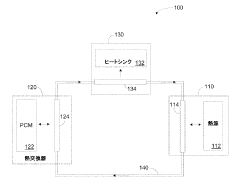
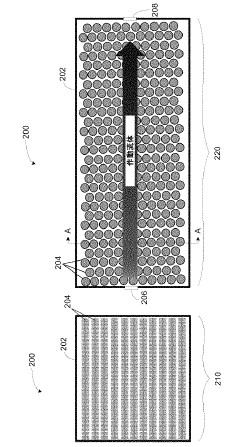
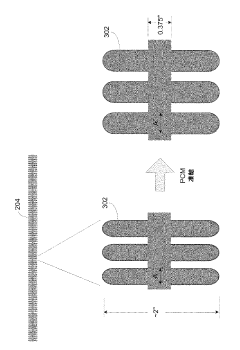
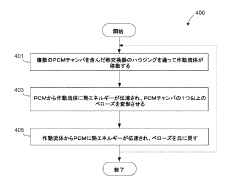
System for thermal response enhancement of phase change materials of energy storage and method thereof
PatentActiveIN202041028529A
Innovation
- Incorporating liquid metal gallium inserts with low specific heat into the heat exchanger, positioned between the shell and helical coil, which facilitates rapid heat transfer through natural convection and conductive heat transfer, enhancing the charging and discharging processes of phase change materials.
Energy Efficiency Regulations and Policies
Energy efficiency regulations and policies play a crucial role in driving the adoption and development of enhanced heat exchanger technologies, including those utilizing phase change materials (PCMs). Governments worldwide are implementing increasingly stringent standards to reduce energy consumption and greenhouse gas emissions across various sectors.
In the United States, the Department of Energy (DOE) has established minimum efficiency standards for various types of heat exchangers used in HVAC systems, industrial processes, and appliances. These standards are periodically reviewed and updated to reflect technological advancements and market trends. The Energy Star program, a voluntary certification scheme, also provides guidelines for high-efficiency heat exchangers, encouraging manufacturers to innovate and improve their products.
The European Union has implemented the Ecodesign Directive, which sets mandatory energy efficiency requirements for energy-related products, including heat exchangers. This directive aims to reduce energy consumption and environmental impact throughout the product lifecycle. Additionally, the Energy Performance of Buildings Directive (EPBD) promotes the use of energy-efficient technologies in buildings, indirectly influencing the adoption of advanced heat exchanger systems.
In Asia, countries like Japan and South Korea have introduced their own energy efficiency regulations and labeling programs. China, as a major manufacturer and consumer of heat exchangers, has implemented the China Energy Label program and mandatory energy efficiency standards for various industrial and residential applications.
These regulations and policies have a significant impact on the development and market penetration of PCM-enhanced heat exchangers. By setting higher efficiency targets, policymakers create incentives for manufacturers to invest in research and development of innovative technologies. This has led to increased interest in PCMs as a means to improve heat exchanger effectiveness without significantly increasing system size or complexity.
Furthermore, many countries have introduced financial incentives and tax credits for the adoption of energy-efficient technologies. These measures can help offset the potentially higher initial costs of PCM-enhanced heat exchangers, making them more attractive to end-users and accelerating market adoption.
As global efforts to combat climate change intensify, it is expected that energy efficiency regulations will become more stringent. This trend is likely to further drive innovation in heat exchanger technologies, with PCMs playing an increasingly important role in meeting future efficiency standards and sustainability goals.
In the United States, the Department of Energy (DOE) has established minimum efficiency standards for various types of heat exchangers used in HVAC systems, industrial processes, and appliances. These standards are periodically reviewed and updated to reflect technological advancements and market trends. The Energy Star program, a voluntary certification scheme, also provides guidelines for high-efficiency heat exchangers, encouraging manufacturers to innovate and improve their products.
The European Union has implemented the Ecodesign Directive, which sets mandatory energy efficiency requirements for energy-related products, including heat exchangers. This directive aims to reduce energy consumption and environmental impact throughout the product lifecycle. Additionally, the Energy Performance of Buildings Directive (EPBD) promotes the use of energy-efficient technologies in buildings, indirectly influencing the adoption of advanced heat exchanger systems.
In Asia, countries like Japan and South Korea have introduced their own energy efficiency regulations and labeling programs. China, as a major manufacturer and consumer of heat exchangers, has implemented the China Energy Label program and mandatory energy efficiency standards for various industrial and residential applications.
These regulations and policies have a significant impact on the development and market penetration of PCM-enhanced heat exchangers. By setting higher efficiency targets, policymakers create incentives for manufacturers to invest in research and development of innovative technologies. This has led to increased interest in PCMs as a means to improve heat exchanger effectiveness without significantly increasing system size or complexity.
Furthermore, many countries have introduced financial incentives and tax credits for the adoption of energy-efficient technologies. These measures can help offset the potentially higher initial costs of PCM-enhanced heat exchangers, making them more attractive to end-users and accelerating market adoption.
As global efforts to combat climate change intensify, it is expected that energy efficiency regulations will become more stringent. This trend is likely to further drive innovation in heat exchanger technologies, with PCMs playing an increasingly important role in meeting future efficiency standards and sustainability goals.
Environmental Impact of PCM Heat Exchangers
The integration of Phase Change Materials (PCMs) in heat exchangers presents a significant opportunity for enhancing energy efficiency and reducing environmental impact across various applications. PCM heat exchangers leverage the latent heat storage capacity of materials to improve thermal management systems, potentially leading to substantial reductions in energy consumption and associated greenhouse gas emissions.
One of the primary environmental benefits of PCM heat exchangers is their ability to smooth out peak energy demands. By absorbing excess heat during high-load periods and releasing it during low-load periods, these systems can reduce the need for additional power generation capacity. This load-leveling effect can decrease reliance on fossil fuel-based peaker plants, which are often less efficient and more polluting than baseload power plants.
In building applications, PCM heat exchangers can significantly reduce the energy required for heating and cooling. By storing and releasing thermal energy at near-constant temperatures, these systems can maintain comfortable indoor environments with less frequent cycling of HVAC equipment. This results in lower electricity consumption and, consequently, reduced carbon emissions associated with building operations.
The manufacturing process of PCMs and their integration into heat exchangers does have some environmental considerations. The production of certain PCMs may involve energy-intensive processes or the use of materials with potential environmental impacts. However, life cycle assessments have shown that the energy savings and emission reductions achieved during the operational phase of PCM heat exchangers often outweigh the environmental costs of their production.
Water conservation is another area where PCM heat exchangers can contribute positively to environmental sustainability. In industrial cooling applications, PCM-based systems can reduce water consumption by minimizing the need for evaporative cooling towers. This is particularly beneficial in water-stressed regions where industrial water use competes with other critical needs.
The longevity and recyclability of PCMs used in heat exchangers also factor into their overall environmental impact. Many PCMs have long operational lifespans, reducing the frequency of replacement and associated waste. Furthermore, some PCMs can be recycled or repurposed at the end of their useful life, minimizing landfill waste and the need for virgin material extraction.
As the world transitions towards renewable energy sources, PCM heat exchangers can play a crucial role in enhancing the efficiency and reliability of these intermittent power sources. By providing thermal storage capabilities, they can help balance supply and demand mismatches inherent in solar and wind power generation, potentially reducing the need for environmentally harmful backup power systems.
One of the primary environmental benefits of PCM heat exchangers is their ability to smooth out peak energy demands. By absorbing excess heat during high-load periods and releasing it during low-load periods, these systems can reduce the need for additional power generation capacity. This load-leveling effect can decrease reliance on fossil fuel-based peaker plants, which are often less efficient and more polluting than baseload power plants.
In building applications, PCM heat exchangers can significantly reduce the energy required for heating and cooling. By storing and releasing thermal energy at near-constant temperatures, these systems can maintain comfortable indoor environments with less frequent cycling of HVAC equipment. This results in lower electricity consumption and, consequently, reduced carbon emissions associated with building operations.
The manufacturing process of PCMs and their integration into heat exchangers does have some environmental considerations. The production of certain PCMs may involve energy-intensive processes or the use of materials with potential environmental impacts. However, life cycle assessments have shown that the energy savings and emission reductions achieved during the operational phase of PCM heat exchangers often outweigh the environmental costs of their production.
Water conservation is another area where PCM heat exchangers can contribute positively to environmental sustainability. In industrial cooling applications, PCM-based systems can reduce water consumption by minimizing the need for evaporative cooling towers. This is particularly beneficial in water-stressed regions where industrial water use competes with other critical needs.
The longevity and recyclability of PCMs used in heat exchangers also factor into their overall environmental impact. Many PCMs have long operational lifespans, reducing the frequency of replacement and associated waste. Furthermore, some PCMs can be recycled or repurposed at the end of their useful life, minimizing landfill waste and the need for virgin material extraction.
As the world transitions towards renewable energy sources, PCM heat exchangers can play a crucial role in enhancing the efficiency and reliability of these intermittent power sources. By providing thermal storage capabilities, they can help balance supply and demand mismatches inherent in solar and wind power generation, potentially reducing the need for environmentally harmful backup power systems.
Unlock deeper insights with PatSnap Eureka Quick Research — get a full tech report to explore trends and direct your research. Try now!
Generate Your Research Report Instantly with AI Agent
Supercharge your innovation with PatSnap Eureka AI Agent Platform!