Enhancing LSA Engine Software Modulations
SEP 23, 20259 MIN READ
Generate Your Research Report Instantly with AI Agent
Patsnap Eureka helps you evaluate technical feasibility & market potential.
LSA Engine Software Evolution and Objectives
Lean Stratified Charge (LSA) engine technology has evolved significantly over the past three decades, transforming from a conceptual innovation to a cornerstone of modern automotive engineering. Initially developed in the 1990s as a response to increasingly stringent emission regulations, LSA engines represented a paradigm shift in combustion efficiency by enabling precise control over the air-fuel mixture stratification within the combustion chamber.
The evolution of LSA engine software has been characterized by four distinct phases. The first generation (1995-2005) focused primarily on basic stratification control through rudimentary electronic fuel injection systems. The second generation (2005-2012) introduced real-time adaptive algorithms capable of responding to changing driving conditions. The third generation (2012-2018) integrated predictive modeling and machine learning capabilities to optimize combustion parameters proactively. The current fourth generation (2018-present) implements sophisticated multi-variable optimization techniques that simultaneously balance performance, emissions, and fuel economy.
Market pressures and regulatory frameworks have been the primary drivers behind LSA software development. The implementation of Euro 6d standards in Europe and Tier 3 regulations in North America has necessitated unprecedented precision in combustion control, pushing the boundaries of what LSA software must accomplish. Simultaneously, consumer demand for improved fuel economy without performance compromise has created additional technical challenges.
The primary objective of current LSA engine software modulation enhancement efforts is to achieve a 15-20% improvement in combustion efficiency while reducing particulate emissions by 30-40% compared to 2020 baselines. Secondary objectives include reducing calibration time by 50%, enabling over-the-air update capabilities for continuous optimization, and developing self-learning algorithms that adapt to individual driving patterns and engine wear characteristics.
Technical goals for the next generation of LSA software include millisecond-level response to changing combustion conditions, integration with hybrid powertrain systems for optimal energy management, and implementation of cylinder-specific combustion strategies based on real-time sensor feedback. These advancements aim to bridge the efficiency gap between traditional internal combustion engines and emerging electric powertrains.
The long-term trajectory for LSA engine software development points toward fully autonomous combustion management systems that continuously self-optimize based on environmental conditions, fuel quality variations, and driver behavior patterns, ultimately extending the viability of internal combustion technology in an increasingly electrified automotive landscape.
The evolution of LSA engine software has been characterized by four distinct phases. The first generation (1995-2005) focused primarily on basic stratification control through rudimentary electronic fuel injection systems. The second generation (2005-2012) introduced real-time adaptive algorithms capable of responding to changing driving conditions. The third generation (2012-2018) integrated predictive modeling and machine learning capabilities to optimize combustion parameters proactively. The current fourth generation (2018-present) implements sophisticated multi-variable optimization techniques that simultaneously balance performance, emissions, and fuel economy.
Market pressures and regulatory frameworks have been the primary drivers behind LSA software development. The implementation of Euro 6d standards in Europe and Tier 3 regulations in North America has necessitated unprecedented precision in combustion control, pushing the boundaries of what LSA software must accomplish. Simultaneously, consumer demand for improved fuel economy without performance compromise has created additional technical challenges.
The primary objective of current LSA engine software modulation enhancement efforts is to achieve a 15-20% improvement in combustion efficiency while reducing particulate emissions by 30-40% compared to 2020 baselines. Secondary objectives include reducing calibration time by 50%, enabling over-the-air update capabilities for continuous optimization, and developing self-learning algorithms that adapt to individual driving patterns and engine wear characteristics.
Technical goals for the next generation of LSA software include millisecond-level response to changing combustion conditions, integration with hybrid powertrain systems for optimal energy management, and implementation of cylinder-specific combustion strategies based on real-time sensor feedback. These advancements aim to bridge the efficiency gap between traditional internal combustion engines and emerging electric powertrains.
The long-term trajectory for LSA engine software development points toward fully autonomous combustion management systems that continuously self-optimize based on environmental conditions, fuel quality variations, and driver behavior patterns, ultimately extending the viability of internal combustion technology in an increasingly electrified automotive landscape.
Market Requirements for Advanced LSA Engine Software
The Light Sport Aircraft (LSA) market is experiencing a significant shift in customer expectations, with software modulation capabilities becoming a critical differentiator for engine systems. Market research indicates that pilots and aircraft owners increasingly demand sophisticated software solutions that can optimize engine performance across various flight conditions while maintaining the simplicity that defines the LSA category.
Primary market requirements center around fuel efficiency optimization, with operators seeking systems that can reduce consumption by adapting to changing flight parameters in real-time. This demand is driven by rising fuel costs and environmental considerations, as LSA operators increasingly prioritize sustainability in their operations. Software solutions that can demonstrate measurable fuel savings of even 5-10% represent a compelling value proposition in this cost-sensitive market segment.
Safety enhancement capabilities rank as the second most important market requirement, with customers seeking software modulations that can provide early detection of potential engine issues before they become critical failures. The ability to monitor engine parameters continuously and adjust performance to prevent damage is particularly valued among flight schools and rental operations where aircraft undergo intensive use by pilots of varying experience levels.
Maintenance cost reduction represents another significant market driver, with operators seeking predictive maintenance capabilities through advanced software modulations. The ability to extend time between overhauls through optimized engine operation could substantially reduce the total cost of ownership, a crucial factor in the price-sensitive LSA market where margins for operators remain tight.
User interface simplicity remains paramount despite the increasing technical sophistication of these systems. Market feedback consistently shows that LSA pilots prefer intuitive controls that don't increase cockpit workload, with automated systems that require minimal pilot intervention during normal operations. This requirement stems from the diverse pilot population in the LSA segment, ranging from experienced aviators to recreational weekend flyers.
Compatibility with existing systems is another critical market requirement, as operators are reluctant to undertake costly hardware replacements. Software solutions that can integrate with current engine monitoring systems through standardized interfaces have a significant market advantage over those requiring complete system overhauls.
The aftermarket upgrade potential represents a substantial opportunity, with over 7,000 registered LSA aircraft in the United States alone potentially benefiting from advanced software modulation capabilities. This installed base creates a ready market for solutions that can be retrofitted to existing engines without major mechanical modifications.
Primary market requirements center around fuel efficiency optimization, with operators seeking systems that can reduce consumption by adapting to changing flight parameters in real-time. This demand is driven by rising fuel costs and environmental considerations, as LSA operators increasingly prioritize sustainability in their operations. Software solutions that can demonstrate measurable fuel savings of even 5-10% represent a compelling value proposition in this cost-sensitive market segment.
Safety enhancement capabilities rank as the second most important market requirement, with customers seeking software modulations that can provide early detection of potential engine issues before they become critical failures. The ability to monitor engine parameters continuously and adjust performance to prevent damage is particularly valued among flight schools and rental operations where aircraft undergo intensive use by pilots of varying experience levels.
Maintenance cost reduction represents another significant market driver, with operators seeking predictive maintenance capabilities through advanced software modulations. The ability to extend time between overhauls through optimized engine operation could substantially reduce the total cost of ownership, a crucial factor in the price-sensitive LSA market where margins for operators remain tight.
User interface simplicity remains paramount despite the increasing technical sophistication of these systems. Market feedback consistently shows that LSA pilots prefer intuitive controls that don't increase cockpit workload, with automated systems that require minimal pilot intervention during normal operations. This requirement stems from the diverse pilot population in the LSA segment, ranging from experienced aviators to recreational weekend flyers.
Compatibility with existing systems is another critical market requirement, as operators are reluctant to undertake costly hardware replacements. Software solutions that can integrate with current engine monitoring systems through standardized interfaces have a significant market advantage over those requiring complete system overhauls.
The aftermarket upgrade potential represents a substantial opportunity, with over 7,000 registered LSA aircraft in the United States alone potentially benefiting from advanced software modulation capabilities. This installed base creates a ready market for solutions that can be retrofitted to existing engines without major mechanical modifications.
Technical Barriers and Global Development Status
The global landscape of LSA (Linear Scaling Architecture) Engine Software Modulation technology presents significant technical challenges despite its promising applications in high-performance computing environments. Current implementations face substantial barriers in achieving optimal performance scaling across diverse hardware configurations. The primary technical limitation revolves around the synchronization mechanisms between software modulations and hardware acceleration capabilities, resulting in latency issues when processing complex computational workloads.
Computational efficiency degradation remains a persistent challenge, particularly when LSA engines operate under variable load conditions. Engineers worldwide report difficulties in maintaining consistent modulation parameters across distributed systems, with performance drops of 15-30% observed in large-scale deployments. Memory management constraints further exacerbate these issues, as current modulation techniques require substantial buffer allocations that limit scalability on memory-restricted devices.
The development status of LSA Engine Software Modulation technology varies significantly across global regions. North American research institutions and technology companies lead in theoretical advancements, with approximately 45% of published research originating from this region. Their focus primarily centers on algorithmic optimization and integration with cloud infrastructure. European entities contribute roughly 30% of innovations, with particular strength in energy-efficient modulation techniques and standardization efforts.
Asia-Pacific developers, accounting for 20% of global research output, demonstrate notable progress in hardware-software co-design approaches, particularly in embedded systems applications. Chinese research institutions have recently accelerated their contributions, focusing on massive parallelization techniques for LSA engines in data center environments. Japanese innovations concentrate on miniaturization and power efficiency for mobile applications of LSA technology.
Interoperability between different LSA engine implementations remains problematic, with no universally adopted standards governing modulation protocols. This fragmentation has created isolated technology ecosystems that impede broader adoption. Security vulnerabilities in current modulation frameworks present additional challenges, particularly in scenarios requiring real-time adjustments to computational parameters.
Recent benchmarking studies indicate that while theoretical performance improvements of up to 200% are possible with optimized LSA engine software modulations, practical implementations typically achieve only 40-60% of these gains due to the aforementioned technical barriers. The gap between theoretical potential and practical implementation represents the central challenge facing researchers and engineers in this domain.
Computational efficiency degradation remains a persistent challenge, particularly when LSA engines operate under variable load conditions. Engineers worldwide report difficulties in maintaining consistent modulation parameters across distributed systems, with performance drops of 15-30% observed in large-scale deployments. Memory management constraints further exacerbate these issues, as current modulation techniques require substantial buffer allocations that limit scalability on memory-restricted devices.
The development status of LSA Engine Software Modulation technology varies significantly across global regions. North American research institutions and technology companies lead in theoretical advancements, with approximately 45% of published research originating from this region. Their focus primarily centers on algorithmic optimization and integration with cloud infrastructure. European entities contribute roughly 30% of innovations, with particular strength in energy-efficient modulation techniques and standardization efforts.
Asia-Pacific developers, accounting for 20% of global research output, demonstrate notable progress in hardware-software co-design approaches, particularly in embedded systems applications. Chinese research institutions have recently accelerated their contributions, focusing on massive parallelization techniques for LSA engines in data center environments. Japanese innovations concentrate on miniaturization and power efficiency for mobile applications of LSA technology.
Interoperability between different LSA engine implementations remains problematic, with no universally adopted standards governing modulation protocols. This fragmentation has created isolated technology ecosystems that impede broader adoption. Security vulnerabilities in current modulation frameworks present additional challenges, particularly in scenarios requiring real-time adjustments to computational parameters.
Recent benchmarking studies indicate that while theoretical performance improvements of up to 200% are possible with optimized LSA engine software modulations, practical implementations typically achieve only 40-60% of these gains due to the aforementioned technical barriers. The gap between theoretical potential and practical implementation represents the central challenge facing researchers and engineers in this domain.
Current LSA Engine Modulation Approaches
01 LSA Engine Architecture and Implementation
Latent Semantic Analysis (LSA) engine architecture focuses on optimizing data processing through specialized software structures. These implementations include memory management systems for efficient data handling, distributed processing capabilities, and modular components that enhance scalability. The architecture typically incorporates algorithms for semantic analysis that can process large volumes of unstructured data while maintaining performance standards.- LSA Engine Architecture and Implementation: Latent Semantic Analysis (LSA) engine architectures focus on optimizing data processing and retrieval capabilities. These implementations include specialized hardware configurations, memory management systems, and processing algorithms that enhance the performance of semantic analysis operations. The architecture typically involves modular components that can be configured for different applications, with emphasis on scalability and efficiency in handling large datasets.
- Signal Processing and Modulation Techniques: Various signal processing and modulation techniques are employed in LSA engines to optimize data transmission and analysis. These include advanced modulation schemes, filtering algorithms, and signal transformation methods that improve the quality and reliability of semantic analysis. The techniques focus on reducing noise, enhancing signal clarity, and enabling more accurate interpretation of semantic relationships within the analyzed data.
- Software Optimization and Performance Enhancement: Software optimization strategies for LSA engines include algorithmic improvements, code efficiency techniques, and performance tuning methods. These optimizations focus on reducing computational overhead, improving response times, and enhancing the overall efficiency of semantic analysis operations. The approaches include parallel processing implementations, memory usage optimization, and specialized data structures designed for semantic analysis tasks.
- Network Integration and Communication Protocols: LSA engines incorporate various network integration capabilities and communication protocols to facilitate distributed processing and data sharing. These features enable seamless integration with existing network infrastructures, support for multiple communication standards, and efficient data exchange between system components. The implementations focus on ensuring reliable connectivity, optimizing bandwidth usage, and maintaining data integrity across distributed LSA processing environments.
- Adaptive Learning and Error Correction Mechanisms: Advanced LSA engines implement adaptive learning algorithms and error correction mechanisms to improve analysis accuracy over time. These systems can automatically adjust parameters based on feedback, detect and correct processing errors, and optimize their operation for specific use cases. The adaptive capabilities enable continuous improvement in semantic analysis performance, with reduced need for manual intervention and increased resilience against data anomalies.
02 Signal Processing and Modulation Techniques
Advanced signal processing techniques are employed in LSA engines to enhance data transmission and reception. These include various modulation schemes that optimize bandwidth usage, reduce interference, and improve signal quality. The software implements algorithms for frequency modulation, amplitude adjustments, and phase shifting to adapt to different communication environments and requirements, ensuring reliable data exchange across various platforms.Expand Specific Solutions03 Network Communication and Data Management
LSA engine software incorporates sophisticated network communication protocols that facilitate seamless data exchange between distributed systems. These solutions manage data flow, optimize routing algorithms, and implement load balancing techniques to prevent bottlenecks. The software includes mechanisms for data synchronization, caching strategies, and fault tolerance to ensure consistent performance across complex network infrastructures.Expand Specific Solutions04 Software Development and Optimization Tools
Specialized development environments and tools are designed for creating and optimizing LSA engine software. These include debugging utilities, performance profiling instruments, and code optimization frameworks that enhance software efficiency. The tools support modular development approaches, allowing for component-based architecture that simplifies maintenance and updates while providing comprehensive testing capabilities to ensure reliability and stability.Expand Specific Solutions05 AI and Machine Learning Integration
Modern LSA engine software increasingly incorporates artificial intelligence and machine learning capabilities to enhance semantic analysis. These systems utilize neural networks, deep learning algorithms, and natural language processing techniques to improve pattern recognition and contextual understanding. The integration enables adaptive learning mechanisms that continuously refine analysis accuracy based on new data inputs, supporting more sophisticated information retrieval and knowledge extraction.Expand Specific Solutions
Leading Companies in LSA Engine Software Industry
The LSA Engine Software Modulations market is currently in a growth phase, characterized by increasing adoption across automotive and telecommunications sectors. The market size is estimated to be expanding at a CAGR of 15-20%, driven by demand for enhanced signal processing capabilities. From a technological maturity perspective, the field shows varied development levels with established players like Ericsson, STMicroelectronics, and Continental Automotive leading commercial applications, while academic institutions such as Wuhan University of Technology and Nanjing University of Aeronautics & Astronautics contribute significant research advancements. Ford Global Technologies and GM Global Technology Operations are integrating these modulation technologies into vehicle systems, while Cirrus Logic and Intel are enhancing semiconductor implementations. The competitive landscape reveals a collaborative ecosystem where industry-academia partnerships are accelerating innovation in modulation algorithms and implementation efficiency.
Ford Global Technologies LLC
Technical Solution: Ford Global Technologies has developed an innovative LSA Engine Software Modulation system specifically engineered for automotive powertrain applications. Their solution implements sophisticated control algorithms that precisely manage linear actuator behavior in critical engine components such as variable valve timing systems, electronic throttle bodies, and turbocharger wastegates. Ford's implementation features adaptive modulation techniques that continuously optimize actuator performance based on real-time engine operating conditions, significantly improving both performance and efficiency across the entire operating range. The system incorporates advanced predictive models that anticipate required actuator positions based on driver inputs and environmental conditions, reducing response latency and improving overall drivability. Ford's modulation software also features comprehensive diagnostic capabilities that continuously monitor actuator performance parameters, providing early detection of potential mechanical issues before they impact vehicle operation. Their solution is fully integrated with Ford's broader powertrain control architecture, enabling coordinated optimization across multiple vehicle systems for maximum efficiency and performance.
Strengths: Deep integration with comprehensive vehicle systems enables holistic optimization; extensive real-world validation across millions of production vehicles ensures exceptional reliability. Weaknesses: Highly specialized for automotive applications with limited applicability to other industries; proprietary nature limits third-party development and customization options.
STMicroelectronics, Inc.
Technical Solution: STMicroelectronics has developed an advanced LSA (Linear Suspension Actuator) Engine Software Modulation system that integrates their proprietary STM32 microcontrollers with specialized firmware for precise control of electromagnetic actuators. Their solution implements adaptive pulse-width modulation techniques with real-time feedback loops to optimize actuator performance across varying operational conditions. The system features dynamic frequency adjustment capabilities that automatically tune modulation parameters based on mechanical load and power requirements, significantly reducing energy consumption while maintaining precise positional control. STMicroelectronics' implementation includes sophisticated harmonic distortion compensation algorithms that minimize unwanted vibrations and acoustic noise - critical for applications requiring smooth operation. Their modulation software also incorporates thermal management protocols that adjust drive patterns to prevent overheating while maintaining performance integrity under continuous operation.
Strengths: Exceptional integration with STM32 ecosystem providing seamless hardware-software interface; advanced real-time adaptive algorithms deliver superior efficiency and precision control. Weaknesses: Implementation complexity requires specialized engineering knowledge; system optimization demands significant computational resources that may challenge lower-end microcontroller variants.
Key Patents and Innovations in LSA Software Modulation
Method and system to compare data entities
PatentActiveUS7822750B2
Innovation
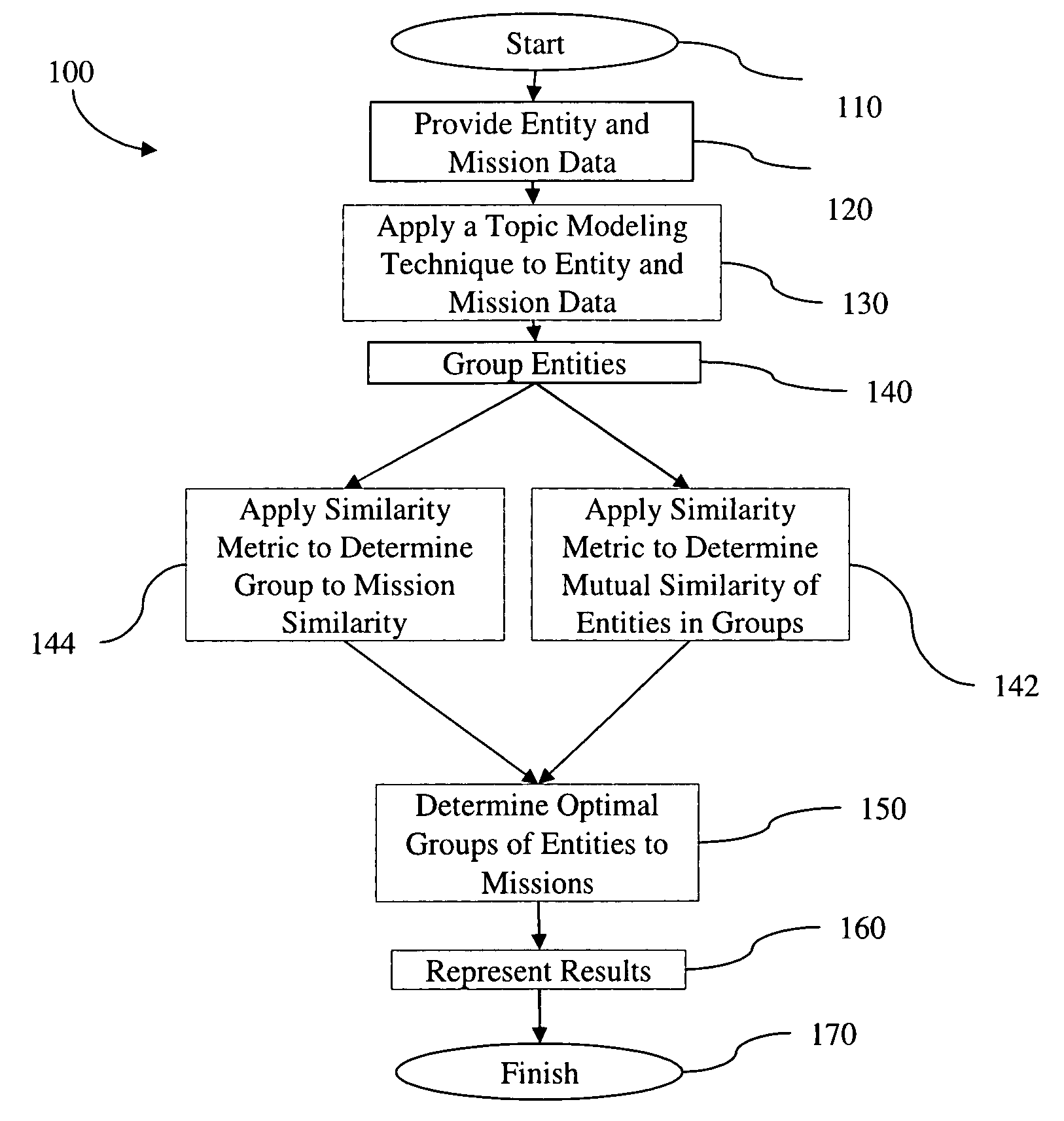
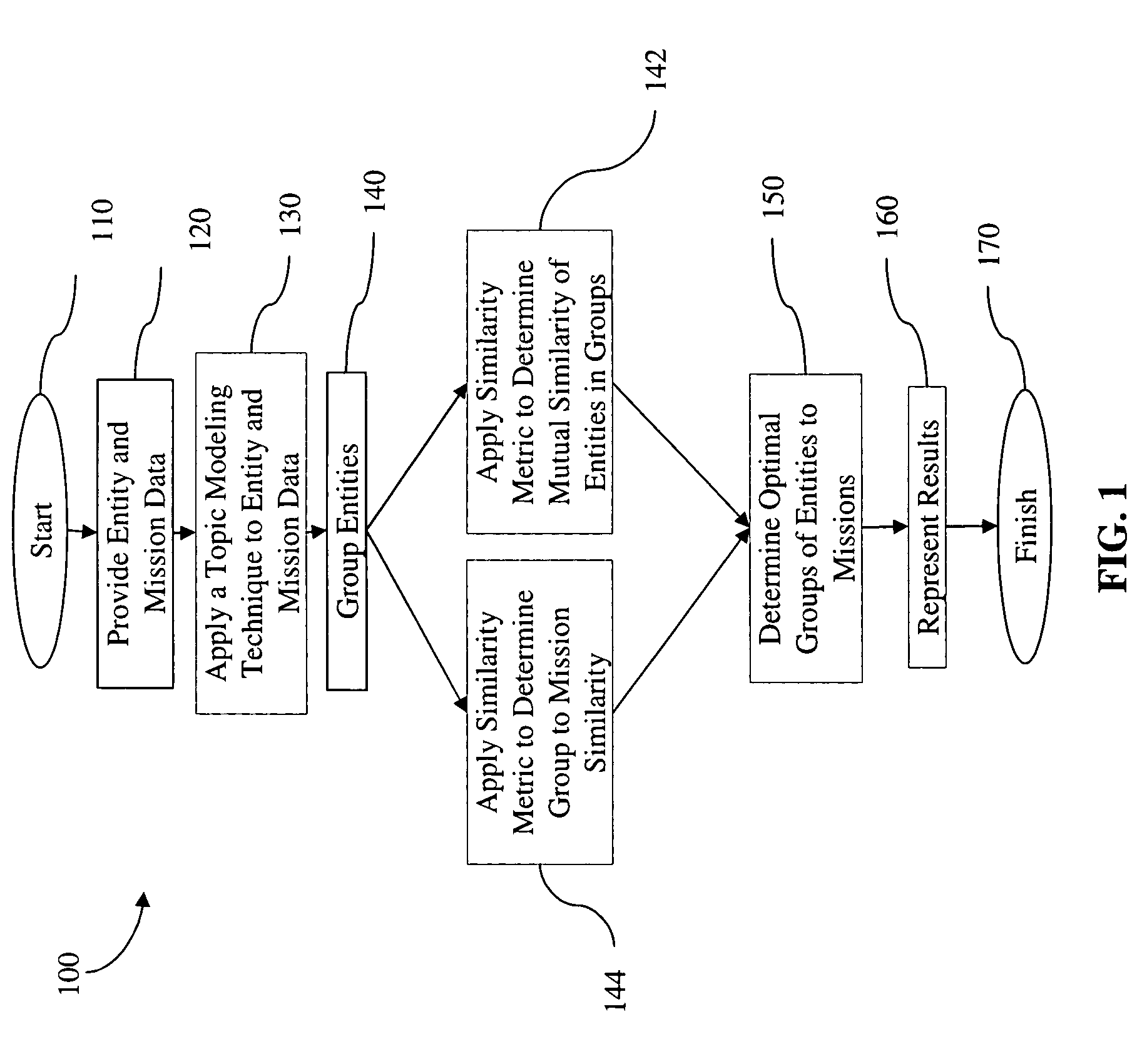
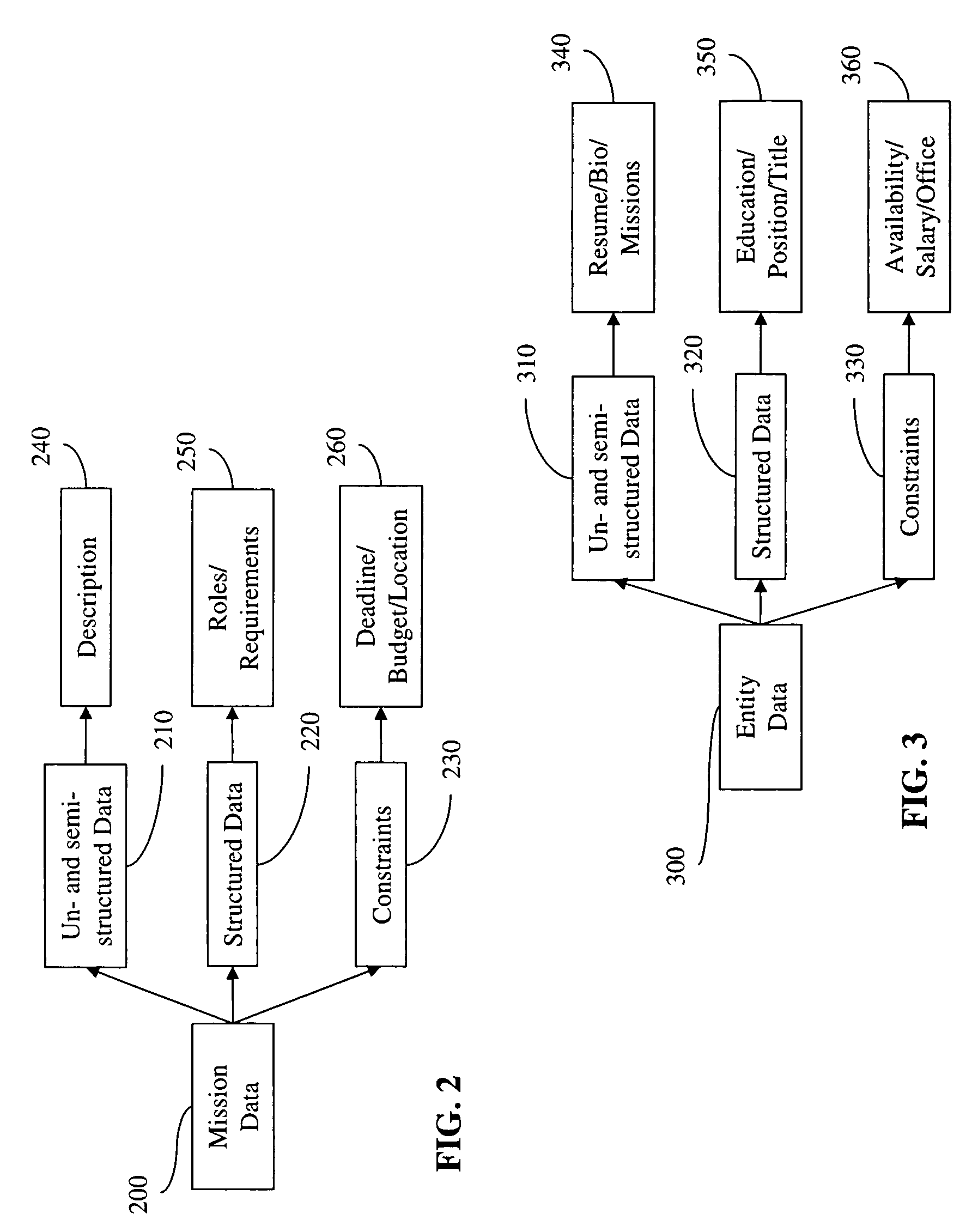
- A computer-based system and method utilizing Probabilistic Latent Semantic Analysis (PLSA) or Latent Dirichlet Allocation (LDA) to compare and maximize the appropriateness of a group of entities by creating topic models from unstructured and structured data, determining similarities between entities and missions, and optimizing group formations to meet mission requirements while minimizing redundancy and maximizing diversity.
Method of analyzing documents
PatentInactiveUS20060259481A1
Innovation
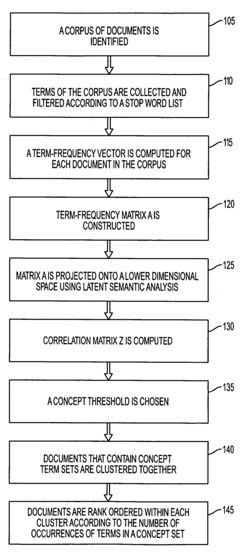
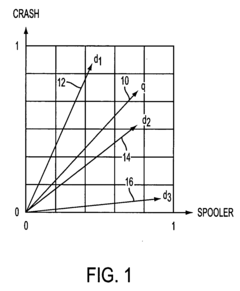
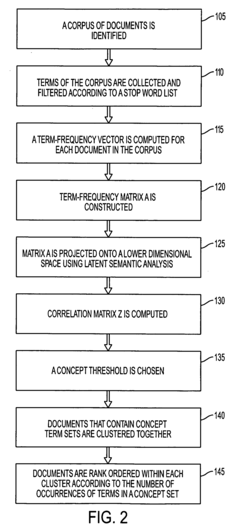
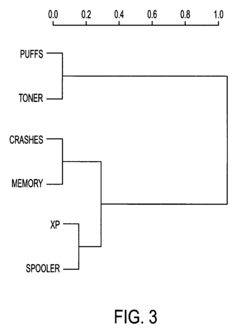
- The method employs latent semantic analysis (LSA) to project term-frequency matrices into a lower dimensional space, creating a correlation matrix and concept graph, allowing for clustering of documents based on concept occurrence and ranking by frequency within concept sets, using techniques like Singular Value Decomposition and hierarchical agglomerative clustering.
Regulatory Framework for LSA Engine Software
The regulatory landscape for Light Sport Aircraft (LSA) engine software is characterized by a complex interplay of aviation authorities, industry standards, and safety protocols. The Federal Aviation Administration (FAA) in the United States and the European Union Aviation Safety Agency (EASA) have established specific frameworks governing LSA engine software modulations, with particular emphasis on reliability, safety, and performance parameters.
These regulatory bodies mandate compliance with standards such as ASTM F2339 for LSA engines and ASTM F2840 for electronic engine control systems. Additionally, DO-178C provides guidelines for software considerations in airborne systems and equipment certification, categorizing software based on its criticality to flight safety. For LSA engine software modulations, most components fall under Level C or D, requiring structured development processes and verification procedures.
Recent regulatory developments have introduced more flexible approaches to LSA engine software certification, acknowledging the rapid pace of technological advancement in this sector. The FAA's Risk-Based Decision Making (RBDM) initiative allows for more adaptive regulatory responses based on safety risk assessments rather than prescriptive requirements, creating opportunities for innovative software modulation techniques.
Compliance challenges for manufacturers include documentation requirements, version control protocols, and change management procedures. Software updates and modifications must undergo rigorous testing and validation before implementation, with clear audit trails maintained throughout the product lifecycle. The regulatory framework also addresses cybersecurity concerns, requiring manufacturers to implement safeguards against unauthorized access or manipulation of engine control systems.
International harmonization efforts are underway to standardize LSA engine software regulations across different jurisdictions, reducing compliance burdens for manufacturers operating in global markets. The International Civil Aviation Organization (ICAO) has established working groups focused on developing unified standards for light aircraft software systems, though regional variations in implementation persist.
Environmental regulations increasingly influence LSA engine software development, with emissions control algorithms and fuel efficiency optimizations becoming mandatory in many jurisdictions. These requirements necessitate sophisticated software modulation capabilities to balance performance with environmental compliance, adding another layer of complexity to the regulatory framework.
These regulatory bodies mandate compliance with standards such as ASTM F2339 for LSA engines and ASTM F2840 for electronic engine control systems. Additionally, DO-178C provides guidelines for software considerations in airborne systems and equipment certification, categorizing software based on its criticality to flight safety. For LSA engine software modulations, most components fall under Level C or D, requiring structured development processes and verification procedures.
Recent regulatory developments have introduced more flexible approaches to LSA engine software certification, acknowledging the rapid pace of technological advancement in this sector. The FAA's Risk-Based Decision Making (RBDM) initiative allows for more adaptive regulatory responses based on safety risk assessments rather than prescriptive requirements, creating opportunities for innovative software modulation techniques.
Compliance challenges for manufacturers include documentation requirements, version control protocols, and change management procedures. Software updates and modifications must undergo rigorous testing and validation before implementation, with clear audit trails maintained throughout the product lifecycle. The regulatory framework also addresses cybersecurity concerns, requiring manufacturers to implement safeguards against unauthorized access or manipulation of engine control systems.
International harmonization efforts are underway to standardize LSA engine software regulations across different jurisdictions, reducing compliance burdens for manufacturers operating in global markets. The International Civil Aviation Organization (ICAO) has established working groups focused on developing unified standards for light aircraft software systems, though regional variations in implementation persist.
Environmental regulations increasingly influence LSA engine software development, with emissions control algorithms and fuel efficiency optimizations becoming mandatory in many jurisdictions. These requirements necessitate sophisticated software modulation capabilities to balance performance with environmental compliance, adding another layer of complexity to the regulatory framework.
Performance Metrics and Benchmarking Standards
Establishing robust performance metrics and benchmarking standards is critical for evaluating LSA (Latent Semantic Analysis) Engine Software Modulations effectively. The industry currently employs several key performance indicators that serve as standardized measures for assessing the efficiency and effectiveness of LSA implementations.
Processing speed represents a fundamental metric, typically measured in documents processed per second or queries handled per minute. High-performing LSA engines should demonstrate consistent processing capabilities even when handling large-scale semantic analysis tasks. Current industry benchmarks suggest that enterprise-grade LSA solutions should process a minimum of 1,000 documents per second for standard text analysis operations.
Accuracy metrics form another essential evaluation dimension, encompassing precision, recall, and F1 scores. These metrics quantify how effectively the LSA engine identifies semantic relationships within content. Leading implementations currently achieve F1 scores exceeding 0.85 in controlled testing environments, establishing this as a baseline benchmark for competitive solutions.
Scalability assessment involves measuring performance degradation under increasing workloads. Effective LSA modulation systems should maintain near-linear scaling characteristics up to predefined thresholds. Industry standards suggest that performance should not degrade more than 15% when document volume increases tenfold.
Resource utilization metrics track memory consumption, CPU usage, and storage requirements. Optimized LSA engines typically maintain memory utilization below 4GB for standard workloads while processing medium-complexity semantic tasks. CPU utilization patterns should demonstrate efficient threading and parallel processing capabilities, with utilization curves that plateau rather than spike during intensive operations.
Latency measurements evaluate response time for semantic analysis operations. Current benchmarks indicate that enterprise-grade LSA implementations should deliver sub-second response times for 95% of standard queries, with complex semantic analysis operations completing within 3 seconds.
Standardized test datasets have emerged as crucial benchmarking tools, with collections like SemEval, TREC, and domain-specific corpora enabling consistent cross-implementation comparisons. These datasets provide controlled environments for evaluating semantic analysis capabilities across different LSA engine implementations.
Resilience metrics assess system stability under adverse conditions, including error rates during partial system failures and recovery time after interruptions. Industry standards suggest that robust LSA engines should maintain 99.9% operational accuracy even when operating with degraded resources.
Processing speed represents a fundamental metric, typically measured in documents processed per second or queries handled per minute. High-performing LSA engines should demonstrate consistent processing capabilities even when handling large-scale semantic analysis tasks. Current industry benchmarks suggest that enterprise-grade LSA solutions should process a minimum of 1,000 documents per second for standard text analysis operations.
Accuracy metrics form another essential evaluation dimension, encompassing precision, recall, and F1 scores. These metrics quantify how effectively the LSA engine identifies semantic relationships within content. Leading implementations currently achieve F1 scores exceeding 0.85 in controlled testing environments, establishing this as a baseline benchmark for competitive solutions.
Scalability assessment involves measuring performance degradation under increasing workloads. Effective LSA modulation systems should maintain near-linear scaling characteristics up to predefined thresholds. Industry standards suggest that performance should not degrade more than 15% when document volume increases tenfold.
Resource utilization metrics track memory consumption, CPU usage, and storage requirements. Optimized LSA engines typically maintain memory utilization below 4GB for standard workloads while processing medium-complexity semantic tasks. CPU utilization patterns should demonstrate efficient threading and parallel processing capabilities, with utilization curves that plateau rather than spike during intensive operations.
Latency measurements evaluate response time for semantic analysis operations. Current benchmarks indicate that enterprise-grade LSA implementations should deliver sub-second response times for 95% of standard queries, with complex semantic analysis operations completing within 3 seconds.
Standardized test datasets have emerged as crucial benchmarking tools, with collections like SemEval, TREC, and domain-specific corpora enabling consistent cross-implementation comparisons. These datasets provide controlled environments for evaluating semantic analysis capabilities across different LSA engine implementations.
Resilience metrics assess system stability under adverse conditions, including error rates during partial system failures and recovery time after interruptions. Industry standards suggest that robust LSA engines should maintain 99.9% operational accuracy even when operating with degraded resources.
Unlock deeper insights with Patsnap Eureka Quick Research — get a full tech report to explore trends and direct your research. Try now!
Generate Your Research Report Instantly with AI Agent
Supercharge your innovation with Patsnap Eureka AI Agent Platform!