

Enhancing Throughput in Fixed Satellite Via Advanced Modulation
MAR 18, 20269 MIN READ
Generate Your Research Report Instantly with AI Agent
PatSnap Eureka helps you evaluate technical feasibility & market potential.
Satellite Communication Modulation Background and Objectives
Satellite communication has undergone remarkable evolution since the launch of the first commercial communication satellites in the 1960s. Early systems relied on simple frequency modulation schemes with limited spectral efficiency, primarily serving basic voice and low-speed data transmission requirements. The progression from analog to digital modulation marked a pivotal transformation, introducing Phase Shift Keying (PSK) and Quadrature Amplitude Modulation (QAM) techniques that significantly improved bandwidth utilization and signal quality.
The advent of fixed satellite services revolutionized global telecommunications by providing reliable point-to-point and point-to-multipoint connectivity across vast geographical distances. Traditional modulation schemes such as BPSK and QPSK dominated early implementations due to their robustness against channel impairments and relatively straightforward implementation complexity. However, the exponential growth in data demand and the emergence of bandwidth-intensive applications have exposed the limitations of conventional modulation approaches.
Contemporary satellite communication systems face unprecedented challenges in meeting escalating throughput requirements while operating within constrained spectrum allocations. The proliferation of high-definition video streaming, cloud computing services, and Internet of Things applications has created an insatiable demand for higher data rates. Simultaneously, the increasing congestion in allocated satellite frequency bands necessitates more efficient spectrum utilization strategies.
Advanced modulation techniques represent a critical pathway toward addressing these capacity constraints without requiring additional spectrum resources or orbital slots. Higher-order modulation schemes, including 16-QAM, 64-QAM, and beyond, offer the potential to multiply throughput capacity by encoding multiple bits per symbol transmission. However, these techniques introduce increased sensitivity to noise, interference, and channel distortions, particularly challenging in the satellite environment characterized by long propagation delays and atmospheric effects.
The primary objective of enhancing throughput through advanced modulation encompasses several key technical goals. First, maximizing spectral efficiency by achieving higher bits-per-hertz ratios while maintaining acceptable error performance under realistic channel conditions. Second, developing adaptive modulation frameworks that dynamically optimize transmission parameters based on real-time channel quality assessments. Third, integrating advanced error correction coding with sophisticated modulation schemes to achieve near-Shannon limit performance.
Furthermore, the implementation objectives include ensuring backward compatibility with existing satellite infrastructure while providing seamless migration paths for legacy systems. The development of robust synchronization algorithms, efficient channel estimation techniques, and practical implementation architectures suitable for satellite transponder constraints represents additional critical objectives in this technological advancement pursuit.
The advent of fixed satellite services revolutionized global telecommunications by providing reliable point-to-point and point-to-multipoint connectivity across vast geographical distances. Traditional modulation schemes such as BPSK and QPSK dominated early implementations due to their robustness against channel impairments and relatively straightforward implementation complexity. However, the exponential growth in data demand and the emergence of bandwidth-intensive applications have exposed the limitations of conventional modulation approaches.
Contemporary satellite communication systems face unprecedented challenges in meeting escalating throughput requirements while operating within constrained spectrum allocations. The proliferation of high-definition video streaming, cloud computing services, and Internet of Things applications has created an insatiable demand for higher data rates. Simultaneously, the increasing congestion in allocated satellite frequency bands necessitates more efficient spectrum utilization strategies.
Advanced modulation techniques represent a critical pathway toward addressing these capacity constraints without requiring additional spectrum resources or orbital slots. Higher-order modulation schemes, including 16-QAM, 64-QAM, and beyond, offer the potential to multiply throughput capacity by encoding multiple bits per symbol transmission. However, these techniques introduce increased sensitivity to noise, interference, and channel distortions, particularly challenging in the satellite environment characterized by long propagation delays and atmospheric effects.
The primary objective of enhancing throughput through advanced modulation encompasses several key technical goals. First, maximizing spectral efficiency by achieving higher bits-per-hertz ratios while maintaining acceptable error performance under realistic channel conditions. Second, developing adaptive modulation frameworks that dynamically optimize transmission parameters based on real-time channel quality assessments. Third, integrating advanced error correction coding with sophisticated modulation schemes to achieve near-Shannon limit performance.
Furthermore, the implementation objectives include ensuring backward compatibility with existing satellite infrastructure while providing seamless migration paths for legacy systems. The development of robust synchronization algorithms, efficient channel estimation techniques, and practical implementation architectures suitable for satellite transponder constraints represents additional critical objectives in this technological advancement pursuit.
Market Demand for High-Throughput Satellite Services
The global satellite communications market is experiencing unprecedented growth driven by the exponential increase in data consumption across various sectors. Traditional satellite systems are struggling to meet the bandwidth requirements of modern applications, creating a substantial market gap that high-throughput satellite services are positioned to fill. The demand spans multiple verticals including telecommunications, broadcasting, maritime, aviation, government, and enterprise connectivity solutions.
Enterprise customers represent a significant portion of the market demand, particularly those operating in remote locations where terrestrial infrastructure is limited or unavailable. Oil and gas companies, mining operations, and agricultural enterprises require reliable, high-capacity connectivity for real-time data transmission, video conferencing, and cloud-based applications. These sectors are increasingly willing to invest in premium satellite services that can deliver terrestrial-like performance.
The maritime and aviation industries are driving substantial demand for enhanced satellite throughput capabilities. Modern vessels and aircraft require seamless connectivity for passenger services, operational communications, and safety systems. The expectation for continuous high-speed internet access during travel has created a lucrative market segment that demands advanced modulation techniques to maximize spectral efficiency and data rates.
Government and defense applications constitute another critical demand driver, requiring secure, high-capacity communications for military operations, disaster response, and remote monitoring systems. These applications often demand guaranteed service levels and enhanced security features, making them ideal candidates for advanced satellite technologies that can deliver superior performance through improved modulation schemes.
The emergence of Internet of Things applications and smart city initiatives is creating new demand patterns for satellite connectivity. These applications require efficient data transmission capabilities that can handle numerous simultaneous connections while maintaining cost-effectiveness. Advanced modulation techniques enable satellite operators to serve these markets more efficiently by increasing spectral utilization and reducing per-bit transmission costs.
Developing regions represent significant untapped market potential, where satellite services often provide the most viable path to broadband connectivity. The demand in these markets is particularly sensitive to cost-per-bit ratios, making throughput enhancement through advanced modulation techniques essential for market penetration and service affordability.
Enterprise customers represent a significant portion of the market demand, particularly those operating in remote locations where terrestrial infrastructure is limited or unavailable. Oil and gas companies, mining operations, and agricultural enterprises require reliable, high-capacity connectivity for real-time data transmission, video conferencing, and cloud-based applications. These sectors are increasingly willing to invest in premium satellite services that can deliver terrestrial-like performance.
The maritime and aviation industries are driving substantial demand for enhanced satellite throughput capabilities. Modern vessels and aircraft require seamless connectivity for passenger services, operational communications, and safety systems. The expectation for continuous high-speed internet access during travel has created a lucrative market segment that demands advanced modulation techniques to maximize spectral efficiency and data rates.
Government and defense applications constitute another critical demand driver, requiring secure, high-capacity communications for military operations, disaster response, and remote monitoring systems. These applications often demand guaranteed service levels and enhanced security features, making them ideal candidates for advanced satellite technologies that can deliver superior performance through improved modulation schemes.
The emergence of Internet of Things applications and smart city initiatives is creating new demand patterns for satellite connectivity. These applications require efficient data transmission capabilities that can handle numerous simultaneous connections while maintaining cost-effectiveness. Advanced modulation techniques enable satellite operators to serve these markets more efficiently by increasing spectral utilization and reducing per-bit transmission costs.
Developing regions represent significant untapped market potential, where satellite services often provide the most viable path to broadband connectivity. The demand in these markets is particularly sensitive to cost-per-bit ratios, making throughput enhancement through advanced modulation techniques essential for market penetration and service affordability.
Current State and Challenges of Fixed Satellite Modulation
Fixed satellite communication systems currently employ a diverse range of modulation techniques, with traditional schemes like QPSK and 8PSK remaining prevalent in many operational satellites. These conventional modulation formats have proven reliable over decades of deployment, offering robust performance under various channel conditions. However, their spectral efficiency limitations have become increasingly apparent as bandwidth demands continue to escalate across commercial, military, and scientific applications.
The industry has witnessed significant adoption of higher-order modulation schemes, particularly 16APSK and 32APSK, which are standardized in DVB-S2 and DVB-S2X specifications. These advanced modulation formats can theoretically deliver substantial throughput improvements, with 32APSK offering up to 5 bits per symbol compared to 2 bits per symbol for QPSK. Leading satellite operators have begun implementing these technologies in next-generation satellites, demonstrating measurable capacity gains in controlled environments.
Despite these technological advances, several critical challenges continue to impede widespread deployment of advanced modulation schemes in fixed satellite systems. The primary obstacle remains the inherent trade-off between spectral efficiency and signal robustness. Higher-order modulation formats exhibit increased sensitivity to channel impairments, including phase noise, amplitude distortion, and nonlinear amplification effects common in satellite transponders.
Power amplifier nonlinearity presents a particularly complex challenge, as traveling wave tube amplifiers and solid-state power amplifiers introduce amplitude and phase distortions that disproportionately affect constellation points in higher-order modulation schemes. This necessitates significant back-off from peak power levels, reducing overall system efficiency and potentially negating throughput gains achieved through advanced modulation.
Atmospheric propagation effects, including rain fade and scintillation, create additional complications for advanced modulation deployment. While adaptive coding and modulation techniques have been developed to address these challenges, their implementation requires sophisticated ground terminal equipment and real-time channel state information, increasing system complexity and cost.
Current satellite systems also face limitations in terms of onboard processing capabilities and power consumption constraints. Advanced modulation schemes often require more sophisticated signal processing algorithms, which can strain existing satellite hardware architectures. The geographic distribution of advanced modulation capabilities remains uneven, with developed markets showing greater adoption rates compared to emerging regions where cost sensitivity remains a primary concern.
The industry has witnessed significant adoption of higher-order modulation schemes, particularly 16APSK and 32APSK, which are standardized in DVB-S2 and DVB-S2X specifications. These advanced modulation formats can theoretically deliver substantial throughput improvements, with 32APSK offering up to 5 bits per symbol compared to 2 bits per symbol for QPSK. Leading satellite operators have begun implementing these technologies in next-generation satellites, demonstrating measurable capacity gains in controlled environments.
Despite these technological advances, several critical challenges continue to impede widespread deployment of advanced modulation schemes in fixed satellite systems. The primary obstacle remains the inherent trade-off between spectral efficiency and signal robustness. Higher-order modulation formats exhibit increased sensitivity to channel impairments, including phase noise, amplitude distortion, and nonlinear amplification effects common in satellite transponders.
Power amplifier nonlinearity presents a particularly complex challenge, as traveling wave tube amplifiers and solid-state power amplifiers introduce amplitude and phase distortions that disproportionately affect constellation points in higher-order modulation schemes. This necessitates significant back-off from peak power levels, reducing overall system efficiency and potentially negating throughput gains achieved through advanced modulation.
Atmospheric propagation effects, including rain fade and scintillation, create additional complications for advanced modulation deployment. While adaptive coding and modulation techniques have been developed to address these challenges, their implementation requires sophisticated ground terminal equipment and real-time channel state information, increasing system complexity and cost.
Current satellite systems also face limitations in terms of onboard processing capabilities and power consumption constraints. Advanced modulation schemes often require more sophisticated signal processing algorithms, which can strain existing satellite hardware architectures. The geographic distribution of advanced modulation capabilities remains uneven, with developed markets showing greater adoption rates compared to emerging regions where cost sensitivity remains a primary concern.
Existing Advanced Modulation Solutions for Satellites
01 Adaptive modulation and coding schemes for throughput optimization
Advanced modulation techniques employ adaptive modulation and coding (AMC) schemes that dynamically adjust modulation orders and coding rates based on channel conditions. This approach optimizes spectral efficiency and data throughput by selecting appropriate modulation schemes such as QPSK, 16-QAM, 64-QAM, or 256-QAM depending on signal quality metrics. The system monitors channel state information and adapts transmission parameters in real-time to maximize throughput while maintaining acceptable error rates.- Adaptive modulation and coding schemes for throughput optimization: Advanced modulation techniques employ adaptive modulation and coding (AMC) schemes that dynamically adjust modulation orders and coding rates based on channel conditions. This approach optimizes spectral efficiency and data throughput by selecting appropriate modulation schemes such as QPSK, 16-QAM, 64-QAM, or 256-QAM depending on signal quality metrics. The system monitors channel state information and adapts transmission parameters in real-time to maximize throughput while maintaining acceptable error rates.
- MIMO and spatial multiplexing for enhanced data rates: Multiple-input multiple-output (MIMO) technology combined with spatial multiplexing techniques significantly increases throughput by transmitting multiple data streams simultaneously over different antennas. Advanced beamforming and precoding methods optimize signal transmission across spatial channels, enabling higher data rates without requiring additional bandwidth. These techniques leverage spatial diversity and multiplexing gains to achieve substantial throughput improvements in wireless communication systems.
- Higher-order modulation with advanced signal processing: Implementation of higher-order modulation schemes beyond traditional formats enables increased bits per symbol transmission, directly enhancing throughput capacity. Advanced signal processing algorithms including equalization, interference cancellation, and error correction techniques support reliable transmission at higher modulation orders. These methods incorporate sophisticated detection algorithms and channel estimation techniques to maintain signal integrity while maximizing spectral efficiency and data rates.
- Carrier aggregation and bandwidth expansion techniques: Carrier aggregation technology combines multiple frequency bands or component carriers to create wider transmission channels, proportionally increasing available throughput. This approach allows simultaneous transmission across aggregated carriers, effectively multiplying the data rate capabilities. Advanced scheduling algorithms coordinate resource allocation across multiple carriers while managing inter-carrier interference and optimizing overall system throughput performance.
- Interference mitigation and spectrum efficiency enhancement: Advanced interference management techniques including coordinated multipoint transmission, interference alignment, and advanced receiver architectures improve throughput by reducing signal degradation. These methods employ sophisticated algorithms for interference detection, cancellation, and suppression, enabling more aggressive modulation schemes and higher data rates. Spectrum efficiency is enhanced through dynamic resource allocation, frequency reuse optimization, and advanced filtering techniques that minimize interference impact on throughput performance.
02 MIMO and spatial multiplexing for enhanced data rates
Multiple-input multiple-output (MIMO) technology combined with spatial multiplexing techniques significantly increases throughput by transmitting multiple data streams simultaneously over different antennas. This approach exploits spatial diversity and multiplexing gains to achieve higher data rates without requiring additional bandwidth. Advanced signal processing algorithms enable the separation and decoding of multiple spatial streams at the receiver, effectively multiplying the system capacity.Expand Specific Solutions03 Higher-order modulation with advanced error correction
Implementation of higher-order modulation schemes paired with sophisticated forward error correction (FEC) codes enables increased throughput while maintaining reliability. These systems utilize advanced coding techniques such as LDPC or turbo codes combined with modulation orders up to 1024-QAM to pack more bits per symbol. The integration of iterative decoding algorithms and soft-decision processing enhances the system's ability to operate at higher spectral efficiencies even in challenging channel conditions.Expand Specific Solutions04 Carrier aggregation and bandwidth expansion techniques
Carrier aggregation technology combines multiple frequency bands or carriers to create wider transmission channels, directly increasing aggregate throughput. This approach allows simultaneous transmission across multiple component carriers, which can be contiguous or non-contiguous in the frequency domain. Advanced scheduling algorithms coordinate resource allocation across aggregated carriers to optimize overall system throughput and efficiently utilize available spectrum resources.Expand Specific Solutions05 Interference mitigation and signal processing for throughput enhancement
Advanced signal processing techniques for interference cancellation and mitigation enable higher throughput by improving signal-to-interference-plus-noise ratio (SINR). These methods include successive interference cancellation, beamforming, and coordinated multipoint transmission to reduce inter-cell and intra-cell interference. By minimizing interference effects, systems can support more aggressive modulation schemes and higher code rates, resulting in improved spectral efficiency and overall throughput performance.Expand Specific Solutions
Key Players in Satellite Communication and Modulation Industry
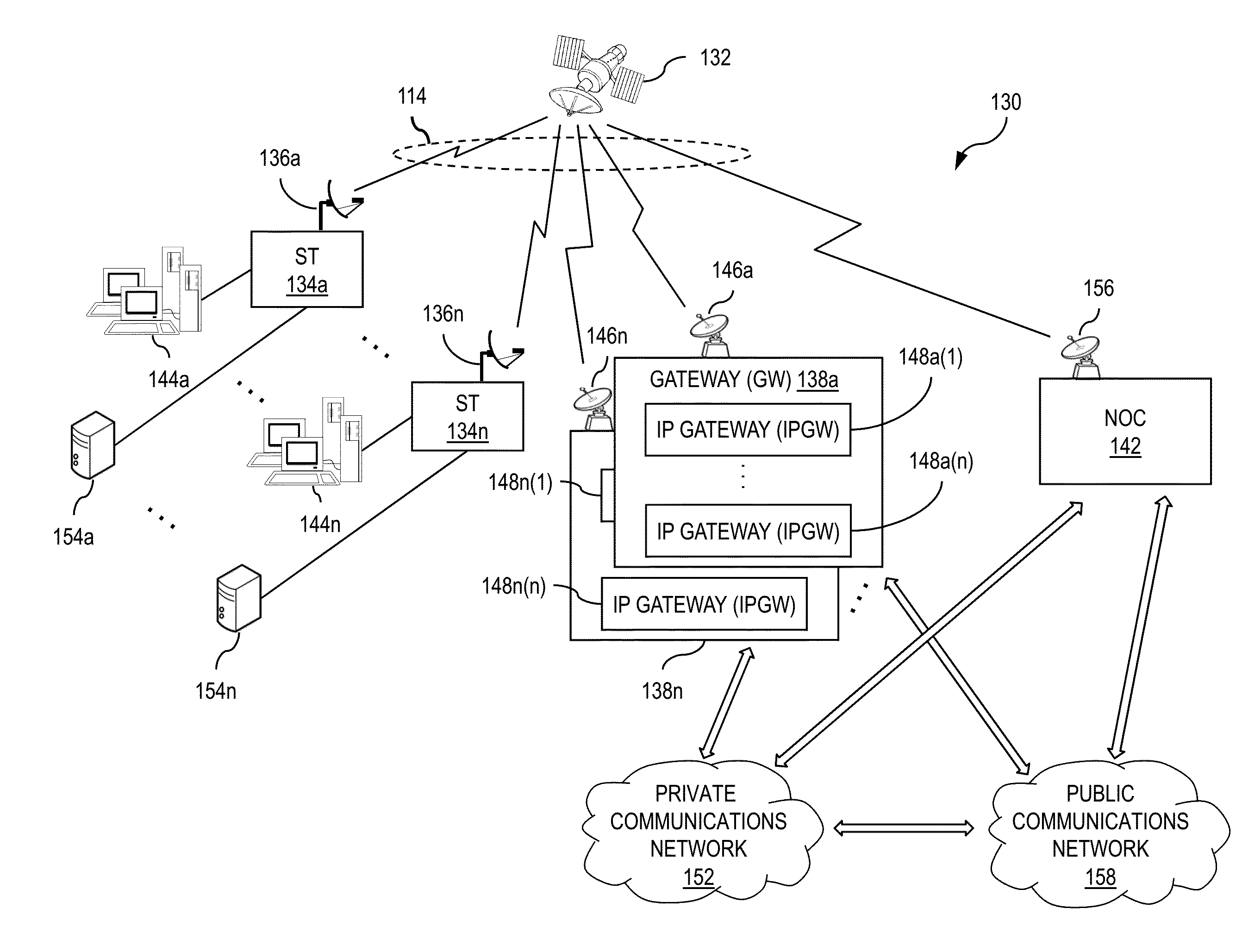
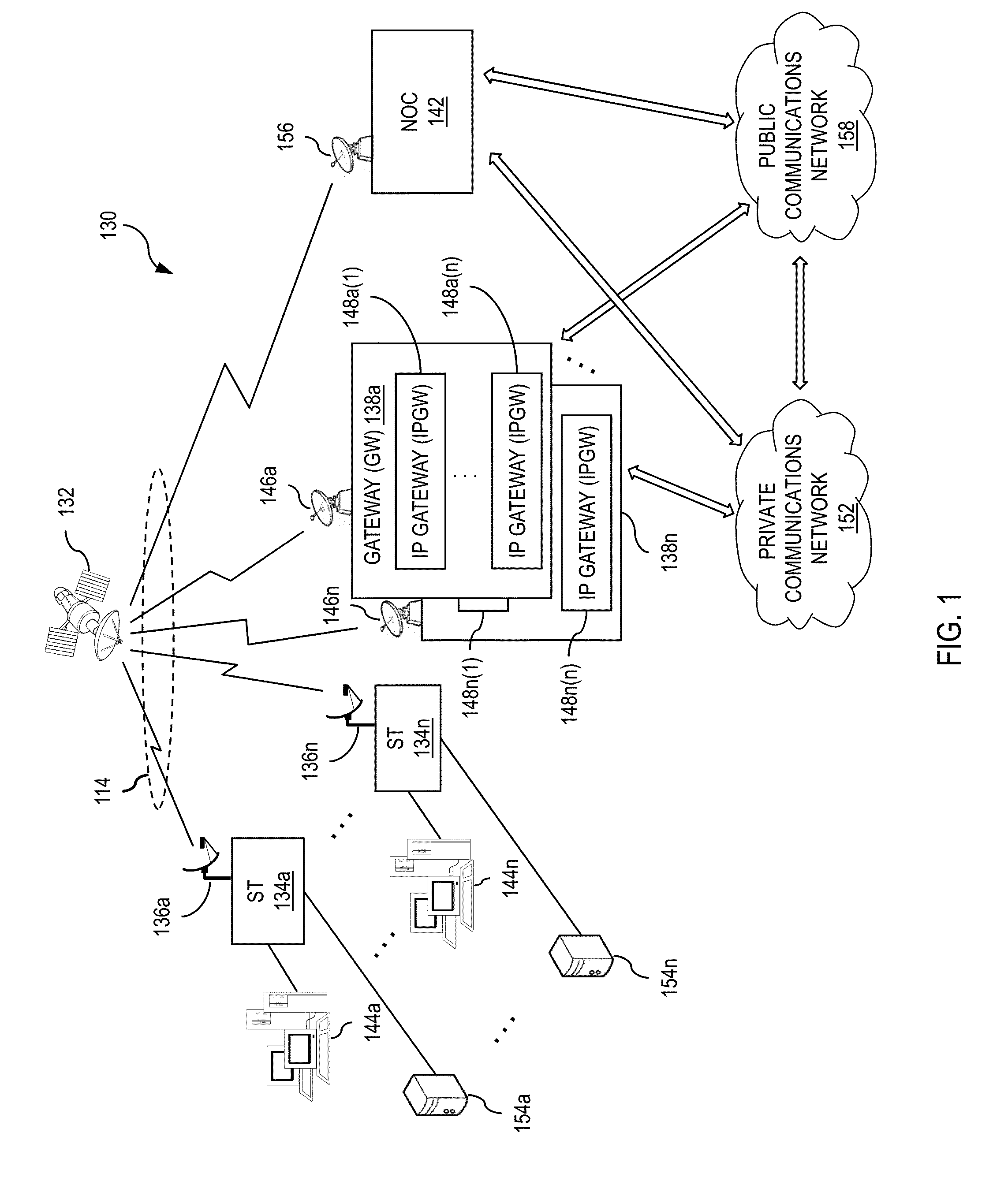
The fixed satellite communication industry for advanced modulation technologies is experiencing rapid growth, driven by increasing demand for high-throughput satellite services. The market demonstrates significant scale with established players like Hughes Network Systems, ViaSat, and DIRECTV leading commercial applications, while aerospace giants Boeing, Thales, and Northrop Grumman dominate infrastructure development. Technology maturity varies across segments, with companies like Huawei, ZTE, and Samsung Electronics advancing semiconductor solutions, while research institutions including China Academy of Space Technology and European Space Agency push innovation boundaries. The competitive landscape shows consolidation trends, evidenced by ST Engineering iDirect's integration activities, as traditional satellite operators compete with emerging players from Asia-Pacific regions, creating a dynamic ecosystem spanning from component manufacturers to end-to-end service providers.
Hughes Network Systems
Technical Solution: Hughes has developed advanced DVB-S2X modulation schemes with adaptive coding and modulation (ACM) technology for their Jupiter satellite platform. Their solution implements higher-order modulation formats including 256APSK and 1024QAM, achieving spectral efficiency improvements of up to 30% compared to traditional DVB-S2. The system dynamically adjusts modulation parameters based on link conditions, optimizing throughput while maintaining signal quality. Hughes integrates advanced forward error correction (FEC) codes and sophisticated signal processing algorithms to enhance performance in varying atmospheric conditions.
Strengths: Market-leading satellite broadband technology with proven commercial deployment and excellent adaptive modulation capabilities. Weaknesses: Higher complexity and cost, primarily focused on consumer broadband rather than specialized applications.
ST Engineering iDirect (Europe) CY NV
Technical Solution: ST Engineering iDirect has developed advanced modulation technologies through their Evolution platform, implementing enhanced DVB-S2X capabilities with proprietary optimizations. Their solution features adaptive coding and modulation with fine-grained control, supporting modulation schemes up to 256APSK with advanced constellation shaping. The system incorporates sophisticated link adaptation algorithms that continuously monitor channel conditions and adjust transmission parameters to maximize throughput. iDirect's technology includes advanced burst time plan optimization and efficient bandwidth allocation mechanisms, combined with enhanced FEC coding schemes to improve overall system performance and spectral efficiency in VSAT networks.
Strengths: Proven VSAT technology with excellent network management capabilities and strong focus on operational efficiency. Weaknesses: Primarily focused on enterprise markets with limited scalability for very high-throughput applications.
Core Innovations in High-Order Modulation Patents
An adaptive modulation system and method for increasing throughput over a transmission channel
PatentWO2015120891A1
Innovation
- An adaptive modulation system that employs a transmitter and receiver with a working set unit to select and optimize signal constellations based on channel parameters, maximizing constrained capacity and storing these in a working set memory to ensure efficient spectral usage, using a signal point optimizer to adjust constellations and communicate optimal settings through a control channel.


Multicarrier successive predistortion for digital transmission
PatentActiveUS20150311927A1
Innovation
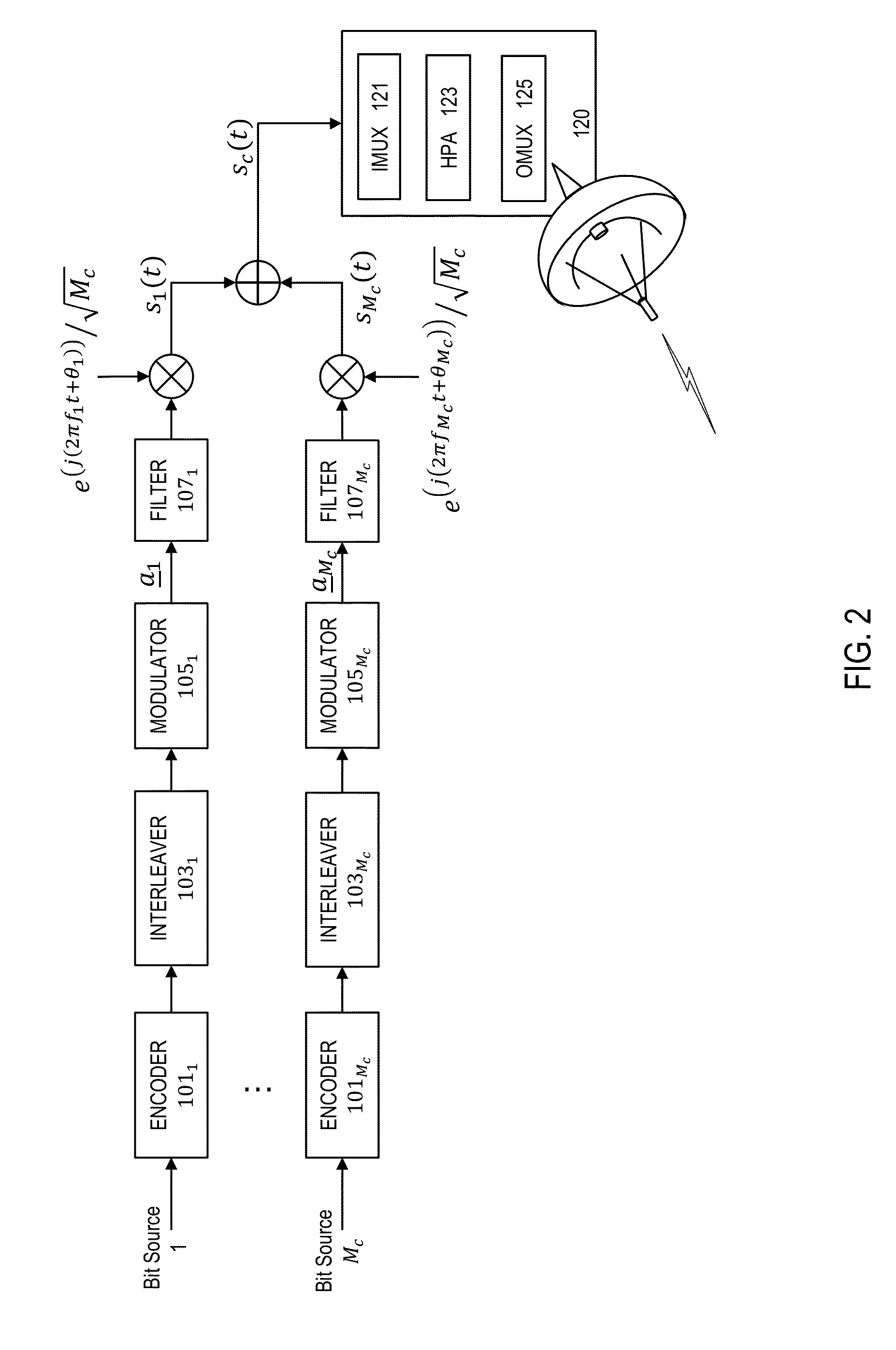
- A multicarrier data predistortion technique is employed to estimate and compensate for distortion by modifying transmission symbols, using either an explicit or Volterra-based approach, to minimize IMD-induced clustering, allowing for operation near saturation with improved spectral efficiency and power usage.

Spectrum Regulatory Framework for Satellite Communications
The spectrum regulatory framework for satellite communications represents a complex international governance structure that directly impacts the implementation of advanced modulation techniques in fixed satellite systems. This framework operates through multiple layers of regulatory oversight, beginning with the International Telecommunication Union (ITU) at the global level, which establishes fundamental principles for spectrum allocation and coordination procedures among member nations.
The ITU Radio Regulations serve as the cornerstone document governing satellite spectrum usage, defining specific frequency bands allocated for fixed satellite services (FSS). These allocations include C-band (3.7-4.2 GHz downlink, 5.925-6.425 GHz uplink), Ku-band (10.7-12.7 GHz downlink, 14.0-14.5 GHz uplink), and Ka-band (17.7-21.2 GHz downlink, 27.5-30.0 GHz uplink) segments. Each band carries distinct regulatory constraints that influence modulation scheme selection and power limitations.
Regional regulatory bodies, such as the Federal Communications Commission in the United States and the European Communications Committee in Europe, implement ITU guidelines while establishing additional technical standards specific to their jurisdictions. These regional frameworks often impose stricter emission limits and interference protection criteria that directly affect the deployment of high-order modulation schemes designed to enhance throughput performance.
Coordination procedures mandated by regulatory frameworks require satellite operators to demonstrate compliance with interference thresholds when implementing advanced modulation techniques. The coordination process involves detailed technical submissions showing how proposed modulation schemes will maintain acceptable carrier-to-interference ratios with existing satellite networks. This regulatory requirement often necessitates adaptive modulation capabilities that can dynamically adjust transmission parameters based on interference conditions.
Emerging regulatory trends indicate increasing flexibility toward innovative modulation approaches, particularly in higher frequency bands where spectrum availability is greater. Recent regulatory developments have introduced more permissive technical standards for Ka-band and V-band operations, enabling the deployment of advanced modulation schemes that were previously constrained by conservative interference protection criteria established for lower frequency bands.
The ITU Radio Regulations serve as the cornerstone document governing satellite spectrum usage, defining specific frequency bands allocated for fixed satellite services (FSS). These allocations include C-band (3.7-4.2 GHz downlink, 5.925-6.425 GHz uplink), Ku-band (10.7-12.7 GHz downlink, 14.0-14.5 GHz uplink), and Ka-band (17.7-21.2 GHz downlink, 27.5-30.0 GHz uplink) segments. Each band carries distinct regulatory constraints that influence modulation scheme selection and power limitations.
Regional regulatory bodies, such as the Federal Communications Commission in the United States and the European Communications Committee in Europe, implement ITU guidelines while establishing additional technical standards specific to their jurisdictions. These regional frameworks often impose stricter emission limits and interference protection criteria that directly affect the deployment of high-order modulation schemes designed to enhance throughput performance.
Coordination procedures mandated by regulatory frameworks require satellite operators to demonstrate compliance with interference thresholds when implementing advanced modulation techniques. The coordination process involves detailed technical submissions showing how proposed modulation schemes will maintain acceptable carrier-to-interference ratios with existing satellite networks. This regulatory requirement often necessitates adaptive modulation capabilities that can dynamically adjust transmission parameters based on interference conditions.
Emerging regulatory trends indicate increasing flexibility toward innovative modulation approaches, particularly in higher frequency bands where spectrum availability is greater. Recent regulatory developments have introduced more permissive technical standards for Ka-band and V-band operations, enabling the deployment of advanced modulation schemes that were previously constrained by conservative interference protection criteria established for lower frequency bands.
Space Debris Impact on Satellite Throughput Enhancement
Space debris has emerged as a critical environmental factor that significantly influences satellite throughput enhancement initiatives, particularly for fixed satellite systems employing advanced modulation techniques. The proliferation of orbital debris, ranging from defunct satellites to microscopic paint flecks, creates a complex operational environment that directly impacts signal integrity and system performance. Current estimates indicate over 34,000 tracked objects larger than 10 centimeters in orbit, with millions of smaller fragments posing substantial risks to satellite operations.
The physical impact of space debris on satellite infrastructure represents the most immediate threat to throughput optimization efforts. Collision events, even with small debris particles, can cause catastrophic damage to satellite antennas, solar panels, and communication equipment. Such incidents not only result in complete system failures but also generate additional debris clouds, perpetuating the cascade effect known as Kessler Syndrome. The 2009 collision between Cosmos 2251 and Iridium 33 satellites exemplifies how debris events can instantly eliminate communication capacity and disrupt global connectivity services.
Beyond direct physical damage, space debris significantly affects the electromagnetic environment in which advanced modulation schemes operate. Debris particles can cause signal scattering, multipath interference, and unexpected reflections that degrade the signal-to-noise ratio essential for high-order modulation techniques. These electromagnetic disturbances are particularly problematic for satellites utilizing sophisticated modulation formats like 256-QAM or advanced APSK configurations, which require pristine signal conditions to achieve optimal throughput performance.
The operational constraints imposed by debris avoidance maneuvers present another substantial challenge to throughput enhancement strategies. Satellites must frequently adjust their orbital positions to avoid predicted collision scenarios, resulting in temporary service interruptions and suboptimal antenna pointing. These maneuvers consume valuable fuel reserves, reduce operational lifespan, and disrupt the precise positioning required for advanced beamforming and frequency reuse techniques that maximize spectral efficiency.
Debris tracking and prediction systems have become integral components of modern satellite operations, requiring significant computational resources and real-time monitoring capabilities. The need for continuous debris surveillance diverts system resources away from throughput optimization functions, creating a fundamental trade-off between safety and performance enhancement initiatives.
The physical impact of space debris on satellite infrastructure represents the most immediate threat to throughput optimization efforts. Collision events, even with small debris particles, can cause catastrophic damage to satellite antennas, solar panels, and communication equipment. Such incidents not only result in complete system failures but also generate additional debris clouds, perpetuating the cascade effect known as Kessler Syndrome. The 2009 collision between Cosmos 2251 and Iridium 33 satellites exemplifies how debris events can instantly eliminate communication capacity and disrupt global connectivity services.
Beyond direct physical damage, space debris significantly affects the electromagnetic environment in which advanced modulation schemes operate. Debris particles can cause signal scattering, multipath interference, and unexpected reflections that degrade the signal-to-noise ratio essential for high-order modulation techniques. These electromagnetic disturbances are particularly problematic for satellites utilizing sophisticated modulation formats like 256-QAM or advanced APSK configurations, which require pristine signal conditions to achieve optimal throughput performance.
The operational constraints imposed by debris avoidance maneuvers present another substantial challenge to throughput enhancement strategies. Satellites must frequently adjust their orbital positions to avoid predicted collision scenarios, resulting in temporary service interruptions and suboptimal antenna pointing. These maneuvers consume valuable fuel reserves, reduce operational lifespan, and disrupt the precise positioning required for advanced beamforming and frequency reuse techniques that maximize spectral efficiency.
Debris tracking and prediction systems have become integral components of modern satellite operations, requiring significant computational resources and real-time monitoring capabilities. The need for continuous debris surveillance diverts system resources away from throughput optimization functions, creating a fundamental trade-off between safety and performance enhancement initiatives.
Unlock deeper insights with PatSnap Eureka Quick Research — get a full tech report to explore trends and direct your research. Try now!
Generate Your Research Report Instantly with AI Agent
Supercharge your innovation with PatSnap Eureka AI Agent Platform!