

Evaluate Fixed Satellite Services for Emergency Communications
MAR 18, 20269 MIN READ
Generate Your Research Report Instantly with AI Agent
PatSnap Eureka helps you evaluate technical feasibility & market potential.
FSS Emergency Communications Background and Objectives
Fixed Satellite Services have emerged as a critical component of emergency communication infrastructure due to their unique ability to provide reliable connectivity when terrestrial networks fail or become compromised. The evolution of FSS technology spans several decades, beginning with early geostationary satellites in the 1960s and progressing through multiple generations of increasingly sophisticated platforms. This technological progression has been driven by the growing recognition that natural disasters, terrorist attacks, and infrastructure failures can severely disrupt conventional communication systems, leaving emergency responders and affected populations without vital connectivity.
The historical development of FSS for emergency applications gained significant momentum following major disasters such as Hurricane Katrina in 2005 and the 2011 Japanese tsunami, which demonstrated the catastrophic impact of communication system failures during crisis situations. These events highlighted the vulnerability of terrestrial infrastructure and accelerated investment in satellite-based emergency communication solutions. The technology has since evolved from basic voice communication capabilities to comprehensive data transmission systems supporting video, internet connectivity, and real-time coordination platforms.
Current FSS emergency communication systems leverage multiple orbital configurations, including geostationary, medium Earth orbit, and low Earth orbit satellites, each offering distinct advantages for different emergency scenarios. Geostationary satellites provide consistent coverage over large geographic areas, making them ideal for coordinating regional disaster response efforts. Meanwhile, newer constellation architectures offer reduced latency and enhanced global coverage, addressing traditional limitations of satellite communications.
The primary objectives of FSS emergency communication systems encompass several critical functions. First, they must provide immediate communication restoration capabilities in disaster-affected areas where terrestrial infrastructure has been damaged or destroyed. This includes supporting first responder coordination, enabling communication between emergency management agencies, and facilitating contact between affected populations and their families. Second, these systems must offer scalable bandwidth allocation to accommodate varying communication demands during different phases of emergency response operations.
Another fundamental objective involves ensuring interoperability between different emergency response organizations, including federal, state, and local agencies, as well as international relief organizations. FSS platforms must support multiple communication protocols and standards to enable seamless information sharing across diverse organizational structures. Additionally, these systems must maintain operational continuity under extreme conditions, including severe weather events, electromagnetic interference, and potential cyber threats.
The strategic importance of FSS emergency communications extends beyond immediate disaster response to encompass long-term resilience planning and national security considerations. Modern objectives include developing rapidly deployable communication solutions that can be activated within hours of a disaster declaration, supporting both temporary emergency operations and longer-term recovery coordination efforts.
The historical development of FSS for emergency applications gained significant momentum following major disasters such as Hurricane Katrina in 2005 and the 2011 Japanese tsunami, which demonstrated the catastrophic impact of communication system failures during crisis situations. These events highlighted the vulnerability of terrestrial infrastructure and accelerated investment in satellite-based emergency communication solutions. The technology has since evolved from basic voice communication capabilities to comprehensive data transmission systems supporting video, internet connectivity, and real-time coordination platforms.
Current FSS emergency communication systems leverage multiple orbital configurations, including geostationary, medium Earth orbit, and low Earth orbit satellites, each offering distinct advantages for different emergency scenarios. Geostationary satellites provide consistent coverage over large geographic areas, making them ideal for coordinating regional disaster response efforts. Meanwhile, newer constellation architectures offer reduced latency and enhanced global coverage, addressing traditional limitations of satellite communications.
The primary objectives of FSS emergency communication systems encompass several critical functions. First, they must provide immediate communication restoration capabilities in disaster-affected areas where terrestrial infrastructure has been damaged or destroyed. This includes supporting first responder coordination, enabling communication between emergency management agencies, and facilitating contact between affected populations and their families. Second, these systems must offer scalable bandwidth allocation to accommodate varying communication demands during different phases of emergency response operations.
Another fundamental objective involves ensuring interoperability between different emergency response organizations, including federal, state, and local agencies, as well as international relief organizations. FSS platforms must support multiple communication protocols and standards to enable seamless information sharing across diverse organizational structures. Additionally, these systems must maintain operational continuity under extreme conditions, including severe weather events, electromagnetic interference, and potential cyber threats.
The strategic importance of FSS emergency communications extends beyond immediate disaster response to encompass long-term resilience planning and national security considerations. Modern objectives include developing rapidly deployable communication solutions that can be activated within hours of a disaster declaration, supporting both temporary emergency operations and longer-term recovery coordination efforts.
Market Demand for Satellite Emergency Communication Services
The global market for satellite emergency communication services has experienced substantial growth driven by increasing frequency and severity of natural disasters, expanding remote operations across industries, and growing awareness of communication resilience requirements. Traditional terrestrial communication infrastructure repeatedly demonstrates vulnerability during catastrophic events, creating sustained demand for reliable backup communication solutions that can operate independently of ground-based networks.
Government agencies and public safety organizations represent the largest market segment, requiring robust communication capabilities for disaster response coordination, search and rescue operations, and inter-agency collaboration during emergencies. These entities prioritize service reliability and coverage breadth over cost considerations, driving demand for premium satellite communication solutions with guaranteed availability and rapid deployment capabilities.
Commercial sectors including oil and gas, mining, maritime, and aviation industries constitute another significant demand driver. These industries operate in remote locations where terrestrial infrastructure is limited or nonexistent, making satellite emergency communications essential for worker safety and operational continuity. The maritime sector particularly relies on satellite services for distress communications and regulatory compliance with international safety requirements.
The humanitarian aid and non-governmental organization sector generates consistent demand for portable, rapidly deployable satellite communication solutions. These organizations require cost-effective services that can be quickly established in disaster-affected areas to coordinate relief efforts and maintain contact with headquarters and field teams.
Regional market dynamics vary significantly based on geographic risk profiles and regulatory frameworks. Areas prone to natural disasters such as hurricanes, earthquakes, and wildfires show higher adoption rates and willingness to invest in redundant communication systems. Developing regions with limited terrestrial infrastructure present emerging market opportunities, though price sensitivity remains a significant consideration.
Market growth is further accelerated by regulatory mandates requiring emergency communication capabilities across various industries and the increasing integration of satellite services into comprehensive emergency preparedness plans. The trend toward hybrid communication solutions combining terrestrial and satellite technologies is expanding the addressable market beyond traditional satellite-only applications.
Government agencies and public safety organizations represent the largest market segment, requiring robust communication capabilities for disaster response coordination, search and rescue operations, and inter-agency collaboration during emergencies. These entities prioritize service reliability and coverage breadth over cost considerations, driving demand for premium satellite communication solutions with guaranteed availability and rapid deployment capabilities.
Commercial sectors including oil and gas, mining, maritime, and aviation industries constitute another significant demand driver. These industries operate in remote locations where terrestrial infrastructure is limited or nonexistent, making satellite emergency communications essential for worker safety and operational continuity. The maritime sector particularly relies on satellite services for distress communications and regulatory compliance with international safety requirements.
The humanitarian aid and non-governmental organization sector generates consistent demand for portable, rapidly deployable satellite communication solutions. These organizations require cost-effective services that can be quickly established in disaster-affected areas to coordinate relief efforts and maintain contact with headquarters and field teams.
Regional market dynamics vary significantly based on geographic risk profiles and regulatory frameworks. Areas prone to natural disasters such as hurricanes, earthquakes, and wildfires show higher adoption rates and willingness to invest in redundant communication systems. Developing regions with limited terrestrial infrastructure present emerging market opportunities, though price sensitivity remains a significant consideration.
Market growth is further accelerated by regulatory mandates requiring emergency communication capabilities across various industries and the increasing integration of satellite services into comprehensive emergency preparedness plans. The trend toward hybrid communication solutions combining terrestrial and satellite technologies is expanding the addressable market beyond traditional satellite-only applications.
Current FSS Capabilities and Technical Limitations
Fixed Satellite Services currently provide comprehensive global coverage through geostationary satellites positioned approximately 35,786 kilometers above Earth's equator. These satellites maintain constant positioning relative to Earth's surface, enabling continuous communication links across vast geographical areas. Modern FSS networks operate across multiple frequency bands, including C-band (4-8 GHz), Ku-band (12-18 GHz), and Ka-band (26.5-40 GHz), offering varying degrees of bandwidth capacity and signal resilience.
Contemporary FSS infrastructure demonstrates robust capabilities for emergency communications through redundant satellite constellations and ground station networks. The technology supports voice, data, and video transmission with typical data rates ranging from 64 kbps to several Mbps per channel. Advanced error correction protocols and adaptive coding modulation techniques ensure reliable signal transmission even under adverse conditions.
Current FSS systems excel in providing immediate communication restoration following terrestrial infrastructure failures. Portable satellite terminals can be rapidly deployed to disaster zones, establishing communication links within hours of arrival. The technology supports multiple simultaneous users through frequency division multiple access and time division multiple access protocols, enabling coordinated emergency response efforts.
However, significant technical limitations constrain FSS effectiveness in emergency scenarios. Propagation delays of approximately 250 milliseconds for geostationary satellites create communication latency that can impede real-time coordination efforts. This delay becomes particularly problematic for voice communications and time-sensitive data exchanges during critical emergency operations.
Weather-related signal attenuation presents another substantial challenge, particularly for higher frequency bands. Rain fade effects in Ku-band and Ka-band frequencies can severely degrade signal quality during severe weather events, precisely when emergency communications are most crucial. Snow accumulation on satellite dishes and atmospheric scintillation further compromise signal reliability.
Equipment portability and power requirements impose practical limitations on emergency deployment scenarios. While portable terminals have become more compact, they still require significant setup time and technical expertise for optimal performance. Power consumption demands often necessitate generator support or substantial battery systems, complicating deployment in resource-constrained emergency environments.
Bandwidth limitations and cost considerations restrict the scalability of FSS emergency communications. High per-megabyte transmission costs can limit data-intensive applications such as high-resolution imagery or video conferencing. Additionally, satellite capacity constraints may result in reduced service quality when multiple emergency response organizations simultaneously access the same satellite resources during large-scale disasters.
Contemporary FSS infrastructure demonstrates robust capabilities for emergency communications through redundant satellite constellations and ground station networks. The technology supports voice, data, and video transmission with typical data rates ranging from 64 kbps to several Mbps per channel. Advanced error correction protocols and adaptive coding modulation techniques ensure reliable signal transmission even under adverse conditions.
Current FSS systems excel in providing immediate communication restoration following terrestrial infrastructure failures. Portable satellite terminals can be rapidly deployed to disaster zones, establishing communication links within hours of arrival. The technology supports multiple simultaneous users through frequency division multiple access and time division multiple access protocols, enabling coordinated emergency response efforts.
However, significant technical limitations constrain FSS effectiveness in emergency scenarios. Propagation delays of approximately 250 milliseconds for geostationary satellites create communication latency that can impede real-time coordination efforts. This delay becomes particularly problematic for voice communications and time-sensitive data exchanges during critical emergency operations.
Weather-related signal attenuation presents another substantial challenge, particularly for higher frequency bands. Rain fade effects in Ku-band and Ka-band frequencies can severely degrade signal quality during severe weather events, precisely when emergency communications are most crucial. Snow accumulation on satellite dishes and atmospheric scintillation further compromise signal reliability.
Equipment portability and power requirements impose practical limitations on emergency deployment scenarios. While portable terminals have become more compact, they still require significant setup time and technical expertise for optimal performance. Power consumption demands often necessitate generator support or substantial battery systems, complicating deployment in resource-constrained emergency environments.
Bandwidth limitations and cost considerations restrict the scalability of FSS emergency communications. High per-megabyte transmission costs can limit data-intensive applications such as high-resolution imagery or video conferencing. Additionally, satellite capacity constraints may result in reduced service quality when multiple emergency response organizations simultaneously access the same satellite resources during large-scale disasters.
Existing FSS Solutions for Emergency Response Applications
01 Frequency band allocation and interference management in FSS
Fixed Satellite Services require careful management of frequency bands to avoid interference with other communication systems. Techniques include dynamic frequency allocation, interference detection and mitigation methods, and coordination between different satellite operators. Advanced filtering and signal processing methods are employed to ensure reliable communication channels while minimizing cross-interference with terrestrial and other satellite services.- Frequency band allocation and interference management in FSS: Fixed Satellite Services require careful management of frequency bands to avoid interference with other communication systems. Techniques include dynamic frequency allocation, interference mitigation algorithms, and coordination between different satellite operators. Advanced filtering and signal processing methods are employed to ensure reliable communication while minimizing cross-interference with terrestrial and other satellite services operating in adjacent frequency bands.
- Satellite beam forming and coverage optimization: Technologies for optimizing satellite beam patterns and coverage areas to improve service quality and capacity in fixed satellite communications. This includes adaptive beam forming techniques, multi-beam antenna systems, and spot beam configurations that allow for efficient frequency reuse and targeted coverage of specific geographic regions. These methods enhance signal strength and data throughput for ground stations within the service area.
- Ground station antenna systems and tracking mechanisms: Ground station equipment and antenna systems designed for fixed satellite service applications, including tracking mechanisms to maintain alignment with satellites. These systems incorporate precision pointing controls, automatic tracking algorithms, and stabilization mechanisms to ensure continuous communication links. The technology addresses challenges such as satellite drift, atmospheric effects, and the need for high-gain antennas to maximize signal reception and transmission efficiency.
- Bandwidth management and data transmission protocols: Methods for efficient bandwidth utilization and data transmission in fixed satellite service networks. This includes advanced modulation schemes, error correction coding, and protocol optimization to maximize data throughput while maintaining signal quality. Techniques for managing multiple user access, quality of service guarantees, and adaptive coding and modulation based on link conditions are employed to optimize network performance and accommodate varying traffic demands.
- Satellite constellation architecture and network topology: System architectures and network configurations for fixed satellite service deployments, including satellite positioning, orbital slot management, and inter-satellite communication links. This encompasses the design of satellite constellations optimized for fixed service applications, redundancy and backup systems for reliability, and network management protocols. The technology addresses coverage continuity, handover mechanisms between satellites, and integration with terrestrial networks to provide seamless end-to-end connectivity.
02 Satellite beam forming and coverage optimization
Technologies for optimizing satellite beam patterns and coverage areas to improve service quality and capacity in fixed satellite communications. This includes adaptive beam forming techniques, multi-beam antenna systems, and methods for dynamically adjusting coverage areas based on traffic demand. These approaches enable more efficient use of satellite resources and improved signal quality for ground stations.Expand Specific Solutions03 Ground station antenna systems and tracking mechanisms
Advanced antenna systems and tracking technologies for ground stations to maintain reliable communication links with satellites. This encompasses motorized tracking systems, phased array antennas, and automatic pointing and acquisition systems. These technologies ensure continuous connectivity and optimal signal reception despite satellite movement and environmental factors.Expand Specific Solutions04 Modulation and coding schemes for satellite links
Implementation of advanced modulation and error correction coding techniques to enhance data transmission efficiency and reliability in satellite communications. This includes adaptive coding and modulation systems that adjust parameters based on link conditions, forward error correction methods, and bandwidth-efficient modulation schemes designed specifically for satellite channel characteristics.Expand Specific Solutions05 Network architecture and resource management for FSS
System architectures and resource allocation methods for managing fixed satellite service networks. This covers bandwidth allocation algorithms, quality of service management, network topology optimization, and integration with terrestrial networks. These solutions enable efficient utilization of satellite capacity and support diverse service requirements including broadband internet, broadcasting, and enterprise communications.Expand Specific Solutions
Major FSS Operators and Emergency Communication Providers
The Fixed Satellite Services (FSS) market for emergency communications is experiencing rapid growth driven by increasing demand for resilient communication infrastructure during disasters and critical situations. The industry is in an expansion phase with market size projected to reach significant valuations as governments and organizations prioritize emergency preparedness. Technology maturity varies across players, with established telecommunications giants like Huawei Technologies, China Mobile, China Telecom, and T-Mobile US leveraging their extensive infrastructure experience to integrate satellite solutions. Specialized satellite companies such as Hughes Network Systems and Lynk Global demonstrate advanced technical capabilities in direct satellite-to-device communications. Research institutions including Beihang University and Harbin Engineering University contribute to technological advancement, while aerospace companies like Airbus Defence & Space and Aerospace Science & Industry Rocket Technology provide launch and satellite manufacturing expertise. The competitive landscape shows a convergence of traditional telecom operators, satellite specialists, and technology innovators working to mature emergency communication solutions.
Huawei Technologies Co., Ltd.
Technical Solution: Huawei has developed comprehensive Fixed Satellite Services solutions for emergency communications, featuring their satellite communication terminals and base stations that can rapidly deploy connectivity in disaster-affected areas. Their technology includes Ka-band and Ku-band satellite terminals with automatic beam switching capabilities, providing up to 100 Mbps data transmission rates. The system integrates with terrestrial networks through hybrid satellite-terrestrial architecture, enabling seamless handover between satellite and cellular networks. Huawei's emergency communication solutions support multiple protocols including LTE, 5G, and legacy systems, with ruggedized equipment designed for harsh environmental conditions. The platform includes AI-powered network optimization that automatically adjusts transmission parameters based on weather conditions and signal quality.
Strengths: Comprehensive end-to-end solutions, strong integration capabilities with existing infrastructure, robust equipment design. Weaknesses: Limited global satellite constellation access, potential regulatory restrictions in some markets.
Hughes Network Systems
Technical Solution: Hughes Network Systems offers JUPITER System technology for Fixed Satellite Services in emergency communications, utilizing High Throughput Satellites (HTS) with advanced spot beam technology. Their emergency response solutions include portable VSAT terminals capable of establishing communications within 15 minutes of deployment. The system supports bandwidth-on-demand allocation, automatically prioritizing emergency traffic during crisis situations. Hughes' technology features adaptive coding and modulation (ACM) that maintains connectivity even in adverse weather conditions, with rain fade mitigation techniques providing 99.5% availability. Their emergency communication hubs can support up to 10,000 simultaneous users per beam, with integrated voice, data, and video services. The platform includes redundant satellite paths and automatic failover mechanisms to ensure continuous operation during critical situations.
Strengths: Proven HTS technology, rapid deployment capabilities, excellent weather resilience, large user capacity. Weaknesses: Higher equipment costs, requires trained personnel for optimal operation.
Core Technologies in FSS Emergency Communication Systems
Communications constellation optimisation facility
PatentWO2017068201A1
Innovation
- A simulation and optimization facility that interfaces with users to model and simulate communications constellations, assessing connectivity and viability, and applying test scenarios to optimize performance, utilizing a combination of existing assets from the space industry and allowing for real-time updates and adaptations.


Method and System for Providing Emergency Communications via Satellite
PatentInactiveUS20110280178A1
Innovation
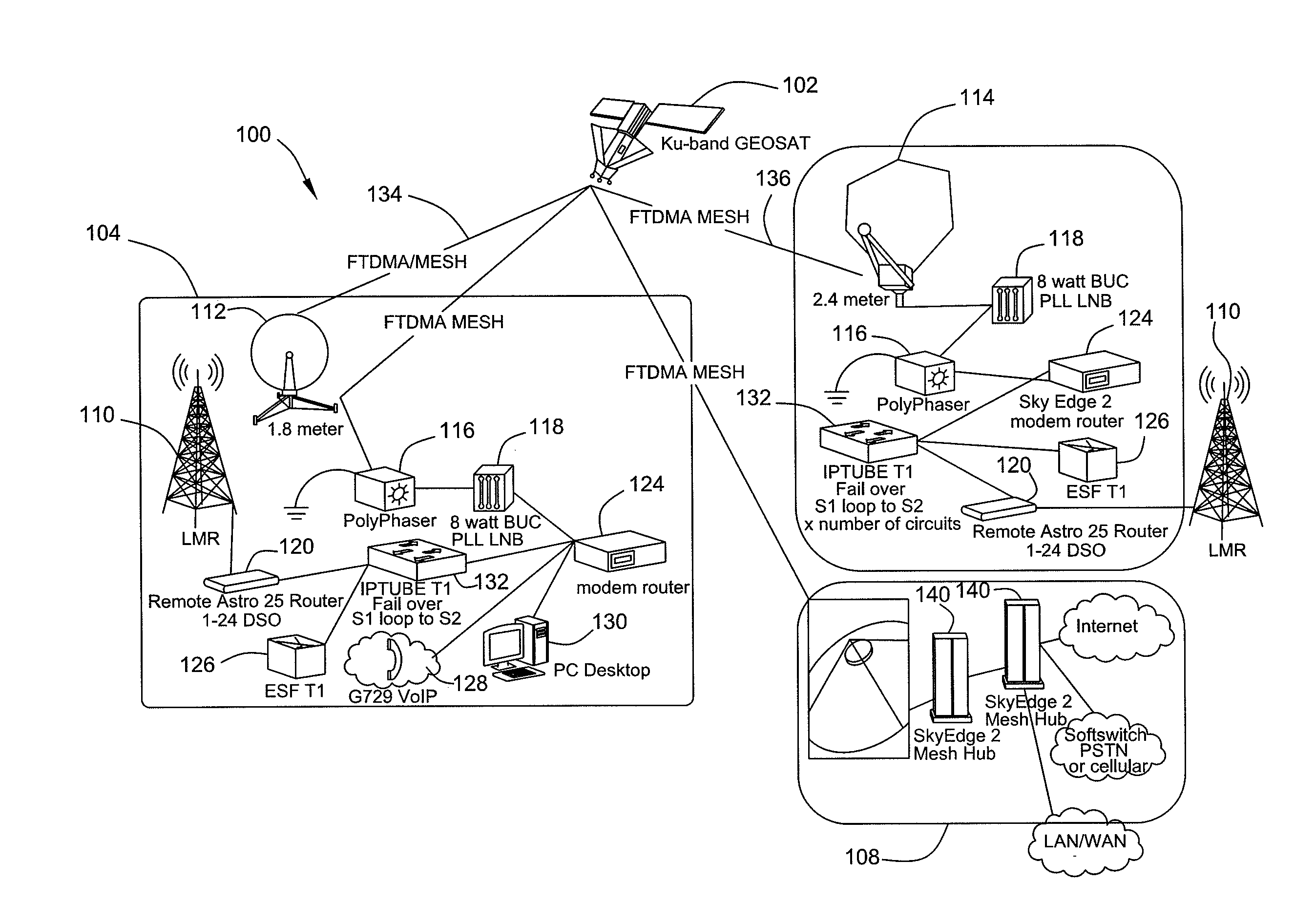
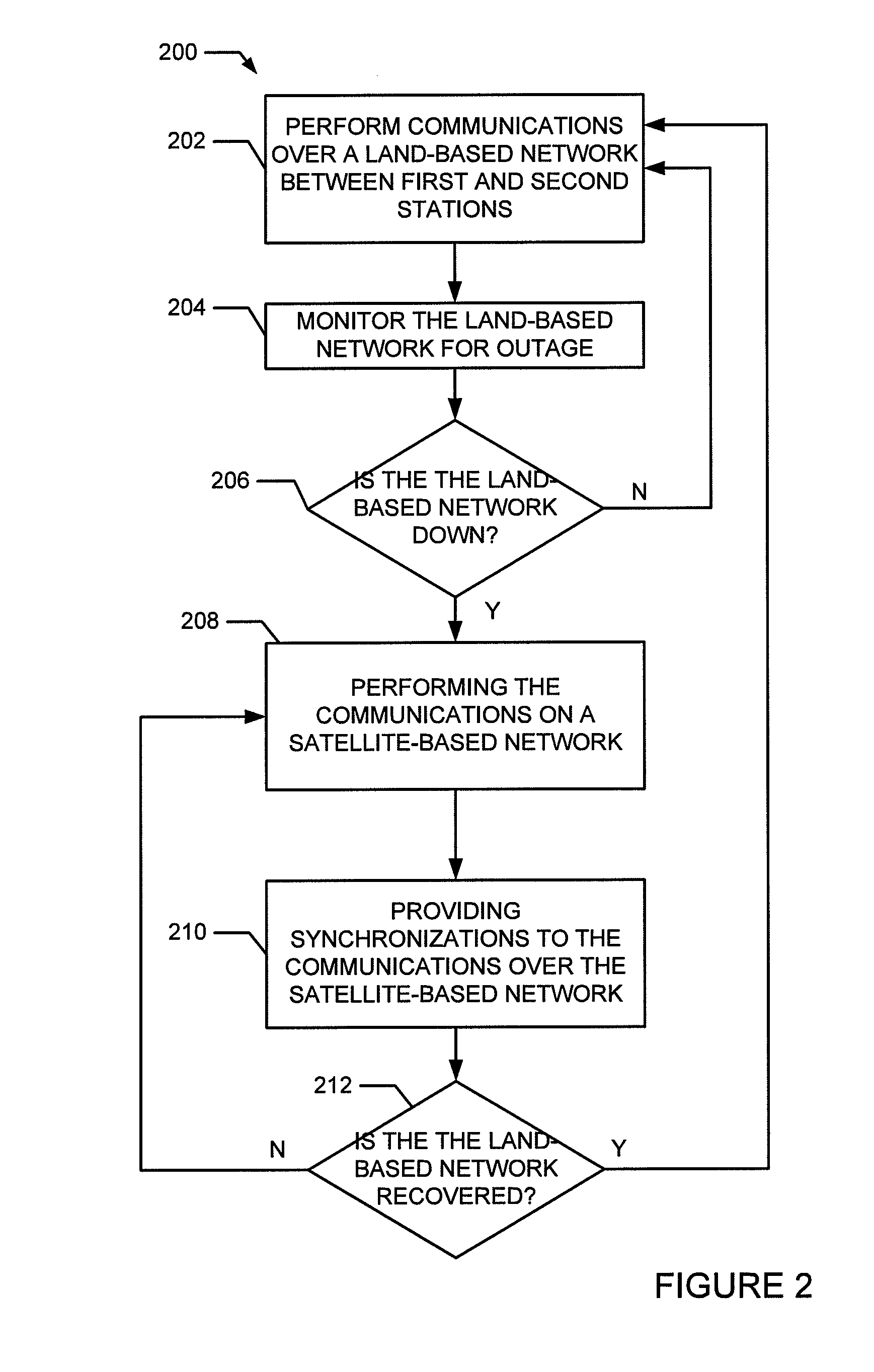
- A satellite-based mesh transmission system that automatically switches communications from land-based networks to a satellite-based network upon failure, using a failover device and satellite-based network modem/router to maintain synchronization and reduce latency by allowing direct communication between ground stations without a central hub, utilizing transparent satellites to minimize costs and latency.
Regulatory Framework for Emergency Satellite Services
The regulatory framework governing emergency satellite services operates within a complex multi-layered structure involving international, national, and regional authorities. The International Telecommunication Union (ITU) serves as the primary global coordinator, establishing fundamental principles through the Radio Regulations that govern spectrum allocation and orbital slot assignments for satellite communications. These regulations provide the foundational framework for emergency communications, ensuring interference-free operations and coordinated access to critical frequency bands.
National telecommunications authorities maintain jurisdiction over domestic emergency satellite service operations, implementing ITU guidelines while addressing specific regional requirements. In the United States, the Federal Communications Commission (FCC) oversees emergency satellite communications through Part 25 regulations, which establish licensing procedures, technical standards, and operational requirements for fixed satellite services during crisis situations. Similar regulatory bodies in other nations maintain comparable oversight mechanisms, creating a patchwork of national regulations that must be navigated for international emergency response operations.
Emergency satellite services benefit from special regulatory provisions that streamline deployment during crisis situations. Many jurisdictions have established expedited licensing procedures that allow rapid activation of satellite communications when terrestrial infrastructure fails. These emergency provisions often include temporary spectrum access rights, relaxed technical requirements, and simplified coordination procedures that enable immediate deployment of critical communications capabilities.
Spectrum management represents a critical regulatory challenge for emergency satellite services. Emergency communications typically operate within designated frequency bands, including C-band, Ku-band, and Ka-band allocations, each subject to specific regulatory constraints and coordination requirements. Regulatory authorities must balance emergency access needs with existing commercial and government satellite operations, often requiring sophisticated interference analysis and coordination protocols.
Cross-border regulatory harmonization remains an ongoing challenge for emergency satellite services. International disaster response operations frequently require satellite communications that span multiple national jurisdictions, each with distinct regulatory requirements and approval processes. Recent initiatives have focused on developing mutual recognition agreements and standardized emergency procedures that facilitate rapid deployment across international boundaries while maintaining regulatory compliance and operational safety standards.
National telecommunications authorities maintain jurisdiction over domestic emergency satellite service operations, implementing ITU guidelines while addressing specific regional requirements. In the United States, the Federal Communications Commission (FCC) oversees emergency satellite communications through Part 25 regulations, which establish licensing procedures, technical standards, and operational requirements for fixed satellite services during crisis situations. Similar regulatory bodies in other nations maintain comparable oversight mechanisms, creating a patchwork of national regulations that must be navigated for international emergency response operations.
Emergency satellite services benefit from special regulatory provisions that streamline deployment during crisis situations. Many jurisdictions have established expedited licensing procedures that allow rapid activation of satellite communications when terrestrial infrastructure fails. These emergency provisions often include temporary spectrum access rights, relaxed technical requirements, and simplified coordination procedures that enable immediate deployment of critical communications capabilities.
Spectrum management represents a critical regulatory challenge for emergency satellite services. Emergency communications typically operate within designated frequency bands, including C-band, Ku-band, and Ka-band allocations, each subject to specific regulatory constraints and coordination requirements. Regulatory authorities must balance emergency access needs with existing commercial and government satellite operations, often requiring sophisticated interference analysis and coordination protocols.
Cross-border regulatory harmonization remains an ongoing challenge for emergency satellite services. International disaster response operations frequently require satellite communications that span multiple national jurisdictions, each with distinct regulatory requirements and approval processes. Recent initiatives have focused on developing mutual recognition agreements and standardized emergency procedures that facilitate rapid deployment across international boundaries while maintaining regulatory compliance and operational safety standards.
Interoperability Standards for Multi-Satellite Networks
Interoperability standards for multi-satellite networks represent a critical foundation for effective emergency communications systems. These standards ensure seamless connectivity and data exchange between different satellite constellations, ground stations, and user terminals during crisis situations. The complexity of modern emergency response scenarios demands robust protocols that can integrate various satellite services including geostationary, medium Earth orbit, and low Earth orbit systems.
The International Telecommunication Union (ITU) has established fundamental frameworks through ITU-R recommendations, particularly focusing on frequency coordination and interference mitigation across different satellite systems. These standards address spectrum management challenges that arise when multiple satellite networks operate simultaneously in emergency scenarios. The Emergency Communications Committee (ECC) within the European Conference of Postal and Telecommunications Administrations has developed complementary standards specifically targeting cross-border emergency communications interoperability.
Technical interoperability encompasses multiple layers including physical connectivity, protocol compatibility, and application-level integration. The Consultative Committee for Space Data Systems (CCSDS) has developed comprehensive standards for space-to-ground communications that facilitate multi-vendor satellite network integration. These standards define common interfaces, data formats, and communication protocols essential for emergency response coordination across different satellite platforms.
Network management interoperability presents significant challenges in emergency scenarios where traditional terrestrial infrastructure may be compromised. Standards such as the Simple Network Management Protocol (SNMP) adaptations for satellite networks and the development of Software-Defined Networking (SDN) approaches enable dynamic resource allocation and network reconfiguration during emergencies. The integration of artificial intelligence-driven network orchestration standards allows for automated failover mechanisms between different satellite systems.
Security interoperability standards ensure that multi-satellite emergency networks maintain robust encryption and authentication protocols while enabling rapid deployment and access for authorized emergency responders. The National Institute of Standards and Technology (NIST) cybersecurity framework adaptations for satellite communications provide guidelines for secure interoperability without compromising operational efficiency during critical emergency response operations.
The International Telecommunication Union (ITU) has established fundamental frameworks through ITU-R recommendations, particularly focusing on frequency coordination and interference mitigation across different satellite systems. These standards address spectrum management challenges that arise when multiple satellite networks operate simultaneously in emergency scenarios. The Emergency Communications Committee (ECC) within the European Conference of Postal and Telecommunications Administrations has developed complementary standards specifically targeting cross-border emergency communications interoperability.
Technical interoperability encompasses multiple layers including physical connectivity, protocol compatibility, and application-level integration. The Consultative Committee for Space Data Systems (CCSDS) has developed comprehensive standards for space-to-ground communications that facilitate multi-vendor satellite network integration. These standards define common interfaces, data formats, and communication protocols essential for emergency response coordination across different satellite platforms.
Network management interoperability presents significant challenges in emergency scenarios where traditional terrestrial infrastructure may be compromised. Standards such as the Simple Network Management Protocol (SNMP) adaptations for satellite networks and the development of Software-Defined Networking (SDN) approaches enable dynamic resource allocation and network reconfiguration during emergencies. The integration of artificial intelligence-driven network orchestration standards allows for automated failover mechanisms between different satellite systems.
Security interoperability standards ensure that multi-satellite emergency networks maintain robust encryption and authentication protocols while enabling rapid deployment and access for authorized emergency responders. The National Institute of Standards and Technology (NIST) cybersecurity framework adaptations for satellite communications provide guidelines for secure interoperability without compromising operational efficiency during critical emergency response operations.
Unlock deeper insights with PatSnap Eureka Quick Research — get a full tech report to explore trends and direct your research. Try now!
Generate Your Research Report Instantly with AI Agent
Supercharge your innovation with PatSnap Eureka AI Agent Platform!