

Exploring V2G Technology in Electric Vehicle Ecosystems
AUG 8, 20259 MIN READ
Generate Your Research Report Instantly with AI Agent
PatSnap Eureka helps you evaluate technical feasibility & market potential.
V2G Technology Evolution and Objectives
Vehicle-to-Grid (V2G) technology has emerged as a revolutionary concept in the electric vehicle (EV) ecosystem, promising to transform the relationship between EVs and the power grid. The evolution of V2G technology can be traced back to the early 2000s when researchers first proposed the idea of using EVs as distributed energy resources. Since then, V2G has progressed from a theoretical concept to a practical solution with real-world applications.
The primary objective of V2G technology is to enable bidirectional power flow between EVs and the electrical grid. This allows EVs to not only consume electricity for charging but also feed power back to the grid when needed. The technology aims to create a symbiotic relationship between EVs and the power infrastructure, addressing challenges such as grid stability, renewable energy integration, and peak demand management.
As V2G technology has evolved, several key milestones have shaped its development. Early prototypes focused on demonstrating the feasibility of bidirectional power flow, while later advancements addressed issues like communication protocols, grid integration, and battery management systems. The introduction of smart charging algorithms and vehicle-to-home (V2H) capabilities further expanded the potential applications of V2G technology.
Recent years have seen a shift towards large-scale pilot projects and commercial implementations, with automakers, utility companies, and technology providers collaborating to refine V2G solutions. The integration of artificial intelligence and machine learning has enhanced the predictive capabilities of V2G systems, optimizing energy flow based on factors such as grid demand, renewable energy availability, and user behavior.
Looking ahead, the objectives of V2G technology are multifaceted. One primary goal is to increase grid resilience by leveraging the distributed energy storage capacity of EVs to balance supply and demand fluctuations. Another objective is to accelerate the adoption of renewable energy sources by using EVs as flexible energy storage units that can absorb excess renewable generation and provide power during periods of low production.
Furthermore, V2G technology aims to create new revenue streams for EV owners by allowing them to participate in energy markets, selling excess power back to the grid during peak demand periods. This not only incentivizes EV adoption but also helps to offset the higher upfront costs of electric vehicles.
As the technology continues to mature, future objectives include seamless integration with smart city infrastructure, enhanced cybersecurity measures to protect the grid and user data, and the development of standardized protocols to ensure interoperability across different EV models and charging systems. The ultimate vision is to create a dynamic, responsive, and sustainable energy ecosystem where EVs play a central role in managing electricity distribution and consumption.
The primary objective of V2G technology is to enable bidirectional power flow between EVs and the electrical grid. This allows EVs to not only consume electricity for charging but also feed power back to the grid when needed. The technology aims to create a symbiotic relationship between EVs and the power infrastructure, addressing challenges such as grid stability, renewable energy integration, and peak demand management.
As V2G technology has evolved, several key milestones have shaped its development. Early prototypes focused on demonstrating the feasibility of bidirectional power flow, while later advancements addressed issues like communication protocols, grid integration, and battery management systems. The introduction of smart charging algorithms and vehicle-to-home (V2H) capabilities further expanded the potential applications of V2G technology.
Recent years have seen a shift towards large-scale pilot projects and commercial implementations, with automakers, utility companies, and technology providers collaborating to refine V2G solutions. The integration of artificial intelligence and machine learning has enhanced the predictive capabilities of V2G systems, optimizing energy flow based on factors such as grid demand, renewable energy availability, and user behavior.
Looking ahead, the objectives of V2G technology are multifaceted. One primary goal is to increase grid resilience by leveraging the distributed energy storage capacity of EVs to balance supply and demand fluctuations. Another objective is to accelerate the adoption of renewable energy sources by using EVs as flexible energy storage units that can absorb excess renewable generation and provide power during periods of low production.
Furthermore, V2G technology aims to create new revenue streams for EV owners by allowing them to participate in energy markets, selling excess power back to the grid during peak demand periods. This not only incentivizes EV adoption but also helps to offset the higher upfront costs of electric vehicles.
As the technology continues to mature, future objectives include seamless integration with smart city infrastructure, enhanced cybersecurity measures to protect the grid and user data, and the development of standardized protocols to ensure interoperability across different EV models and charging systems. The ultimate vision is to create a dynamic, responsive, and sustainable energy ecosystem where EVs play a central role in managing electricity distribution and consumption.
V2G Market Demand Analysis
The market demand for Vehicle-to-Grid (V2G) technology in electric vehicle ecosystems is experiencing significant growth, driven by the increasing adoption of electric vehicles (EVs) and the need for grid stability. As the global EV market expands, with sales reaching 10.5 million units in 2022, the potential for V2G integration becomes more pronounced. This technology allows EVs to not only consume electricity but also feed it back into the grid, creating a bidirectional energy flow that can help balance supply and demand.
The primary market drivers for V2G technology include the growing concerns over grid reliability, the push for renewable energy integration, and the desire for more efficient energy management systems. Utility companies are increasingly recognizing the value of EVs as distributed energy resources, capable of providing grid services such as frequency regulation, voltage support, and peak shaving. This recognition is translating into tangible market opportunities, with the global V2G market projected to reach $17.43 billion by 2027, growing at a CAGR of 48% from 2020 to 2027.
Consumer demand for V2G technology is also on the rise, as EV owners seek ways to monetize their vehicles' battery capacity and reduce overall energy costs. The concept of using EVs as mobile power banks is gaining traction, particularly in regions with high electricity prices or frequent power outages. This consumer interest is further fueled by the development of smart charging systems and energy management platforms that make V2G participation more accessible and user-friendly.
In the commercial and industrial sectors, fleet operators are showing increased interest in V2G solutions as a means to optimize their energy consumption and potentially generate additional revenue streams. Large-scale EV fleets, such as those used by logistics companies or public transportation systems, represent significant untapped potential for V2G applications. The ability to aggregate these fleets into virtual power plants offers substantial value to grid operators and energy markets.
Geographically, the market demand for V2G technology varies. Europe leads in V2G adoption and market readiness, with countries like Denmark, the Netherlands, and the UK implementing pilot projects and supportive regulatory frameworks. North America follows closely, with several states in the US actively exploring V2G potential. The Asia-Pacific region, particularly Japan and South Korea, is also showing strong interest, driven by their advanced automotive industries and commitment to clean energy transitions.
However, the V2G market still faces challenges that impact demand. These include the need for standardization of V2G protocols, concerns over battery degradation, and the requirement for significant infrastructure investments. Additionally, regulatory barriers and the complexity of electricity market structures in some regions hinder widespread adoption. Overcoming these challenges will be crucial for unlocking the full market potential of V2G technology in electric vehicle ecosystems.
The primary market drivers for V2G technology include the growing concerns over grid reliability, the push for renewable energy integration, and the desire for more efficient energy management systems. Utility companies are increasingly recognizing the value of EVs as distributed energy resources, capable of providing grid services such as frequency regulation, voltage support, and peak shaving. This recognition is translating into tangible market opportunities, with the global V2G market projected to reach $17.43 billion by 2027, growing at a CAGR of 48% from 2020 to 2027.
Consumer demand for V2G technology is also on the rise, as EV owners seek ways to monetize their vehicles' battery capacity and reduce overall energy costs. The concept of using EVs as mobile power banks is gaining traction, particularly in regions with high electricity prices or frequent power outages. This consumer interest is further fueled by the development of smart charging systems and energy management platforms that make V2G participation more accessible and user-friendly.
In the commercial and industrial sectors, fleet operators are showing increased interest in V2G solutions as a means to optimize their energy consumption and potentially generate additional revenue streams. Large-scale EV fleets, such as those used by logistics companies or public transportation systems, represent significant untapped potential for V2G applications. The ability to aggregate these fleets into virtual power plants offers substantial value to grid operators and energy markets.
Geographically, the market demand for V2G technology varies. Europe leads in V2G adoption and market readiness, with countries like Denmark, the Netherlands, and the UK implementing pilot projects and supportive regulatory frameworks. North America follows closely, with several states in the US actively exploring V2G potential. The Asia-Pacific region, particularly Japan and South Korea, is also showing strong interest, driven by their advanced automotive industries and commitment to clean energy transitions.
However, the V2G market still faces challenges that impact demand. These include the need for standardization of V2G protocols, concerns over battery degradation, and the requirement for significant infrastructure investments. Additionally, regulatory barriers and the complexity of electricity market structures in some regions hinder widespread adoption. Overcoming these challenges will be crucial for unlocking the full market potential of V2G technology in electric vehicle ecosystems.
V2G Technical Challenges and Constraints
Vehicle-to-Grid (V2G) technology, while promising, faces several significant technical challenges and constraints that hinder its widespread adoption and implementation. One of the primary obstacles is the bidirectional charging infrastructure required for V2G systems. Most existing charging stations are designed for unidirectional power flow, and upgrading them to support bidirectional energy transfer is both complex and costly.
Battery degradation is another major concern in V2G systems. The frequent charging and discharging cycles associated with V2G operations can accelerate battery wear, potentially reducing the overall lifespan of electric vehicle (EV) batteries. This issue raises questions about the long-term economic viability of V2G technology and its impact on EV warranties.
Grid integration poses a significant challenge for V2G implementation. The existing power grid infrastructure in many regions is not designed to handle the dynamic and distributed nature of V2G energy flows. Ensuring grid stability and reliability while accommodating the variable input from numerous EVs requires sophisticated management systems and grid upgrades.
Communication and control systems present another hurdle in V2G technology. Establishing a robust, secure, and standardized communication protocol between EVs, charging stations, and the grid is crucial for effective V2G operations. However, developing and implementing such systems across diverse EV models and grid infrastructures is a complex task.
The lack of standardization in V2G technology is a significant constraint. Different automakers, charging station manufacturers, and utility companies often use proprietary systems, making interoperability a challenge. This fragmentation hinders the scalability of V2G solutions and increases implementation costs.
Energy metering and billing in V2G systems present technical and regulatory challenges. Accurately measuring and accounting for bidirectional energy flows, especially when EVs are connected to different charging points, requires advanced metering infrastructure and complex billing systems.
Cybersecurity is a critical concern in V2G technology. The interconnected nature of V2G systems creates potential vulnerabilities to cyber attacks, which could have severe consequences for both the power grid and individual EV users. Developing robust security measures without compromising system efficiency is a significant challenge.
Finally, the impact of V2G operations on EV performance and user experience needs to be carefully managed. Balancing the needs of the grid with the primary function of EVs as transportation vehicles requires sophisticated algorithms and user-friendly interfaces to ensure that V2G activities do not negatively affect vehicle availability or driving range.
Battery degradation is another major concern in V2G systems. The frequent charging and discharging cycles associated with V2G operations can accelerate battery wear, potentially reducing the overall lifespan of electric vehicle (EV) batteries. This issue raises questions about the long-term economic viability of V2G technology and its impact on EV warranties.
Grid integration poses a significant challenge for V2G implementation. The existing power grid infrastructure in many regions is not designed to handle the dynamic and distributed nature of V2G energy flows. Ensuring grid stability and reliability while accommodating the variable input from numerous EVs requires sophisticated management systems and grid upgrades.
Communication and control systems present another hurdle in V2G technology. Establishing a robust, secure, and standardized communication protocol between EVs, charging stations, and the grid is crucial for effective V2G operations. However, developing and implementing such systems across diverse EV models and grid infrastructures is a complex task.
The lack of standardization in V2G technology is a significant constraint. Different automakers, charging station manufacturers, and utility companies often use proprietary systems, making interoperability a challenge. This fragmentation hinders the scalability of V2G solutions and increases implementation costs.
Energy metering and billing in V2G systems present technical and regulatory challenges. Accurately measuring and accounting for bidirectional energy flows, especially when EVs are connected to different charging points, requires advanced metering infrastructure and complex billing systems.
Cybersecurity is a critical concern in V2G technology. The interconnected nature of V2G systems creates potential vulnerabilities to cyber attacks, which could have severe consequences for both the power grid and individual EV users. Developing robust security measures without compromising system efficiency is a significant challenge.
Finally, the impact of V2G operations on EV performance and user experience needs to be carefully managed. Balancing the needs of the grid with the primary function of EVs as transportation vehicles requires sophisticated algorithms and user-friendly interfaces to ensure that V2G activities do not negatively affect vehicle availability or driving range.
Current V2G Implementation Strategies
01 Bidirectional charging systems for V2G
V2G technology utilizes bidirectional charging systems that allow electric vehicles to not only receive power from the grid but also feed power back into it. This enables EVs to act as mobile energy storage units, providing grid support during peak demand periods or emergencies. The system includes advanced power electronics and control algorithms to manage the flow of electricity between the vehicle and the grid.- Bidirectional charging systems for electric vehicles: V2G technology enables electric vehicles to not only receive power from the grid but also feed power back into it. This bidirectional charging system allows for more efficient energy management and grid stabilization. The technology includes advanced power electronics and control systems to manage the flow of electricity between the vehicle and the grid.
- Grid integration and load balancing: V2G systems can help balance the electrical grid by using electric vehicles as distributed energy storage units. During peak demand periods, vehicles can supply power to the grid, while charging during off-peak hours. This integration helps to stabilize the grid, reduce the need for additional power plants, and accommodate the intermittent nature of renewable energy sources.
- Smart charging and energy management: V2G technology incorporates smart charging algorithms and energy management systems to optimize the charging and discharging of electric vehicles. These systems consider factors such as electricity prices, grid demand, and user preferences to determine the best times for charging and selling power back to the grid, maximizing economic benefits for vehicle owners.
- Communication protocols and infrastructure: Effective V2G systems require robust communication protocols and infrastructure to facilitate seamless interaction between vehicles, charging stations, and the grid. This includes standardized interfaces, secure data exchange, and real-time monitoring capabilities to ensure efficient and reliable operation of the V2G network.
- Battery management and longevity: V2G technology incorporates advanced battery management systems to optimize the performance and lifespan of electric vehicle batteries. These systems monitor battery health, manage charge/discharge cycles, and implement strategies to minimize degradation caused by frequent grid interactions, ensuring that V2G participation does not significantly impact battery life.
02 Smart grid integration and management
V2G technology integrates electric vehicles into smart grid systems, allowing for efficient management of energy resources. This includes real-time monitoring of grid conditions, predictive analytics for energy demand, and automated control of vehicle charging and discharging based on grid needs. The integration helps balance load, improve grid stability, and optimize the use of renewable energy sources.Expand Specific Solutions03 V2G communication protocols and standards
Standardized communication protocols are essential for effective V2G implementation. These protocols enable seamless interaction between vehicles, charging stations, and grid operators. They define data exchange formats, security measures, and operational parameters to ensure interoperability across different EV models and grid systems. The development of these standards is crucial for widespread adoption of V2G technology.Expand Specific Solutions04 Economic models and incentives for V2G participation
V2G technology requires innovative economic models to incentivize EV owners to participate in grid services. This includes developing pricing structures, reward systems, and market mechanisms that compensate users for providing energy storage and grid support. The models consider factors such as battery degradation, energy costs, and grid demand to create mutually beneficial arrangements for EV owners and utility companies.Expand Specific Solutions05 Battery management and longevity in V2G applications
Effective battery management is crucial in V2G systems to maximize battery life and performance. This involves sophisticated algorithms that optimize charging and discharging cycles, monitor battery health, and adjust usage patterns to minimize degradation. Advanced thermal management and state-of-charge control techniques are employed to ensure that V2G operations do not significantly impact the vehicle's primary function or battery lifespan.Expand Specific Solutions
Key V2G Industry Players
The V2G (Vehicle-to-Grid) technology market in electric vehicle ecosystems is in its early growth stage, with increasing interest from major players. The market size is expanding, driven by the growing adoption of electric vehicles and the need for grid stability. Technologically, V2G is still evolving, with varying levels of maturity among key players. Companies like State Grid Corp. of China, Hyundai Motor Co., and Kia Corp. are investing heavily in V2G research and development. Other significant contributors include Siemens Industry, Inc., Eaton Intelligent Power Ltd., and various Chinese research institutions and universities. The competitive landscape is diverse, featuring both established automotive manufacturers and emerging energy technology firms, indicating a dynamic and innovative market environment.
State Grid Corp. of China
Technical Solution: State Grid Corp. of China has developed a comprehensive V2G (Vehicle-to-Grid) technology solution for electric vehicle ecosystems. Their approach integrates advanced bidirectional charging stations with smart grid management systems. The company has implemented large-scale V2G pilot projects, demonstrating the ability to utilize electric vehicles as distributed energy resources. Their system allows for dynamic load balancing, where EVs can feed power back to the grid during peak demand periods, helping to stabilize the grid and reduce overall energy costs[1][3]. State Grid has also developed sophisticated algorithms for predicting EV charging patterns and grid demand, enabling more efficient energy distribution and utilization[5].
Strengths: Extensive grid infrastructure, large-scale implementation capability, advanced predictive algorithms. Weaknesses: Potential regulatory challenges, need for widespread EV adoption to maximize benefits.
Hyundai Motor Co., Ltd.
Technical Solution: Hyundai Motor Co., Ltd. has developed an innovative V2G technology solution that focuses on seamless integration between their electric vehicles and the power grid. Their system utilizes advanced power electronics in their EVs to enable bidirectional power flow. Hyundai has implemented smart charging algorithms that optimize charging schedules based on grid conditions and electricity prices[2]. The company has also developed a user-friendly interface that allows EV owners to easily participate in V2G programs, providing them with incentives for supporting grid stability. Hyundai's V2G solution includes vehicle-to-home (V2H) functionality, enabling EVs to power homes during outages or high electricity price periods[4].
Strengths: Integration with vehicle manufacturing, user-friendly interface, V2H functionality. Weaknesses: Limited to Hyundai EVs, dependent on widespread adoption of their vehicles.
V2G Core Patents and Innovations
Dynamic adjusting system and method for participation of electric vehicle in power grid based on V2G technology
PatentActiveCN118651117A
Innovation
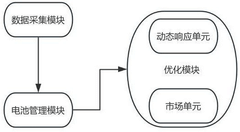
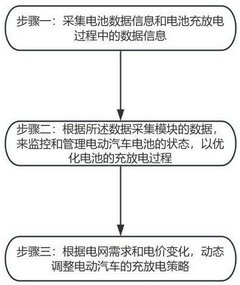
- The battery status is monitored in real time through the data acquisition module. The battery management module dynamically adjusts the charge and discharge strategy according to the comprehensive evaluation value and grid demand. The optimization module includes a dynamic response unit to adjust the charge and discharge rate and strategy. The predictive maintenance unit predicts battery maintenance time. The market unit provides Incentive mechanisms to optimize grid load.
Priority based vehicle control strategy
PatentActiveUS20160075247A1
Innovation
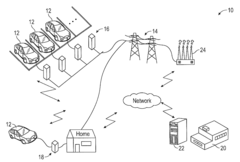
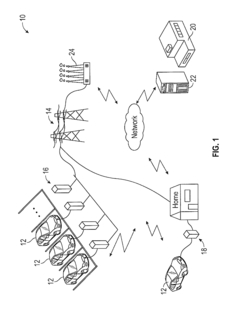
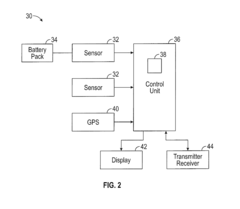
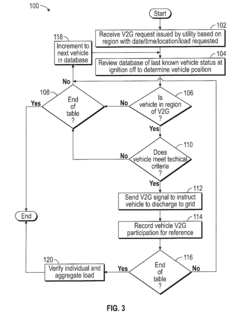
- A method and system that prioritize V2G requests by determining which vehicles in a specific geographic region meet criteria established to reduce battery degradation, using historical and current data to select vehicles for participation, thereby limiting the number of charge and discharge cycles and extending the battery life.
V2G Grid Integration Roadmap
The integration of Vehicle-to-Grid (V2G) technology into electric vehicle ecosystems represents a significant shift in how we perceive and utilize energy storage in transportation. The roadmap for V2G grid integration encompasses several key milestones and technological advancements that are crucial for widespread adoption and seamless implementation.
Initially, the focus is on developing robust communication protocols between electric vehicles (EVs) and the power grid. This involves standardizing data exchange formats and ensuring secure, real-time communication to facilitate bidirectional power flow. Concurrently, smart charging infrastructure must be upgraded to support V2G capabilities, including the installation of bidirectional chargers and the integration of advanced metering systems.
As the foundation is established, the next phase involves enhancing grid management systems to effectively incorporate EVs as distributed energy resources. This requires sophisticated algorithms for load balancing, demand response, and energy arbitrage. Power utilities will need to implement advanced forecasting tools to predict EV charging patterns and available capacity for grid support.
The roadmap also emphasizes the development of user-friendly interfaces and incentive structures to encourage EV owners' participation in V2G programs. This includes creating mobile applications for easy management of V2G services and implementing dynamic pricing models that reward grid-supportive behavior.
A critical milestone is the establishment of regulatory frameworks and market mechanisms to support V2G integration. This involves working with policymakers to create guidelines for grid services provided by EVs, addressing issues such as compensation, liability, and battery degradation.
As V2G technology matures, the focus shifts to scaling up implementation and optimizing system performance. This includes refining power electronics for improved efficiency, developing advanced battery management systems to mitigate the impact of V2G on battery life, and integrating V2G with other smart grid technologies such as renewable energy sources and energy storage systems.
The final stages of the roadmap involve achieving full interoperability across different EV models, charging stations, and grid systems. This requires ongoing collaboration between automakers, charging infrastructure providers, and utility companies to ensure seamless V2G operations regardless of vehicle type or location.
Throughout this integration process, continuous research and development efforts are essential to address emerging challenges and capitalize on new opportunities in V2G technology. This includes exploring innovative applications such as using EVs for emergency power supply during outages or integrating V2G with smart home energy management systems.
Initially, the focus is on developing robust communication protocols between electric vehicles (EVs) and the power grid. This involves standardizing data exchange formats and ensuring secure, real-time communication to facilitate bidirectional power flow. Concurrently, smart charging infrastructure must be upgraded to support V2G capabilities, including the installation of bidirectional chargers and the integration of advanced metering systems.
As the foundation is established, the next phase involves enhancing grid management systems to effectively incorporate EVs as distributed energy resources. This requires sophisticated algorithms for load balancing, demand response, and energy arbitrage. Power utilities will need to implement advanced forecasting tools to predict EV charging patterns and available capacity for grid support.
The roadmap also emphasizes the development of user-friendly interfaces and incentive structures to encourage EV owners' participation in V2G programs. This includes creating mobile applications for easy management of V2G services and implementing dynamic pricing models that reward grid-supportive behavior.
A critical milestone is the establishment of regulatory frameworks and market mechanisms to support V2G integration. This involves working with policymakers to create guidelines for grid services provided by EVs, addressing issues such as compensation, liability, and battery degradation.
As V2G technology matures, the focus shifts to scaling up implementation and optimizing system performance. This includes refining power electronics for improved efficiency, developing advanced battery management systems to mitigate the impact of V2G on battery life, and integrating V2G with other smart grid technologies such as renewable energy sources and energy storage systems.
The final stages of the roadmap involve achieving full interoperability across different EV models, charging stations, and grid systems. This requires ongoing collaboration between automakers, charging infrastructure providers, and utility companies to ensure seamless V2G operations regardless of vehicle type or location.
Throughout this integration process, continuous research and development efforts are essential to address emerging challenges and capitalize on new opportunities in V2G technology. This includes exploring innovative applications such as using EVs for emergency power supply during outages or integrating V2G with smart home energy management systems.
V2G Policy and Regulatory Framework
The development of Vehicle-to-Grid (V2G) technology within electric vehicle ecosystems requires a robust policy and regulatory framework to ensure its successful implementation and widespread adoption. This framework must address various aspects, including grid integration, energy market participation, and consumer protection.
At the national level, governments are increasingly recognizing the potential of V2G technology and are implementing policies to support its development. For instance, some countries have introduced legislation that mandates the integration of V2G capabilities in new electric vehicle charging infrastructure. These policies aim to create a foundation for future V2G services and encourage investment in the necessary technology.
Regulatory bodies are also working to establish standards for V2G communication protocols and hardware interfaces. These standards are crucial for ensuring interoperability between different electric vehicle models, charging stations, and grid systems. The development of universal standards will facilitate the seamless integration of V2G technology across diverse platforms and geographical regions.
Energy market regulations are being adapted to accommodate V2G participation. This includes creating new market mechanisms that allow electric vehicle owners to sell excess energy back to the grid during peak demand periods. Regulators are also addressing issues related to pricing structures, bidding processes, and settlement procedures for V2G transactions.
Consumer protection is another critical aspect of the V2G regulatory framework. Policies are being developed to safeguard the rights of electric vehicle owners participating in V2G programs. These include measures to ensure fair compensation for energy contributions, protection against excessive battery degradation, and clear guidelines on data privacy and security.
Grid operators are working closely with regulators to establish rules for V2G grid integration. This involves defining technical requirements for grid stability, power quality, and safety measures. Regulations are also being put in place to manage the potential impact of large-scale V2G adoption on local distribution networks.
Incentive programs are being designed to encourage V2G adoption among consumers and businesses. These may include tax credits, rebates, or preferential electricity rates for V2G-enabled vehicles and charging systems. Some jurisdictions are also exploring the concept of "green certificates" for V2G participants, recognizing their contribution to grid stability and renewable energy integration.
As V2G technology continues to evolve, policymakers and regulators must remain flexible and responsive to new developments. This may involve regular reviews and updates to existing regulations to ensure they remain relevant and effective in supporting the growth of V2G ecosystems.
At the national level, governments are increasingly recognizing the potential of V2G technology and are implementing policies to support its development. For instance, some countries have introduced legislation that mandates the integration of V2G capabilities in new electric vehicle charging infrastructure. These policies aim to create a foundation for future V2G services and encourage investment in the necessary technology.
Regulatory bodies are also working to establish standards for V2G communication protocols and hardware interfaces. These standards are crucial for ensuring interoperability between different electric vehicle models, charging stations, and grid systems. The development of universal standards will facilitate the seamless integration of V2G technology across diverse platforms and geographical regions.
Energy market regulations are being adapted to accommodate V2G participation. This includes creating new market mechanisms that allow electric vehicle owners to sell excess energy back to the grid during peak demand periods. Regulators are also addressing issues related to pricing structures, bidding processes, and settlement procedures for V2G transactions.
Consumer protection is another critical aspect of the V2G regulatory framework. Policies are being developed to safeguard the rights of electric vehicle owners participating in V2G programs. These include measures to ensure fair compensation for energy contributions, protection against excessive battery degradation, and clear guidelines on data privacy and security.
Grid operators are working closely with regulators to establish rules for V2G grid integration. This involves defining technical requirements for grid stability, power quality, and safety measures. Regulations are also being put in place to manage the potential impact of large-scale V2G adoption on local distribution networks.
Incentive programs are being designed to encourage V2G adoption among consumers and businesses. These may include tax credits, rebates, or preferential electricity rates for V2G-enabled vehicles and charging systems. Some jurisdictions are also exploring the concept of "green certificates" for V2G participants, recognizing their contribution to grid stability and renewable energy integration.
As V2G technology continues to evolve, policymakers and regulators must remain flexible and responsive to new developments. This may involve regular reviews and updates to existing regulations to ensure they remain relevant and effective in supporting the growth of V2G ecosystems.
Unlock deeper insights with PatSnap Eureka Quick Research — get a full tech report to explore trends and direct your research. Try now!
Generate Your Research Report Instantly with AI Agent
Supercharge your innovation with PatSnap Eureka AI Agent Platform!