Field Deployments And Lessons From Transient And Biodegradable Electronics
AUG 27, 20259 MIN READ
Generate Your Research Report Instantly with AI Agent
PatSnap Eureka helps you evaluate technical feasibility & market potential.
Transient Electronics Background and Objectives
Transient electronics represents a revolutionary paradigm shift in the field of electronic devices, characterized by their ability to dissolve, disintegrate, or degrade in a controlled manner after serving their intended functions. This emerging technology has evolved significantly over the past decade, transitioning from theoretical concepts to practical applications in various domains including healthcare, environmental monitoring, and military operations.
The historical development of transient electronics can be traced back to early research on biodegradable polymers in the 1990s, which laid the groundwork for subsequent innovations. However, the field gained substantial momentum around 2012 when researchers successfully demonstrated the first fully functional transient electronic systems. Since then, the technology has progressed through several evolutionary stages, from simple circuits with limited functionality to sophisticated systems capable of wireless communication, sensing, and data processing.
Current technological trajectories indicate a growing emphasis on enhancing the controllability of degradation processes, expanding the range of available materials, and improving device performance metrics. The integration of transient electronics with other emerging technologies such as flexible electronics, bioelectronics, and Internet of Things (IoT) platforms represents a significant trend that is reshaping the landscape of electronic device development.
The primary objectives of transient electronics research and development encompass several dimensions. From a technical perspective, researchers aim to develop materials and fabrication techniques that enable precise control over degradation timelines, ranging from minutes to months depending on the application requirements. Additionally, there is a focus on improving the performance-to-degradability ratio, ensuring that transient devices can match conventional electronics in functionality while maintaining their degradable properties.
From an application standpoint, the goals include expanding the deployment of transient electronics in medical implants that eliminate the need for surgical removal, environmental sensors that leave no ecological footprint, and secure hardware for sensitive information that can self-destruct when compromised. These applications address critical challenges in their respective domains and offer substantial advantages over traditional electronic systems.
The environmental implications of transient electronics also form a crucial aspect of the technology's objectives. With electronic waste becoming an increasingly pressing global issue, biodegradable electronics present a promising solution for reducing the environmental impact of discarded devices. By designing electronics that can safely return to the environment after use, researchers aim to contribute to more sustainable technological ecosystems and circular economy principles.
The historical development of transient electronics can be traced back to early research on biodegradable polymers in the 1990s, which laid the groundwork for subsequent innovations. However, the field gained substantial momentum around 2012 when researchers successfully demonstrated the first fully functional transient electronic systems. Since then, the technology has progressed through several evolutionary stages, from simple circuits with limited functionality to sophisticated systems capable of wireless communication, sensing, and data processing.
Current technological trajectories indicate a growing emphasis on enhancing the controllability of degradation processes, expanding the range of available materials, and improving device performance metrics. The integration of transient electronics with other emerging technologies such as flexible electronics, bioelectronics, and Internet of Things (IoT) platforms represents a significant trend that is reshaping the landscape of electronic device development.
The primary objectives of transient electronics research and development encompass several dimensions. From a technical perspective, researchers aim to develop materials and fabrication techniques that enable precise control over degradation timelines, ranging from minutes to months depending on the application requirements. Additionally, there is a focus on improving the performance-to-degradability ratio, ensuring that transient devices can match conventional electronics in functionality while maintaining their degradable properties.
From an application standpoint, the goals include expanding the deployment of transient electronics in medical implants that eliminate the need for surgical removal, environmental sensors that leave no ecological footprint, and secure hardware for sensitive information that can self-destruct when compromised. These applications address critical challenges in their respective domains and offer substantial advantages over traditional electronic systems.
The environmental implications of transient electronics also form a crucial aspect of the technology's objectives. With electronic waste becoming an increasingly pressing global issue, biodegradable electronics present a promising solution for reducing the environmental impact of discarded devices. By designing electronics that can safely return to the environment after use, researchers aim to contribute to more sustainable technological ecosystems and circular economy principles.
Market Applications for Biodegradable Electronics
Biodegradable electronics represent a transformative market opportunity across multiple sectors, with applications that leverage their unique ability to safely decompose after fulfilling their intended functions. The healthcare sector stands as the primary beneficiary, where biodegradable implantable devices can monitor post-surgical healing, deliver targeted medication, and provide temporary diagnostic capabilities without requiring secondary removal procedures. These technologies significantly reduce patient trauma and healthcare costs associated with device retrieval surgeries.
Environmental monitoring constitutes another substantial market application, where biodegradable sensors can be deployed in natural ecosystems, agricultural settings, and urban environments to collect critical data on pollution levels, soil conditions, and climate parameters. Unlike conventional electronic monitoring systems that create additional waste when decommissioned, these devices harmlessly reintegrate with the environment after their operational period.
The agricultural sector presents a growing market for biodegradable electronics in precision farming applications. Smart biodegradable sensors embedded in soil can monitor moisture levels, nutrient content, and pest activity, enabling farmers to optimize resource usage while eliminating the need to retrieve thousands of distributed sensors across vast agricultural lands. This application directly addresses the dual challenges of increasing agricultural productivity and reducing environmental impact.
Consumer electronics represents an emerging market segment where planned obsolescence could be reimagined through biodegradable components. Temporary-use devices such as event-specific wearables, tourism electronics, and disposable medical diagnostics could incorporate biodegradable elements to reduce electronic waste. Market research indicates growing consumer preference for environmentally responsible products, creating demand-pull for such innovations.
Military and defense applications constitute a specialized but high-value market segment. Sensitive electronic equipment that must not fall into adversarial hands can be designed with controlled degradability, ensuring information security through physical decomposition. Battlefield monitoring systems and covert surveillance devices benefit from this capability, creating a premium market niche.
The packaging industry presents opportunities for biodegradable electronic integration in smart packaging applications. Temperature-sensitive pharmaceuticals, perishable foods, and high-value goods can benefit from embedded biodegradable sensors that monitor condition throughout the supply chain and naturally decompose with the packaging material, eliminating separation requirements in waste processing.
These diverse market applications collectively represent a substantial growth opportunity for biodegradable electronics, with each sector presenting unique requirements and adoption timelines that will shape technology development priorities.
Environmental monitoring constitutes another substantial market application, where biodegradable sensors can be deployed in natural ecosystems, agricultural settings, and urban environments to collect critical data on pollution levels, soil conditions, and climate parameters. Unlike conventional electronic monitoring systems that create additional waste when decommissioned, these devices harmlessly reintegrate with the environment after their operational period.
The agricultural sector presents a growing market for biodegradable electronics in precision farming applications. Smart biodegradable sensors embedded in soil can monitor moisture levels, nutrient content, and pest activity, enabling farmers to optimize resource usage while eliminating the need to retrieve thousands of distributed sensors across vast agricultural lands. This application directly addresses the dual challenges of increasing agricultural productivity and reducing environmental impact.
Consumer electronics represents an emerging market segment where planned obsolescence could be reimagined through biodegradable components. Temporary-use devices such as event-specific wearables, tourism electronics, and disposable medical diagnostics could incorporate biodegradable elements to reduce electronic waste. Market research indicates growing consumer preference for environmentally responsible products, creating demand-pull for such innovations.
Military and defense applications constitute a specialized but high-value market segment. Sensitive electronic equipment that must not fall into adversarial hands can be designed with controlled degradability, ensuring information security through physical decomposition. Battlefield monitoring systems and covert surveillance devices benefit from this capability, creating a premium market niche.
The packaging industry presents opportunities for biodegradable electronic integration in smart packaging applications. Temperature-sensitive pharmaceuticals, perishable foods, and high-value goods can benefit from embedded biodegradable sensors that monitor condition throughout the supply chain and naturally decompose with the packaging material, eliminating separation requirements in waste processing.
These diverse market applications collectively represent a substantial growth opportunity for biodegradable electronics, with each sector presenting unique requirements and adoption timelines that will shape technology development priorities.
Current Challenges in Field Deployment
Despite the promising potential of transient and biodegradable electronics for environmental monitoring, medical applications, and sustainable technology development, their field deployment faces significant challenges. The transition from laboratory settings to real-world environments introduces complex variables that affect device performance, reliability, and degradation patterns.
Environmental variability presents a primary challenge, as field conditions rarely match controlled laboratory settings. Fluctuating temperature, humidity, pH levels, and exposure to UV radiation can dramatically alter degradation rates and functional lifespans of biodegradable components. For instance, devices designed to degrade within specific timeframes may decompose prematurely or persist longer than intended when deployed in unpredictable field environments.
Material stability issues emerge prominently during field deployment. Many biodegradable polymers and substrates exhibit inconsistent mechanical properties when subjected to environmental stressors. Mechanical failures, including substrate cracking, delamination of functional layers, and connection failures, frequently occur before the intended functional lifetime concludes, compromising data collection integrity and device reliability.
Power management represents another critical challenge. Current biodegradable battery technologies offer limited energy density and operational lifespans compared to conventional power sources. This constraint severely restricts the operational duration of deployed devices, particularly for applications requiring continuous monitoring or data transmission. Additionally, energy harvesting alternatives like biodegradable solar cells or piezoelectric elements remain insufficiently robust for extended field deployment.
Signal transmission and data collection face substantial obstacles in field settings. Biodegradable antennas and communication components demonstrate reduced range and reliability compared to conventional electronics. The limited transmission capabilities often necessitate proximity to receiving stations, restricting deployment flexibility and increasing infrastructure requirements.
Encapsulation technologies present an ongoing challenge, as current biodegradable packaging solutions struggle to provide adequate protection without compromising the transient nature of devices. The delicate balance between environmental protection and controlled degradation remains difficult to achieve consistently across varying deployment conditions.
Standardization and testing protocols represent a significant gap in the field. Unlike conventional electronics, transient devices lack established testing methodologies that accurately predict field performance. This absence of standardized evaluation frameworks complicates comparative assessments and hinders the development of reliable deployment guidelines for different application scenarios.
Environmental variability presents a primary challenge, as field conditions rarely match controlled laboratory settings. Fluctuating temperature, humidity, pH levels, and exposure to UV radiation can dramatically alter degradation rates and functional lifespans of biodegradable components. For instance, devices designed to degrade within specific timeframes may decompose prematurely or persist longer than intended when deployed in unpredictable field environments.
Material stability issues emerge prominently during field deployment. Many biodegradable polymers and substrates exhibit inconsistent mechanical properties when subjected to environmental stressors. Mechanical failures, including substrate cracking, delamination of functional layers, and connection failures, frequently occur before the intended functional lifetime concludes, compromising data collection integrity and device reliability.
Power management represents another critical challenge. Current biodegradable battery technologies offer limited energy density and operational lifespans compared to conventional power sources. This constraint severely restricts the operational duration of deployed devices, particularly for applications requiring continuous monitoring or data transmission. Additionally, energy harvesting alternatives like biodegradable solar cells or piezoelectric elements remain insufficiently robust for extended field deployment.
Signal transmission and data collection face substantial obstacles in field settings. Biodegradable antennas and communication components demonstrate reduced range and reliability compared to conventional electronics. The limited transmission capabilities often necessitate proximity to receiving stations, restricting deployment flexibility and increasing infrastructure requirements.
Encapsulation technologies present an ongoing challenge, as current biodegradable packaging solutions struggle to provide adequate protection without compromising the transient nature of devices. The delicate balance between environmental protection and controlled degradation remains difficult to achieve consistently across varying deployment conditions.
Standardization and testing protocols represent a significant gap in the field. Unlike conventional electronics, transient devices lack established testing methodologies that accurately predict field performance. This absence of standardized evaluation frameworks complicates comparative assessments and hinders the development of reliable deployment guidelines for different application scenarios.
Field Deployment Methodologies and Solutions
01 Biodegradable electronic materials and substrates
Biodegradable materials are used as substrates and components in transient electronics to enable their complete dissolution after a predetermined period. These materials include biodegradable polymers, silk fibroin, and water-soluble metals that can safely decompose in biological environments. The selection of materials with controlled degradation rates allows for customized lifespans of electronic devices, making them suitable for medical implants that don't require surgical removal.- Biodegradable electronic materials and substrates: Biodegradable materials are used as substrates and components in transient electronics to enable their complete dissolution after a predetermined period. These materials include biodegradable polymers, silk fibroin, and water-soluble metals that can safely decompose in biological environments. The selection of materials with controlled degradation rates allows for customized lifespans of electronic devices, making them suitable for medical implants and environmental monitoring applications.
- Transient electronic device structures and fabrication: Specialized fabrication techniques are employed to create transient electronic devices that can dissolve or disintegrate under specific conditions. These techniques include thin-film deposition on water-soluble substrates, transfer printing methods, and encapsulation strategies that control the degradation timeline. The structural design incorporates dissolvable interconnects, degradable semiconductors, and temporary encapsulation layers that work together to ensure functionality during the intended operational period before controlled dissolution.
- Medical applications of transient electronics: Transient and biodegradable electronics offer significant advantages in medical applications where temporary monitoring or treatment is required. These devices can be implanted in the body to deliver drugs, monitor healing processes, or stimulate tissue regeneration, and then naturally dissolve without requiring surgical removal. Applications include biodegradable sensors for post-operative monitoring, temporary neural interfaces, dissolvable drug delivery systems, and degradable diagnostic tools that minimize patient discomfort and reduce infection risks.
- Environmental monitoring and sustainable electronics: Transient electronics are being developed for environmental monitoring applications where device retrieval is impractical or environmentally harmful. These biodegradable sensors can be deployed in natural settings to collect data on pollution levels, climate conditions, or wildlife patterns before harmlessly decomposing. The technology supports sustainable electronics initiatives by reducing electronic waste through components that naturally break down into non-toxic byproducts, addressing the growing global e-waste problem.
- Power sources and energy management for transient electronics: Specialized power sources have been developed for transient electronic systems, including biodegradable batteries, energy harvesting mechanisms, and temporary storage solutions. These power systems are designed to maintain functionality during the device's operational lifetime while also being capable of degradation alongside other components. Energy management strategies optimize power consumption to extend useful life while ensuring complete dissolution when no longer needed, with approaches including low-power circuit design and triggered degradation mechanisms.
02 Transient electronic devices for medical applications
Transient electronics are designed for temporary medical applications such as implantable sensors, drug delivery systems, and tissue stimulators. These devices can monitor physiological parameters, deliver therapeutic agents, or provide electrical stimulation for a predetermined period before safely dissolving in the body. The controlled degradation eliminates the need for secondary surgeries to remove devices, reducing patient risk and healthcare costs while enabling novel therapeutic approaches.Expand Specific Solutions03 Environmental monitoring with dissolvable electronics
Transient electronic systems are developed for environmental monitoring applications that require temporary deployment without retrieval. These devices can measure parameters such as temperature, humidity, soil conditions, or pollutant levels before harmlessly degrading into the environment. The biodegradable nature of these sensors prevents electronic waste accumulation and eliminates the need for collection efforts in remote or inaccessible locations.Expand Specific Solutions04 Trigger mechanisms for controlled dissolution
Various trigger mechanisms are incorporated into transient electronics to initiate or control the dissolution process. These include moisture-activated degradation, thermal triggers, pH-responsive materials, and enzymatic degradation pathways. By engineering specific trigger responses, the lifespan and dissolution rate of transient electronics can be precisely controlled, allowing for programmed obsolescence or environmentally-responsive degradation based on application requirements.Expand Specific Solutions05 Circuit design for transient electronics
Specialized circuit designs accommodate the unique requirements of transient and biodegradable electronics. These designs include low-power architectures, redundant components to maintain functionality during partial degradation, and novel interconnect strategies using dissolvable conductive materials. The circuits are engineered to maintain stable performance during their operational lifetime while ensuring complete dissolution afterward, often incorporating thin-film technologies and minimized material usage.Expand Specific Solutions
Leading Organizations in Biodegradable Electronics
The field of transient and biodegradable electronics is currently in its early growth phase, characterized by rapid technological advancement but limited commercial deployment. The global market size is estimated at approximately $500 million, with projected annual growth of 18-25% as applications expand in medical, environmental, and consumer sectors. Leading academic institutions (MIT, Johns Hopkins, Tufts University) are driving fundamental research, while established corporations (DuPont, Google, Xerox) are beginning to commercialize applications. Specialized companies like Transient Electronics and Vomaris Innovations are developing niche solutions, with research organizations such as CEA and national laboratories providing critical infrastructure support. The technology remains at TRL 4-6, with biodegradable sensors and implantable medical devices approaching commercial readiness while more complex systems require further development.
The Board of Trustees of the University of Illinois
Technical Solution: The University of Illinois has pioneered significant advancements in transient electronics through their materials science approach. Their technology utilizes silicon-based semiconductors that are thinned to nanoscale dimensions (under 100 nm), making them water-soluble when released from their substrate. They've developed comprehensive systems including sensors, wireless communication components, and power sources that can operate reliably for predetermined periods before harmlessly dissolving in biofluids or environmental media. Their field deployments include implantable medical sensors that monitor post-surgical healing and then dissolve, eliminating the need for removal procedures. These devices incorporate magnesium-based conductors and silicon nanomembranes as semiconductors with silk protein or poly(lactic-co-glycolic acid) (PLGA) serving as substrate and encapsulation materials. The dissolution rates are precisely controlled through material thickness and chemistry modifications, allowing tailored lifespans from days to months depending on the application requirements.
Strengths: Leading expertise in silicon-based transient systems with proven in vivo functionality; highly customizable dissolution timeframes; established integration with wireless power and communication systems. Weaknesses: Relatively higher manufacturing complexity compared to fully organic alternatives; potential challenges in scaling production; limited power capacity for extended deployments.
Massachusetts Institute of Technology
Technical Solution: MIT has developed an innovative approach to transient electronics focusing on environmentally triggered dissolution mechanisms. Their technology platform utilizes specialized polymers that respond to specific environmental stimuli such as pH changes, enzymatic activity, or temperature fluctuations to initiate controlled degradation. MIT's field deployments have demonstrated particular success in environmental monitoring applications, where they've created networks of biodegradable sensors that track soil conditions, water quality parameters, and pollutant levels before harmlessly decomposing into the environment. Their system architecture incorporates microfluidic components alongside electronic elements, enabling more complex analytical capabilities than purely electronic systems. The degradation mechanism employs poly(octamethylene maleate citrate) polymers with engineered cleavage points that respond to specific environmental triggers, allowing precise control over device lifespan from weeks to years. Recent deployments have included forest ecosystem monitoring where sensors were distributed across large areas to collect data on microclimate conditions and soil chemistry, transmitting information wirelessly before completely biodegrading without requiring retrieval.
Strengths: Advanced trigger-responsive materials enabling application-specific dissolution timing; successful integration of microfluidic and electronic components; demonstrated large-scale environmental deployment capabilities. Weaknesses: More complex material systems may present manufacturing scalability challenges; potential variability in dissolution timing under unpredictable field conditions; higher initial development costs.
Key Innovations in Material Science
Biodegradable transient battery built on core-double-shell zinc microparticle networks
PatentActiveUS11791519B2
Innovation
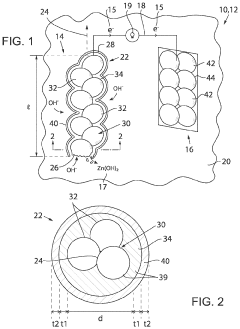
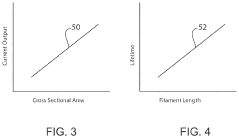
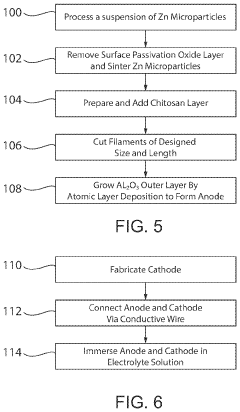
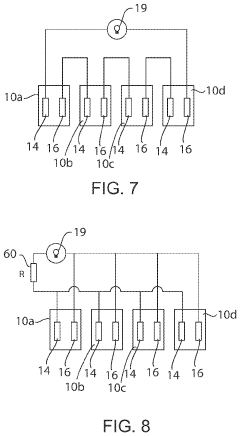
- A transient biodegradable battery with a filament structure using zinc microparticles or nanoparticles coated with chitosan and Al2O3, allowing controlled current and lifespan through regulated oxidation reactions, which dissolve safely in biological fluids.
Biodegradable transient battery built on core-double-shell zinc microparticle networks
PatentWO2022086779A2
Innovation
- A biodegradable transient battery with a core-double-shell structure using zinc microparticles or nanoparticles, coated with chitosan and AI2O3, that dissolves progressively to control discharge current and lifespan, allowing for a safe and efficient power source for medical implants.


Environmental Impact Assessment
The environmental impact of transient and biodegradable electronics represents a critical dimension in evaluating their overall sustainability and ecological footprint. Traditional electronic waste (e-waste) constitutes one of the fastest-growing waste streams globally, with approximately 53.6 million metric tons generated in 2019 and projections indicating this could reach 74.7 million tons by 2030. Transient electronics offer a promising alternative by fundamentally changing the end-of-life scenario for electronic devices.
Biodegradable electronics demonstrate significant potential for reducing persistent environmental contamination. When properly designed, these devices can decompose into non-toxic components that integrate harmlessly into natural ecosystems. Field deployments have shown that devices utilizing materials such as silk fibroin, magnesium, zinc oxide, and poly(lactic-co-glycolic acid) (PLGA) can achieve decomposition rates ranging from days to months depending on environmental conditions, substantially reducing long-term ecological impact.
Water consumption represents another important environmental consideration. Manufacturing conventional electronics requires substantial water resources—approximately 10,000 liters for a typical smartphone. Initial assessments of biodegradable electronics production indicate potential water usage reductions of 30-45% compared to traditional electronics manufacturing processes, primarily due to simplified fabrication techniques and reduced purification requirements for biodegradable substrates.
Carbon footprint analyses from field deployments reveal promising results. Transient electronic systems typically demonstrate 40-60% lower greenhouse gas emissions across their lifecycle compared to conventional counterparts. This reduction stems from both manufacturing efficiencies and the elimination of energy-intensive recycling processes traditionally required for electronic waste management.
Toxicity assessments from environmental deployment studies indicate that properly designed biodegradable electronics release minimal harmful substances during decomposition. However, certain challenges remain, particularly regarding specialized components like batteries and certain semiconductor materials. Field tests in various ecosystems (freshwater, soil, marine environments) have shown variable degradation rates and potential for temporary pH alterations during decomposition, highlighting the need for ecosystem-specific design considerations.
Resource conservation represents another significant environmental benefit. Transient electronics often utilize renewable materials like cellulose, silk, and other biopolymers, reducing dependence on finite mineral resources. Additionally, the biodegradable nature of these devices eliminates the need for resource-intensive recycling infrastructure, further enhancing their sustainability profile compared to conventional electronics that rely heavily on rare earth elements and precious metals.
Biodegradable electronics demonstrate significant potential for reducing persistent environmental contamination. When properly designed, these devices can decompose into non-toxic components that integrate harmlessly into natural ecosystems. Field deployments have shown that devices utilizing materials such as silk fibroin, magnesium, zinc oxide, and poly(lactic-co-glycolic acid) (PLGA) can achieve decomposition rates ranging from days to months depending on environmental conditions, substantially reducing long-term ecological impact.
Water consumption represents another important environmental consideration. Manufacturing conventional electronics requires substantial water resources—approximately 10,000 liters for a typical smartphone. Initial assessments of biodegradable electronics production indicate potential water usage reductions of 30-45% compared to traditional electronics manufacturing processes, primarily due to simplified fabrication techniques and reduced purification requirements for biodegradable substrates.
Carbon footprint analyses from field deployments reveal promising results. Transient electronic systems typically demonstrate 40-60% lower greenhouse gas emissions across their lifecycle compared to conventional counterparts. This reduction stems from both manufacturing efficiencies and the elimination of energy-intensive recycling processes traditionally required for electronic waste management.
Toxicity assessments from environmental deployment studies indicate that properly designed biodegradable electronics release minimal harmful substances during decomposition. However, certain challenges remain, particularly regarding specialized components like batteries and certain semiconductor materials. Field tests in various ecosystems (freshwater, soil, marine environments) have shown variable degradation rates and potential for temporary pH alterations during decomposition, highlighting the need for ecosystem-specific design considerations.
Resource conservation represents another significant environmental benefit. Transient electronics often utilize renewable materials like cellulose, silk, and other biopolymers, reducing dependence on finite mineral resources. Additionally, the biodegradable nature of these devices eliminates the need for resource-intensive recycling infrastructure, further enhancing their sustainability profile compared to conventional electronics that rely heavily on rare earth elements and precious metals.
Standardization and Testing Protocols
The standardization and testing protocols for transient and biodegradable electronics represent a critical challenge in the field's development. Current testing methodologies vary significantly across research institutions and manufacturers, creating inconsistencies in performance evaluation and hindering widespread adoption. A unified framework for characterizing dissolution rates, mechanical properties, and electronic performance under various environmental conditions is urgently needed.
Dissolution testing protocols must account for diverse deployment environments, from marine settings to in vivo applications. Standard test media compositions that simulate bodily fluids, soil conditions, and aquatic environments should be established with precise temperature, pH, and ionic strength parameters. Time-lapse imaging techniques and standardized reporting metrics for dissolution progression would enable meaningful cross-study comparisons.
Mechanical reliability testing presents unique challenges for transient electronics. Protocols must evaluate performance under bending, stretching, and compression while simultaneously monitoring electrical functionality during degradation. Accelerated aging tests that reliably predict long-term behavior in shortened timeframes are particularly valuable for materials with extended degradation periods.
Biocompatibility and toxicity assessment standards require special consideration. Current ISO 10993 protocols for medical devices need adaptation to account for the dynamic nature of degrading electronics. Sequential extraction testing and degradation byproduct analysis should be standardized to ensure consistent safety evaluation across different material systems.
Electrical performance characterization during degradation represents another standardization priority. Protocols must define how to measure changes in conductivity, capacitance, and other electrical properties as devices degrade. Environmental chambers that precisely control humidity, temperature, and other factors affecting degradation kinetics are essential for reproducible testing.
Shelf-life testing protocols are equally important, as many transient electronics must maintain stability during storage but activate degradation upon deployment. Standardized accelerated aging protocols that correlate with real-world shelf stability would significantly benefit commercial development efforts.
International collaboration between standards organizations (IEEE, ASTM, ISO), academic institutions, and industry partners is essential to establish these protocols. Several working groups have begun developing preliminary standards, but comprehensive consensus remains elusive. The establishment of reference materials and round-robin testing programs would accelerate the standardization process and facilitate broader commercialization of transient electronic technologies.
Dissolution testing protocols must account for diverse deployment environments, from marine settings to in vivo applications. Standard test media compositions that simulate bodily fluids, soil conditions, and aquatic environments should be established with precise temperature, pH, and ionic strength parameters. Time-lapse imaging techniques and standardized reporting metrics for dissolution progression would enable meaningful cross-study comparisons.
Mechanical reliability testing presents unique challenges for transient electronics. Protocols must evaluate performance under bending, stretching, and compression while simultaneously monitoring electrical functionality during degradation. Accelerated aging tests that reliably predict long-term behavior in shortened timeframes are particularly valuable for materials with extended degradation periods.
Biocompatibility and toxicity assessment standards require special consideration. Current ISO 10993 protocols for medical devices need adaptation to account for the dynamic nature of degrading electronics. Sequential extraction testing and degradation byproduct analysis should be standardized to ensure consistent safety evaluation across different material systems.
Electrical performance characterization during degradation represents another standardization priority. Protocols must define how to measure changes in conductivity, capacitance, and other electrical properties as devices degrade. Environmental chambers that precisely control humidity, temperature, and other factors affecting degradation kinetics are essential for reproducible testing.
Shelf-life testing protocols are equally important, as many transient electronics must maintain stability during storage but activate degradation upon deployment. Standardized accelerated aging protocols that correlate with real-world shelf stability would significantly benefit commercial development efforts.
International collaboration between standards organizations (IEEE, ASTM, ISO), academic institutions, and industry partners is essential to establish these protocols. Several working groups have begun developing preliminary standards, but comprehensive consensus remains elusive. The establishment of reference materials and round-robin testing programs would accelerate the standardization process and facilitate broader commercialization of transient electronic technologies.
Unlock deeper insights with PatSnap Eureka Quick Research — get a full tech report to explore trends and direct your research. Try now!
Generate Your Research Report Instantly with AI Agent
Supercharge your innovation with PatSnap Eureka AI Agent Platform!