Trigger Selection For On-Demand Vanish In Transient And Biodegradable Electronics
AUG 27, 202510 MIN READ
Generate Your Research Report Instantly with AI Agent
PatSnap Eureka helps you evaluate technical feasibility & market potential.
Transient Electronics Trigger Technology Background and Objectives
Transient electronics represent a revolutionary paradigm shift in the field of electronic devices, characterized by their ability to physically disappear or degrade in a controlled manner after serving their intended functions. This emerging technology has evolved significantly over the past decade, transitioning from conceptual frameworks to practical implementations across various domains including healthcare, environmental monitoring, and security applications.
The evolution of transient electronics has been marked by several key milestones, beginning with the development of water-soluble electronic components in the early 2010s, followed by the integration of biodegradable substrates, and more recently, the incorporation of sophisticated trigger mechanisms for controlled dissolution. This technological progression has been driven by the growing need for sustainable electronic solutions that minimize electronic waste and address privacy concerns in sensitive applications.
Current research in trigger selection for on-demand vanishing capabilities represents a critical frontier in advancing transient electronics. The ability to precisely control when and how electronic devices degrade is essential for expanding their practical applications and ensuring their reliability in real-world scenarios. Traditional transient electronics often rely on passive degradation mechanisms, which offer limited control over the timing and rate of dissolution.
The primary technical objective in this domain is to develop robust, reliable, and versatile trigger mechanisms that can initiate the controlled degradation of transient electronic devices on demand. These triggers must be responsive to specific stimuli while remaining stable under normal operating conditions, presenting a significant engineering challenge that balances reactivity with stability.
Key technical goals include the development of triggers that respond to various stimuli such as thermal changes, electromagnetic signals, chemical agents, mechanical forces, and biological markers. Additionally, there is a focus on creating multi-modal trigger systems that can be activated through different mechanisms, enhancing the versatility and security of transient electronic devices.
Another critical objective is to improve the precision and predictability of the degradation process following trigger activation. This includes controlling the rate of dissolution, ensuring complete degradation of all components, and preventing the release of potentially harmful byproducts into the environment.
The advancement of trigger technology for transient electronics aligns with broader technological trends toward sustainable electronics, Internet of Things (IoT) applications, and personalized healthcare solutions. As these fields continue to evolve, the demand for sophisticated, controllable transient electronic systems is expected to grow, driving further innovation in trigger selection and design methodologies.
The evolution of transient electronics has been marked by several key milestones, beginning with the development of water-soluble electronic components in the early 2010s, followed by the integration of biodegradable substrates, and more recently, the incorporation of sophisticated trigger mechanisms for controlled dissolution. This technological progression has been driven by the growing need for sustainable electronic solutions that minimize electronic waste and address privacy concerns in sensitive applications.
Current research in trigger selection for on-demand vanishing capabilities represents a critical frontier in advancing transient electronics. The ability to precisely control when and how electronic devices degrade is essential for expanding their practical applications and ensuring their reliability in real-world scenarios. Traditional transient electronics often rely on passive degradation mechanisms, which offer limited control over the timing and rate of dissolution.
The primary technical objective in this domain is to develop robust, reliable, and versatile trigger mechanisms that can initiate the controlled degradation of transient electronic devices on demand. These triggers must be responsive to specific stimuli while remaining stable under normal operating conditions, presenting a significant engineering challenge that balances reactivity with stability.
Key technical goals include the development of triggers that respond to various stimuli such as thermal changes, electromagnetic signals, chemical agents, mechanical forces, and biological markers. Additionally, there is a focus on creating multi-modal trigger systems that can be activated through different mechanisms, enhancing the versatility and security of transient electronic devices.
Another critical objective is to improve the precision and predictability of the degradation process following trigger activation. This includes controlling the rate of dissolution, ensuring complete degradation of all components, and preventing the release of potentially harmful byproducts into the environment.
The advancement of trigger technology for transient electronics aligns with broader technological trends toward sustainable electronics, Internet of Things (IoT) applications, and personalized healthcare solutions. As these fields continue to evolve, the demand for sophisticated, controllable transient electronic systems is expected to grow, driving further innovation in trigger selection and design methodologies.
Market Analysis for On-Demand Vanishing Electronics
The market for on-demand vanishing electronics, also known as transient and biodegradable electronics, is experiencing significant growth driven by increasing environmental concerns and expanding applications across multiple industries. Current market estimates suggest that the global transient electronics market is projected to grow at a compound annual growth rate of approximately 20% over the next five years, reaching several billion dollars by 2028.
Healthcare represents the largest application segment, accounting for nearly 40% of the market share. The demand for implantable medical devices that can dissolve after serving their purpose eliminates the need for secondary surgeries and reduces patient discomfort. Biodegradable sensors for monitoring post-operative recovery, wound healing, and drug delivery systems are particularly gaining traction among healthcare providers and patients.
Environmental monitoring applications constitute the second-largest market segment. Biodegradable sensors deployed in natural environments for climate research, wildlife tracking, and pollution monitoring offer significant advantages over conventional electronics that may harm ecosystems when abandoned. This segment is expected to witness the fastest growth rate due to increasing environmental regulations and sustainability initiatives worldwide.
Consumer electronics represents an emerging but rapidly growing segment. Manufacturers are exploring transient technologies for temporary-use devices such as event-specific wearables, tourism-oriented electronics, and limited-lifetime promotional gadgets. The reduced electronic waste footprint resonates strongly with environmentally conscious consumers.
Regional analysis indicates North America currently leads the market with approximately 35% share, followed by Europe and Asia-Pacific. However, Asia-Pacific is expected to register the highest growth rate due to increasing research investments, growing healthcare infrastructure, and manufacturing capabilities in countries like China, Japan, and South Korea.
Key market drivers include stringent environmental regulations regarding electronic waste management, growing healthcare expenditure on innovative medical technologies, and increasing consumer awareness about sustainable products. The push for circular economy principles in electronics manufacturing is also accelerating market growth.
Market challenges primarily revolve around high development costs, technical limitations in achieving precise control over dissolution timing, and concerns regarding reliability during the functional lifetime. Additionally, the lack of standardized testing protocols and regulatory frameworks specifically designed for transient electronics poses commercialization barriers.
Customer demand patterns indicate strong preference for trigger mechanisms that offer precise control, reliability, and safety. Market research shows that healthcare professionals prioritize biocompatibility and predictable dissolution timelines, while environmental applications value weather resistance during operational life followed by complete biodegradation.
Healthcare represents the largest application segment, accounting for nearly 40% of the market share. The demand for implantable medical devices that can dissolve after serving their purpose eliminates the need for secondary surgeries and reduces patient discomfort. Biodegradable sensors for monitoring post-operative recovery, wound healing, and drug delivery systems are particularly gaining traction among healthcare providers and patients.
Environmental monitoring applications constitute the second-largest market segment. Biodegradable sensors deployed in natural environments for climate research, wildlife tracking, and pollution monitoring offer significant advantages over conventional electronics that may harm ecosystems when abandoned. This segment is expected to witness the fastest growth rate due to increasing environmental regulations and sustainability initiatives worldwide.
Consumer electronics represents an emerging but rapidly growing segment. Manufacturers are exploring transient technologies for temporary-use devices such as event-specific wearables, tourism-oriented electronics, and limited-lifetime promotional gadgets. The reduced electronic waste footprint resonates strongly with environmentally conscious consumers.
Regional analysis indicates North America currently leads the market with approximately 35% share, followed by Europe and Asia-Pacific. However, Asia-Pacific is expected to register the highest growth rate due to increasing research investments, growing healthcare infrastructure, and manufacturing capabilities in countries like China, Japan, and South Korea.
Key market drivers include stringent environmental regulations regarding electronic waste management, growing healthcare expenditure on innovative medical technologies, and increasing consumer awareness about sustainable products. The push for circular economy principles in electronics manufacturing is also accelerating market growth.
Market challenges primarily revolve around high development costs, technical limitations in achieving precise control over dissolution timing, and concerns regarding reliability during the functional lifetime. Additionally, the lack of standardized testing protocols and regulatory frameworks specifically designed for transient electronics poses commercialization barriers.
Customer demand patterns indicate strong preference for trigger mechanisms that offer precise control, reliability, and safety. Market research shows that healthcare professionals prioritize biocompatibility and predictable dissolution timelines, while environmental applications value weather resistance during operational life followed by complete biodegradation.
Current Challenges in Biodegradable Trigger Mechanisms
Despite significant advancements in transient and biodegradable electronics, trigger mechanisms for on-demand vanishing remain one of the most challenging aspects of this technology. Current biodegradable trigger mechanisms face several critical limitations that hinder their widespread implementation and reliability in real-world applications.
The primary challenge lies in achieving precise temporal control over the degradation process. Most existing trigger mechanisms either respond too quickly or too slowly to stimuli, making it difficult to predict and control exactly when a device will begin to degrade. This unpredictability severely limits applications in medical implants and environmental monitoring where timing is crucial.
Selectivity presents another significant hurdle. Ideal trigger mechanisms should respond exclusively to specific stimuli while remaining stable under normal operating conditions. However, many current solutions exhibit cross-sensitivity to unintended environmental factors such as humidity variations, temperature fluctuations, or mechanical stress, resulting in premature or delayed degradation.
The integration of trigger mechanisms with functional electronic components poses substantial fabrication challenges. Conventional electronic manufacturing processes often involve high temperatures and harsh chemicals that can compromise the integrity of biodegradable materials or inadvertently activate trigger mechanisms during production. This compatibility issue restricts manufacturing scalability and increases production costs.
Stability during the functional lifetime of devices represents a persistent problem. Many biodegradable trigger materials gradually degrade even before activation, leading to shortened shelf life and operational reliability concerns. This gradual deterioration makes it difficult to guarantee consistent performance throughout the intended usage period.
Energy requirements for active trigger mechanisms create additional complications. Many sophisticated trigger systems require continuous power to maintain their pre-triggered state, which contradicts the low-power objectives of transient electronics. This power dependency creates a paradoxical situation where the trigger mechanism itself may become the limiting factor in device longevity.
Biocompatibility concerns arise particularly in medical applications. Trigger mechanisms must not only perform their technical function but also avoid releasing toxic byproducts during degradation. Current solutions often struggle to balance effective triggering with biological safety, especially when considering the diverse physiological environments in which these devices might operate.
Reproducibility and standardization remain elusive across different manufacturing batches and environmental conditions. The inherent variability in biodegradable materials leads to inconsistent trigger performance, making quality control and regulatory approval particularly challenging for commercial applications.
The primary challenge lies in achieving precise temporal control over the degradation process. Most existing trigger mechanisms either respond too quickly or too slowly to stimuli, making it difficult to predict and control exactly when a device will begin to degrade. This unpredictability severely limits applications in medical implants and environmental monitoring where timing is crucial.
Selectivity presents another significant hurdle. Ideal trigger mechanisms should respond exclusively to specific stimuli while remaining stable under normal operating conditions. However, many current solutions exhibit cross-sensitivity to unintended environmental factors such as humidity variations, temperature fluctuations, or mechanical stress, resulting in premature or delayed degradation.
The integration of trigger mechanisms with functional electronic components poses substantial fabrication challenges. Conventional electronic manufacturing processes often involve high temperatures and harsh chemicals that can compromise the integrity of biodegradable materials or inadvertently activate trigger mechanisms during production. This compatibility issue restricts manufacturing scalability and increases production costs.
Stability during the functional lifetime of devices represents a persistent problem. Many biodegradable trigger materials gradually degrade even before activation, leading to shortened shelf life and operational reliability concerns. This gradual deterioration makes it difficult to guarantee consistent performance throughout the intended usage period.
Energy requirements for active trigger mechanisms create additional complications. Many sophisticated trigger systems require continuous power to maintain their pre-triggered state, which contradicts the low-power objectives of transient electronics. This power dependency creates a paradoxical situation where the trigger mechanism itself may become the limiting factor in device longevity.
Biocompatibility concerns arise particularly in medical applications. Trigger mechanisms must not only perform their technical function but also avoid releasing toxic byproducts during degradation. Current solutions often struggle to balance effective triggering with biological safety, especially when considering the diverse physiological environments in which these devices might operate.
Reproducibility and standardization remain elusive across different manufacturing batches and environmental conditions. The inherent variability in biodegradable materials leads to inconsistent trigger performance, making quality control and regulatory approval particularly challenging for commercial applications.
Existing Trigger Selection Methodologies and Solutions
01 Biodegradable substrate materials for transient electronics
Biodegradable materials such as silk fibroin, cellulose derivatives, and specific polymers can be used as substrates for transient electronic devices. These materials naturally degrade under environmental conditions or specific triggers, allowing the electronic components to disintegrate in a controlled manner. The degradation rate can be engineered by adjusting the material composition and structure, enabling on-demand vanishing capabilities for various applications including medical implants and environmental sensors.- Biodegradable substrate materials for transient electronics: Biodegradable materials such as silk fibroin, cellulose derivatives, and specific polymers can be used as substrates for transient electronic devices. These materials naturally degrade in environmental or physiological conditions, allowing the electronic components to disintegrate over time. The degradation rate can be controlled by adjusting the material composition and processing methods, enabling on-demand vanishing of the electronic devices after they have served their purpose.
- Water-soluble electronic components: Electronic components can be designed to dissolve in water or specific solutions, enabling on-demand vanishing functionality. These components include water-soluble conductors, semiconductors, and dielectrics that maintain functionality during operation but dissolve when exposed to aqueous environments. The dissolution rate can be controlled through material selection and structural design, allowing for predictable device lifetimes before complete disappearance.
- Trigger mechanisms for controlled dissolution: Various trigger mechanisms can initiate the controlled dissolution or degradation of transient electronics. These include thermal triggers that melt specific components, pH-responsive materials that dissolve under certain acidity conditions, enzymatic degradation systems, and light-activated dissolution processes. These mechanisms allow for precise control over when and how quickly the electronic devices vanish, making them suitable for applications requiring timed disappearance.
- Encapsulation techniques for temporary protection: Encapsulation techniques can temporarily protect transient electronic components from environmental factors while allowing for controlled degradation when needed. These techniques involve coating the electronics with materials that provide stability during operation but can be removed or degraded on demand. The encapsulation layers can be designed to respond to specific triggers such as temperature changes, pH shifts, or exposure to certain chemicals, enabling the underlying electronics to vanish when required.
- Circuit design for controlled functionality loss: Specialized circuit designs enable controlled functionality loss in transient electronics. These designs incorporate fuse-like elements that can be triggered to break connections, self-destructing power sources that deplete in controlled ways, and logic circuits that initiate cascading breakdown of device functionality. By strategically designing the circuit architecture, electronics can maintain full functionality until a specific signal or condition causes them to lose capabilities and eventually vanish completely.
02 Water-soluble electronic components
Electronic components can be designed to dissolve in water or bodily fluids, enabling transient functionality. These components include water-soluble conductors, semiconductors, and dielectrics that maintain functionality during operation but dissolve when exposed to aqueous environments. Silicon nanomembranes, magnesium conductors, and specific metal oxides can be engineered to dissolve at controlled rates, allowing for precise timing of the device's disappearance. This approach is particularly valuable for implantable medical devices that eliminate the need for surgical removal.Expand Specific Solutions03 Trigger mechanisms for on-demand dissolution
Various trigger mechanisms can initiate the controlled dissolution of transient electronics. These include thermal triggers that melt or decompose specific components, electrical triggers that initiate electrochemical reactions, optical triggers that respond to specific wavelengths of light, and chemical triggers that react with environmental stimuli. By incorporating these trigger mechanisms, electronics can be designed to vanish on command or in response to specific environmental conditions, enhancing security applications and reducing electronic waste.Expand Specific Solutions04 Encapsulation systems for controlled degradation
Specialized encapsulation systems can protect transient electronics during operation while allowing controlled degradation when needed. These systems may include layered structures with varying dissolution rates, pH-responsive polymers, or enzymatically degradable coatings. The encapsulation can be designed to respond to specific environmental conditions or external triggers, maintaining device functionality until dissolution is desired. This approach enables applications in environmental monitoring, where devices need to operate for a specific period before harmlessly disappearing.Expand Specific Solutions05 Circuit design for transient functionality
Specialized circuit designs can facilitate controlled degradation of electronic devices. These include fuse-like structures that break connections upon triggering, metastable circuit configurations that lose functionality in specific conditions, and redundant systems that gradually reduce performance as components degrade. By carefully engineering the circuit architecture, electronic devices can maintain full functionality during their operational lifetime and then rapidly or gradually lose functionality when triggered to vanish, supporting applications in secure data storage and temporary electronic systems.Expand Specific Solutions
Leading Organizations in Biodegradable Electronics Research
The transient and biodegradable electronics market is currently in its early growth phase, characterized by significant research activity but limited commercial deployment. The global market size is estimated to reach $1-2 billion by 2025, driven by applications in healthcare, environmental monitoring, and consumer electronics. Technologically, trigger selection mechanisms for on-demand vanishing remain at varying maturity levels. Leading players like Samsung Electronics and Huawei are developing proprietary dissolution technologies, while academic institutions including Tsinghua University and EPFL are pioneering fundamental research. Companies such as SK hynix and Apple are focusing on environmentally-triggered mechanisms, while SanDisk and Kioxia are exploring electrical triggering systems. The competitive landscape features both established electronics manufacturers and specialized startups like Avalanche Technology, creating a dynamic ecosystem balancing innovation with practical implementation challenges.
The Board of Trustees of the University of Illinois
Technical Solution: The University of Illinois has developed groundbreaking transient electronics systems with sophisticated trigger selection mechanisms. Their approach centers on silicon nanomembranes and magnesium-based conductors embedded within water-soluble polymers like poly(vinyl alcohol) and silk protein. The technology features strategically designed trigger points that respond to specific environmental stimuli including moisture, pH changes, temperature variations, and enzymatic activity. A key innovation is their development of "vascular channels" within the substrate that, when activated by a trigger, deliver dissolution agents to specific components in a controlled sequence. This allows for selective dissolution of different parts of the device at predetermined times. Their recent work has demonstrated implantable sensors that monitor post-surgical healing and then dissolve completely when exposed to a specific externally applied RF signal that induces localized heating at trigger points[5][6]. The Illinois team has also pioneered self-powered transient systems that harvest energy from the surrounding environment until a specific biochemical trigger initiates the controlled disintegration process.
Strengths: Exceptional control over dissolution timing and sequence; integration of functional silicon-based electronics with completely biodegradable substrates; demonstrated in vivo functionality with minimal inflammatory response. Weaknesses: Complex fabrication processes may limit mass production; potential reliability issues in environments with fluctuating conditions; challenges in achieving uniform dissolution rates across larger devices.
Trustees of Tufts College
Technical Solution: Tufts University has pioneered significant advancements in transient electronics with trigger-responsive biodegradable systems. Their approach utilizes silk fibroin as both a structural and functional material that can be programmed to dissolve at specific rates when exposed to water or enzymatic solutions. The technology incorporates microfluidic channels within the silk substrate that, when activated by specific chemical or physical triggers, initiate controlled dissolution pathways. Their recent developments include implantable medical devices that can be triggered to dissolve after completing therapeutic functions, eliminating the need for retrieval surgeries. The silk-based platform allows for precise control over dissolution kinetics through molecular weight manipulation and post-processing treatments, enabling customizable vanishing timeframes from minutes to months depending on clinical requirements[1][2]. Additionally, they've developed wireless triggering mechanisms using near-field communication (NFC) that can remotely activate the dissolution process through localized heating or electrochemical reactions.
Strengths: Highly biocompatible materials with programmable degradation rates; ability to integrate with various electronic components while maintaining biodegradability; proven in vivo functionality. Weaknesses: Limited thermal stability compared to conventional electronics; potential challenges in scaling manufacturing processes; dissolution rate variability in different physiological environments.
Key Innovations in On-Demand Vanishing Mechanisms
Biodegradable transient battery built on core-double-shell zinc microparticle networks
PatentActiveUS11791519B2
Innovation
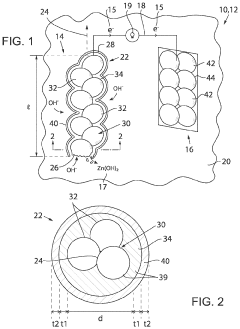
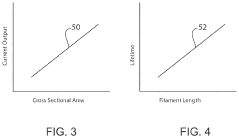
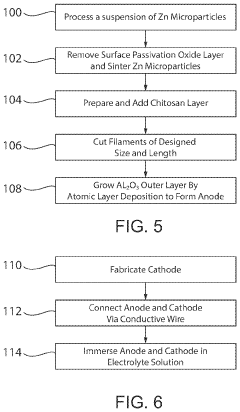
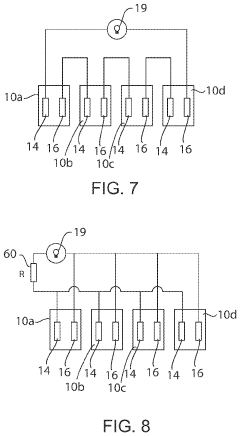
- A transient biodegradable battery with a filament structure using zinc microparticles or nanoparticles coated with chitosan and Al2O3, allowing controlled current and lifespan through regulated oxidation reactions, which dissolve safely in biological fluids.
Environmental Impact Assessment of Transient Electronics
The environmental impact of transient electronics represents a critical dimension in evaluating their overall sustainability and ecological footprint. As these devices are designed to disappear after fulfilling their intended functions, they offer promising alternatives to conventional electronics that contribute significantly to e-waste accumulation. However, the environmental implications of trigger-based vanishing mechanisms require comprehensive assessment.
The degradation processes triggered by various stimuli (thermal, chemical, photonic, or mechanical) release different byproducts into the environment. For instance, thermally-triggered transient electronics may produce heat and gaseous emissions during decomposition, while chemically-triggered systems introduce reactive substances into surrounding ecosystems. These byproducts must be thoroughly evaluated for potential toxicity, bioaccumulation properties, and long-term environmental persistence.
Water systems are particularly vulnerable to contamination from degrading electronic components. Research indicates that silicon-based transient electronics can dissolve into silicic acid, which, while generally benign, may affect aquatic ecosystems at high concentrations. Similarly, biodegradable polymers used as substrates may release microplastic particles during incomplete degradation processes, potentially entering food chains and water supplies.
Soil impact assessment reveals varying degradation rates and effects depending on soil composition, pH levels, and microbial activity. Laboratory studies demonstrate that magnesium-based components in transient electronics can alter soil chemistry temporarily, though these changes typically normalize within weeks under optimal conditions. However, real-world degradation patterns may differ significantly from controlled laboratory environments.
Carbon footprint analysis of transient electronics shows promising results compared to conventional electronics. The manufacturing processes for biodegradable components often require less energy and produce fewer greenhouse gas emissions. Additionally, the elimination of electronic waste collection and processing infrastructure represents significant environmental savings, though this advantage must be balanced against the potentially shorter operational lifespans of transient devices.
Lifecycle assessment methodologies specifically adapted for transient electronics are emerging, incorporating novel metrics such as "degradation efficiency" and "environmental residence time." These frameworks help quantify the environmental benefits of on-demand vanishing capabilities against potential ecological risks, providing a more nuanced understanding of their sustainability profile compared to traditional electronic waste management approaches.
The degradation processes triggered by various stimuli (thermal, chemical, photonic, or mechanical) release different byproducts into the environment. For instance, thermally-triggered transient electronics may produce heat and gaseous emissions during decomposition, while chemically-triggered systems introduce reactive substances into surrounding ecosystems. These byproducts must be thoroughly evaluated for potential toxicity, bioaccumulation properties, and long-term environmental persistence.
Water systems are particularly vulnerable to contamination from degrading electronic components. Research indicates that silicon-based transient electronics can dissolve into silicic acid, which, while generally benign, may affect aquatic ecosystems at high concentrations. Similarly, biodegradable polymers used as substrates may release microplastic particles during incomplete degradation processes, potentially entering food chains and water supplies.
Soil impact assessment reveals varying degradation rates and effects depending on soil composition, pH levels, and microbial activity. Laboratory studies demonstrate that magnesium-based components in transient electronics can alter soil chemistry temporarily, though these changes typically normalize within weeks under optimal conditions. However, real-world degradation patterns may differ significantly from controlled laboratory environments.
Carbon footprint analysis of transient electronics shows promising results compared to conventional electronics. The manufacturing processes for biodegradable components often require less energy and produce fewer greenhouse gas emissions. Additionally, the elimination of electronic waste collection and processing infrastructure represents significant environmental savings, though this advantage must be balanced against the potentially shorter operational lifespans of transient devices.
Lifecycle assessment methodologies specifically adapted for transient electronics are emerging, incorporating novel metrics such as "degradation efficiency" and "environmental residence time." These frameworks help quantify the environmental benefits of on-demand vanishing capabilities against potential ecological risks, providing a more nuanced understanding of their sustainability profile compared to traditional electronic waste management approaches.
Standardization and Safety Protocols for Vanishing Electronics
The standardization and safety protocols for vanishing electronics represent a critical framework for ensuring the reliable, safe, and effective implementation of transient electronic systems. As the field of biodegradable electronics advances, particularly with on-demand vanishing capabilities, establishing comprehensive standards becomes increasingly important for industry adoption and regulatory approval.
Current standardization efforts focus primarily on three key areas: material safety certification, trigger mechanism reliability, and environmental impact assessment. Organizations such as IEEE, ASTM International, and IEC have begun developing preliminary guidelines, though these remain in early stages due to the novelty of transient electronics technology.
Safety protocols must address both immediate and long-term considerations. Immediate safety concerns include potential toxicity during the vanishing process, unintended trigger activation, and electrical safety during operation. Long-term considerations involve environmental fate of degradation products, biocompatibility for medical applications, and potential ecological impacts of widespread deployment.
Risk assessment frameworks specific to transient electronics are being developed to evaluate hazards across the entire product lifecycle. These frameworks incorporate trigger selection parameters, establishing acceptable thresholds for various stimuli including thermal, chemical, photonic, and mechanical triggers. The sensitivity and specificity of these triggers require standardized testing methodologies to ensure consistent performance across different environmental conditions.
Regulatory bodies including the FDA, EPA, and their international counterparts are beginning to establish approval pathways for vanishing electronics. For medical applications, additional protocols address biocompatibility, sterility, and clinical safety. Industrial applications require different certification processes focusing on workplace safety and environmental compliance.
Documentation standards for trigger mechanisms represent another crucial aspect of standardization. Manufacturers must provide detailed information regarding trigger specifications, activation parameters, vanishing timeframes, and potential byproducts. This documentation enables proper risk assessment and informs end-users about safe handling procedures.
Emergency protocols for unintended activation scenarios constitute an essential safety component. These protocols outline containment procedures, neutralization methods for active triggers, and appropriate disposal of partially degraded components. Training requirements for personnel handling transient electronics are also being formalized to minimize operational risks.
As the technology matures, these standardization and safety protocols will likely evolve through collaborative efforts between industry stakeholders, academic researchers, and regulatory authorities. The establishment of comprehensive standards will ultimately facilitate broader adoption of transient electronics across diverse application domains.
Current standardization efforts focus primarily on three key areas: material safety certification, trigger mechanism reliability, and environmental impact assessment. Organizations such as IEEE, ASTM International, and IEC have begun developing preliminary guidelines, though these remain in early stages due to the novelty of transient electronics technology.
Safety protocols must address both immediate and long-term considerations. Immediate safety concerns include potential toxicity during the vanishing process, unintended trigger activation, and electrical safety during operation. Long-term considerations involve environmental fate of degradation products, biocompatibility for medical applications, and potential ecological impacts of widespread deployment.
Risk assessment frameworks specific to transient electronics are being developed to evaluate hazards across the entire product lifecycle. These frameworks incorporate trigger selection parameters, establishing acceptable thresholds for various stimuli including thermal, chemical, photonic, and mechanical triggers. The sensitivity and specificity of these triggers require standardized testing methodologies to ensure consistent performance across different environmental conditions.
Regulatory bodies including the FDA, EPA, and their international counterparts are beginning to establish approval pathways for vanishing electronics. For medical applications, additional protocols address biocompatibility, sterility, and clinical safety. Industrial applications require different certification processes focusing on workplace safety and environmental compliance.
Documentation standards for trigger mechanisms represent another crucial aspect of standardization. Manufacturers must provide detailed information regarding trigger specifications, activation parameters, vanishing timeframes, and potential byproducts. This documentation enables proper risk assessment and informs end-users about safe handling procedures.
Emergency protocols for unintended activation scenarios constitute an essential safety component. These protocols outline containment procedures, neutralization methods for active triggers, and appropriate disposal of partially degraded components. Training requirements for personnel handling transient electronics are also being formalized to minimize operational risks.
As the technology matures, these standardization and safety protocols will likely evolve through collaborative efforts between industry stakeholders, academic researchers, and regulatory authorities. The establishment of comprehensive standards will ultimately facilitate broader adoption of transient electronics across diverse application domains.
Unlock deeper insights with PatSnap Eureka Quick Research — get a full tech report to explore trends and direct your research. Try now!
Generate Your Research Report Instantly with AI Agent
Supercharge your innovation with PatSnap Eureka AI Agent Platform!