Standards And Certification Pathways For Transient And Biodegradable Electronics
AUG 27, 20259 MIN READ
Generate Your Research Report Instantly with AI Agent
PatSnap Eureka helps you evaluate technical feasibility & market potential.
Biodegradable Electronics Background and Objectives
Biodegradable electronics represent a revolutionary paradigm shift in the electronics industry, emerging as a response to the growing global electronic waste crisis. Since the early 2000s, researchers have been exploring materials and design approaches that allow electronic components to harmlessly degrade after their functional lifetime. This technological evolution aims to address the environmental impact of conventional electronics, which typically contain hazardous materials and persist in landfills for centuries.
The development trajectory of biodegradable electronics has accelerated significantly in the past decade, with notable breakthroughs in materials science, particularly in the areas of substrate development, conductive polymers, and biodegradable semiconductors. Initial research focused primarily on medical applications, where transient implantable devices could perform therapeutic functions and then dissolve, eliminating the need for retrieval surgeries.
Current technological objectives in this field encompass several dimensions. First, researchers aim to develop fully functional electronic systems with controlled degradation profiles, allowing precise timing of dissolution based on application requirements. Second, there is a push toward improving the performance metrics of biodegradable components to match conventional electronics, particularly in terms of processing speed, power efficiency, and durability during the intended use period.
Another critical objective involves establishing comprehensive environmental impact assessments for these novel materials, ensuring that degradation byproducts are genuinely benign across various ecosystems. This includes understanding how these materials interact with different environmental conditions such as varying pH levels, temperatures, and microbial populations.
The standardization of testing protocols represents a fundamental goal for the industry's maturation. Currently, there exists no unified framework for evaluating the degradation characteristics, functional performance, or environmental safety of transient electronics. This lack of standardization impedes regulatory approval processes and creates uncertainty for manufacturers and end-users alike.
Looking forward, the field aims to bridge the gap between laboratory prototypes and commercially viable products. This transition requires scalable manufacturing processes, cost-effective material sourcing, and the development of design methodologies that accommodate the unique constraints of biodegradable components. The ultimate vision encompasses a circular electronics economy where devices are designed with end-of-life considerations as a primary design parameter rather than an afterthought.
The development trajectory of biodegradable electronics has accelerated significantly in the past decade, with notable breakthroughs in materials science, particularly in the areas of substrate development, conductive polymers, and biodegradable semiconductors. Initial research focused primarily on medical applications, where transient implantable devices could perform therapeutic functions and then dissolve, eliminating the need for retrieval surgeries.
Current technological objectives in this field encompass several dimensions. First, researchers aim to develop fully functional electronic systems with controlled degradation profiles, allowing precise timing of dissolution based on application requirements. Second, there is a push toward improving the performance metrics of biodegradable components to match conventional electronics, particularly in terms of processing speed, power efficiency, and durability during the intended use period.
Another critical objective involves establishing comprehensive environmental impact assessments for these novel materials, ensuring that degradation byproducts are genuinely benign across various ecosystems. This includes understanding how these materials interact with different environmental conditions such as varying pH levels, temperatures, and microbial populations.
The standardization of testing protocols represents a fundamental goal for the industry's maturation. Currently, there exists no unified framework for evaluating the degradation characteristics, functional performance, or environmental safety of transient electronics. This lack of standardization impedes regulatory approval processes and creates uncertainty for manufacturers and end-users alike.
Looking forward, the field aims to bridge the gap between laboratory prototypes and commercially viable products. This transition requires scalable manufacturing processes, cost-effective material sourcing, and the development of design methodologies that accommodate the unique constraints of biodegradable components. The ultimate vision encompasses a circular electronics economy where devices are designed with end-of-life considerations as a primary design parameter rather than an afterthought.
Market Analysis for Transient Electronics
The transient electronics market is experiencing significant growth, driven by increasing demand for environmentally friendly electronic solutions across multiple sectors. Current market valuations estimate the global transient electronics market at approximately 2.9 billion USD in 2023, with projections indicating a compound annual growth rate (CAGR) of 18.7% through 2030. This remarkable growth trajectory reflects the expanding applications and technological advancements in biodegradable electronic components.
Healthcare represents the largest market segment, accounting for nearly 38% of the current market share. Medical implants, drug delivery systems, and temporary diagnostic devices constitute the primary applications in this sector. The ability of transient electronics to perform critical functions for predetermined periods before harmlessly dissolving within the body presents revolutionary possibilities for post-operative monitoring and targeted therapies.
Environmental monitoring applications form the second-largest market segment at 27%, where biodegradable sensors deployed in natural ecosystems can collect data without requiring retrieval, thereby minimizing ecological disruption. This application is particularly valuable for agricultural monitoring, wildlife tracking, and pollution detection in sensitive environments.
Consumer electronics represents an emerging segment with substantial growth potential, currently at 15% of the market but expanding rapidly. Temporary electronic devices, biodegradable wearables, and disposable smart packaging solutions are gaining traction as consumers become increasingly environmentally conscious.
Geographically, North America leads the market with 42% share, followed by Europe (31%) and Asia-Pacific (21%). However, the Asia-Pacific region is expected to demonstrate the highest growth rate over the next five years, driven by increasing research investments in countries like China, Japan, and South Korea.
Market challenges include higher production costs compared to conventional electronics, with transient devices typically commanding a 30-40% price premium. Additionally, performance limitations and reliability concerns continue to restrict widespread adoption in certain high-performance applications.
The competitive landscape features both established electronics manufacturers diversifying into transient technologies and specialized startups focused exclusively on biodegradable solutions. Key market drivers include stringent environmental regulations, growing electronic waste concerns, and increasing healthcare demand for non-permanent implantable devices.
Industry analysts predict that as manufacturing scales and technologies mature, production costs will decrease by approximately 25% within the next three years, potentially accelerating market penetration across all segments. The development of standardized certification pathways is expected to further legitimize the industry and facilitate broader commercial adoption.
Healthcare represents the largest market segment, accounting for nearly 38% of the current market share. Medical implants, drug delivery systems, and temporary diagnostic devices constitute the primary applications in this sector. The ability of transient electronics to perform critical functions for predetermined periods before harmlessly dissolving within the body presents revolutionary possibilities for post-operative monitoring and targeted therapies.
Environmental monitoring applications form the second-largest market segment at 27%, where biodegradable sensors deployed in natural ecosystems can collect data without requiring retrieval, thereby minimizing ecological disruption. This application is particularly valuable for agricultural monitoring, wildlife tracking, and pollution detection in sensitive environments.
Consumer electronics represents an emerging segment with substantial growth potential, currently at 15% of the market but expanding rapidly. Temporary electronic devices, biodegradable wearables, and disposable smart packaging solutions are gaining traction as consumers become increasingly environmentally conscious.
Geographically, North America leads the market with 42% share, followed by Europe (31%) and Asia-Pacific (21%). However, the Asia-Pacific region is expected to demonstrate the highest growth rate over the next five years, driven by increasing research investments in countries like China, Japan, and South Korea.
Market challenges include higher production costs compared to conventional electronics, with transient devices typically commanding a 30-40% price premium. Additionally, performance limitations and reliability concerns continue to restrict widespread adoption in certain high-performance applications.
The competitive landscape features both established electronics manufacturers diversifying into transient technologies and specialized startups focused exclusively on biodegradable solutions. Key market drivers include stringent environmental regulations, growing electronic waste concerns, and increasing healthcare demand for non-permanent implantable devices.
Industry analysts predict that as manufacturing scales and technologies mature, production costs will decrease by approximately 25% within the next three years, potentially accelerating market penetration across all segments. The development of standardized certification pathways is expected to further legitimize the industry and facilitate broader commercial adoption.
Technical Challenges in Standardization
The standardization of transient and biodegradable electronics faces significant technical challenges that must be addressed before widespread adoption can occur. One primary obstacle is the lack of unified testing methodologies to evaluate degradation rates and patterns. Current testing protocols designed for conventional electronics cannot adequately capture the unique degradation behaviors of transient materials, which may respond differently to various environmental conditions such as humidity, temperature, pH levels, and biological agents.
Material inconsistency presents another major challenge, as biodegradable substrates and components often exhibit batch-to-batch variations that complicate standardization efforts. The degradation kinetics of these materials can differ substantially depending on manufacturing processes, making it difficult to establish reliable benchmarks for certification purposes. This variability undermines the reproducibility essential for any robust standardization framework.
Performance metrics for transient electronics require fundamentally different parameters than those used for conventional electronics. Traditional metrics focus on longevity and durability, whereas transient electronics must balance functionality during their operational lifetime with controlled degradation afterward. Developing standardized metrics that can accurately reflect this dual requirement remains technically challenging, particularly in quantifying the transition from functional to degraded states.
Safety assessment protocols represent another significant hurdle. The byproducts of degradation must be thoroughly characterized to ensure they pose no toxicological or environmental hazards. Current analytical techniques may be insufficient to detect all potential degradation products or to predict long-term ecological impacts, creating uncertainty in certification processes.
Accelerated aging tests, crucial for practical certification timelines, present unique technical difficulties for transient electronics. Developing methods that can reliably compress degradation timelines without altering degradation mechanisms requires sophisticated modeling and validation approaches that do not yet exist in standardized forms.
Interoperability standards face particular challenges as transient components must often interface with conventional electronic systems during their functional lifetime. Establishing electrical, mechanical, and communication standards that accommodate both the transient nature of these components and their integration with permanent systems requires complex technical solutions.
Finally, measurement instrumentation for characterizing transient electronics often lacks the sensitivity and specificity needed for reliable certification. Conventional testing equipment may damage delicate biodegradable structures or fail to capture subtle degradation indicators, necessitating the development of specialized analytical tools and methodologies specifically designed for these unique materials and systems.
Material inconsistency presents another major challenge, as biodegradable substrates and components often exhibit batch-to-batch variations that complicate standardization efforts. The degradation kinetics of these materials can differ substantially depending on manufacturing processes, making it difficult to establish reliable benchmarks for certification purposes. This variability undermines the reproducibility essential for any robust standardization framework.
Performance metrics for transient electronics require fundamentally different parameters than those used for conventional electronics. Traditional metrics focus on longevity and durability, whereas transient electronics must balance functionality during their operational lifetime with controlled degradation afterward. Developing standardized metrics that can accurately reflect this dual requirement remains technically challenging, particularly in quantifying the transition from functional to degraded states.
Safety assessment protocols represent another significant hurdle. The byproducts of degradation must be thoroughly characterized to ensure they pose no toxicological or environmental hazards. Current analytical techniques may be insufficient to detect all potential degradation products or to predict long-term ecological impacts, creating uncertainty in certification processes.
Accelerated aging tests, crucial for practical certification timelines, present unique technical difficulties for transient electronics. Developing methods that can reliably compress degradation timelines without altering degradation mechanisms requires sophisticated modeling and validation approaches that do not yet exist in standardized forms.
Interoperability standards face particular challenges as transient components must often interface with conventional electronic systems during their functional lifetime. Establishing electrical, mechanical, and communication standards that accommodate both the transient nature of these components and their integration with permanent systems requires complex technical solutions.
Finally, measurement instrumentation for characterizing transient electronics often lacks the sensitivity and specificity needed for reliable certification. Conventional testing equipment may damage delicate biodegradable structures or fail to capture subtle degradation indicators, necessitating the development of specialized analytical tools and methodologies specifically designed for these unique materials and systems.
Current Certification Frameworks
01 Biodegradable electronic materials and certification standards
Biodegradable electronic materials are designed to decompose naturally after their intended use period. These materials undergo specific certification processes to verify their environmental impact and degradation timeline. Standards for these materials include testing protocols for biodegradability in various environments, toxicity assessments, and end-of-life management requirements. Certification pathways typically involve laboratory testing followed by field validation to ensure compliance with environmental regulations.- Biodegradable electronic materials and certification standards: Development of biodegradable electronic materials that meet specific certification standards for environmental safety and sustainability. These materials are designed to decompose naturally after their intended use period, reducing electronic waste. Certification pathways include testing for biodegradability under various environmental conditions, toxicity assessments, and compliance with international environmental standards for electronics disposal.
- Transient electronics verification protocols: Verification protocols and testing methodologies specifically designed for transient electronics to ensure they meet performance requirements during their functional lifetime and properly degrade afterward. These protocols establish standardized testing procedures for measuring dissolution rates, functional stability periods, and environmental impact of degradation byproducts. The certification process validates that transient electronic devices perform as intended before safely decomposing.
- Security and authentication frameworks for temporary electronic systems: Security frameworks and authentication systems specifically designed for transient electronic devices that have limited lifespans. These frameworks ensure data security during the operational phase while allowing for complete data destruction during the degradation phase. Certification pathways focus on verifying secure data handling, authentication protocols, and ensuring no recoverable information remains after device degradation.
- Lifecycle assessment and environmental impact certification: Methodologies for assessing the complete lifecycle of transient and biodegradable electronics, from raw material sourcing to end-of-life degradation. Certification processes evaluate environmental impact factors including carbon footprint, resource consumption, toxicity of components, and biodegradation byproducts. These assessments provide standardized metrics for comparing different transient electronic technologies and verifying their environmental benefits.
- Regulatory compliance and international standards harmonization: Frameworks for ensuring transient and biodegradable electronics comply with existing electronic waste regulations while developing new specialized standards. This includes harmonization efforts across international regulatory bodies to create consistent certification pathways and standards. The process involves adapting existing electronic product certification standards to accommodate the unique characteristics of transient electronics while ensuring consumer safety and environmental protection.
02 Transient electronics verification and testing protocols
Verification and testing protocols for transient electronics involve specialized procedures to assess their controlled degradation capabilities. These protocols include accelerated aging tests, environmental exposure simulations, and performance monitoring during the degradation process. Standardized testing methods help ensure that transient electronic devices meet their specified lifespans and degrade safely without leaving harmful residues. Certification bodies require comprehensive documentation of these test results before approving transient electronic products for market release.Expand Specific Solutions03 Environmental impact assessment frameworks for electronics
Environmental impact assessment frameworks provide structured approaches for evaluating the ecological footprint of transient and biodegradable electronics throughout their lifecycle. These frameworks consider factors such as resource extraction, manufacturing processes, energy consumption during use, and end-of-life disposal. Standardized assessment methodologies enable consistent comparison between different electronic products and technologies. Certification systems use these assessments to award environmental credentials based on predetermined sustainability criteria.Expand Specific Solutions04 Security and data protection standards for transient electronics
Security and data protection standards for transient electronics address the unique challenges of ensuring information security in devices designed to degrade. These standards specify requirements for secure data handling during the operational phase and complete data destruction during the degradation phase. Certification processes verify that transient electronic devices can protect sensitive information throughout their lifecycle and that no recoverable data remains after degradation. Compliance with these standards is particularly important for applications in healthcare, defense, and financial sectors.Expand Specific Solutions05 Regulatory compliance and market authorization pathways
Regulatory compliance and market authorization pathways outline the necessary steps for bringing transient and biodegradable electronics to market. These pathways involve navigating various regulatory frameworks across different jurisdictions, including electronic waste regulations, chemical substance registrations, and product safety certifications. Standardized documentation requirements help manufacturers prepare technical files that demonstrate compliance with all applicable regulations. Certification bodies serve as intermediaries between manufacturers and regulatory authorities, validating that products meet all necessary requirements before market entry.Expand Specific Solutions
Key Organizations in Certification Development
The field of transient and biodegradable electronics is currently in its early growth phase, with an estimated market size of $45-60 million that is projected to expand significantly as sustainability concerns drive adoption. The technology maturity varies across applications, with medical implantables showing the most advancement. Leading academic institutions (MIT, EPFL, University of Illinois) are pioneering fundamental research, while established corporations (Hitachi, BASF, Huawei) are developing commercial applications. Specialized startups like Transient Electronics, Inc. are emerging to bridge the gap between research and commercialization. The lack of standardized certification pathways remains a key challenge, with industry consortia beginning to form to address regulatory frameworks for these novel materials that balance performance with environmental safety.
The Board of Trustees of the University of Illinois
Technical Solution: The University of Illinois has pioneered transient electronics through their development of silicon-based biodegradable systems that can dissolve in water or biofluids at controlled rates. Their approach focuses on using ultrathin silicon nanomembranes (Si NMs) as semiconductors, magnesium (Mg) for conductors, and silk fibroin or poly(lactic-co-glycolic acid) (PLGA) as substrate materials. These materials are designed to dissolve into non-toxic byproducts when exposed to aqueous environments. The university has established comprehensive dissolution kinetics models that predict degradation rates based on material thickness, composition, and environmental conditions. Their certification pathway involves rigorous biocompatibility testing according to ISO 10993 standards, with particular emphasis on cytotoxicity, sensitization, and irritation assessments. They have also developed specialized test methods for verifying dissolution rates and functional reliability during the operational lifetime of devices.
Strengths: Strong scientific foundation with extensive research publications; established testing protocols specific to transient electronics; comprehensive understanding of dissolution mechanisms. Weaknesses: Relatively slow dissolution rates for some silicon-based components; challenges in achieving consistent degradation timelines across different physiological environments; limited commercial-scale manufacturing processes.
École Polytechnique Fédérale de Lausanne
Technical Solution: École Polytechnique Fédérale de Lausanne (EPFL) has developed an innovative platform for transient electronics based on environmentally degradable materials and designs. Their approach centers on using biodegradable polymers derived from renewable resources as substrates, including polylactic acid (PLA), polyhydroxyalkanoates (PHAs), and cellulose derivatives. For electronic components, they utilize conductive materials including magnesium, zinc, and iron alloys with controlled corrosion rates, along with organic semiconductors that can degrade through hydrolysis or enzymatic processes. EPFL has established a comprehensive certification framework that integrates European standards for biodegradability (EN 13432) with electronic device testing protocols. Their methodology includes accelerated aging tests under controlled environmental conditions (temperature, humidity, pH) to predict degradation timelines accurately. They have developed specialized analytical techniques to characterize degradation byproducts and verify their environmental safety according to OECD guidelines. EPFL researchers have also pioneered standardized testing for functional reliability during operational lifetime, ensuring devices maintain performance until programmed degradation begins. Their certification pathway includes lifecycle assessment methodologies specifically adapted for transient electronics, quantifying environmental benefits compared to conventional electronic waste.
Strengths: Comprehensive environmental impact assessment methodology; integration with existing European biodegradability standards; advanced lifecycle analysis techniques. Weaknesses: Performance limitations compared to conventional electronics; challenges in achieving consistent degradation rates in variable environmental conditions; relatively high production costs limiting commercial viability.
Core Standards and Testing Protocols
Biodegradable transient battery built on core-double-shell zinc microparticle networks
PatentActiveUS11791519B2
Innovation
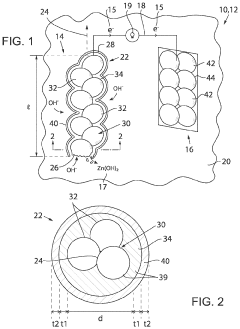
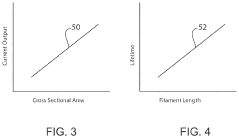
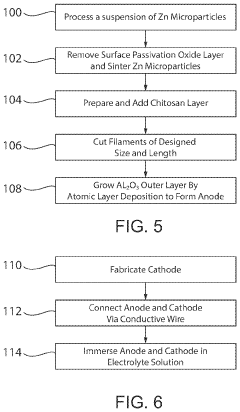
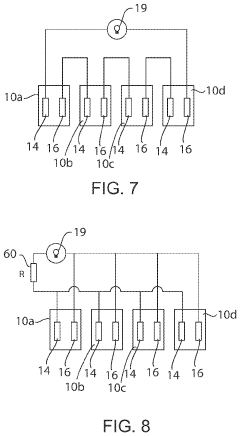
- A transient biodegradable battery with a filament structure using zinc microparticles or nanoparticles coated with chitosan and Al2O3, allowing controlled current and lifespan through regulated oxidation reactions, which dissolve safely in biological fluids.
Method for manufacturing an electrically conductive metal trace and corresponding metal trace, particularly suitable for transient electronic devices
PatentInactiveEP4274391A1
Innovation
- A method involving sequential electrochemical oxide layer removal followed by light-induced heat sintering of metal micro or nano particles deposited on a substrate, allowing for large-scale production of thin, high-conductivity metal traces without damaging the substrate or trace.


Environmental Impact Assessment
The environmental impact assessment of transient and biodegradable electronics represents a critical dimension in evaluating their sustainability credentials and regulatory compliance. These novel electronic systems, designed to harmlessly degrade after their functional lifetime, present both opportunities and challenges from an environmental perspective.
Lifecycle analysis of transient electronics reveals significant potential advantages over conventional electronics. Traditional electronic waste contributes approximately 50 million tons annually to global waste streams, with only 20% being properly recycled. Biodegradable electronics could substantially reduce this environmental burden by eliminating end-of-life disposal issues, as components naturally decompose into non-toxic constituents.
Water quality impacts require particular attention in assessment protocols. Studies indicate that silicon-based transient electronics typically degrade into silicic acid, a naturally occurring compound in water bodies. However, comprehensive testing must verify that degradation byproducts from all components—including metals, semiconductors, and polymers—remain below ecotoxicity thresholds in various aquatic environments.
Soil interaction assessments demonstrate promising results, with most biodegradable electronic materials showing minimal adverse effects on soil microbial communities and plant growth. Research indicates that magnesium, silicon, and zinc—common elements in transient electronics—can actually provide beneficial micronutrients to soil systems when present in appropriate concentrations.
Carbon footprint analyses suggest potential advantages throughout the product lifecycle. Manufacturing processes for biodegradable electronics often require fewer harsh chemicals and lower processing temperatures compared to conventional electronics, potentially reducing energy consumption by 15-30% depending on the specific technologies employed.
Standardized testing protocols must address the unique environmental considerations of these technologies. Current frameworks for assessing electronic waste inadequately capture the distinctive characteristics of transient electronics. New methodologies must evaluate degradation rates under various environmental conditions, leaching potential of component materials, and ecotoxicological impacts across different ecosystems.
Regulatory bodies worldwide are beginning to recognize the need for specialized environmental impact assessment frameworks for transient electronics. The European Union's Environmental Technology Verification program has initiated pilot projects specifically examining biodegradable electronic components, while the U.S. Environmental Protection Agency is developing modified testing protocols under its Sustainable Materials Management initiative.
Lifecycle analysis of transient electronics reveals significant potential advantages over conventional electronics. Traditional electronic waste contributes approximately 50 million tons annually to global waste streams, with only 20% being properly recycled. Biodegradable electronics could substantially reduce this environmental burden by eliminating end-of-life disposal issues, as components naturally decompose into non-toxic constituents.
Water quality impacts require particular attention in assessment protocols. Studies indicate that silicon-based transient electronics typically degrade into silicic acid, a naturally occurring compound in water bodies. However, comprehensive testing must verify that degradation byproducts from all components—including metals, semiconductors, and polymers—remain below ecotoxicity thresholds in various aquatic environments.
Soil interaction assessments demonstrate promising results, with most biodegradable electronic materials showing minimal adverse effects on soil microbial communities and plant growth. Research indicates that magnesium, silicon, and zinc—common elements in transient electronics—can actually provide beneficial micronutrients to soil systems when present in appropriate concentrations.
Carbon footprint analyses suggest potential advantages throughout the product lifecycle. Manufacturing processes for biodegradable electronics often require fewer harsh chemicals and lower processing temperatures compared to conventional electronics, potentially reducing energy consumption by 15-30% depending on the specific technologies employed.
Standardized testing protocols must address the unique environmental considerations of these technologies. Current frameworks for assessing electronic waste inadequately capture the distinctive characteristics of transient electronics. New methodologies must evaluate degradation rates under various environmental conditions, leaching potential of component materials, and ecotoxicological impacts across different ecosystems.
Regulatory bodies worldwide are beginning to recognize the need for specialized environmental impact assessment frameworks for transient electronics. The European Union's Environmental Technology Verification program has initiated pilot projects specifically examining biodegradable electronic components, while the U.S. Environmental Protection Agency is developing modified testing protocols under its Sustainable Materials Management initiative.
Regulatory Compliance Strategies
Navigating the regulatory landscape for transient and biodegradable electronics requires strategic approaches that balance innovation with compliance. Organizations developing these novel technologies must establish comprehensive regulatory compliance strategies that address the unique characteristics of materials that are designed to degrade over time.
A multi-tiered approach to regulatory compliance is essential, beginning with thorough classification analysis. Companies must determine how their transient electronics fit within existing regulatory frameworks, which often weren't designed with biodegradable technologies in mind. This requires engagement with regulatory bodies early in the development process to establish appropriate product categories and testing protocols.
Risk-based compliance planning represents a cornerstone strategy for manufacturers. This involves identifying potential regulatory hurdles across different jurisdictions and prioritizing compliance efforts based on market importance and regulatory complexity. For transient electronics, special attention must be paid to end-of-life considerations, as the biodegradation process introduces novel regulatory questions regarding material transformation and environmental impact.
Documentation systems tailored to transient electronics are critical compliance tools. These should track material sourcing, manufacturing processes, degradation testing, and environmental impact assessments. Such comprehensive documentation serves both as evidence of compliance and as a foundation for certification applications across different regulatory frameworks.
Collaborative regulatory engagement has proven effective for emerging technologies. Industry consortia focused on transient electronics can collectively engage with regulatory bodies to develop appropriate standards and testing methodologies. This approach distributes the regulatory development burden while ensuring industry-wide consistency in compliance approaches.
Phased market entry strategies allow companies to navigate regulatory uncertainties by initially targeting markets with clearer regulatory pathways or those offering regulatory sandboxes for innovative technologies. This approach enables real-world testing while building the compliance evidence needed for broader market access.
Continuous regulatory monitoring systems are essential given the evolving nature of regulations affecting novel electronic materials. Organizations should establish dedicated teams or partnerships with regulatory specialists who track developments across relevant jurisdictions and provide early warning of regulatory changes that might impact certification pathways.
Cross-functional compliance teams that integrate regulatory expertise with R&D, manufacturing, and marketing functions ensure that compliance considerations are embedded throughout the product lifecycle. This integration helps prevent costly redesigns and certification delays by addressing regulatory requirements during early development stages.
A multi-tiered approach to regulatory compliance is essential, beginning with thorough classification analysis. Companies must determine how their transient electronics fit within existing regulatory frameworks, which often weren't designed with biodegradable technologies in mind. This requires engagement with regulatory bodies early in the development process to establish appropriate product categories and testing protocols.
Risk-based compliance planning represents a cornerstone strategy for manufacturers. This involves identifying potential regulatory hurdles across different jurisdictions and prioritizing compliance efforts based on market importance and regulatory complexity. For transient electronics, special attention must be paid to end-of-life considerations, as the biodegradation process introduces novel regulatory questions regarding material transformation and environmental impact.
Documentation systems tailored to transient electronics are critical compliance tools. These should track material sourcing, manufacturing processes, degradation testing, and environmental impact assessments. Such comprehensive documentation serves both as evidence of compliance and as a foundation for certification applications across different regulatory frameworks.
Collaborative regulatory engagement has proven effective for emerging technologies. Industry consortia focused on transient electronics can collectively engage with regulatory bodies to develop appropriate standards and testing methodologies. This approach distributes the regulatory development burden while ensuring industry-wide consistency in compliance approaches.
Phased market entry strategies allow companies to navigate regulatory uncertainties by initially targeting markets with clearer regulatory pathways or those offering regulatory sandboxes for innovative technologies. This approach enables real-world testing while building the compliance evidence needed for broader market access.
Continuous regulatory monitoring systems are essential given the evolving nature of regulations affecting novel electronic materials. Organizations should establish dedicated teams or partnerships with regulatory specialists who track developments across relevant jurisdictions and provide early warning of regulatory changes that might impact certification pathways.
Cross-functional compliance teams that integrate regulatory expertise with R&D, manufacturing, and marketing functions ensure that compliance considerations are embedded throughout the product lifecycle. This integration helps prevent costly redesigns and certification delays by addressing regulatory requirements during early development stages.
Unlock deeper insights with PatSnap Eureka Quick Research — get a full tech report to explore trends and direct your research. Try now!
Generate Your Research Report Instantly with AI Agent
Supercharge your innovation with PatSnap Eureka AI Agent Platform!