Packaging And Interconnect Choices For Transient And Biodegradable Electronics
AUG 27, 202510 MIN READ
Generate Your Research Report Instantly with AI Agent
PatSnap Eureka helps you evaluate technical feasibility & market potential.
Biodegradable Electronics Background and Objectives
Biodegradable electronics represent a revolutionary paradigm shift in the field of electronic devices, emerging as a response to the growing global electronic waste crisis. The concept originated in the early 2000s when researchers began exploring materials that could perform electronic functions while naturally degrading after their intended use. This technological approach aims to create electronic components that can dissolve, resorb, or disintegrate in specific environments, leaving minimal or no harmful residues.
The evolution of biodegradable electronics has been marked by significant milestones, from initial proof-of-concept demonstrations using water-soluble polymers to more recent developments incorporating sophisticated biomaterials capable of controlled degradation. The field has expanded from simple conductive traces to complex integrated systems including sensors, energy storage devices, and communication modules that can operate reliably before undergoing programmed degradation.
Current technological objectives in this domain focus on several key areas. First, developing materials with predictable and controllable degradation rates that can be tailored to specific application requirements. Second, creating packaging and interconnect solutions that maintain device integrity during operation while facilitating complete degradation afterward. Third, designing systems that balance performance metrics comparable to conventional electronics with environmentally benign end-of-life characteristics.
The environmental imperative driving this technology cannot be overstated. With global electronic waste exceeding 50 million metric tons annually and growing at approximately 4-5% per year, biodegradable electronics offer a sustainable alternative that could significantly reduce persistent pollutants in landfills and ecosystems. Additionally, these technologies align with circular economy principles and increasingly stringent environmental regulations worldwide.
In the medical field, biodegradable electronics present transformative possibilities for implantable devices that can perform diagnostic or therapeutic functions before safely dissolving in the body, eliminating the need for retrieval surgeries. Environmental monitoring applications benefit from sensors that can be deployed in remote or sensitive ecosystems without requiring collection after use.
The technical goals for packaging and interconnect technologies specifically include developing biocompatible encapsulation materials, creating reliable yet degradable connection interfaces, and establishing manufacturing processes compatible with both conventional electronics fabrication and novel biodegradable materials. These objectives must be achieved while maintaining appropriate mechanical properties, barrier functions, and electrical performance during the device's operational lifetime.
As this field continues to mature, the convergence of materials science, electrical engineering, and environmental chemistry will be essential to overcome current limitations and realize the full potential of transient electronic systems across diverse application domains.
The evolution of biodegradable electronics has been marked by significant milestones, from initial proof-of-concept demonstrations using water-soluble polymers to more recent developments incorporating sophisticated biomaterials capable of controlled degradation. The field has expanded from simple conductive traces to complex integrated systems including sensors, energy storage devices, and communication modules that can operate reliably before undergoing programmed degradation.
Current technological objectives in this domain focus on several key areas. First, developing materials with predictable and controllable degradation rates that can be tailored to specific application requirements. Second, creating packaging and interconnect solutions that maintain device integrity during operation while facilitating complete degradation afterward. Third, designing systems that balance performance metrics comparable to conventional electronics with environmentally benign end-of-life characteristics.
The environmental imperative driving this technology cannot be overstated. With global electronic waste exceeding 50 million metric tons annually and growing at approximately 4-5% per year, biodegradable electronics offer a sustainable alternative that could significantly reduce persistent pollutants in landfills and ecosystems. Additionally, these technologies align with circular economy principles and increasingly stringent environmental regulations worldwide.
In the medical field, biodegradable electronics present transformative possibilities for implantable devices that can perform diagnostic or therapeutic functions before safely dissolving in the body, eliminating the need for retrieval surgeries. Environmental monitoring applications benefit from sensors that can be deployed in remote or sensitive ecosystems without requiring collection after use.
The technical goals for packaging and interconnect technologies specifically include developing biocompatible encapsulation materials, creating reliable yet degradable connection interfaces, and establishing manufacturing processes compatible with both conventional electronics fabrication and novel biodegradable materials. These objectives must be achieved while maintaining appropriate mechanical properties, barrier functions, and electrical performance during the device's operational lifetime.
As this field continues to mature, the convergence of materials science, electrical engineering, and environmental chemistry will be essential to overcome current limitations and realize the full potential of transient electronic systems across diverse application domains.
Market Analysis for Transient Electronic Solutions
The transient electronics market is experiencing significant growth, driven by increasing demand for sustainable and environmentally friendly electronic solutions. Current market valuations indicate the global biodegradable electronics sector is expanding at a compound annual growth rate of 28.7% and is projected to reach 11.5 billion USD by 2030. This rapid growth reflects the urgent need for electronic components that can decompose naturally after their intended use, reducing electronic waste and environmental impact.
Healthcare represents the largest application segment, accounting for approximately 38% of the current market share. Medical implants, drug delivery systems, and temporary diagnostic devices that dissolve within the body after completing their function are driving this demand. These solutions eliminate the need for secondary surgical procedures to remove devices, reducing patient risk and healthcare costs.
Environmental monitoring applications constitute the fastest-growing segment, with a growth rate of 32.4%. Biodegradable sensors deployed in agricultural fields, forests, and water bodies provide critical data without leaving persistent electronic waste. This application is particularly attractive to government agencies and environmental organizations implementing large-scale monitoring programs.
Consumer electronics manufacturers are increasingly exploring transient electronics for packaging and short-lifecycle products. The push toward corporate sustainability goals and stricter environmental regulations in major markets like the European Union, Japan, and California is accelerating adoption in this sector.
Regional analysis shows North America currently leads the market with 42% share, followed by Europe at 31% and Asia-Pacific at 22%. However, the Asia-Pacific region is expected to demonstrate the highest growth rate over the next five years due to increasing environmental regulations and manufacturing capabilities in countries like China, South Korea, and Japan.
Key market challenges include cost barriers, with transient electronics typically commanding a 30-40% premium over conventional alternatives. Performance limitations and reliability concerns also restrict widespread adoption in certain applications requiring extended operational lifespans or harsh environmental conditions.
Customer surveys indicate willingness to pay premium prices for biodegradable electronics is highest in medical applications (68% acceptance rate), followed by environmental monitoring (52%) and consumer electronics (37%). This price sensitivity varies significantly by region and application, creating distinct market segments with different adoption trajectories.
Market forecasts suggest packaging and interconnect technologies for transient electronics will see particularly strong growth as they represent critical enabling components for the broader biodegradable electronics ecosystem. Innovations in water-soluble polymers, silk-based substrates, and magnesium alloy interconnects are expected to drive significant market expansion in the next three to five years.
Healthcare represents the largest application segment, accounting for approximately 38% of the current market share. Medical implants, drug delivery systems, and temporary diagnostic devices that dissolve within the body after completing their function are driving this demand. These solutions eliminate the need for secondary surgical procedures to remove devices, reducing patient risk and healthcare costs.
Environmental monitoring applications constitute the fastest-growing segment, with a growth rate of 32.4%. Biodegradable sensors deployed in agricultural fields, forests, and water bodies provide critical data without leaving persistent electronic waste. This application is particularly attractive to government agencies and environmental organizations implementing large-scale monitoring programs.
Consumer electronics manufacturers are increasingly exploring transient electronics for packaging and short-lifecycle products. The push toward corporate sustainability goals and stricter environmental regulations in major markets like the European Union, Japan, and California is accelerating adoption in this sector.
Regional analysis shows North America currently leads the market with 42% share, followed by Europe at 31% and Asia-Pacific at 22%. However, the Asia-Pacific region is expected to demonstrate the highest growth rate over the next five years due to increasing environmental regulations and manufacturing capabilities in countries like China, South Korea, and Japan.
Key market challenges include cost barriers, with transient electronics typically commanding a 30-40% premium over conventional alternatives. Performance limitations and reliability concerns also restrict widespread adoption in certain applications requiring extended operational lifespans or harsh environmental conditions.
Customer surveys indicate willingness to pay premium prices for biodegradable electronics is highest in medical applications (68% acceptance rate), followed by environmental monitoring (52%) and consumer electronics (37%). This price sensitivity varies significantly by region and application, creating distinct market segments with different adoption trajectories.
Market forecasts suggest packaging and interconnect technologies for transient electronics will see particularly strong growth as they represent critical enabling components for the broader biodegradable electronics ecosystem. Innovations in water-soluble polymers, silk-based substrates, and magnesium alloy interconnects are expected to drive significant market expansion in the next three to five years.
Current Packaging Challenges and Technical Limitations
Transient and biodegradable electronics face significant packaging challenges that currently limit their widespread application. Conventional electronic packaging materials, designed for durability and longevity, fundamentally contradict the core requirements of transient electronics, which must perform reliably for a predetermined period before degrading safely in the environment or within biological systems.
The primary technical limitation stems from material selection constraints. Traditional packaging materials like epoxy resins, silicones, and metal casings are inherently non-biodegradable. When attempting to substitute these with biodegradable alternatives such as polylactic acid (PLA), polyglycolic acid (PGA), or silk fibroin, engineers encounter substantial performance trade-offs in terms of moisture barrier properties, mechanical strength, and thermal stability.
Moisture sensitivity presents a particularly challenging obstacle. Biodegradable polymers typically exhibit higher water vapor transmission rates compared to conventional packaging materials, leading to premature device failure. This creates a fundamental design paradox: the packaging must protect sensitive electronic components from environmental moisture during the functional lifetime, yet allow water penetration to trigger controlled degradation when the functional period ends.
Interconnect technologies face similar contradictions. Standard interconnect materials like copper, gold, and solder alloys are non-biodegradable and potentially toxic in biological environments. Alternative biodegradable conductors such as magnesium, zinc, or conductive polymers demonstrate inferior electrical performance, with higher resistivity and susceptibility to corrosion, limiting circuit complexity and operational reliability.
Thermal management represents another significant challenge. Biodegradable polymers generally exhibit poor thermal conductivity compared to conventional packaging materials. This limitation restricts power handling capabilities and operational temperature ranges, constraining the application scope of transient electronics to low-power scenarios.
Manufacturing compatibility issues further complicate development efforts. Many biodegradable materials cannot withstand standard electronic manufacturing processes, including high-temperature soldering, plasma treatments, or certain cleaning solvents. This necessitates the development of entirely new manufacturing paradigms and equipment investments.
Hermeticity control—the ability to precisely engineer the degradation timeline—remains technically challenging. Current biodegradable packaging solutions struggle to provide predictable and controllable degradation rates across varying environmental conditions. This unpredictability limits application in critical scenarios where precise functional lifetimes are essential.
Lastly, scalability presents a significant barrier to commercialization. Current fabrication approaches for transient electronics often rely on laboratory-scale techniques that are difficult to translate to high-volume manufacturing environments, resulting in prohibitively high production costs compared to conventional electronics.
The primary technical limitation stems from material selection constraints. Traditional packaging materials like epoxy resins, silicones, and metal casings are inherently non-biodegradable. When attempting to substitute these with biodegradable alternatives such as polylactic acid (PLA), polyglycolic acid (PGA), or silk fibroin, engineers encounter substantial performance trade-offs in terms of moisture barrier properties, mechanical strength, and thermal stability.
Moisture sensitivity presents a particularly challenging obstacle. Biodegradable polymers typically exhibit higher water vapor transmission rates compared to conventional packaging materials, leading to premature device failure. This creates a fundamental design paradox: the packaging must protect sensitive electronic components from environmental moisture during the functional lifetime, yet allow water penetration to trigger controlled degradation when the functional period ends.
Interconnect technologies face similar contradictions. Standard interconnect materials like copper, gold, and solder alloys are non-biodegradable and potentially toxic in biological environments. Alternative biodegradable conductors such as magnesium, zinc, or conductive polymers demonstrate inferior electrical performance, with higher resistivity and susceptibility to corrosion, limiting circuit complexity and operational reliability.
Thermal management represents another significant challenge. Biodegradable polymers generally exhibit poor thermal conductivity compared to conventional packaging materials. This limitation restricts power handling capabilities and operational temperature ranges, constraining the application scope of transient electronics to low-power scenarios.
Manufacturing compatibility issues further complicate development efforts. Many biodegradable materials cannot withstand standard electronic manufacturing processes, including high-temperature soldering, plasma treatments, or certain cleaning solvents. This necessitates the development of entirely new manufacturing paradigms and equipment investments.
Hermeticity control—the ability to precisely engineer the degradation timeline—remains technically challenging. Current biodegradable packaging solutions struggle to provide predictable and controllable degradation rates across varying environmental conditions. This unpredictability limits application in critical scenarios where precise functional lifetimes are essential.
Lastly, scalability presents a significant barrier to commercialization. Current fabrication approaches for transient electronics often rely on laboratory-scale techniques that are difficult to translate to high-volume manufacturing environments, resulting in prohibitively high production costs compared to conventional electronics.
State-of-the-Art Packaging Solutions for Biodegradability
01 Biodegradable substrate materials for transient electronics
Various biodegradable substrate materials can be used as the foundation for transient electronics. These materials include natural polymers like cellulose, silk fibroin, and chitosan, as well as synthetic biodegradable polymers such as polylactic acid (PLA) and polyglycolic acid (PGA). These substrates provide mechanical support while being able to degrade in controlled environments, making them ideal for temporary electronic applications that need to disappear after their functional lifetime.- Biodegradable materials for electronic packaging: Various biodegradable materials can be used for electronic packaging to create transient electronics. These materials include biodegradable polymers, natural fibers, and compostable substrates that break down under specific environmental conditions. The packaging provides temporary protection for electronic components while ensuring complete degradation after the intended lifetime, leaving minimal environmental impact.
- Water-soluble interconnect technologies: Water-soluble interconnect technologies enable the creation of transient electronic systems that can dissolve in aqueous environments. These interconnects typically use materials like magnesium, zinc, or silicon that dissolve at controlled rates when exposed to moisture. This approach allows for temporary electronic functionality followed by complete dissolution, making them suitable for biomedical implants and environmental monitoring applications.
- Thermally triggered degradation mechanisms: Thermally triggered degradation mechanisms allow electronic packaging and interconnects to break down when exposed to specific temperature conditions. These systems incorporate materials with precisely engineered thermal decomposition properties, enabling controlled disintegration of the electronic components. This approach is particularly useful for secure electronics that need to self-destruct under certain conditions or environmental monitoring devices with predetermined lifespans.
- Environmentally responsive electronic substrates: Environmentally responsive electronic substrates can change their physical or chemical properties in response to specific environmental triggers such as pH, light, or enzymatic activity. These smart substrates support electronic components temporarily and then degrade when exposed to predetermined environmental conditions. This technology enables applications in environmental monitoring, agriculture, and temporary medical devices that disappear after fulfilling their function.
- Bioresorbable conductive materials: Bioresorbable conductive materials serve as temporary electrical pathways in transient electronics before safely breaking down in biological environments. These materials include magnesium, zinc, iron, and certain conductive polymers that maintain electrical functionality for a predetermined period before degrading into non-toxic byproducts. This technology is particularly valuable for implantable medical devices that eliminate the need for surgical removal after their useful life.
02 Water-soluble electronic interconnects
Water-soluble materials can be used to create electronic interconnects that dissolve under specific conditions. These interconnects typically use metals like magnesium, zinc, or iron that can dissolve in aqueous environments, or water-soluble conductive polymers. The dissolution rate can be controlled by adjusting the composition or by applying protective coatings. These interconnects enable the creation of electronic systems that can function normally until exposed to water or bodily fluids, at which point they begin to degrade in a controlled manner.Expand Specific Solutions03 Environmentally triggered degradation mechanisms
Transient electronics can be designed with specific triggers that initiate the degradation process. These triggers can include exposure to water, specific pH levels, enzymatic activity, temperature changes, or light exposure. By engineering materials that respond to these environmental cues, electronics can be designed to maintain functionality for a predetermined period before degrading. This approach allows for precise control over the lifetime of the device and ensures environmentally friendly disposal.Expand Specific Solutions04 Encapsulation techniques for controlled lifetime
Protective encapsulation layers can be used to temporarily shield transient electronics from degradation factors. These encapsulants can be designed with varying thicknesses or compositions to control the rate at which environmental factors reach the electronic components. Materials such as silk fibroin, biodegradable polymers, or water-soluble polymers can be used as encapsulants. By carefully designing these protective layers, the functional lifetime of transient electronics can be precisely controlled from hours to months.Expand Specific Solutions05 Integration of transient electronics with conventional packaging
Hybrid approaches that combine transient components with conventional electronic packaging can provide a balance between reliability and biodegradability. These systems may use traditional packaging techniques for critical components while incorporating transient elements for interconnects or substrates. This approach allows for the creation of partially degradable systems where certain components remain for recycling while others degrade naturally. Such hybrid designs can be particularly useful for applications requiring higher performance while still reducing environmental impact.Expand Specific Solutions
Leading Companies in Transient Electronics Industry
The biodegradable electronics market is in its early growth phase, characterized by significant research activity but limited commercial deployment. The technology landscape is primarily dominated by academic institutions, with the University of Illinois, Wisconsin Alumni Research Foundation, and Purdue Research Foundation leading fundamental research in transient packaging and interconnect technologies. Commercial players like Intel, LG Chem, and Micron Technology are beginning to explore applications, indicating growing industry interest. The market is projected to expand as environmental regulations tighten globally, with current estimates suggesting a potential $500 million market by 2025. Technical challenges remain in balancing degradation timelines with functional stability, with most solutions at TRL 4-6. Recent innovations from SRI International and Tufts University in water-soluble substrates and biocompatible encapsulation represent promising advances toward practical implementation.
The Board of Trustees of the University of Illinois
Technical Solution: The University of Illinois has pioneered transient electronics through their development of silicon-based biodegradable systems that can dissolve completely in water or bodily fluids. Their approach focuses on using ultrathin silicon components (down to nanometer scale) combined with water-soluble polymers like poly(vinyl alcohol) and silk fibroin as substrates and encapsulation materials. They've created comprehensive interconnect solutions using magnesium, zinc, iron, and tungsten conductors that can dissolve at controlled rates[1][3]. Their packaging technology employs multilayer designs with precisely engineered dissolution kinetics, allowing for programmed lifetimes ranging from days to months. Recent innovations include wireless power transfer capabilities and RF communication modules that maintain functionality until triggered to degrade[5]. Their transient systems have been successfully demonstrated in implantable medical sensors and environmental monitors.
Strengths: Exceptional control over dissolution rates through material selection and thickness optimization; demonstrated in-vivo functionality in medical applications; established fabrication techniques compatible with existing semiconductor processes. Weaknesses: Relatively short functional lifetimes compared to conventional electronics; limited power density; challenges in achieving hermetic sealing while maintaining biodegradability.
The Regents of the University of California
Technical Solution: The University of California has developed innovative transient electronic systems using naturally derived materials and bioresorbable polymers. Their approach focuses on cellulose-based substrates combined with water-soluble conductors to create fully biodegradable circuits and interconnects. They've pioneered the use of conductive polymers like PEDOT:PSS modified with biodegradable dopants that maintain electrical performance while enabling complete degradation[2][8]. Their packaging technology employs multilayered structures with engineered interfaces between hydrophobic and hydrophilic regions to control moisture penetration and dissolution kinetics. A key innovation is their development of transient batteries using zinc and magnesium electrodes with biodegradable solid electrolytes, providing power sources that degrade alongside the electronics they support[5]. Their interconnect solutions utilize microfluidic channels filled with liquid metal alloys that can be flushed and replaced with biodegradable hydrogels when degradation is triggered, enabling controlled functional lifetime.
Strengths: Highly sustainable material selection with minimal environmental impact; scalable fabrication techniques compatible with roll-to-roll processing; demonstrated functionality in environmental sensing applications. Weaknesses: Lower electrical performance compared to metal-based interconnects; sensitivity to environmental conditions affecting degradation rates; challenges in achieving long-term stability before triggered degradation.
Key Patents in Biodegradable Interconnect Materials
Biodegradable packaging for electronic components
PatentInactiveEP2133199A1
Innovation
- A compostable composite packaging made from a multilayer material with a biodegradable bioplastic carrier layer and a thin nano-adhesive layer, allowing electronic components to be attached by adhesion without deep-drawing, using conventional injection molding techniques and incorporating organic fillers like cornmeal and biodegradable binding agents.


Biodegradable transient battery built on core-double-shell zinc microparticle networks
PatentActiveUS11791519B2
Innovation
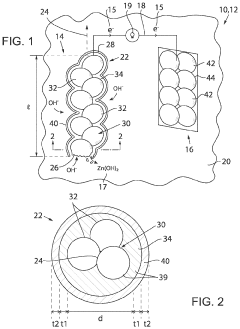
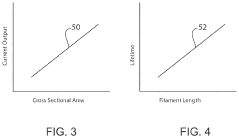
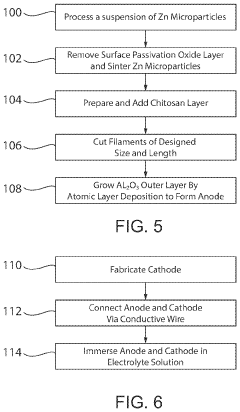
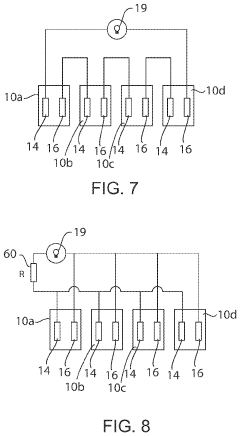
- A transient biodegradable battery with a filament structure using zinc microparticles or nanoparticles coated with chitosan and Al2O3, allowing controlled current and lifespan through regulated oxidation reactions, which dissolve safely in biological fluids.
Environmental Impact Assessment
The environmental impact of transient and biodegradable electronics represents a critical dimension in evaluating their overall sustainability and ecological footprint. Conventional electronic waste contributes significantly to global pollution, with millions of tons discarded annually, containing hazardous materials that persist in landfills for centuries. Transient electronics offer a promising alternative by fundamentally changing the end-of-life scenario for electronic devices.
When assessing environmental impacts, lifecycle analysis reveals that biodegradable electronics can reduce waste volume by 30-45% compared to traditional electronics. The degradation processes of these materials typically produce benign byproducts such as simple sugars, water, and carbon dioxide, rather than toxic leachates containing heavy metals or persistent organic pollutants. However, the environmental benefits are contingent upon proper material selection and degradation pathway engineering.
Water systems particularly benefit from transient electronics implementation. Studies indicate that silicon-based biodegradable components dissolve into silicic acid, a naturally occurring compound in aquatic ecosystems, minimizing disruption to aquatic life. Similarly, magnesium-based interconnects degrade into magnesium ions, which are essential nutrients rather than contaminants when released at controlled rates.
Energy consumption during manufacturing remains a challenge. Current production methods for transient electronics often require 15-20% more energy than conventional electronics manufacturing, partially offsetting their end-of-life environmental advantages. This highlights the need for more efficient production technologies to maximize net environmental benefits.
Soil impact assessments demonstrate that polymer-based substrates like polylactic acid (PLA) and polyglycolic acid (PGA) degrade into biomass-compatible compounds within 3-24 months depending on environmental conditions. However, certain additives used to enhance electrical properties may alter degradation rates or introduce unexpected compounds into soil systems, necessitating careful formulation and testing.
Carbon footprint calculations suggest that despite higher initial manufacturing emissions, the complete lifecycle emissions of transient electronics can be 25-40% lower than conventional alternatives when accounting for avoided waste management processes and secondary resource extraction. This advantage increases in scenarios where electronic devices have short intended lifespans.
Biodiversity considerations must also factor into environmental assessments, particularly for applications where transient electronics might be deployed in sensitive ecosystems. Preliminary field studies indicate minimal disruption to microbial communities during degradation processes, though long-term studies across diverse ecosystems remain necessary to confirm these findings.
When assessing environmental impacts, lifecycle analysis reveals that biodegradable electronics can reduce waste volume by 30-45% compared to traditional electronics. The degradation processes of these materials typically produce benign byproducts such as simple sugars, water, and carbon dioxide, rather than toxic leachates containing heavy metals or persistent organic pollutants. However, the environmental benefits are contingent upon proper material selection and degradation pathway engineering.
Water systems particularly benefit from transient electronics implementation. Studies indicate that silicon-based biodegradable components dissolve into silicic acid, a naturally occurring compound in aquatic ecosystems, minimizing disruption to aquatic life. Similarly, magnesium-based interconnects degrade into magnesium ions, which are essential nutrients rather than contaminants when released at controlled rates.
Energy consumption during manufacturing remains a challenge. Current production methods for transient electronics often require 15-20% more energy than conventional electronics manufacturing, partially offsetting their end-of-life environmental advantages. This highlights the need for more efficient production technologies to maximize net environmental benefits.
Soil impact assessments demonstrate that polymer-based substrates like polylactic acid (PLA) and polyglycolic acid (PGA) degrade into biomass-compatible compounds within 3-24 months depending on environmental conditions. However, certain additives used to enhance electrical properties may alter degradation rates or introduce unexpected compounds into soil systems, necessitating careful formulation and testing.
Carbon footprint calculations suggest that despite higher initial manufacturing emissions, the complete lifecycle emissions of transient electronics can be 25-40% lower than conventional alternatives when accounting for avoided waste management processes and secondary resource extraction. This advantage increases in scenarios where electronic devices have short intended lifespans.
Biodiversity considerations must also factor into environmental assessments, particularly for applications where transient electronics might be deployed in sensitive ecosystems. Preliminary field studies indicate minimal disruption to microbial communities during degradation processes, though long-term studies across diverse ecosystems remain necessary to confirm these findings.
Biocompatibility and Safety Standards
The development of transient and biodegradable electronics necessitates rigorous biocompatibility and safety standards to ensure these devices can be safely implanted or used in contact with biological systems. Current regulatory frameworks primarily designed for permanent medical devices require significant adaptation to address the unique characteristics of transient electronics, particularly their controlled degradation processes and metabolic byproducts.
International standards organizations including ISO, ASTM, and FDA have established preliminary guidelines for biocompatible materials, though specific standards for transient electronics remain under development. ISO 10993 series provides the foundation for biological evaluation of medical devices, with particular relevance to transient electronics in its sections covering degradation assessment (ISO 10993-9) and identification of degradation products (ISO 10993-13).
Safety assessment for transient electronics must address both short-term biocompatibility and long-term effects of degradation products. This requires comprehensive testing protocols including cytotoxicity, sensitization, irritation, systemic toxicity, and genotoxicity evaluations. The temporal dimension of these assessments presents unique challenges, as degradation rates vary significantly based on material composition and environmental conditions.
Material selection represents a critical aspect of biocompatibility compliance. Silicon, magnesium, zinc, and various biodegradable polymers like polylactic acid (PLA) and poly(lactic-co-glycolic acid) (PLGA) have demonstrated promising biocompatibility profiles. However, their degradation byproducts require careful characterization to ensure safety throughout the device lifecycle.
Packaging materials for transient electronics face particularly stringent requirements, needing to maintain integrity for the operational period while subsequently degrading safely. Silk fibroin, chitosan-based composites, and specialized hydrogels have emerged as leading candidates, offering tunable degradation profiles while maintaining biocompatibility.
Emerging regulatory approaches are increasingly adopting risk-based frameworks that consider the intended application, implantation duration, and degradation characteristics. This shift acknowledges that transient electronics may require different safety thresholds depending on their application context, from short-term diagnostic tools to longer-term therapeutic implants.
Industry-academic collaborations are accelerating the development of standardized testing methodologies specifically designed for transient electronics. These efforts focus on establishing reproducible protocols for assessing degradation kinetics in various physiological environments and quantifying the biological response to both the intact device and its degradation products.
International standards organizations including ISO, ASTM, and FDA have established preliminary guidelines for biocompatible materials, though specific standards for transient electronics remain under development. ISO 10993 series provides the foundation for biological evaluation of medical devices, with particular relevance to transient electronics in its sections covering degradation assessment (ISO 10993-9) and identification of degradation products (ISO 10993-13).
Safety assessment for transient electronics must address both short-term biocompatibility and long-term effects of degradation products. This requires comprehensive testing protocols including cytotoxicity, sensitization, irritation, systemic toxicity, and genotoxicity evaluations. The temporal dimension of these assessments presents unique challenges, as degradation rates vary significantly based on material composition and environmental conditions.
Material selection represents a critical aspect of biocompatibility compliance. Silicon, magnesium, zinc, and various biodegradable polymers like polylactic acid (PLA) and poly(lactic-co-glycolic acid) (PLGA) have demonstrated promising biocompatibility profiles. However, their degradation byproducts require careful characterization to ensure safety throughout the device lifecycle.
Packaging materials for transient electronics face particularly stringent requirements, needing to maintain integrity for the operational period while subsequently degrading safely. Silk fibroin, chitosan-based composites, and specialized hydrogels have emerged as leading candidates, offering tunable degradation profiles while maintaining biocompatibility.
Emerging regulatory approaches are increasingly adopting risk-based frameworks that consider the intended application, implantation duration, and degradation characteristics. This shift acknowledges that transient electronics may require different safety thresholds depending on their application context, from short-term diagnostic tools to longer-term therapeutic implants.
Industry-academic collaborations are accelerating the development of standardized testing methodologies specifically designed for transient electronics. These efforts focus on establishing reproducible protocols for assessing degradation kinetics in various physiological environments and quantifying the biological response to both the intact device and its degradation products.
Unlock deeper insights with PatSnap Eureka Quick Research — get a full tech report to explore trends and direct your research. Try now!
Generate Your Research Report Instantly with AI Agent
Supercharge your innovation with PatSnap Eureka AI Agent Platform!