Fixed Satellite Vs Digital Radio: Comprehensive Evaluation
MAR 18, 202610 MIN READ
Generate Your Research Report Instantly with AI Agent
Patsnap Eureka helps you evaluate technical feasibility & market potential.
Fixed Satellite vs Digital Radio Technology Background and Objectives
Fixed satellite and digital radio technologies represent two distinct paradigms in wireless communication systems, each with unique evolutionary trajectories spanning several decades. Fixed satellite communication emerged in the 1960s with the deployment of geostationary satellites, fundamentally transforming long-distance communication capabilities. This technology leverages satellites positioned in geostationary orbit to provide wide-area coverage, enabling communication across vast geographical distances without terrestrial infrastructure dependencies.
Digital radio technology evolved from analog broadcasting systems, gaining prominence in the 1990s with the development of standards such as DAB (Digital Audio Broadcasting) and later HD Radio. Unlike satellite systems, digital radio primarily operates through terrestrial transmission networks, offering enhanced audio quality and spectrum efficiency compared to traditional analog broadcasting methods.
The convergence of these technologies has created a complex landscape where both systems compete and complement each other in various application scenarios. Fixed satellite systems excel in providing coverage to remote areas, maritime communications, and emergency services where terrestrial infrastructure is limited or unavailable. Digital radio systems demonstrate superiority in urban environments with high population density, offering localized content delivery and reduced latency.
Current technological objectives focus on addressing fundamental challenges inherent to each system. For fixed satellite communications, primary goals include reducing latency through low Earth orbit constellation deployment, improving bandwidth efficiency, and minimizing ground equipment complexity. Digital radio development emphasizes expanding coverage areas, enhancing spectrum utilization, and integrating with emerging 5G networks.
The comparative evaluation framework encompasses multiple dimensions including coverage capabilities, signal quality, infrastructure requirements, operational costs, and scalability potential. Fixed satellite systems offer global reach but face challenges related to signal delay and weather interference. Digital radio provides superior audio fidelity and interactive capabilities while being constrained by geographical coverage limitations.
Emerging hybrid approaches seek to combine the strengths of both technologies, creating integrated communication ecosystems that leverage satellite backhaul for digital radio distribution networks. This convergence represents a significant technological objective, aiming to deliver seamless communication services across diverse geographical and operational contexts while optimizing resource utilization and service quality.
Digital radio technology evolved from analog broadcasting systems, gaining prominence in the 1990s with the development of standards such as DAB (Digital Audio Broadcasting) and later HD Radio. Unlike satellite systems, digital radio primarily operates through terrestrial transmission networks, offering enhanced audio quality and spectrum efficiency compared to traditional analog broadcasting methods.
The convergence of these technologies has created a complex landscape where both systems compete and complement each other in various application scenarios. Fixed satellite systems excel in providing coverage to remote areas, maritime communications, and emergency services where terrestrial infrastructure is limited or unavailable. Digital radio systems demonstrate superiority in urban environments with high population density, offering localized content delivery and reduced latency.
Current technological objectives focus on addressing fundamental challenges inherent to each system. For fixed satellite communications, primary goals include reducing latency through low Earth orbit constellation deployment, improving bandwidth efficiency, and minimizing ground equipment complexity. Digital radio development emphasizes expanding coverage areas, enhancing spectrum utilization, and integrating with emerging 5G networks.
The comparative evaluation framework encompasses multiple dimensions including coverage capabilities, signal quality, infrastructure requirements, operational costs, and scalability potential. Fixed satellite systems offer global reach but face challenges related to signal delay and weather interference. Digital radio provides superior audio fidelity and interactive capabilities while being constrained by geographical coverage limitations.
Emerging hybrid approaches seek to combine the strengths of both technologies, creating integrated communication ecosystems that leverage satellite backhaul for digital radio distribution networks. This convergence represents a significant technological objective, aiming to deliver seamless communication services across diverse geographical and operational contexts while optimizing resource utilization and service quality.
Market Demand Analysis for Satellite and Digital Radio Services
The global satellite communication services market demonstrates robust growth momentum, driven by increasing demand for reliable connectivity across remote and underserved regions. Fixed satellite services particularly excel in applications requiring consistent, high-capacity data transmission, including enterprise communications, government operations, and critical infrastructure support. The maritime and aviation sectors represent significant growth drivers, where terrestrial alternatives remain unavailable or unreliable.
Digital radio services maintain strong market positioning across multiple segments, with terrestrial digital audio broadcasting experiencing steady adoption in developed markets. The automotive industry continues to drive demand for digital radio integration, as manufacturers seek to provide enhanced in-vehicle entertainment experiences. Emergency services and public safety organizations represent another crucial market segment, requiring reliable digital communication systems for mission-critical operations.
Broadcasting and media distribution constitute a substantial market opportunity for both technologies. Fixed satellite services dominate long-distance content distribution and international broadcasting, while digital radio excels in local and regional content delivery. The shift toward high-definition audio content and multi-channel programming creates additional revenue streams for service providers across both platforms.
Enterprise connectivity requirements present divergent market dynamics. Fixed satellite solutions address the growing need for backup connectivity, disaster recovery communications, and primary connectivity in geographically challenging locations. Digital radio systems serve specialized enterprise applications including fleet management, industrial communications, and campus-wide coordination systems.
Consumer market trends reveal distinct usage patterns and preferences. Satellite services increasingly target residential broadband markets, particularly in rural areas where fiber infrastructure remains economically unfeasible. Digital radio maintains relevance through integration with smart devices and streaming platforms, creating hybrid consumption models that combine traditional broadcasting with on-demand content.
The Internet of Things expansion creates emerging market opportunities for both technologies. Satellite connectivity enables remote sensor networks and asset tracking applications across agriculture, energy, and logistics sectors. Digital radio protocols support local IoT implementations requiring reliable, low-latency communication within defined geographic boundaries.
Market capacity analysis indicates continued expansion potential, particularly in developing regions where communication infrastructure gaps persist. Government initiatives promoting digital inclusion and rural connectivity programs provide additional market stimulus, creating opportunities for both satellite and digital radio service providers to address underserved populations.
Digital radio services maintain strong market positioning across multiple segments, with terrestrial digital audio broadcasting experiencing steady adoption in developed markets. The automotive industry continues to drive demand for digital radio integration, as manufacturers seek to provide enhanced in-vehicle entertainment experiences. Emergency services and public safety organizations represent another crucial market segment, requiring reliable digital communication systems for mission-critical operations.
Broadcasting and media distribution constitute a substantial market opportunity for both technologies. Fixed satellite services dominate long-distance content distribution and international broadcasting, while digital radio excels in local and regional content delivery. The shift toward high-definition audio content and multi-channel programming creates additional revenue streams for service providers across both platforms.
Enterprise connectivity requirements present divergent market dynamics. Fixed satellite solutions address the growing need for backup connectivity, disaster recovery communications, and primary connectivity in geographically challenging locations. Digital radio systems serve specialized enterprise applications including fleet management, industrial communications, and campus-wide coordination systems.
Consumer market trends reveal distinct usage patterns and preferences. Satellite services increasingly target residential broadband markets, particularly in rural areas where fiber infrastructure remains economically unfeasible. Digital radio maintains relevance through integration with smart devices and streaming platforms, creating hybrid consumption models that combine traditional broadcasting with on-demand content.
The Internet of Things expansion creates emerging market opportunities for both technologies. Satellite connectivity enables remote sensor networks and asset tracking applications across agriculture, energy, and logistics sectors. Digital radio protocols support local IoT implementations requiring reliable, low-latency communication within defined geographic boundaries.
Market capacity analysis indicates continued expansion potential, particularly in developing regions where communication infrastructure gaps persist. Government initiatives promoting digital inclusion and rural connectivity programs provide additional market stimulus, creating opportunities for both satellite and digital radio service providers to address underserved populations.
Current Status and Technical Challenges in Radio Broadcasting
Radio broadcasting technology currently operates through two primary transmission paradigms: traditional terrestrial digital radio systems and fixed satellite broadcasting platforms. The terrestrial digital radio landscape is dominated by established standards including DAB (Digital Audio Broadcasting), DAB+, HD Radio, and DRM (Digital Radio Mondiale). These systems have achieved varying degrees of market penetration globally, with DAB+ showing strong adoption in European markets while HD Radio maintains dominance in North American territories.
Fixed satellite radio services, exemplified by platforms such as SiriusXM in North America and similar services in other regions, utilize geostationary satellites to deliver content directly to receivers. This approach enables continental-scale coverage with consistent signal quality, particularly advantageous for mobile applications and areas with challenging terrestrial coverage. Current satellite systems typically operate in S-band frequencies and employ advanced compression algorithms to maximize channel capacity.
The technical infrastructure supporting terrestrial digital radio faces significant modernization challenges. Legacy analog FM infrastructure requires substantial investment for digital transition, creating economic barriers for broadcasters. Signal propagation limitations inherent to terrestrial transmission result in coverage gaps, particularly in rural and mountainous regions. Additionally, the fragmented nature of digital radio standards across different markets creates interoperability issues and increases receiver complexity.
Satellite radio systems encounter distinct technical obstacles, primarily centered on signal reception reliability in urban environments and indoor locations. The line-of-sight requirement for satellite signals creates challenges in dense urban areas where buildings obstruct direct satellite visibility. Power consumption considerations for portable devices remain problematic, as satellite signal processing typically requires more energy than terrestrial reception.
Spectrum allocation represents a critical challenge affecting both transmission methods. Increasing demand for wireless spectrum from mobile telecommunications and other services creates pressure on radio broadcasting allocations. Interference mitigation becomes increasingly complex as spectrum becomes more congested, requiring sophisticated filtering and signal processing techniques.
Content delivery and quality standards present ongoing technical challenges across both platforms. Achieving optimal audio quality while maintaining efficient spectrum utilization requires continuous advancement in compression technologies. Real-time content synchronization, emergency alert system integration, and metadata delivery capabilities demand robust technical solutions that must function reliably across diverse reception environments and device types.
Fixed satellite radio services, exemplified by platforms such as SiriusXM in North America and similar services in other regions, utilize geostationary satellites to deliver content directly to receivers. This approach enables continental-scale coverage with consistent signal quality, particularly advantageous for mobile applications and areas with challenging terrestrial coverage. Current satellite systems typically operate in S-band frequencies and employ advanced compression algorithms to maximize channel capacity.
The technical infrastructure supporting terrestrial digital radio faces significant modernization challenges. Legacy analog FM infrastructure requires substantial investment for digital transition, creating economic barriers for broadcasters. Signal propagation limitations inherent to terrestrial transmission result in coverage gaps, particularly in rural and mountainous regions. Additionally, the fragmented nature of digital radio standards across different markets creates interoperability issues and increases receiver complexity.
Satellite radio systems encounter distinct technical obstacles, primarily centered on signal reception reliability in urban environments and indoor locations. The line-of-sight requirement for satellite signals creates challenges in dense urban areas where buildings obstruct direct satellite visibility. Power consumption considerations for portable devices remain problematic, as satellite signal processing typically requires more energy than terrestrial reception.
Spectrum allocation represents a critical challenge affecting both transmission methods. Increasing demand for wireless spectrum from mobile telecommunications and other services creates pressure on radio broadcasting allocations. Interference mitigation becomes increasingly complex as spectrum becomes more congested, requiring sophisticated filtering and signal processing techniques.
Content delivery and quality standards present ongoing technical challenges across both platforms. Achieving optimal audio quality while maintaining efficient spectrum utilization requires continuous advancement in compression technologies. Real-time content synchronization, emergency alert system integration, and metadata delivery capabilities demand robust technical solutions that must function reliably across diverse reception environments and device types.
Current Technical Solutions for Radio Signal Transmission
01 Satellite signal reception and processing systems
Technologies for receiving and processing satellite signals in fixed satellite systems, including signal acquisition, tracking, and demodulation techniques. These systems enable reliable communication between ground stations and satellites, incorporating advanced signal processing algorithms to handle various modulation schemes and frequency bands. The systems are designed to optimize signal quality and minimize interference in satellite communication networks.- Satellite signal reception and processing systems: Technologies for receiving and processing satellite signals in fixed satellite systems, including signal demodulation, decoding, and error correction mechanisms. These systems enable reliable reception of digital radio broadcasts from satellites, incorporating advanced signal processing techniques to handle various transmission formats and ensure high-quality audio delivery.
- Frequency allocation and channel management: Methods for managing frequency bands and channel allocation in satellite-based digital radio systems. These techniques optimize spectrum utilization by coordinating between fixed satellite services and terrestrial digital radio broadcasts, implementing dynamic frequency assignment and interference mitigation strategies to maximize system capacity and service quality.
- Antenna systems for satellite and digital radio reception: Antenna designs and configurations optimized for receiving both fixed satellite signals and digital radio broadcasts. These systems include multi-band antennas, beam-forming technologies, and tracking mechanisms that enable simultaneous or switchable reception of different signal sources while maintaining signal quality and minimizing interference.
- Integrated receiver and decoder architectures: Hardware and software architectures for integrated receivers capable of processing both satellite and digital radio signals. These designs incorporate multi-standard decoders, shared processing resources, and unified user interfaces that allow seamless switching between satellite and terrestrial digital radio services within a single device.
- Content delivery and broadcast management: Systems and methods for managing content delivery across fixed satellite and digital radio platforms. These technologies include broadcast scheduling, content encryption and conditional access, metadata transmission, and synchronization mechanisms that ensure coordinated delivery of audio content, program information, and supplementary data across multiple distribution channels.
02 Digital radio broadcasting and transmission methods
Methods and systems for digital radio broadcasting that enable high-quality audio transmission with improved spectral efficiency. These technologies include digital modulation techniques, error correction coding, and multiplexing schemes that allow multiple channels to be transmitted simultaneously. The systems support various digital radio standards and provide enhanced audio quality compared to traditional analog broadcasting.Expand Specific Solutions03 Integrated satellite and terrestrial radio systems
Hybrid systems that combine satellite and terrestrial radio broadcasting capabilities to provide seamless coverage and service continuity. These systems utilize both satellite links and ground-based repeaters to extend coverage areas and improve signal reliability in urban and rural environments. The integration allows for efficient spectrum utilization and enhanced user experience through automatic switching between satellite and terrestrial modes.Expand Specific Solutions04 Frequency allocation and interference management
Techniques for managing frequency spectrum allocation and mitigating interference between fixed satellite services and digital radio systems. These methods include dynamic frequency assignment, interference detection and cancellation algorithms, and coordination protocols between different service providers. The technologies ensure efficient spectrum utilization while maintaining service quality for both satellite and radio communications.Expand Specific Solutions05 Receiver architecture for multi-service reception
Advanced receiver designs capable of simultaneously or selectively receiving both fixed satellite services and digital radio broadcasts. These architectures incorporate multi-band tuners, software-defined radio components, and flexible baseband processing units that can adapt to different signal formats and standards. The receivers provide users with access to diverse content sources through a single device platform.Expand Specific Solutions
Major Players in Satellite and Digital Radio Industry
The fixed satellite versus digital radio technology landscape represents a mature market experiencing significant transformation driven by evolving consumer preferences and technological convergence. The industry has reached substantial scale with established players like Sirius XM dominating satellite radio services, while traditional electronics giants including Sony, Samsung, LG Electronics, and Sharp continue advancing digital radio capabilities. Technology maturity varies significantly across segments, with companies like SK Telecom and NTT leading in telecommunications infrastructure, while automotive integration specialists such as Aptiv Technologies and Faurecia Clarion Electronics drive in-vehicle entertainment evolution. Research institutions including Beihang University and Southeast University contribute to next-generation developments, while semiconductor providers like Novatek Microelectronics and ZTE enable underlying hardware innovations. The competitive landscape reflects a consolidating market where traditional boundaries between satellite and terrestrial digital radio are blurring, creating opportunities for integrated solutions and cross-platform services.
Sirius XM Radio LLC
Technical Solution: Sirius XM operates North America's largest satellite radio platform, utilizing a constellation of geostationary satellites to deliver over 150 channels of commercial-free music, sports, news, and entertainment content. Their technology employs advanced compression algorithms and error correction techniques to ensure high-quality audio transmission even in challenging environments. The system integrates seamlessly with automotive infotainment systems and offers both satellite and streaming capabilities through their mobile applications. Their infrastructure includes ground-based repeaters in urban areas to enhance signal coverage and reliability.
Strengths: Extensive satellite infrastructure, wide coverage area, commercial-free content, reliable signal quality. Weaknesses: Subscription-based model, limited to North American coverage, requires specialized receivers.
Sony Group Corp.
Technical Solution: Sony has pioneered digital radio receiver technology with focus on high-fidelity audio reproduction and advanced noise cancellation algorithms. Their digital radio solutions incorporate proprietary DSEE (Digital Sound Enhancement Engine) technology to upscale compressed audio signals and deliver superior sound quality. Sony's approach emphasizes portable and automotive applications, featuring low-power consumption designs and robust signal acquisition capabilities. The company's digital radio products support multiple broadcasting standards and include features like program-associated data display and automatic station scanning.
Strengths: Superior audio quality processing, low power consumption, strong brand recognition, innovative noise cancellation. Weaknesses: Premium pricing, limited infrastructure investment, focus primarily on consumer devices rather than broadcasting infrastructure.
Core Technologies in Satellite vs Digital Radio Systems
Computer based multi-channel radio system and user interface
PatentActiveUS20050020238A1
Innovation
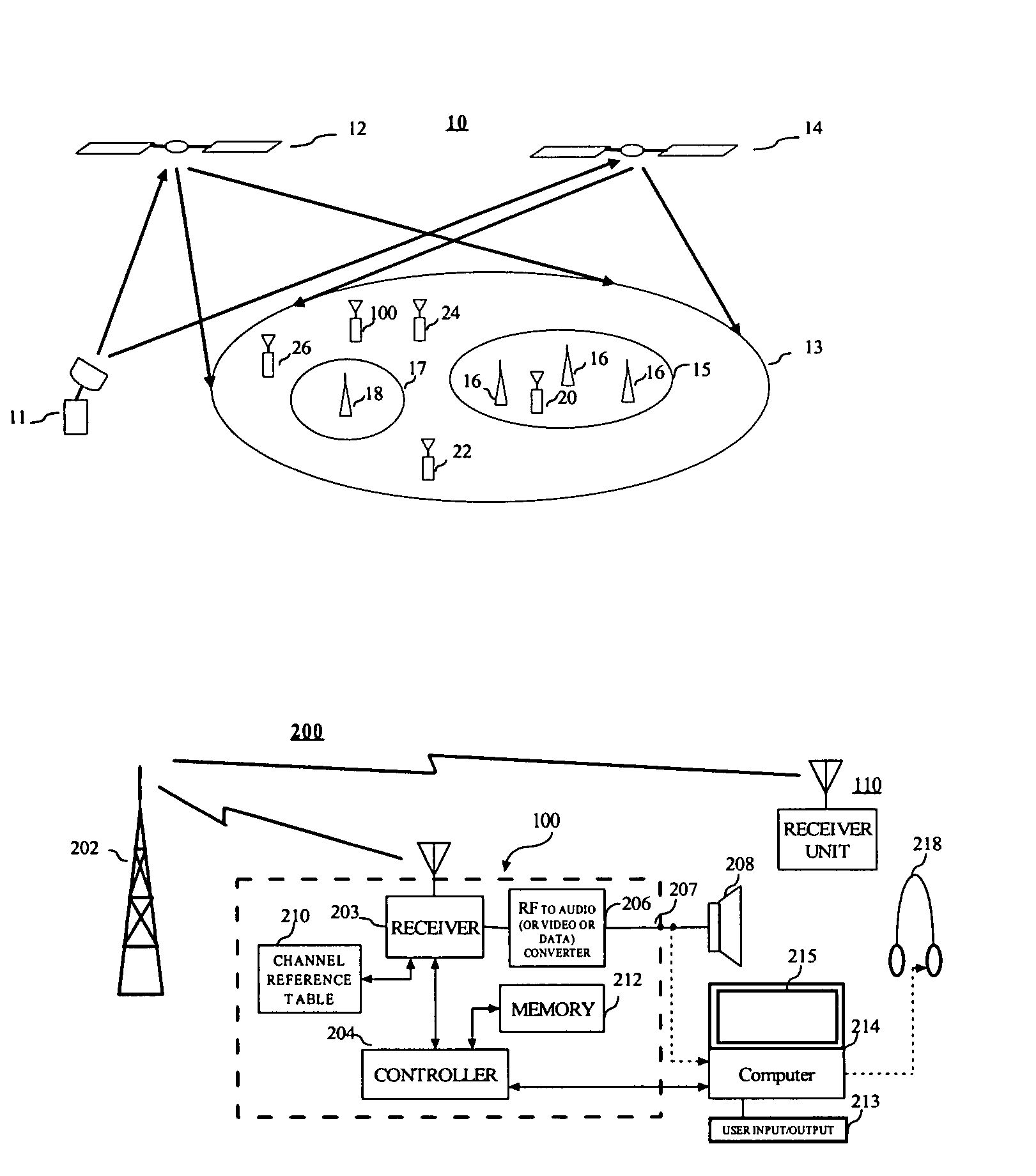
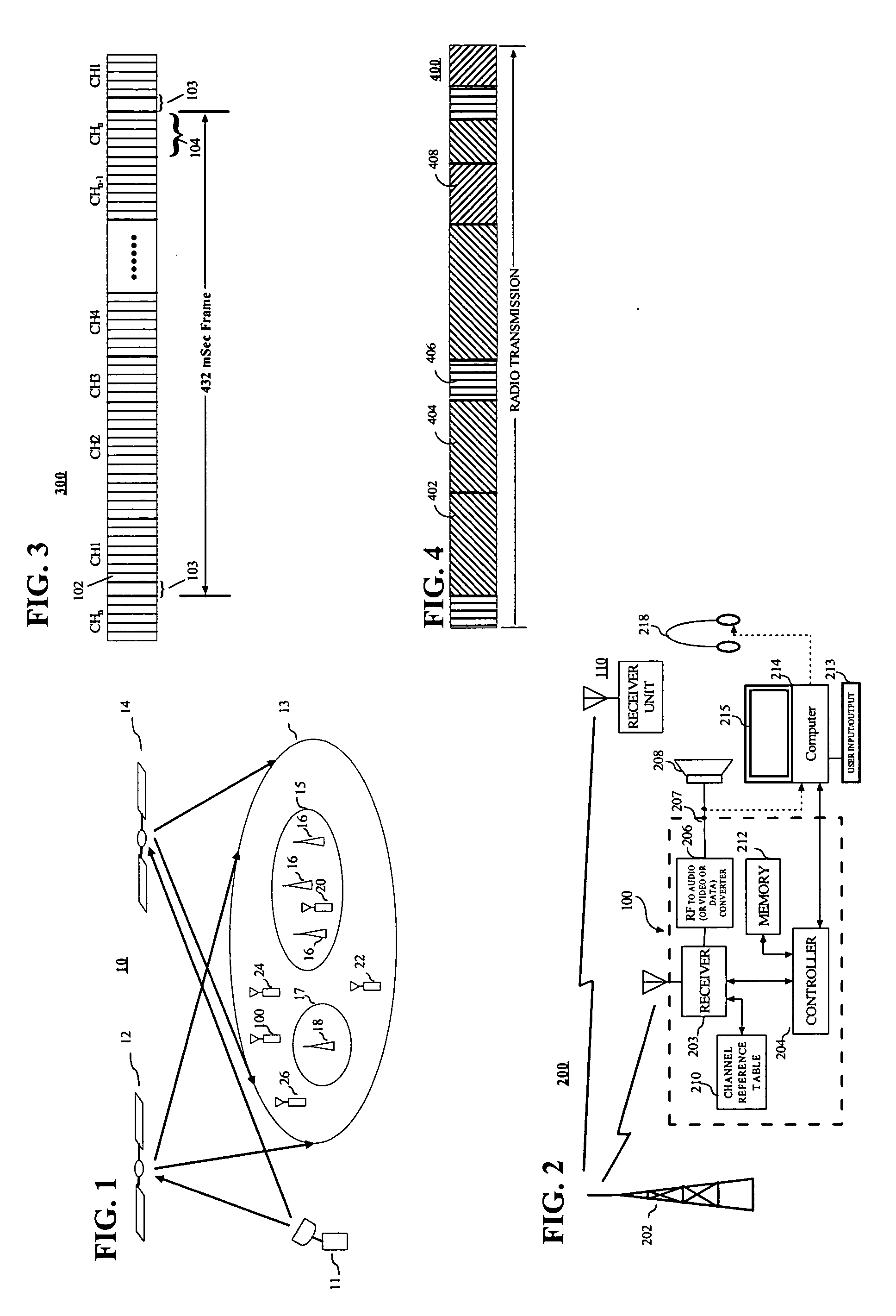
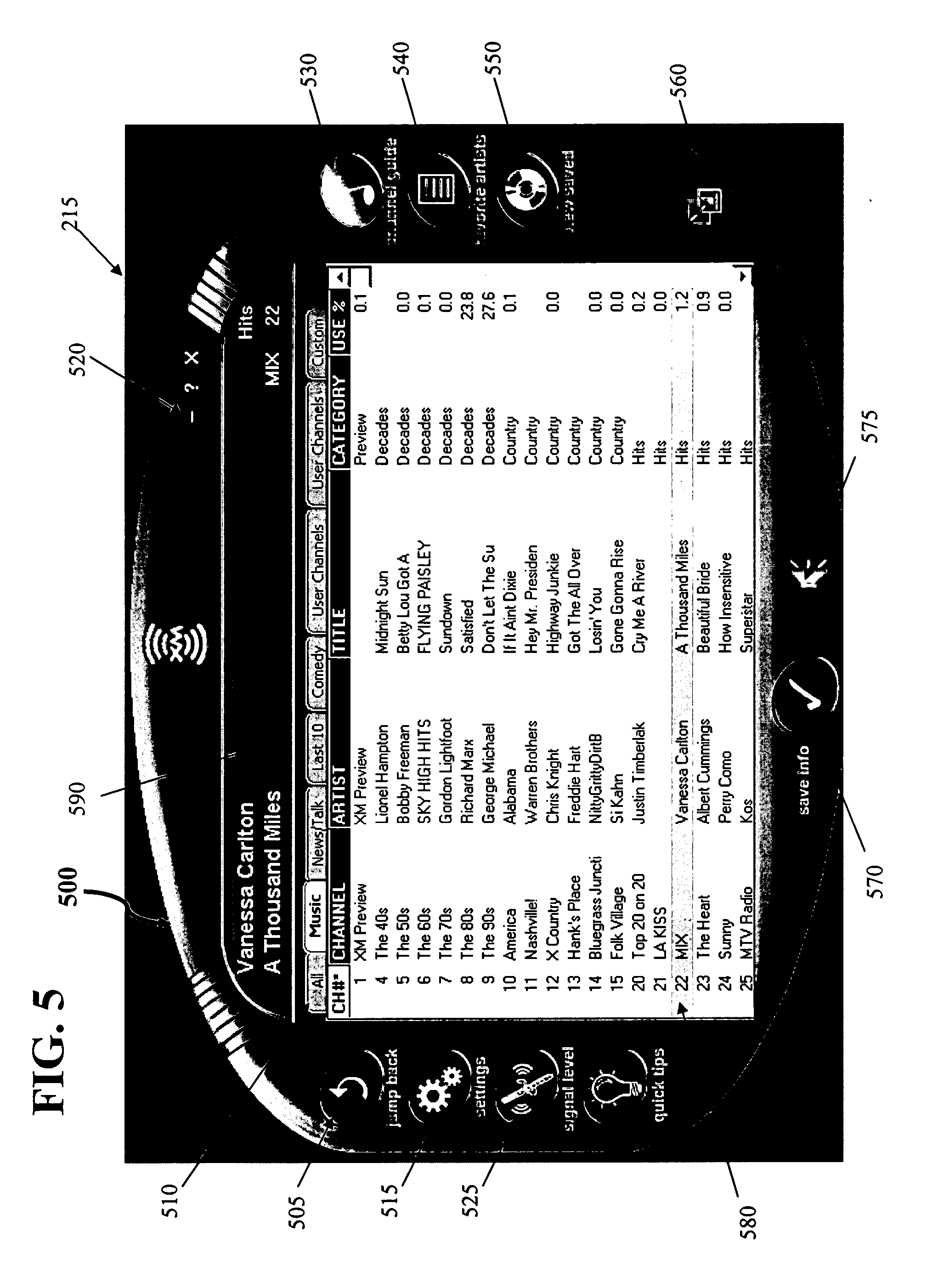
- A computer-based multi-channel radio system with a graphical user interface that minimizes system resource usage and allows users to select and display multiple channels without remote server access, featuring a radio receiver, channel decoder, and output port for streaming data or audio, enabling simultaneous updates and user-controlled channel selection.

Method for variable performance in communication systems
PatentActiveUS7512159B2
Innovation
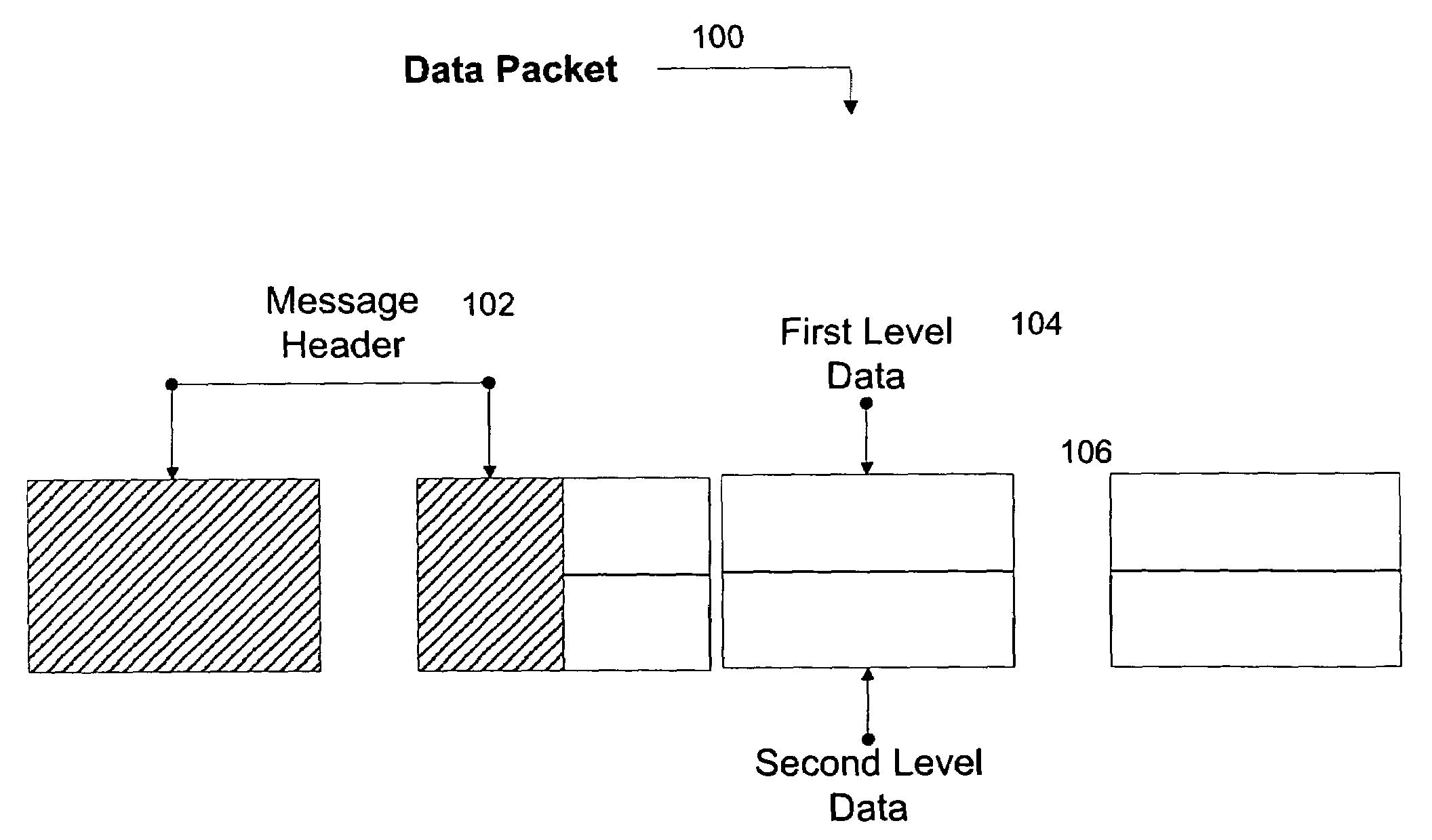
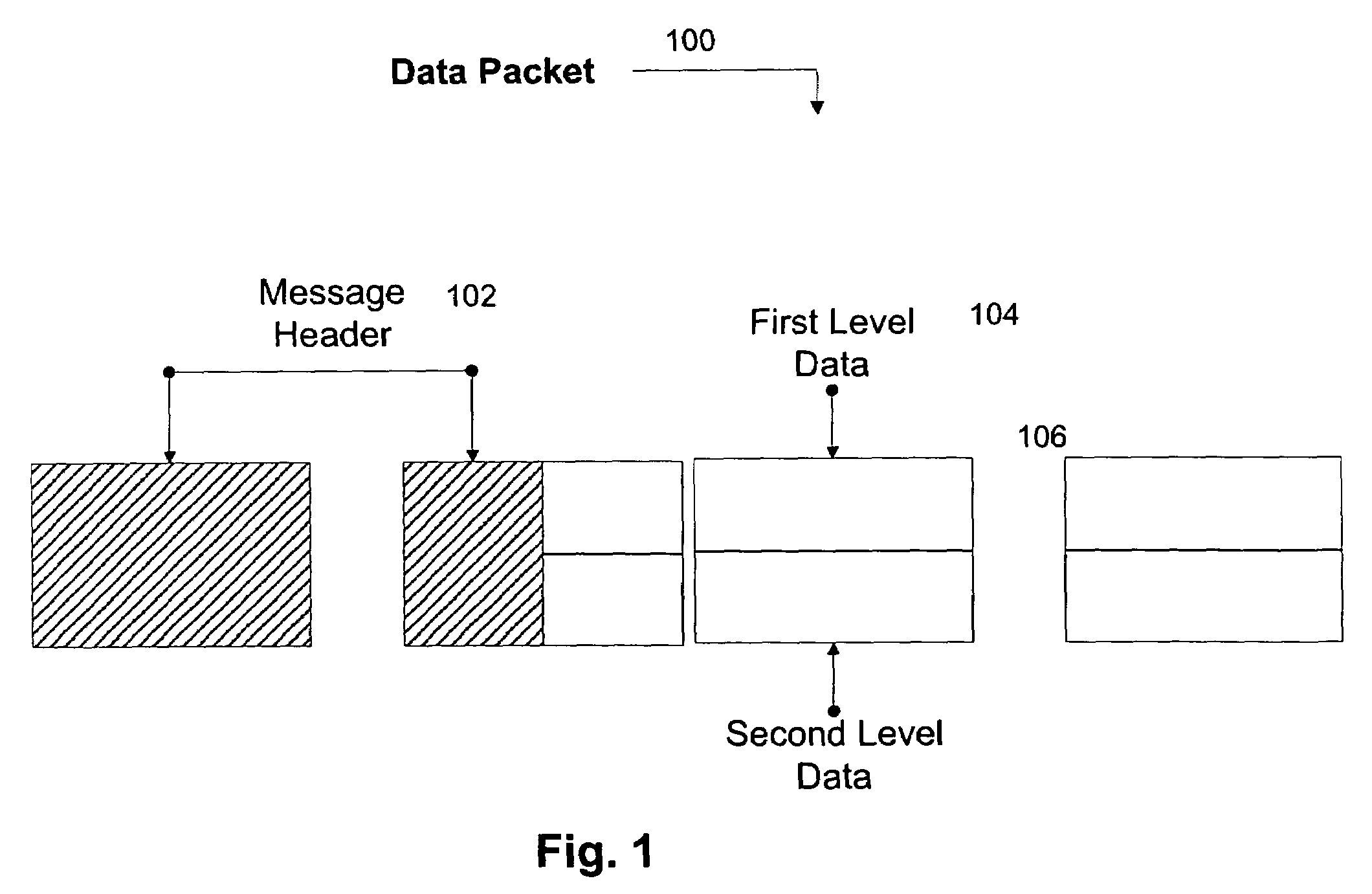
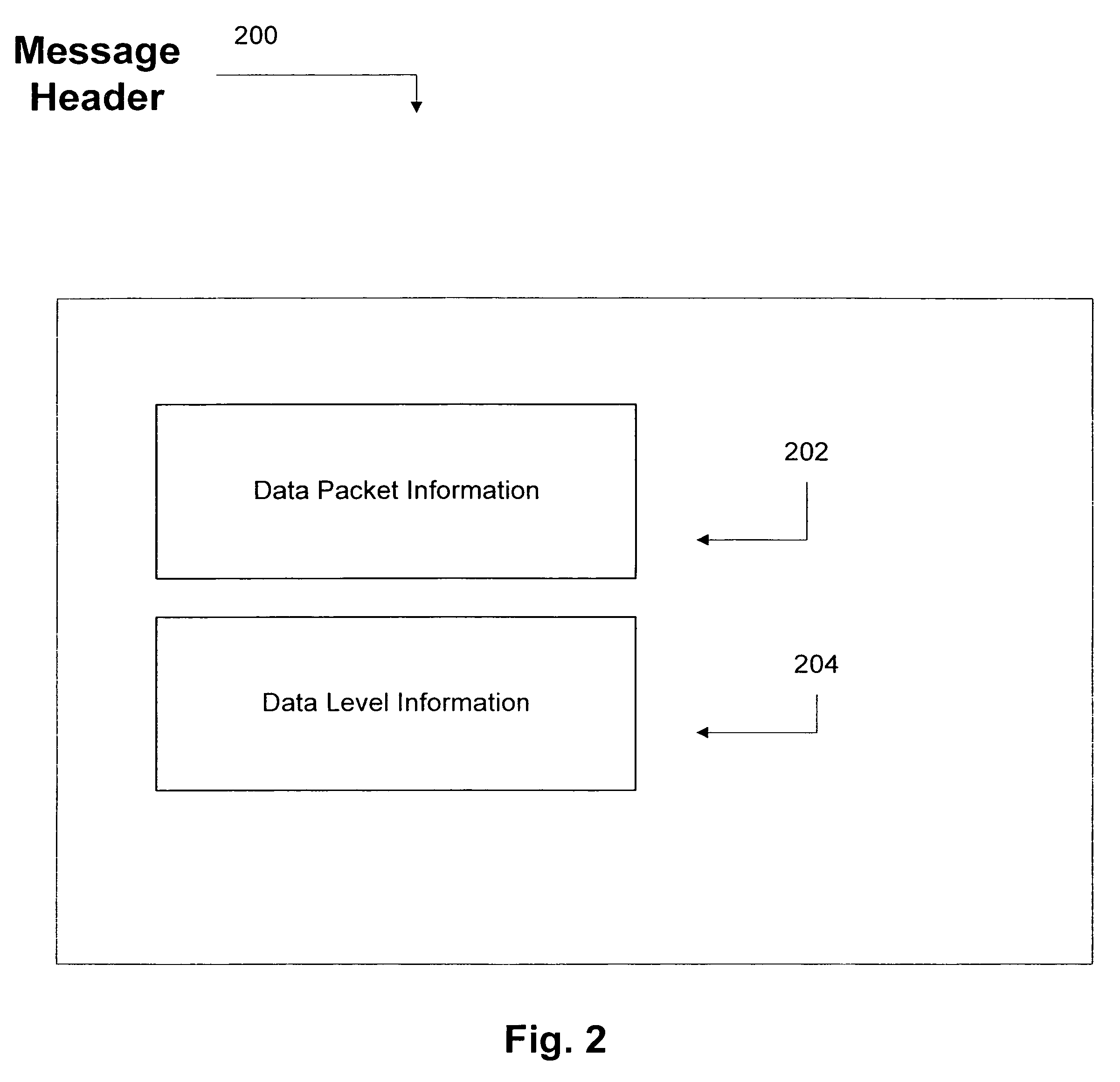
- The implementation of hierarchical modulation, where high priority data is embedded within or superimposed upon low priority data, with varying error protection levels and energy per symbol, allowing for differentiated performance levels within data packets, and the use of message headers to instruct demodulation and error correction.

Spectrum Allocation and Regulatory Framework
The spectrum allocation framework for fixed satellite services and digital radio systems operates under fundamentally different regulatory paradigms, reflecting their distinct operational characteristics and service requirements. Fixed satellite services typically utilize C-band (4-8 GHz), Ku-band (12-18 GHz), and Ka-band (26.5-40 GHz) frequencies, which are allocated through international coordination mechanisms under the International Telecommunication Union Radio Regulations. These allocations require extensive coordination procedures due to the global coverage footprint of satellite beams and potential interference with terrestrial services.
Digital radio systems, conversely, operate within more localized spectrum assignments that vary significantly across different regions and countries. In Europe, DAB+ services utilize VHF Band III (174-240 MHz) and L-band (1452-1492 MHz), while the United States has adopted HD Radio technology operating within existing FM and AM broadcast bands through in-band on-channel transmission methods. This fundamental difference in spectrum utilization creates distinct regulatory challenges and opportunities for each technology.
The regulatory framework governing these technologies involves multiple layers of oversight, from international treaty obligations to national licensing regimes. Satellite operators must navigate complex coordination procedures with multiple administrations, particularly for geostationary orbit positions where interference potential is highest. The ITU's Master International Frequency Register serves as the primary coordination mechanism, requiring advance publication and coordination of satellite network characteristics up to seven years before service commencement.
Digital radio regulation focuses primarily on domestic broadcasting policy objectives, including coverage obligations, content requirements, and technical standards compliance. National regulatory authorities maintain direct control over digital radio licensing, enabling more responsive policy implementation but potentially creating market fragmentation across different jurisdictions.
Interference management represents a critical regulatory challenge for both technologies, though manifesting differently in practice. Satellite services must address both space-to-Earth and Earth-to-space interference scenarios, requiring sophisticated coordination algorithms and real-time monitoring systems. Digital radio systems face primarily terrestrial interference issues, including co-channel and adjacent channel interference from other broadcast services, which can be managed through more conventional frequency planning methodologies.
The evolving regulatory landscape increasingly emphasizes spectrum efficiency and flexible use policies, potentially favoring technologies that demonstrate superior spectral utilization characteristics. This trend may influence future allocation decisions between fixed satellite and digital radio applications, particularly in congested frequency bands where competing demands continue to intensify.
Digital radio systems, conversely, operate within more localized spectrum assignments that vary significantly across different regions and countries. In Europe, DAB+ services utilize VHF Band III (174-240 MHz) and L-band (1452-1492 MHz), while the United States has adopted HD Radio technology operating within existing FM and AM broadcast bands through in-band on-channel transmission methods. This fundamental difference in spectrum utilization creates distinct regulatory challenges and opportunities for each technology.
The regulatory framework governing these technologies involves multiple layers of oversight, from international treaty obligations to national licensing regimes. Satellite operators must navigate complex coordination procedures with multiple administrations, particularly for geostationary orbit positions where interference potential is highest. The ITU's Master International Frequency Register serves as the primary coordination mechanism, requiring advance publication and coordination of satellite network characteristics up to seven years before service commencement.
Digital radio regulation focuses primarily on domestic broadcasting policy objectives, including coverage obligations, content requirements, and technical standards compliance. National regulatory authorities maintain direct control over digital radio licensing, enabling more responsive policy implementation but potentially creating market fragmentation across different jurisdictions.
Interference management represents a critical regulatory challenge for both technologies, though manifesting differently in practice. Satellite services must address both space-to-Earth and Earth-to-space interference scenarios, requiring sophisticated coordination algorithms and real-time monitoring systems. Digital radio systems face primarily terrestrial interference issues, including co-channel and adjacent channel interference from other broadcast services, which can be managed through more conventional frequency planning methodologies.
The evolving regulatory landscape increasingly emphasizes spectrum efficiency and flexible use policies, potentially favoring technologies that demonstrate superior spectral utilization characteristics. This trend may influence future allocation decisions between fixed satellite and digital radio applications, particularly in congested frequency bands where competing demands continue to intensify.
Infrastructure Investment and Deployment Strategies
Fixed satellite and digital radio systems require fundamentally different infrastructure investment approaches, each presenting distinct deployment strategies with varying capital requirements and implementation timelines. The infrastructure investment landscape for these technologies reflects their inherent architectural differences and operational characteristics.
Fixed satellite systems demand substantial upfront capital investments, primarily concentrated in space segment development and ground infrastructure establishment. Satellite manufacturing, launch services, and ground station construction typically require investments ranging from hundreds of millions to several billion dollars per system. The deployment strategy follows a centralized approach, where a single satellite or constellation can provide coverage across vast geographical areas, making it particularly cost-effective for serving remote or sparsely populated regions.
Digital radio infrastructure investment follows a distributed model, requiring extensive terrestrial network deployment with numerous transmission sites, towers, and broadcasting equipment. The capital expenditure is typically lower per site but requires significant cumulative investment across multiple locations to achieve comprehensive coverage. This approach enables gradual market expansion and allows for incremental capacity increases based on demand patterns.
The deployment timeline considerations differ significantly between these technologies. Satellite systems involve longer development cycles, often spanning 3-7 years from conception to operational deployment, but can achieve immediate wide-area coverage upon activation. Digital radio networks can be deployed more rapidly on a site-by-site basis, allowing for faster market entry and revenue generation in targeted areas.
Risk distribution patterns vary considerably between the two approaches. Satellite infrastructure concentrates risk in fewer, higher-value assets, making system redundancy and insurance critical considerations. Digital radio networks distribute risk across numerous smaller installations, providing inherent redundancy but requiring more complex network management and maintenance strategies.
Operational expenditure profiles also diverge substantially. Satellite systems typically incur lower ongoing operational costs per unit of coverage area, with primary expenses related to satellite control, ground station maintenance, and eventual replacement cycles. Digital radio networks require continuous maintenance across distributed infrastructure, including site leasing, equipment servicing, and network optimization activities.
The scalability characteristics influence long-term investment strategies. Satellite systems offer excellent scalability for geographic expansion but face constraints in capacity increases without additional space assets. Digital radio networks provide flexible capacity scaling through additional transmitter deployment but require proportional infrastructure investment for geographic expansion.
Fixed satellite systems demand substantial upfront capital investments, primarily concentrated in space segment development and ground infrastructure establishment. Satellite manufacturing, launch services, and ground station construction typically require investments ranging from hundreds of millions to several billion dollars per system. The deployment strategy follows a centralized approach, where a single satellite or constellation can provide coverage across vast geographical areas, making it particularly cost-effective for serving remote or sparsely populated regions.
Digital radio infrastructure investment follows a distributed model, requiring extensive terrestrial network deployment with numerous transmission sites, towers, and broadcasting equipment. The capital expenditure is typically lower per site but requires significant cumulative investment across multiple locations to achieve comprehensive coverage. This approach enables gradual market expansion and allows for incremental capacity increases based on demand patterns.
The deployment timeline considerations differ significantly between these technologies. Satellite systems involve longer development cycles, often spanning 3-7 years from conception to operational deployment, but can achieve immediate wide-area coverage upon activation. Digital radio networks can be deployed more rapidly on a site-by-site basis, allowing for faster market entry and revenue generation in targeted areas.
Risk distribution patterns vary considerably between the two approaches. Satellite infrastructure concentrates risk in fewer, higher-value assets, making system redundancy and insurance critical considerations. Digital radio networks distribute risk across numerous smaller installations, providing inherent redundancy but requiring more complex network management and maintenance strategies.
Operational expenditure profiles also diverge substantially. Satellite systems typically incur lower ongoing operational costs per unit of coverage area, with primary expenses related to satellite control, ground station maintenance, and eventual replacement cycles. Digital radio networks require continuous maintenance across distributed infrastructure, including site leasing, equipment servicing, and network optimization activities.
The scalability characteristics influence long-term investment strategies. Satellite systems offer excellent scalability for geographic expansion but face constraints in capacity increases without additional space assets. Digital radio networks provide flexible capacity scaling through additional transmitter deployment but require proportional infrastructure investment for geographic expansion.
Unlock deeper insights with Patsnap Eureka Quick Research — get a full tech report to explore trends and direct your research. Try now!
Generate Your Research Report Instantly with AI Agent
Supercharge your innovation with Patsnap Eureka AI Agent Platform!