Frequency-Locked Loop in Industrial Controls: Boosting Longevity and Reliability
MAR 18, 20269 MIN READ
Generate Your Research Report Instantly with AI Agent
Patsnap Eureka helps you evaluate technical feasibility & market potential.
FLL Technology Background and Industrial Control Objectives
Frequency-Locked Loop (FLL) technology represents a critical advancement in synchronization systems, particularly within industrial control environments where precision timing and signal stability are paramount. Unlike traditional Phase-Locked Loops (PLLs), FLLs demonstrate superior performance in maintaining frequency coherence under challenging industrial conditions, including electromagnetic interference, temperature fluctuations, and mechanical vibrations that commonly plague manufacturing facilities.
The evolution of FLL technology stems from the inherent limitations of conventional synchronization methods in industrial applications. Early industrial control systems relied heavily on crystal oscillators and basic PLL circuits, which often suffered from phase noise accumulation and lock-time delays during transient conditions. The development of FLL architectures addressed these shortcomings by focusing on frequency tracking rather than phase alignment, resulting in faster acquisition times and enhanced stability margins.
Industrial control systems have increasingly demanded robust synchronization solutions capable of maintaining operational integrity across extended periods. Modern manufacturing processes, particularly in semiconductor fabrication, automotive assembly, and precision machining, require timing accuracies measured in parts per billion while operating continuously for years without maintenance interventions. These stringent requirements have driven the adoption of FLL-based solutions as foundational elements in distributed control architectures.
The primary objective of implementing FLL technology in industrial controls centers on achieving unprecedented longevity and reliability metrics. Traditional synchronization failures often cascade through interconnected systems, causing production line shutdowns that can cost manufacturers millions of dollars per hour. FLL systems address this vulnerability by providing inherent redundancy and graceful degradation characteristics that maintain partial functionality even under component stress conditions.
Contemporary FLL implementations target specific industrial challenges including multi-node synchronization across factory networks, real-time coordination of robotic systems, and precise timing control for high-speed manufacturing processes. The technology's ability to maintain frequency lock while rejecting common-mode disturbances makes it particularly valuable in environments where electromagnetic compatibility and signal integrity are critical concerns.
The strategic importance of FLL technology extends beyond immediate operational benefits to encompass long-term asset management and predictive maintenance capabilities. By providing stable reference signals with measurable drift characteristics, FLL systems enable advanced monitoring algorithms that can predict component degradation before catastrophic failures occur, thereby supporting proactive maintenance strategies that maximize equipment uptime and extend operational lifecycles.
The evolution of FLL technology stems from the inherent limitations of conventional synchronization methods in industrial applications. Early industrial control systems relied heavily on crystal oscillators and basic PLL circuits, which often suffered from phase noise accumulation and lock-time delays during transient conditions. The development of FLL architectures addressed these shortcomings by focusing on frequency tracking rather than phase alignment, resulting in faster acquisition times and enhanced stability margins.
Industrial control systems have increasingly demanded robust synchronization solutions capable of maintaining operational integrity across extended periods. Modern manufacturing processes, particularly in semiconductor fabrication, automotive assembly, and precision machining, require timing accuracies measured in parts per billion while operating continuously for years without maintenance interventions. These stringent requirements have driven the adoption of FLL-based solutions as foundational elements in distributed control architectures.
The primary objective of implementing FLL technology in industrial controls centers on achieving unprecedented longevity and reliability metrics. Traditional synchronization failures often cascade through interconnected systems, causing production line shutdowns that can cost manufacturers millions of dollars per hour. FLL systems address this vulnerability by providing inherent redundancy and graceful degradation characteristics that maintain partial functionality even under component stress conditions.
Contemporary FLL implementations target specific industrial challenges including multi-node synchronization across factory networks, real-time coordination of robotic systems, and precise timing control for high-speed manufacturing processes. The technology's ability to maintain frequency lock while rejecting common-mode disturbances makes it particularly valuable in environments where electromagnetic compatibility and signal integrity are critical concerns.
The strategic importance of FLL technology extends beyond immediate operational benefits to encompass long-term asset management and predictive maintenance capabilities. By providing stable reference signals with measurable drift characteristics, FLL systems enable advanced monitoring algorithms that can predict component degradation before catastrophic failures occur, thereby supporting proactive maintenance strategies that maximize equipment uptime and extend operational lifecycles.
Market Demand for Enhanced Industrial Control Reliability
The industrial automation sector is experiencing unprecedented demand for enhanced control system reliability, driven by the critical need for continuous operations across manufacturing, energy, and process industries. Modern industrial facilities cannot afford unplanned downtime, as production interruptions can result in substantial financial losses, safety hazards, and supply chain disruptions. This imperative has created a substantial market opportunity for advanced control technologies that can deliver superior reliability and extended operational lifespans.
Manufacturing industries, particularly automotive, semiconductor, and pharmaceutical sectors, represent the largest market segments demanding enhanced control reliability. These industries operate under stringent quality requirements and tight production schedules, making system reliability a paramount concern. The increasing complexity of automated production lines has amplified the need for robust control systems that can maintain precise synchronization and timing accuracy over extended periods.
Energy sector applications, including power generation, oil and gas processing, and renewable energy systems, constitute another significant market driver. These applications require control systems capable of operating reliably in harsh environmental conditions while maintaining critical safety and operational parameters. The growing emphasis on grid stability and renewable energy integration has further intensified the demand for highly reliable frequency control solutions.
The market demand is particularly strong for technologies that can address common reliability challenges in industrial controls, such as frequency drift, temperature-induced variations, and aging-related performance degradation. Traditional control systems often suffer from these issues, leading to maintenance requirements, calibration needs, and eventual system replacements that increase total cost of ownership.
Emerging trends in Industry 4.0 and smart manufacturing are creating additional market pressure for enhanced reliability. As industrial systems become more interconnected and data-driven, the reliability requirements extend beyond individual components to encompass entire networked control architectures. This evolution demands control solutions that can maintain consistent performance while supporting advanced connectivity and diagnostic capabilities.
The market opportunity extends globally, with particular growth potential in developing industrial economies where new manufacturing facilities are being established with modern reliability standards. Additionally, the retrofit market in established industrial regions presents substantial opportunities as aging control systems require upgrades to meet contemporary reliability expectations and regulatory requirements.
Manufacturing industries, particularly automotive, semiconductor, and pharmaceutical sectors, represent the largest market segments demanding enhanced control reliability. These industries operate under stringent quality requirements and tight production schedules, making system reliability a paramount concern. The increasing complexity of automated production lines has amplified the need for robust control systems that can maintain precise synchronization and timing accuracy over extended periods.
Energy sector applications, including power generation, oil and gas processing, and renewable energy systems, constitute another significant market driver. These applications require control systems capable of operating reliably in harsh environmental conditions while maintaining critical safety and operational parameters. The growing emphasis on grid stability and renewable energy integration has further intensified the demand for highly reliable frequency control solutions.
The market demand is particularly strong for technologies that can address common reliability challenges in industrial controls, such as frequency drift, temperature-induced variations, and aging-related performance degradation. Traditional control systems often suffer from these issues, leading to maintenance requirements, calibration needs, and eventual system replacements that increase total cost of ownership.
Emerging trends in Industry 4.0 and smart manufacturing are creating additional market pressure for enhanced reliability. As industrial systems become more interconnected and data-driven, the reliability requirements extend beyond individual components to encompass entire networked control architectures. This evolution demands control solutions that can maintain consistent performance while supporting advanced connectivity and diagnostic capabilities.
The market opportunity extends globally, with particular growth potential in developing industrial economies where new manufacturing facilities are being established with modern reliability standards. Additionally, the retrofit market in established industrial regions presents substantial opportunities as aging control systems require upgrades to meet contemporary reliability expectations and regulatory requirements.
Current FLL Implementation Challenges in Industrial Systems
Industrial implementation of Frequency-Locked Loops faces significant technical barriers that limit their widespread adoption and optimal performance. The primary challenge stems from the inherent complexity of maintaining phase coherence in harsh industrial environments where electromagnetic interference, temperature fluctuations, and mechanical vibrations can severely disrupt signal integrity. Traditional FLL architectures struggle to maintain lock stability when subjected to rapid frequency variations common in industrial motor drives and power conversion systems.
Signal processing latency represents another critical bottleneck in current FLL implementations. Conventional digital signal processors often introduce delays that compromise the loop's ability to track fast-changing reference frequencies, particularly in applications requiring sub-millisecond response times. This latency issue becomes more pronounced when implementing advanced filtering algorithms necessary for noise rejection, creating a fundamental trade-off between tracking speed and signal quality.
Power consumption constraints pose substantial challenges for battery-operated industrial sensors and remote monitoring systems. Existing FLL designs typically require continuous high-frequency sampling and complex mathematical operations, resulting in power consumption levels that exceed the energy budgets of many industrial IoT devices. The computational overhead associated with adaptive filtering and phase detection algorithms further exacerbates this power efficiency problem.
Temperature stability remains a persistent issue across different FLL topologies. Industrial environments often expose control systems to temperature ranges exceeding standard operating conditions, causing frequency drift in reference oscillators and phase detector circuits. Current compensation techniques frequently prove inadequate for maintaining lock accuracy across the full industrial temperature spectrum, leading to performance degradation and potential system failures.
Integration complexity with existing industrial control architectures presents additional implementation hurdles. Many legacy systems lack the necessary interface protocols and computational resources required for modern FLL implementations. The absence of standardized communication interfaces between FLL modules and industrial controllers creates compatibility issues that increase deployment costs and system complexity.
Calibration and maintenance requirements for current FLL systems demand specialized expertise that may not be readily available in typical industrial settings. The need for periodic recalibration to maintain optimal performance adds operational overhead and increases the total cost of ownership, making FLL adoption less attractive for cost-sensitive industrial applications.
Signal processing latency represents another critical bottleneck in current FLL implementations. Conventional digital signal processors often introduce delays that compromise the loop's ability to track fast-changing reference frequencies, particularly in applications requiring sub-millisecond response times. This latency issue becomes more pronounced when implementing advanced filtering algorithms necessary for noise rejection, creating a fundamental trade-off between tracking speed and signal quality.
Power consumption constraints pose substantial challenges for battery-operated industrial sensors and remote monitoring systems. Existing FLL designs typically require continuous high-frequency sampling and complex mathematical operations, resulting in power consumption levels that exceed the energy budgets of many industrial IoT devices. The computational overhead associated with adaptive filtering and phase detection algorithms further exacerbates this power efficiency problem.
Temperature stability remains a persistent issue across different FLL topologies. Industrial environments often expose control systems to temperature ranges exceeding standard operating conditions, causing frequency drift in reference oscillators and phase detector circuits. Current compensation techniques frequently prove inadequate for maintaining lock accuracy across the full industrial temperature spectrum, leading to performance degradation and potential system failures.
Integration complexity with existing industrial control architectures presents additional implementation hurdles. Many legacy systems lack the necessary interface protocols and computational resources required for modern FLL implementations. The absence of standardized communication interfaces between FLL modules and industrial controllers creates compatibility issues that increase deployment costs and system complexity.
Calibration and maintenance requirements for current FLL systems demand specialized expertise that may not be readily available in typical industrial settings. The need for periodic recalibration to maintain optimal performance adds operational overhead and increases the total cost of ownership, making FLL adoption less attractive for cost-sensitive industrial applications.
Current FLL Solutions for Industrial Applications
01 Phase-locked loop circuit design with improved stability
Frequency-locked loop circuits can be designed with enhanced stability mechanisms to improve long-term reliability. This includes implementing feedback control systems, voltage-controlled oscillators with reduced phase noise, and compensation circuits that maintain lock conditions under varying environmental conditions. Advanced circuit topologies help minimize jitter and drift over extended operational periods, ensuring consistent performance throughout the device lifetime.- Phase-locked loop circuit design with improved stability: Frequency-locked loop circuits can be designed with enhanced stability mechanisms to improve long-term reliability. This includes implementing feedback control systems, voltage-controlled oscillators with reduced phase noise, and compensation circuits that maintain lock conditions under varying environmental conditions. Advanced circuit topologies help minimize jitter and drift over extended operational periods, ensuring consistent performance throughout the device lifetime.
- Temperature compensation and thermal management: Temperature variations significantly impact frequency-locked loop performance and longevity. Implementing temperature compensation techniques, thermal sensors, and adaptive control mechanisms helps maintain frequency stability across wide temperature ranges. These approaches include temperature-dependent bias adjustments, thermally stable reference oscillators, and circuit designs that minimize temperature coefficients, thereby extending operational reliability in harsh environments.
- Low-power consumption design for extended lifetime: Reducing power consumption in frequency-locked loop circuits directly contributes to improved longevity and reliability by minimizing thermal stress and component degradation. Design strategies include implementing sleep modes, dynamic power management, optimized bias currents, and efficient charge pump circuits. These low-power techniques reduce heat generation and electrical stress on components, significantly extending the operational lifetime of the system.
- Fault detection and self-correction mechanisms: Incorporating fault detection circuits and self-correction capabilities enhances frequency-locked loop reliability by identifying and compensating for performance degradation. These systems monitor lock status, detect frequency drift, and implement automatic correction algorithms. Built-in self-test features and redundancy schemes enable early detection of potential failures, allowing for preventive measures that extend system longevity and maintain operational integrity.
- Component aging compensation and calibration: Long-term reliability of frequency-locked loops requires addressing component aging effects through periodic calibration and adaptive compensation. Techniques include digital calibration algorithms, aging prediction models, and adaptive tuning mechanisms that adjust circuit parameters over time. These methods compensate for gradual changes in component characteristics due to aging, maintaining frequency accuracy and loop performance throughout the device operational lifetime.
02 Temperature compensation and thermal management
Temperature variations significantly impact frequency-locked loop performance and longevity. Implementing temperature compensation techniques, thermal sensors, and adaptive control mechanisms helps maintain frequency stability across wide temperature ranges. These approaches include temperature-dependent bias adjustments, thermal coefficient correction, and heat dissipation structures that prevent performance degradation due to thermal stress over time.Expand Specific Solutions03 Low-power consumption design for extended operational life
Reducing power consumption in frequency-locked loop circuits directly contributes to improved reliability and longevity by minimizing thermal stress and component degradation. Design strategies include implementing sleep modes, dynamic power management, optimized bias currents, and efficient charge pump circuits. These low-power techniques reduce heat generation and electrical stress on components, extending the operational lifetime of the system.Expand Specific Solutions04 Noise reduction and signal integrity enhancement
Maintaining signal integrity and reducing noise sources are critical for frequency-locked loop longevity. Techniques include implementing filtering circuits, shielding structures, differential signaling, and noise-immune architectures. These methods prevent cumulative degradation effects from electromagnetic interference and internal noise sources, ensuring stable operation over extended periods and improving overall system reliability.Expand Specific Solutions05 Self-calibration and adaptive correction mechanisms
Incorporating self-calibration and adaptive correction capabilities enables frequency-locked loops to compensate for component aging and environmental variations automatically. These systems include built-in self-test circuits, automatic tuning algorithms, and digital correction techniques that adjust operating parameters dynamically. Such mechanisms maintain optimal performance throughout the device lifetime by continuously compensating for drift and degradation effects.Expand Specific Solutions
Key Players in Industrial Control and FLL Technology
The frequency-locked loop technology in industrial controls represents a mature yet evolving market segment focused on enhancing system longevity and reliability. The industry is in a consolidation phase where established semiconductor giants like Intel and SK Hynix dominate foundational technologies, while specialized players such as Analog Devices lead in precision control solutions. Chinese companies including Hangzhou Silan Microelectronics, Shanghai Huahong Grace Semiconductor, and IPGoal Microelectronics are rapidly advancing their capabilities, supported by research institutions like Southeast University and Huazhong University of Science & Technology. The technology demonstrates high maturity in traditional applications but shows emerging potential in IoT and 5G implementations, as evidenced by companies like Xinyi Information Technology developing next-generation communication solutions. Market growth is driven by increasing industrial automation demands and reliability requirements across manufacturing sectors.
Institute of Microelectronics of Chinese Academy of Sciences
Technical Solution: The Institute develops innovative frequency-locked loop architectures focusing on radiation-hardened designs for extreme industrial environments. Their research encompasses novel FLL topologies utilizing wide-bandgap semiconductors and advanced compensation techniques for temperature and aging effects. The institute's FLL implementations feature self-calibrating frequency references and adaptive control algorithms that maintain performance stability over extended operational periods. Their designs incorporate fault-tolerant architectures and real-time performance monitoring capabilities, specifically targeting applications requiring exceptional longevity and reliability in harsh industrial conditions including high-radiation environments and extreme temperature variations.
Strengths: Cutting-edge research capabilities, radiation-hardened design expertise, innovative compensation techniques. Weaknesses: Limited commercial production experience, longer development cycles for market-ready solutions.
Intel Corp.
Technical Solution: Intel's frequency-locked loop solutions for industrial controls leverage their advanced process technology nodes, implementing digitally-enhanced FLL architectures with integrated phase-locked loop (PLL) hybrid designs. Their approach combines hardware-based frequency tracking with software-defined control algorithms, achieving sub-nanosecond jitter performance and frequency stability better than 1ppm over extended operational periods. Intel's FLL implementations feature adaptive loop bandwidth adjustment and predictive frequency drift compensation, specifically optimized for industrial IoT applications and edge computing platforms requiring long-term reliability exceeding 15-year operational lifespans.
Strengths: Advanced semiconductor process technology, strong digital integration capabilities, comprehensive ecosystem support. Weaknesses: Limited focus on specialized industrial applications, higher power consumption in some implementations.
Core FLL Innovations for Longevity Enhancement
Controlling a frequency locked loop
PatentActiveUS20120161835A1
Innovation
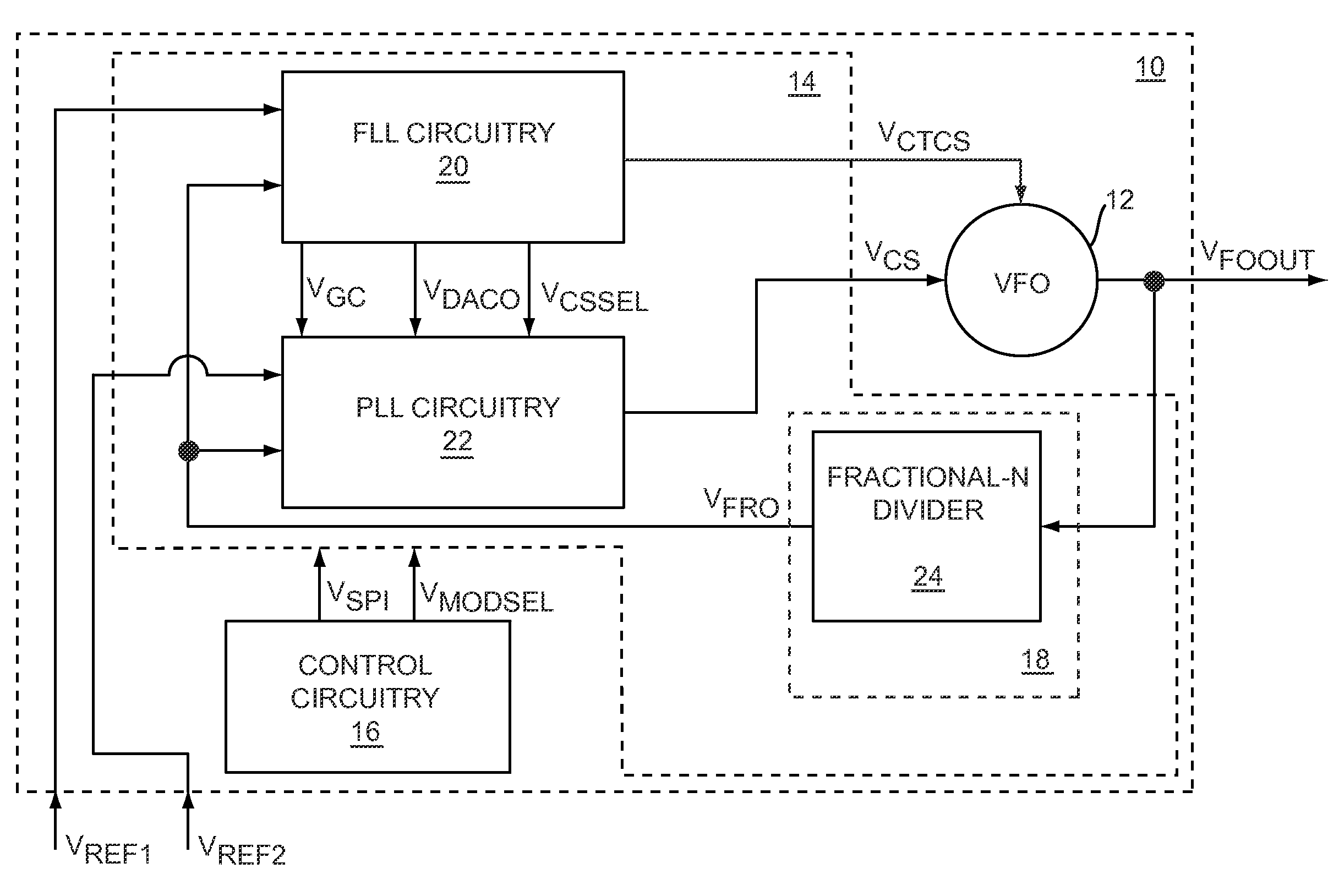
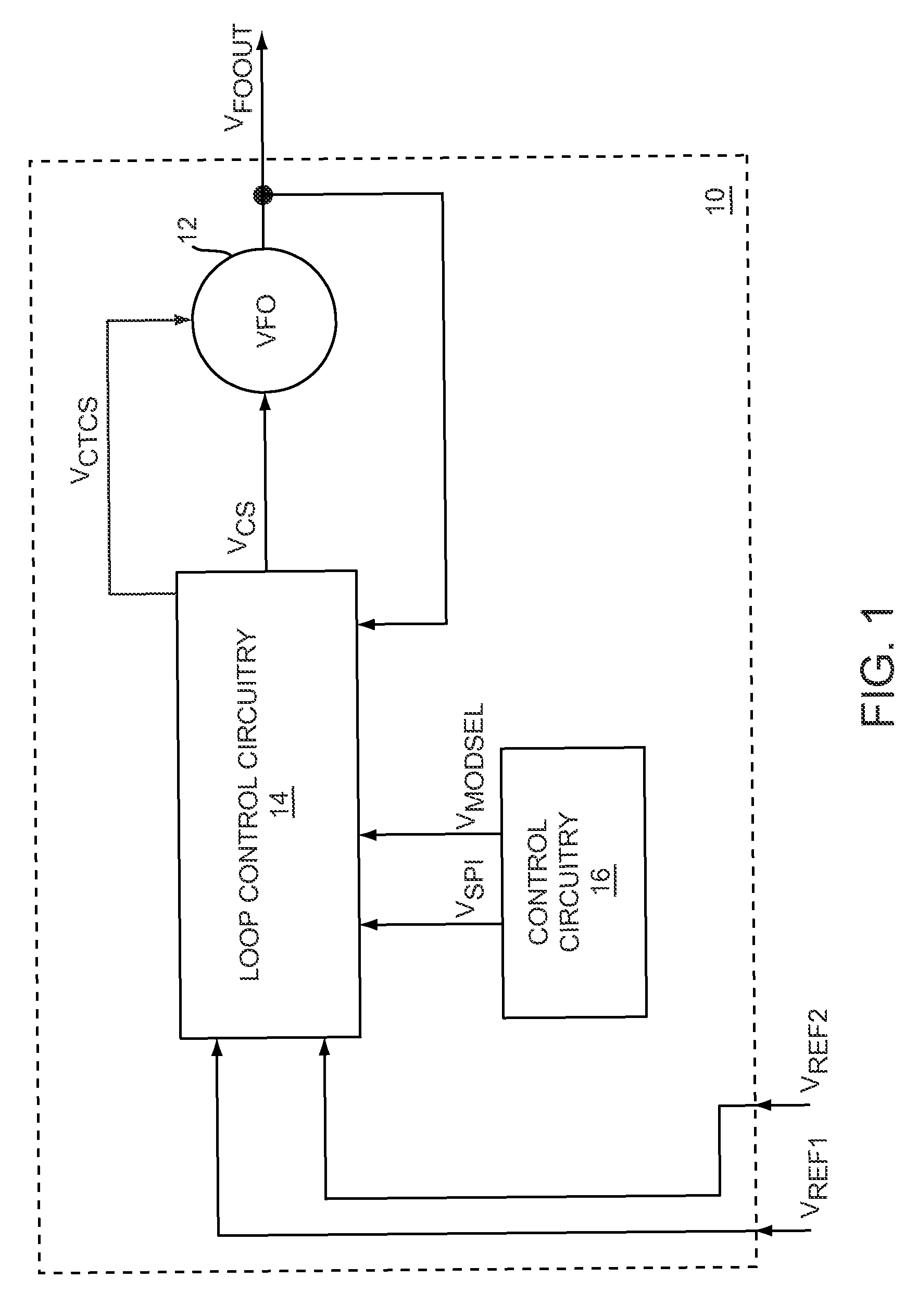
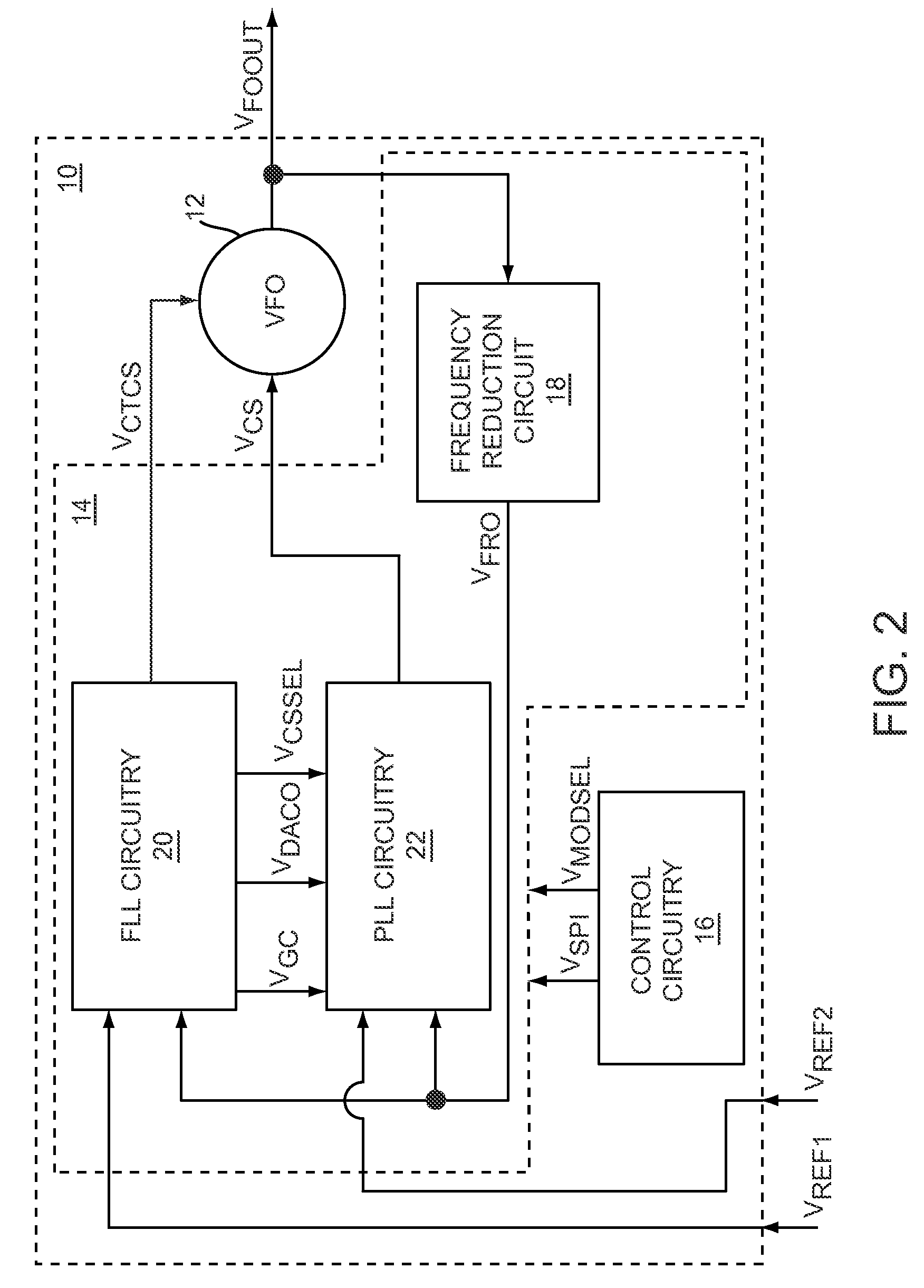
- Storing and initializing the state of the FLL with a previously stored state when re-enabled, allowing the loop to rapidly relock onto a reference signal, thereby minimizing relocking time and enabling immediate use of the output clock signal without waiting for locking to occur.


Frequency-locked loop calibration of a phase-locked loop gain
PatentInactiveUS7898343B1
Innovation
- A calibrated phase-locked loop (PLL) system with a calibration mode for measuring tuning gain and a PLL mode for normal operation, using frequency-locked loop (FLL) circuit elements for coarse tuning and PLL for high frequency accuracy, reducing phase lock times by regulating loop gain and pre-charging the PLL loop filter.

Industrial Safety Standards and FLL Compliance Requirements
The implementation of Frequency-Locked Loop (FLL) technology in industrial control systems must adhere to stringent safety standards and regulatory frameworks that govern critical infrastructure operations. International standards such as IEC 61508 for functional safety and IEC 61511 for process industry safety instrumented systems establish fundamental requirements for FLL-based control mechanisms. These standards mandate comprehensive safety integrity level (SIL) assessments, requiring FLL systems to demonstrate failure rates below specified thresholds and maintain predictable behavior under fault conditions.
Compliance with electromagnetic compatibility (EMC) standards, particularly IEC 61000 series, becomes crucial for FLL implementations due to their frequency-sensitive nature. Industrial environments present significant electromagnetic interference challenges that can disrupt frequency synchronization mechanisms. FLL systems must demonstrate immunity to conducted and radiated disturbances while maintaining phase-locked accuracy within acceptable tolerances. Testing protocols require validation across extended temperature ranges and vibration conditions typical of industrial installations.
Regional regulatory bodies impose additional compliance requirements that vary by application sector. The Federal Communications Commission (FCC) in North America and the European Telecommunications Standards Institute (ETSI) establish frequency allocation and emission limits that directly impact FLL design parameters. Industrial FLL systems operating in licensed frequency bands must obtain appropriate certifications and demonstrate non-interference with existing communication infrastructure.
Safety-critical applications such as nuclear power generation and chemical processing impose the most stringent compliance requirements. Nuclear regulatory authorities require FLL systems to meet IEEE 323 environmental qualification standards and demonstrate continued operation during design basis events. Chemical industry applications must comply with ATEX directives for explosive atmosphere operation, necessitating intrinsically safe FLL designs with certified enclosures and energy limitation circuits.
Cybersecurity compliance has emerged as a critical requirement following increased connectivity in industrial control systems. NIST Cybersecurity Framework guidelines and IEC 62443 industrial cybersecurity standards mandate secure communication protocols and authentication mechanisms for networked FLL implementations. These requirements often conflict with traditional analog FLL designs, driving adoption of hybrid architectures that maintain frequency stability while incorporating digital security features.
Compliance with electromagnetic compatibility (EMC) standards, particularly IEC 61000 series, becomes crucial for FLL implementations due to their frequency-sensitive nature. Industrial environments present significant electromagnetic interference challenges that can disrupt frequency synchronization mechanisms. FLL systems must demonstrate immunity to conducted and radiated disturbances while maintaining phase-locked accuracy within acceptable tolerances. Testing protocols require validation across extended temperature ranges and vibration conditions typical of industrial installations.
Regional regulatory bodies impose additional compliance requirements that vary by application sector. The Federal Communications Commission (FCC) in North America and the European Telecommunications Standards Institute (ETSI) establish frequency allocation and emission limits that directly impact FLL design parameters. Industrial FLL systems operating in licensed frequency bands must obtain appropriate certifications and demonstrate non-interference with existing communication infrastructure.
Safety-critical applications such as nuclear power generation and chemical processing impose the most stringent compliance requirements. Nuclear regulatory authorities require FLL systems to meet IEEE 323 environmental qualification standards and demonstrate continued operation during design basis events. Chemical industry applications must comply with ATEX directives for explosive atmosphere operation, necessitating intrinsically safe FLL designs with certified enclosures and energy limitation circuits.
Cybersecurity compliance has emerged as a critical requirement following increased connectivity in industrial control systems. NIST Cybersecurity Framework guidelines and IEC 62443 industrial cybersecurity standards mandate secure communication protocols and authentication mechanisms for networked FLL implementations. These requirements often conflict with traditional analog FLL designs, driving adoption of hybrid architectures that maintain frequency stability while incorporating digital security features.
Cost-Benefit Analysis of FLL Implementation in Industrial Controls
The implementation of Frequency-Locked Loop technology in industrial control systems presents a compelling economic proposition when evaluated through comprehensive cost-benefit analysis. Initial capital expenditure for FLL integration typically ranges from $15,000 to $50,000 per control system, depending on complexity and scale. This upfront investment encompasses hardware components, software licensing, system integration, and personnel training costs.
The primary economic benefits emerge through substantial reductions in maintenance expenses and unplanned downtime. Traditional industrial control systems experience frequency drift-related failures approximately 15-20% more frequently than FLL-equipped systems. This translates to annual maintenance cost savings of $8,000 to $25,000 per system, primarily through reduced component replacement frequency and extended calibration intervals.
Operational efficiency gains constitute another significant value driver. FLL implementation typically improves system accuracy by 25-40%, resulting in enhanced product quality and reduced waste. Manufacturing facilities report average productivity improvements of 3-7% following FLL deployment, directly impacting revenue generation. Energy consumption optimization through precise frequency control contributes additional savings of 2-5% in power costs.
The reliability enhancement aspect delivers quantifiable returns through minimized production interruptions. Unplanned downtime costs in industrial environments average $50,000 to $300,000 per incident. FLL systems demonstrate 60-80% reduction in frequency-related failures, significantly decreasing these costly disruptions. Insurance premium reductions of 5-15% are commonly achieved due to improved system reliability profiles.
Return on investment calculations indicate payback periods typically ranging from 18 to 36 months, with net present value becoming positive within the second operational year. Long-term analysis over a 10-year horizon shows total cost of ownership reductions of 20-35% compared to conventional control systems. Risk mitigation benefits, while challenging to quantify precisely, provide additional economic value through enhanced operational predictability and reduced liability exposure.
The primary economic benefits emerge through substantial reductions in maintenance expenses and unplanned downtime. Traditional industrial control systems experience frequency drift-related failures approximately 15-20% more frequently than FLL-equipped systems. This translates to annual maintenance cost savings of $8,000 to $25,000 per system, primarily through reduced component replacement frequency and extended calibration intervals.
Operational efficiency gains constitute another significant value driver. FLL implementation typically improves system accuracy by 25-40%, resulting in enhanced product quality and reduced waste. Manufacturing facilities report average productivity improvements of 3-7% following FLL deployment, directly impacting revenue generation. Energy consumption optimization through precise frequency control contributes additional savings of 2-5% in power costs.
The reliability enhancement aspect delivers quantifiable returns through minimized production interruptions. Unplanned downtime costs in industrial environments average $50,000 to $300,000 per incident. FLL systems demonstrate 60-80% reduction in frequency-related failures, significantly decreasing these costly disruptions. Insurance premium reductions of 5-15% are commonly achieved due to improved system reliability profiles.
Return on investment calculations indicate payback periods typically ranging from 18 to 36 months, with net present value becoming positive within the second operational year. Long-term analysis over a 10-year horizon shows total cost of ownership reductions of 20-35% compared to conventional control systems. Risk mitigation benefits, while challenging to quantify precisely, provide additional economic value through enhanced operational predictability and reduced liability exposure.
Unlock deeper insights with Patsnap Eureka Quick Research — get a full tech report to explore trends and direct your research. Try now!
Generate Your Research Report Instantly with AI Agent
Supercharge your innovation with Patsnap Eureka AI Agent Platform!