

Frequency-Locked Loop vs Crystal Oscillator: Stability Over Temperature Range
MAR 18, 20269 MIN READ
Generate Your Research Report Instantly with AI Agent
PatSnap Eureka helps you evaluate technical feasibility & market potential.
FLL vs Crystal Oscillator Temperature Stability Background
Frequency stability over temperature variations represents one of the most critical challenges in modern electronic systems, particularly as devices operate across increasingly wide environmental conditions. The fundamental requirement for precise timing references has driven decades of research into oscillator technologies, with crystal oscillators and frequency-locked loops emerging as two distinct approaches to achieving temperature-stable frequency generation.
Crystal oscillators have dominated timing applications since the early 20th century, leveraging the piezoelectric properties of quartz crystals to generate highly stable frequencies. The inherent temperature coefficient of quartz, typically ranging from -20 to -40 parts per million per degree Celsius, has been the primary limitation driving continuous innovation in temperature compensation techniques. Traditional approaches include temperature-compensated crystal oscillators (TCXO) and oven-controlled crystal oscillators (OCXO), each representing different trade-offs between stability, power consumption, and cost.
The emergence of frequency-locked loops as an alternative timing solution stems from advances in phase-locked loop technology and digital signal processing. FLL architectures offer the potential for superior temperature stability through real-time frequency correction mechanisms, eliminating the need for physical temperature compensation methods. This approach has gained particular attention in applications where power efficiency and miniaturization are critical constraints.
The comparative analysis of these technologies has become increasingly relevant as modern applications demand both exceptional frequency stability and operational flexibility across extreme temperature ranges. Automotive electronics, aerospace systems, and telecommunications infrastructure represent key domains where temperature-induced frequency drift can significantly impact system performance and reliability.
Recent technological developments have blurred the traditional boundaries between these approaches, with hybrid solutions incorporating elements of both crystal-based references and loop-based correction mechanisms. The integration of advanced materials, MEMS technology, and sophisticated control algorithms has opened new possibilities for achieving unprecedented temperature stability while maintaining practical implementation constraints.
Understanding the fundamental trade-offs between FLL and crystal oscillator approaches requires examination of their respective temperature stability mechanisms, performance characteristics, and implementation complexities across diverse operating environments.
Crystal oscillators have dominated timing applications since the early 20th century, leveraging the piezoelectric properties of quartz crystals to generate highly stable frequencies. The inherent temperature coefficient of quartz, typically ranging from -20 to -40 parts per million per degree Celsius, has been the primary limitation driving continuous innovation in temperature compensation techniques. Traditional approaches include temperature-compensated crystal oscillators (TCXO) and oven-controlled crystal oscillators (OCXO), each representing different trade-offs between stability, power consumption, and cost.
The emergence of frequency-locked loops as an alternative timing solution stems from advances in phase-locked loop technology and digital signal processing. FLL architectures offer the potential for superior temperature stability through real-time frequency correction mechanisms, eliminating the need for physical temperature compensation methods. This approach has gained particular attention in applications where power efficiency and miniaturization are critical constraints.
The comparative analysis of these technologies has become increasingly relevant as modern applications demand both exceptional frequency stability and operational flexibility across extreme temperature ranges. Automotive electronics, aerospace systems, and telecommunications infrastructure represent key domains where temperature-induced frequency drift can significantly impact system performance and reliability.
Recent technological developments have blurred the traditional boundaries between these approaches, with hybrid solutions incorporating elements of both crystal-based references and loop-based correction mechanisms. The integration of advanced materials, MEMS technology, and sophisticated control algorithms has opened new possibilities for achieving unprecedented temperature stability while maintaining practical implementation constraints.
Understanding the fundamental trade-offs between FLL and crystal oscillator approaches requires examination of their respective temperature stability mechanisms, performance characteristics, and implementation complexities across diverse operating environments.
Market Demand for Temperature-Stable Frequency References
The global market for temperature-stable frequency references has experienced substantial growth driven by the proliferation of high-precision electronic systems across multiple industries. Telecommunications infrastructure, particularly 5G networks, requires exceptionally stable frequency sources to maintain signal integrity across varying environmental conditions. The automotive sector's transition toward autonomous vehicles and advanced driver assistance systems has created unprecedented demand for reliable timing solutions that can withstand extreme temperature fluctuations.
Aerospace and defense applications represent another critical market segment, where frequency stability over temperature ranges directly impacts mission-critical systems. Satellite communications, radar systems, and navigation equipment require frequency references that maintain accuracy from arctic conditions to desert environments. The increasing deployment of small satellites and CubeSats has further expanded this market segment, as these platforms face severe thermal cycling in space.
Industrial automation and Internet of Things applications have emerged as significant growth drivers. Manufacturing facilities require precise timing for synchronized operations, while smart grid infrastructure depends on stable frequency references for accurate power monitoring and control. The expansion of data centers globally has created additional demand, as these facilities require precise clock distribution systems that remain stable despite temperature variations from cooling systems.
The medical device industry presents a specialized but growing market segment. Advanced imaging systems, patient monitoring equipment, and surgical robotics require frequency stability that remains consistent across hospital temperature variations. Portable medical devices face particular challenges, as they must maintain accuracy while transitioning between different environmental conditions.
Consumer electronics, while traditionally less demanding, increasingly require temperature-stable frequency references. High-end audio equipment, precision measurement instruments, and advanced gaming systems now incorporate sophisticated timing solutions. The growing market for wearable devices has introduced new requirements for miniaturized frequency references that maintain stability across body temperature variations and ambient conditions.
Market dynamics indicate a shift toward integrated solutions that combine multiple frequency generation techniques. Hybrid approaches that leverage both crystal oscillators and frequency-locked loops are gaining traction, as they offer optimized performance across different temperature ranges while managing cost considerations.
Aerospace and defense applications represent another critical market segment, where frequency stability over temperature ranges directly impacts mission-critical systems. Satellite communications, radar systems, and navigation equipment require frequency references that maintain accuracy from arctic conditions to desert environments. The increasing deployment of small satellites and CubeSats has further expanded this market segment, as these platforms face severe thermal cycling in space.
Industrial automation and Internet of Things applications have emerged as significant growth drivers. Manufacturing facilities require precise timing for synchronized operations, while smart grid infrastructure depends on stable frequency references for accurate power monitoring and control. The expansion of data centers globally has created additional demand, as these facilities require precise clock distribution systems that remain stable despite temperature variations from cooling systems.
The medical device industry presents a specialized but growing market segment. Advanced imaging systems, patient monitoring equipment, and surgical robotics require frequency stability that remains consistent across hospital temperature variations. Portable medical devices face particular challenges, as they must maintain accuracy while transitioning between different environmental conditions.
Consumer electronics, while traditionally less demanding, increasingly require temperature-stable frequency references. High-end audio equipment, precision measurement instruments, and advanced gaming systems now incorporate sophisticated timing solutions. The growing market for wearable devices has introduced new requirements for miniaturized frequency references that maintain stability across body temperature variations and ambient conditions.
Market dynamics indicate a shift toward integrated solutions that combine multiple frequency generation techniques. Hybrid approaches that leverage both crystal oscillators and frequency-locked loops are gaining traction, as they offer optimized performance across different temperature ranges while managing cost considerations.
Current Temperature Stability Challenges in FLL and Crystal
Temperature stability represents one of the most critical performance challenges for both Frequency-Locked Loops (FLL) and crystal oscillators in modern electronic systems. As operating environments become increasingly demanding, ranging from automotive applications experiencing -40°C to +125°C variations to aerospace systems encountering even more extreme conditions, maintaining frequency accuracy across these temperature ranges has become a fundamental engineering constraint.
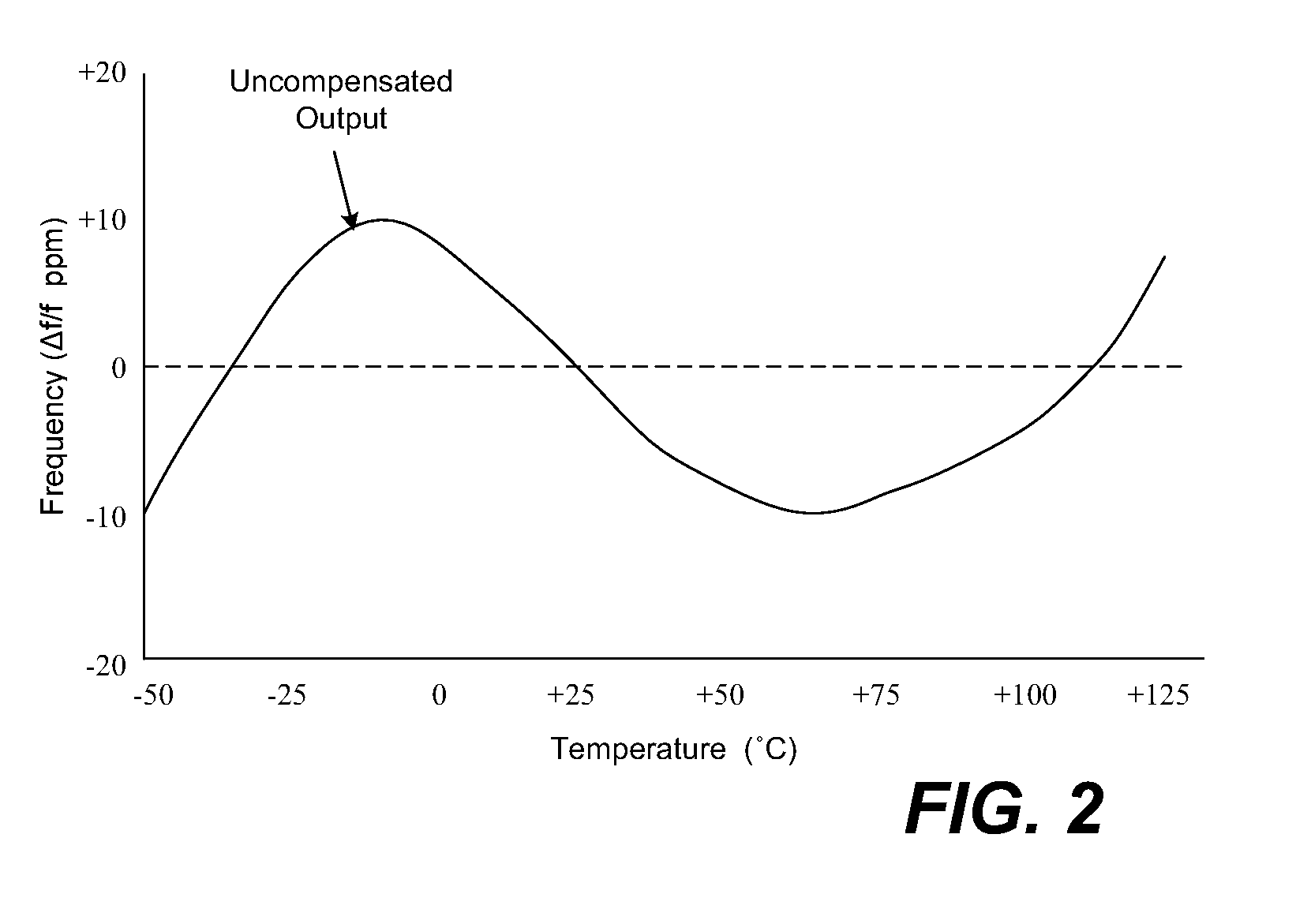
Crystal oscillators face inherent temperature-dependent frequency drift due to the physical properties of quartz crystals. The frequency-temperature characteristic typically follows a cubic relationship, with AT-cut crystals exhibiting parabolic curves that can result in frequency deviations of ±20 to ±100 ppm across industrial temperature ranges. This drift occurs because the elastic constants and dimensions of the quartz crystal change with temperature, directly affecting the resonant frequency.
Temperature compensation techniques for crystal oscillators, such as Temperature Compensated Crystal Oscillators (TCXO) and Oven Controlled Crystal Oscillators (OCXO), introduce additional complexity and power consumption. TCXOs require precise characterization and compensation networks that may drift over time, while OCXOs demand significant power budgets to maintain stable operating temperatures, making them unsuitable for battery-powered applications.
FLL systems present different temperature stability challenges primarily related to their reference sources and control loop components. When FLLs utilize crystal references, they inherit the temperature instability of the underlying crystal. However, the closed-loop nature of FLLs can potentially provide better temperature tracking when locked to stable external references, such as GPS signals or network timing protocols.
The temperature coefficients of electronic components within FLL control loops, including voltage-controlled oscillators, phase detectors, and loop filters, contribute additional temperature-dependent errors. These components exhibit varying temperature responses that can cause loop parameter variations, potentially affecting lock acquisition time and steady-state accuracy across temperature ranges.
Power consumption variations with temperature create secondary effects in both technologies. Crystal oscillators may experience activity dip phenomena at specific temperatures, while FLL systems face challenges in maintaining consistent loop dynamics as component characteristics shift with thermal conditions.
Emerging applications in Internet of Things devices, 5G infrastructure, and autonomous systems demand increasingly stringent temperature stability requirements, often necessitating frequency accuracies better than ±1 ppm across extended temperature ranges while maintaining low power consumption profiles.
Crystal oscillators face inherent temperature-dependent frequency drift due to the physical properties of quartz crystals. The frequency-temperature characteristic typically follows a cubic relationship, with AT-cut crystals exhibiting parabolic curves that can result in frequency deviations of ±20 to ±100 ppm across industrial temperature ranges. This drift occurs because the elastic constants and dimensions of the quartz crystal change with temperature, directly affecting the resonant frequency.
Temperature compensation techniques for crystal oscillators, such as Temperature Compensated Crystal Oscillators (TCXO) and Oven Controlled Crystal Oscillators (OCXO), introduce additional complexity and power consumption. TCXOs require precise characterization and compensation networks that may drift over time, while OCXOs demand significant power budgets to maintain stable operating temperatures, making them unsuitable for battery-powered applications.
FLL systems present different temperature stability challenges primarily related to their reference sources and control loop components. When FLLs utilize crystal references, they inherit the temperature instability of the underlying crystal. However, the closed-loop nature of FLLs can potentially provide better temperature tracking when locked to stable external references, such as GPS signals or network timing protocols.
The temperature coefficients of electronic components within FLL control loops, including voltage-controlled oscillators, phase detectors, and loop filters, contribute additional temperature-dependent errors. These components exhibit varying temperature responses that can cause loop parameter variations, potentially affecting lock acquisition time and steady-state accuracy across temperature ranges.
Power consumption variations with temperature create secondary effects in both technologies. Crystal oscillators may experience activity dip phenomena at specific temperatures, while FLL systems face challenges in maintaining consistent loop dynamics as component characteristics shift with thermal conditions.
Emerging applications in Internet of Things devices, 5G infrastructure, and autonomous systems demand increasingly stringent temperature stability requirements, often necessitating frequency accuracies better than ±1 ppm across extended temperature ranges while maintaining low power consumption profiles.
Existing Temperature Compensation Solutions
01 Temperature compensation techniques for crystal oscillator stability
Crystal oscillators can be stabilized through temperature compensation methods that adjust frequency based on temperature variations. These techniques include using temperature sensors to detect ambient temperature changes and applying correction signals to maintain stable oscillator output. Compensation circuits can employ analog or digital methods to counteract frequency drift caused by temperature fluctuations, ensuring consistent performance across varying environmental conditions.- Temperature compensation techniques for crystal oscillator stability: Crystal oscillators are susceptible to frequency variations due to temperature changes. Temperature compensation techniques involve using temperature sensors and compensation circuits to adjust the oscillator frequency based on ambient temperature. These methods can include analog compensation using varactor diodes or digital compensation using lookup tables and digital-to-analog converters. The compensation circuitry monitors temperature variations and applies corrective voltage or current to maintain stable frequency output across wide temperature ranges.
- Frequency-locked loop architecture for oscillator synchronization: Frequency-locked loops provide a mechanism to synchronize a local oscillator to a reference frequency source. The architecture typically includes a frequency detector, loop filter, and voltage-controlled oscillator. The frequency detector compares the output frequency with the reference and generates an error signal. This error signal is filtered and used to adjust the oscillator frequency until lock is achieved. Advanced implementations may include digital frequency detectors and adaptive loop bandwidth control to improve lock time and stability.
- Phase noise reduction in crystal oscillator circuits: Phase noise is a critical parameter affecting oscillator stability and system performance. Reduction techniques include optimizing the resonator quality factor, minimizing noise contributions from active components, and implementing low-noise amplifier designs. Circuit topologies may incorporate differential architectures, careful power supply filtering, and isolation techniques. Additional methods include using high-quality crystal resonators with low aging characteristics and implementing proper grounding and shielding to minimize external interference.
- Aging compensation and long-term frequency stability: Crystal oscillators experience frequency drift over time due to aging effects in the crystal resonator and electronic components. Compensation methods include periodic calibration against stable reference sources, implementation of aging prediction algorithms, and use of oven-controlled crystal oscillators for critical applications. Digital compensation techniques can store aging characteristics and apply corrections automatically. Some systems incorporate GPS or atomic clock references for periodic recalibration to maintain long-term accuracy.
- Voltage-controlled oscillator tuning and stability enhancement: Voltage-controlled oscillators in frequency-locked loops require careful design to balance tuning range and stability. Techniques include using varactor diodes with linear capacitance-voltage characteristics, implementing multi-band switching for wide frequency coverage, and designing loop filters with appropriate bandwidth. Stability enhancement methods involve minimizing supply voltage sensitivity, reducing load pulling effects, and implementing automatic gain control. Advanced designs may incorporate digital tuning combined with analog fine-tuning for optimal performance.
02 Phase-locked loop integration with crystal oscillators
Frequency-locked loops can be enhanced by integrating phase-locked loop circuits with crystal oscillators to achieve improved frequency stability and reduced phase noise. The phase-locked loop compares the output frequency with a reference signal from the crystal oscillator and adjusts accordingly to maintain lock. This integration allows for precise frequency synthesis while leveraging the inherent stability of crystal oscillators as reference sources.Expand Specific Solutions03 Voltage-controlled oscillator stabilization methods
Voltage-controlled oscillators used in frequency-locked loops can be stabilized through various control mechanisms that minimize frequency drift and improve long-term stability. These methods include using feedback control systems that continuously monitor and adjust the control voltage to maintain desired frequency output. Advanced stabilization techniques may incorporate digital signal processing algorithms to compensate for environmental variations and component aging effects.Expand Specific Solutions04 Frequency synthesis and multiplication techniques
Frequency-locked loops can employ synthesis and multiplication techniques to generate stable output frequencies that are multiples or fractions of the crystal oscillator reference frequency. These techniques utilize divider circuits, multiplier stages, and fractional-N synthesis methods to achieve desired frequency outputs while maintaining the stability characteristics of the reference oscillator. Digital frequency synthesis approaches enable fine frequency resolution and rapid switching capabilities.Expand Specific Solutions05 Noise reduction and jitter suppression in oscillator circuits
Crystal oscillator stability can be enhanced through noise reduction and jitter suppression techniques that minimize phase noise and timing variations. These approaches include optimizing circuit layout to reduce electromagnetic interference, implementing filtering stages to remove unwanted noise components, and using low-noise power supply designs. Advanced methods may incorporate adaptive filtering and signal conditioning circuits to maintain clean oscillator output signals with minimal jitter.Expand Specific Solutions
Key Players in Frequency Control and Oscillator Industry
The frequency-locked loop versus crystal oscillator technology landscape represents a mature market in the growth-to-maturity transition phase, with established market size exceeding several billion dollars annually driven by telecommunications, automotive, and IoT applications. The competitive environment demonstrates high technology maturity levels, with industry leaders like Nihon Dempa Kogyo, Seiko Epson, and TXC Corp specializing in crystal-based solutions, while semiconductor giants including Silicon Laboratories, NXP USA, and Infineon Technologies focus on integrated frequency synthesis approaches. Companies such as Murata Manufacturing and Skyworks Solutions have achieved advanced integration capabilities, offering complete timing solutions with superior temperature stability. The market shows clear technological differentiation between traditional crystal oscillator manufacturers and modern PLL-based frequency control providers, with emerging players like MediaTek and Realtek driving innovation in low-power, high-precision applications for next-generation wireless systems.
Seiko Epson Corp.
Technical Solution: Seiko Epson specializes in crystal oscillator technology and has developed frequency-locked loop solutions that leverage their expertise in quartz crystal manufacturing. Their approach focuses on characterizing crystal behavior across temperature ranges and implementing predictive FLL algorithms that anticipate frequency drift based on temperature trends. The company's solutions utilize ultra-stable AT-cut crystals with frequency-temperature characteristics optimized for FLL applications, achieving stability of ±1ppm across 0°C to +70°C. Their FLL designs incorporate crystal aging compensation algorithms that adapt to long-term frequency drift patterns while maintaining temperature stability through real-time correction mechanisms.
Strengths: Superior crystal manufacturing expertise, excellent long-term stability, predictive drift compensation. Weaknesses: Limited to narrower temperature ranges for optimal performance, higher sensitivity to mechanical stress.
NXP USA, Inc.
Technical Solution: NXP implements temperature-compensated frequency-locked loops (TC-FLL) in their automotive and industrial applications, addressing the stability challenges across extreme temperature ranges (-40°C to +125°C). Their approach utilizes polynomial temperature compensation with real-time temperature sensing to adjust FLL parameters dynamically. The company's solutions integrate MEMS-based timing references with FLL circuits to achieve frequency stability of ±20ppm over temperature while maintaining the rapid acquisition capabilities of FLLs. NXP's designs feature adaptive bandwidth control that narrows the loop bandwidth at steady-state to improve noise performance while widening it during temperature transients for faster tracking.
Strengths: Robust automotive-grade temperature performance, adaptive bandwidth control, MEMS integration for size reduction. Weaknesses: Moderate frequency stability compared to pure crystal solutions, complex calibration requirements.
Core Patents in Temperature-Stable Frequency Control
Method and apparatus for compensating temperature changes in an oscillator-based frequency synthesizer
PatentInactiveUS7579919B1
Innovation
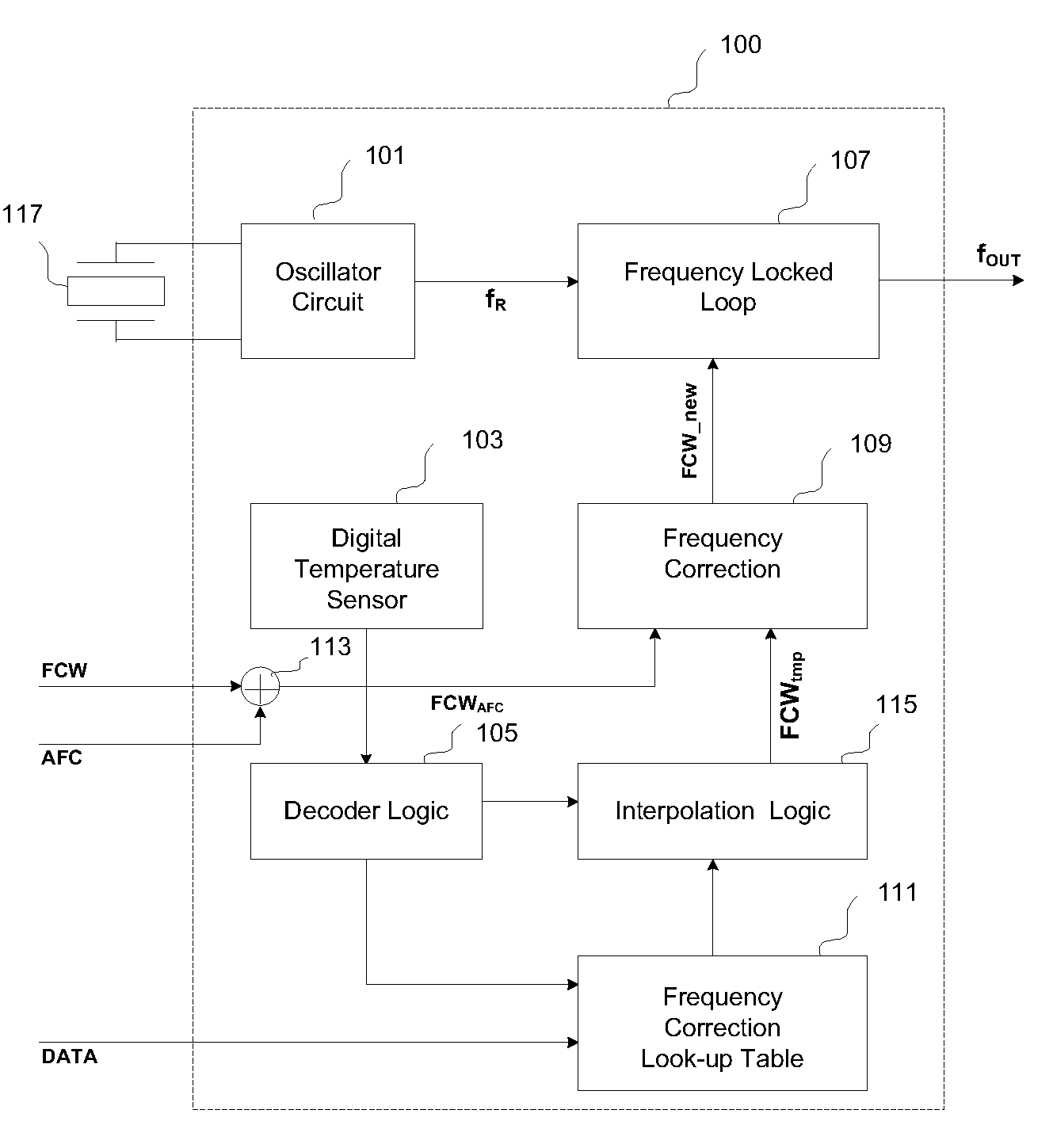
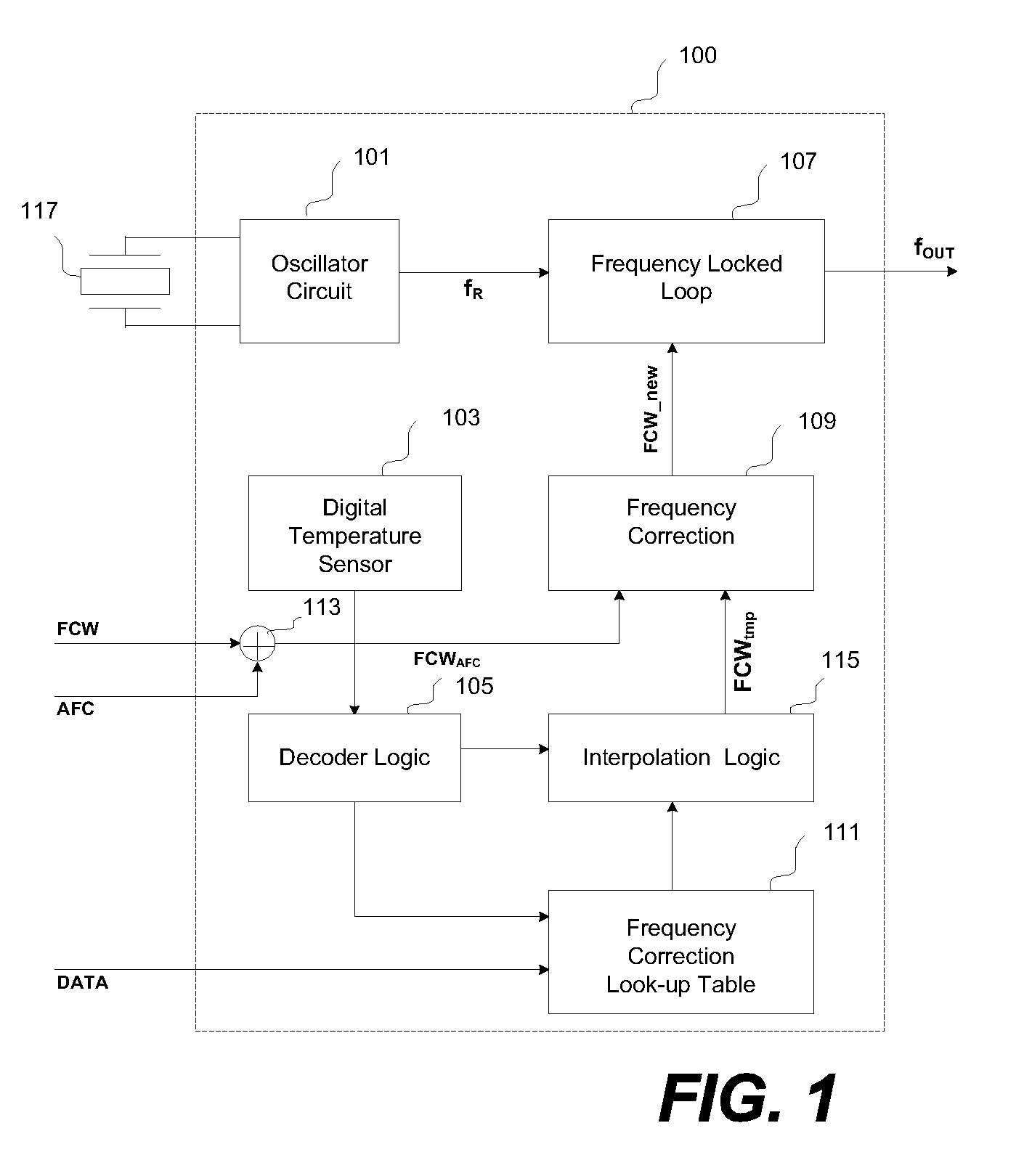
- A frequency locked loop architecture that uses a combination of a fixed frequency control word and an automatic frequency correction word, along with interpolation logic, to generate a digital frequency corrected control word, stabilizing the output frequency by compensating for temperature changes, either producing a steady timing clock signal or a frequency modulated signal.

Double phase-locked loop with frequency stabilization
PatentWO2015113135A1
Innovation
- A double phase-locked loop (PLL) system with a narrowband PLL and a second PLL with a higher bandwidth, where the first PLL filters out phase noise and the second PLL stabilizes the first, allowing synchronization to both a PRC for frequency stability and a standard clock like UTC for time-of-day accuracy, using a regular low-cost crystal oscillator and minimizing the need for expensive TCXOs or OCXOs.


Standards and Specifications for Frequency Stability
Frequency stability standards serve as the foundation for evaluating and comparing timing solutions across different applications and environmental conditions. The Institute of Electrical and Electronics Engineers (IEEE) has established comprehensive standards, particularly IEEE 1139 and IEEE 1193, which define measurement methodologies and acceptable performance criteria for frequency sources including crystal oscillators and frequency-locked loops.
The International Telecommunication Union (ITU) provides critical specifications through ITU-T G.810 series recommendations, establishing stratum levels for telecommunications timing equipment. These standards categorize frequency sources based on their long-term stability, temperature coefficient, and aging characteristics. Stratum 1 sources require frequency accuracy better than 1×10^-11, while lower stratum levels permit progressively relaxed specifications.
Military and aerospace applications adhere to MIL-PRF-55310 specifications, which impose stringent requirements for frequency stability across extended temperature ranges typically spanning -55°C to +125°C. These specifications mandate Allan deviation measurements over multiple time intervals, ensuring consistent performance under extreme environmental conditions where both crystal oscillators and frequency-locked loops must maintain operational integrity.
The European Telecommunications Standards Institute (ETSI) has developed EN 300 462 series standards specifically addressing synchronization equipment performance. These standards emphasize temperature stability metrics, requiring frequency deviation measurements across operational temperature ranges with specific attention to thermal transient responses and steady-state accuracy.
Commercial timing applications often reference ANSI T1.101 standards, which establish performance requirements for network synchronization equipment. These specifications define acceptable frequency drift rates, typically requiring stability better than 4.6×10^-6 over temperature ranges, with additional provisions for holdover performance during reference signal interruptions.
Modern 5G and precision timing applications have driven development of enhanced standards through organizations like the International Committee for Weights and Measures (CIPM), establishing traceable frequency references and measurement uncertainties that directly impact the selection criteria between frequency-locked loops and crystal oscillator solutions for temperature-critical applications.
The International Telecommunication Union (ITU) provides critical specifications through ITU-T G.810 series recommendations, establishing stratum levels for telecommunications timing equipment. These standards categorize frequency sources based on their long-term stability, temperature coefficient, and aging characteristics. Stratum 1 sources require frequency accuracy better than 1×10^-11, while lower stratum levels permit progressively relaxed specifications.
Military and aerospace applications adhere to MIL-PRF-55310 specifications, which impose stringent requirements for frequency stability across extended temperature ranges typically spanning -55°C to +125°C. These specifications mandate Allan deviation measurements over multiple time intervals, ensuring consistent performance under extreme environmental conditions where both crystal oscillators and frequency-locked loops must maintain operational integrity.
The European Telecommunications Standards Institute (ETSI) has developed EN 300 462 series standards specifically addressing synchronization equipment performance. These standards emphasize temperature stability metrics, requiring frequency deviation measurements across operational temperature ranges with specific attention to thermal transient responses and steady-state accuracy.
Commercial timing applications often reference ANSI T1.101 standards, which establish performance requirements for network synchronization equipment. These specifications define acceptable frequency drift rates, typically requiring stability better than 4.6×10^-6 over temperature ranges, with additional provisions for holdover performance during reference signal interruptions.
Modern 5G and precision timing applications have driven development of enhanced standards through organizations like the International Committee for Weights and Measures (CIPM), establishing traceable frequency references and measurement uncertainties that directly impact the selection criteria between frequency-locked loops and crystal oscillator solutions for temperature-critical applications.
Cost-Performance Trade-offs in Frequency Reference Design
The selection between frequency-locked loops and crystal oscillators presents a fundamental cost-performance dilemma in frequency reference design, particularly when considering temperature stability requirements. Crystal oscillators, especially temperature-compensated (TCXO) and oven-controlled variants (OCXO), represent the traditional high-performance solution with exceptional frequency stability across temperature ranges. However, these solutions command premium pricing, with OCXO systems often costing 10-50 times more than basic crystal oscillators due to their complex thermal management systems and precision manufacturing requirements.
Frequency-locked loops offer an attractive middle-ground approach, providing improved temperature stability compared to basic crystal oscillators while maintaining significantly lower costs than precision temperature-controlled solutions. The cost advantage stems from their ability to leverage lower-grade crystal references and compensate for temperature drift through digital signal processing and feedback control mechanisms. This approach typically achieves cost reductions of 60-80% compared to equivalent OCXO solutions while delivering temperature stability performance within 2-5 times of high-end crystal oscillators.
The performance trade-off analysis reveals that crystal oscillators excel in applications requiring sub-ppm frequency accuracy across wide temperature ranges, making them indispensable for telecommunications infrastructure, precision instrumentation, and aerospace applications where cost sensitivity is secondary to performance requirements. Their inherent stability and predictable aging characteristics justify the higher investment in mission-critical applications.
Conversely, frequency-locked loops demonstrate superior cost-effectiveness in consumer electronics, automotive systems, and IoT devices where moderate temperature stability requirements can be met without the expense of precision crystal solutions. The programmable nature of FLL systems also provides additional value through reduced inventory complexity and design flexibility, enabling manufacturers to optimize performance parameters for specific application requirements while maintaining cost competitiveness in volume production scenarios.
Frequency-locked loops offer an attractive middle-ground approach, providing improved temperature stability compared to basic crystal oscillators while maintaining significantly lower costs than precision temperature-controlled solutions. The cost advantage stems from their ability to leverage lower-grade crystal references and compensate for temperature drift through digital signal processing and feedback control mechanisms. This approach typically achieves cost reductions of 60-80% compared to equivalent OCXO solutions while delivering temperature stability performance within 2-5 times of high-end crystal oscillators.
The performance trade-off analysis reveals that crystal oscillators excel in applications requiring sub-ppm frequency accuracy across wide temperature ranges, making them indispensable for telecommunications infrastructure, precision instrumentation, and aerospace applications where cost sensitivity is secondary to performance requirements. Their inherent stability and predictable aging characteristics justify the higher investment in mission-critical applications.
Conversely, frequency-locked loops demonstrate superior cost-effectiveness in consumer electronics, automotive systems, and IoT devices where moderate temperature stability requirements can be met without the expense of precision crystal solutions. The programmable nature of FLL systems also provides additional value through reduced inventory complexity and design flexibility, enabling manufacturers to optimize performance parameters for specific application requirements while maintaining cost competitiveness in volume production scenarios.
Unlock deeper insights with PatSnap Eureka Quick Research — get a full tech report to explore trends and direct your research. Try now!
Generate Your Research Report Instantly with AI Agent
Supercharge your innovation with PatSnap Eureka AI Agent Platform!