How Dolby Vision Augments Educational Content Distribution
JUL 30, 20259 MIN READ
Generate Your Research Report Instantly with AI Agent
Patsnap Eureka helps you evaluate technical feasibility & market potential.
Dolby Vision in Education: Background and Objectives
Dolby Vision, a cutting-edge high dynamic range (HDR) imaging technology, has been making significant strides in the entertainment industry. However, its potential applications extend far beyond cinema and home entertainment, with education emerging as a promising frontier. The evolution of educational content distribution has been marked by continuous technological advancements, from traditional textbooks to digital platforms and interactive multimedia. In this context, Dolby Vision presents a unique opportunity to revolutionize the way educational content is created, delivered, and consumed.
The primary objective of integrating Dolby Vision into educational content distribution is to enhance the learning experience through superior visual quality and immersion. By leveraging its advanced HDR capabilities, Dolby Vision can bring educational materials to life with unprecedented clarity, color accuracy, and contrast. This technology aims to make complex concepts more accessible and engaging, particularly in subjects that rely heavily on visual aids, such as science, art, and geography.
The journey of visual technology in education has seen several milestones, from the introduction of color television in classrooms to the widespread adoption of digital projectors and interactive whiteboards. Dolby Vision represents the next leap forward in this progression, offering a level of visual fidelity that closely mimics real-world perception. This advancement is particularly timely given the increasing prevalence of remote and hybrid learning models, where the quality of digital content plays a crucial role in student engagement and comprehension.
As we explore the potential of Dolby Vision in education, it is essential to consider the broader technological landscape. The rise of 4K and 8K displays, virtual and augmented reality, and artificial intelligence-driven personalized learning platforms all contribute to a rapidly evolving educational technology ecosystem. Dolby Vision's integration into this landscape aims to address several key challenges, including the need for more immersive and realistic visual representations of complex phenomena, improved accessibility for visually impaired students, and the creation of more engaging and memorable learning experiences.
The adoption of Dolby Vision in educational content distribution also aligns with the growing emphasis on STEM education and the increasing importance of visual literacy in the digital age. By providing a more accurate and vivid representation of scientific concepts, historical events, and artistic works, this technology has the potential to inspire greater interest and deeper understanding across various disciplines. Furthermore, as the global education market continues to expand and digitize, the implementation of advanced visual technologies like Dolby Vision could become a key differentiator for educational institutions and content providers seeking to offer premium learning experiences.
The primary objective of integrating Dolby Vision into educational content distribution is to enhance the learning experience through superior visual quality and immersion. By leveraging its advanced HDR capabilities, Dolby Vision can bring educational materials to life with unprecedented clarity, color accuracy, and contrast. This technology aims to make complex concepts more accessible and engaging, particularly in subjects that rely heavily on visual aids, such as science, art, and geography.
The journey of visual technology in education has seen several milestones, from the introduction of color television in classrooms to the widespread adoption of digital projectors and interactive whiteboards. Dolby Vision represents the next leap forward in this progression, offering a level of visual fidelity that closely mimics real-world perception. This advancement is particularly timely given the increasing prevalence of remote and hybrid learning models, where the quality of digital content plays a crucial role in student engagement and comprehension.
As we explore the potential of Dolby Vision in education, it is essential to consider the broader technological landscape. The rise of 4K and 8K displays, virtual and augmented reality, and artificial intelligence-driven personalized learning platforms all contribute to a rapidly evolving educational technology ecosystem. Dolby Vision's integration into this landscape aims to address several key challenges, including the need for more immersive and realistic visual representations of complex phenomena, improved accessibility for visually impaired students, and the creation of more engaging and memorable learning experiences.
The adoption of Dolby Vision in educational content distribution also aligns with the growing emphasis on STEM education and the increasing importance of visual literacy in the digital age. By providing a more accurate and vivid representation of scientific concepts, historical events, and artistic works, this technology has the potential to inspire greater interest and deeper understanding across various disciplines. Furthermore, as the global education market continues to expand and digitize, the implementation of advanced visual technologies like Dolby Vision could become a key differentiator for educational institutions and content providers seeking to offer premium learning experiences.
Market Analysis for Enhanced Educational Content
The educational content market is experiencing a significant shift towards enhanced digital experiences, driven by technological advancements and changing consumer preferences. Dolby Vision, a cutting-edge HDR (High Dynamic Range) technology, is poised to play a crucial role in this transformation, offering unprecedented visual quality for educational materials.
The global e-learning market, valued at $250 billion in 2020, is projected to grow at a CAGR of 21% from 2021 to 2028. This growth is fueled by the increasing demand for interactive and immersive learning experiences, particularly in the wake of the COVID-19 pandemic, which accelerated the adoption of digital learning platforms.
Dolby Vision's potential in the educational content market stems from its ability to deliver superior image quality, with enhanced contrast, brightness, and color accuracy. This technology can significantly improve the visual representation of complex subjects, making abstract concepts more tangible and engaging for learners.
The demand for high-quality educational content is particularly strong in STEM fields, where visual representation of complex phenomena is crucial. Dolby Vision can enhance the clarity and detail of scientific simulations, 3D models, and virtual laboratories, providing students with a more realistic and immersive learning experience.
Furthermore, the rise of mobile learning and the increasing use of tablets and smartphones for educational purposes create a fertile ground for Dolby Vision-enhanced content. As more devices become Dolby Vision-compatible, the potential market for enhanced educational content expands.
The integration of Dolby Vision in educational content also aligns with the growing trend of gamification in education. Enhanced visuals can make educational games more engaging and effective, potentially increasing student motivation and knowledge retention.
However, the adoption of Dolby Vision in educational content faces some challenges. The cost of producing and distributing HDR content may be a barrier for some educational publishers. Additionally, not all devices currently support Dolby Vision, which could limit the initial reach of enhanced content.
Despite these challenges, the potential benefits of Dolby Vision in education are substantial. As the technology becomes more widespread and production costs decrease, it is likely to become an increasingly important factor in the competitive landscape of educational content distribution.
The global e-learning market, valued at $250 billion in 2020, is projected to grow at a CAGR of 21% from 2021 to 2028. This growth is fueled by the increasing demand for interactive and immersive learning experiences, particularly in the wake of the COVID-19 pandemic, which accelerated the adoption of digital learning platforms.
Dolby Vision's potential in the educational content market stems from its ability to deliver superior image quality, with enhanced contrast, brightness, and color accuracy. This technology can significantly improve the visual representation of complex subjects, making abstract concepts more tangible and engaging for learners.
The demand for high-quality educational content is particularly strong in STEM fields, where visual representation of complex phenomena is crucial. Dolby Vision can enhance the clarity and detail of scientific simulations, 3D models, and virtual laboratories, providing students with a more realistic and immersive learning experience.
Furthermore, the rise of mobile learning and the increasing use of tablets and smartphones for educational purposes create a fertile ground for Dolby Vision-enhanced content. As more devices become Dolby Vision-compatible, the potential market for enhanced educational content expands.
The integration of Dolby Vision in educational content also aligns with the growing trend of gamification in education. Enhanced visuals can make educational games more engaging and effective, potentially increasing student motivation and knowledge retention.
However, the adoption of Dolby Vision in educational content faces some challenges. The cost of producing and distributing HDR content may be a barrier for some educational publishers. Additionally, not all devices currently support Dolby Vision, which could limit the initial reach of enhanced content.
Despite these challenges, the potential benefits of Dolby Vision in education are substantial. As the technology becomes more widespread and production costs decrease, it is likely to become an increasingly important factor in the competitive landscape of educational content distribution.
Current Challenges in Educational Video Distribution
The distribution of educational video content faces several significant challenges in the current digital landscape. One of the primary issues is the inconsistent quality of video playback across different devices and platforms. With students accessing educational content on a wide range of devices, from smartphones to tablets and laptops, ensuring a uniform viewing experience becomes increasingly difficult.
Another major challenge is the bandwidth limitations in many educational settings. Schools and institutions often struggle with limited network capacity, especially in rural or underdeveloped areas. This can lead to buffering issues, reduced video quality, and interrupted learning experiences, particularly when streaming high-quality educational content.
Content creators and educational institutions also grapple with the challenge of producing engaging and visually appealing content that can effectively convey complex concepts. Traditional video formats may not always capture the nuances of certain subjects, leading to a less immersive and potentially less effective learning experience.
The issue of accessibility is another significant concern in educational video distribution. Ensuring that content is available to students with visual or auditory impairments requires additional considerations in terms of captioning, audio descriptions, and adaptable visual elements. This can be both technically challenging and resource-intensive for content providers.
Data security and privacy concerns also pose challenges in the distribution of educational videos. With the increasing use of online platforms and cloud-based services, protecting sensitive student information and ensuring compliance with data protection regulations become critical considerations for educational institutions and content providers.
Lastly, the cost associated with producing and distributing high-quality educational video content can be prohibitive for many institutions. The need for specialized equipment, software, and expertise to create visually rich and interactive content often strains limited educational budgets, potentially limiting the scope and quality of available materials.
These challenges collectively highlight the need for innovative solutions in educational video distribution, particularly those that can address issues of quality, accessibility, and engagement while remaining cost-effective and secure.
Another major challenge is the bandwidth limitations in many educational settings. Schools and institutions often struggle with limited network capacity, especially in rural or underdeveloped areas. This can lead to buffering issues, reduced video quality, and interrupted learning experiences, particularly when streaming high-quality educational content.
Content creators and educational institutions also grapple with the challenge of producing engaging and visually appealing content that can effectively convey complex concepts. Traditional video formats may not always capture the nuances of certain subjects, leading to a less immersive and potentially less effective learning experience.
The issue of accessibility is another significant concern in educational video distribution. Ensuring that content is available to students with visual or auditory impairments requires additional considerations in terms of captioning, audio descriptions, and adaptable visual elements. This can be both technically challenging and resource-intensive for content providers.
Data security and privacy concerns also pose challenges in the distribution of educational videos. With the increasing use of online platforms and cloud-based services, protecting sensitive student information and ensuring compliance with data protection regulations become critical considerations for educational institutions and content providers.
Lastly, the cost associated with producing and distributing high-quality educational video content can be prohibitive for many institutions. The need for specialized equipment, software, and expertise to create visually rich and interactive content often strains limited educational budgets, potentially limiting the scope and quality of available materials.
These challenges collectively highlight the need for innovative solutions in educational video distribution, particularly those that can address issues of quality, accessibility, and engagement while remaining cost-effective and secure.
Dolby Vision Implementation in E-learning Platforms
01 Content distribution and delivery systems
This category focuses on systems and methods for distributing and delivering Dolby Vision content to end-users. It includes technologies for efficient content streaming, broadcasting, and transmission across various networks and platforms. These systems ensure high-quality delivery of Dolby Vision content while optimizing bandwidth usage and maintaining the integrity of the enhanced visual experience.- Content distribution and delivery systems: Systems and methods for distributing and delivering Dolby Vision content through various networks and platforms. This includes techniques for efficient content streaming, broadcasting, and on-demand delivery of high-quality video content with enhanced dynamic range and color capabilities.
- Encoding and compression techniques: Advanced encoding and compression methods specifically designed for Dolby Vision content to optimize file sizes while maintaining high visual quality. These techniques enable efficient storage and transmission of HDR content across different bandwidth constraints.
- Content protection and digital rights management: Security measures and DRM solutions tailored for Dolby Vision content to prevent unauthorized access, copying, and distribution. This includes encryption methods, secure key management, and authentication protocols to protect high-value HDR content throughout the distribution chain.
- Adaptive streaming and quality optimization: Techniques for adapting Dolby Vision content delivery based on network conditions, device capabilities, and user preferences. This includes dynamic bitrate adjustment, resolution scaling, and content optimization to ensure the best possible viewing experience across various devices and network environments.
- Cross-platform compatibility and device support: Methods for ensuring Dolby Vision content compatibility across different display technologies, operating systems, and playback devices. This includes techniques for metadata handling, color space conversion, and dynamic range adaptation to maintain consistent visual quality across diverse viewing environments.
02 Content protection and digital rights management
This area covers technologies and methods for protecting Dolby Vision content from unauthorized access, copying, or distribution. It includes encryption techniques, digital rights management (DRM) systems, and secure content delivery protocols specifically designed for Dolby Vision content. These measures ensure that content creators and distributors can maintain control over their intellectual property while allowing authorized users to access and enjoy the content.Expand Specific Solutions03 Content encoding and compression
This category encompasses technologies for efficiently encoding and compressing Dolby Vision content to optimize storage and transmission. It includes advanced compression algorithms, codec implementations, and encoding techniques that preserve the high dynamic range and wide color gamut characteristics of Dolby Vision while reducing file sizes and bandwidth requirements for distribution.Expand Specific Solutions04 User interface and content discovery
This area focuses on technologies that enhance the user experience in discovering, accessing, and interacting with Dolby Vision content. It includes user interface designs, content recommendation systems, and interactive features that highlight the benefits of Dolby Vision and guide users to compatible content across various platforms and devices.Expand Specific Solutions05 Device compatibility and playback optimization
This category covers technologies that ensure seamless playback of Dolby Vision content across a wide range of devices and display technologies. It includes methods for device detection, content adaptation, and playback optimization to deliver the best possible Dolby Vision experience on different screens, from high-end TVs to mobile devices, while maintaining compatibility with legacy systems.Expand Specific Solutions
Key Players in Educational Content and HDR Tech
The market for Dolby Vision in educational content distribution is in its growth phase, with increasing adoption driven by the demand for high-quality visual experiences in e-learning. The global edtech market, valued at over $250 billion, provides a substantial opportunity for Dolby Vision integration. While the technology is mature in entertainment sectors, its application in education is still evolving. Key players like Dolby Laboratories, IBM, and Google are at the forefront, leveraging their expertise in audio-visual technologies and cloud platforms. Educational institutions such as Peking University and the University of South Florida are exploring innovative ways to incorporate this technology, potentially reshaping content delivery in higher education.
Dolby Laboratories Licensing Corp.
Technical Solution: Dolby Vision, developed by Dolby Laboratories, is a cutting-edge HDR (High Dynamic Range) technology that significantly enhances educational content distribution. It utilizes dynamic metadata to optimize each frame of video content, resulting in superior brightness, contrast, and color accuracy[1]. For educational applications, Dolby Vision enables the creation and delivery of more immersive and engaging visual content, such as high-fidelity scientific simulations, detailed historical reconstructions, and vivid nature documentaries. The technology supports up to 12-bit color depth and can display a peak brightness of 10,000 nits, far exceeding standard HDR formats[2]. This allows for more precise representation of educational materials, particularly in fields like art, design, and natural sciences where color accuracy is crucial. Dolby Vision also incorporates advanced content mapping algorithms that ensure optimal playback across a wide range of devices, from high-end displays to mobile screens, making it ideal for diverse educational settings[3].
Strengths: Superior image quality, wide device compatibility, and dynamic optimization for various display capabilities. Weaknesses: Requires specialized hardware for full benefits, potentially higher implementation costs for educational institutions.
Chegg, Inc.
Technical Solution: Chegg, as an education technology company, focuses on providing digital learning tools and online tutoring services. While not directly involved in Dolby Vision technology, Chegg's platform could potentially benefit from and integrate high-quality video content to enhance its educational offerings. The company's online tutoring service, Chegg Study, could leverage Dolby Vision-enhanced content to provide more detailed and visually engaging explanations for complex topics, particularly in subjects like science, engineering, and visual arts[9]. Chegg's video solutions for textbook problems could also be upgraded to utilize HDR technology, offering students clearer and more accurate visual representations of problem-solving processes. The company's focus on mobile-first learning aligns well with Dolby Vision's capability to optimize content across various devices[10].
Strengths: Large user base of students, potential for integration of high-quality video content in existing services. Weaknesses: Limited direct involvement in video technology development, primarily focused on content aggregation and distribution rather than creation.
Core Innovations of Dolby Vision for Education
Layered representation and delivery of high dynamic range video
PatentActiveUS20190373290A1
Innovation
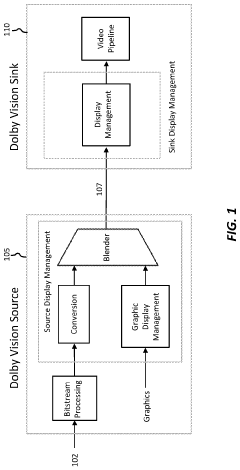
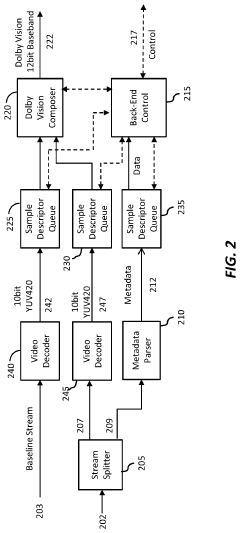
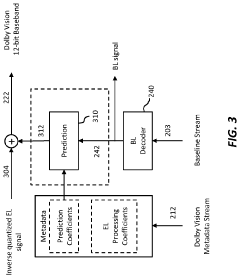
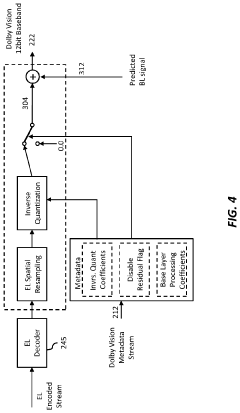
- The implementation of a layered representation and delivery system for HDR video, utilizing Dolby Vision technology, which includes a base layer and enhancement layer, along with metadata processing to reconstruct HDR signals, ensuring seamless playback on compatible displays.
HDR video transmission method, device and system and computer readable storage medium
PatentActiveCN112702651A
Innovation
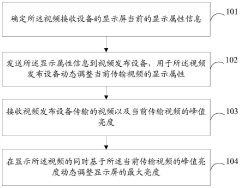
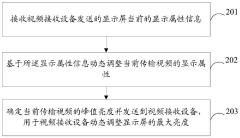
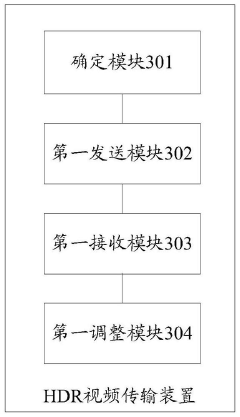
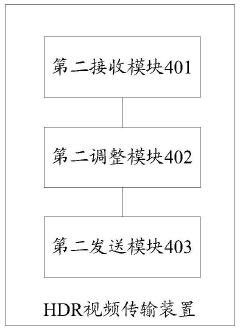
- Through the collaborative work between the video receiving device and the video publishing device, the current display attribute information and power status of the display screen are determined, the maximum brightness of the display screen is dynamically adjusted, and the brightness of the display screen is realized based on the peak brightness and the viewing mode selected by the user. and real-time optimization of color gamut range.
Content Accessibility and Device Compatibility
Dolby Vision's impact on educational content distribution extends significantly to content accessibility and device compatibility. This advanced HDR technology enhances the visual experience across a wide range of devices, ensuring that educational materials are more engaging and accessible to diverse learners.
One of the key advantages of Dolby Vision in educational content distribution is its ability to optimize content for various display capabilities. The technology dynamically adjusts brightness, contrast, and color settings based on the specific device's capabilities, ensuring that educational videos and interactive content maintain their visual quality across different screens. This adaptability is crucial in educational settings where students may access content on various devices, from high-end tablets to budget smartphones.
The enhanced visual quality provided by Dolby Vision also improves content accessibility for students with visual impairments. The technology's superior contrast and color range can make text more legible and visual elements more distinguishable, potentially reducing eye strain during extended viewing sessions. This is particularly beneficial for students who rely heavily on digital content for their studies.
Device compatibility is another area where Dolby Vision excels in educational content distribution. The technology is supported by a growing ecosystem of devices, including smartphones, tablets, laptops, and smart TVs from various manufacturers. This wide compatibility ensures that educational institutions can create content once and distribute it across multiple platforms without compromising quality or accessibility.
Furthermore, Dolby Vision's metadata-driven approach allows for efficient content delivery. The technology can adjust the content's visual parameters in real-time based on the viewing environment and device capabilities, reducing the need for multiple versions of the same content for different devices. This streamlines the content distribution process and reduces storage and bandwidth requirements for educational institutions.
The technology also supports seamless integration with popular video streaming platforms and learning management systems. This compatibility allows educational content creators to leverage existing distribution channels while enhancing the visual quality of their materials. As a result, students can access high-quality educational content through familiar platforms, improving the overall learning experience.
In conclusion, Dolby Vision's contribution to content accessibility and device compatibility in educational content distribution is significant. By ensuring consistent visual quality across devices, enhancing accessibility for visually impaired students, and streamlining content delivery, the technology plays a crucial role in modernizing educational content distribution and improving learning outcomes.
One of the key advantages of Dolby Vision in educational content distribution is its ability to optimize content for various display capabilities. The technology dynamically adjusts brightness, contrast, and color settings based on the specific device's capabilities, ensuring that educational videos and interactive content maintain their visual quality across different screens. This adaptability is crucial in educational settings where students may access content on various devices, from high-end tablets to budget smartphones.
The enhanced visual quality provided by Dolby Vision also improves content accessibility for students with visual impairments. The technology's superior contrast and color range can make text more legible and visual elements more distinguishable, potentially reducing eye strain during extended viewing sessions. This is particularly beneficial for students who rely heavily on digital content for their studies.
Device compatibility is another area where Dolby Vision excels in educational content distribution. The technology is supported by a growing ecosystem of devices, including smartphones, tablets, laptops, and smart TVs from various manufacturers. This wide compatibility ensures that educational institutions can create content once and distribute it across multiple platforms without compromising quality or accessibility.
Furthermore, Dolby Vision's metadata-driven approach allows for efficient content delivery. The technology can adjust the content's visual parameters in real-time based on the viewing environment and device capabilities, reducing the need for multiple versions of the same content for different devices. This streamlines the content distribution process and reduces storage and bandwidth requirements for educational institutions.
The technology also supports seamless integration with popular video streaming platforms and learning management systems. This compatibility allows educational content creators to leverage existing distribution channels while enhancing the visual quality of their materials. As a result, students can access high-quality educational content through familiar platforms, improving the overall learning experience.
In conclusion, Dolby Vision's contribution to content accessibility and device compatibility in educational content distribution is significant. By ensuring consistent visual quality across devices, enhancing accessibility for visually impaired students, and streamlining content delivery, the technology plays a crucial role in modernizing educational content distribution and improving learning outcomes.
Cost-Benefit Analysis for Educational Institutions
Implementing Dolby Vision in educational content distribution requires a thorough cost-benefit analysis for educational institutions. The initial investment in Dolby Vision-compatible equipment and content creation tools can be substantial. However, the long-term benefits may outweigh these costs, particularly for institutions aiming to differentiate themselves in the competitive education market.
The primary cost considerations include hardware upgrades, such as Dolby Vision-capable displays and playback devices, which may necessitate significant capital expenditure. Additionally, there are costs associated with training staff to utilize Dolby Vision technology effectively and potentially hiring specialized personnel for content creation and management.
Content production costs may also increase due to the need for higher-quality source materials and more sophisticated post-production processes to fully leverage Dolby Vision's capabilities. Licensing fees for Dolby Vision technology should also be factored into the overall cost structure.
On the benefit side, Dolby Vision can significantly enhance the visual quality of educational content, potentially leading to improved student engagement and learning outcomes. The technology's ability to deliver more vibrant colors, deeper contrasts, and greater detail can make complex subjects more accessible and memorable, particularly in fields such as science, art, and medicine.
Enhanced content quality may also extend the lifespan of educational materials, reducing the frequency of content updates and potentially offsetting some of the initial investment costs. Furthermore, offering Dolby Vision-enhanced content could be a unique selling point for institutions, potentially attracting more students and justifying premium pricing for certain courses or programs.
The technology's compatibility with a wide range of devices, from high-end displays to mobile phones, ensures that students can access high-quality content across various platforms, enhancing the flexibility and reach of educational programs. This multi-platform approach could lead to increased enrollment in distance learning programs and improved student satisfaction.
Institutions must also consider the potential for increased collaboration with content creators and technology partners, which could lead to innovative educational experiences and research opportunities. The adoption of cutting-edge technology like Dolby Vision may also position institutions as forward-thinking leaders in educational innovation, potentially attracting grants, partnerships, and positive media attention.
However, the return on investment timeline is crucial. Educational institutions must carefully assess whether the benefits of Dolby Vision align with their long-term strategic goals and financial capabilities. A phased implementation approach may be advisable, starting with pilot programs in select departments or courses to gauge effectiveness and student reception before a full-scale rollout.
The primary cost considerations include hardware upgrades, such as Dolby Vision-capable displays and playback devices, which may necessitate significant capital expenditure. Additionally, there are costs associated with training staff to utilize Dolby Vision technology effectively and potentially hiring specialized personnel for content creation and management.
Content production costs may also increase due to the need for higher-quality source materials and more sophisticated post-production processes to fully leverage Dolby Vision's capabilities. Licensing fees for Dolby Vision technology should also be factored into the overall cost structure.
On the benefit side, Dolby Vision can significantly enhance the visual quality of educational content, potentially leading to improved student engagement and learning outcomes. The technology's ability to deliver more vibrant colors, deeper contrasts, and greater detail can make complex subjects more accessible and memorable, particularly in fields such as science, art, and medicine.
Enhanced content quality may also extend the lifespan of educational materials, reducing the frequency of content updates and potentially offsetting some of the initial investment costs. Furthermore, offering Dolby Vision-enhanced content could be a unique selling point for institutions, potentially attracting more students and justifying premium pricing for certain courses or programs.
The technology's compatibility with a wide range of devices, from high-end displays to mobile phones, ensures that students can access high-quality content across various platforms, enhancing the flexibility and reach of educational programs. This multi-platform approach could lead to increased enrollment in distance learning programs and improved student satisfaction.
Institutions must also consider the potential for increased collaboration with content creators and technology partners, which could lead to innovative educational experiences and research opportunities. The adoption of cutting-edge technology like Dolby Vision may also position institutions as forward-thinking leaders in educational innovation, potentially attracting grants, partnerships, and positive media attention.
However, the return on investment timeline is crucial. Educational institutions must carefully assess whether the benefits of Dolby Vision align with their long-term strategic goals and financial capabilities. A phased implementation approach may be advisable, starting with pilot programs in select departments or courses to gauge effectiveness and student reception before a full-scale rollout.
Unlock deeper insights with Patsnap Eureka Quick Research — get a full tech report to explore trends and direct your research. Try now!
Generate Your Research Report Instantly with AI Agent
Supercharge your innovation with Patsnap Eureka AI Agent Platform!