

How Dolby Vision Transforms Smartphone Filmmaking
JUL 30, 20259 MIN READ
Generate Your Research Report Instantly with AI Agent
PatSnap Eureka helps you evaluate technical feasibility & market potential.
Dolby Vision Evolution
Dolby Vision has undergone a remarkable evolution since its introduction in 2014, transforming the landscape of digital imaging and video technology. Initially developed for high-end cinema and television applications, Dolby Vision has rapidly expanded its reach to encompass a wide range of consumer devices, including smartphones.
The journey of Dolby Vision in smartphone filmmaking began with the increasing demand for high-quality video capture on mobile devices. As smartphone cameras improved in resolution and low-light performance, there was a growing need for advanced HDR (High Dynamic Range) technology to fully utilize these capabilities. Dolby Vision stepped in to fill this gap, offering a superior HDR solution that could capture, process, and display a wider range of colors and brightness levels.
The first significant milestone in Dolby Vision's smartphone integration came with the introduction of Dolby Vision capture capabilities in high-end mobile devices. This allowed users to record video content in Dolby Vision format directly from their smartphones, opening up new possibilities for mobile content creators and filmmakers.
As the technology matured, Dolby Vision evolved to address the specific challenges of mobile filmmaking. This included optimizing the encoding process for mobile processors, reducing power consumption, and adapting to the unique display characteristics of smartphone screens. These advancements made it possible to both capture and view Dolby Vision content on the same device, creating a seamless end-to-end HDR workflow for mobile creators.
The integration of Dolby Vision with smartphone camera systems has led to significant improvements in mobile video quality. The technology's ability to capture a wider dynamic range and more accurate colors has elevated smartphone-captured footage to a level that can rival professional-grade equipment in certain scenarios. This has democratized high-quality video production, allowing amateur filmmakers and content creators to produce visually stunning content with readily available tools.
Recent developments in Dolby Vision for smartphones have focused on real-time processing and AI-enhanced capabilities. These advancements enable on-the-fly adjustments to exposure, color grading, and tone mapping, ensuring optimal video quality even in challenging lighting conditions. The integration of machine learning algorithms has further improved the technology's ability to analyze scenes and apply appropriate enhancements, making it easier for users to achieve professional-looking results without extensive technical knowledge.
Looking ahead, the evolution of Dolby Vision in smartphone filmmaking is likely to continue at a rapid pace. Future iterations may include more advanced AI-driven features, improved integration with mobile editing software, and enhanced compatibility with emerging display technologies. As smartphones continue to push the boundaries of what's possible in mobile imaging, Dolby Vision is poised to play a crucial role in shaping the future of portable filmmaking tools.
The journey of Dolby Vision in smartphone filmmaking began with the increasing demand for high-quality video capture on mobile devices. As smartphone cameras improved in resolution and low-light performance, there was a growing need for advanced HDR (High Dynamic Range) technology to fully utilize these capabilities. Dolby Vision stepped in to fill this gap, offering a superior HDR solution that could capture, process, and display a wider range of colors and brightness levels.
The first significant milestone in Dolby Vision's smartphone integration came with the introduction of Dolby Vision capture capabilities in high-end mobile devices. This allowed users to record video content in Dolby Vision format directly from their smartphones, opening up new possibilities for mobile content creators and filmmakers.
As the technology matured, Dolby Vision evolved to address the specific challenges of mobile filmmaking. This included optimizing the encoding process for mobile processors, reducing power consumption, and adapting to the unique display characteristics of smartphone screens. These advancements made it possible to both capture and view Dolby Vision content on the same device, creating a seamless end-to-end HDR workflow for mobile creators.
The integration of Dolby Vision with smartphone camera systems has led to significant improvements in mobile video quality. The technology's ability to capture a wider dynamic range and more accurate colors has elevated smartphone-captured footage to a level that can rival professional-grade equipment in certain scenarios. This has democratized high-quality video production, allowing amateur filmmakers and content creators to produce visually stunning content with readily available tools.
Recent developments in Dolby Vision for smartphones have focused on real-time processing and AI-enhanced capabilities. These advancements enable on-the-fly adjustments to exposure, color grading, and tone mapping, ensuring optimal video quality even in challenging lighting conditions. The integration of machine learning algorithms has further improved the technology's ability to analyze scenes and apply appropriate enhancements, making it easier for users to achieve professional-looking results without extensive technical knowledge.
Looking ahead, the evolution of Dolby Vision in smartphone filmmaking is likely to continue at a rapid pace. Future iterations may include more advanced AI-driven features, improved integration with mobile editing software, and enhanced compatibility with emerging display technologies. As smartphones continue to push the boundaries of what's possible in mobile imaging, Dolby Vision is poised to play a crucial role in shaping the future of portable filmmaking tools.
Smartphone Filmmaking Demand
The demand for smartphone filmmaking has experienced a significant surge in recent years, driven by advancements in mobile technology and changing consumer preferences. As smartphones become increasingly sophisticated, with improved camera capabilities and processing power, they have emerged as viable tools for content creation, particularly in the realm of video production.
The rise of social media platforms and video-sharing apps has fueled this trend, creating a vast market for user-generated content. Platforms like TikTok, Instagram Reels, and YouTube Shorts have popularized short-form video content, encouraging users to create and share their own films directly from their smartphones. This shift has democratized content creation, allowing anyone with a smartphone to become a potential filmmaker.
Professional filmmakers and content creators have also recognized the potential of smartphone filmmaking. Many have embraced these devices for their portability, ease of use, and ability to capture high-quality footage in various settings. This has led to an increased demand for smartphone-specific filmmaking accessories, such as gimbals, external lenses, and microphones, further expanding the market ecosystem.
The COVID-19 pandemic has accelerated this trend, as lockdowns and social distancing measures forced many to explore new ways of creating content from home. This situation has highlighted the versatility and accessibility of smartphone filmmaking, leading to its adoption across various industries, including journalism, marketing, and education.
The entertainment industry has also taken notice of this shift. Major film festivals now include categories for smartphone-shot films, and some high-profile directors have experimented with shooting entire feature films using smartphones. This recognition from the professional film industry has further legitimized smartphone filmmaking as a serious medium for creative expression.
As the quality of smartphone cameras continues to improve, with features like multiple lenses, advanced image stabilization, and high dynamic range capabilities, the demand for smartphone filmmaking is expected to grow. Consumers are increasingly looking for devices that can serve as all-in-one content creation tools, capable of capturing, editing, and sharing high-quality video content.
The integration of advanced technologies like Dolby Vision into smartphones represents a significant leap forward in mobile filmmaking capabilities. This technology enhances the visual quality of content created on smartphones, offering improved color accuracy, contrast, and brightness. As a result, it is likely to drive further demand for smartphone filmmaking, attracting both amateur enthusiasts and professional creators who seek to produce cinema-quality content using mobile devices.
The rise of social media platforms and video-sharing apps has fueled this trend, creating a vast market for user-generated content. Platforms like TikTok, Instagram Reels, and YouTube Shorts have popularized short-form video content, encouraging users to create and share their own films directly from their smartphones. This shift has democratized content creation, allowing anyone with a smartphone to become a potential filmmaker.
Professional filmmakers and content creators have also recognized the potential of smartphone filmmaking. Many have embraced these devices for their portability, ease of use, and ability to capture high-quality footage in various settings. This has led to an increased demand for smartphone-specific filmmaking accessories, such as gimbals, external lenses, and microphones, further expanding the market ecosystem.
The COVID-19 pandemic has accelerated this trend, as lockdowns and social distancing measures forced many to explore new ways of creating content from home. This situation has highlighted the versatility and accessibility of smartphone filmmaking, leading to its adoption across various industries, including journalism, marketing, and education.
The entertainment industry has also taken notice of this shift. Major film festivals now include categories for smartphone-shot films, and some high-profile directors have experimented with shooting entire feature films using smartphones. This recognition from the professional film industry has further legitimized smartphone filmmaking as a serious medium for creative expression.
As the quality of smartphone cameras continues to improve, with features like multiple lenses, advanced image stabilization, and high dynamic range capabilities, the demand for smartphone filmmaking is expected to grow. Consumers are increasingly looking for devices that can serve as all-in-one content creation tools, capable of capturing, editing, and sharing high-quality video content.
The integration of advanced technologies like Dolby Vision into smartphones represents a significant leap forward in mobile filmmaking capabilities. This technology enhances the visual quality of content created on smartphones, offering improved color accuracy, contrast, and brightness. As a result, it is likely to drive further demand for smartphone filmmaking, attracting both amateur enthusiasts and professional creators who seek to produce cinema-quality content using mobile devices.
Dolby Vision Tech Challenges
Dolby Vision implementation in smartphone filmmaking faces several technical challenges that need to be addressed for optimal performance. One of the primary hurdles is the limited dynamic range of smartphone camera sensors compared to professional cinema cameras. This constraint makes it difficult to capture the full spectrum of light and color information required for Dolby Vision's high dynamic range (HDR) capabilities.
Another significant challenge lies in the computational power required to process Dolby Vision content in real-time. Smartphones have limited processing capabilities compared to dedicated video editing workstations, which can impact the speed and efficiency of encoding and decoding Dolby Vision content. This limitation may result in longer rendering times or reduced performance during live preview and playback.
Storage and bandwidth constraints also pose challenges for Dolby Vision implementation in smartphones. The increased data requirements of Dolby Vision content can quickly consume available storage space on devices with limited capacity. Additionally, transferring and streaming Dolby Vision content may require higher bandwidth, potentially impacting the user experience in areas with limited network connectivity.
Color accuracy and calibration present another set of challenges. Ensuring consistent color reproduction across different smartphone displays and maintaining color fidelity throughout the entire workflow from capture to playback can be complex. This is particularly crucial for Dolby Vision, which relies on precise color management to deliver its enhanced visual experience.
Heat management is a critical concern when implementing Dolby Vision on smartphones. The intensive processing required for HDR content can lead to increased power consumption and heat generation, potentially affecting device performance and battery life. Balancing image quality with thermal management is essential for a seamless user experience.
Compatibility issues with existing software and hardware ecosystems pose additional challenges. Integrating Dolby Vision technology into various camera apps, editing software, and playback systems requires extensive collaboration and standardization efforts across the industry. Ensuring backward compatibility with non-Dolby Vision devices and displays is also crucial for widespread adoption.
Lastly, the challenge of user education and interface design cannot be overlooked. Implementing Dolby Vision features in a user-friendly manner that allows both amateur and professional filmmakers to leverage its capabilities effectively requires careful consideration of the user interface and workflow design. Striking a balance between advanced features and ease of use is essential for the successful integration of Dolby Vision in smartphone filmmaking.
Another significant challenge lies in the computational power required to process Dolby Vision content in real-time. Smartphones have limited processing capabilities compared to dedicated video editing workstations, which can impact the speed and efficiency of encoding and decoding Dolby Vision content. This limitation may result in longer rendering times or reduced performance during live preview and playback.
Storage and bandwidth constraints also pose challenges for Dolby Vision implementation in smartphones. The increased data requirements of Dolby Vision content can quickly consume available storage space on devices with limited capacity. Additionally, transferring and streaming Dolby Vision content may require higher bandwidth, potentially impacting the user experience in areas with limited network connectivity.
Color accuracy and calibration present another set of challenges. Ensuring consistent color reproduction across different smartphone displays and maintaining color fidelity throughout the entire workflow from capture to playback can be complex. This is particularly crucial for Dolby Vision, which relies on precise color management to deliver its enhanced visual experience.
Heat management is a critical concern when implementing Dolby Vision on smartphones. The intensive processing required for HDR content can lead to increased power consumption and heat generation, potentially affecting device performance and battery life. Balancing image quality with thermal management is essential for a seamless user experience.
Compatibility issues with existing software and hardware ecosystems pose additional challenges. Integrating Dolby Vision technology into various camera apps, editing software, and playback systems requires extensive collaboration and standardization efforts across the industry. Ensuring backward compatibility with non-Dolby Vision devices and displays is also crucial for widespread adoption.
Lastly, the challenge of user education and interface design cannot be overlooked. Implementing Dolby Vision features in a user-friendly manner that allows both amateur and professional filmmakers to leverage its capabilities effectively requires careful consideration of the user interface and workflow design. Striking a balance between advanced features and ease of use is essential for the successful integration of Dolby Vision in smartphone filmmaking.
Current Dolby Vision Solutions
01 High Dynamic Range (HDR) Technology
Dolby Vision utilizes HDR technology to enhance image quality by expanding the range of both contrast and color. This results in brighter highlights, deeper blacks, and a wider color gamut, providing a more lifelike and immersive viewing experience.- High Dynamic Range (HDR) imaging technology: Dolby Vision utilizes HDR technology to enhance image quality by expanding the range of both contrast and color. This results in brighter highlights, deeper blacks, and a wider color gamut, providing a more lifelike and immersive viewing experience.
- Dynamic metadata optimization: Dolby Vision employs dynamic metadata to optimize image quality on a scene-by-scene or frame-by-frame basis. This allows for precise control over brightness, contrast, and color, ensuring that each scene is displayed at its best possible quality.
- Color grading and mapping techniques: Advanced color grading and mapping techniques are used in Dolby Vision to accurately reproduce colors across different display devices. This ensures consistent color representation and maintains the creator's artistic intent, regardless of the viewing device's capabilities.
- Display device calibration and optimization: Dolby Vision incorporates display device calibration and optimization to ensure that the content is displayed correctly on various screens. This includes adjusting for the specific characteristics of each display, such as peak brightness, black levels, and color gamut.
- Content creation and mastering tools: Specialized content creation and mastering tools are developed for Dolby Vision to enable filmmakers and content creators to produce high-quality HDR content. These tools allow for precise control over image parameters and ensure that the final product meets Dolby Vision standards.
02 Dynamic Metadata Processing
Dolby Vision employs dynamic metadata processing to optimize image quality on a scene-by-scene or frame-by-frame basis. This allows for precise control over brightness, contrast, and color, ensuring that each image is displayed at its best possible quality.Expand Specific Solutions03 Color Grading and Mapping
Advanced color grading and mapping techniques are used in Dolby Vision to accurately reproduce colors across different display devices. This ensures consistent color representation and maintains the creator's artistic intent, regardless of the viewing device's capabilities.Expand Specific Solutions04 Display Calibration and Optimization
Dolby Vision incorporates display calibration and optimization technologies to ensure that content is displayed optimally on various screens. This includes adjusting for the specific characteristics of each display, such as peak brightness and color gamut, to deliver the best possible image quality.Expand Specific Solutions05 Content Creation and Mastering Tools
Specialized content creation and mastering tools are developed for Dolby Vision, allowing filmmakers and content creators to produce high-quality HDR content. These tools enable precise control over image parameters during the production process, ensuring that the final product meets Dolby Vision's high standards for image quality.Expand Specific Solutions
Key Dolby Vision Players
The competitive landscape for Dolby Vision in smartphone filmmaking is evolving rapidly, with the market in its growth phase. As the technology matures, major players like Apple, Samsung, and Huawei are integrating Dolby Vision capabilities into their high-end devices. The market size is expanding as more consumers seek professional-quality video capture on mobile devices. Companies like Qualcomm and Google are also contributing to the ecosystem by developing supporting technologies. While adoption is increasing, there's still room for innovation and differentiation among manufacturers, particularly in areas like AI-enhanced processing and advanced sensor technologies.
Samsung Electronics Co., Ltd.
Technical Solution: Samsung has implemented HDR10+ technology in its high-end smartphones, offering a Dolby Vision alternative. The company's flagship devices support 8K video recording with HDR10+ capabilities, leveraging Samsung's advanced ISOCELL image sensors and Exynos processors[10]. Samsung's approach includes AI-enhanced video processing, which can optimize color, contrast, and brightness in real-time. The company has also developed a Pro Video mode that allows users to manually adjust HDR settings for more creative control[11].
Strengths: High-resolution video capture, advanced hardware capabilities, wide range of devices supporting HDR. Weaknesses: Not natively supporting Dolby Vision, potential complexity for average users in Pro modes.
Apple, Inc.
Technical Solution: Apple has integrated Dolby Vision into its iPhone lineup, enabling users to capture, edit, and share Dolby Vision HDR videos. The company's A-series chips, combined with advanced image signal processors, allow for real-time Dolby Vision processing. Apple's implementation supports 10-bit HDR recording at up to 4K 60fps, with the ability to edit Dolby Vision content directly on the device[1][3]. The company has also developed a custom color grading workflow within its Photos and iMovie apps, making professional-level color adjustments accessible to smartphone users[2].
Strengths: Seamless integration with iOS ecosystem, powerful hardware for real-time processing, user-friendly editing tools. Weaknesses: Limited to Apple devices, potentially higher cost for consumers.
Core Dolby Vision Patents
Image processing method based on backlight adjustment, smart television and storage medium
PatentActiveCN109640155A
Innovation
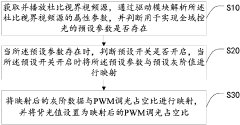
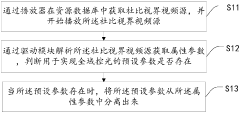
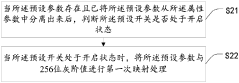
- By analyzing the attribute parameters of the Dolby Vision video source, it is determined whether the preset parameters exist, and mapped according to the preset switch and grayscale value, and the PWM dimming duty cycle is adjusted to set the backlight value to achieve smooth transition changes in the backlight.

Method for recording and/or streaming and in particular processing at least one video sequence comprising at least one video track and one audio track
PatentWO2016071353A2
Innovation
- A method utilizing a video recording device and an operating device connected via a wireless data connection, where the video signal from the device and audio signal from the control unit are primarily used to record video and audio tracks, with the operating device equipped with a directional microphone and sensors for real-time parameter adjustment, such as light and sound settings, to enhance sound quality and automate noise reduction.


Dolby Vision Ecosystem
The Dolby Vision ecosystem encompasses a comprehensive network of technologies, devices, and content creation tools that work together to deliver an enhanced visual experience. At its core, Dolby Vision is an advanced HDR (High Dynamic Range) format that enables a wider range of colors, brighter highlights, and deeper blacks in video content.
In the context of smartphone filmmaking, the Dolby Vision ecosystem extends from capture to playback, ensuring a consistent and high-quality visual experience throughout the content creation process. This ecosystem includes Dolby Vision-enabled smartphones, which can capture, process, and display HDR content, as well as professional-grade editing software that supports Dolby Vision workflows.
Content creators using Dolby Vision-enabled smartphones can take advantage of the format's capabilities to capture a wider dynamic range and color gamut. This allows for more detailed and vibrant footage, even in challenging lighting conditions. The ecosystem also includes post-production tools that enable filmmakers to fine-tune their content while maintaining the Dolby Vision metadata, ensuring that the creator's intent is preserved across different display devices.
The playback aspect of the Dolby Vision ecosystem is equally important. It encompasses a wide range of devices, including smartphones, tablets, smart TVs, and streaming platforms that support Dolby Vision content. These devices are capable of interpreting the Dolby Vision metadata and adjusting the display parameters in real-time to optimize the viewing experience for each specific screen.
Furthermore, the Dolby Vision ecosystem extends to content distribution channels. Major streaming services have embraced Dolby Vision, offering a growing library of HDR content that takes full advantage of the format's capabilities. This widespread adoption ensures that content created using Dolby Vision-enabled smartphones can reach a broad audience without compromising on quality.
The ecosystem also includes a certification process for devices and content, ensuring that products and media labeled as Dolby Vision-compatible meet specific quality standards. This helps maintain consistency and reliability across the entire ecosystem, from creation to consumption.
By providing a complete end-to-end solution, the Dolby Vision ecosystem empowers smartphone filmmakers to create, edit, and distribute high-quality HDR content with confidence, knowing that their vision will be accurately represented across a wide range of viewing devices.
In the context of smartphone filmmaking, the Dolby Vision ecosystem extends from capture to playback, ensuring a consistent and high-quality visual experience throughout the content creation process. This ecosystem includes Dolby Vision-enabled smartphones, which can capture, process, and display HDR content, as well as professional-grade editing software that supports Dolby Vision workflows.
Content creators using Dolby Vision-enabled smartphones can take advantage of the format's capabilities to capture a wider dynamic range and color gamut. This allows for more detailed and vibrant footage, even in challenging lighting conditions. The ecosystem also includes post-production tools that enable filmmakers to fine-tune their content while maintaining the Dolby Vision metadata, ensuring that the creator's intent is preserved across different display devices.
The playback aspect of the Dolby Vision ecosystem is equally important. It encompasses a wide range of devices, including smartphones, tablets, smart TVs, and streaming platforms that support Dolby Vision content. These devices are capable of interpreting the Dolby Vision metadata and adjusting the display parameters in real-time to optimize the viewing experience for each specific screen.
Furthermore, the Dolby Vision ecosystem extends to content distribution channels. Major streaming services have embraced Dolby Vision, offering a growing library of HDR content that takes full advantage of the format's capabilities. This widespread adoption ensures that content created using Dolby Vision-enabled smartphones can reach a broad audience without compromising on quality.
The ecosystem also includes a certification process for devices and content, ensuring that products and media labeled as Dolby Vision-compatible meet specific quality standards. This helps maintain consistency and reliability across the entire ecosystem, from creation to consumption.
By providing a complete end-to-end solution, the Dolby Vision ecosystem empowers smartphone filmmakers to create, edit, and distribute high-quality HDR content with confidence, knowing that their vision will be accurately represented across a wide range of viewing devices.
Content Distribution Strategies
Content distribution strategies play a crucial role in maximizing the impact of Dolby Vision-enhanced smartphone filmmaking. As this technology transforms the way content is created, it also necessitates innovative approaches to ensure that the enhanced visual experience reaches the intended audience effectively.
One key strategy is leveraging streaming platforms that support Dolby Vision. Major players like Netflix, Amazon Prime Video, and Apple TV+ have embraced this technology, providing filmmakers with a direct channel to showcase their work in its full visual glory. These platforms often highlight Dolby Vision content, giving it prominence in their user interfaces and recommendations.
Social media platforms are also adapting to support high-quality video content. Instagram, TikTok, and YouTube have introduced features that allow for higher resolution and dynamic range uploads, though full Dolby Vision support is still evolving. Filmmakers can utilize these platforms for teasers and behind-the-scenes content, driving viewers to full Dolby Vision experiences on dedicated streaming services.
Film festivals and virtual screenings have become important distribution channels for smartphone-created Dolby Vision content. Many festivals now accept submissions in this format, recognizing the quality achievable with modern smartphone cameras. Virtual screenings, which gained popularity during the pandemic, offer a way to showcase Dolby Vision content to a global audience while maintaining visual fidelity.
Partnerships with device manufacturers and telecom companies present another avenue for distribution. Smartphone makers can preload Dolby Vision-enhanced content to showcase their devices' capabilities, while telecom providers can offer exclusive access to such content as part of their service packages, driving adoption of both the technology and higher-tier data plans.
Educational initiatives and workshops focused on Dolby Vision smartphone filmmaking can serve as indirect distribution channels. By teaching creators how to leverage this technology, these programs naturally lead to the production and dissemination of more Dolby Vision content, expanding its reach organically.
Lastly, collaborations with established filmmakers and influencers can significantly boost the visibility of Dolby Vision smartphone filmmaking. When respected creators embrace and promote this technology, it not only lends credibility but also exposes the enhanced visual experience to a broader audience, potentially inspiring a new generation of filmmakers to explore its possibilities.
One key strategy is leveraging streaming platforms that support Dolby Vision. Major players like Netflix, Amazon Prime Video, and Apple TV+ have embraced this technology, providing filmmakers with a direct channel to showcase their work in its full visual glory. These platforms often highlight Dolby Vision content, giving it prominence in their user interfaces and recommendations.
Social media platforms are also adapting to support high-quality video content. Instagram, TikTok, and YouTube have introduced features that allow for higher resolution and dynamic range uploads, though full Dolby Vision support is still evolving. Filmmakers can utilize these platforms for teasers and behind-the-scenes content, driving viewers to full Dolby Vision experiences on dedicated streaming services.
Film festivals and virtual screenings have become important distribution channels for smartphone-created Dolby Vision content. Many festivals now accept submissions in this format, recognizing the quality achievable with modern smartphone cameras. Virtual screenings, which gained popularity during the pandemic, offer a way to showcase Dolby Vision content to a global audience while maintaining visual fidelity.
Partnerships with device manufacturers and telecom companies present another avenue for distribution. Smartphone makers can preload Dolby Vision-enhanced content to showcase their devices' capabilities, while telecom providers can offer exclusive access to such content as part of their service packages, driving adoption of both the technology and higher-tier data plans.
Educational initiatives and workshops focused on Dolby Vision smartphone filmmaking can serve as indirect distribution channels. By teaching creators how to leverage this technology, these programs naturally lead to the production and dissemination of more Dolby Vision content, expanding its reach organically.
Lastly, collaborations with established filmmakers and influencers can significantly boost the visibility of Dolby Vision smartphone filmmaking. When respected creators embrace and promote this technology, it not only lends credibility but also exposes the enhanced visual experience to a broader audience, potentially inspiring a new generation of filmmakers to explore its possibilities.
Unlock deeper insights with PatSnap Eureka Quick Research — get a full tech report to explore trends and direct your research. Try now!
Generate Your Research Report Instantly with AI Agent
Supercharge your innovation with PatSnap Eureka AI Agent Platform!