
How to Align Notch Filter with Signal Source Frequency
MAR 17, 20269 MIN READ
Generate Your Research Report Instantly with AI Agent
Patsnap Eureka helps you evaluate technical feasibility & market potential.
Notch Filter Alignment Background and Objectives
Notch filters represent a critical component in electronic signal processing systems, designed to attenuate specific frequency components while preserving the integrity of surrounding spectral content. These specialized filters create deep nulls at predetermined frequencies, making them indispensable for eliminating unwanted interference, noise, or spurious signals that can compromise system performance. The fundamental challenge lies in achieving precise alignment between the filter's rejection frequency and the target signal source frequency.
The evolution of notch filter technology has progressed through several distinct phases, beginning with passive LC circuits in early radio applications, advancing through active analog implementations using operational amplifiers, and culminating in sophisticated digital signal processing solutions. Each technological generation has brought improvements in precision, stability, and adaptability, yet the core challenge of frequency alignment remains paramount across all implementations.
Modern electronic systems operate in increasingly complex electromagnetic environments where multiple signal sources coexist within narrow frequency bands. This congestion necessitates highly selective filtering capabilities that can precisely target specific frequencies without affecting adjacent channels. The alignment challenge becomes particularly acute in applications requiring real-time adaptation to varying signal conditions or multiple simultaneous interference sources.
The primary technical objective centers on developing robust methodologies for achieving and maintaining precise frequency correspondence between notch filters and their target signals. This encompasses both initial calibration procedures and dynamic tracking mechanisms that can accommodate frequency drift, temperature variations, and component aging effects. Secondary objectives include minimizing filter complexity while maximizing rejection depth and maintaining stable performance across varying environmental conditions.
Contemporary applications span diverse domains including wireless communications, where notch filters eliminate co-channel interference; audio processing systems requiring removal of specific noise frequencies; and precision instrumentation where spurious signals must be suppressed without affecting measurement accuracy. Each application domain presents unique alignment requirements and performance constraints that drive ongoing technological development.
The strategic importance of solving notch filter alignment challenges extends beyond immediate technical benefits to encompass broader system reliability, performance optimization, and cost reduction objectives. Effective alignment solutions enable more efficient spectrum utilization, reduce system complexity, and enhance overall signal quality in increasingly demanding operational environments.
The evolution of notch filter technology has progressed through several distinct phases, beginning with passive LC circuits in early radio applications, advancing through active analog implementations using operational amplifiers, and culminating in sophisticated digital signal processing solutions. Each technological generation has brought improvements in precision, stability, and adaptability, yet the core challenge of frequency alignment remains paramount across all implementations.
Modern electronic systems operate in increasingly complex electromagnetic environments where multiple signal sources coexist within narrow frequency bands. This congestion necessitates highly selective filtering capabilities that can precisely target specific frequencies without affecting adjacent channels. The alignment challenge becomes particularly acute in applications requiring real-time adaptation to varying signal conditions or multiple simultaneous interference sources.
The primary technical objective centers on developing robust methodologies for achieving and maintaining precise frequency correspondence between notch filters and their target signals. This encompasses both initial calibration procedures and dynamic tracking mechanisms that can accommodate frequency drift, temperature variations, and component aging effects. Secondary objectives include minimizing filter complexity while maximizing rejection depth and maintaining stable performance across varying environmental conditions.
Contemporary applications span diverse domains including wireless communications, where notch filters eliminate co-channel interference; audio processing systems requiring removal of specific noise frequencies; and precision instrumentation where spurious signals must be suppressed without affecting measurement accuracy. Each application domain presents unique alignment requirements and performance constraints that drive ongoing technological development.
The strategic importance of solving notch filter alignment challenges extends beyond immediate technical benefits to encompass broader system reliability, performance optimization, and cost reduction objectives. Effective alignment solutions enable more efficient spectrum utilization, reduce system complexity, and enhance overall signal quality in increasingly demanding operational environments.
Market Demand for Precise Frequency Filtering Solutions
The telecommunications industry represents the largest market segment driving demand for precise frequency filtering solutions, particularly in the context of notch filter alignment with signal source frequencies. Modern wireless communication systems, including 5G networks, satellite communications, and IoT devices, require increasingly sophisticated filtering capabilities to manage spectrum congestion and interference mitigation. The proliferation of wireless devices operating across overlapping frequency bands has created an urgent need for adaptive filtering technologies that can dynamically align with varying signal source frequencies.
Industrial automation and control systems constitute another significant market driver, where precise frequency filtering is essential for maintaining signal integrity in harsh electromagnetic environments. Manufacturing facilities, power generation plants, and process control systems rely heavily on accurate frequency filtering to prevent interference between control signals and operational equipment. The growing adoption of Industry 4.0 technologies has amplified this demand, as interconnected systems require more robust filtering solutions to ensure reliable communication between sensors, actuators, and control units.
The aerospace and defense sector presents substantial opportunities for advanced notch filter alignment technologies. Military communication systems, radar applications, and electronic warfare platforms demand exceptional precision in frequency filtering to maintain operational security and effectiveness. These applications often require real-time frequency tracking and adaptive filtering capabilities to counter sophisticated jamming techniques and maintain communication links in contested environments.
Medical device manufacturing has emerged as a rapidly growing market segment for precise frequency filtering solutions. Modern medical equipment, including MRI systems, patient monitoring devices, and implantable electronics, requires stringent electromagnetic compatibility standards. The ability to precisely align notch filters with specific interference frequencies is crucial for ensuring accurate diagnostic readings and patient safety.
The automotive industry's transition toward electric and autonomous vehicles has created new demands for frequency filtering technologies. Electric vehicle charging systems, vehicle-to-everything communication protocols, and advanced driver assistance systems all require precise filtering to manage electromagnetic interference and ensure reliable operation. The integration of multiple wireless communication standards within modern vehicles necessitates sophisticated filtering solutions capable of dynamic frequency alignment.
Consumer electronics manufacturers increasingly seek cost-effective solutions for implementing precise frequency filtering in smartphones, tablets, and wearable devices. The miniaturization trend in consumer electronics, combined with the need for multi-band operation, drives demand for compact, efficient filtering solutions that can adapt to varying signal conditions while maintaining low power consumption.
Industrial automation and control systems constitute another significant market driver, where precise frequency filtering is essential for maintaining signal integrity in harsh electromagnetic environments. Manufacturing facilities, power generation plants, and process control systems rely heavily on accurate frequency filtering to prevent interference between control signals and operational equipment. The growing adoption of Industry 4.0 technologies has amplified this demand, as interconnected systems require more robust filtering solutions to ensure reliable communication between sensors, actuators, and control units.
The aerospace and defense sector presents substantial opportunities for advanced notch filter alignment technologies. Military communication systems, radar applications, and electronic warfare platforms demand exceptional precision in frequency filtering to maintain operational security and effectiveness. These applications often require real-time frequency tracking and adaptive filtering capabilities to counter sophisticated jamming techniques and maintain communication links in contested environments.
Medical device manufacturing has emerged as a rapidly growing market segment for precise frequency filtering solutions. Modern medical equipment, including MRI systems, patient monitoring devices, and implantable electronics, requires stringent electromagnetic compatibility standards. The ability to precisely align notch filters with specific interference frequencies is crucial for ensuring accurate diagnostic readings and patient safety.
The automotive industry's transition toward electric and autonomous vehicles has created new demands for frequency filtering technologies. Electric vehicle charging systems, vehicle-to-everything communication protocols, and advanced driver assistance systems all require precise filtering to manage electromagnetic interference and ensure reliable operation. The integration of multiple wireless communication standards within modern vehicles necessitates sophisticated filtering solutions capable of dynamic frequency alignment.
Consumer electronics manufacturers increasingly seek cost-effective solutions for implementing precise frequency filtering in smartphones, tablets, and wearable devices. The miniaturization trend in consumer electronics, combined with the need for multi-band operation, drives demand for compact, efficient filtering solutions that can adapt to varying signal conditions while maintaining low power consumption.
Current Challenges in Signal-Notch Frequency Alignment
Signal-notch frequency alignment faces significant technical challenges that stem from the inherent variability and instability of both signal sources and notch filter characteristics. The primary challenge lies in the dynamic nature of signal frequencies, which can drift due to temperature variations, component aging, and power supply fluctuations. Traditional fixed-frequency notch filters cannot accommodate these variations, leading to degraded interference suppression performance when the target frequency shifts even slightly from the filter's center frequency.
Frequency drift represents one of the most persistent challenges in maintaining optimal alignment. Signal sources, particularly oscillators and communication systems, exhibit frequency instability that can range from parts per million to parts per billion depending on the quality and environmental conditions. This drift occurs across multiple time scales, from short-term jitter to long-term aging effects, making it difficult to predict and compensate for using conventional filtering approaches.
Temperature-induced frequency variations pose another critical challenge, as both the signal source and the notch filter components respond differently to thermal changes. The temperature coefficients of various circuit elements create complex interdependencies that can cause the relative frequency relationship to shift unpredictably. This thermal sensitivity becomes particularly problematic in applications where equipment operates across wide temperature ranges or experiences rapid temperature transitions.
Manufacturing tolerances and component variations introduce additional complexity to the alignment challenge. Even with precise design specifications, actual component values can deviate significantly from nominal values, causing the notch filter's center frequency to differ from its intended target. These variations are often compounded by the statistical distribution of multiple components within the filter circuit, making it difficult to achieve consistent performance across production units.
Real-time tracking requirements present substantial implementation challenges, particularly in applications where signal frequencies change rapidly or unpredictably. The control systems responsible for maintaining alignment must balance response speed with stability, avoiding oscillations while ensuring adequate tracking bandwidth. This becomes especially challenging when dealing with multiple interfering signals or when the desired signal and interference frequencies are closely spaced.
Power consumption and circuit complexity constraints limit the sophistication of alignment mechanisms that can be practically implemented. Advanced tracking systems often require additional circuitry, processing power, and control algorithms that may not be feasible in power-sensitive or cost-constrained applications. The trade-off between alignment accuracy and system complexity remains a fundamental challenge in many practical implementations.
Frequency drift represents one of the most persistent challenges in maintaining optimal alignment. Signal sources, particularly oscillators and communication systems, exhibit frequency instability that can range from parts per million to parts per billion depending on the quality and environmental conditions. This drift occurs across multiple time scales, from short-term jitter to long-term aging effects, making it difficult to predict and compensate for using conventional filtering approaches.
Temperature-induced frequency variations pose another critical challenge, as both the signal source and the notch filter components respond differently to thermal changes. The temperature coefficients of various circuit elements create complex interdependencies that can cause the relative frequency relationship to shift unpredictably. This thermal sensitivity becomes particularly problematic in applications where equipment operates across wide temperature ranges or experiences rapid temperature transitions.
Manufacturing tolerances and component variations introduce additional complexity to the alignment challenge. Even with precise design specifications, actual component values can deviate significantly from nominal values, causing the notch filter's center frequency to differ from its intended target. These variations are often compounded by the statistical distribution of multiple components within the filter circuit, making it difficult to achieve consistent performance across production units.
Real-time tracking requirements present substantial implementation challenges, particularly in applications where signal frequencies change rapidly or unpredictably. The control systems responsible for maintaining alignment must balance response speed with stability, avoiding oscillations while ensuring adequate tracking bandwidth. This becomes especially challenging when dealing with multiple interfering signals or when the desired signal and interference frequencies are closely spaced.
Power consumption and circuit complexity constraints limit the sophistication of alignment mechanisms that can be practically implemented. Advanced tracking systems often require additional circuitry, processing power, and control algorithms that may not be feasible in power-sensitive or cost-constrained applications. The trade-off between alignment accuracy and system complexity remains a fundamental challenge in many practical implementations.
Existing Frequency Alignment Solutions and Methods
01 Automatic frequency alignment using feedback control
Notch filter frequency alignment can be achieved through automatic feedback control systems that continuously monitor the filter's performance and adjust the center frequency accordingly. These systems typically employ phase-locked loops or frequency detection circuits to track the target frequency and maintain optimal alignment. The feedback mechanism ensures that the notch filter remains accurately tuned even in the presence of component variations or environmental changes.- Automatic frequency alignment using feedback control: Notch filter frequency alignment can be achieved through automatic feedback control systems that continuously monitor the filter's performance and adjust the center frequency accordingly. These systems typically employ phase-locked loops or frequency detection circuits to track the target frequency and maintain optimal alignment. The feedback mechanism ensures that the notch filter remains tuned to the desired frequency even in the presence of component variations or environmental changes.
- Digital tuning and calibration methods: Digital techniques can be employed to align notch filter frequencies through programmable components and calibration algorithms. These methods involve using digital signal processing to adjust filter parameters, storing calibration data in memory, and implementing adaptive algorithms that compensate for frequency drift. Digital control allows for precise frequency adjustment and the ability to store multiple filter configurations for different operating conditions.
- Temperature compensation techniques: Notch filter frequency alignment can be maintained across varying temperature conditions through compensation circuits that counteract temperature-induced frequency shifts. These techniques include using temperature sensors coupled with adjustment circuits, selecting components with complementary temperature coefficients, and implementing active compensation schemes. Temperature compensation ensures stable filter performance in applications subject to environmental variations.
- Voltage-controlled tuning mechanisms: Frequency alignment of notch filters can be accomplished using voltage-controlled elements such as varactors or voltage-controlled oscillators. These mechanisms allow for electronic adjustment of the filter's center frequency by varying a control voltage. The tuning range and linearity can be optimized through circuit design, and the control voltage can be generated by manual adjustment, automatic control systems, or microprocessor-based controllers.
- Multi-stage cascaded alignment approach: Complex notch filter systems can achieve precise frequency alignment through cascaded stages where multiple filter sections are individually tuned and combined. This approach allows for sharper notch characteristics and improved rejection at the target frequency. Each stage can be independently adjusted to compensate for component tolerances, and the cascaded configuration provides enhanced overall performance compared to single-stage designs.
02 Digital tuning and calibration methods
Digital techniques can be employed to align notch filter frequencies through programmable control of filter parameters. These methods involve using digital signal processing algorithms to calculate and adjust the required filter coefficients or control voltages. Calibration procedures may include storing reference values in memory and applying correction factors to compensate for manufacturing tolerances and temperature drift.Expand Specific Solutions03 Variable capacitance or inductance adjustment
Frequency alignment of notch filters can be accomplished by adjusting variable reactive components such as varactor diodes, variable capacitors, or tunable inductors. These components allow for precise control of the resonant frequency by varying the capacitance or inductance values in response to control signals. This approach is particularly useful in analog filter implementations where continuous frequency tuning is required.Expand Specific Solutions04 Temperature compensation techniques
Notch filter frequency alignment can be maintained across varying temperature conditions through compensation circuits that counteract temperature-induced frequency drift. These techniques may include using temperature sensors coupled with adjustment circuits, selecting components with complementary temperature coefficients, or implementing active compensation algorithms that predict and correct for temperature effects on filter performance.Expand Specific Solutions05 Multi-stage cascaded alignment systems
Complex notch filter frequency alignment can be achieved through cascaded multi-stage configurations where each stage is independently aligned to achieve precise overall frequency response. This approach allows for sharper notch characteristics and better rejection performance. The alignment process may involve sequential tuning of individual stages or coordinated adjustment of multiple stages to achieve the desired frequency response while maintaining stability.Expand Specific Solutions
Key Players in Adaptive Filter and Signal Processing
The notch filter alignment technology market is in a mature development stage, driven by increasing demand for precise signal processing across telecommunications, aerospace, and consumer electronics sectors. The market demonstrates substantial scale with established semiconductor giants like Texas Instruments, Samsung Electronics, NXP Semiconductors, and STMicroelectronics leading commercial implementations. Technology maturity varies significantly across players - while companies like Honeywell International, Lockheed Martin, and Boeing have developed sophisticated aerospace-grade solutions, emerging players like Novelty Intelligent Technology focus on 5G applications. Academic institutions including University of Sydney, Xi'an Jiaotong University, and University of Florida contribute fundamental research advancements. The competitive landscape shows consolidation around major semiconductor manufacturers who possess both design capabilities and manufacturing scale, while specialized firms like pSemi and SnapTrack target niche applications requiring advanced frequency alignment precision.
NXP Semiconductors (Thailand) Co., Ltd.
Technical Solution: NXP implements voltage-controlled notch filters with integrated frequency synthesis and automatic gain control for signal source alignment. Their approach combines analog varactor-tuned LC circuits with digital frequency detection algorithms to create self-adjusting notch filter systems. The solution features real-time spectrum analysis capabilities that identify unwanted signal components and automatically tune the notch frequency through voltage-controlled capacitors, maintaining optimal filtering performance across varying operating conditions with response times under 10 microseconds for frequency adjustments.
Strengths: Fast response time and low latency analog tuning with integrated digital control for precise frequency alignment. Weaknesses: Limited frequency range due to varactor tuning constraints and potential temperature sensitivity affecting long-term stability.
Texas Instruments Incorporated
Technical Solution: Texas Instruments develops adaptive notch filter systems using digital signal processing techniques with automatic frequency tracking capabilities. Their solutions employ phase-locked loop (PLL) circuits combined with digitally controlled oscillators to continuously monitor the input signal spectrum and dynamically adjust the notch frequency in real-time. The system utilizes fast Fourier transform algorithms to detect dominant frequency components and implements feedback control mechanisms to maintain precise alignment between the notch filter center frequency and the target interference signal, achieving rejection ratios exceeding 40dB with frequency tracking accuracy within ±0.1% of the target frequency.
Strengths: High precision frequency tracking with excellent rejection performance and robust digital implementation. Weaknesses: Higher power consumption due to continuous DSP operations and increased system complexity requiring sophisticated control algorithms.
Core Patents in Adaptive Notch Filter Design
Method and apparatus for automatic alignment of notch filters
PatentInactiveUS20070047681A1
Innovation
- A method and system for automatically aligning notch filters by determining the frequency of interfering signals, monitoring energy content, incrementally tuning the filters, and storing new tune values to minimize energy in the interfering signals, ensuring effective filtering of radio signals.


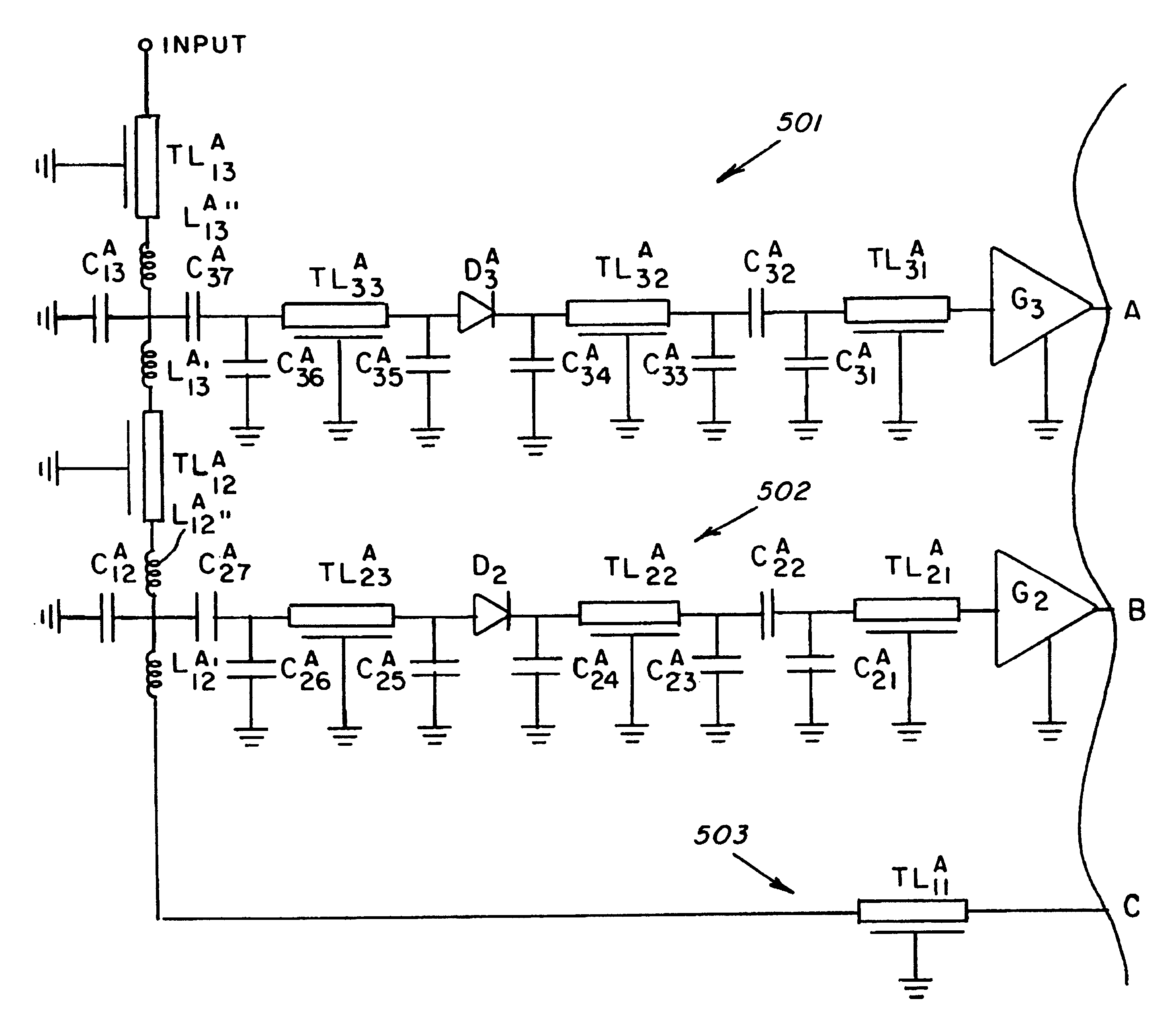
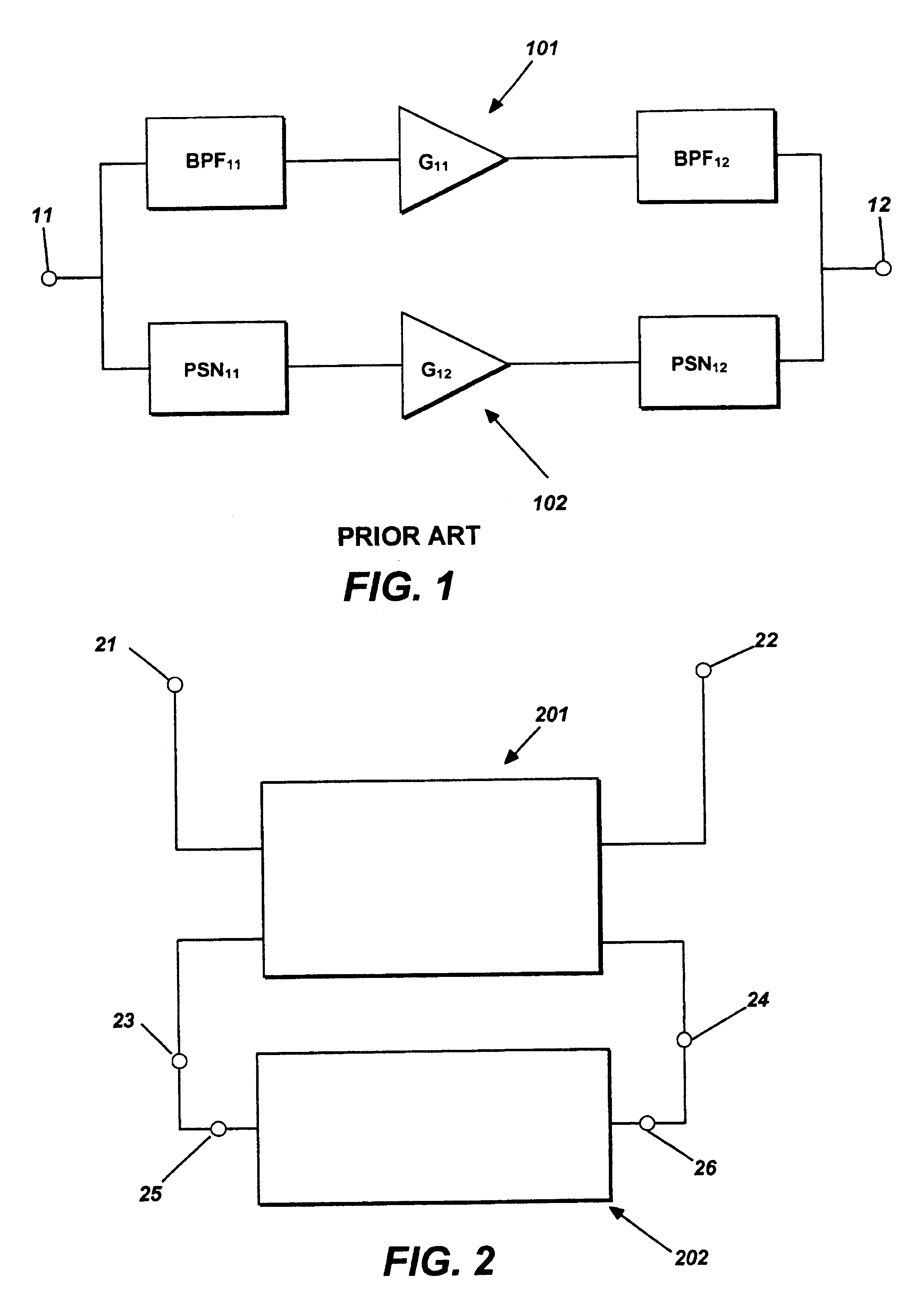
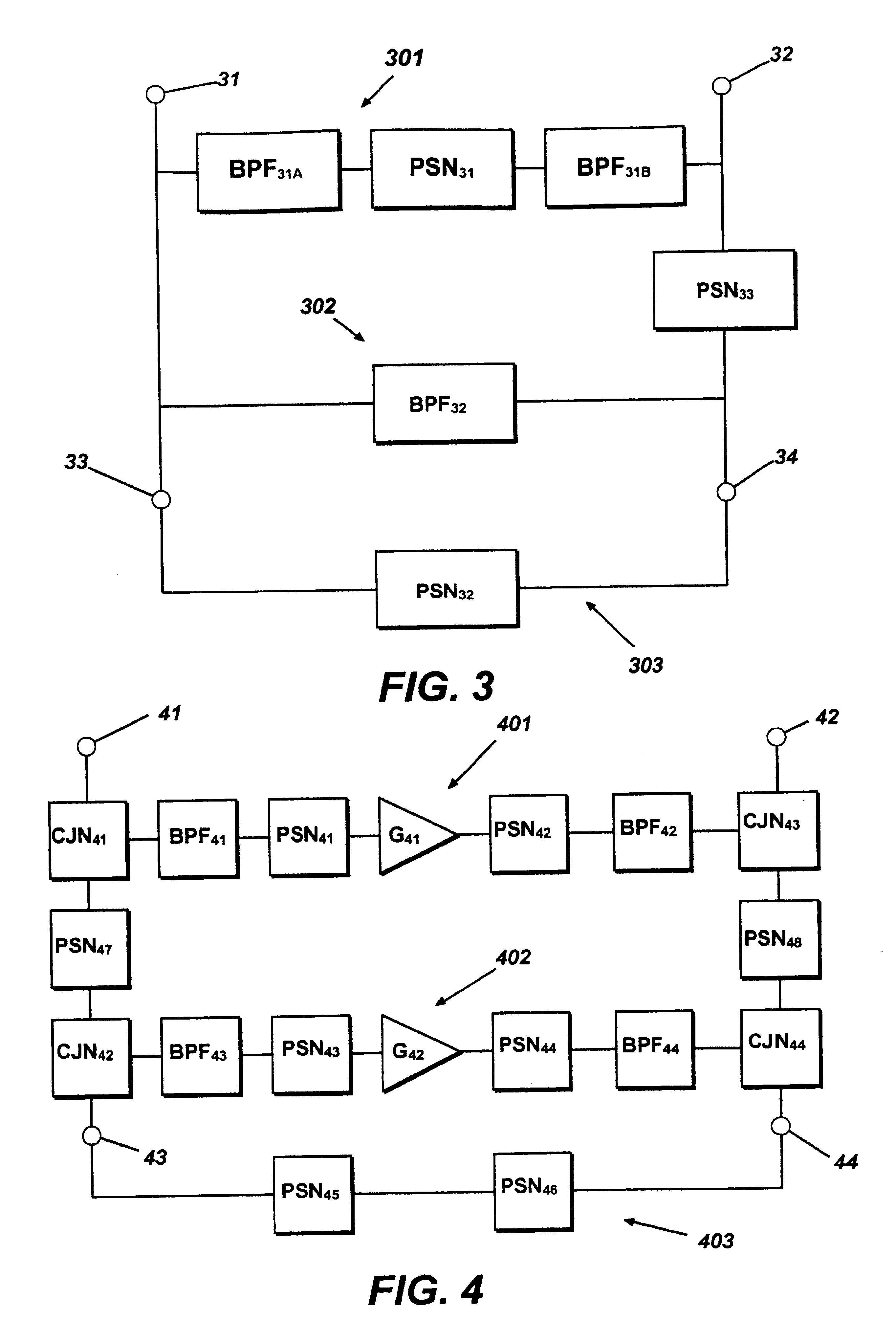
Frequency-tunable notch filter
PatentInactiveUS6636128B2
Innovation
- A channelized frequency-tunable active notch filter design that employs a frequency-selective four-port directional coupling network and a reciprocal passive phase-shift network, eliminating the need for amplifiers in the bypass channel and using a single variable capacitance element for frequency tuning, thereby minimizing noise and distortion.

Standards and Compliance for Signal Processing Systems
Signal processing systems incorporating notch filters for frequency alignment must adhere to stringent regulatory frameworks and industry standards to ensure reliable operation and electromagnetic compatibility. The Federal Communications Commission (FCC) Part 15 regulations establish fundamental requirements for electronic devices, mandating that notch filter implementations maintain spurious emission levels below specified thresholds while preserving signal integrity across designated frequency bands.
International Electrotechnical Commission (IEC) standards, particularly IEC 61000 series for electromagnetic compatibility, define critical performance criteria for notch filter systems. These standards specify conducted and radiated emission limits, immunity requirements, and harmonic distortion thresholds that directly impact filter design parameters. Compliance with IEC 61000-4-6 ensures proper immunity to conducted disturbances, while IEC 61000-6-3 addresses emission standards for residential and commercial environments.
Military and aerospace applications require adherence to MIL-STD-461 specifications, which impose more rigorous electromagnetic interference and susceptibility requirements. These standards mandate specific test procedures for notch filter performance under extreme environmental conditions, including temperature variations, vibration, and electromagnetic pulse exposure. The standard defines acceptable insertion loss variations and frequency stability requirements that influence filter alignment methodologies.
IEEE 802.11 wireless communication standards establish spectral mask requirements that directly affect notch filter implementation in wireless systems. Compliance necessitates precise frequency alignment to avoid interference with adjacent channels while maintaining signal quality metrics such as error vector magnitude and adjacent channel power ratio.
Industry-specific standards like CISPR 22 for information technology equipment and CISPR 32 for multimedia equipment define additional constraints on notch filter performance. These standards specify measurement methodologies and limit values for both narrowband and broadband emissions, requiring careful consideration of filter Q-factor and center frequency stability.
Regulatory compliance testing protocols mandate specific measurement equipment calibration, test setup configurations, and environmental conditions. Pre-compliance testing using spectrum analyzers with appropriate resolution bandwidths and detector functions ensures alignment with regulatory requirements before formal certification processes.
International Electrotechnical Commission (IEC) standards, particularly IEC 61000 series for electromagnetic compatibility, define critical performance criteria for notch filter systems. These standards specify conducted and radiated emission limits, immunity requirements, and harmonic distortion thresholds that directly impact filter design parameters. Compliance with IEC 61000-4-6 ensures proper immunity to conducted disturbances, while IEC 61000-6-3 addresses emission standards for residential and commercial environments.
Military and aerospace applications require adherence to MIL-STD-461 specifications, which impose more rigorous electromagnetic interference and susceptibility requirements. These standards mandate specific test procedures for notch filter performance under extreme environmental conditions, including temperature variations, vibration, and electromagnetic pulse exposure. The standard defines acceptable insertion loss variations and frequency stability requirements that influence filter alignment methodologies.
IEEE 802.11 wireless communication standards establish spectral mask requirements that directly affect notch filter implementation in wireless systems. Compliance necessitates precise frequency alignment to avoid interference with adjacent channels while maintaining signal quality metrics such as error vector magnitude and adjacent channel power ratio.
Industry-specific standards like CISPR 22 for information technology equipment and CISPR 32 for multimedia equipment define additional constraints on notch filter performance. These standards specify measurement methodologies and limit values for both narrowband and broadband emissions, requiring careful consideration of filter Q-factor and center frequency stability.
Regulatory compliance testing protocols mandate specific measurement equipment calibration, test setup configurations, and environmental conditions. Pre-compliance testing using spectrum analyzers with appropriate resolution bandwidths and detector functions ensures alignment with regulatory requirements before formal certification processes.
Performance Metrics for Notch Filter Alignment Accuracy
The accuracy of notch filter alignment with signal source frequency is fundamentally measured through several critical performance metrics that determine the effectiveness of the filtering system. These metrics provide quantitative assessments of how precisely the notch filter's rejection frequency matches the target interference frequency, directly impacting the overall system performance.
Frequency deviation represents the primary metric for alignment accuracy, typically measured in parts per million (ppm) or absolute frequency units. This parameter quantifies the difference between the notch filter's center frequency and the actual interference signal frequency. High-precision applications often require frequency deviations below 0.1% of the target frequency, while less critical applications may tolerate deviations up to 1-2%.
Notch depth accuracy serves as another crucial performance indicator, measuring how effectively the filter attenuates the unwanted signal at the aligned frequency. This metric is typically expressed in decibels and indicates the filter's rejection capability. Optimal alignment should achieve notch depths exceeding 40-60 dB for most applications, with some precision systems requiring rejection levels above 80 dB.
Bandwidth precision defines the sharpness of the notch characteristic and its consistency with design specifications. This metric evaluates how well the actual 3-dB bandwidth matches the intended bandwidth, affecting both the filter's selectivity and its impact on adjacent frequency components. Bandwidth accuracy is particularly critical in applications where multiple signals exist in close proximity to the interference frequency.
Tracking speed represents the dynamic performance metric that measures how quickly the notch filter can adjust its center frequency to follow variations in the interference signal. This parameter is essential for applications involving frequency-agile interference sources or systems operating in dynamic environments. Tracking speeds are typically measured in Hz/second or as settling times for frequency step changes.
Temperature stability and aging characteristics provide long-term accuracy metrics that evaluate how environmental factors affect alignment precision over time. These parameters are crucial for systems requiring consistent performance across varying operating conditions and extended operational periods without manual recalibration.
Frequency deviation represents the primary metric for alignment accuracy, typically measured in parts per million (ppm) or absolute frequency units. This parameter quantifies the difference between the notch filter's center frequency and the actual interference signal frequency. High-precision applications often require frequency deviations below 0.1% of the target frequency, while less critical applications may tolerate deviations up to 1-2%.
Notch depth accuracy serves as another crucial performance indicator, measuring how effectively the filter attenuates the unwanted signal at the aligned frequency. This metric is typically expressed in decibels and indicates the filter's rejection capability. Optimal alignment should achieve notch depths exceeding 40-60 dB for most applications, with some precision systems requiring rejection levels above 80 dB.
Bandwidth precision defines the sharpness of the notch characteristic and its consistency with design specifications. This metric evaluates how well the actual 3-dB bandwidth matches the intended bandwidth, affecting both the filter's selectivity and its impact on adjacent frequency components. Bandwidth accuracy is particularly critical in applications where multiple signals exist in close proximity to the interference frequency.
Tracking speed represents the dynamic performance metric that measures how quickly the notch filter can adjust its center frequency to follow variations in the interference signal. This parameter is essential for applications involving frequency-agile interference sources or systems operating in dynamic environments. Tracking speeds are typically measured in Hz/second or as settling times for frequency step changes.
Temperature stability and aging characteristics provide long-term accuracy metrics that evaluate how environmental factors affect alignment precision over time. These parameters are crucial for systems requiring consistent performance across varying operating conditions and extended operational periods without manual recalibration.
Unlock deeper insights with Patsnap Eureka Quick Research — get a full tech report to explore trends and direct your research. Try now!
Generate Your Research Report Instantly with AI Agent
Supercharge your innovation with Patsnap Eureka AI Agent Platform!