
How to Reduce Crosstalk Using Notch Filter Arrays
MAR 17, 20269 MIN READ
Generate Your Research Report Instantly with AI Agent
Patsnap Eureka helps you evaluate technical feasibility & market potential.
Notch Filter Array Crosstalk Reduction Background and Objectives
Crosstalk interference represents one of the most persistent challenges in modern communication systems, particularly affecting the performance and reliability of high-frequency signal transmission networks. This phenomenon occurs when unwanted electromagnetic coupling between adjacent channels or transmission lines causes signal degradation, leading to reduced system performance and compromised data integrity. As communication systems continue to evolve toward higher frequencies and increased channel density, the mitigation of crosstalk has become increasingly critical for maintaining optimal system functionality.
The evolution of crosstalk reduction techniques has progressed through several distinct phases, beginning with basic physical separation methods and advancing to sophisticated electronic filtering solutions. Early approaches relied primarily on increased spacing between transmission lines and improved shielding materials. However, these passive methods proved insufficient for modern high-density applications where space constraints and performance requirements demand more innovative solutions.
Notch filter arrays have emerged as a promising technological approach to address crosstalk challenges in contemporary communication systems. These specialized filtering structures offer precise frequency-selective attenuation capabilities, enabling targeted suppression of interfering signals while preserving desired signal characteristics. The development of notch filter array technology represents a significant advancement in active crosstalk mitigation strategies, providing engineers with powerful tools to combat interference in increasingly complex electromagnetic environments.
The primary objective of implementing notch filter arrays for crosstalk reduction centers on achieving substantial improvement in signal-to-interference ratios across multiple frequency bands simultaneously. This approach aims to deliver superior performance compared to traditional single-frequency filtering methods by providing coordinated suppression across the entire operational spectrum. The technology seeks to maintain signal integrity while minimizing insertion losses in desired frequency ranges.
Secondary objectives include developing scalable filtering solutions that can adapt to varying system configurations and operational requirements. The goal encompasses creating flexible architectures capable of real-time adjustment to changing interference patterns, thereby ensuring consistent performance across diverse operating conditions. Additionally, the technology aims to reduce overall system complexity by integrating multiple filtering functions into unified array structures, ultimately improving cost-effectiveness and reliability in practical implementations.
The evolution of crosstalk reduction techniques has progressed through several distinct phases, beginning with basic physical separation methods and advancing to sophisticated electronic filtering solutions. Early approaches relied primarily on increased spacing between transmission lines and improved shielding materials. However, these passive methods proved insufficient for modern high-density applications where space constraints and performance requirements demand more innovative solutions.
Notch filter arrays have emerged as a promising technological approach to address crosstalk challenges in contemporary communication systems. These specialized filtering structures offer precise frequency-selective attenuation capabilities, enabling targeted suppression of interfering signals while preserving desired signal characteristics. The development of notch filter array technology represents a significant advancement in active crosstalk mitigation strategies, providing engineers with powerful tools to combat interference in increasingly complex electromagnetic environments.
The primary objective of implementing notch filter arrays for crosstalk reduction centers on achieving substantial improvement in signal-to-interference ratios across multiple frequency bands simultaneously. This approach aims to deliver superior performance compared to traditional single-frequency filtering methods by providing coordinated suppression across the entire operational spectrum. The technology seeks to maintain signal integrity while minimizing insertion losses in desired frequency ranges.
Secondary objectives include developing scalable filtering solutions that can adapt to varying system configurations and operational requirements. The goal encompasses creating flexible architectures capable of real-time adjustment to changing interference patterns, thereby ensuring consistent performance across diverse operating conditions. Additionally, the technology aims to reduce overall system complexity by integrating multiple filtering functions into unified array structures, ultimately improving cost-effectiveness and reliability in practical implementations.
Market Demand for Low-Crosstalk Filter Solutions
The telecommunications industry faces unprecedented challenges in signal integrity as data transmission rates continue to escalate and system integration becomes increasingly dense. Modern communication systems, particularly in 5G networks, optical communications, and high-speed digital applications, demand exceptional signal clarity with minimal interference. Crosstalk, the unwanted coupling of signals between adjacent channels or transmission lines, represents one of the most critical performance bottlenecks in these advanced systems.
The surge in demand for high-bandwidth applications has intensified the need for sophisticated filtering solutions. Data centers processing massive volumes of information require ultra-low crosstalk performance to maintain signal integrity across thousands of parallel channels. Similarly, automotive electronics, aerospace communications, and medical imaging systems increasingly rely on precise signal separation to ensure reliable operation and safety compliance.
Market drivers extend beyond traditional telecommunications into emerging sectors. The Internet of Things ecosystem generates substantial demand for compact, efficient filtering solutions that can operate in space-constrained environments while maintaining superior crosstalk suppression. Edge computing applications require localized signal processing capabilities with minimal interference, creating new market segments for advanced filter technologies.
The financial implications of crosstalk-related performance degradation have become increasingly significant. System operators face substantial costs from signal retransmission, error correction overhead, and reduced channel capacity. These operational inefficiencies drive strong market demand for proactive filtering solutions that can prevent crosstalk at the source rather than compensating for it downstream.
Regulatory requirements in various industries further amplify market demand. Electromagnetic compatibility standards mandate specific crosstalk suppression levels, particularly in critical infrastructure applications. Medical device regulations require stringent signal isolation to prevent interference that could compromise patient safety or diagnostic accuracy.
The competitive landscape reflects this growing demand through increased investment in filter technology development. Market participants recognize that superior crosstalk suppression capabilities represent a key differentiator in winning high-value contracts and establishing long-term customer relationships in increasingly demanding applications.
The surge in demand for high-bandwidth applications has intensified the need for sophisticated filtering solutions. Data centers processing massive volumes of information require ultra-low crosstalk performance to maintain signal integrity across thousands of parallel channels. Similarly, automotive electronics, aerospace communications, and medical imaging systems increasingly rely on precise signal separation to ensure reliable operation and safety compliance.
Market drivers extend beyond traditional telecommunications into emerging sectors. The Internet of Things ecosystem generates substantial demand for compact, efficient filtering solutions that can operate in space-constrained environments while maintaining superior crosstalk suppression. Edge computing applications require localized signal processing capabilities with minimal interference, creating new market segments for advanced filter technologies.
The financial implications of crosstalk-related performance degradation have become increasingly significant. System operators face substantial costs from signal retransmission, error correction overhead, and reduced channel capacity. These operational inefficiencies drive strong market demand for proactive filtering solutions that can prevent crosstalk at the source rather than compensating for it downstream.
Regulatory requirements in various industries further amplify market demand. Electromagnetic compatibility standards mandate specific crosstalk suppression levels, particularly in critical infrastructure applications. Medical device regulations require stringent signal isolation to prevent interference that could compromise patient safety or diagnostic accuracy.
The competitive landscape reflects this growing demand through increased investment in filter technology development. Market participants recognize that superior crosstalk suppression capabilities represent a key differentiator in winning high-value contracts and establishing long-term customer relationships in increasingly demanding applications.
Current Crosstalk Challenges in Notch Filter Array Systems
Crosstalk in notch filter array systems represents one of the most persistent challenges in modern optical and electronic filtering applications. This phenomenon occurs when signals intended for one channel inadvertently interfere with adjacent channels, degrading overall system performance and limiting the achievable isolation between different frequency bands. The complexity of this issue has intensified as systems demand higher channel densities and narrower spectral spacing.
The fundamental nature of crosstalk in notch filter arrays stems from several interconnected factors. Electromagnetic coupling between adjacent filter elements creates unwanted signal pathways that bypass the intended filtering mechanisms. This coupling becomes particularly problematic in densely packed arrays where physical proximity between components cannot be avoided. Manufacturing tolerances further exacerbate the situation, as slight variations in filter characteristics can create impedance mismatches that facilitate crosstalk propagation.
Spectral leakage presents another significant challenge, where the finite rejection characteristics of individual notch filters allow residual energy to pass through at frequencies near the notch center. When multiple filters operate in close proximity, these spectral artifacts can accumulate and create substantial interference. The situation becomes more complex when considering temperature variations, which can shift filter responses and create dynamic crosstalk patterns that vary with operating conditions.
Insertion loss variations across the array introduce additional complications. Non-uniform attenuation characteristics between channels can create power imbalances that make certain channels more susceptible to crosstalk interference. This issue is particularly pronounced in applications requiring precise amplitude control, where even small variations can significantly impact system performance.
The challenge extends beyond purely technical considerations to encompass practical implementation constraints. Space limitations in modern systems often force designers to accept suboptimal spacing between filter elements, while cost pressures limit the use of expensive isolation techniques. Power consumption requirements further restrict the available solutions, as active isolation methods may not be feasible in power-sensitive applications.
Current measurement and characterization techniques also face limitations in accurately quantifying crosstalk behavior across all operating conditions. Traditional isolation measurements may not capture the full complexity of multi-channel interactions, leading to incomplete understanding of system behavior and suboptimal design decisions.
The fundamental nature of crosstalk in notch filter arrays stems from several interconnected factors. Electromagnetic coupling between adjacent filter elements creates unwanted signal pathways that bypass the intended filtering mechanisms. This coupling becomes particularly problematic in densely packed arrays where physical proximity between components cannot be avoided. Manufacturing tolerances further exacerbate the situation, as slight variations in filter characteristics can create impedance mismatches that facilitate crosstalk propagation.
Spectral leakage presents another significant challenge, where the finite rejection characteristics of individual notch filters allow residual energy to pass through at frequencies near the notch center. When multiple filters operate in close proximity, these spectral artifacts can accumulate and create substantial interference. The situation becomes more complex when considering temperature variations, which can shift filter responses and create dynamic crosstalk patterns that vary with operating conditions.
Insertion loss variations across the array introduce additional complications. Non-uniform attenuation characteristics between channels can create power imbalances that make certain channels more susceptible to crosstalk interference. This issue is particularly pronounced in applications requiring precise amplitude control, where even small variations can significantly impact system performance.
The challenge extends beyond purely technical considerations to encompass practical implementation constraints. Space limitations in modern systems often force designers to accept suboptimal spacing between filter elements, while cost pressures limit the use of expensive isolation techniques. Power consumption requirements further restrict the available solutions, as active isolation methods may not be feasible in power-sensitive applications.
Current measurement and characterization techniques also face limitations in accurately quantifying crosstalk behavior across all operating conditions. Traditional isolation measurements may not capture the full complexity of multi-channel interactions, leading to incomplete understanding of system behavior and suboptimal design decisions.
Existing Crosstalk Mitigation Solutions in Filter Arrays
01 Spatial separation and isolation techniques in filter arrays
Implementing physical spacing and isolation structures between adjacent notch filters in an array configuration to minimize electromagnetic coupling and signal interference. This includes the use of guard bands, shielding structures, and optimized layout geometries that prevent unwanted signal leakage between neighboring filter elements. The spatial arrangement considers both lateral and vertical dimensions to achieve effective isolation.- Spatial separation and isolation techniques in filter arrays: Implementing physical spacing and isolation structures between adjacent notch filters in an array configuration to minimize electromagnetic coupling and signal interference. This includes the use of guard bands, shielding structures, and optimized layout geometries that prevent unwanted signal leakage between neighboring filter elements. The spatial arrangement considers both lateral and vertical dimensions to achieve effective isolation.
- Frequency domain separation and channel allocation: Designing notch filter arrays with strategically selected center frequencies and bandwidths to reduce spectral overlap and interference between channels. This approach involves careful frequency planning, adequate guard bands between adjacent channels, and optimization of filter rejection characteristics to minimize out-of-band coupling. The technique ensures that each filter operates in its designated frequency range with minimal impact on neighboring filters.
- Impedance matching and termination methods: Utilizing proper impedance matching networks and termination techniques at filter ports to reduce reflections and coupling between array elements. This includes the implementation of matching circuits, absorptive terminations, and balanced configurations that minimize standing waves and parasitic coupling paths. The approach ensures that signal energy is properly absorbed or transmitted rather than coupled to adjacent filters.
- Active cancellation and compensation circuits: Employing active electronic circuits and signal processing techniques to detect and cancel crosstalk signals in real-time. This method uses feedback loops, adaptive algorithms, and compensation networks that monitor coupling between filters and generate anti-phase signals to neutralize unwanted interference. The active approach allows for dynamic adjustment based on operating conditions and can handle time-varying crosstalk scenarios.
- Material selection and substrate engineering: Selecting appropriate substrate materials and engineering their properties to reduce electromagnetic coupling in filter arrays. This includes using low-loss dielectric materials, high-resistivity substrates, and multilayer structures with embedded ground planes that provide natural isolation between filter elements. The material approach also considers thermal stability and manufacturing compatibility to ensure consistent performance across the array.
02 Frequency domain separation and channel allocation
Designing notch filter arrays with strategically selected center frequencies and bandwidths to reduce spectral overlap and interference between channels. This approach involves careful frequency planning, adequate guard bands between adjacent channels, and optimization of filter rejection characteristics to minimize out-of-band coupling. The technique ensures that each filter operates in its designated frequency range with minimal impact on neighboring filters.Expand Specific Solutions03 Impedance matching and termination methods
Utilizing proper impedance matching networks and termination techniques at filter interfaces to reduce reflections and coupling between array elements. This includes the implementation of matching circuits, absorptive terminations, and controlled impedance transmission lines that minimize signal reflections and parasitic coupling paths. The approach ensures optimal power transfer and reduces standing waves that could contribute to crosstalk.Expand Specific Solutions04 Active cancellation and compensation circuits
Employing active electronic circuits and signal processing techniques to detect and cancel crosstalk signals in real-time. This method involves sensing the interference between channels and generating compensating signals with appropriate amplitude and phase to neutralize the unwanted coupling. The implementation may include adaptive algorithms that continuously monitor and adjust cancellation parameters to maintain optimal performance across varying operating conditions.Expand Specific Solutions05 Material selection and substrate engineering
Selecting appropriate substrate materials and dielectric properties to minimize electromagnetic coupling in notch filter arrays. This involves using low-loss, high-isolation materials and multilayer substrate configurations that provide inherent isolation between filter elements. The approach includes optimization of substrate thickness, dielectric constant, and loss tangent to achieve desired isolation characteristics while maintaining filter performance.Expand Specific Solutions
Key Players in Filter Array and Signal Processing Industry
The crosstalk reduction using notch filter arrays technology represents a mature field within the broader RF/microwave and signal processing industry, currently experiencing steady growth driven by 5G deployment and IoT expansion. The market demonstrates significant scale, particularly in telecommunications infrastructure and consumer electronics sectors, with established players like Huawei, Samsung Electronics, and Qualcomm leading through extensive patent portfolios and commercial implementations. Technology maturity varies across applications, with companies like TDK, Fujikura, and Sumitomo Electric Industries demonstrating advanced manufacturing capabilities in passive components and filtering solutions, while emerging players such as Audioscenic explore novel approaches for specialized applications. The competitive landscape shows consolidation around major technology conglomerates alongside specialized component manufacturers, indicating a market transitioning from pure innovation to optimization and cost-effective deployment across diverse applications.
Huawei Technologies Co., Ltd.
Technical Solution: Huawei has developed advanced notch filter array solutions for reducing crosstalk in optical communication systems and RF applications. Their approach utilizes cascaded micro-ring resonators with precisely controlled coupling coefficients to create sharp notch responses at specific interference frequencies[1][3]. The company implements adaptive tuning mechanisms using thermal or electro-optic effects to dynamically adjust notch frequencies in real-time, achieving crosstalk suppression levels exceeding 40dB[2]. Their integrated photonic platforms combine multiple notch filters in compact arrays, enabling simultaneous suppression of multiple crosstalk channels while maintaining low insertion loss below 0.5dB[4].
Strengths: Strong integration capabilities and adaptive tuning technology. Weaknesses: High power consumption for thermal tuning and complex manufacturing processes.
Samsung Electronics Co., Ltd.
Technical Solution: Samsung has developed sophisticated notch filter arrays primarily for display and semiconductor applications to minimize electromagnetic interference and crosstalk. Their solution employs metamaterial-based structures with engineered periodic patterns that create deep notches at problematic frequencies[5][7]. The company utilizes advanced lithography techniques to fabricate high-density filter arrays with sub-wavelength features, achieving precise frequency selectivity. Samsung's approach includes multi-layer configurations with different resonant elements to create broadband suppression while maintaining signal integrity in adjacent channels[6]. Their filters demonstrate excellent temperature stability and can be integrated directly into chip-level packaging for enhanced performance.
Strengths: Advanced manufacturing capabilities and excellent integration with semiconductor processes. Weaknesses: Limited tunability and high development costs for custom applications.
Core Innovations in Notch Filter Crosstalk Suppression
Adaptive Anti-crosscolor notch filter for secam encoder
PatentInactiveEP1099353A1
Innovation
- An adaptive digital luminance notch filter using a bandpass filter and gain factors to attenuate luminance signals within the chrominance passband, with a detector adjusting gain values based on signal strength, implemented as a 3rd-order all-pole IIR filter to provide adaptive attenuation across a wide range of luminance amplitudes, ensuring unity response at the DC level.
Ultra-high-frequency notch filter
PatentInactiveUS20050059998A1
Innovation
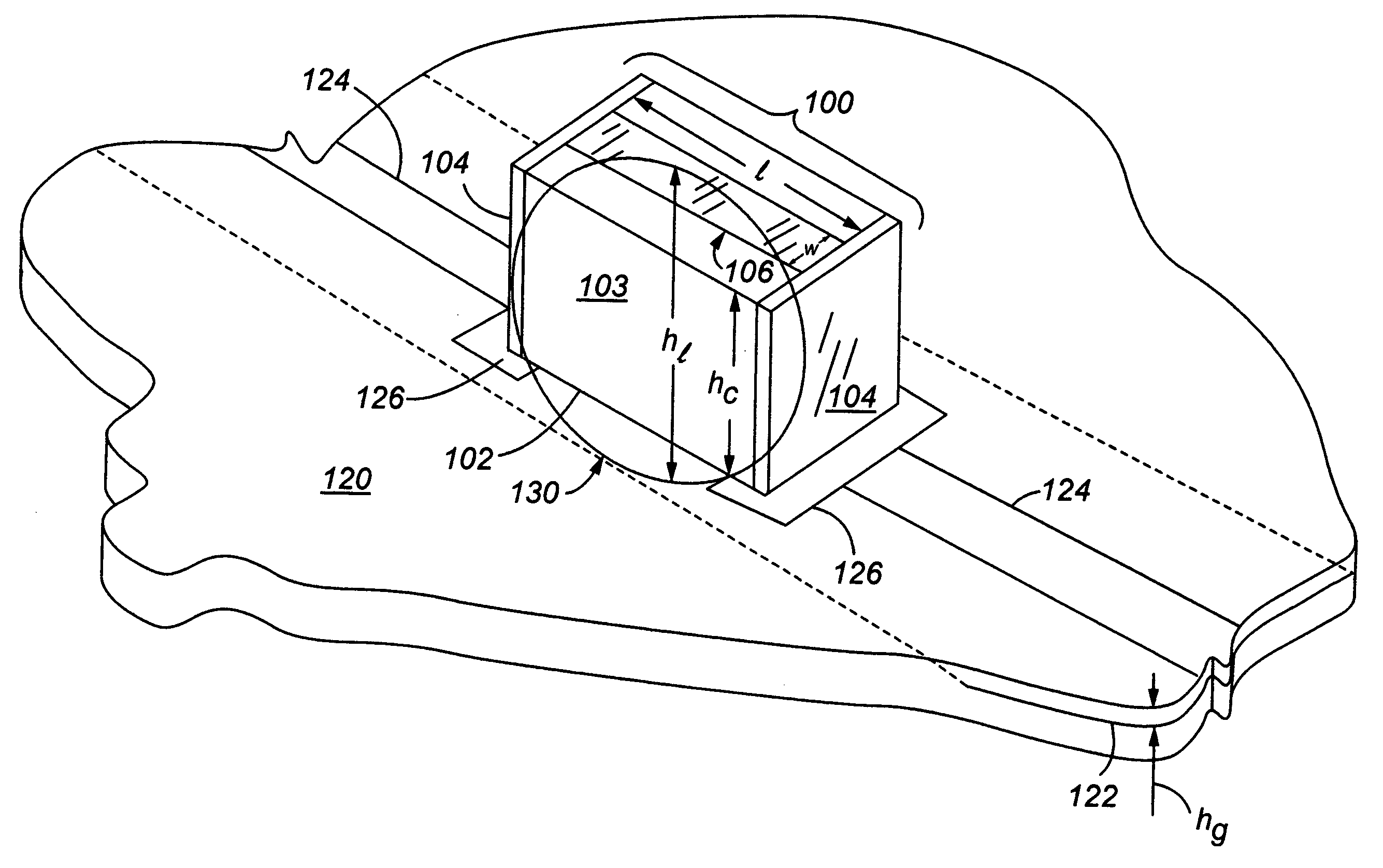
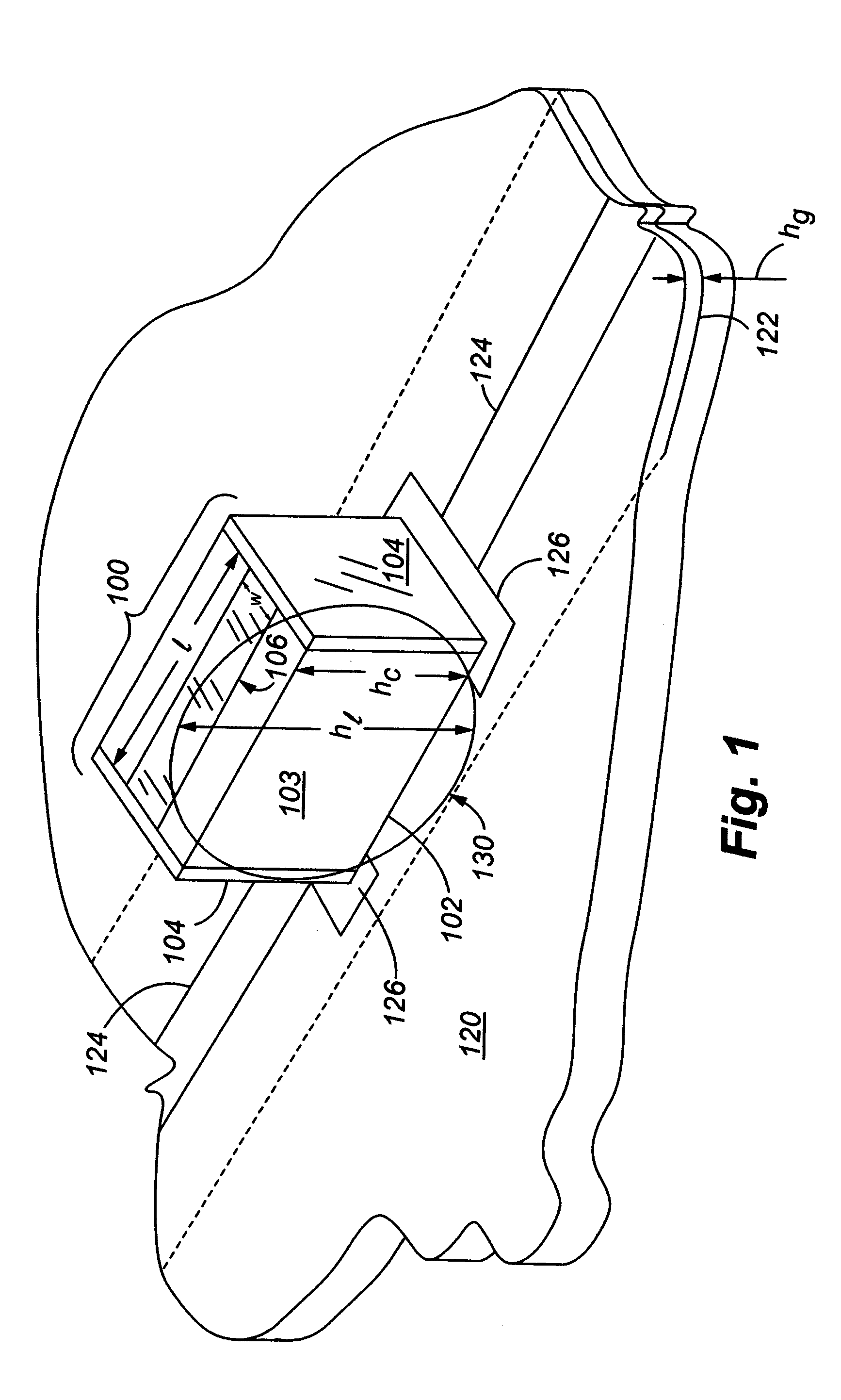
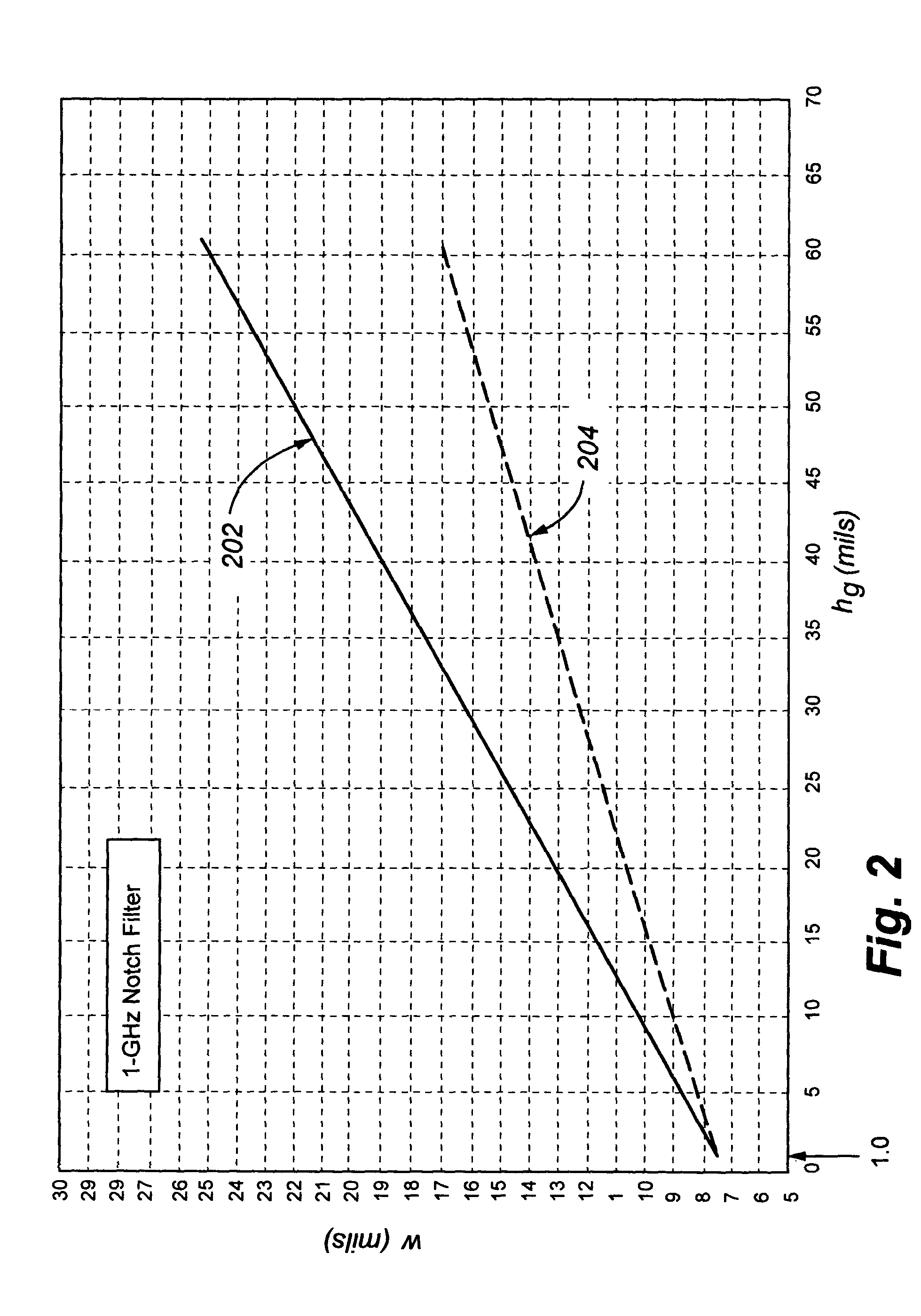
- A notch filter design comprising a capacitor and a conductive trace forming a parallel LC circuit, where the inductance and capacitance are tuned by varying the trace width, creating a virtual conductive loop with the ground plane to achieve a specific notch center frequency, minimizing parts and being compact and tuneable.

Signal Integrity Standards for Filter Array Applications
Signal integrity standards for filter array applications have evolved significantly to address the growing complexity of high-frequency electronic systems. These standards establish critical performance metrics and testing methodologies specifically tailored for notch filter arrays used in crosstalk reduction applications. The primary standards encompass electromagnetic compatibility requirements, insertion loss specifications, and isolation parameters that directly impact filter array effectiveness in maintaining signal quality.
The IEEE 802.3 Ethernet standards provide foundational guidelines for signal integrity in high-speed data transmission systems, establishing maximum allowable crosstalk levels and defining measurement procedures for filter array performance evaluation. These specifications require notch filter arrays to maintain insertion loss below 0.5 dB within the passband while achieving minimum 40 dB isolation at targeted interference frequencies. Additionally, the standards mandate group delay variation limits to prevent signal distortion in multi-channel applications.
IPC-2251 standards specifically address printed circuit board design considerations for filter array implementations, defining trace routing requirements, via placement guidelines, and ground plane configurations that optimize filter performance. These standards emphasize the importance of maintaining consistent impedance profiles and minimizing parasitic coupling between adjacent filter elements. The specifications also establish thermal management requirements to ensure stable filter characteristics across operating temperature ranges.
Military and aerospace applications follow MIL-STD-461 requirements, which impose stricter electromagnetic interference limits and enhanced reliability criteria for filter array systems. These standards mandate extended frequency range testing from 10 kHz to 40 GHz and require filter arrays to maintain performance under extreme environmental conditions including vibration, shock, and temperature cycling.
Emerging 5G and automotive standards introduce new challenges for filter array signal integrity, requiring enhanced selectivity and broader bandwidth capabilities. The 3GPP specifications define stringent adjacent channel leakage ratio requirements that directly influence notch filter array design parameters. These evolving standards emphasize the need for adaptive filtering capabilities and real-time performance monitoring to maintain signal integrity in dynamic interference environments.
Compliance with these comprehensive standards ensures that notch filter arrays deliver consistent crosstalk reduction performance while maintaining system-level signal integrity across diverse application environments.
The IEEE 802.3 Ethernet standards provide foundational guidelines for signal integrity in high-speed data transmission systems, establishing maximum allowable crosstalk levels and defining measurement procedures for filter array performance evaluation. These specifications require notch filter arrays to maintain insertion loss below 0.5 dB within the passband while achieving minimum 40 dB isolation at targeted interference frequencies. Additionally, the standards mandate group delay variation limits to prevent signal distortion in multi-channel applications.
IPC-2251 standards specifically address printed circuit board design considerations for filter array implementations, defining trace routing requirements, via placement guidelines, and ground plane configurations that optimize filter performance. These standards emphasize the importance of maintaining consistent impedance profiles and minimizing parasitic coupling between adjacent filter elements. The specifications also establish thermal management requirements to ensure stable filter characteristics across operating temperature ranges.
Military and aerospace applications follow MIL-STD-461 requirements, which impose stricter electromagnetic interference limits and enhanced reliability criteria for filter array systems. These standards mandate extended frequency range testing from 10 kHz to 40 GHz and require filter arrays to maintain performance under extreme environmental conditions including vibration, shock, and temperature cycling.
Emerging 5G and automotive standards introduce new challenges for filter array signal integrity, requiring enhanced selectivity and broader bandwidth capabilities. The 3GPP specifications define stringent adjacent channel leakage ratio requirements that directly influence notch filter array design parameters. These evolving standards emphasize the need for adaptive filtering capabilities and real-time performance monitoring to maintain signal integrity in dynamic interference environments.
Compliance with these comprehensive standards ensures that notch filter arrays deliver consistent crosstalk reduction performance while maintaining system-level signal integrity across diverse application environments.
Electromagnetic Compatibility Requirements for Filter Systems
Electromagnetic compatibility requirements for filter systems utilizing notch filter arrays to reduce crosstalk represent a critical aspect of modern electronic system design. These requirements establish the fundamental performance criteria that filter systems must meet to ensure reliable operation in complex electromagnetic environments while maintaining signal integrity across multiple channels.
The primary EMC requirement focuses on insertion loss specifications, which define the minimum attenuation levels that notch filter arrays must achieve at specific frequencies to effectively suppress crosstalk signals. Typically, these specifications mandate insertion loss values ranging from 40dB to 80dB at target interference frequencies, depending on the application's sensitivity requirements and the proximity of adjacent channels.
Frequency selectivity requirements constitute another essential EMC criterion, establishing the sharpness of the notch response and the allowable bandwidth of the rejection band. These specifications ensure that the filter array provides precise frequency discrimination while minimizing impact on desired signal frequencies. The quality factor requirements typically range from 50 to 500, depending on the channel spacing and spectral efficiency demands of the system.
Return loss specifications define the acceptable level of signal reflection at the filter input and output ports, ensuring minimal signal degradation and preventing standing wave formation that could compromise system performance. Standard EMC requirements typically specify return loss values exceeding 15dB across the operational frequency range, with stricter requirements of 20dB or higher for critical applications.
Group delay variation requirements address the phase linearity of the filter response, ensuring that broadband signals maintain their temporal characteristics after filtering. These specifications are particularly crucial for digital communication systems where signal distortion can lead to increased bit error rates and reduced system reliability.
Temperature stability and aging requirements ensure that the filter array maintains its EMC performance characteristics over the operational lifetime and environmental conditions. These specifications typically define maximum allowable drift in center frequency, insertion loss, and bandwidth parameters, ensuring consistent crosstalk suppression performance throughout the system's operational life.
The primary EMC requirement focuses on insertion loss specifications, which define the minimum attenuation levels that notch filter arrays must achieve at specific frequencies to effectively suppress crosstalk signals. Typically, these specifications mandate insertion loss values ranging from 40dB to 80dB at target interference frequencies, depending on the application's sensitivity requirements and the proximity of adjacent channels.
Frequency selectivity requirements constitute another essential EMC criterion, establishing the sharpness of the notch response and the allowable bandwidth of the rejection band. These specifications ensure that the filter array provides precise frequency discrimination while minimizing impact on desired signal frequencies. The quality factor requirements typically range from 50 to 500, depending on the channel spacing and spectral efficiency demands of the system.
Return loss specifications define the acceptable level of signal reflection at the filter input and output ports, ensuring minimal signal degradation and preventing standing wave formation that could compromise system performance. Standard EMC requirements typically specify return loss values exceeding 15dB across the operational frequency range, with stricter requirements of 20dB or higher for critical applications.
Group delay variation requirements address the phase linearity of the filter response, ensuring that broadband signals maintain their temporal characteristics after filtering. These specifications are particularly crucial for digital communication systems where signal distortion can lead to increased bit error rates and reduced system reliability.
Temperature stability and aging requirements ensure that the filter array maintains its EMC performance characteristics over the operational lifetime and environmental conditions. These specifications typically define maximum allowable drift in center frequency, insertion loss, and bandwidth parameters, ensuring consistent crosstalk suppression performance throughout the system's operational life.
Unlock deeper insights with Patsnap Eureka Quick Research — get a full tech report to explore trends and direct your research. Try now!
Generate Your Research Report Instantly with AI Agent
Supercharge your innovation with Patsnap Eureka AI Agent Platform!