
How to Attain Seamless Integration with Multi Point Constraint
MAR 13, 20269 MIN READ
Generate Your Research Report Instantly with AI Agent
Patsnap Eureka helps you evaluate technical feasibility & market potential.
Multi Point Constraint Integration Background and Objectives
Multi Point Constraint (MPC) integration represents a critical technological challenge in modern engineering systems, particularly within computer-aided design, simulation, and manufacturing environments. This technology addresses the fundamental need to establish and maintain multiple simultaneous constraints across interconnected system components while ensuring seamless data flow and operational continuity.
The historical development of MPC integration traces back to early finite element analysis systems in the 1960s, where engineers first encountered the need to couple multiple boundary conditions simultaneously. As computational capabilities expanded through the 1980s and 1990s, the complexity of multi-physics simulations and multi-disciplinary optimization problems drove significant advances in constraint handling methodologies. The emergence of cloud computing and distributed processing architectures in the 2000s further accelerated the evolution toward more sophisticated integration approaches.
Current technological trends indicate a shift toward real-time constraint resolution, adaptive constraint weighting, and machine learning-enhanced constraint prediction. The integration of artificial intelligence algorithms has enabled dynamic constraint prioritization and automated conflict resolution, representing a paradigm shift from traditional static constraint management approaches.
The primary technical objectives for seamless MPC integration encompass several critical dimensions. First, achieving computational efficiency through optimized constraint solving algorithms that can handle large-scale systems with minimal performance degradation. Second, ensuring numerical stability across diverse constraint types, including geometric, kinematic, and dynamic constraints that may exhibit varying mathematical properties and convergence characteristics.
Interoperability represents another fundamental objective, requiring the development of standardized interfaces and data exchange protocols that enable seamless communication between disparate software platforms and hardware systems. This includes establishing robust API frameworks and middleware solutions that can accommodate heterogeneous computing environments.
Scalability objectives focus on developing architectures capable of handling exponentially increasing constraint complexity without proportional increases in computational overhead. This involves implementing hierarchical constraint management strategies and distributed processing methodologies that can leverage modern parallel computing infrastructures.
The ultimate goal encompasses creating a unified framework that enables engineers and designers to work with multiple constraints as naturally as single-constraint scenarios, eliminating the traditional complexity barriers that have historically limited the adoption of advanced multi-constraint optimization techniques in practical engineering applications.
The historical development of MPC integration traces back to early finite element analysis systems in the 1960s, where engineers first encountered the need to couple multiple boundary conditions simultaneously. As computational capabilities expanded through the 1980s and 1990s, the complexity of multi-physics simulations and multi-disciplinary optimization problems drove significant advances in constraint handling methodologies. The emergence of cloud computing and distributed processing architectures in the 2000s further accelerated the evolution toward more sophisticated integration approaches.
Current technological trends indicate a shift toward real-time constraint resolution, adaptive constraint weighting, and machine learning-enhanced constraint prediction. The integration of artificial intelligence algorithms has enabled dynamic constraint prioritization and automated conflict resolution, representing a paradigm shift from traditional static constraint management approaches.
The primary technical objectives for seamless MPC integration encompass several critical dimensions. First, achieving computational efficiency through optimized constraint solving algorithms that can handle large-scale systems with minimal performance degradation. Second, ensuring numerical stability across diverse constraint types, including geometric, kinematic, and dynamic constraints that may exhibit varying mathematical properties and convergence characteristics.
Interoperability represents another fundamental objective, requiring the development of standardized interfaces and data exchange protocols that enable seamless communication between disparate software platforms and hardware systems. This includes establishing robust API frameworks and middleware solutions that can accommodate heterogeneous computing environments.
Scalability objectives focus on developing architectures capable of handling exponentially increasing constraint complexity without proportional increases in computational overhead. This involves implementing hierarchical constraint management strategies and distributed processing methodologies that can leverage modern parallel computing infrastructures.
The ultimate goal encompasses creating a unified framework that enables engineers and designers to work with multiple constraints as naturally as single-constraint scenarios, eliminating the traditional complexity barriers that have historically limited the adoption of advanced multi-constraint optimization techniques in practical engineering applications.
Market Demand for Seamless MPC Integration Solutions
The market demand for seamless Multi Point Constraint (MPC) integration solutions has experienced substantial growth across multiple industrial sectors, driven by the increasing complexity of modern engineering systems and the need for more sophisticated simulation capabilities. Manufacturing industries, particularly automotive and aerospace, represent the largest consumer segments, where MPC integration is essential for optimizing complex assembly processes and ensuring structural integrity in multi-component systems.
The automotive sector demonstrates particularly strong demand for MPC solutions in electric vehicle development, where battery pack integration, thermal management systems, and lightweight structural designs require precise constraint modeling. Advanced driver assistance systems and autonomous vehicle development further amplify this demand, as these applications necessitate real-time constraint optimization across multiple interconnected subsystems.
Aerospace and defense industries constitute another significant market segment, where MPC integration is critical for aircraft structural analysis, satellite deployment mechanisms, and missile guidance systems. The growing commercial space industry has created additional demand for sophisticated constraint management solutions that can handle the complex interactions between multiple spacecraft components during various mission phases.
The renewable energy sector, particularly wind and solar power generation, has emerged as a rapidly expanding market for MPC integration solutions. Wind turbine design optimization, solar panel tracking systems, and energy storage integration all require advanced constraint modeling capabilities to maximize efficiency and reliability while minimizing operational costs.
Industrial automation and robotics represent an increasingly important market segment, where MPC integration enables more precise control of multi-axis robotic systems, collaborative robot operations, and flexible manufacturing processes. The rise of Industry 4.0 initiatives has accelerated demand for solutions that can seamlessly integrate multiple constraint systems across interconnected production lines.
The market is also witnessing growing demand from the construction and civil engineering sectors, where Building Information Modeling (BIM) systems require sophisticated constraint management for complex structural designs, particularly in high-rise buildings and infrastructure projects involving multiple interconnected systems.
Geographically, North America and Europe currently dominate market demand, driven by established aerospace, automotive, and industrial automation sectors. However, the Asia-Pacific region is experiencing the fastest growth rate, fueled by rapid industrialization, expanding manufacturing capabilities, and increasing adoption of advanced simulation technologies across emerging economies.
The automotive sector demonstrates particularly strong demand for MPC solutions in electric vehicle development, where battery pack integration, thermal management systems, and lightweight structural designs require precise constraint modeling. Advanced driver assistance systems and autonomous vehicle development further amplify this demand, as these applications necessitate real-time constraint optimization across multiple interconnected subsystems.
Aerospace and defense industries constitute another significant market segment, where MPC integration is critical for aircraft structural analysis, satellite deployment mechanisms, and missile guidance systems. The growing commercial space industry has created additional demand for sophisticated constraint management solutions that can handle the complex interactions between multiple spacecraft components during various mission phases.
The renewable energy sector, particularly wind and solar power generation, has emerged as a rapidly expanding market for MPC integration solutions. Wind turbine design optimization, solar panel tracking systems, and energy storage integration all require advanced constraint modeling capabilities to maximize efficiency and reliability while minimizing operational costs.
Industrial automation and robotics represent an increasingly important market segment, where MPC integration enables more precise control of multi-axis robotic systems, collaborative robot operations, and flexible manufacturing processes. The rise of Industry 4.0 initiatives has accelerated demand for solutions that can seamlessly integrate multiple constraint systems across interconnected production lines.
The market is also witnessing growing demand from the construction and civil engineering sectors, where Building Information Modeling (BIM) systems require sophisticated constraint management for complex structural designs, particularly in high-rise buildings and infrastructure projects involving multiple interconnected systems.
Geographically, North America and Europe currently dominate market demand, driven by established aerospace, automotive, and industrial automation sectors. However, the Asia-Pacific region is experiencing the fastest growth rate, fueled by rapid industrialization, expanding manufacturing capabilities, and increasing adoption of advanced simulation technologies across emerging economies.
Current MPC Integration Challenges and Technical Barriers
Multi Point Constraint (MPC) integration faces significant technical barriers that impede seamless implementation across diverse engineering applications. The primary challenge stems from computational complexity, where real-time constraint solving becomes exponentially difficult as the number of constraint points increases. Traditional numerical solvers often struggle with convergence issues when dealing with over-constrained systems, leading to unstable or non-deterministic solutions that compromise system reliability.
Geometric compatibility represents another critical barrier, particularly when integrating MPC systems across different coordinate systems and reference frames. Inconsistent geometric representations between CAD systems, simulation environments, and physical hardware create substantial alignment challenges. These discrepancies manifest as constraint conflicts, where mathematically valid constraints become physically impossible to satisfy simultaneously.
Data synchronization poses substantial obstacles in distributed MPC implementations. Real-time constraint updates across multiple nodes require sophisticated communication protocols and error handling mechanisms. Network latency, packet loss, and bandwidth limitations can cause constraint violations or system instability, especially in time-critical applications where microsecond-level precision is essential.
Legacy system integration creates additional complexity layers. Existing engineering tools often employ proprietary constraint definition formats and solving algorithms that resist standardization efforts. The lack of universal MPC interfaces forces developers to create custom translation layers, introducing potential error sources and performance bottlenecks that undermine seamless integration objectives.
Scalability limitations emerge when constraint networks exceed certain complexity thresholds. Current MPC frameworks demonstrate degraded performance characteristics as constraint interdependencies multiply, creating computational bottlenecks that prevent real-time operation in large-scale systems. Memory management becomes particularly challenging when maintaining constraint history and state information across extended operational periods.
Validation and verification of complex MPC systems present ongoing challenges. Traditional testing methodologies prove inadequate for systems with hundreds or thousands of interconnected constraints. The absence of standardized validation frameworks makes it difficult to ensure system reliability and predict failure modes, creating significant barriers to industrial adoption and regulatory compliance.
Geometric compatibility represents another critical barrier, particularly when integrating MPC systems across different coordinate systems and reference frames. Inconsistent geometric representations between CAD systems, simulation environments, and physical hardware create substantial alignment challenges. These discrepancies manifest as constraint conflicts, where mathematically valid constraints become physically impossible to satisfy simultaneously.
Data synchronization poses substantial obstacles in distributed MPC implementations. Real-time constraint updates across multiple nodes require sophisticated communication protocols and error handling mechanisms. Network latency, packet loss, and bandwidth limitations can cause constraint violations or system instability, especially in time-critical applications where microsecond-level precision is essential.
Legacy system integration creates additional complexity layers. Existing engineering tools often employ proprietary constraint definition formats and solving algorithms that resist standardization efforts. The lack of universal MPC interfaces forces developers to create custom translation layers, introducing potential error sources and performance bottlenecks that undermine seamless integration objectives.
Scalability limitations emerge when constraint networks exceed certain complexity thresholds. Current MPC frameworks demonstrate degraded performance characteristics as constraint interdependencies multiply, creating computational bottlenecks that prevent real-time operation in large-scale systems. Memory management becomes particularly challenging when maintaining constraint history and state information across extended operational periods.
Validation and verification of complex MPC systems present ongoing challenges. Traditional testing methodologies prove inadequate for systems with hundreds or thousands of interconnected constraints. The absence of standardized validation frameworks makes it difficult to ensure system reliability and predict failure modes, creating significant barriers to industrial adoption and regulatory compliance.
Existing MPC Integration Methods and Frameworks
01 Multi-point constraint algorithms for structural analysis
Implementation of multi-point constraint (MPC) algorithms in finite element analysis systems to handle complex structural connections and boundary conditions. These methods enable the seamless integration of different mesh regions by establishing mathematical relationships between multiple degrees of freedom at connection points, ensuring continuity and compatibility across interfaces.- Multi-point constraint algorithms for structural analysis: Implementation of multi-point constraint (MPC) algorithms in finite element analysis systems to handle complex structural connections and boundary conditions. These methods enable the coupling of degrees of freedom between multiple nodes, allowing for accurate representation of rigid connections, hinges, and other mechanical constraints in structural simulations. The algorithms ensure compatibility and equilibrium conditions are maintained across constrained points.
- Seamless data integration across heterogeneous systems: Techniques for achieving seamless integration of data from multiple disparate sources and platforms without requiring manual intervention or data transformation. These approaches utilize middleware architectures, standardized interfaces, and automated mapping mechanisms to enable real-time data synchronization and interoperability between different software systems, databases, and applications.
- Constraint management in CAD and modeling systems: Methods for managing geometric and parametric constraints in computer-aided design and modeling environments. These systems allow users to define relationships between multiple design elements and automatically maintain these constraints during design modifications. The constraint solvers handle complex interdependencies and propagate changes throughout the model while preserving design intent.
- Integration frameworks for enterprise applications: Architectural frameworks and platforms designed to facilitate seamless integration of multiple enterprise applications and services. These solutions provide standardized protocols, message queuing systems, and service orchestration capabilities to enable different business systems to communicate and share data efficiently. The frameworks support both synchronous and asynchronous integration patterns.
- Multi-constraint optimization in system design: Optimization techniques that simultaneously satisfy multiple constraints and objectives in complex system design scenarios. These methods employ mathematical programming, heuristic algorithms, or machine learning approaches to find optimal or near-optimal solutions that meet various performance, cost, and operational requirements. The techniques are applicable to resource allocation, scheduling, and configuration problems.
02 Seamless data integration across heterogeneous systems
Techniques for achieving seamless integration of data from multiple sources and platforms through standardized interfaces and middleware solutions. These approaches facilitate real-time data synchronization, transformation, and mapping between disparate systems while maintaining data integrity and consistency throughout the integration process.Expand Specific Solutions03 Constraint management in distributed computing environments
Methods for managing and enforcing constraints across distributed computing systems to ensure consistency and coordination. These solutions address the challenges of maintaining multiple constraint points in cloud-based or networked environments, enabling seamless operation across different nodes while preserving system-wide constraint satisfaction.Expand Specific Solutions04 Integration frameworks for multi-domain applications
Architectural frameworks and design patterns that enable seamless integration of multiple application domains or modules with various constraint requirements. These frameworks provide abstraction layers and standardized protocols that allow different components to interact smoothly while respecting their individual constraints and operational requirements.Expand Specific Solutions05 Automated constraint resolution and optimization
Automated systems and algorithms for resolving conflicts between multiple constraints and optimizing their integration. These solutions employ artificial intelligence, machine learning, or heuristic methods to automatically identify, prioritize, and resolve constraint conflicts, ensuring seamless system operation while maximizing performance and efficiency.Expand Specific Solutions
Key Players in MPC and Integration Software Industry
The seamless integration with multi-point constraints represents a mature computational technology primarily concentrated in the research and development phase, with significant academic leadership from Chinese institutions. The competitive landscape is dominated by educational entities including Beihang University, Northwestern Polytechnical University, and Beijing Institute of Technology, which demonstrate advanced capabilities in aerospace and mechanical engineering applications. Industrial players like Boeing, Siemens Industry Software, and Microsoft Technology Licensing provide commercial implementation expertise. The technology shows high maturity in finite element analysis and structural mechanics domains, with emerging applications in multi-physics simulations. Market adoption remains concentrated in aerospace, automotive, and defense sectors, indicating a specialized but growing market with substantial technical barriers to entry requiring deep mathematical and computational expertise.
The Boeing Co.
Technical Solution: Boeing has developed multi-point constraint integration systems primarily for aerospace applications, focusing on structural, aerodynamic, and manufacturing constraints. Their approach utilizes hierarchical constraint decomposition with distributed solving algorithms that can handle thousands of interdependent constraints across aircraft design and manufacturing processes. The system employs model-based systems engineering (MBSE) principles with constraint verification through digital mock-ups and virtual testing environments. Boeing's solution includes automated constraint checking during design iterations and provides real-time feedback to engineers about constraint violations and their propagation effects across the entire aircraft system.
Strengths: Extensive experience with complex multi-disciplinary constraints, proven reliability in safety-critical applications, advanced simulation and validation capabilities. Weaknesses: Highly specialized for aerospace domain, limited applicability to other industries, proprietary nature restricts broader adoption.
Tata Consultancy Services Ltd.
Technical Solution: TCS has developed enterprise-level multi-point constraint integration solutions through their digital transformation services and custom software development platforms. Their approach emphasizes service-oriented architecture (SOA) with constraint management as a core service layer. The system uses event-driven architecture to propagate constraint changes across multiple integration points and employs rule engines for constraint validation. TCS solutions include API-based constraint management systems that enable real-time constraint checking across distributed applications and microservices architectures. Their framework supports both synchronous and asynchronous constraint validation with rollback mechanisms for constraint violation scenarios.
Strengths: Cost-effective implementation, extensive experience across multiple industries, flexible customization capabilities. Weaknesses: Dependency on external expertise, potential communication challenges in global delivery model, varying quality across different project teams.
Core Technologies for Seamless MPC Implementation
Multi-objective optimization within a constraint management system
PatentActiveUS20070239497A1
Innovation
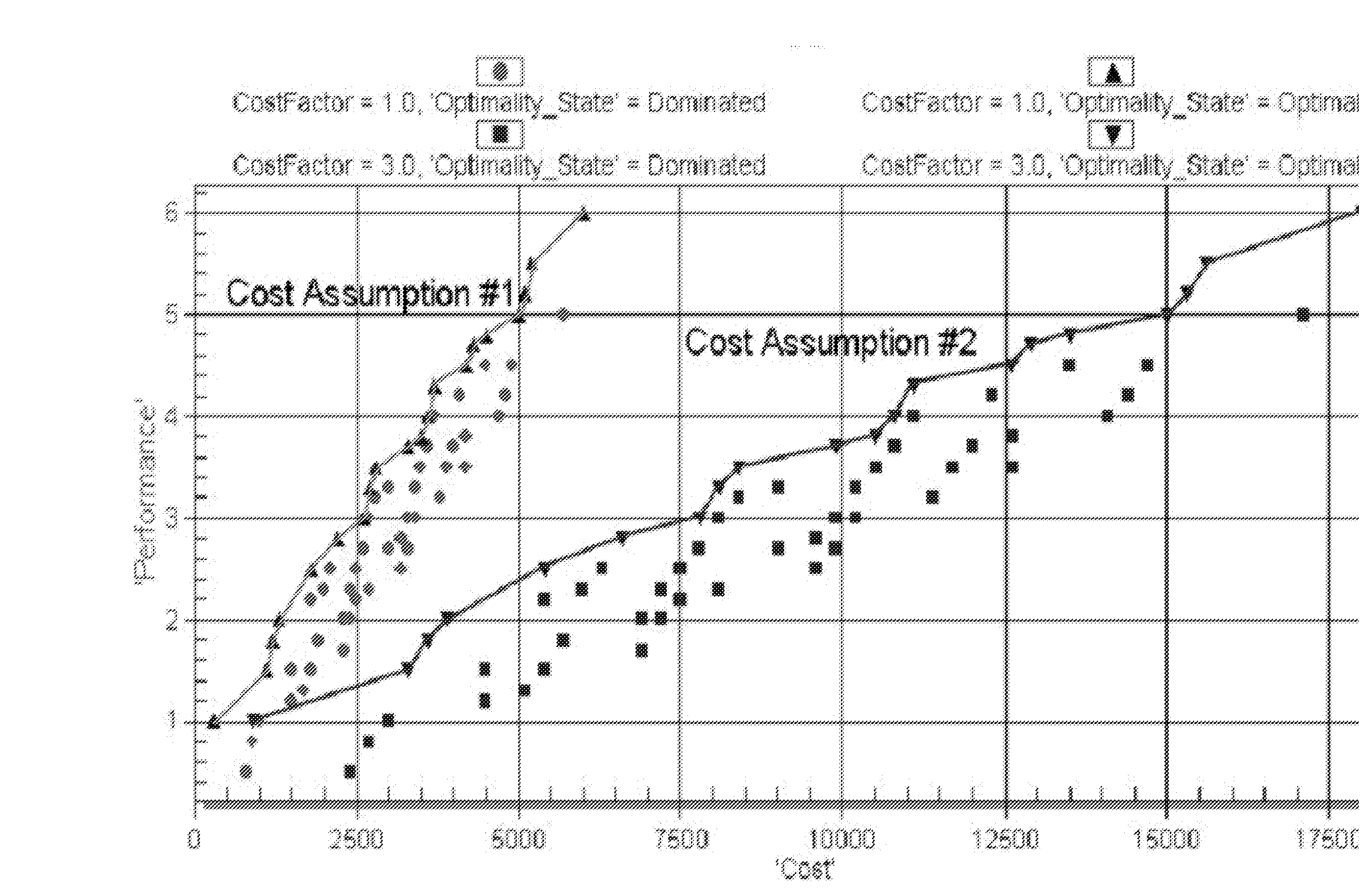
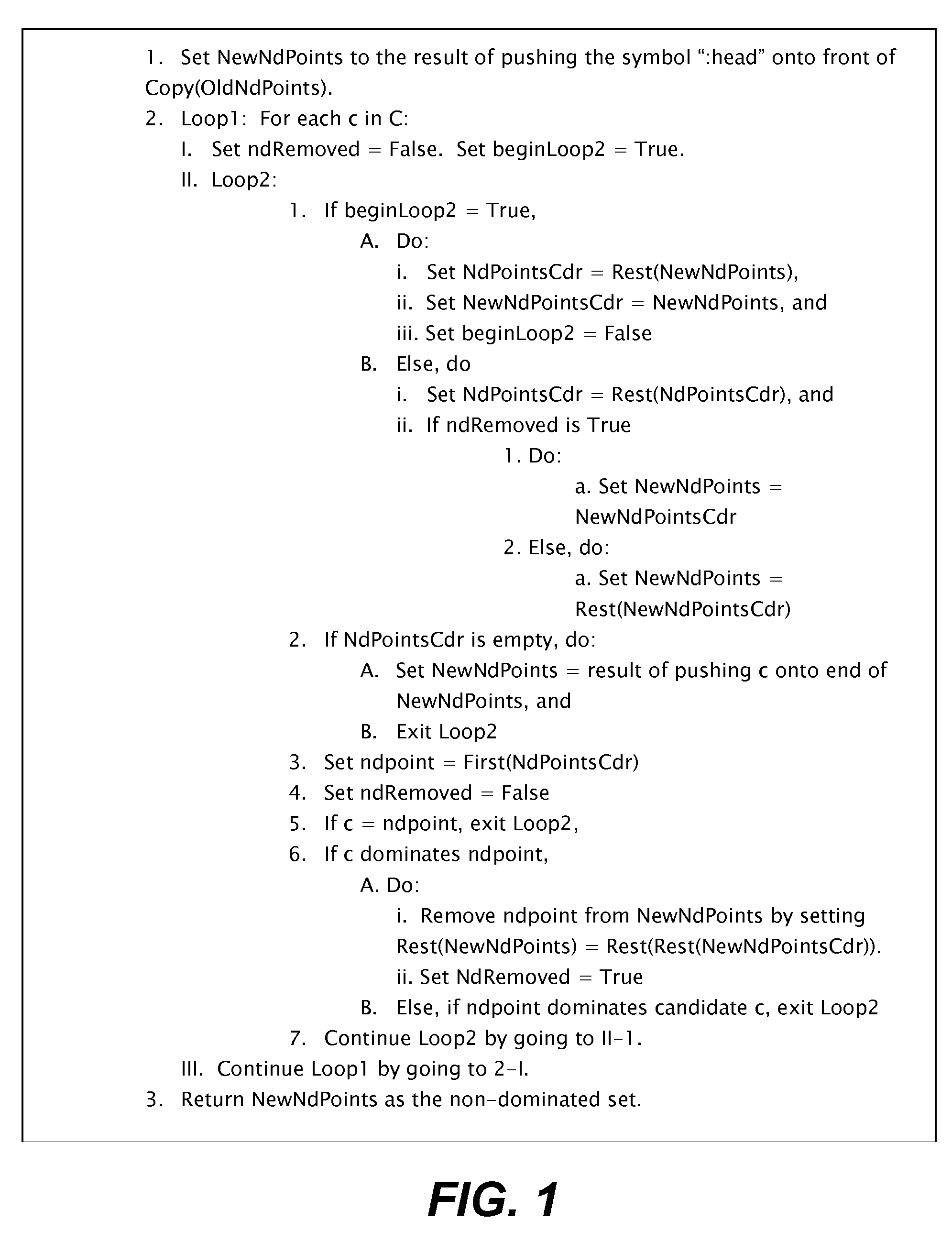
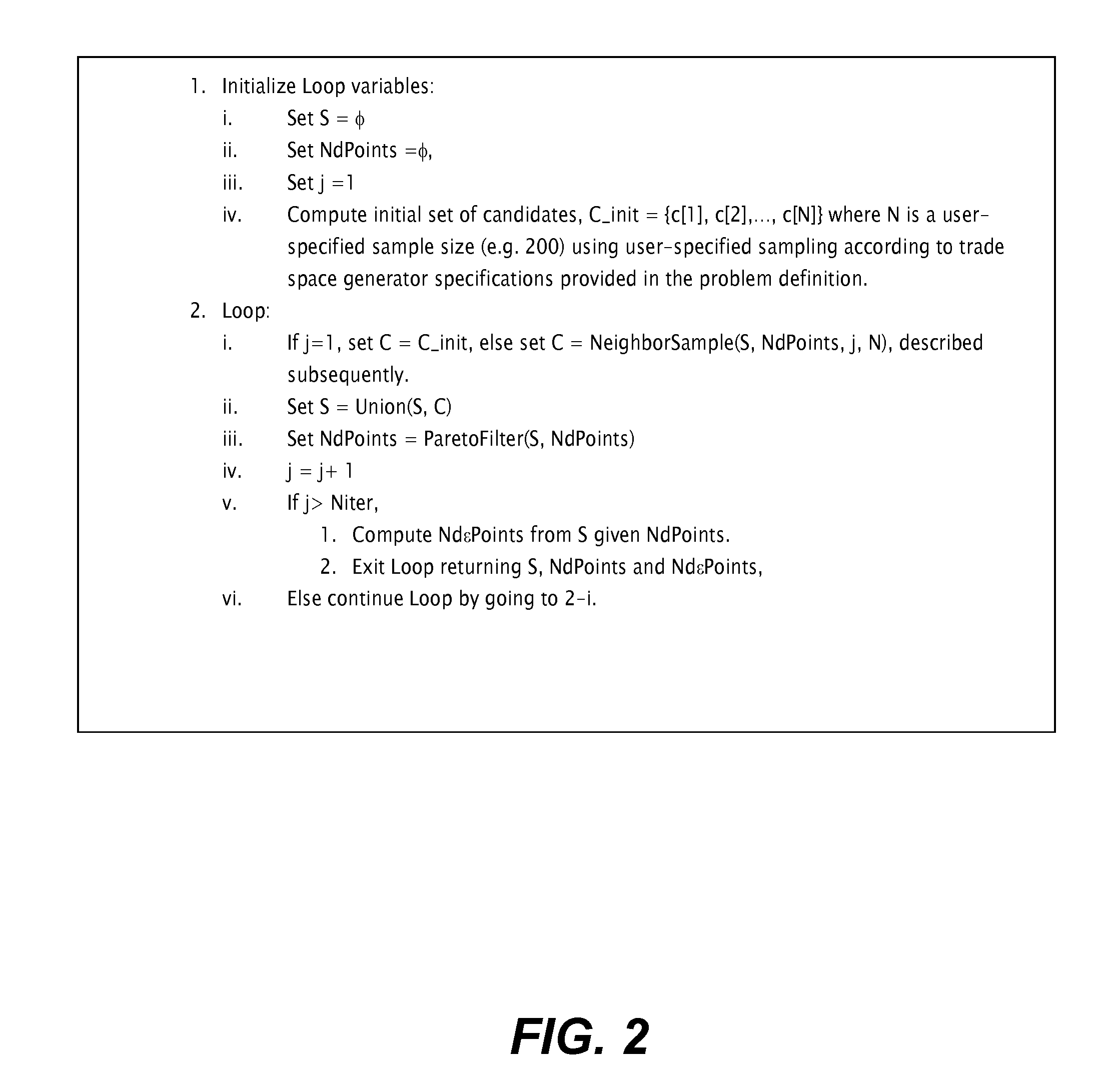
- Integration of Multi-Objective Optimization (MOO) with Constraint Management Systems (CMS) and robust nonlinear equation solvers, allowing users to switch input and output variables, decomposing equality constraints for efficient management and automating the search for 'interesting' designs within the trade space.

Multi-point-position cooperation control manufacturing and assembling device and method based on information fusion
PatentActiveCN110666792A
Innovation
- Design a multi-point collaborative control device based on information fusion, using color plates, image capture devices and multi-manipulator collaborative operations to achieve precise positioning of mounting holes and uniform tightening of screws through machine vision, combined with torque sensors and alarm devices , to achieve automated installation.


Software Compatibility Standards for MPC Systems
Software compatibility standards for Multi Point Constraint (MPC) systems represent a critical framework for ensuring interoperability across diverse computational environments and engineering platforms. These standards establish unified protocols that enable MPC algorithms to function consistently regardless of the underlying software architecture, operating system, or hardware configuration.
The foundation of MPC software compatibility rests on standardized data exchange formats and communication protocols. Industry-standard formats such as XML, JSON, and binary serialization methods ensure that constraint definitions, boundary conditions, and solution parameters can be seamlessly transferred between different software packages. These formats must accommodate complex mathematical representations including matrix structures, vector arrays, and hierarchical constraint relationships while maintaining numerical precision and computational efficiency.
Application Programming Interface (API) standardization plays a pivotal role in MPC system integration. Standardized APIs define consistent function calls, parameter passing conventions, and return value formats across different MPC implementations. This standardization enables developers to create modular applications where MPC solvers can be interchanged without requiring extensive code modifications. RESTful web services and message queuing protocols further enhance cross-platform compatibility by providing language-agnostic communication mechanisms.
Version control and backward compatibility standards ensure long-term system stability and upgrade pathways. These standards define how MPC systems handle legacy constraint definitions, deprecated functions, and evolving mathematical formulations. Semantic versioning protocols help maintain compatibility matrices between different software components while enabling progressive feature enhancement.
Cross-platform runtime environments require standardized dependency management and library linking protocols. Container technologies and virtualization standards provide isolated execution environments that guarantee consistent MPC behavior across different deployment scenarios. These standards address memory management, numerical library dependencies, and parallel processing requirements essential for complex MPC computations.
Validation and certification standards establish benchmarking protocols for MPC implementations, ensuring that different software packages produce mathematically equivalent results for identical constraint problems. These standards define test suites, tolerance specifications, and performance metrics that validate compliance with established MPC compatibility requirements.
The foundation of MPC software compatibility rests on standardized data exchange formats and communication protocols. Industry-standard formats such as XML, JSON, and binary serialization methods ensure that constraint definitions, boundary conditions, and solution parameters can be seamlessly transferred between different software packages. These formats must accommodate complex mathematical representations including matrix structures, vector arrays, and hierarchical constraint relationships while maintaining numerical precision and computational efficiency.
Application Programming Interface (API) standardization plays a pivotal role in MPC system integration. Standardized APIs define consistent function calls, parameter passing conventions, and return value formats across different MPC implementations. This standardization enables developers to create modular applications where MPC solvers can be interchanged without requiring extensive code modifications. RESTful web services and message queuing protocols further enhance cross-platform compatibility by providing language-agnostic communication mechanisms.
Version control and backward compatibility standards ensure long-term system stability and upgrade pathways. These standards define how MPC systems handle legacy constraint definitions, deprecated functions, and evolving mathematical formulations. Semantic versioning protocols help maintain compatibility matrices between different software components while enabling progressive feature enhancement.
Cross-platform runtime environments require standardized dependency management and library linking protocols. Container technologies and virtualization standards provide isolated execution environments that guarantee consistent MPC behavior across different deployment scenarios. These standards address memory management, numerical library dependencies, and parallel processing requirements essential for complex MPC computations.
Validation and certification standards establish benchmarking protocols for MPC implementations, ensuring that different software packages produce mathematically equivalent results for identical constraint problems. These standards define test suites, tolerance specifications, and performance metrics that validate compliance with established MPC compatibility requirements.
Performance Optimization Strategies for MPC Integration
Performance optimization in Multi Point Constraint (MPC) integration requires a systematic approach that addresses computational efficiency, memory management, and real-time processing capabilities. The fundamental challenge lies in balancing constraint satisfaction accuracy with system responsiveness, particularly when dealing with complex mechanical assemblies containing numerous interconnected components.
Computational efficiency optimization begins with algorithm selection and implementation strategies. Advanced sparse matrix techniques significantly reduce memory footprint and computational overhead by exploiting the inherent sparsity patterns in constraint Jacobian matrices. Iterative solvers such as conjugate gradient methods with appropriate preconditioners demonstrate superior performance compared to direct factorization approaches, especially for large-scale systems. Parallel processing architectures enable simultaneous constraint evaluation and resolution across multiple processor cores, achieving substantial performance gains in multi-constraint scenarios.
Memory management optimization focuses on data structure design and caching strategies. Hierarchical constraint organization allows for selective activation and deactivation of constraint groups based on proximity and relevance criteria. Dynamic memory allocation schemes prevent excessive memory fragmentation while maintaining optimal access patterns. Pre-computed constraint derivatives and cached geometric relationships reduce redundant calculations during iterative solving processes.
Real-time performance enhancement involves predictive constraint handling and adaptive time-stepping mechanisms. Constraint prediction algorithms anticipate potential violations before they occur, enabling proactive adjustments that maintain system stability. Variable time-step integration schemes automatically adjust computational granularity based on constraint complexity and system dynamics, ensuring consistent performance across varying operational conditions.
Load balancing strategies distribute computational workload across available processing resources through intelligent task partitioning. Constraint dependency analysis identifies independent constraint groups that can be processed concurrently, maximizing parallel execution efficiency. Dynamic load redistribution mechanisms adapt to changing constraint configurations during runtime, maintaining optimal resource utilization.
Numerical stability optimization employs regularization techniques and constraint scaling methods to prevent ill-conditioned systems. Adaptive tolerance management adjusts convergence criteria based on constraint importance and system requirements, ensuring reliable performance across diverse operational scenarios while maintaining computational efficiency.
Computational efficiency optimization begins with algorithm selection and implementation strategies. Advanced sparse matrix techniques significantly reduce memory footprint and computational overhead by exploiting the inherent sparsity patterns in constraint Jacobian matrices. Iterative solvers such as conjugate gradient methods with appropriate preconditioners demonstrate superior performance compared to direct factorization approaches, especially for large-scale systems. Parallel processing architectures enable simultaneous constraint evaluation and resolution across multiple processor cores, achieving substantial performance gains in multi-constraint scenarios.
Memory management optimization focuses on data structure design and caching strategies. Hierarchical constraint organization allows for selective activation and deactivation of constraint groups based on proximity and relevance criteria. Dynamic memory allocation schemes prevent excessive memory fragmentation while maintaining optimal access patterns. Pre-computed constraint derivatives and cached geometric relationships reduce redundant calculations during iterative solving processes.
Real-time performance enhancement involves predictive constraint handling and adaptive time-stepping mechanisms. Constraint prediction algorithms anticipate potential violations before they occur, enabling proactive adjustments that maintain system stability. Variable time-step integration schemes automatically adjust computational granularity based on constraint complexity and system dynamics, ensuring consistent performance across varying operational conditions.
Load balancing strategies distribute computational workload across available processing resources through intelligent task partitioning. Constraint dependency analysis identifies independent constraint groups that can be processed concurrently, maximizing parallel execution efficiency. Dynamic load redistribution mechanisms adapt to changing constraint configurations during runtime, maintaining optimal resource utilization.
Numerical stability optimization employs regularization techniques and constraint scaling methods to prevent ill-conditioned systems. Adaptive tolerance management adjusts convergence criteria based on constraint importance and system requirements, ensuring reliable performance across diverse operational scenarios while maintaining computational efficiency.
Unlock deeper insights with Patsnap Eureka Quick Research — get a full tech report to explore trends and direct your research. Try now!
Generate Your Research Report Instantly with AI Agent
Supercharge your innovation with Patsnap Eureka AI Agent Platform!