

Optimize Material Use with Multi Point Constraint Tactics
MAR 13, 20269 MIN READ
Generate Your Research Report Instantly with AI Agent
Patsnap Eureka helps you evaluate technical feasibility & market potential.
Material Optimization Background and Objectives
Material optimization has emerged as a critical discipline in modern engineering and manufacturing, driven by the convergence of resource scarcity, environmental sustainability imperatives, and economic pressures. The field encompasses systematic approaches to minimize material consumption while maintaining or enhancing product performance, quality, and functionality. Traditional optimization methods often focused on single-parameter improvements, but contemporary challenges demand sophisticated multi-constraint approaches that simultaneously address weight reduction, cost minimization, structural integrity, and manufacturing feasibility.
The evolution of material optimization can be traced from early empirical methods to today's computational approaches. Initial efforts relied heavily on trial-and-error methodologies and simplified analytical models. The advent of computer-aided design and finite element analysis revolutionized the field, enabling engineers to simulate complex loading conditions and material behaviors. Subsequently, the integration of artificial intelligence, machine learning algorithms, and advanced optimization techniques has opened new possibilities for handling multiple constraints simultaneously.
Multi-point constraint tactics represent a paradigm shift from conventional optimization strategies. These approaches recognize that real-world engineering problems involve numerous interdependent variables and conflicting objectives. For instance, reducing material thickness may decrease weight and cost but could compromise structural strength or thermal performance. Multi-point constraint optimization addresses these trade-offs systematically, seeking optimal solutions within defined parameter spaces while satisfying all critical requirements.
The primary objective of implementing multi-point constraint tactics in material optimization is to achieve Pareto-optimal solutions that balance competing demands. This involves establishing clear performance metrics, defining constraint boundaries, and developing robust optimization algorithms capable of navigating complex solution spaces. Key goals include minimizing material waste, reducing production costs, enhancing product durability, and meeting regulatory compliance requirements.
Contemporary applications span diverse industries, from aerospace and automotive sectors seeking lightweight yet strong components, to construction industries pursuing sustainable building materials. The integration of additive manufacturing technologies has further expanded possibilities, enabling complex geometries and material distributions previously impossible with traditional manufacturing methods. These developments necessitate sophisticated optimization frameworks that can leverage new manufacturing capabilities while respecting material properties and performance requirements.
The evolution of material optimization can be traced from early empirical methods to today's computational approaches. Initial efforts relied heavily on trial-and-error methodologies and simplified analytical models. The advent of computer-aided design and finite element analysis revolutionized the field, enabling engineers to simulate complex loading conditions and material behaviors. Subsequently, the integration of artificial intelligence, machine learning algorithms, and advanced optimization techniques has opened new possibilities for handling multiple constraints simultaneously.
Multi-point constraint tactics represent a paradigm shift from conventional optimization strategies. These approaches recognize that real-world engineering problems involve numerous interdependent variables and conflicting objectives. For instance, reducing material thickness may decrease weight and cost but could compromise structural strength or thermal performance. Multi-point constraint optimization addresses these trade-offs systematically, seeking optimal solutions within defined parameter spaces while satisfying all critical requirements.
The primary objective of implementing multi-point constraint tactics in material optimization is to achieve Pareto-optimal solutions that balance competing demands. This involves establishing clear performance metrics, defining constraint boundaries, and developing robust optimization algorithms capable of navigating complex solution spaces. Key goals include minimizing material waste, reducing production costs, enhancing product durability, and meeting regulatory compliance requirements.
Contemporary applications span diverse industries, from aerospace and automotive sectors seeking lightweight yet strong components, to construction industries pursuing sustainable building materials. The integration of additive manufacturing technologies has further expanded possibilities, enabling complex geometries and material distributions previously impossible with traditional manufacturing methods. These developments necessitate sophisticated optimization frameworks that can leverage new manufacturing capabilities while respecting material properties and performance requirements.
Market Demand for Multi-Constraint Material Solutions
The global materials industry faces unprecedented pressure to optimize resource utilization while meeting increasingly complex performance requirements. Multi-constraint material solutions have emerged as a critical response to this challenge, addressing simultaneous demands for cost reduction, environmental sustainability, performance enhancement, and regulatory compliance. This convergence of constraints has created a substantial market opportunity for advanced optimization technologies.
Manufacturing sectors across automotive, aerospace, construction, and electronics industries are driving significant demand for materials that can satisfy multiple performance criteria simultaneously. The automotive industry particularly seeks lightweight materials that maintain structural integrity while reducing environmental impact. Aerospace applications require materials that optimize weight, strength, thermal resistance, and cost considerations concurrently.
Environmental regulations and sustainability mandates are reshaping material selection criteria globally. Companies increasingly require solutions that minimize waste generation, reduce carbon footprint, and enable circular economy principles while maintaining product quality and cost competitiveness. This regulatory landscape has accelerated adoption of multi-constraint optimization approaches in material design and selection processes.
The construction industry represents another major demand driver, seeking materials that balance structural performance, thermal efficiency, durability, and environmental impact. Smart building initiatives and green construction standards have intensified requirements for materials that can simultaneously address energy efficiency, structural integrity, and sustainability metrics.
Supply chain disruptions and raw material price volatility have heightened industry focus on material optimization strategies. Companies are actively seeking solutions that can adapt to changing material availability and cost structures while maintaining product performance standards. This dynamic environment has increased market receptivity to advanced optimization technologies that can rapidly recalculate optimal material configurations under changing constraints.
Emerging applications in renewable energy infrastructure, electric vehicle components, and advanced manufacturing processes are creating new market segments for multi-constraint material solutions. These sectors demand materials that can simultaneously optimize performance, cost, environmental impact, and manufacturing feasibility across complex operational conditions.
Manufacturing sectors across automotive, aerospace, construction, and electronics industries are driving significant demand for materials that can satisfy multiple performance criteria simultaneously. The automotive industry particularly seeks lightweight materials that maintain structural integrity while reducing environmental impact. Aerospace applications require materials that optimize weight, strength, thermal resistance, and cost considerations concurrently.
Environmental regulations and sustainability mandates are reshaping material selection criteria globally. Companies increasingly require solutions that minimize waste generation, reduce carbon footprint, and enable circular economy principles while maintaining product quality and cost competitiveness. This regulatory landscape has accelerated adoption of multi-constraint optimization approaches in material design and selection processes.
The construction industry represents another major demand driver, seeking materials that balance structural performance, thermal efficiency, durability, and environmental impact. Smart building initiatives and green construction standards have intensified requirements for materials that can simultaneously address energy efficiency, structural integrity, and sustainability metrics.
Supply chain disruptions and raw material price volatility have heightened industry focus on material optimization strategies. Companies are actively seeking solutions that can adapt to changing material availability and cost structures while maintaining product performance standards. This dynamic environment has increased market receptivity to advanced optimization technologies that can rapidly recalculate optimal material configurations under changing constraints.
Emerging applications in renewable energy infrastructure, electric vehicle components, and advanced manufacturing processes are creating new market segments for multi-constraint material solutions. These sectors demand materials that can simultaneously optimize performance, cost, environmental impact, and manufacturing feasibility across complex operational conditions.
Current State of Multi-Point Constraint Material Systems
Multi-point constraint material systems represent a sophisticated approach to material optimization that has gained significant traction across various industries. These systems operate on the principle of simultaneously managing multiple constraints such as weight, strength, cost, thermal properties, and manufacturing feasibility to achieve optimal material utilization. The current technological landscape demonstrates varying levels of maturity across different application domains, with aerospace and automotive sectors leading the implementation of advanced constraint-based optimization methodologies.
The aerospace industry has established the most mature multi-point constraint systems, primarily driven by stringent weight and performance requirements. Current implementations utilize advanced computational frameworks that integrate structural analysis, thermal modeling, and manufacturing constraints simultaneously. Boeing and Airbus have developed proprietary systems that can optimize composite material layups while considering factors such as fiber orientation, ply thickness, manufacturing tolerances, and maintenance accessibility. These systems typically achieve 15-25% material savings compared to traditional design approaches.
Automotive manufacturers are rapidly advancing their multi-point constraint capabilities, particularly in electric vehicle development where weight optimization directly impacts range performance. Tesla's material optimization platform integrates battery thermal management, crash safety requirements, and manufacturing cost constraints into a unified optimization framework. Similarly, BMW's lightweight construction program employs multi-material design strategies that optimize the use of aluminum, carbon fiber, and high-strength steel based on local loading conditions and manufacturing constraints.
The construction industry presents a more fragmented landscape, with multi-point constraint systems primarily concentrated in high-performance applications such as skyscrapers and long-span bridges. Current systems focus on optimizing concrete and steel usage while considering seismic loads, wind resistance, construction sequencing, and material availability. However, adoption remains limited due to conservative industry practices and regulatory constraints that often prioritize safety margins over material efficiency.
Manufacturing sectors face significant challenges in implementing comprehensive multi-point constraint systems due to the complexity of production processes and supply chain variables. Current solutions often address subsets of constraints rather than holistic optimization. For instance, injection molding applications may optimize material flow and cooling time but struggle to integrate real-time cost fluctuations and quality control parameters into the optimization framework.
The primary technological barriers include computational complexity, real-time data integration, and the need for sophisticated modeling capabilities that can accurately represent material behavior under multiple simultaneous constraints. Most current systems rely on iterative optimization algorithms that require significant computational resources and may not guarantee global optimization solutions.
The aerospace industry has established the most mature multi-point constraint systems, primarily driven by stringent weight and performance requirements. Current implementations utilize advanced computational frameworks that integrate structural analysis, thermal modeling, and manufacturing constraints simultaneously. Boeing and Airbus have developed proprietary systems that can optimize composite material layups while considering factors such as fiber orientation, ply thickness, manufacturing tolerances, and maintenance accessibility. These systems typically achieve 15-25% material savings compared to traditional design approaches.
Automotive manufacturers are rapidly advancing their multi-point constraint capabilities, particularly in electric vehicle development where weight optimization directly impacts range performance. Tesla's material optimization platform integrates battery thermal management, crash safety requirements, and manufacturing cost constraints into a unified optimization framework. Similarly, BMW's lightweight construction program employs multi-material design strategies that optimize the use of aluminum, carbon fiber, and high-strength steel based on local loading conditions and manufacturing constraints.
The construction industry presents a more fragmented landscape, with multi-point constraint systems primarily concentrated in high-performance applications such as skyscrapers and long-span bridges. Current systems focus on optimizing concrete and steel usage while considering seismic loads, wind resistance, construction sequencing, and material availability. However, adoption remains limited due to conservative industry practices and regulatory constraints that often prioritize safety margins over material efficiency.
Manufacturing sectors face significant challenges in implementing comprehensive multi-point constraint systems due to the complexity of production processes and supply chain variables. Current solutions often address subsets of constraints rather than holistic optimization. For instance, injection molding applications may optimize material flow and cooling time but struggle to integrate real-time cost fluctuations and quality control parameters into the optimization framework.
The primary technological barriers include computational complexity, real-time data integration, and the need for sophisticated modeling capabilities that can accurately represent material behavior under multiple simultaneous constraints. Most current systems rely on iterative optimization algorithms that require significant computational resources and may not guarantee global optimization solutions.
Existing Multi-Point Constraint Material Solutions
01 Multi-point constraint systems in structural engineering
Multi-point constraint (MPC) systems are utilized in structural engineering to connect multiple nodes or points in a structure, ensuring coordinated movement and load distribution. These systems employ mathematical formulations to define relationships between degrees of freedom at different points, enabling complex structural behaviors to be modeled accurately. The constraints can be applied to various structural elements including beams, plates, and shells to simulate realistic boundary conditions and connection behaviors.- Multi-point constraint systems in structural engineering: Multi-point constraint (MPC) systems are utilized in structural engineering to connect multiple degrees of freedom at different nodes. These systems enable the distribution of loads and forces across multiple points, improving structural stability and performance. The constraint equations establish relationships between nodal displacements, allowing for more accurate modeling of complex structural behaviors. Applications include connecting rigid bodies, modeling joints, and simulating contact conditions in finite element analysis.
- Advanced composite materials for constraint applications: Advanced composite materials are employed in multi-point constraint applications to achieve superior mechanical properties and weight reduction. These materials combine different constituents such as fiber reinforcements and matrix materials to create structures with enhanced strength-to-weight ratios. The use of composites allows for tailored mechanical properties at different constraint points, enabling optimized load transfer and improved durability. Material selection considers factors such as stiffness, strength, fatigue resistance, and environmental stability.
- Constraint devices and connection mechanisms: Specialized constraint devices and connection mechanisms are designed to implement multi-point constraints in practical applications. These devices include mechanical fasteners, coupling elements, and connection assemblies that physically link multiple points while maintaining desired constraint relationships. The mechanisms allow for controlled load distribution and can accommodate various degrees of freedom restrictions. Design considerations include ease of assembly, adjustability, and the ability to maintain constraint integrity under operational conditions.
- Tactical material optimization for constraint systems: Tactical material selection and optimization strategies focus on enhancing the performance of multi-point constraint systems under specific operational requirements. This involves analyzing material properties such as elasticity, plasticity, and failure characteristics to ensure optimal behavior at constraint points. Material optimization considers factors including load-bearing capacity, deformation compatibility, and long-term reliability. Advanced materials may incorporate smart materials, functionally graded materials, or hybrid material systems to achieve superior constraint performance.
- Computational methods for multi-point constraint analysis: Computational methods and numerical techniques are essential for analyzing and implementing multi-point constraints in complex systems. These methods include finite element formulations, constraint enforcement algorithms, and optimization procedures that ensure accurate representation of constraint conditions. Computational approaches enable the simulation of material behavior under various loading scenarios and facilitate the design of efficient constraint configurations. Implementation strategies address issues such as constraint compatibility, numerical stability, and solution accuracy.
02 Material selection for constraint applications
The selection of appropriate materials for multi-point constraint applications involves considering mechanical properties such as strength, stiffness, durability, and compatibility with connected components. Materials commonly used include high-strength alloys, composite materials, and specialized polymers that can withstand the forces and deformations imposed by constraint conditions. Material properties must be carefully matched to the specific loading conditions and environmental factors to ensure long-term performance and reliability of the constraint system.Expand Specific Solutions03 Tactical deployment of constraint mechanisms
Tactical approaches to implementing multi-point constraints involve strategic placement and configuration of constraint elements to optimize structural performance. This includes determining optimal locations for constraint points, selecting appropriate constraint types, and coordinating multiple constraints to achieve desired structural behavior. The tactical deployment considers factors such as load paths, stress concentrations, and potential failure modes to maximize effectiveness while minimizing material usage and complexity.Expand Specific Solutions04 Computational methods for constraint analysis
Advanced computational methods are employed to analyze and optimize multi-point constraint systems, including finite element analysis techniques that incorporate constraint equations into the solution process. These methods enable prediction of structural responses under various loading conditions and facilitate design optimization. Numerical algorithms handle the mathematical complexity of constraint relationships, ensuring accurate simulation of coupled behaviors and interaction effects between constrained points.Expand Specific Solutions05 Integration of constraints in composite structures
Multi-point constraints are integrated into composite structures to manage complex load transfer mechanisms and ensure structural integrity. This involves developing connection strategies that account for the anisotropic nature of composite materials and the need to distribute loads across multiple attachment points. Special consideration is given to preventing delamination, managing stress concentrations at constraint locations, and maintaining the advantages of lightweight composite construction while achieving necessary structural connectivity.Expand Specific Solutions
Key Players in Advanced Material Optimization Industry
The competitive landscape for optimizing material use with multi-point constraint tactics is in an emerging growth phase, driven by increasing demand for resource efficiency across aerospace, manufacturing, and technology sectors. The market demonstrates significant potential with diverse players ranging from established aerospace giants like Boeing and Raytheon to technology leaders such as Microsoft Technology Licensing LLC and Dassault Systèmes SE. Technology maturity varies considerably across participants, with academic institutions like Northwestern Polytechnical University and Huazhong University of Science & Technology conducting foundational research, while industrial players like Caterpillar and TRUMPF Werkzeugmaschinen implement practical applications. The fragmented ecosystem suggests early-stage market development with substantial opportunities for innovation and consolidation as constraint optimization technologies advance toward mainstream adoption.
The Boeing Co.
Technical Solution: Boeing implements advanced topology optimization algorithms combined with multi-point constraint methodologies for aerospace structural design. Their approach utilizes gradient-based optimization techniques that simultaneously consider multiple loading conditions, manufacturing constraints, and material property limitations. The system integrates finite element analysis with constraint handling methods to achieve optimal material distribution while maintaining structural integrity across various flight conditions. Boeing's framework incorporates additive manufacturing constraints and considers fatigue life requirements, enabling up to 20% weight reduction in aircraft components while meeting all safety and performance specifications. The multi-point constraint system addresses thermal expansion, vibration modes, and stress concentration factors simultaneously.
Strengths: Extensive aerospace experience and proven track record in weight-critical applications. Weaknesses: Solutions may be over-engineered for simpler applications and require significant computational resources.
Raytheon Co.
Technical Solution: Raytheon develops multi-constraint optimization systems for defense applications, focusing on radar and missile component design. Their approach combines material property constraints with electromagnetic performance requirements, utilizing machine learning-enhanced optimization algorithms. The system addresses multiple objectives including weight minimization, thermal management, and electromagnetic interference reduction. Raytheon's methodology incorporates reliability constraints and considers harsh environmental conditions typical in defense applications. Their framework uses parallel processing techniques to handle complex constraint sets and achieves material efficiency improvements of 15-25% while maintaining mission-critical performance standards.
Strengths: Specialized expertise in high-performance defense systems and robust constraint handling. Weaknesses: Limited applicability to commercial markets and high development costs.
Core Innovations in Constraint-Based Material Design
Multi-objective optimization within a constraint management system
PatentActiveUS20070239497A1
Innovation
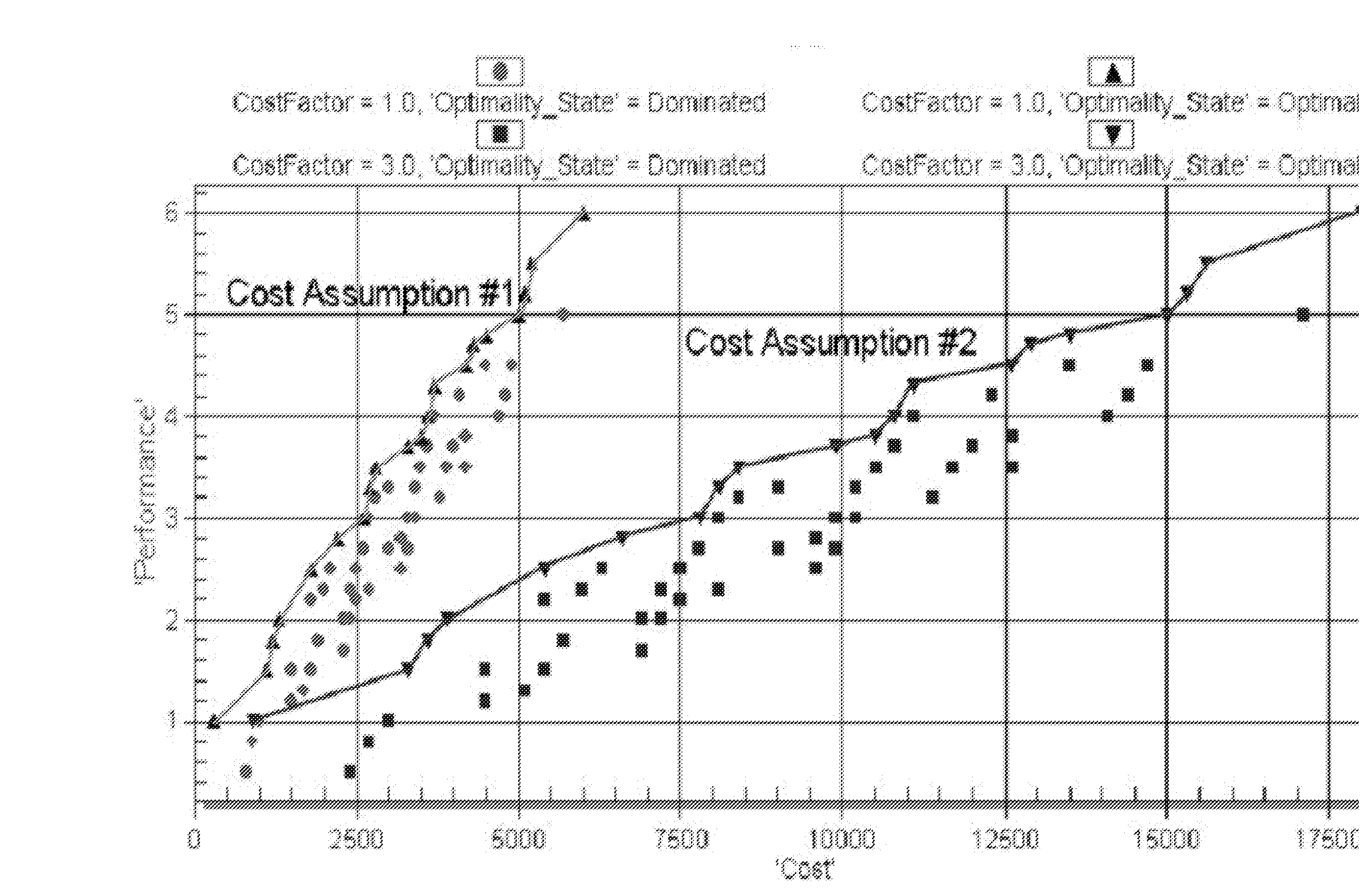
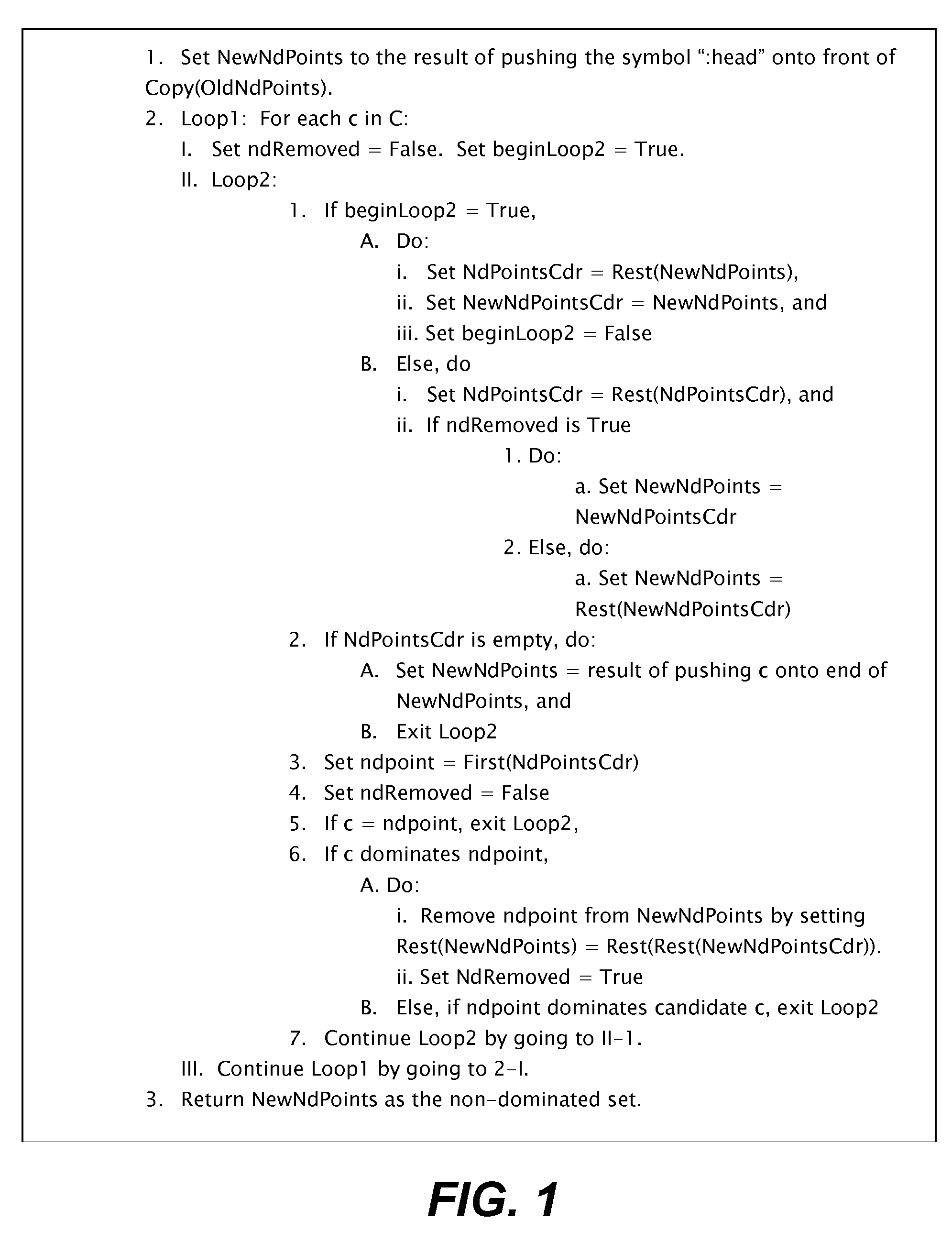
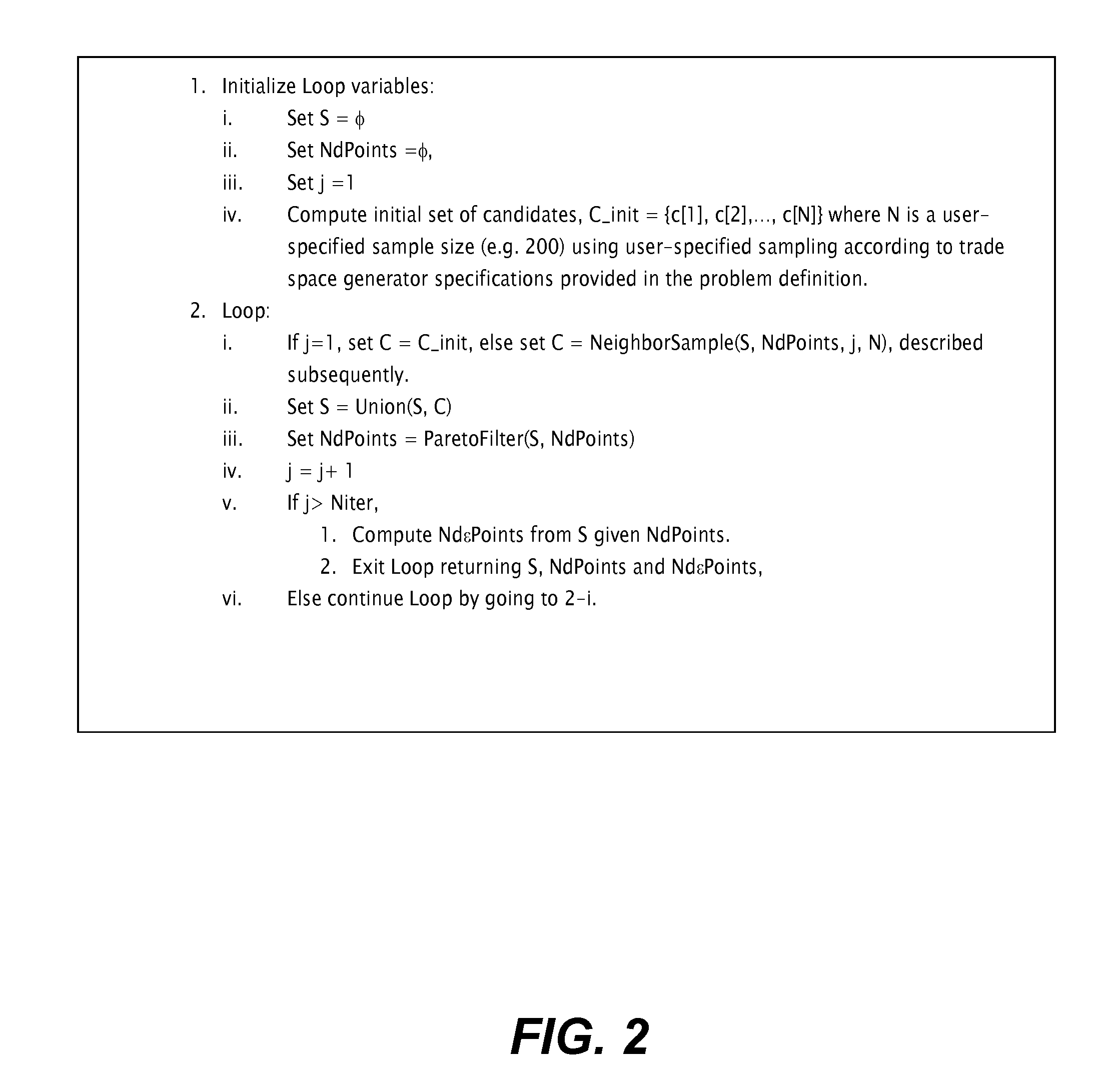
- Integration of Multi-Objective Optimization (MOO) with Constraint Management Systems (CMS) and robust nonlinear equation solvers, allowing users to switch input and output variables, decomposing equality constraints for efficient management and automating the search for 'interesting' designs within the trade space.

Selecting materials of components of a product to be manufactured
PatentPendingUS20240338014A1
Innovation
- A computer-implemented method that uses Multiple Criteria Decision Aiding sorting models, incorporating Non-Compensatory Sorting and SAT/MaxSAT-based encodings, to determine optimal materials for each component of a product by analyzing provided constraints and specifications, ensuring compatibility and reliability across all components.


Sustainability Standards for Material Optimization
The establishment of comprehensive sustainability standards for material optimization represents a critical framework for implementing multi-point constraint tactics in resource management. These standards serve as regulatory benchmarks that guide organizations toward environmentally responsible material utilization while maintaining operational efficiency and economic viability.
International sustainability frameworks such as ISO 14001 and the Global Reporting Initiative provide foundational guidelines for material optimization practices. These standards emphasize lifecycle assessment methodologies, requiring organizations to evaluate environmental impacts from raw material extraction through end-of-life disposal. The integration of circular economy principles within these frameworks promotes material reuse, recycling, and regeneration strategies that align with multi-point constraint optimization objectives.
Emerging sustainability certifications specifically address material efficiency metrics, including material intensity ratios, waste reduction percentages, and resource productivity indicators. Standards like LEED and BREEAM incorporate material optimization requirements that mandate minimum recycled content, local sourcing preferences, and low-impact material selection criteria. These certification systems create measurable targets that support constraint-based optimization algorithms in material selection processes.
Regional regulatory frameworks increasingly mandate sustainability reporting for material consumption patterns. The European Union's Sustainable Finance Disclosure Regulation and similar initiatives require detailed documentation of material optimization strategies and their environmental outcomes. These regulations establish compliance thresholds that function as hard constraints in optimization models, ensuring that material use efficiency improvements align with broader sustainability objectives.
Industry-specific sustainability standards address unique material optimization challenges across different sectors. The automotive industry's Material Data System standards and construction sector's Environmental Product Declarations provide sector-tailored frameworks for implementing multi-point constraint tactics. These specialized standards incorporate technical performance requirements alongside environmental criteria, creating complex optimization scenarios that balance multiple competing objectives.
The evolution toward science-based targets for material optimization reflects growing emphasis on quantifiable sustainability outcomes. Organizations increasingly adopt standards that link material efficiency improvements to specific environmental impact reductions, such as carbon footprint minimization and biodiversity preservation. This trend supports the development of more sophisticated constraint optimization models that integrate environmental performance metrics with traditional cost and quality parameters.
International sustainability frameworks such as ISO 14001 and the Global Reporting Initiative provide foundational guidelines for material optimization practices. These standards emphasize lifecycle assessment methodologies, requiring organizations to evaluate environmental impacts from raw material extraction through end-of-life disposal. The integration of circular economy principles within these frameworks promotes material reuse, recycling, and regeneration strategies that align with multi-point constraint optimization objectives.
Emerging sustainability certifications specifically address material efficiency metrics, including material intensity ratios, waste reduction percentages, and resource productivity indicators. Standards like LEED and BREEAM incorporate material optimization requirements that mandate minimum recycled content, local sourcing preferences, and low-impact material selection criteria. These certification systems create measurable targets that support constraint-based optimization algorithms in material selection processes.
Regional regulatory frameworks increasingly mandate sustainability reporting for material consumption patterns. The European Union's Sustainable Finance Disclosure Regulation and similar initiatives require detailed documentation of material optimization strategies and their environmental outcomes. These regulations establish compliance thresholds that function as hard constraints in optimization models, ensuring that material use efficiency improvements align with broader sustainability objectives.
Industry-specific sustainability standards address unique material optimization challenges across different sectors. The automotive industry's Material Data System standards and construction sector's Environmental Product Declarations provide sector-tailored frameworks for implementing multi-point constraint tactics. These specialized standards incorporate technical performance requirements alongside environmental criteria, creating complex optimization scenarios that balance multiple competing objectives.
The evolution toward science-based targets for material optimization reflects growing emphasis on quantifiable sustainability outcomes. Organizations increasingly adopt standards that link material efficiency improvements to specific environmental impact reductions, such as carbon footprint minimization and biodiversity preservation. This trend supports the development of more sophisticated constraint optimization models that integrate environmental performance metrics with traditional cost and quality parameters.
Cost-Performance Trade-offs in Material Selection
Cost-performance trade-offs represent the fundamental challenge in material selection for multi-point constraint optimization systems. Engineers must balance competing objectives where superior material properties often correlate with exponentially increasing costs. This relationship becomes particularly complex when multiple performance criteria must be satisfied simultaneously, creating a multi-dimensional optimization space where traditional cost-benefit analysis proves insufficient.
The economic impact of material selection extends beyond initial procurement costs to encompass lifecycle considerations including processing complexity, maintenance requirements, and end-of-life disposal. High-performance materials such as advanced composites or specialized alloys may justify their premium pricing through enhanced durability, reduced weight, or superior thermal properties. However, these benefits must be quantified against manufacturing constraints, supply chain reliability, and long-term availability.
Performance metrics in multi-constraint scenarios often exhibit non-linear relationships with material properties. A material excelling in strength-to-weight ratio may compromise thermal stability or corrosion resistance, necessitating careful evaluation of priority hierarchies. The challenge intensifies when constraints are interdependent, where optimizing for one parameter inadvertently affects others, creating cascading effects throughout the system design.
Market dynamics significantly influence cost-performance equations, with material prices subject to volatility based on supply availability, geopolitical factors, and technological disruptions. Strategic material selection must account for these uncertainties while maintaining performance standards. Alternative materials or hybrid approaches may provide risk mitigation strategies, though they introduce additional complexity in qualification and validation processes.
Emerging materials technologies continuously reshape the cost-performance landscape, offering new possibilities for constraint optimization. Advanced manufacturing techniques enable previously impractical material combinations, while computational materials science accelerates the discovery of optimized compositions. These developments create opportunities for breakthrough solutions but require careful assessment of technological maturity and commercial viability.
The integration of sustainability considerations adds another dimension to cost-performance trade-offs, where environmental impact becomes a quantifiable constraint. Life cycle assessment methodologies help evaluate true costs including carbon footprint, recyclability, and resource depletion factors, potentially justifying premium materials with superior environmental profiles.
The economic impact of material selection extends beyond initial procurement costs to encompass lifecycle considerations including processing complexity, maintenance requirements, and end-of-life disposal. High-performance materials such as advanced composites or specialized alloys may justify their premium pricing through enhanced durability, reduced weight, or superior thermal properties. However, these benefits must be quantified against manufacturing constraints, supply chain reliability, and long-term availability.
Performance metrics in multi-constraint scenarios often exhibit non-linear relationships with material properties. A material excelling in strength-to-weight ratio may compromise thermal stability or corrosion resistance, necessitating careful evaluation of priority hierarchies. The challenge intensifies when constraints are interdependent, where optimizing for one parameter inadvertently affects others, creating cascading effects throughout the system design.
Market dynamics significantly influence cost-performance equations, with material prices subject to volatility based on supply availability, geopolitical factors, and technological disruptions. Strategic material selection must account for these uncertainties while maintaining performance standards. Alternative materials or hybrid approaches may provide risk mitigation strategies, though they introduce additional complexity in qualification and validation processes.
Emerging materials technologies continuously reshape the cost-performance landscape, offering new possibilities for constraint optimization. Advanced manufacturing techniques enable previously impractical material combinations, while computational materials science accelerates the discovery of optimized compositions. These developments create opportunities for breakthrough solutions but require careful assessment of technological maturity and commercial viability.
The integration of sustainability considerations adds another dimension to cost-performance trade-offs, where environmental impact becomes a quantifiable constraint. Life cycle assessment methodologies help evaluate true costs including carbon footprint, recyclability, and resource depletion factors, potentially justifying premium materials with superior environmental profiles.
Unlock deeper insights with Patsnap Eureka Quick Research — get a full tech report to explore trends and direct your research. Try now!
Generate Your Research Report Instantly with AI Agent
Supercharge your innovation with Patsnap Eureka AI Agent Platform!