Use of Multi Point Constraint for Structural Efficiency Goals
MAR 13, 20269 MIN READ
Generate Your Research Report Instantly with AI Agent
PatSnap Eureka helps you evaluate technical feasibility & market potential.
Multi Point Constraint Structural Goals and Background
Multi Point Constraint (MPC) technology represents a fundamental advancement in structural optimization methodologies, emerging from the convergence of computational mechanics, mathematical optimization theory, and advanced manufacturing capabilities. This approach addresses the growing demand for lightweight, high-performance structures across aerospace, automotive, and civil engineering sectors by enabling simultaneous consideration of multiple design constraints and performance objectives.
The evolution of MPC applications in structural design traces back to early finite element analysis developments in the 1960s, where engineers first recognized the potential for mathematically linking multiple structural points to achieve desired mechanical behaviors. Initial implementations focused primarily on simple load transfer mechanisms and basic connectivity requirements between structural components.
During the 1980s and 1990s, the integration of computer-aided design systems with structural analysis software catalyzed significant progress in MPC methodologies. Engineers began exploring more sophisticated constraint formulations that could simultaneously address stress limitations, displacement requirements, frequency constraints, and manufacturing considerations within unified optimization frameworks.
The primary objective of contemporary MPC structural efficiency approaches centers on achieving optimal material distribution and geometric configurations while satisfying multiple performance criteria simultaneously. These objectives typically encompass weight minimization, stress concentration reduction, dynamic response optimization, and manufacturing feasibility enhancement. Modern applications extend beyond traditional strength-based design to incorporate fatigue life, buckling stability, and multi-physics considerations.
Recent technological developments have expanded MPC capabilities to address complex multi-scale structural problems, where constraints operate across different length scales from microscopic material properties to macroscopic system-level performance requirements. This evolution reflects the industry's transition toward integrated design philosophies that consider entire product lifecycles rather than isolated performance metrics.
The strategic importance of MPC technology continues growing as industries face increasing pressure to develop sustainable, resource-efficient solutions. Current research directions emphasize adaptive constraint formulations, real-time optimization capabilities, and integration with additive manufacturing processes, positioning MPC as a cornerstone technology for next-generation structural design methodologies.
The evolution of MPC applications in structural design traces back to early finite element analysis developments in the 1960s, where engineers first recognized the potential for mathematically linking multiple structural points to achieve desired mechanical behaviors. Initial implementations focused primarily on simple load transfer mechanisms and basic connectivity requirements between structural components.
During the 1980s and 1990s, the integration of computer-aided design systems with structural analysis software catalyzed significant progress in MPC methodologies. Engineers began exploring more sophisticated constraint formulations that could simultaneously address stress limitations, displacement requirements, frequency constraints, and manufacturing considerations within unified optimization frameworks.
The primary objective of contemporary MPC structural efficiency approaches centers on achieving optimal material distribution and geometric configurations while satisfying multiple performance criteria simultaneously. These objectives typically encompass weight minimization, stress concentration reduction, dynamic response optimization, and manufacturing feasibility enhancement. Modern applications extend beyond traditional strength-based design to incorporate fatigue life, buckling stability, and multi-physics considerations.
Recent technological developments have expanded MPC capabilities to address complex multi-scale structural problems, where constraints operate across different length scales from microscopic material properties to macroscopic system-level performance requirements. This evolution reflects the industry's transition toward integrated design philosophies that consider entire product lifecycles rather than isolated performance metrics.
The strategic importance of MPC technology continues growing as industries face increasing pressure to develop sustainable, resource-efficient solutions. Current research directions emphasize adaptive constraint formulations, real-time optimization capabilities, and integration with additive manufacturing processes, positioning MPC as a cornerstone technology for next-generation structural design methodologies.
Market Demand for Advanced Structural Optimization
The aerospace industry represents the most significant market segment driving demand for advanced structural optimization technologies, particularly multi-point constraint methodologies. Commercial aircraft manufacturers face mounting pressure to reduce fuel consumption while maintaining stringent safety standards, creating substantial demand for optimization solutions that can simultaneously address multiple structural performance criteria. Military aerospace applications similarly require structures that optimize weight, strength, and stealth characteristics concurrently.
Automotive manufacturers increasingly seek advanced structural optimization to meet evolving regulatory requirements and consumer expectations. Electric vehicle development has intensified this demand, as manufacturers must optimize battery housing structures, chassis components, and body panels to maximize range while ensuring crash safety. The transition toward autonomous vehicles further amplifies requirements for structures that can accommodate complex sensor arrays while maintaining aerodynamic efficiency.
The renewable energy sector presents rapidly expanding market opportunities for structural optimization technologies. Wind turbine manufacturers require optimization solutions that address fatigue resistance, aerodynamic performance, and material cost constraints simultaneously. Solar panel mounting systems and offshore platform structures similarly benefit from multi-constraint optimization approaches that balance structural integrity with installation efficiency.
Construction and infrastructure markets demonstrate growing adoption of advanced optimization techniques, driven by sustainability mandates and cost pressures. Large-scale building projects increasingly require structural solutions that optimize material usage, seismic resistance, and thermal performance concurrently. Bridge and tunnel construction projects particularly benefit from optimization approaches that address multiple loading conditions and environmental factors.
Marine and offshore industries represent emerging market segments with substantial growth potential. Ship hull optimization requires simultaneous consideration of hydrodynamic efficiency, structural strength, and cargo capacity constraints. Offshore drilling platforms and renewable energy installations demand structures optimized for wave loading, corrosion resistance, and operational accessibility.
The defense sector maintains consistent demand for structural optimization technologies that address unique multi-constraint scenarios. Military vehicle design requires optimization across protection levels, mobility characteristics, and payload capacity. Naval vessel construction similarly demands solutions that balance stealth requirements with structural performance and operational capabilities.
Market growth drivers include increasingly stringent environmental regulations, rising material costs, and computational advances that enable more sophisticated optimization approaches. The integration of artificial intelligence and machine learning technologies with traditional optimization methods creates new market opportunities for advanced structural design solutions.
Automotive manufacturers increasingly seek advanced structural optimization to meet evolving regulatory requirements and consumer expectations. Electric vehicle development has intensified this demand, as manufacturers must optimize battery housing structures, chassis components, and body panels to maximize range while ensuring crash safety. The transition toward autonomous vehicles further amplifies requirements for structures that can accommodate complex sensor arrays while maintaining aerodynamic efficiency.
The renewable energy sector presents rapidly expanding market opportunities for structural optimization technologies. Wind turbine manufacturers require optimization solutions that address fatigue resistance, aerodynamic performance, and material cost constraints simultaneously. Solar panel mounting systems and offshore platform structures similarly benefit from multi-constraint optimization approaches that balance structural integrity with installation efficiency.
Construction and infrastructure markets demonstrate growing adoption of advanced optimization techniques, driven by sustainability mandates and cost pressures. Large-scale building projects increasingly require structural solutions that optimize material usage, seismic resistance, and thermal performance concurrently. Bridge and tunnel construction projects particularly benefit from optimization approaches that address multiple loading conditions and environmental factors.
Marine and offshore industries represent emerging market segments with substantial growth potential. Ship hull optimization requires simultaneous consideration of hydrodynamic efficiency, structural strength, and cargo capacity constraints. Offshore drilling platforms and renewable energy installations demand structures optimized for wave loading, corrosion resistance, and operational accessibility.
The defense sector maintains consistent demand for structural optimization technologies that address unique multi-constraint scenarios. Military vehicle design requires optimization across protection levels, mobility characteristics, and payload capacity. Naval vessel construction similarly demands solutions that balance stealth requirements with structural performance and operational capabilities.
Market growth drivers include increasingly stringent environmental regulations, rising material costs, and computational advances that enable more sophisticated optimization approaches. The integration of artificial intelligence and machine learning technologies with traditional optimization methods creates new market opportunities for advanced structural design solutions.
Current MPC Implementation Challenges in Engineering
Multi Point Constraint (MPC) implementation in engineering applications faces significant computational complexity challenges that limit its widespread adoption in structural optimization workflows. The primary bottleneck stems from the substantial increase in degrees of freedom when establishing constraint relationships between multiple structural nodes, leading to exponential growth in computational requirements as model complexity increases. This computational burden becomes particularly pronounced in large-scale finite element models where thousands of constraint equations must be simultaneously solved.
Matrix conditioning issues represent another critical challenge in current MPC implementations. The constraint equations often introduce numerical instabilities that can compromise solution accuracy and convergence reliability. These conditioning problems are exacerbated when dealing with disparate element types or when constraint equations involve nodes with significantly different stiffness characteristics, resulting in ill-conditioned system matrices that require specialized solution techniques.
Integration difficulties with existing Computer-Aided Engineering (CAE) software platforms pose substantial barriers to MPC adoption. Many commercial finite element analysis packages lack robust native MPC capabilities, forcing engineers to rely on workaround solutions or third-party plugins that may not seamlessly integrate with established design workflows. This fragmentation creates compatibility issues and increases the learning curve for engineering teams attempting to implement MPC-based optimization strategies.
Validation and verification challenges further complicate MPC implementation in practical engineering scenarios. The complex nature of multi-point constraint relationships makes it difficult to establish clear benchmarks for solution accuracy, particularly when dealing with nonlinear material behaviors or dynamic loading conditions. Traditional validation approaches often prove inadequate for verifying the correctness of MPC-based structural modifications.
Scalability limitations become apparent when attempting to apply MPC techniques to industrial-scale problems. Current implementation approaches struggle to maintain computational efficiency as the number of constraint points increases, often requiring significant computational resources that may exceed practical limits for routine design optimization tasks. This scalability issue is particularly problematic in aerospace and automotive applications where complex geometries demand extensive constraint networks.
User interface and workflow integration challenges also hinder widespread MPC adoption. The complexity of defining and managing multiple constraint relationships requires sophisticated user interfaces that can effectively communicate constraint dependencies and their impact on structural behavior. Many current implementations lack intuitive visualization tools that would enable engineers to efficiently set up, modify, and troubleshoot MPC configurations within their existing design processes.
Matrix conditioning issues represent another critical challenge in current MPC implementations. The constraint equations often introduce numerical instabilities that can compromise solution accuracy and convergence reliability. These conditioning problems are exacerbated when dealing with disparate element types or when constraint equations involve nodes with significantly different stiffness characteristics, resulting in ill-conditioned system matrices that require specialized solution techniques.
Integration difficulties with existing Computer-Aided Engineering (CAE) software platforms pose substantial barriers to MPC adoption. Many commercial finite element analysis packages lack robust native MPC capabilities, forcing engineers to rely on workaround solutions or third-party plugins that may not seamlessly integrate with established design workflows. This fragmentation creates compatibility issues and increases the learning curve for engineering teams attempting to implement MPC-based optimization strategies.
Validation and verification challenges further complicate MPC implementation in practical engineering scenarios. The complex nature of multi-point constraint relationships makes it difficult to establish clear benchmarks for solution accuracy, particularly when dealing with nonlinear material behaviors or dynamic loading conditions. Traditional validation approaches often prove inadequate for verifying the correctness of MPC-based structural modifications.
Scalability limitations become apparent when attempting to apply MPC techniques to industrial-scale problems. Current implementation approaches struggle to maintain computational efficiency as the number of constraint points increases, often requiring significant computational resources that may exceed practical limits for routine design optimization tasks. This scalability issue is particularly problematic in aerospace and automotive applications where complex geometries demand extensive constraint networks.
User interface and workflow integration challenges also hinder widespread MPC adoption. The complexity of defining and managing multiple constraint relationships requires sophisticated user interfaces that can effectively communicate constraint dependencies and their impact on structural behavior. Many current implementations lack intuitive visualization tools that would enable engineers to efficiently set up, modify, and troubleshoot MPC configurations within their existing design processes.
Existing MPC Solutions for Structural Efficiency
01 Multi-point constraint methods in structural optimization
Structural optimization techniques that incorporate multiple constraint points to improve overall structural efficiency. These methods involve defining multiple design constraints simultaneously, such as stress limits, displacement limits, and stability requirements at various locations in the structure. The optimization process balances these constraints to achieve an efficient design that meets all specified requirements while minimizing material usage or weight.- Multi-point constraint algorithms for structural optimization: Advanced algorithms are employed to handle multiple constraint conditions simultaneously in structural optimization processes. These methods enable efficient computation by integrating various design constraints such as stress, displacement, and stability requirements into a unified optimization framework. The algorithms utilize mathematical programming techniques to balance competing objectives while satisfying all specified constraints, resulting in improved structural efficiency and reduced computational time.
- Topology optimization with multiple performance constraints: Topology optimization techniques are applied to achieve optimal material distribution within structures while considering multiple performance criteria. These methods systematically remove or redistribute material to meet various constraints including weight reduction, stiffness requirements, and manufacturing feasibility. The approach enables designers to create lightweight yet robust structures that satisfy complex multi-point constraint conditions through iterative refinement processes.
- Finite element analysis for multi-constraint structural design: Finite element methods are utilized to evaluate structural performance under multiple constraint scenarios. These computational techniques discretize complex structures into manageable elements, allowing for detailed analysis of stress distribution, deformation patterns, and failure modes. The analysis results guide design modifications to ensure all constraint requirements are met while maximizing structural efficiency through iterative simulation and validation processes.
- Parametric design optimization with constraint management: Parametric modeling approaches enable systematic exploration of design spaces while managing multiple structural constraints. These methods define relationships between geometric parameters and performance metrics, allowing automated adjustment of design variables to satisfy constraint conditions. The parametric framework facilitates rapid evaluation of design alternatives and identification of optimal configurations that balance efficiency with practical limitations.
- Sensitivity analysis for constraint-driven structural efficiency: Sensitivity analysis techniques identify the influence of design variables on structural performance under multiple constraints. These methods quantify how changes in parameters affect constraint satisfaction and overall efficiency, enabling designers to prioritize modifications that yield maximum improvement. The analysis provides insights into critical design factors and guides decision-making processes to achieve optimal structural configurations within specified constraint boundaries.
02 Topology optimization with constraint handling
Advanced topology optimization approaches that handle multiple constraints to determine optimal material distribution in structures. These techniques use mathematical algorithms to find the best structural layout while satisfying various performance constraints. The methods can simultaneously consider multiple objectives such as stiffness maximization, weight minimization, and compliance with specific boundary conditions at multiple points throughout the structure.Expand Specific Solutions03 Finite element analysis with multi-point constraints
Computational methods using finite element analysis that implement multi-point constraint equations to model complex structural behaviors. These approaches enable accurate simulation of structures with interconnected components, joint behaviors, and coupled degrees of freedom. The constraint equations ensure proper load transfer and deformation compatibility between different parts of the structure, leading to more efficient structural designs.Expand Specific Solutions04 Parametric design optimization with multiple constraints
Parametric optimization methodologies that adjust design parameters while satisfying multiple structural constraints simultaneously. These systems allow designers to explore various design configurations by varying key parameters such as dimensions, material properties, and geometric features. The optimization algorithms evaluate numerous design alternatives to identify solutions that meet all constraint requirements while maximizing structural efficiency metrics.Expand Specific Solutions05 Structural performance evaluation under multiple loading conditions
Methods for assessing and optimizing structural efficiency when subjected to multiple loading scenarios and constraint conditions. These approaches evaluate structural performance across various load cases, including static, dynamic, and combined loading situations. The evaluation considers multiple performance criteria at different points in the structure to ensure robust design that maintains efficiency under diverse operating conditions.Expand Specific Solutions
Key Players in Structural Optimization Software Industry
The multi-point constraint technology for structural efficiency represents a mature computational field currently in its optimization and specialized application phase. The market demonstrates substantial growth potential, particularly within aerospace, automotive, and infrastructure sectors, driven by increasing demands for lightweight yet robust structural designs. Technology maturity varies significantly across industry players, with aerospace leaders like Boeing and Intel advancing sophisticated constraint optimization algorithms, while power sector entities including State Grid Corp. of China and NARI Technology focus on grid infrastructure applications. Academic institutions such as Beijing University of Technology and Huazhong University of Science & Technology contribute foundational research, bridging theoretical developments with practical implementations. The competitive landscape shows established technology companies like SAP SE and Huawei Technologies integrating multi-point constraints into broader engineering software suites, while specialized firms and research institutes drive innovation in algorithm efficiency and application-specific solutions across diverse engineering domains.
SAP SE
Technical Solution: SAP develops software solutions that incorporate multi-point constraint optimization algorithms for enterprise resource planning and supply chain management, but lacks direct involvement in structural engineering applications. Their technology focuses on constraint optimization in business processes rather than physical structural systems. While SAP's optimization engines could theoretically support MPC calculations for structural efficiency goals, the company does not currently offer specialized solutions for mechanical or civil engineering applications. Their constraint solving capabilities are primarily designed for logistics, manufacturing scheduling, and resource allocation problems rather than the complex mathematical frameworks required for structural MPC implementation.
Strengths: Advanced optimization algorithms and enterprise-scale computational infrastructure. Weaknesses: No direct experience in structural engineering or mechanical constraint applications, limiting relevance to MPC structural efficiency goals.
Honeywell International Technologies Ltd.
Technical Solution: Honeywell leverages multi-point constraint methodologies in aerospace and industrial control systems to optimize structural efficiency across diverse applications. Their MPC approach integrates smart materials and adaptive structures in aircraft engines and industrial equipment, where multiple constraint points are dynamically adjusted based on operational conditions. The company's technology focuses on vibration control and load distribution in rotating machinery, using MPC algorithms to minimize structural fatigue while maximizing operational efficiency. Honeywell's implementation includes advanced sensor networks that monitor structural performance in real-time, enabling adaptive constraint adjustments that optimize structural response under varying load conditions. Their MPC solutions are particularly effective in gas turbine engines, where multiple structural components must work together to handle extreme temperatures and rotational forces while maintaining precise dimensional tolerances.
Strengths: Diverse application portfolio spanning aerospace and industrial sectors with strong systems integration capabilities. Weaknesses: Complex multi-domain requirements may limit focused development in specific MPC applications.
Core Innovations in Multi Point Constraint Methods
High structural efficiency blades and devices using same
PatentInactiveUS7322798B2
Innovation
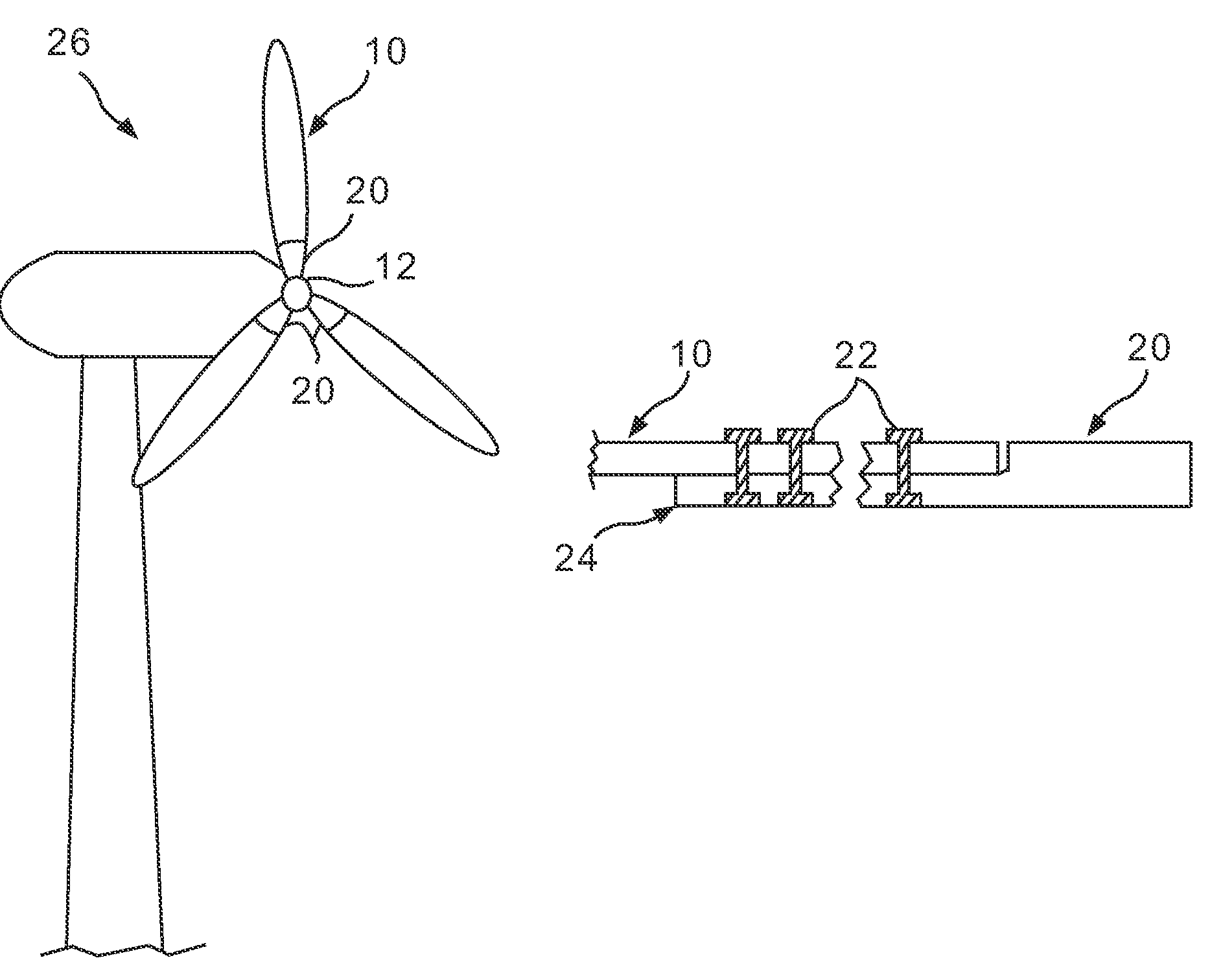
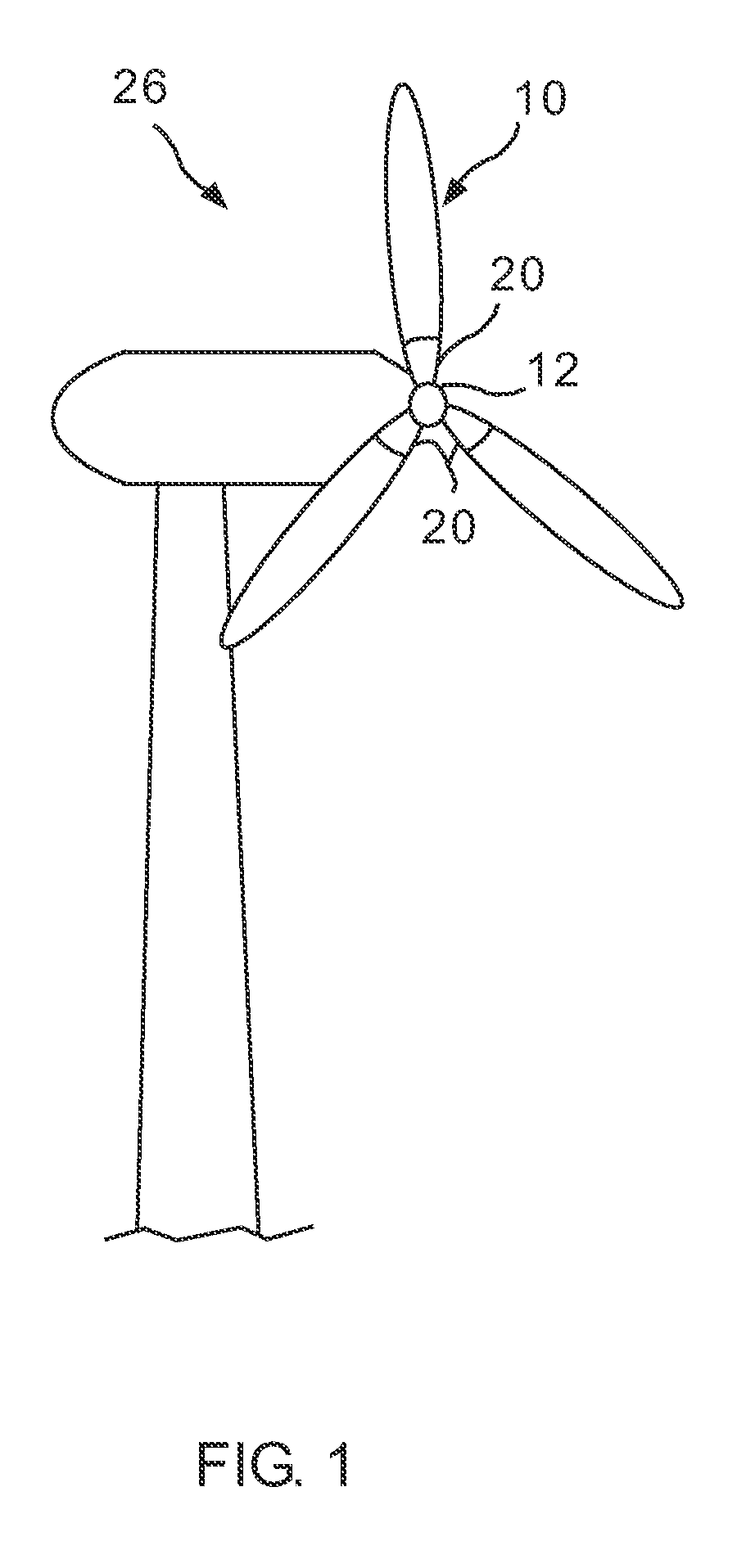
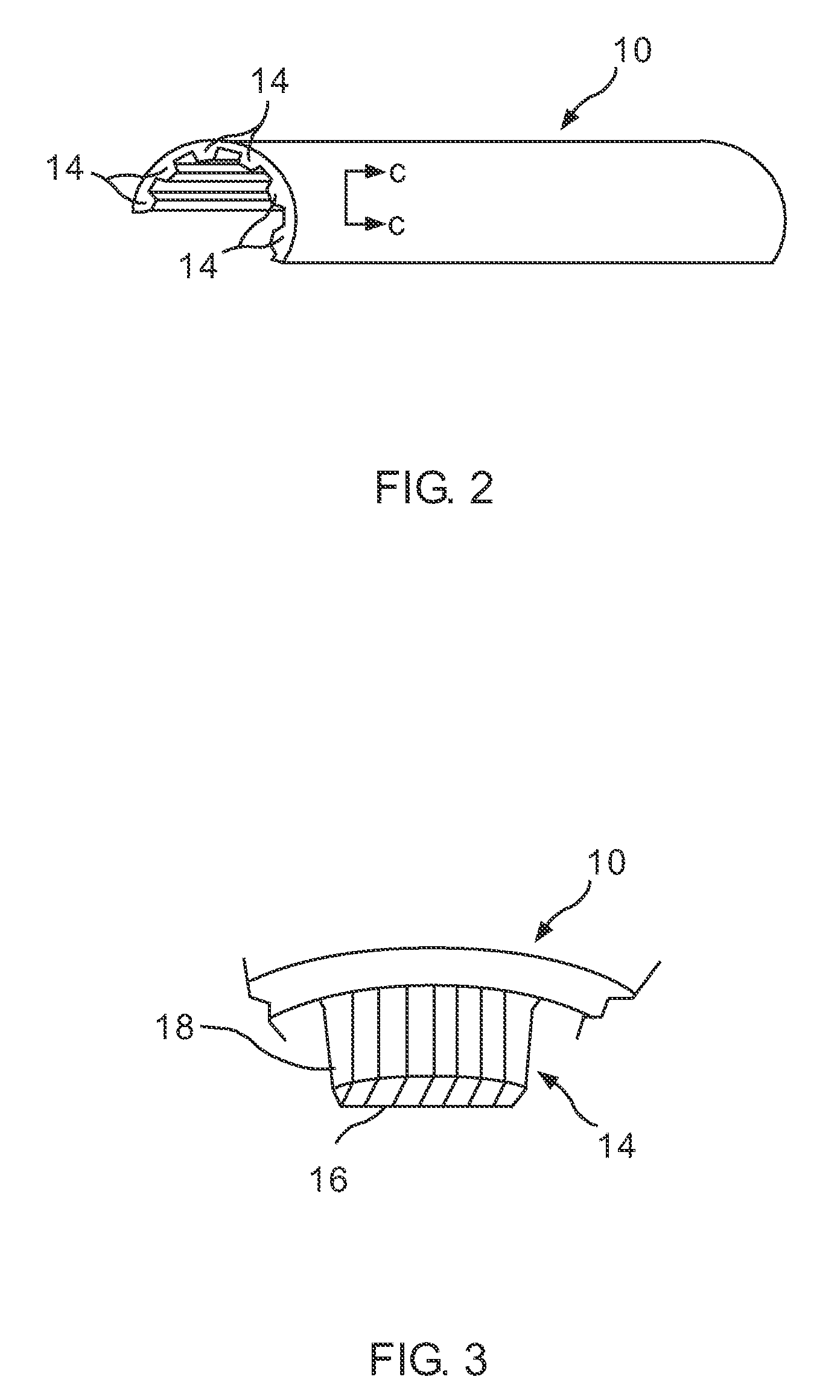
- The integration of unidirectional caps and webs as integral stiffeners within the blade structure to carry bending loads, allowing for adjustable strength and stiffness, and a robust attachment coupling to improve structural performance.

Industry Standards for Structural Design Optimization
The structural design optimization landscape is governed by a comprehensive framework of industry standards that establish fundamental principles for implementing multi-point constraints in pursuit of structural efficiency goals. These standards provide essential guidelines for engineers and designers working to balance performance requirements with material efficiency and safety considerations.
International standards organizations have developed specific protocols for structural optimization methodologies. The International Organization for Standardization (ISO) maintains several relevant standards, including ISO 2394 for general principles on reliability of structures and ISO 19902 for fixed steel offshore structures. These frameworks establish baseline requirements for constraint-based optimization approaches, ensuring that multi-point constraint implementations maintain structural integrity while achieving efficiency targets.
The American Institute of Steel Construction (AISC) and the American Concrete Institute (ACI) have established complementary standards that address constraint-based design optimization. AISC 360 provides specifications for structural steel buildings that incorporate optimization principles, while ACI 318 establishes building code requirements for structural concrete that support multi-constraint optimization approaches. These standards define acceptable stress distributions, deflection limits, and safety factors that must be maintained during optimization processes.
European standards, particularly the Eurocode series, offer comprehensive guidance for structural design optimization across multiple materials and applications. Eurocode 0 (EN 1990) establishes the basis of structural design with emphasis on reliability and optimization principles, while material-specific codes like Eurocode 2 for concrete and Eurocode 3 for steel provide detailed constraint parameters for optimization algorithms.
Industry-specific standards further refine optimization requirements for specialized applications. The aerospace sector follows AS9100 quality management standards alongside specific structural optimization protocols, while automotive industries adhere to ISO/TS 16949 requirements that emphasize weight reduction through constraint-based design optimization.
These standards collectively establish performance metrics, safety margins, and validation procedures that ensure multi-point constraint optimization delivers reliable structural efficiency improvements while maintaining compliance with regulatory requirements and industry best practices.
International standards organizations have developed specific protocols for structural optimization methodologies. The International Organization for Standardization (ISO) maintains several relevant standards, including ISO 2394 for general principles on reliability of structures and ISO 19902 for fixed steel offshore structures. These frameworks establish baseline requirements for constraint-based optimization approaches, ensuring that multi-point constraint implementations maintain structural integrity while achieving efficiency targets.
The American Institute of Steel Construction (AISC) and the American Concrete Institute (ACI) have established complementary standards that address constraint-based design optimization. AISC 360 provides specifications for structural steel buildings that incorporate optimization principles, while ACI 318 establishes building code requirements for structural concrete that support multi-constraint optimization approaches. These standards define acceptable stress distributions, deflection limits, and safety factors that must be maintained during optimization processes.
European standards, particularly the Eurocode series, offer comprehensive guidance for structural design optimization across multiple materials and applications. Eurocode 0 (EN 1990) establishes the basis of structural design with emphasis on reliability and optimization principles, while material-specific codes like Eurocode 2 for concrete and Eurocode 3 for steel provide detailed constraint parameters for optimization algorithms.
Industry-specific standards further refine optimization requirements for specialized applications. The aerospace sector follows AS9100 quality management standards alongside specific structural optimization protocols, while automotive industries adhere to ISO/TS 16949 requirements that emphasize weight reduction through constraint-based design optimization.
These standards collectively establish performance metrics, safety margins, and validation procedures that ensure multi-point constraint optimization delivers reliable structural efficiency improvements while maintaining compliance with regulatory requirements and industry best practices.
Computational Resource Requirements for MPC Analysis
Multi Point Constraint (MPC) analysis demands substantial computational resources due to its complex mathematical formulations and iterative solution processes. The computational intensity stems from the need to simultaneously evaluate multiple constraint equations while optimizing structural parameters across numerous design points. Modern MPC implementations typically require high-performance computing environments with parallel processing capabilities to handle the extensive matrix operations and constraint evaluations efficiently.
Memory requirements for MPC analysis scale significantly with problem complexity, particularly when dealing with large-scale structural models containing thousands of elements and multiple loading scenarios. A typical aerospace structural optimization problem using MPC may require 32-128 GB of RAM for intermediate calculations, with peak memory usage occurring during constraint gradient computations. The memory footprint increases exponentially when considering nonlinear constraints or dynamic response evaluations across multiple frequency ranges.
Processing power demands vary considerably based on the number of design variables, constraint functions, and structural complexity. CPU-intensive operations include finite element analysis calls, sensitivity calculations, and constraint linearization processes. Modern MPC implementations benefit from multi-core architectures, with optimal performance typically achieved using 16-64 cores for medium-scale problems. GPU acceleration has emerged as a viable solution for specific computational bottlenecks, particularly in gradient calculations and matrix operations.
Storage requirements encompass both temporary working files and result databases. Large-scale MPC analyses can generate terabytes of intermediate data, including design iteration histories, constraint violation records, and sensitivity matrices. Efficient data management strategies, including compressed storage formats and selective result archiving, become critical for maintaining reasonable disk space requirements while preserving analysis traceability.
The computational time horizon for MPC analysis ranges from hours to weeks, depending on problem scale and convergence criteria. Typical industrial applications require 24-72 hours for convergence, with complex multi-disciplinary problems potentially extending to several weeks. Advanced algorithmic improvements, including adaptive constraint handling and parallel constraint evaluation, continue to reduce computational time requirements while maintaining solution accuracy and reliability.
Memory requirements for MPC analysis scale significantly with problem complexity, particularly when dealing with large-scale structural models containing thousands of elements and multiple loading scenarios. A typical aerospace structural optimization problem using MPC may require 32-128 GB of RAM for intermediate calculations, with peak memory usage occurring during constraint gradient computations. The memory footprint increases exponentially when considering nonlinear constraints or dynamic response evaluations across multiple frequency ranges.
Processing power demands vary considerably based on the number of design variables, constraint functions, and structural complexity. CPU-intensive operations include finite element analysis calls, sensitivity calculations, and constraint linearization processes. Modern MPC implementations benefit from multi-core architectures, with optimal performance typically achieved using 16-64 cores for medium-scale problems. GPU acceleration has emerged as a viable solution for specific computational bottlenecks, particularly in gradient calculations and matrix operations.
Storage requirements encompass both temporary working files and result databases. Large-scale MPC analyses can generate terabytes of intermediate data, including design iteration histories, constraint violation records, and sensitivity matrices. Efficient data management strategies, including compressed storage formats and selective result archiving, become critical for maintaining reasonable disk space requirements while preserving analysis traceability.
The computational time horizon for MPC analysis ranges from hours to weeks, depending on problem scale and convergence criteria. Typical industrial applications require 24-72 hours for convergence, with complex multi-disciplinary problems potentially extending to several weeks. Advanced algorithmic improvements, including adaptive constraint handling and parallel constraint evaluation, continue to reduce computational time requirements while maintaining solution accuracy and reliability.
Unlock deeper insights with PatSnap Eureka Quick Research — get a full tech report to explore trends and direct your research. Try now!
Generate Your Research Report Instantly with AI Agent
Supercharge your innovation with PatSnap Eureka AI Agent Platform!