

Multi Point Constraint in Lightweight Structural Development
MAR 13, 20269 MIN READ
Generate Your Research Report Instantly with AI Agent
Patsnap Eureka helps you evaluate technical feasibility & market potential.
Multi Point Constraint Background and Structural Goals
Multi-point constraint systems in lightweight structural development have emerged as a critical engineering discipline addressing the fundamental challenge of achieving optimal structural performance while minimizing material usage. This field originated from the aerospace industry's relentless pursuit of weight reduction without compromising structural integrity, where every gram saved translates to significant fuel efficiency improvements and enhanced payload capacity.
The evolution of multi-point constraint methodologies can be traced back to the 1960s when aerospace engineers first recognized that traditional single-point optimization approaches were insufficient for complex structural systems. Early developments focused on simple beam and truss structures, but the increasing complexity of modern engineering applications demanded more sophisticated approaches capable of handling multiple simultaneous constraints across distributed load points.
Contemporary lightweight structural development faces unprecedented challenges driven by stringent environmental regulations, material cost escalations, and performance demands across industries including automotive, aerospace, marine, and renewable energy sectors. The integration of advanced materials such as carbon fiber composites, titanium alloys, and metamaterials has expanded the design space while simultaneously increasing the complexity of constraint management.
The primary technical objectives in multi-point constraint systems center on achieving Pareto-optimal solutions that balance competing requirements including structural stiffness, strength, fatigue resistance, manufacturing feasibility, and cost effectiveness. Modern approaches seek to establish mathematical frameworks that can simultaneously satisfy stress limitations at critical points, displacement constraints under various loading conditions, frequency response requirements, and geometric manufacturing constraints.
Advanced computational methodologies now enable engineers to consider hundreds of constraint points simultaneously, incorporating probabilistic factors such as material property variations, manufacturing tolerances, and operational uncertainties. The integration of machine learning algorithms with traditional optimization techniques has opened new possibilities for discovering non-intuitive structural configurations that satisfy complex multi-point constraint sets.
The ultimate goal involves developing predictive design methodologies that can automatically generate lightweight structural solutions meeting specified multi-point constraints while maintaining robustness against uncertainties. This represents a paradigm shift from traditional trial-and-error approaches toward systematic, data-driven structural optimization that can significantly reduce development time and improve performance outcomes across diverse engineering applications.
The evolution of multi-point constraint methodologies can be traced back to the 1960s when aerospace engineers first recognized that traditional single-point optimization approaches were insufficient for complex structural systems. Early developments focused on simple beam and truss structures, but the increasing complexity of modern engineering applications demanded more sophisticated approaches capable of handling multiple simultaneous constraints across distributed load points.
Contemporary lightweight structural development faces unprecedented challenges driven by stringent environmental regulations, material cost escalations, and performance demands across industries including automotive, aerospace, marine, and renewable energy sectors. The integration of advanced materials such as carbon fiber composites, titanium alloys, and metamaterials has expanded the design space while simultaneously increasing the complexity of constraint management.
The primary technical objectives in multi-point constraint systems center on achieving Pareto-optimal solutions that balance competing requirements including structural stiffness, strength, fatigue resistance, manufacturing feasibility, and cost effectiveness. Modern approaches seek to establish mathematical frameworks that can simultaneously satisfy stress limitations at critical points, displacement constraints under various loading conditions, frequency response requirements, and geometric manufacturing constraints.
Advanced computational methodologies now enable engineers to consider hundreds of constraint points simultaneously, incorporating probabilistic factors such as material property variations, manufacturing tolerances, and operational uncertainties. The integration of machine learning algorithms with traditional optimization techniques has opened new possibilities for discovering non-intuitive structural configurations that satisfy complex multi-point constraint sets.
The ultimate goal involves developing predictive design methodologies that can automatically generate lightweight structural solutions meeting specified multi-point constraints while maintaining robustness against uncertainties. This represents a paradigm shift from traditional trial-and-error approaches toward systematic, data-driven structural optimization that can significantly reduce development time and improve performance outcomes across diverse engineering applications.
Market Demand for Lightweight Structural Solutions
The global demand for lightweight structural solutions has experienced unprecedented growth across multiple industries, driven by stringent environmental regulations and performance optimization requirements. Aerospace manufacturers face increasing pressure to reduce fuel consumption while maintaining structural integrity, creating substantial market opportunities for advanced lightweight technologies. The automotive sector represents another significant demand driver, with electric vehicle manufacturers requiring weight reduction to extend battery range and improve energy efficiency.
Construction and infrastructure industries are increasingly adopting lightweight structural solutions to reduce material costs and construction time while meeting seismic and environmental standards. The marine industry similarly seeks weight reduction for improved fuel efficiency and payload capacity. These sectors collectively generate substantial demand for innovative structural optimization technologies that can handle multiple design constraints simultaneously.
Market research indicates that traditional lightweight design approaches often fail to address complex multi-point constraint scenarios effectively. Current solutions frequently require extensive iterative processes and compromise between competing design objectives, leading to suboptimal outcomes. This gap creates significant market demand for advanced methodologies that can simultaneously optimize multiple structural parameters while maintaining safety and performance standards.
The emergence of additive manufacturing and advanced composite materials has expanded the design space for lightweight structures, but also increased the complexity of constraint management. Engineers require sophisticated tools capable of handling geometric, material, manufacturing, and performance constraints concurrently. This technological evolution has created new market segments focused on integrated design optimization platforms.
Regional demand patterns show particularly strong growth in Asia-Pacific markets, where rapid industrialization and urbanization drive infrastructure development. European markets emphasize regulatory compliance and sustainability metrics, while North American markets focus on performance optimization and cost reduction. These regional variations create diverse market opportunities for tailored lightweight structural solutions.
The increasing adoption of digital twin technologies and real-time monitoring systems has further expanded market demand for adaptive lightweight structures that can respond to changing operational conditions. Industries seek solutions that not only reduce weight but also provide predictive maintenance capabilities and performance optimization throughout the structural lifecycle.
Construction and infrastructure industries are increasingly adopting lightweight structural solutions to reduce material costs and construction time while meeting seismic and environmental standards. The marine industry similarly seeks weight reduction for improved fuel efficiency and payload capacity. These sectors collectively generate substantial demand for innovative structural optimization technologies that can handle multiple design constraints simultaneously.
Market research indicates that traditional lightweight design approaches often fail to address complex multi-point constraint scenarios effectively. Current solutions frequently require extensive iterative processes and compromise between competing design objectives, leading to suboptimal outcomes. This gap creates significant market demand for advanced methodologies that can simultaneously optimize multiple structural parameters while maintaining safety and performance standards.
The emergence of additive manufacturing and advanced composite materials has expanded the design space for lightweight structures, but also increased the complexity of constraint management. Engineers require sophisticated tools capable of handling geometric, material, manufacturing, and performance constraints concurrently. This technological evolution has created new market segments focused on integrated design optimization platforms.
Regional demand patterns show particularly strong growth in Asia-Pacific markets, where rapid industrialization and urbanization drive infrastructure development. European markets emphasize regulatory compliance and sustainability metrics, while North American markets focus on performance optimization and cost reduction. These regional variations create diverse market opportunities for tailored lightweight structural solutions.
The increasing adoption of digital twin technologies and real-time monitoring systems has further expanded market demand for adaptive lightweight structures that can respond to changing operational conditions. Industries seek solutions that not only reduce weight but also provide predictive maintenance capabilities and performance optimization throughout the structural lifecycle.
Current MPC Challenges in Lightweight Design
Multi-point constraint (MPC) implementation in lightweight structural development faces significant computational complexity challenges. Traditional finite element analysis methods struggle with the increased degrees of freedom introduced by multiple constraint points, leading to substantial increases in solution time and memory requirements. The computational burden becomes particularly pronounced when dealing with large-scale assemblies where hundreds or thousands of constraint points must be simultaneously evaluated and maintained throughout the analysis process.
Constraint consistency presents another critical challenge in lightweight design applications. When multiple constraints are applied simultaneously across different structural components, maintaining mathematical consistency between constraint equations becomes increasingly difficult. Conflicting constraints can lead to over-constrained systems that either fail to converge or produce physically unrealistic results. This issue is exacerbated in lightweight structures where material removal and geometric optimization can create unexpected constraint interactions.
Manufacturing feasibility constraints often conflict with optimal design solutions generated by MPC algorithms. While computational optimization may suggest ideal material distributions and geometric configurations, these solutions frequently prove impossible or economically unfeasible to manufacture using conventional production methods. The gap between theoretical optimal designs and practical manufacturing capabilities represents a significant barrier to implementing MPC-driven lightweight structures in real-world applications.
Material property variations and uncertainties pose substantial challenges for MPC-based lightweight design. Real-world materials exhibit property variations due to manufacturing tolerances, environmental conditions, and aging effects. These variations can significantly impact constraint satisfaction and structural performance, yet most current MPC formulations assume deterministic material properties. Incorporating uncertainty quantification into multi-point constraint frameworks remains computationally expensive and methodologically complex.
Integration challenges arise when attempting to incorporate MPC methodologies into existing design workflows and software ecosystems. Many established CAD and analysis platforms lack native support for advanced multi-point constraint formulations, requiring custom implementations or complex workarounds. This integration difficulty limits widespread adoption and creates barriers for design teams seeking to leverage MPC capabilities in their lightweight structure development processes.
Constraint consistency presents another critical challenge in lightweight design applications. When multiple constraints are applied simultaneously across different structural components, maintaining mathematical consistency between constraint equations becomes increasingly difficult. Conflicting constraints can lead to over-constrained systems that either fail to converge or produce physically unrealistic results. This issue is exacerbated in lightweight structures where material removal and geometric optimization can create unexpected constraint interactions.
Manufacturing feasibility constraints often conflict with optimal design solutions generated by MPC algorithms. While computational optimization may suggest ideal material distributions and geometric configurations, these solutions frequently prove impossible or economically unfeasible to manufacture using conventional production methods. The gap between theoretical optimal designs and practical manufacturing capabilities represents a significant barrier to implementing MPC-driven lightweight structures in real-world applications.
Material property variations and uncertainties pose substantial challenges for MPC-based lightweight design. Real-world materials exhibit property variations due to manufacturing tolerances, environmental conditions, and aging effects. These variations can significantly impact constraint satisfaction and structural performance, yet most current MPC formulations assume deterministic material properties. Incorporating uncertainty quantification into multi-point constraint frameworks remains computationally expensive and methodologically complex.
Integration challenges arise when attempting to incorporate MPC methodologies into existing design workflows and software ecosystems. Many established CAD and analysis platforms lack native support for advanced multi-point constraint formulations, requiring custom implementations or complex workarounds. This integration difficulty limits widespread adoption and creates barriers for design teams seeking to leverage MPC capabilities in their lightweight structure development processes.
Existing MPC Solutions for Weight Optimization
01 Multi-point constraint methods in finite element analysis
Multi-point constraint (MPC) techniques are widely used in finite element analysis to establish kinematic relationships between multiple nodes or degrees of freedom. These methods enable the coupling of different mesh regions, connection of dissimilar elements, and enforcement of specific boundary conditions. The constraints can be linear or nonlinear and are typically implemented through Lagrange multipliers or penalty methods to ensure compatibility and continuity in structural simulations.- Multi-point constraint methods in finite element analysis: Multi-point constraint (MPC) techniques are widely used in finite element analysis to establish kinematic relationships between multiple nodes or degrees of freedom. These methods enable the coupling of different mesh regions, connection of dissimilar elements, and enforcement of specific boundary conditions. The constraints can be linear or nonlinear and are typically implemented through Lagrange multipliers or penalty methods to ensure compatibility and continuity in structural simulations.
- Application of multi-point constraints in mesh connection and assembly: Multi-point constraints are employed to connect different mesh regions in complex assemblies, particularly when dealing with non-matching meshes or different element types. This approach facilitates the modeling of component interfaces, joints, and contact regions in mechanical systems. The technique allows for efficient coupling of substructures while maintaining computational accuracy and reducing modeling complexity in large-scale simulations.
- Multi-point constraint formulations for structural optimization: In structural optimization problems, multi-point constraints are utilized to impose design requirements across multiple locations simultaneously. These constraints ensure that optimization objectives are met while maintaining structural integrity and performance criteria at various critical points. The formulation enables designers to control multiple response parameters and achieve balanced designs that satisfy complex engineering requirements across different regions of the structure.
- Implementation of multi-point constraints in contact mechanics: Multi-point constraint algorithms are applied in contact mechanics to model interactions between multiple surfaces or bodies. These methods handle complex contact scenarios including friction, separation, and sliding conditions across multiple contact points. The implementation ensures accurate force transmission and displacement compatibility at contact interfaces, which is essential for simulating realistic mechanical behavior in assemblies and mechanisms.
- Multi-point constraint techniques for dynamic analysis and time integration: In dynamic analysis, multi-point constraints are incorporated into time integration schemes to maintain kinematic relationships during transient simulations. These techniques ensure that constraint conditions are satisfied throughout the dynamic response, enabling accurate prediction of system behavior under time-varying loads. The methods are particularly important for analyzing mechanisms, flexible multibody systems, and structures with prescribed motion relationships.
02 Application of multi-point constraints in mesh connection and assembly
Multi-point constraints are employed to connect different mesh regions in complex assemblies, particularly when dealing with non-matching meshes or interfaces between components. This approach facilitates the modeling of bolted joints, welded connections, and contact interfaces by establishing mathematical relationships that tie the motion of slave nodes to master nodes. The technique improves computational efficiency while maintaining accuracy in representing mechanical interactions between parts.Expand Specific Solutions03 Multi-point constraint optimization in structural topology design
In topology optimization problems, multi-point constraints are utilized to impose design requirements at multiple locations simultaneously. These constraints ensure that structural performance criteria are met at critical points while optimizing material distribution. The method allows designers to control displacements, stresses, or other response quantities at specified locations, leading to more practical and manufacturable designs that satisfy multiple functional requirements.Expand Specific Solutions04 Multi-point constraint handling in dynamic and nonlinear analysis
For dynamic and nonlinear structural analysis, multi-point constraints are adapted to handle time-dependent and large deformation scenarios. These advanced constraint formulations maintain kinematic relationships during dynamic loading, impact events, and geometric nonlinearity. The implementation often involves iterative solution schemes and updated constraint equations to accurately capture the evolving structural behavior under complex loading conditions.Expand Specific Solutions05 Computational algorithms for efficient multi-point constraint enforcement
Various computational algorithms have been developed to efficiently enforce multi-point constraints in large-scale simulations. These include direct elimination methods, transformation techniques, and augmented formulations that reduce computational cost while maintaining numerical stability. The algorithms address challenges such as constraint redundancy, ill-conditioning, and parallel processing requirements, enabling the practical application of multi-point constraints in industrial-scale finite element models.Expand Specific Solutions
Key Players in Lightweight Structural Industry
The multi-point constraint technology in lightweight structural development represents a rapidly evolving field within the mature aerospace and automotive industries, with significant market expansion driven by sustainability demands. The competitive landscape spans established aerospace giants like Boeing and automotive leaders such as Guangzhou Automobile Group, alongside specialized technology providers including Schlumberger's various entities and Bosch. Academic institutions, particularly Chinese universities like Northwestern Polytechnical University, Huazhong University of Science & Technology, and Zhejiang University, demonstrate strong research capabilities, while European institutions like Technical University of Denmark contribute advanced methodologies. The technology maturity varies significantly across applications, with aerospace applications showing higher sophistication through Boeing's implementations, while automotive applications by companies like Honda Research Institute Europe and Kawasaki Heavy Industries are rapidly advancing. This diverse ecosystem indicates a transitioning market from research-intensive development toward commercial deployment.
Northwestern Polytechnical University
Technical Solution: Northwestern Polytechnical University develops advanced multi-point constraint methodologies for lightweight structural optimization through comprehensive research programs. Their approach integrates machine learning algorithms with traditional optimization techniques to handle complex constraint sets in aerospace and automotive applications. The university's technical solution focuses on developing novel constraint handling methods that can efficiently manage conflicting design requirements while achieving significant weight reduction. Their research emphasizes the development of adaptive constraint management systems that can dynamically adjust optimization parameters based on design evolution. The university's methodology incorporates uncertainty quantification in constraint formulation, enabling robust lightweight designs that maintain performance under varying operational conditions and manufacturing tolerances.
Strengths: Cutting-edge research capabilities, strong theoretical foundation, innovative algorithm development. Weaknesses: Limited industrial implementation experience, focus primarily on research rather than commercial applications.
Canon, Inc.
Technical Solution: Canon applies multi-point constraint optimization in developing lightweight structures for precision equipment and optical systems. Their approach focuses on minimizing structural deformation while reducing weight through strategic material placement and geometric optimization. The company employs constraint-based design methodologies that simultaneously address thermal stability, vibration resistance, and manufacturing tolerances. Canon's technical solution integrates advanced polymer composites and metal matrix materials, utilizing multi-point constraints to ensure optical alignment precision under various operating conditions. Their optimization framework incorporates manufacturing constraints specific to precision machining and assembly processes, enabling cost-effective production of lightweight structural components for imaging systems and industrial equipment.
Strengths: Precision engineering expertise, advanced material science capabilities, strong manufacturing process control. Weaknesses: Limited to precision equipment applications, high precision requirements increase complexity.
Core MPC Innovations in Structural Engineering
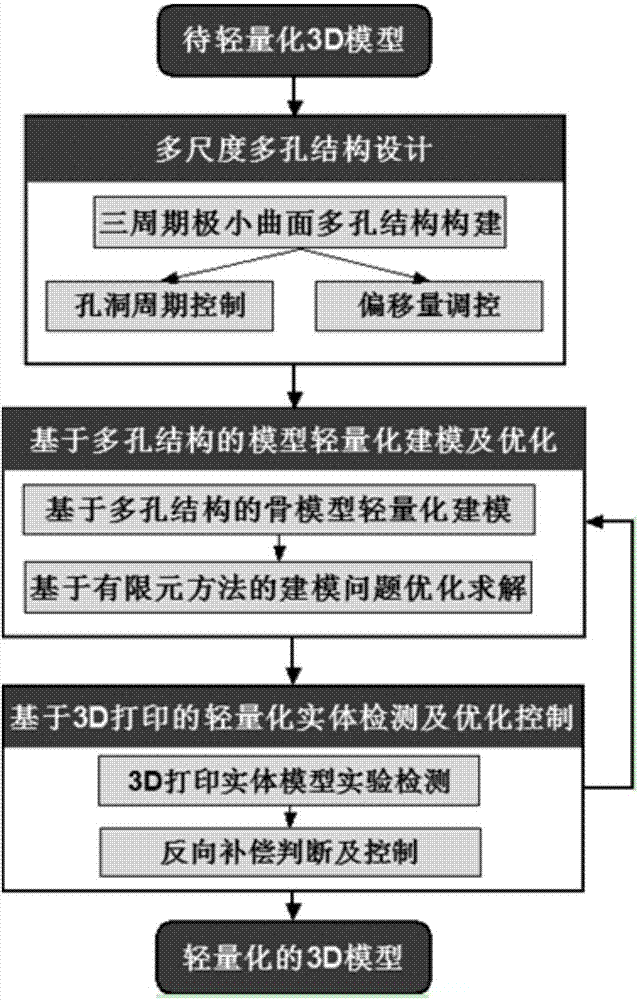
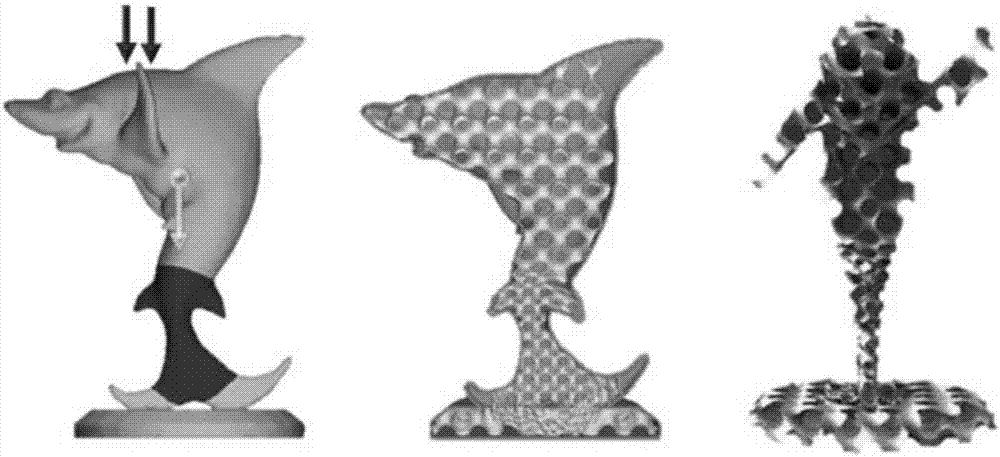
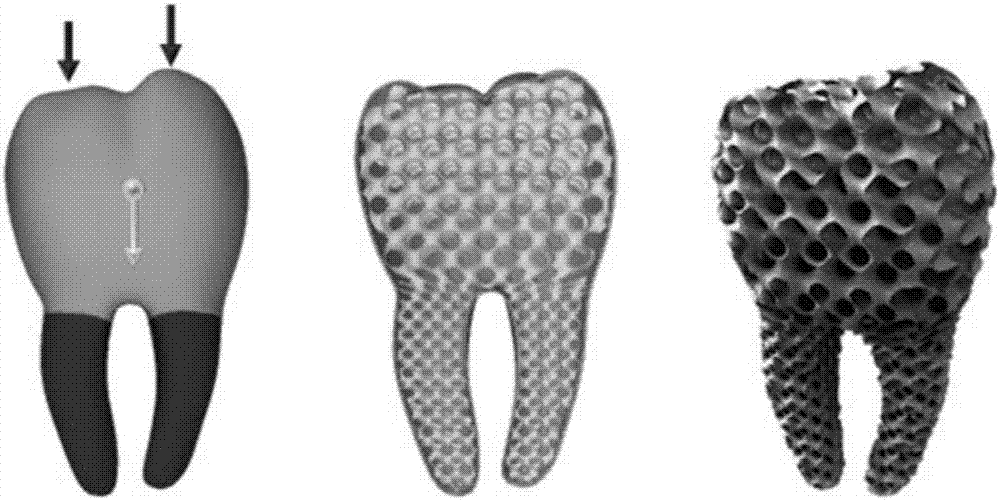
Multi-scale porous structure light weight modeling method oriented to 3D printing
PatentActiveCN107885945A
Innovation
- A three-period minimal surface is used to construct a multi-scale porous structure, and a smooth multi-scale porous model is constructed through compactly supported radial basis function interpolation. The force-volume iterative algorithm is used for optimization and solution, and 3D printing technology is used for verification and feedback optimization to establish A complete model lightweight framework for modeling-optimization-feedback control.

Safety Standards for Lightweight Structural Systems
Safety standards for lightweight structural systems represent a critical framework governing the design, manufacturing, and deployment of weight-optimized structures across various industries. These standards have evolved significantly over the past decades, driven by increasing demands for fuel efficiency in aerospace and automotive sectors, while maintaining uncompromising safety requirements. The regulatory landscape encompasses multiple international organizations, including ISO, ASTM, FAA, and EASA, each contributing specialized requirements for different application domains.
The aerospace industry leads in establishing rigorous safety protocols for lightweight structures, with standards such as AS9100 and DO-160 defining comprehensive testing methodologies and certification processes. These frameworks mandate extensive fatigue testing, environmental exposure assessments, and failure mode analysis specifically tailored to lightweight materials like carbon fiber composites and advanced aluminum alloys. The automotive sector follows similar principles through ISO 26262 functional safety standards, which address the unique challenges of lightweight vehicle structures in crash scenarios.
Material-specific safety standards have emerged to address the distinct characteristics of lightweight structural materials. Composite materials require specialized standards covering fiber orientation verification, matrix integrity assessment, and delamination resistance testing. Metal matrix composites and advanced high-strength steels demand unique evaluation criteria for stress concentration factors and fatigue crack propagation rates under multi-point constraint conditions.
Testing protocols within these safety standards emphasize real-world loading scenarios that lightweight structures encounter. Multi-axial loading tests, thermal cycling assessments, and long-term creep evaluations form the cornerstone of certification processes. These protocols specifically address how multi-point constraints affect stress distribution and potential failure modes in lightweight designs.
Emerging safety considerations focus on the integration of smart materials and embedded sensing systems within lightweight structures. Standards are evolving to accommodate structural health monitoring capabilities and adaptive response mechanisms. Future regulatory developments anticipate the need for dynamic safety assessment protocols that can evaluate real-time structural performance and predictive maintenance requirements in lightweight systems operating under complex multi-point constraint scenarios.
The aerospace industry leads in establishing rigorous safety protocols for lightweight structures, with standards such as AS9100 and DO-160 defining comprehensive testing methodologies and certification processes. These frameworks mandate extensive fatigue testing, environmental exposure assessments, and failure mode analysis specifically tailored to lightweight materials like carbon fiber composites and advanced aluminum alloys. The automotive sector follows similar principles through ISO 26262 functional safety standards, which address the unique challenges of lightweight vehicle structures in crash scenarios.
Material-specific safety standards have emerged to address the distinct characteristics of lightweight structural materials. Composite materials require specialized standards covering fiber orientation verification, matrix integrity assessment, and delamination resistance testing. Metal matrix composites and advanced high-strength steels demand unique evaluation criteria for stress concentration factors and fatigue crack propagation rates under multi-point constraint conditions.
Testing protocols within these safety standards emphasize real-world loading scenarios that lightweight structures encounter. Multi-axial loading tests, thermal cycling assessments, and long-term creep evaluations form the cornerstone of certification processes. These protocols specifically address how multi-point constraints affect stress distribution and potential failure modes in lightweight designs.
Emerging safety considerations focus on the integration of smart materials and embedded sensing systems within lightweight structures. Standards are evolving to accommodate structural health monitoring capabilities and adaptive response mechanisms. Future regulatory developments anticipate the need for dynamic safety assessment protocols that can evaluate real-time structural performance and predictive maintenance requirements in lightweight systems operating under complex multi-point constraint scenarios.
Computational Efficiency in MPC Simulation Methods
Computational efficiency represents a critical bottleneck in Multi Point Constraint (MPC) simulation methods for lightweight structural development. Traditional finite element analysis approaches often struggle with the computational complexity introduced by multiple constraint points, particularly when dealing with large-scale structural models that require real-time or near-real-time analysis capabilities.
The primary computational challenge stems from the need to solve large systems of linear equations repeatedly during iterative optimization processes. Each constraint point introduces additional degrees of freedom and coupling terms in the global stiffness matrix, leading to increased matrix density and computational overhead. This becomes particularly pronounced in topology optimization scenarios where thousands of design variables must be evaluated simultaneously across multiple load cases and constraint conditions.
Modern simulation methods have adopted several strategies to address these computational limitations. Matrix decomposition techniques, including Cholesky factorization and LU decomposition with pivoting, have been optimized for sparse matrix structures typical in MPC problems. Additionally, iterative solvers such as conjugate gradient methods and preconditioned Krylov subspace algorithms demonstrate superior performance for large-scale problems compared to direct solution methods.
Parallel computing architectures have emerged as essential tools for enhancing MPC simulation efficiency. GPU-accelerated computing platforms enable massive parallelization of matrix operations, while distributed computing frameworks allow for domain decomposition strategies that partition large structural models across multiple processing nodes. These approaches can achieve computational speedups of 10-100x compared to traditional sequential processing methods.
Advanced algorithmic innovations focus on reducing the dimensionality of the optimization problem through model order reduction techniques. Proper Orthogonal Decomposition (POD) and Reduced Basis Methods (RBM) create low-dimensional approximations of the full-order model while preserving essential structural behavior characteristics. These methods prove particularly effective for parametric studies and design space exploration where multiple similar configurations require evaluation.
Adaptive mesh refinement strategies further enhance computational efficiency by concentrating computational resources in regions of high stress gradients or constraint activity. This selective refinement approach maintains solution accuracy while significantly reducing overall computational cost, particularly important for iterative design optimization workflows in lightweight structural development applications.
The primary computational challenge stems from the need to solve large systems of linear equations repeatedly during iterative optimization processes. Each constraint point introduces additional degrees of freedom and coupling terms in the global stiffness matrix, leading to increased matrix density and computational overhead. This becomes particularly pronounced in topology optimization scenarios where thousands of design variables must be evaluated simultaneously across multiple load cases and constraint conditions.
Modern simulation methods have adopted several strategies to address these computational limitations. Matrix decomposition techniques, including Cholesky factorization and LU decomposition with pivoting, have been optimized for sparse matrix structures typical in MPC problems. Additionally, iterative solvers such as conjugate gradient methods and preconditioned Krylov subspace algorithms demonstrate superior performance for large-scale problems compared to direct solution methods.
Parallel computing architectures have emerged as essential tools for enhancing MPC simulation efficiency. GPU-accelerated computing platforms enable massive parallelization of matrix operations, while distributed computing frameworks allow for domain decomposition strategies that partition large structural models across multiple processing nodes. These approaches can achieve computational speedups of 10-100x compared to traditional sequential processing methods.
Advanced algorithmic innovations focus on reducing the dimensionality of the optimization problem through model order reduction techniques. Proper Orthogonal Decomposition (POD) and Reduced Basis Methods (RBM) create low-dimensional approximations of the full-order model while preserving essential structural behavior characteristics. These methods prove particularly effective for parametric studies and design space exploration where multiple similar configurations require evaluation.
Adaptive mesh refinement strategies further enhance computational efficiency by concentrating computational resources in regions of high stress gradients or constraint activity. This selective refinement approach maintains solution accuracy while significantly reducing overall computational cost, particularly important for iterative design optimization workflows in lightweight structural development applications.
Unlock deeper insights with Patsnap Eureka Quick Research — get a full tech report to explore trends and direct your research. Try now!
Generate Your Research Report Instantly with AI Agent
Supercharge your innovation with Patsnap Eureka AI Agent Platform!