

Managing Material Behavior with Multi Point Constraint
MAR 13, 20269 MIN READ
Generate Your Research Report Instantly with AI Agent
Patsnap Eureka helps you evaluate technical feasibility & market potential.
Multi Point Constraint Technology Background and Objectives
Multi Point Constraint (MPC) technology emerged from the fundamental need to accurately simulate complex material interactions in computational mechanics and finite element analysis. This technology addresses the critical challenge of managing material behavior when multiple points or regions must maintain specific geometric or kinematic relationships during deformation processes. The evolution of MPC stems from early developments in structural analysis during the 1960s, where engineers recognized limitations in traditional constraint methods for handling complex assemblies and contact scenarios.
The historical development of MPC technology can be traced through several key phases. Initial implementations focused on simple rigid body connections and basic kinematic constraints. As computational power increased through the 1980s and 1990s, more sophisticated algorithms emerged to handle non-linear material behaviors, large deformations, and multi-physics coupling scenarios. The integration of advanced numerical methods, including Lagrange multipliers and penalty methods, significantly enhanced the capability to enforce complex constraint conditions while maintaining computational stability.
Current technological trends indicate a shift toward more adaptive and intelligent constraint management systems. Modern MPC implementations incorporate machine learning algorithms to optimize constraint parameters dynamically, improving convergence rates and solution accuracy. The integration with high-performance computing platforms enables real-time constraint management for large-scale simulations involving millions of degrees of freedom.
The primary technical objectives of contemporary MPC technology center on achieving seamless integration between disparate material regions while preserving physical accuracy. Key goals include developing robust algorithms that can handle extreme deformation scenarios without compromising numerical stability, implementing efficient constraint enforcement mechanisms that minimize computational overhead, and creating adaptive systems capable of automatically adjusting constraint parameters based on evolving material conditions.
Advanced MPC systems aim to bridge the gap between theoretical material models and practical engineering applications. This involves developing constraint formulations that can accommodate complex material constitutive relationships, including viscoelastic, plastic, and composite material behaviors. The technology seeks to provide engineers with intuitive tools for defining and managing constraints while maintaining the underlying mathematical rigor necessary for accurate predictions.
Future objectives emphasize the development of multi-scale constraint management capabilities, enabling seamless transition between molecular, microscopic, and macroscopic material behavior representations. This ambitious goal requires sophisticated mathematical frameworks that can efficiently couple different length and time scales while preserving essential physical phenomena at each level.
The historical development of MPC technology can be traced through several key phases. Initial implementations focused on simple rigid body connections and basic kinematic constraints. As computational power increased through the 1980s and 1990s, more sophisticated algorithms emerged to handle non-linear material behaviors, large deformations, and multi-physics coupling scenarios. The integration of advanced numerical methods, including Lagrange multipliers and penalty methods, significantly enhanced the capability to enforce complex constraint conditions while maintaining computational stability.
Current technological trends indicate a shift toward more adaptive and intelligent constraint management systems. Modern MPC implementations incorporate machine learning algorithms to optimize constraint parameters dynamically, improving convergence rates and solution accuracy. The integration with high-performance computing platforms enables real-time constraint management for large-scale simulations involving millions of degrees of freedom.
The primary technical objectives of contemporary MPC technology center on achieving seamless integration between disparate material regions while preserving physical accuracy. Key goals include developing robust algorithms that can handle extreme deformation scenarios without compromising numerical stability, implementing efficient constraint enforcement mechanisms that minimize computational overhead, and creating adaptive systems capable of automatically adjusting constraint parameters based on evolving material conditions.
Advanced MPC systems aim to bridge the gap between theoretical material models and practical engineering applications. This involves developing constraint formulations that can accommodate complex material constitutive relationships, including viscoelastic, plastic, and composite material behaviors. The technology seeks to provide engineers with intuitive tools for defining and managing constraints while maintaining the underlying mathematical rigor necessary for accurate predictions.
Future objectives emphasize the development of multi-scale constraint management capabilities, enabling seamless transition between molecular, microscopic, and macroscopic material behavior representations. This ambitious goal requires sophisticated mathematical frameworks that can efficiently couple different length and time scales while preserving essential physical phenomena at each level.
Market Demand for Advanced Material Behavior Control Systems
The global demand for advanced material behavior control systems is experiencing unprecedented growth, driven by the increasing complexity of modern engineering applications and the need for precise material performance optimization. Industries ranging from aerospace and automotive to biomedical and construction are seeking sophisticated solutions that can manage material properties under multiple constraint conditions simultaneously.
Manufacturing sectors are particularly driving demand for multi-point constraint systems as they face mounting pressure to optimize material utilization while maintaining structural integrity. The aerospace industry requires materials that can withstand extreme temperature variations, mechanical stress, and environmental conditions while adhering to strict weight limitations. Similarly, automotive manufacturers are pursuing lightweight materials with enhanced durability to meet fuel efficiency standards and safety regulations.
The construction and infrastructure sectors represent another significant demand driver, where materials must satisfy multiple performance criteria including load-bearing capacity, thermal expansion control, seismic resistance, and environmental durability. Smart building technologies are increasingly incorporating adaptive material systems that can respond to changing environmental conditions while maintaining structural stability.
Biomedical applications are creating specialized demand for materials that can interface with biological systems while maintaining mechanical properties under physiological constraints. This includes implantable devices, prosthetics, and tissue engineering scaffolds that must balance biocompatibility with functional performance requirements.
The electronics and semiconductor industries are driving demand for materials with precisely controlled thermal, electrical, and mechanical properties. As device miniaturization continues, the need for materials that can maintain performance under multiple physical constraints becomes increasingly critical for product reliability and longevity.
Energy sector applications, including renewable energy systems and energy storage technologies, require materials that can operate efficiently under varying thermal, mechanical, and chemical constraints. Wind turbine components, solar panel materials, and battery systems all demand sophisticated material behavior control to optimize performance and extend operational lifespans.
Market growth is further accelerated by the integration of artificial intelligence and machine learning technologies, which enable real-time optimization of material behavior under dynamic constraint conditions. This technological convergence is creating new opportunities for advanced material control systems across multiple industrial sectors.
Manufacturing sectors are particularly driving demand for multi-point constraint systems as they face mounting pressure to optimize material utilization while maintaining structural integrity. The aerospace industry requires materials that can withstand extreme temperature variations, mechanical stress, and environmental conditions while adhering to strict weight limitations. Similarly, automotive manufacturers are pursuing lightweight materials with enhanced durability to meet fuel efficiency standards and safety regulations.
The construction and infrastructure sectors represent another significant demand driver, where materials must satisfy multiple performance criteria including load-bearing capacity, thermal expansion control, seismic resistance, and environmental durability. Smart building technologies are increasingly incorporating adaptive material systems that can respond to changing environmental conditions while maintaining structural stability.
Biomedical applications are creating specialized demand for materials that can interface with biological systems while maintaining mechanical properties under physiological constraints. This includes implantable devices, prosthetics, and tissue engineering scaffolds that must balance biocompatibility with functional performance requirements.
The electronics and semiconductor industries are driving demand for materials with precisely controlled thermal, electrical, and mechanical properties. As device miniaturization continues, the need for materials that can maintain performance under multiple physical constraints becomes increasingly critical for product reliability and longevity.
Energy sector applications, including renewable energy systems and energy storage technologies, require materials that can operate efficiently under varying thermal, mechanical, and chemical constraints. Wind turbine components, solar panel materials, and battery systems all demand sophisticated material behavior control to optimize performance and extend operational lifespans.
Market growth is further accelerated by the integration of artificial intelligence and machine learning technologies, which enable real-time optimization of material behavior under dynamic constraint conditions. This technological convergence is creating new opportunities for advanced material control systems across multiple industrial sectors.
Current State and Challenges in Multi Point Constraint Methods
Multi-point constraint (MPC) methods have emerged as a fundamental approach in computational mechanics for managing material behavior across complex geometries and interfaces. These techniques enable the enforcement of kinematic relationships between multiple degrees of freedom, facilitating the simulation of intricate material interactions in finite element analysis. Current implementations span various domains, from structural mechanics to multiphysics simulations, where traditional single-point constraints prove insufficient.
The state-of-the-art in MPC technology encompasses several established methodologies. Lagrange multiplier methods remain prevalent due to their mathematical rigor and ability to enforce constraints exactly. These approaches introduce additional variables to the system, ensuring constraint satisfaction while maintaining the physical interpretation of forces. Penalty methods offer computational efficiency by approximating constraints through high stiffness parameters, though they introduce potential numerical conditioning issues.
Master-slave elimination techniques represent another cornerstone of current MPC implementations. These methods reduce system size by expressing dependent degrees of freedom in terms of independent ones, leading to computational savings but potentially compromising solution accuracy near constraint boundaries. Augmented Lagrangian approaches attempt to combine the benefits of both penalty and Lagrange multiplier methods, providing a balanced solution for constraint enforcement.
Contemporary challenges in MPC methods center on several critical areas. Numerical stability remains a persistent concern, particularly when dealing with ill-conditioned constraint matrices or near-singular configurations. The selection of appropriate constraint parameters often requires extensive calibration, limiting the robustness of automated simulation workflows. Computational scalability presents another significant hurdle, as constraint enforcement can dramatically increase solution times for large-scale problems.
Interface modeling complexity poses substantial difficulties in current MPC implementations. Managing contact-separation behavior, friction effects, and material nonlinearities simultaneously through constraint formulations requires sophisticated algorithmic approaches. The treatment of evolving constraints, such as those encountered in crack propagation or phase transformation problems, remains computationally intensive and methodologically challenging.
Convergence behavior in nonlinear analyses represents a critical limitation of existing MPC methods. The interaction between material nonlinearity and constraint enforcement can lead to oscillatory or divergent solution paths, particularly in problems involving large deformations or material instabilities. Current iterative solution strategies often struggle to maintain robustness across diverse loading scenarios and material configurations.
The state-of-the-art in MPC technology encompasses several established methodologies. Lagrange multiplier methods remain prevalent due to their mathematical rigor and ability to enforce constraints exactly. These approaches introduce additional variables to the system, ensuring constraint satisfaction while maintaining the physical interpretation of forces. Penalty methods offer computational efficiency by approximating constraints through high stiffness parameters, though they introduce potential numerical conditioning issues.
Master-slave elimination techniques represent another cornerstone of current MPC implementations. These methods reduce system size by expressing dependent degrees of freedom in terms of independent ones, leading to computational savings but potentially compromising solution accuracy near constraint boundaries. Augmented Lagrangian approaches attempt to combine the benefits of both penalty and Lagrange multiplier methods, providing a balanced solution for constraint enforcement.
Contemporary challenges in MPC methods center on several critical areas. Numerical stability remains a persistent concern, particularly when dealing with ill-conditioned constraint matrices or near-singular configurations. The selection of appropriate constraint parameters often requires extensive calibration, limiting the robustness of automated simulation workflows. Computational scalability presents another significant hurdle, as constraint enforcement can dramatically increase solution times for large-scale problems.
Interface modeling complexity poses substantial difficulties in current MPC implementations. Managing contact-separation behavior, friction effects, and material nonlinearities simultaneously through constraint formulations requires sophisticated algorithmic approaches. The treatment of evolving constraints, such as those encountered in crack propagation or phase transformation problems, remains computationally intensive and methodologically challenging.
Convergence behavior in nonlinear analyses represents a critical limitation of existing MPC methods. The interaction between material nonlinearity and constraint enforcement can lead to oscillatory or divergent solution paths, particularly in problems involving large deformations or material instabilities. Current iterative solution strategies often struggle to maintain robustness across diverse loading scenarios and material configurations.
Existing Multi Point Constraint Implementation Solutions
01 Multi-point constraint methods in finite element analysis
Multi-point constraint (MPC) methods are used in finite element analysis to establish kinematic relationships between multiple nodes or degrees of freedom. These constraints enable the modeling of complex mechanical connections, such as rigid links, beam-to-solid connections, and contact interfaces. The implementation involves mathematical formulations that couple the displacement or rotation of multiple points, allowing for accurate simulation of structural behavior under various loading conditions.- Multi-point constraint methods in finite element analysis: Multi-point constraint (MPC) methods are used in finite element analysis to establish kinematic relationships between multiple nodes or degrees of freedom. These constraints enable the modeling of complex structural behaviors by linking the motion of different points in a model. The methods are particularly useful for simulating connections, joints, and interfaces between different materials or components, allowing for accurate representation of load transfer and deformation patterns in computational simulations.
- Material constitutive models with constraint conditions: Advanced material constitutive models incorporate constraint conditions to accurately represent material behavior under various loading scenarios. These models account for physical constraints such as incompressibility, volume preservation, or directional dependencies in material response. The constraint formulations ensure that the simulated material behavior adheres to fundamental physical principles while capturing complex phenomena like plasticity, damage, and nonlinear deformation characteristics.
- Constraint-based optimization for material parameter identification: Constraint-based optimization techniques are employed to identify material parameters from experimental data or simulation results. These methods use mathematical constraints to ensure that the identified parameters fall within physically meaningful ranges and satisfy known material behavior characteristics. The optimization process incorporates multiple data points and constraint equations to improve the accuracy and reliability of material property determination for use in predictive modeling.
- Multi-scale material modeling with constraint coupling: Multi-scale material modeling approaches utilize constraint coupling mechanisms to bridge different length scales in material simulations. These techniques establish relationships between microscopic and macroscopic material behaviors through constraint equations that ensure consistency across scales. The constraint coupling enables the transfer of information between atomic, mesoscopic, and continuum levels, providing comprehensive understanding of material response under various conditions.
- Constraint enforcement in contact and interface problems: Constraint enforcement techniques are critical for accurately modeling contact and interface problems in materials. These methods ensure proper treatment of boundary conditions, contact forces, and interface compatibility between different material regions. The constraint formulations prevent non-physical penetration, maintain continuity requirements, and properly distribute forces at material interfaces, which is essential for simulating composite materials, adhesive joints, and multi-body contact scenarios.
02 Material constitutive models with constraint conditions
Advanced material constitutive models incorporate constraint conditions to accurately represent material behavior under complex stress states. These models account for material anisotropy, plasticity, and damage evolution while satisfying physical constraints such as incompressibility or volume preservation. The constraint formulations ensure that the material response remains physically realistic during large deformations and multi-axial loading scenarios.Expand Specific Solutions03 Constraint-based optimization for material parameter identification
Constraint-based optimization techniques are employed to identify material parameters from experimental data. These methods incorporate physical constraints and boundary conditions to ensure that the identified parameters are physically meaningful and consistent with observed material behavior. The optimization process typically involves minimizing the difference between experimental measurements and numerical predictions while satisfying multiple constraint equations.Expand Specific Solutions04 Multi-scale material modeling with constraint coupling
Multi-scale material modeling approaches utilize constraint coupling mechanisms to bridge different length scales, from microscopic to macroscopic behavior. These methods establish constraint relationships between fine-scale and coarse-scale models, enabling the transfer of information across scales. The constraint formulations ensure consistency in material response predictions and allow for efficient computational analysis of heterogeneous materials.Expand Specific Solutions05 Constraint enforcement in nonlinear material simulation
Nonlinear material simulations require robust constraint enforcement techniques to handle large deformations, contact conditions, and material nonlinearities. These techniques include penalty methods, Lagrange multiplier approaches, and augmented Lagrangian formulations that ensure constraint satisfaction throughout the simulation. The methods are particularly important for modeling material behavior involving geometric constraints, incompressibility conditions, and interface interactions.Expand Specific Solutions
Key Players in Computational Mechanics and Constraint Systems
The multi-point constraint technology for managing material behavior represents a mature computational mechanics field currently in its expansion phase, with significant market growth driven by increasing demand for advanced simulation capabilities across aerospace, automotive, and manufacturing sectors. The technology demonstrates high maturity levels, evidenced by established implementations from industry leaders including Boeing, Siemens AG, and SAP SE providing comprehensive software solutions, while Microsoft Technology Licensing LLC and IBM contribute robust computational platforms. Academic institutions like Huazhong University of Science & Technology, Northwestern Polytechnical University, and Beijing Institute of Technology drive fundamental research advancement. Industrial applications span from Caterpillar and Honda's mechanical systems to Schlumberger's energy sector solutions, with specialized providers like Nikon SLM Solutions advancing additive manufacturing applications, indicating a well-established competitive landscape with diverse technological approaches and strong research-industry collaboration.
The Boeing Co.
Technical Solution: Boeing implements multi-point constraint (MPC) algorithms in their advanced finite element analysis systems for aerospace structural design. Their approach utilizes distributed constraint enforcement across multiple material interface points to manage complex composite material behaviors during flight loading conditions. The system incorporates real-time constraint violation detection and adaptive constraint parameter adjustment to maintain structural integrity. Boeing's MPC framework handles thermal expansion differentials between aluminum and carbon fiber components, ensuring proper load distribution across joint interfaces. Their implementation includes automated constraint stiffness scaling based on material property variations and environmental conditions.
Strengths: Extensive aerospace application experience with proven reliability in critical systems. Weaknesses: High computational overhead and limited applicability outside aerospace domain.
Siemens AG
Technical Solution: Siemens develops industrial MPC solutions through their NX Nastran simulation platform, focusing on manufacturing process optimization. Their technology employs constraint-based material behavior modeling for metal forming, welding, and additive manufacturing processes. The system uses multi-physics coupling to handle thermal, mechanical, and metallurgical constraints simultaneously. Siemens' approach includes predictive constraint adjustment algorithms that anticipate material property changes during manufacturing cycles. Their MPC implementation supports real-time process control integration, enabling dynamic constraint parameter modification based on sensor feedback from production equipment.
Strengths: Strong integration with industrial automation systems and comprehensive multi-physics capabilities. Weaknesses: Complex setup requirements and high licensing costs for full feature access.
Core Innovations in Constraint-Based Material Modeling
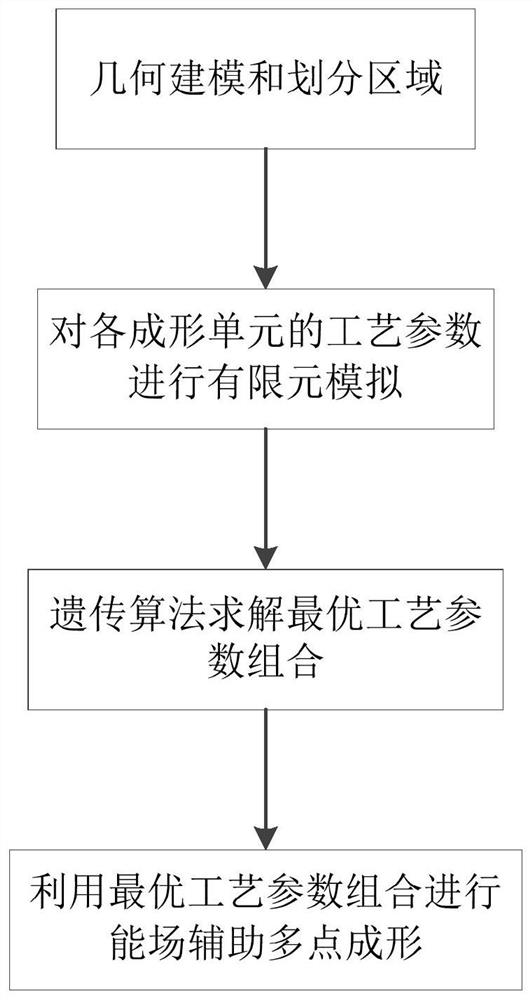
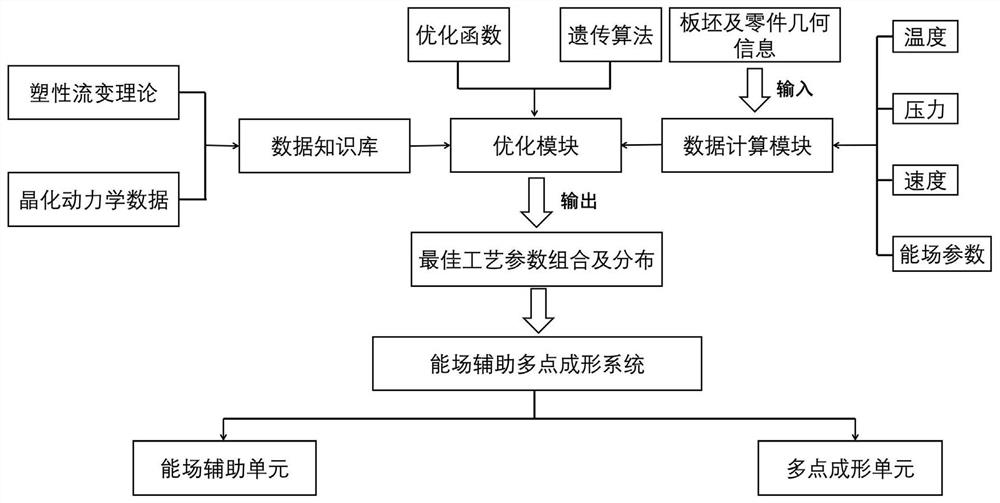
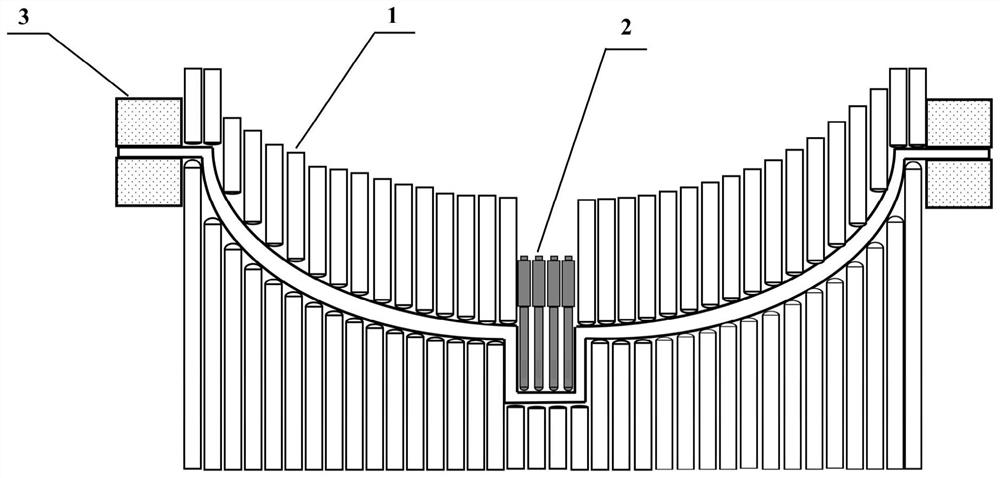
Energy field assisted intelligent multi-point forming method and system for amorphous alloy parts
PatentActiveCN111753452A
Innovation
- An energy field-assisted intelligent multi-point forming method is employed. Through finite element numerical simulation and genetic algorithms to optimize process parameters, and combining the characteristics of multi-point forming processes and amorphous alloy materials, auxiliary energy fields such as ultrasound, electricity, electromagnetics, and lasers are utilized to control the plastic deformation and microstructure of the material, achieving the integral forming of the part.

Heuristic scheme in material point method for simulating material
PatentWO2022182398A1
Innovation
- A modified MPM approach using heuristic schemes like HFLIP, AFLIP, and AHFLIP for particle-to-grid and grid-to-particle computations, which include velocity and positional adjustments to reduce dissipation and break positional traps, while maintaining energetic dynamics without significant computational overhead.


Safety Standards for Material Behavior Simulation Systems
The establishment of comprehensive safety standards for material behavior simulation systems represents a critical foundation for ensuring reliable and secure implementation of multi-point constraint technologies. Current regulatory frameworks primarily focus on traditional finite element analysis methods, creating significant gaps when addressing the complex interactions inherent in multi-point constraint systems. These standards must encompass both computational accuracy requirements and operational safety protocols to prevent catastrophic failures in real-world applications.
International standardization bodies including ISO, ASTM, and ASME have begun developing specific guidelines for advanced simulation methodologies. The ISO 16620 series provides fundamental requirements for material modeling validation, while ASTM E3012 addresses uncertainty quantification in computational mechanics. However, these existing standards lack specific provisions for multi-point constraint scenarios where material behavior becomes highly interdependent across multiple connection points.
Safety certification processes for material behavior simulation systems require rigorous validation protocols that extend beyond traditional verification methods. These protocols must include stress testing under extreme loading conditions, validation against experimental data from multi-point constraint scenarios, and comprehensive error propagation analysis. The certification framework should mandate regular recalibration procedures and establish clear boundaries for acceptable simulation accuracy levels.
Risk assessment methodologies specific to multi-point constraint systems have emerged as essential components of safety standards. These methodologies must account for cascading failure modes where constraint point failures can propagate throughout the entire system. The assessment framework requires probabilistic approaches that consider material property uncertainties, geometric tolerances, and loading condition variations simultaneously.
Compliance monitoring and audit procedures form the operational backbone of safety standards implementation. These procedures must establish clear documentation requirements for simulation model validation, regular performance benchmarking against certified reference cases, and mandatory reporting of simulation anomalies or unexpected results. The monitoring framework should include automated validation checks and human oversight protocols to ensure continuous compliance with established safety criteria.
Future safety standard development must address emerging challenges in artificial intelligence-enhanced simulation systems and real-time constraint optimization algorithms. These evolving technologies introduce new risk factors that current standards cannot adequately address, necessitating adaptive regulatory frameworks capable of evolving alongside technological advancement.
International standardization bodies including ISO, ASTM, and ASME have begun developing specific guidelines for advanced simulation methodologies. The ISO 16620 series provides fundamental requirements for material modeling validation, while ASTM E3012 addresses uncertainty quantification in computational mechanics. However, these existing standards lack specific provisions for multi-point constraint scenarios where material behavior becomes highly interdependent across multiple connection points.
Safety certification processes for material behavior simulation systems require rigorous validation protocols that extend beyond traditional verification methods. These protocols must include stress testing under extreme loading conditions, validation against experimental data from multi-point constraint scenarios, and comprehensive error propagation analysis. The certification framework should mandate regular recalibration procedures and establish clear boundaries for acceptable simulation accuracy levels.
Risk assessment methodologies specific to multi-point constraint systems have emerged as essential components of safety standards. These methodologies must account for cascading failure modes where constraint point failures can propagate throughout the entire system. The assessment framework requires probabilistic approaches that consider material property uncertainties, geometric tolerances, and loading condition variations simultaneously.
Compliance monitoring and audit procedures form the operational backbone of safety standards implementation. These procedures must establish clear documentation requirements for simulation model validation, regular performance benchmarking against certified reference cases, and mandatory reporting of simulation anomalies or unexpected results. The monitoring framework should include automated validation checks and human oversight protocols to ensure continuous compliance with established safety criteria.
Future safety standard development must address emerging challenges in artificial intelligence-enhanced simulation systems and real-time constraint optimization algorithms. These evolving technologies introduce new risk factors that current standards cannot adequately address, necessitating adaptive regulatory frameworks capable of evolving alongside technological advancement.
Computational Resource Optimization for Constraint Methods
Multi-point constraint methods in material behavior simulation present significant computational challenges that require sophisticated resource optimization strategies. The inherent complexity of these systems stems from the need to simultaneously solve large-scale matrix equations while maintaining constraint satisfaction across multiple material points, leading to substantial memory and processing demands.
Memory management represents a critical optimization frontier for constraint-based simulations. Sparse matrix storage techniques become essential when dealing with multi-point constraints, as the constraint matrices often exhibit high sparsity patterns. Advanced data structures such as compressed sparse row formats and block-sparse representations can reduce memory footprint by 60-80% compared to dense matrix storage, enabling larger problem sizes within available hardware limitations.
Parallel computing architectures offer substantial performance improvements for constraint method implementations. Domain decomposition strategies allow constraint problems to be partitioned across multiple processors, with careful attention to load balancing and inter-processor communication overhead. GPU acceleration has shown particular promise for iterative constraint solvers, where the massively parallel architecture can handle thousands of constraint equations simultaneously.
Algorithmic optimization focuses on reducing computational complexity through advanced solver techniques. Multigrid methods and algebraic multigrid approaches demonstrate superior convergence rates for large constraint systems, often achieving order-of-magnitude improvements over traditional iterative solvers. Preconditioning strategies specifically designed for constraint matrices, such as block-diagonal and approximate Schur complement preconditioners, further enhance solver efficiency.
Adaptive refinement strategies provide dynamic resource allocation based on constraint violation patterns and material behavior complexity. These methods automatically adjust computational effort where needed most, concentrating resources on regions with high constraint activity while reducing computational load in stable areas. This approach typically achieves 40-60% reduction in overall computational time while maintaining solution accuracy.
Modern constraint solvers increasingly incorporate machine learning techniques for predictive resource allocation. Neural network models trained on constraint violation patterns can anticipate computational hotspots and pre-allocate resources accordingly, leading to more efficient overall system performance and reduced solution times for complex multi-point constraint problems.
Memory management represents a critical optimization frontier for constraint-based simulations. Sparse matrix storage techniques become essential when dealing with multi-point constraints, as the constraint matrices often exhibit high sparsity patterns. Advanced data structures such as compressed sparse row formats and block-sparse representations can reduce memory footprint by 60-80% compared to dense matrix storage, enabling larger problem sizes within available hardware limitations.
Parallel computing architectures offer substantial performance improvements for constraint method implementations. Domain decomposition strategies allow constraint problems to be partitioned across multiple processors, with careful attention to load balancing and inter-processor communication overhead. GPU acceleration has shown particular promise for iterative constraint solvers, where the massively parallel architecture can handle thousands of constraint equations simultaneously.
Algorithmic optimization focuses on reducing computational complexity through advanced solver techniques. Multigrid methods and algebraic multigrid approaches demonstrate superior convergence rates for large constraint systems, often achieving order-of-magnitude improvements over traditional iterative solvers. Preconditioning strategies specifically designed for constraint matrices, such as block-diagonal and approximate Schur complement preconditioners, further enhance solver efficiency.
Adaptive refinement strategies provide dynamic resource allocation based on constraint violation patterns and material behavior complexity. These methods automatically adjust computational effort where needed most, concentrating resources on regions with high constraint activity while reducing computational load in stable areas. This approach typically achieves 40-60% reduction in overall computational time while maintaining solution accuracy.
Modern constraint solvers increasingly incorporate machine learning techniques for predictive resource allocation. Neural network models trained on constraint violation patterns can anticipate computational hotspots and pre-allocate resources accordingly, leading to more efficient overall system performance and reduced solution times for complex multi-point constraint problems.
Unlock deeper insights with Patsnap Eureka Quick Research — get a full tech report to explore trends and direct your research. Try now!
Generate Your Research Report Instantly with AI Agent
Supercharge your innovation with Patsnap Eureka AI Agent Platform!