

How to Design a Robust Frequency-Locked Loop for High-Vibration Environments
MAR 18, 20269 MIN READ
Generate Your Research Report Instantly with AI Agent
PatSnap Eureka helps you evaluate technical feasibility & market potential.
FLL Design Challenges in High-Vibration Environments
Frequency-locked loops operating in high-vibration environments face unprecedented challenges that fundamentally alter their performance characteristics and reliability. Traditional FLL designs, optimized for stable laboratory conditions, encounter severe degradation when subjected to mechanical vibrations ranging from low-frequency structural oscillations to high-frequency random disturbances. These environmental stressors introduce multiple failure modes that compromise the loop's ability to maintain precise frequency tracking and phase coherence.
The primary challenge stems from vibration-induced phase noise, which manifests as unwanted frequency modulation in the reference oscillator and voltage-controlled oscillator components. Mechanical vibrations cause physical displacement of crystal resonators, leading to frequency instability that can exceed the FLL's tracking bandwidth. This phenomenon becomes particularly problematic in aerospace, automotive, and industrial applications where vibration levels can reach several G-forces across broad frequency spectra.
Component-level vulnerabilities represent another critical challenge area. Passive components such as inductors and capacitors exhibit parameter variations under mechanical stress, altering the loop filter characteristics and potentially destabilizing the control system. Active components, including operational amplifiers and phase detectors, suffer from supply voltage fluctuations caused by vibration-induced connector intermittency and PCB flexing. These variations directly impact the loop's gain and phase margins, potentially causing loss of lock or oscillatory behavior.
Thermal effects compound the vibration-related challenges significantly. High-vibration environments often coincide with temperature extremes and rapid thermal cycling, creating additional frequency drift in oscillator components. The interaction between mechanical stress and thermal expansion introduces complex, time-varying perturbations that traditional FLL compensation techniques cannot adequately address. This dual-stress environment demands innovative design approaches that simultaneously account for both mechanical and thermal stability requirements.
Loop dynamics present fundamental design trade-offs in vibration-prone applications. Narrow loop bandwidths provide better noise rejection but reduce the system's ability to track rapid frequency changes caused by vibration-induced disturbances. Conversely, wider bandwidths improve tracking performance but increase susceptibility to high-frequency noise and potential instability. Achieving optimal performance requires sophisticated bandwidth adaptation techniques and robust control algorithms that can dynamically adjust to changing vibration conditions while maintaining lock integrity.
The primary challenge stems from vibration-induced phase noise, which manifests as unwanted frequency modulation in the reference oscillator and voltage-controlled oscillator components. Mechanical vibrations cause physical displacement of crystal resonators, leading to frequency instability that can exceed the FLL's tracking bandwidth. This phenomenon becomes particularly problematic in aerospace, automotive, and industrial applications where vibration levels can reach several G-forces across broad frequency spectra.
Component-level vulnerabilities represent another critical challenge area. Passive components such as inductors and capacitors exhibit parameter variations under mechanical stress, altering the loop filter characteristics and potentially destabilizing the control system. Active components, including operational amplifiers and phase detectors, suffer from supply voltage fluctuations caused by vibration-induced connector intermittency and PCB flexing. These variations directly impact the loop's gain and phase margins, potentially causing loss of lock or oscillatory behavior.
Thermal effects compound the vibration-related challenges significantly. High-vibration environments often coincide with temperature extremes and rapid thermal cycling, creating additional frequency drift in oscillator components. The interaction between mechanical stress and thermal expansion introduces complex, time-varying perturbations that traditional FLL compensation techniques cannot adequately address. This dual-stress environment demands innovative design approaches that simultaneously account for both mechanical and thermal stability requirements.
Loop dynamics present fundamental design trade-offs in vibration-prone applications. Narrow loop bandwidths provide better noise rejection but reduce the system's ability to track rapid frequency changes caused by vibration-induced disturbances. Conversely, wider bandwidths improve tracking performance but increase susceptibility to high-frequency noise and potential instability. Achieving optimal performance requires sophisticated bandwidth adaptation techniques and robust control algorithms that can dynamically adjust to changing vibration conditions while maintaining lock integrity.
Market Demand for Vibration-Resistant Frequency Control
The aerospace and defense sectors represent the most significant market drivers for vibration-resistant frequency control technologies. Commercial aviation systems require precise frequency stability for navigation, communication, and flight control systems operating under extreme mechanical stress conditions. Military applications demand even higher performance standards, with frequency-locked loops needing to maintain accuracy during high-G maneuvers, weapon system operations, and harsh battlefield environments. The growing complexity of avionics systems and increasing reliance on satellite-based navigation further amplify the demand for robust frequency control solutions.
Industrial automation and manufacturing sectors constitute another substantial market segment. Modern production facilities increasingly deploy precision machinery operating at high speeds with significant vibrational forces. CNC machining centers, robotic assembly lines, and automated quality control systems require stable frequency references to maintain operational accuracy. The trend toward Industry 4.0 and smart manufacturing intensifies the need for reliable frequency control systems that can withstand continuous mechanical stress while maintaining synchronization across distributed control networks.
The telecommunications infrastructure market presents expanding opportunities as 5G networks proliferate globally. Base stations and network equipment often face installation in challenging environments with significant vibration exposure from wind, traffic, and structural movement. The stringent timing requirements of 5G networks demand frequency stability that traditional solutions struggle to maintain under these conditions. Edge computing deployments in industrial settings further compound these challenges by requiring precise timing in mechanically harsh environments.
Automotive applications represent an emerging high-growth segment driven by autonomous vehicle development and advanced driver assistance systems. Modern vehicles generate substantial vibration across multiple frequency ranges, yet require increasingly precise timing for sensor fusion, communication systems, and safety-critical functions. The transition toward electric vehicles introduces additional electromagnetic interference challenges while maintaining demanding vibration resistance requirements.
Energy sector applications, particularly in renewable energy systems, create additional market demand. Wind turbines, offshore platforms, and geothermal installations operate in environments with continuous mechanical stress while requiring precise frequency control for grid synchronization and power management systems. The global expansion of renewable energy infrastructure drives sustained demand for vibration-resistant frequency control technologies capable of operating reliably in these challenging conditions.
Industrial automation and manufacturing sectors constitute another substantial market segment. Modern production facilities increasingly deploy precision machinery operating at high speeds with significant vibrational forces. CNC machining centers, robotic assembly lines, and automated quality control systems require stable frequency references to maintain operational accuracy. The trend toward Industry 4.0 and smart manufacturing intensifies the need for reliable frequency control systems that can withstand continuous mechanical stress while maintaining synchronization across distributed control networks.
The telecommunications infrastructure market presents expanding opportunities as 5G networks proliferate globally. Base stations and network equipment often face installation in challenging environments with significant vibration exposure from wind, traffic, and structural movement. The stringent timing requirements of 5G networks demand frequency stability that traditional solutions struggle to maintain under these conditions. Edge computing deployments in industrial settings further compound these challenges by requiring precise timing in mechanically harsh environments.
Automotive applications represent an emerging high-growth segment driven by autonomous vehicle development and advanced driver assistance systems. Modern vehicles generate substantial vibration across multiple frequency ranges, yet require increasingly precise timing for sensor fusion, communication systems, and safety-critical functions. The transition toward electric vehicles introduces additional electromagnetic interference challenges while maintaining demanding vibration resistance requirements.
Energy sector applications, particularly in renewable energy systems, create additional market demand. Wind turbines, offshore platforms, and geothermal installations operate in environments with continuous mechanical stress while requiring precise frequency control for grid synchronization and power management systems. The global expansion of renewable energy infrastructure drives sustained demand for vibration-resistant frequency control technologies capable of operating reliably in these challenging conditions.
Current FLL Limitations Under Mechanical Stress
Traditional frequency-locked loops face significant operational challenges when deployed in high-vibration environments, primarily due to their inherent sensitivity to mechanical disturbances. The fundamental limitation stems from the physical properties of conventional oscillator components, particularly crystal resonators and voltage-controlled oscillators, which exhibit frequency drift and phase noise degradation under mechanical stress conditions.
Mechanical vibrations introduce parasitic frequency modulation through several pathways. Crystal oscillators experience frequency shifts due to acceleration sensitivity, typically ranging from 1×10⁻⁹ to 1×10⁻⁷ per g of acceleration, depending on the crystal cut and mounting configuration. This acceleration-induced frequency variation directly impacts the FLL's ability to maintain stable lock conditions, causing periodic unlocking events and increased settling times.
Phase noise performance deteriorates significantly under vibrational stress, with close-in phase noise floors increasing by 10-20 dB in typical aerospace and automotive applications. The degradation occurs due to microphonic effects in oscillator circuits, where mechanical energy couples into electrical signals through parasitic capacitance variations and conductor movement within electromagnetic fields.
Loop filter components present additional vulnerability points under mechanical stress. Passive components such as capacitors and inductors exhibit parameter variations due to mechanical deformation and thermal cycling induced by vibration. These variations alter the loop's transfer function characteristics, potentially compromising stability margins and introducing unwanted resonances within the control bandwidth.
The feedback control mechanism itself becomes compromised when reference and controlled oscillators experience differential mechanical effects. Asymmetric vibration coupling between these elements creates correlated noise sources that cannot be effectively filtered by conventional loop architectures, leading to increased steady-state phase error and reduced tracking accuracy.
Current FLL implementations typically employ fixed-bandwidth designs optimized for stationary conditions, lacking adaptive mechanisms to compensate for dynamic mechanical environments. This limitation becomes particularly pronounced in applications requiring rapid frequency acquisition or tracking of agile frequency sources, where vibration-induced disturbances can exceed the loop's correction capability and cause complete loss of lock.
Mechanical vibrations introduce parasitic frequency modulation through several pathways. Crystal oscillators experience frequency shifts due to acceleration sensitivity, typically ranging from 1×10⁻⁹ to 1×10⁻⁷ per g of acceleration, depending on the crystal cut and mounting configuration. This acceleration-induced frequency variation directly impacts the FLL's ability to maintain stable lock conditions, causing periodic unlocking events and increased settling times.
Phase noise performance deteriorates significantly under vibrational stress, with close-in phase noise floors increasing by 10-20 dB in typical aerospace and automotive applications. The degradation occurs due to microphonic effects in oscillator circuits, where mechanical energy couples into electrical signals through parasitic capacitance variations and conductor movement within electromagnetic fields.
Loop filter components present additional vulnerability points under mechanical stress. Passive components such as capacitors and inductors exhibit parameter variations due to mechanical deformation and thermal cycling induced by vibration. These variations alter the loop's transfer function characteristics, potentially compromising stability margins and introducing unwanted resonances within the control bandwidth.
The feedback control mechanism itself becomes compromised when reference and controlled oscillators experience differential mechanical effects. Asymmetric vibration coupling between these elements creates correlated noise sources that cannot be effectively filtered by conventional loop architectures, leading to increased steady-state phase error and reduced tracking accuracy.
Current FLL implementations typically employ fixed-bandwidth designs optimized for stationary conditions, lacking adaptive mechanisms to compensate for dynamic mechanical environments. This limitation becomes particularly pronounced in applications requiring rapid frequency acquisition or tracking of agile frequency sources, where vibration-induced disturbances can exceed the loop's correction capability and cause complete loss of lock.
Existing Vibration-Tolerant FLL Design Solutions
01 Adaptive loop bandwidth control for improved stability
Frequency-locked loops can achieve enhanced robustness by implementing adaptive bandwidth control mechanisms that dynamically adjust the loop bandwidth based on operating conditions. This approach helps maintain stability across varying input frequencies and noise conditions. The adaptive control can monitor phase error or frequency deviation and automatically tune loop parameters to optimize performance while preventing instability or loss of lock.- Adaptive loop bandwidth control for improved stability: Frequency-locked loops can achieve enhanced robustness by implementing adaptive bandwidth control mechanisms that dynamically adjust the loop bandwidth based on operating conditions. This approach helps maintain stability across varying input frequencies and noise conditions. The adaptive control can monitor phase error or frequency deviation and modify loop parameters accordingly to optimize performance while preventing instability or loss of lock.
- Multi-stage filtering and noise suppression techniques: Robustness in frequency-locked loops can be significantly improved through the implementation of multi-stage filtering architectures that effectively suppress noise and spurious signals. These techniques employ cascaded filter stages with optimized characteristics to reduce jitter and phase noise while maintaining fast lock acquisition. The filtering approach helps the loop maintain lock even in the presence of significant interference or signal degradation.
- Frequency detection and lock acquisition enhancement: Enhanced frequency detection mechanisms improve the robustness of frequency-locked loops by enabling reliable lock acquisition and maintenance across wide frequency ranges. These methods incorporate frequency discriminators or detectors that provide coarse frequency alignment before fine phase locking occurs. The approach reduces lock time and improves the ability to maintain lock under dynamic frequency variations or when recovering from loss of lock conditions.
- Digital control and compensation methods: Digital implementation of frequency-locked loop control provides enhanced robustness through programmable compensation and correction algorithms. Digital control enables precise adjustment of loop parameters, implementation of non-linear control laws, and compensation for component variations or environmental effects. This approach allows for sophisticated error correction and adaptive behavior that improves stability and performance under varying conditions.
- Phase-frequency detector optimization for extended capture range: Optimized phase-frequency detector designs enhance frequency-locked loop robustness by extending the capture range and improving immunity to cycle slips. These detectors provide both phase and frequency error information with reduced dead zones and improved linearity. The enhanced detection capability allows the loop to maintain lock over wider frequency deviations and recover more quickly from disturbances, thereby improving overall system reliability.
02 Multi-stage filtering and noise suppression techniques
Robustness in frequency-locked loops can be significantly improved through the implementation of multi-stage filtering architectures that effectively suppress noise and spurious signals. These techniques employ cascaded filter stages with optimized characteristics to reduce jitter and phase noise while maintaining fast lock acquisition. The filtering approach helps the loop maintain lock even in the presence of significant interference or signal degradation.Expand Specific Solutions03 Frequency detection and lock monitoring circuits
Enhanced robustness can be achieved through dedicated frequency detection and lock monitoring circuits that continuously assess the lock status and frequency alignment. These circuits provide real-time feedback about loop performance and can trigger corrective actions when deviations are detected. The monitoring mechanisms enable the system to distinguish between locked and unlocked states, preventing false lock conditions and improving overall reliability.Expand Specific Solutions04 Wide capture range and fast acquisition mechanisms
Frequency-locked loop robustness is enhanced by implementing wide capture range designs combined with fast acquisition mechanisms that enable rapid locking across broad frequency ranges. These designs incorporate frequency sweep circuits, multi-phase detection, or coarse-fine tuning strategies to quickly establish and maintain lock even with large initial frequency offsets. The wide operating range ensures reliable performance across diverse applications and environmental conditions.Expand Specific Solutions05 Temperature and process variation compensation
Robustness against environmental variations is achieved through compensation techniques that account for temperature fluctuations and process variations in integrated circuit implementations. These methods employ calibration circuits, reference trimming, or adaptive biasing to maintain consistent loop performance across operating conditions. The compensation mechanisms ensure stable frequency locking despite changes in temperature, supply voltage, or manufacturing process variations.Expand Specific Solutions
Key Players in Robust FLL and Vibration-Resistant Systems
The frequency-locked loop technology for high-vibration environments represents a specialized niche within the broader timing and synchronization semiconductor market, currently in a mature development stage with significant growth potential driven by aerospace, automotive, and industrial automation demands. The market demonstrates substantial scale, with key players spanning from established semiconductor giants like Qualcomm, Texas Instruments, Analog Devices, and STMicroelectronics to specialized timing solution providers such as Silicon Laboratories and IDT. Technology maturity varies significantly across participants, with companies like Renesas Electronics, NXP Semiconductors, and Bosch leading in ruggedized solutions for harsh environments, while research institutions including Zhejiang University, Beihang University, and AIST contribute fundamental innovations in phase-locked loop architectures and vibration-resistant designs, creating a competitive landscape characterized by both commercial implementation expertise and cutting-edge academic research.
QUALCOMM, Inc.
Technical Solution: Qualcomm has developed innovative frequency-locked loop technologies primarily for wireless communication systems operating in mobile and vehicular environments. Their FLL designs incorporate machine learning algorithms that can predict and compensate for vibration patterns in real-time. The company's solutions feature multi-reference architecture that allows seamless switching between different frequency sources when vibration levels exceed predetermined thresholds. Qualcomm's FLL implementations are optimized for low power consumption while maintaining high frequency accuracy, making them suitable for battery-powered devices in high-vibration scenarios.
Strengths: Advanced digital signal processing capabilities and extensive experience in mobile communication systems. Weaknesses: Solutions primarily optimized for communication applications rather than general industrial use.
Renesas Electronics Corp.
Technical Solution: Renesas Electronics specializes in microcontroller-based FLL solutions that provide robust frequency locking capabilities in high-vibration environments. Their approach utilizes embedded digital filtering techniques and real-time vibration detection algorithms to maintain frequency stability. The company's FLL designs feature configurable loop parameters that can be adjusted based on the specific vibration characteristics of the operating environment. Renesas solutions incorporate advanced clock management units that can automatically switch to backup frequency sources during extreme vibration events, ensuring continuous operation in critical applications.
Strengths: Strong microcontroller integration and flexible configuration options for diverse applications. Weaknesses: Performance limitations in extremely high-frequency applications and requires significant software development effort.
Core Innovations in High-Vibration FLL Architecture
Vibration optimizing intelligent phase locked loop
PatentWO2017151198A1
Innovation
- A tunable phase-locked loop system that self-detects vibration levels using an accelerometer and adjusts its bandwidth through a controller, employing a digitally addressable MEMS capacitor bank or potentiometer to optimize performance across varying scenarios, including temperature compensation.


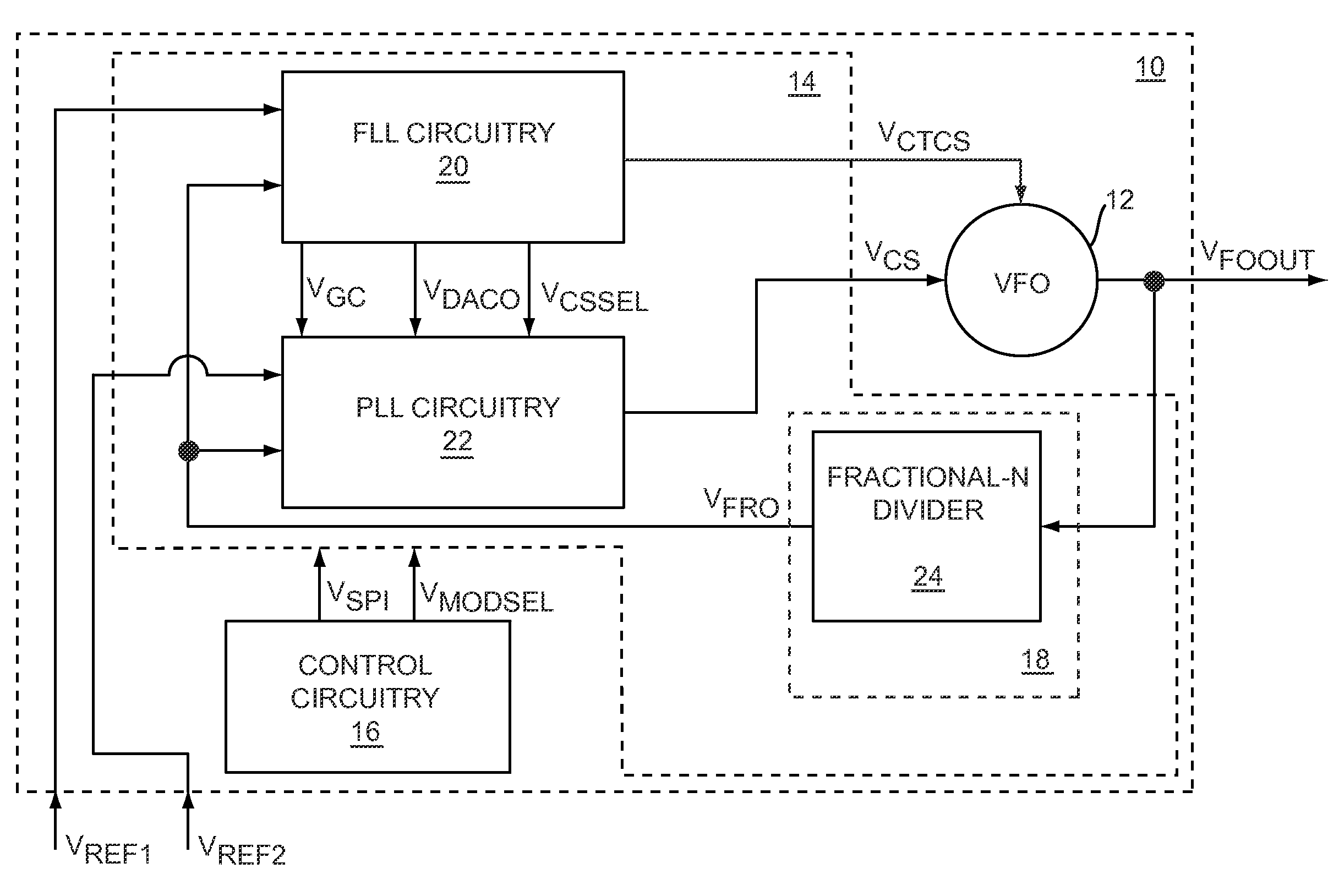
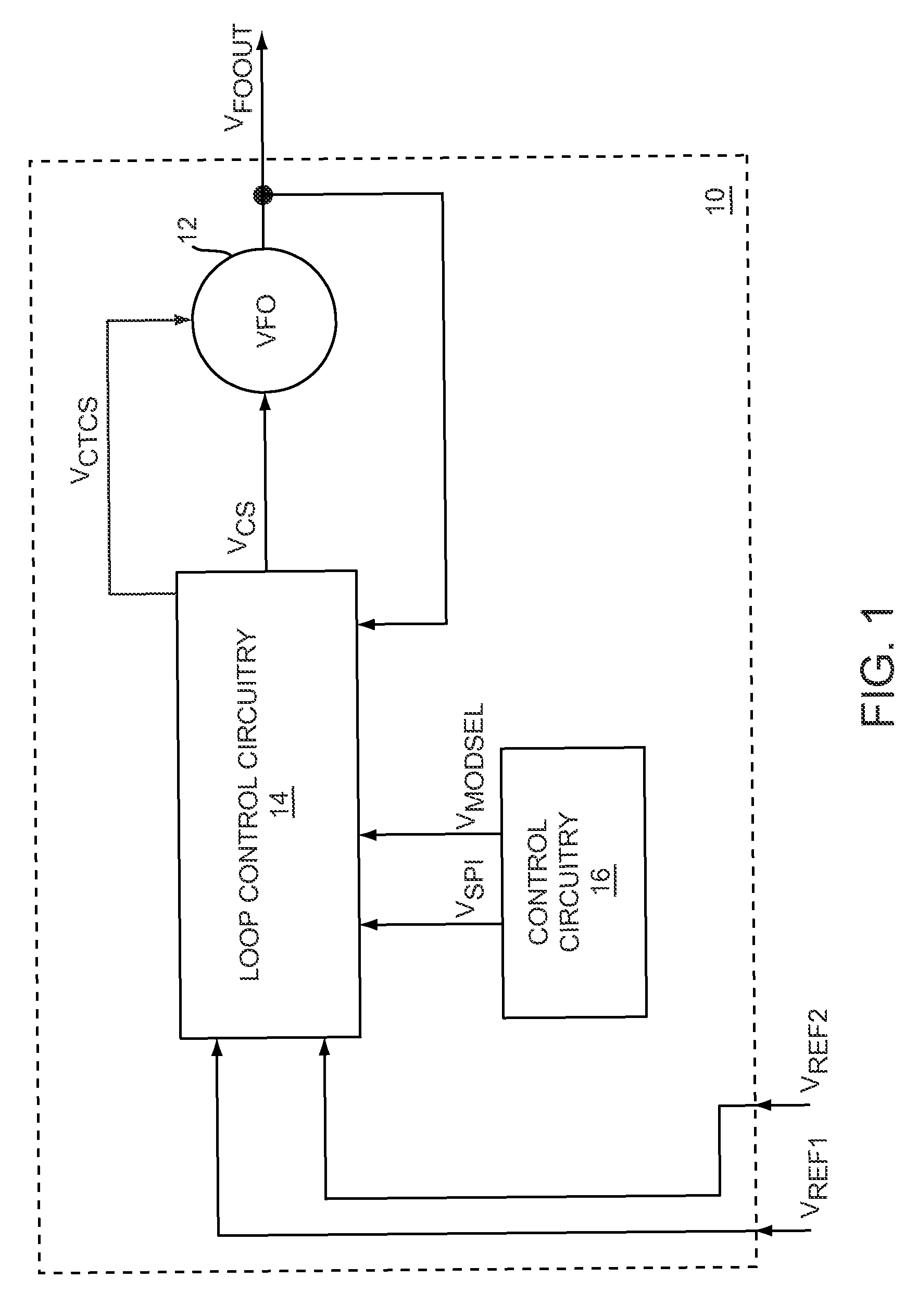
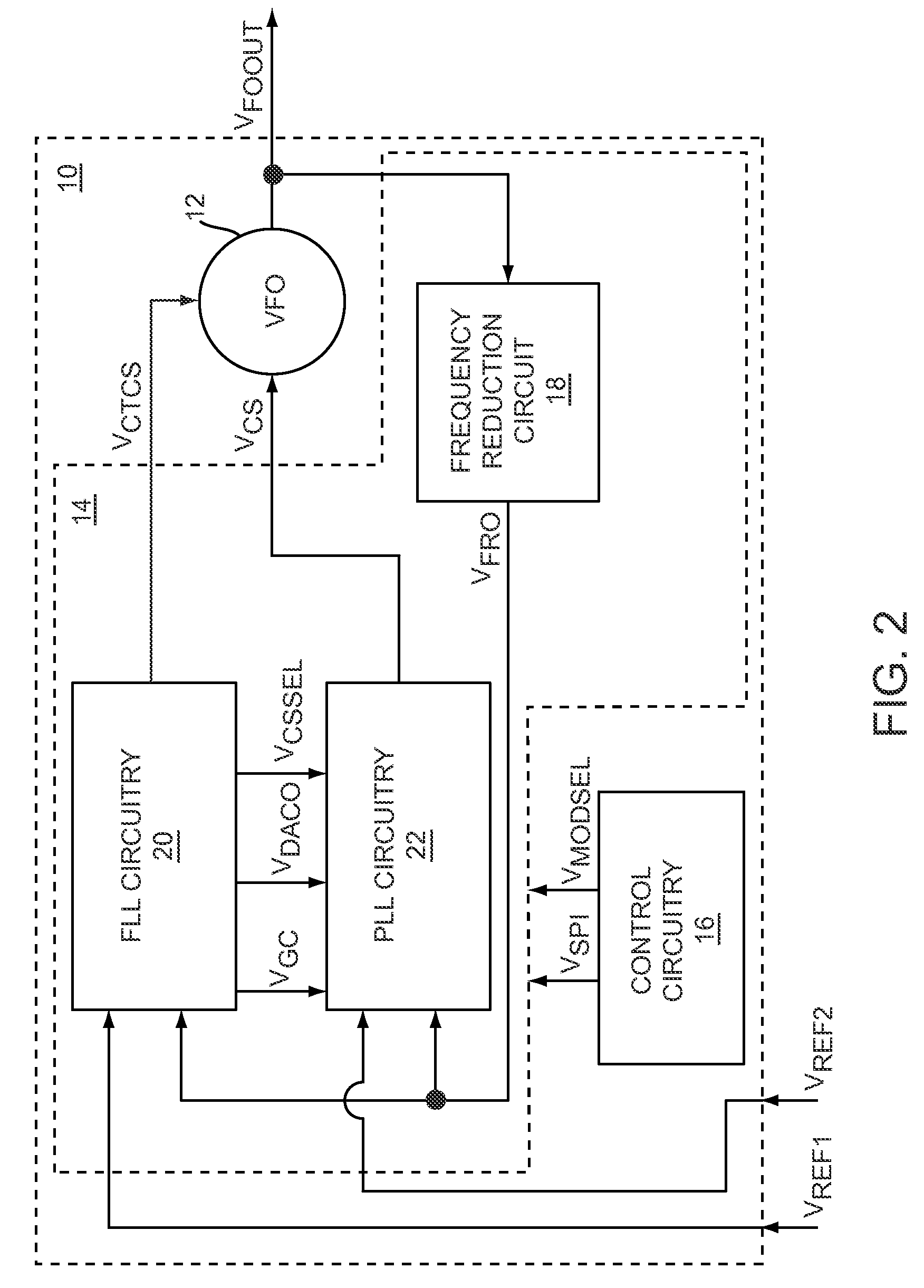
Frequency-locked loop calibration of a phase-locked loop gain
PatentInactiveUS7898343B1
Innovation
- A calibrated phase-locked loop (PLL) system with a calibration mode for measuring tuning gain and a PLL mode for normal operation, using frequency-locked loop (FLL) circuit elements for coarse tuning and PLL for high frequency accuracy, reducing phase lock times by regulating loop gain and pre-charging the PLL loop filter.

Environmental Testing Standards for FLL Systems
Environmental testing standards for Frequency-Locked Loop (FLL) systems operating in high-vibration environments are governed by multiple international and industry-specific protocols. The primary framework is established by IEC 60068-2-6 for sinusoidal vibration testing and IEC 60068-2-64 for random vibration testing, which define fundamental test procedures for electronic equipment subjected to mechanical stress.
Military and aerospace applications typically adhere to MIL-STD-810H standards, particularly Method 514.8 for vibration testing. This standard specifies test profiles ranging from 5 Hz to 2000 Hz with acceleration levels up to 20g RMS for random vibration scenarios. The DO-160G standard governs avionics equipment, establishing vibration test categories from Category A (transport aircraft) to Category U (helicopter applications), with frequency ranges extending up to 2000 Hz and acceleration levels reaching 7.7g RMS.
Automotive FLL systems must comply with ISO 16750-3 standards, which address electrical and electronic equipment performance under mechanical loads. The standard defines vibration profiles specific to different vehicle mounting locations, with engine compartment installations requiring survival under sinusoidal vibrations up to 200 Hz at 30g acceleration and random vibrations with power spectral density levels reaching 0.5 g²/Hz.
Telecommunications infrastructure follows ETSI EN 300 019-1-3 for stationary use at weather-protected locations and ETSI EN 300 019-1-4 for non-weather-protected installations. These standards specify vibration immunity requirements ranging from 0.15g to 1.0g depending on the installation environment and expected seismic activity levels.
Testing protocols typically involve multi-axis vibration exposure, with simultaneous or sequential testing in X, Y, and Z axes. Functional verification during vibration exposure is mandatory, requiring continuous monitoring of FLL lock status, frequency accuracy, and phase noise performance. Temperature cycling combined with vibration testing simulates real-world operational conditions, following thermal shock profiles defined in IEC 60068-2-14.
Qualification testing duration varies by application, with aerospace systems requiring 3-hour minimum exposure per axis, while automotive applications may demand up to 24-hour endurance testing. Post-vibration functional verification ensures no degradation in critical performance parameters, with acceptance criteria typically allowing less than 1% frequency deviation and maintaining phase lock throughout the test sequence.
Military and aerospace applications typically adhere to MIL-STD-810H standards, particularly Method 514.8 for vibration testing. This standard specifies test profiles ranging from 5 Hz to 2000 Hz with acceleration levels up to 20g RMS for random vibration scenarios. The DO-160G standard governs avionics equipment, establishing vibration test categories from Category A (transport aircraft) to Category U (helicopter applications), with frequency ranges extending up to 2000 Hz and acceleration levels reaching 7.7g RMS.
Automotive FLL systems must comply with ISO 16750-3 standards, which address electrical and electronic equipment performance under mechanical loads. The standard defines vibration profiles specific to different vehicle mounting locations, with engine compartment installations requiring survival under sinusoidal vibrations up to 200 Hz at 30g acceleration and random vibrations with power spectral density levels reaching 0.5 g²/Hz.
Telecommunications infrastructure follows ETSI EN 300 019-1-3 for stationary use at weather-protected locations and ETSI EN 300 019-1-4 for non-weather-protected installations. These standards specify vibration immunity requirements ranging from 0.15g to 1.0g depending on the installation environment and expected seismic activity levels.
Testing protocols typically involve multi-axis vibration exposure, with simultaneous or sequential testing in X, Y, and Z axes. Functional verification during vibration exposure is mandatory, requiring continuous monitoring of FLL lock status, frequency accuracy, and phase noise performance. Temperature cycling combined with vibration testing simulates real-world operational conditions, following thermal shock profiles defined in IEC 60068-2-14.
Qualification testing duration varies by application, with aerospace systems requiring 3-hour minimum exposure per axis, while automotive applications may demand up to 24-hour endurance testing. Post-vibration functional verification ensures no degradation in critical performance parameters, with acceptance criteria typically allowing less than 1% frequency deviation and maintaining phase lock throughout the test sequence.
Reliability Assessment Methods for Harsh Environment FLLs
Reliability assessment for frequency-locked loops operating in harsh environments requires comprehensive evaluation methodologies that account for the unique stressors present in high-vibration conditions. Traditional reliability testing approaches must be adapted to capture the complex failure modes and degradation mechanisms specific to FLL circuits subjected to mechanical stress, temperature fluctuations, and electromagnetic interference simultaneously.
Accelerated life testing represents a fundamental approach for evaluating FLL reliability under harsh conditions. This methodology involves subjecting test samples to elevated stress levels including increased vibration amplitudes, extended temperature cycling, and enhanced electromagnetic field exposure. The acceleration factors must be carefully calibrated to ensure that the failure mechanisms observed during testing accurately represent those occurring in actual operating environments without introducing artificial failure modes.
Statistical reliability modeling forms the backbone of comprehensive assessment frameworks. Weibull distribution analysis proves particularly effective for characterizing FLL component failure rates under mechanical stress, while lognormal distributions better capture degradation processes in semiconductor elements. Monte Carlo simulation techniques enable prediction of system-level reliability by incorporating component-level failure data and accounting for the interdependencies between different circuit elements under vibration stress.
Environmental stress screening protocols specifically designed for harsh environment FLLs incorporate multi-axis vibration testing, thermal shock exposure, and humidity cycling. These protocols must replicate the actual operational environment while providing sufficient stress margins to identify latent defects. The screening process typically involves progressive stress application, starting with individual environmental factors and advancing to combined stress conditions that mirror real-world deployment scenarios.
Failure mode and effects analysis tailored for high-vibration FLL applications identifies critical failure pathways including solder joint fatigue, component lead fracture, and frequency drift due to mechanical resonance. This analysis framework incorporates vibration-specific failure mechanisms such as wire bond degradation, package cracking, and parametric shifts in passive components caused by mechanical stress cycling.
Real-time health monitoring techniques enable continuous reliability assessment during operation. These methods utilize built-in test circuits to monitor key performance parameters including frequency stability, phase noise characteristics, and loop response time. Degradation trending algorithms process this monitoring data to predict remaining useful life and schedule preventive maintenance before critical failures occur.
Accelerated life testing represents a fundamental approach for evaluating FLL reliability under harsh conditions. This methodology involves subjecting test samples to elevated stress levels including increased vibration amplitudes, extended temperature cycling, and enhanced electromagnetic field exposure. The acceleration factors must be carefully calibrated to ensure that the failure mechanisms observed during testing accurately represent those occurring in actual operating environments without introducing artificial failure modes.
Statistical reliability modeling forms the backbone of comprehensive assessment frameworks. Weibull distribution analysis proves particularly effective for characterizing FLL component failure rates under mechanical stress, while lognormal distributions better capture degradation processes in semiconductor elements. Monte Carlo simulation techniques enable prediction of system-level reliability by incorporating component-level failure data and accounting for the interdependencies between different circuit elements under vibration stress.
Environmental stress screening protocols specifically designed for harsh environment FLLs incorporate multi-axis vibration testing, thermal shock exposure, and humidity cycling. These protocols must replicate the actual operational environment while providing sufficient stress margins to identify latent defects. The screening process typically involves progressive stress application, starting with individual environmental factors and advancing to combined stress conditions that mirror real-world deployment scenarios.
Failure mode and effects analysis tailored for high-vibration FLL applications identifies critical failure pathways including solder joint fatigue, component lead fracture, and frequency drift due to mechanical resonance. This analysis framework incorporates vibration-specific failure mechanisms such as wire bond degradation, package cracking, and parametric shifts in passive components caused by mechanical stress cycling.
Real-time health monitoring techniques enable continuous reliability assessment during operation. These methods utilize built-in test circuits to monitor key performance parameters including frequency stability, phase noise characteristics, and loop response time. Degradation trending algorithms process this monitoring data to predict remaining useful life and schedule preventive maintenance before critical failures occur.
Unlock deeper insights with PatSnap Eureka Quick Research — get a full tech report to explore trends and direct your research. Try now!
Generate Your Research Report Instantly with AI Agent
Supercharge your innovation with PatSnap Eureka AI Agent Platform!