How to Integrate Dipropylene Glycol for Long-Lasting Perfumes?
JUL 7, 20259 MIN READ
Generate Your Research Report Instantly with AI Agent
Patsnap Eureka helps you evaluate technical feasibility & market potential.
Dipropylene Glycol in Perfumery: Background and Objectives
Dipropylene glycol (DPG) has emerged as a crucial component in the perfume industry, revolutionizing the way fragrances are formulated and experienced. This versatile chemical compound, with its unique properties, has become an indispensable tool for perfumers seeking to create long-lasting and stable scents. The integration of DPG in perfumery marks a significant milestone in the evolution of fragrance technology, addressing longstanding challenges in scent longevity and performance.
The primary objective of incorporating DPG into perfume formulations is to enhance the overall quality and durability of fragrances. By acting as a fixative and solvent, DPG helps to stabilize volatile aromatic compounds, effectively prolonging the life of the scent on the skin. This characteristic is particularly valuable in an era where consumers demand fragrances that can withstand the rigors of daily life and maintain their olfactory integrity over extended periods.
Historically, the perfume industry has grappled with the inherent volatility of essential oils and aromatic compounds. Traditional perfumes often suffered from rapid evaporation, leading to short-lived scent experiences. The introduction of DPG represents a technological leap forward, offering a solution to this persistent problem by providing a medium that can hold and release fragrance molecules more gradually.
The evolution of DPG use in perfumery is closely tied to advancements in chemical engineering and a deeper understanding of molecular interactions. As research in these fields progressed, perfumers gained insights into how different compounds could be leveraged to manipulate scent profiles and longevity. This knowledge paved the way for the strategic integration of DPG, marking a shift from purely artistic fragrance creation to a more scientifically informed approach.
Looking ahead, the perfume industry aims to further refine the application of DPG and similar compounds to achieve even greater control over fragrance performance. Goals include developing formulations that can adapt to environmental conditions, personalize scent release based on individual body chemistry, and minimize the environmental impact of fragrance products. These objectives reflect a broader trend towards sustainable and technologically advanced perfumery practices.
The integration of DPG also aligns with the growing consumer demand for fragrances that offer all-day wear without the need for reapplication. This trend has pushed perfumers to explore innovative ways of balancing scent intensity, longevity, and the subtle evolution of fragrance notes over time. The challenge lies in creating complex, multi-layered scents that unfold gracefully, maintaining their intended character from the initial spritz to the final dry-down hours later.
The primary objective of incorporating DPG into perfume formulations is to enhance the overall quality and durability of fragrances. By acting as a fixative and solvent, DPG helps to stabilize volatile aromatic compounds, effectively prolonging the life of the scent on the skin. This characteristic is particularly valuable in an era where consumers demand fragrances that can withstand the rigors of daily life and maintain their olfactory integrity over extended periods.
Historically, the perfume industry has grappled with the inherent volatility of essential oils and aromatic compounds. Traditional perfumes often suffered from rapid evaporation, leading to short-lived scent experiences. The introduction of DPG represents a technological leap forward, offering a solution to this persistent problem by providing a medium that can hold and release fragrance molecules more gradually.
The evolution of DPG use in perfumery is closely tied to advancements in chemical engineering and a deeper understanding of molecular interactions. As research in these fields progressed, perfumers gained insights into how different compounds could be leveraged to manipulate scent profiles and longevity. This knowledge paved the way for the strategic integration of DPG, marking a shift from purely artistic fragrance creation to a more scientifically informed approach.
Looking ahead, the perfume industry aims to further refine the application of DPG and similar compounds to achieve even greater control over fragrance performance. Goals include developing formulations that can adapt to environmental conditions, personalize scent release based on individual body chemistry, and minimize the environmental impact of fragrance products. These objectives reflect a broader trend towards sustainable and technologically advanced perfumery practices.
The integration of DPG also aligns with the growing consumer demand for fragrances that offer all-day wear without the need for reapplication. This trend has pushed perfumers to explore innovative ways of balancing scent intensity, longevity, and the subtle evolution of fragrance notes over time. The challenge lies in creating complex, multi-layered scents that unfold gracefully, maintaining their intended character from the initial spritz to the final dry-down hours later.
Market Analysis for Long-Lasting Fragrances
The global fragrance market has been experiencing steady growth, with a particular emphasis on long-lasting perfumes. Consumers are increasingly seeking fragrances that offer extended wear time, driving demand for innovative formulations and ingredients. The market for long-lasting fragrances is projected to expand significantly over the next five years, fueled by changing consumer preferences and advancements in perfume technology.
One of the key drivers of this market growth is the rising disposable income in emerging economies, coupled with a growing awareness of personal grooming and luxury products. Consumers are willing to invest in premium, long-lasting fragrances that offer better value for money. This trend is particularly evident in regions such as Asia-Pacific and the Middle East, where the fragrance market is experiencing rapid expansion.
The demand for long-lasting fragrances is also influenced by lifestyle changes and increased working hours. Consumers are seeking perfumes that can withstand the rigors of a busy day without the need for frequent reapplication. This has led to a surge in the development of innovative fragrance technologies and the use of fixative ingredients like dipropylene glycol.
In terms of market segmentation, the long-lasting fragrance sector spans across various product categories, including eau de parfum, eau de toilette, and perfume oils. Eau de parfum, known for its higher concentration of fragrance oils, has been gaining popularity due to its longer-lasting nature. This segment is expected to witness the highest growth rate within the long-lasting fragrance market.
The integration of dipropylene glycol in perfume formulations has opened up new opportunities for fragrance manufacturers. This versatile ingredient not only enhances the longevity of scents but also improves the overall stability and performance of the fragrance. As a result, perfume brands are increasingly incorporating dipropylene glycol into their products to meet consumer demands for long-lasting scents.
Market research indicates that consumers are willing to pay a premium for fragrances that offer extended wear time. This has led to a shift in marketing strategies, with brands emphasizing the long-lasting properties of their perfumes as a key selling point. The trend is particularly strong in the luxury fragrance segment, where consumers expect superior performance and are willing to invest in high-quality, long-lasting scents.
The market for long-lasting fragrances is highly competitive, with both established luxury brands and niche perfume houses vying for market share. Innovation in formulation and packaging is crucial for brands to differentiate themselves in this crowded market. The use of advanced ingredients like dipropylene glycol is becoming a significant factor in product development and marketing strategies.
One of the key drivers of this market growth is the rising disposable income in emerging economies, coupled with a growing awareness of personal grooming and luxury products. Consumers are willing to invest in premium, long-lasting fragrances that offer better value for money. This trend is particularly evident in regions such as Asia-Pacific and the Middle East, where the fragrance market is experiencing rapid expansion.
The demand for long-lasting fragrances is also influenced by lifestyle changes and increased working hours. Consumers are seeking perfumes that can withstand the rigors of a busy day without the need for frequent reapplication. This has led to a surge in the development of innovative fragrance technologies and the use of fixative ingredients like dipropylene glycol.
In terms of market segmentation, the long-lasting fragrance sector spans across various product categories, including eau de parfum, eau de toilette, and perfume oils. Eau de parfum, known for its higher concentration of fragrance oils, has been gaining popularity due to its longer-lasting nature. This segment is expected to witness the highest growth rate within the long-lasting fragrance market.
The integration of dipropylene glycol in perfume formulations has opened up new opportunities for fragrance manufacturers. This versatile ingredient not only enhances the longevity of scents but also improves the overall stability and performance of the fragrance. As a result, perfume brands are increasingly incorporating dipropylene glycol into their products to meet consumer demands for long-lasting scents.
Market research indicates that consumers are willing to pay a premium for fragrances that offer extended wear time. This has led to a shift in marketing strategies, with brands emphasizing the long-lasting properties of their perfumes as a key selling point. The trend is particularly strong in the luxury fragrance segment, where consumers expect superior performance and are willing to invest in high-quality, long-lasting scents.
The market for long-lasting fragrances is highly competitive, with both established luxury brands and niche perfume houses vying for market share. Innovation in formulation and packaging is crucial for brands to differentiate themselves in this crowded market. The use of advanced ingredients like dipropylene glycol is becoming a significant factor in product development and marketing strategies.
Current Challenges in Fragrance Longevity
The fragrance industry faces significant challenges in creating long-lasting perfumes that maintain their scent profile throughout the day. One of the primary obstacles is the volatile nature of many fragrance compounds, which tend to evaporate quickly, leading to a rapid decline in scent intensity. This volatility is particularly problematic for top and middle notes, which are responsible for the initial impression and heart of the fragrance.
Another major challenge is the interaction between fragrance molecules and the skin's natural oils and bacteria. These interactions can alter the scent profile over time, causing the perfume to smell different from its intended composition. Additionally, factors such as skin pH, temperature, and humidity can significantly affect the longevity and projection of a fragrance, making it difficult to create a universally long-lasting perfume.
The use of fixatives, such as synthetic musks or natural resins, has been a traditional approach to improving fragrance longevity. However, finding the right balance between fixatives and fragrance compounds without compromising the desired scent profile remains a complex task. Moreover, some fixatives may cause allergic reactions or skin irritation in certain individuals, limiting their widespread use.
Environmental factors also play a crucial role in fragrance longevity challenges. Exposure to heat, light, and air can degrade fragrance molecules, reducing their effectiveness over time. This not only affects the perfume during wear but also impacts its shelf life and storage stability, presenting additional hurdles for manufacturers and retailers.
The demand for natural and sustainable ingredients in perfumery has further complicated the quest for long-lasting fragrances. Many natural essential oils and extracts, while prized for their complex scent profiles, are inherently more volatile than their synthetic counterparts. This creates a dilemma for perfumers striving to meet consumer preferences for natural products while maintaining fragrance longevity.
Lastly, the challenge of creating long-lasting fragrances is compounded by individual variations in skin chemistry and olfactory perception. What may last for hours on one person might quickly fade on another, making it difficult to develop a universally effective solution. This variability necessitates extensive testing and refinement of fragrance formulations to achieve consistent performance across a diverse consumer base.
Another major challenge is the interaction between fragrance molecules and the skin's natural oils and bacteria. These interactions can alter the scent profile over time, causing the perfume to smell different from its intended composition. Additionally, factors such as skin pH, temperature, and humidity can significantly affect the longevity and projection of a fragrance, making it difficult to create a universally long-lasting perfume.
The use of fixatives, such as synthetic musks or natural resins, has been a traditional approach to improving fragrance longevity. However, finding the right balance between fixatives and fragrance compounds without compromising the desired scent profile remains a complex task. Moreover, some fixatives may cause allergic reactions or skin irritation in certain individuals, limiting their widespread use.
Environmental factors also play a crucial role in fragrance longevity challenges. Exposure to heat, light, and air can degrade fragrance molecules, reducing their effectiveness over time. This not only affects the perfume during wear but also impacts its shelf life and storage stability, presenting additional hurdles for manufacturers and retailers.
The demand for natural and sustainable ingredients in perfumery has further complicated the quest for long-lasting fragrances. Many natural essential oils and extracts, while prized for their complex scent profiles, are inherently more volatile than their synthetic counterparts. This creates a dilemma for perfumers striving to meet consumer preferences for natural products while maintaining fragrance longevity.
Lastly, the challenge of creating long-lasting fragrances is compounded by individual variations in skin chemistry and olfactory perception. What may last for hours on one person might quickly fade on another, making it difficult to develop a universally effective solution. This variability necessitates extensive testing and refinement of fragrance formulations to achieve consistent performance across a diverse consumer base.
Existing Methods for Dipropylene Glycol Integration
01 Use of dipropylene glycol in cosmetic formulations
Dipropylene glycol is commonly used in cosmetic and personal care products as a solvent, humectant, and viscosity regulator. It helps to improve the stability and longevity of various formulations, including creams, lotions, and fragrances. Its hygroscopic properties contribute to maintaining product moisture and preventing drying out.- Use of dipropylene glycol in personal care products: Dipropylene glycol is commonly used in personal care products such as cosmetics, fragrances, and skincare formulations. It acts as a solvent, humectant, and viscosity regulator, contributing to the product's stability and longevity. Its hygroscopic properties help maintain moisture in the formulation, extending the shelf life of the product.
- Application in industrial processes and materials: Dipropylene glycol finds applications in various industrial processes and materials, including as a component in plastics, resins, and lubricants. Its chemical properties contribute to the durability and longevity of these materials, enhancing their resistance to degradation and extending their useful life.
- Role in preservative systems: Dipropylene glycol is utilized in preservative systems for various products, including pharmaceuticals and food items. It acts as a solvent for preservatives, enhancing their effectiveness and contributing to the overall longevity of the preserved products by preventing microbial growth and oxidation.
- Use in cleaning and disinfecting formulations: Dipropylene glycol is incorporated into cleaning and disinfecting formulations, where it serves as a solvent and helps to stabilize active ingredients. This application contributes to the longevity of the cleaning products themselves and aids in maintaining the cleanliness and hygiene of treated surfaces for extended periods.
- Application in heat transfer fluids: Dipropylene glycol is used in heat transfer fluids due to its thermal stability and resistance to degradation at high temperatures. This property contributes to the longevity of heating and cooling systems, allowing for extended use without frequent fluid replacement or system maintenance.
02 Application in fragrance and perfume industry
Dipropylene glycol is widely used as a solvent and fixative in the fragrance industry. It helps to dissolve and blend various fragrance components, enhancing the overall longevity and performance of perfumes and other scented products. Its low volatility contributes to the extended release of fragrances over time.Expand Specific Solutions03 Role in industrial and household products
Dipropylene glycol finds applications in various industrial and household products due to its stability and longevity-enhancing properties. It is used in cleaning agents, paints, and coatings to improve product performance and shelf life. Its low toxicity and biodegradability make it a preferred choice in environmentally friendly formulations.Expand Specific Solutions04 Use in pharmaceutical and medical applications
Dipropylene glycol is utilized in pharmaceutical and medical products for its solvent properties and ability to enhance the stability of active ingredients. It contributes to the longevity of various medications, topical treatments, and medical devices by preventing degradation and maintaining product efficacy over time.Expand Specific Solutions05 Environmental and safety considerations
The longevity of dipropylene glycol in the environment and its safety profile are important considerations for its use in various applications. Studies have shown that it has low environmental persistence and is readily biodegradable. Its low toxicity and minimal bioaccumulation potential contribute to its widespread use in consumer and industrial products.Expand Specific Solutions
Key Players in Fragrance and Chemical Industries
The integration of dipropylene glycol for long-lasting perfumes is a mature technology in a well-established industry. The global fragrance market is experiencing steady growth, with an estimated size of $50 billion. Major players like Firmenich, Symrise, Givaudan, and International Flavors & Fragrances dominate the field, leveraging their extensive R&D capabilities and global presence. These companies have developed sophisticated techniques for incorporating dipropylene glycol and other fixatives to enhance fragrance longevity. Emerging players, such as Guangzhou Fine Hao Flavor and Shanghai Heyun Flavors & Fragrances, are also making strides in this area, particularly in the Asian market.
Firmenich SA
Technical Solution: Firmenich has developed an innovative approach called "Scentcode™ Technology" that integrates dipropylene glycol for long-lasting perfumes. This technology utilizes a combination of DPG and proprietary polymers to create a matrix that slowly releases fragrance molecules over time[2]. The DPG acts as both a solvent and a fixative, helping to stabilize volatile fragrance compounds. Firmenich's method involves creating a network of interconnected molecular channels within the DPG-polymer matrix, allowing for controlled diffusion of scent molecules[4]. This results in a more sustained and consistent fragrance experience, with some formulations lasting up to 24 hours on the skin.
Strengths: Extended fragrance longevity, consistent scent profile over time. Weaknesses: May require specialized manufacturing processes, potentially limiting application in some product types.
Symrise GmbH & Co. KG
Technical Solution: Symrise has developed a technology called "SymTrap®" that utilizes dipropylene glycol in combination with cyclodextrins to create long-lasting perfumes. This method involves encapsulating fragrance molecules within cyclodextrin cavities, with DPG acting as a solvent and stabilizer[7]. The DPG helps to maintain the integrity of the cyclodextrin-fragrance complex and aids in the slow release of scent molecules. Symrise's approach also incorporates a proprietary blend of fixatives that work synergistically with DPG to extend fragrance longevity[8]. This combination results in perfumes that can maintain their scent profile for up to 12 hours, with a gradual and controlled release of fragrance notes throughout the wear time.
Strengths: Effective encapsulation technology, good stability, and controlled release. Weaknesses: May have limitations in incorporating certain fragrance molecules due to size constraints of cyclodextrins.
Innovative Approaches to DPG Formulation
Formula for solubilizing perfume compositions in swimming pools
PatentInactiveEP0984793A1
Innovation
- A formula combining a perfuming composition with Dipropylene glycol and/or Polyethylene glycol, along with optional hydrogen carbides and surfactants, ensures solubility and safety by maintaining eye and skin non-irritation, non-toxicity, and preventing alterations to pool water clarity and protection, while minimizing foaming and evaporation.
Perfuming compositions and uses thereof
PatentWO2013060691A2
Innovation
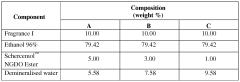
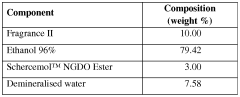
- The use of Neopentyl Glycol Diethylhexanoate as a fragrance modulator in compositions with specific vapor pressures, combined with ethanol, to enhance the longevity of fragrance perception without affecting odor stability, allowing for a selective approach to prolonging the tenacity of perfumes.
Regulatory Compliance for Fragrance Ingredients
Regulatory compliance is a critical aspect of integrating dipropylene glycol (DPG) into long-lasting perfumes. The fragrance industry is subject to stringent regulations to ensure consumer safety and environmental protection. Understanding and adhering to these regulations is essential for successful product development and market entry.
In the United States, the Food and Drug Administration (FDA) oversees the regulation of fragrances under the Federal Food, Drug, and Cosmetic Act. While the FDA does not require pre-market approval for fragrances, it mandates that all ingredients, including DPG, must be safe for their intended use. The Cosmetic Ingredient Review (CIR) has evaluated DPG and deemed it safe for use in cosmetic products, including perfumes.
The European Union (EU) has more comprehensive regulations for fragrance ingredients through the Registration, Evaluation, Authorization, and Restriction of Chemicals (REACH) regulation and the Cosmetic Products Regulation. DPG must be registered under REACH if manufactured or imported in quantities of one tonne or more per year. The EU Cosmetic Products Regulation requires that all cosmetic products, including perfumes, undergo a safety assessment before being placed on the market.
Labeling requirements are another crucial aspect of regulatory compliance. In both the US and EU, perfumes containing DPG must list it as an ingredient on the product label. The International Nomenclature of Cosmetic Ingredients (INCI) name for DPG should be used, which is "Dipropylene Glycol."
Environmental regulations also play a role in the use of DPG in perfumes. Many countries have restrictions on volatile organic compounds (VOCs) in consumer products. While DPG is considered a low-volatility compound, perfume manufacturers must ensure that their overall formulations comply with VOC limits set by regulatory bodies such as the California Air Resources Board (CARB) in the United States.
Allergen regulations are particularly relevant to the fragrance industry. The EU requires the declaration of 26 fragrance allergens on product labels if they exceed certain concentration thresholds. While DPG itself is not on this list, perfume manufacturers must consider the potential allergenic properties of other ingredients used in combination with DPG.
To ensure compliance, perfume manufacturers should implement robust quality control measures and maintain detailed documentation of their formulations and safety assessments. Regular updates on regulatory changes and participation in industry associations can help companies stay informed about evolving compliance requirements.
In conclusion, integrating DPG into long-lasting perfumes requires a thorough understanding of and adherence to various regulatory frameworks. Compliance with these regulations not only ensures legal market access but also builds consumer trust and supports the long-term sustainability of fragrance products.
In the United States, the Food and Drug Administration (FDA) oversees the regulation of fragrances under the Federal Food, Drug, and Cosmetic Act. While the FDA does not require pre-market approval for fragrances, it mandates that all ingredients, including DPG, must be safe for their intended use. The Cosmetic Ingredient Review (CIR) has evaluated DPG and deemed it safe for use in cosmetic products, including perfumes.
The European Union (EU) has more comprehensive regulations for fragrance ingredients through the Registration, Evaluation, Authorization, and Restriction of Chemicals (REACH) regulation and the Cosmetic Products Regulation. DPG must be registered under REACH if manufactured or imported in quantities of one tonne or more per year. The EU Cosmetic Products Regulation requires that all cosmetic products, including perfumes, undergo a safety assessment before being placed on the market.
Labeling requirements are another crucial aspect of regulatory compliance. In both the US and EU, perfumes containing DPG must list it as an ingredient on the product label. The International Nomenclature of Cosmetic Ingredients (INCI) name for DPG should be used, which is "Dipropylene Glycol."
Environmental regulations also play a role in the use of DPG in perfumes. Many countries have restrictions on volatile organic compounds (VOCs) in consumer products. While DPG is considered a low-volatility compound, perfume manufacturers must ensure that their overall formulations comply with VOC limits set by regulatory bodies such as the California Air Resources Board (CARB) in the United States.
Allergen regulations are particularly relevant to the fragrance industry. The EU requires the declaration of 26 fragrance allergens on product labels if they exceed certain concentration thresholds. While DPG itself is not on this list, perfume manufacturers must consider the potential allergenic properties of other ingredients used in combination with DPG.
To ensure compliance, perfume manufacturers should implement robust quality control measures and maintain detailed documentation of their formulations and safety assessments. Regular updates on regulatory changes and participation in industry associations can help companies stay informed about evolving compliance requirements.
In conclusion, integrating DPG into long-lasting perfumes requires a thorough understanding of and adherence to various regulatory frameworks. Compliance with these regulations not only ensures legal market access but also builds consumer trust and supports the long-term sustainability of fragrance products.
Sustainability in Fragrance Development
Sustainability in fragrance development has become a critical focus in the perfume industry, particularly when integrating dipropylene glycol (DPG) for long-lasting perfumes. As consumers increasingly demand eco-friendly products, perfume manufacturers are exploring innovative ways to incorporate sustainable practices into their formulations and production processes.
One of the key aspects of sustainability in fragrance development is the sourcing of raw materials. When using DPG as a solvent and fixative in perfumes, companies are now prioritizing suppliers who produce this chemical through environmentally responsible methods. This includes utilizing renewable feedstocks and implementing energy-efficient production processes to minimize the carbon footprint associated with DPG manufacturing.
Water conservation is another crucial element in sustainable fragrance development. DPG's hygroscopic properties can be leveraged to create water-based perfume formulations, reducing the need for alcohol-based solvents. This approach not only conserves water but also decreases the environmental impact of volatile organic compounds (VOCs) typically associated with traditional perfume compositions.
The longevity of fragrances enhanced by DPG contributes to sustainability by reducing the frequency of product application and, consequently, the overall consumption of perfume products. This extended wear time translates to less packaging waste and a lower environmental impact from transportation and distribution.
Packaging innovations play a significant role in sustainable fragrance development. When formulating long-lasting perfumes with DPG, companies are exploring refillable and recyclable packaging options. These initiatives aim to minimize single-use plastics and reduce the overall waste generated by the fragrance industry.
Biodegradability is a growing concern in the perfume sector. Researchers are investigating ways to enhance the biodegradability of DPG-based fragrances without compromising their longevity. This involves developing novel molecular structures and exploring natural alternatives that can work synergistically with DPG to maintain fragrance performance while ensuring environmental safety.
The concept of circular economy is gaining traction in fragrance development. Companies are exploring ways to recycle and upcycle fragrance materials, including DPG-based formulations. This approach aims to minimize waste and maximize resource efficiency throughout the product lifecycle.
As the industry moves towards more sustainable practices, there is an increasing focus on transparency and traceability in the supply chain. Perfume manufacturers are implementing systems to track the origin and processing of DPG and other ingredients, ensuring compliance with environmental and ethical standards throughout the production process.
One of the key aspects of sustainability in fragrance development is the sourcing of raw materials. When using DPG as a solvent and fixative in perfumes, companies are now prioritizing suppliers who produce this chemical through environmentally responsible methods. This includes utilizing renewable feedstocks and implementing energy-efficient production processes to minimize the carbon footprint associated with DPG manufacturing.
Water conservation is another crucial element in sustainable fragrance development. DPG's hygroscopic properties can be leveraged to create water-based perfume formulations, reducing the need for alcohol-based solvents. This approach not only conserves water but also decreases the environmental impact of volatile organic compounds (VOCs) typically associated with traditional perfume compositions.
The longevity of fragrances enhanced by DPG contributes to sustainability by reducing the frequency of product application and, consequently, the overall consumption of perfume products. This extended wear time translates to less packaging waste and a lower environmental impact from transportation and distribution.
Packaging innovations play a significant role in sustainable fragrance development. When formulating long-lasting perfumes with DPG, companies are exploring refillable and recyclable packaging options. These initiatives aim to minimize single-use plastics and reduce the overall waste generated by the fragrance industry.
Biodegradability is a growing concern in the perfume sector. Researchers are investigating ways to enhance the biodegradability of DPG-based fragrances without compromising their longevity. This involves developing novel molecular structures and exploring natural alternatives that can work synergistically with DPG to maintain fragrance performance while ensuring environmental safety.
The concept of circular economy is gaining traction in fragrance development. Companies are exploring ways to recycle and upcycle fragrance materials, including DPG-based formulations. This approach aims to minimize waste and maximize resource efficiency throughout the product lifecycle.
As the industry moves towards more sustainable practices, there is an increasing focus on transparency and traceability in the supply chain. Perfume manufacturers are implementing systems to track the origin and processing of DPG and other ingredients, ensuring compliance with environmental and ethical standards throughout the production process.
Unlock deeper insights with Patsnap Eureka Quick Research — get a full tech report to explore trends and direct your research. Try now!
Generate Your Research Report Instantly with AI Agent
Supercharge your innovation with Patsnap Eureka AI Agent Platform!