

How to Push Electromagnetic Performance with Graphene Oxide?
Graphene Oxide EM Enhancement: Background and Objectives
Graphene oxide (GO) has emerged as a revolutionary material in the field of electromagnetic (EM) performance enhancement. This two-dimensional carbon-based nanomaterial, derived from the oxidation of graphite, possesses unique properties that make it highly attractive for various electromagnetic applications. The journey of GO in EM enhancement began with the discovery of graphene in 2004, which sparked intense research into its derivatives and potential applications.
The primary objective of enhancing electromagnetic performance with GO is to leverage its exceptional electrical, thermal, and mechanical properties to develop advanced materials and devices with superior EM characteristics. Researchers aim to exploit GO's high surface area, tunable electronic properties, and ability to be functionalized with various chemical groups to create novel solutions for electromagnetic shielding, absorption, and wave manipulation.
One of the key goals in this field is to address the growing demand for effective electromagnetic interference (EMI) shielding materials in electronics, telecommunications, and aerospace industries. As electronic devices become more compact and operate at higher frequencies, the need for lightweight, thin, and highly efficient EM shielding materials becomes increasingly critical. GO-based composites offer a promising avenue to meet these requirements.
Another significant objective is to develop GO-enhanced materials for radar absorption and stealth technology. The ability of GO to absorb electromagnetic waves across a wide frequency range makes it an ideal candidate for creating radar-absorbing materials (RAMs) with improved performance and reduced thickness compared to traditional solutions.
Researchers are also exploring the potential of GO in antenna design and wireless communication systems. The aim is to utilize GO's unique properties to create miniaturized antennas with enhanced bandwidth and efficiency, addressing the challenges posed by the rapid growth of 5G and IoT technologies.
Furthermore, the scientific community is focused on understanding the fundamental mechanisms behind GO's interaction with electromagnetic waves. This includes investigating how the oxygen-containing functional groups on GO's surface influence its EM properties and how these can be tailored for specific applications.
As the field progresses, there is a growing emphasis on developing scalable and cost-effective methods for producing GO-based EM materials. This involves optimizing synthesis techniques, exploring new composite formulations, and addressing challenges related to large-scale manufacturing and integration into existing products and systems.
In conclusion, the background and objectives of graphene oxide EM enhancement encompass a wide range of technological goals, from improving existing EM solutions to enabling entirely new applications. The ultimate aim is to harness the full potential of GO to push the boundaries of electromagnetic performance across various industries and technological domains.
Market Demand for Advanced EM Materials
The market demand for advanced electromagnetic (EM) materials has been steadily increasing across various industries, driven by the need for improved performance in electronic devices, telecommunications, and emerging technologies. Graphene oxide (GO) has emerged as a promising candidate in this field due to its unique properties and potential to enhance electromagnetic performance.
In the electronics industry, there is a growing demand for materials that can provide better electromagnetic shielding and absorption. As electronic devices become more compact and powerful, the need for effective EM interference mitigation becomes crucial. Graphene oxide-based composites have shown excellent potential in this area, offering superior shielding effectiveness compared to traditional materials.
The telecommunications sector is another major driver of demand for advanced EM materials. With the ongoing rollout of 5G networks and the anticipated development of 6G technologies, there is a pressing need for materials that can support higher frequencies and bandwidths. Graphene oxide's ability to manipulate electromagnetic waves at the nanoscale makes it an attractive option for developing high-performance antennas and waveguides.
In the aerospace and defense industries, there is a constant pursuit of lightweight materials with enhanced EM properties. Graphene oxide-based composites offer the potential to reduce the weight of EM shielding components while maintaining or improving their performance. This is particularly valuable in applications such as aircraft and satellite construction, where weight reduction directly translates to fuel efficiency and payload capacity.
The automotive industry is also showing increased interest in advanced EM materials, particularly with the rise of electric vehicles (EVs) and autonomous driving technologies. Graphene oxide-based materials could play a crucial role in improving electromagnetic compatibility within vehicles, ensuring the proper functioning of sensitive electronic systems and reducing interference.
In the energy sector, the development of more efficient and compact power electronics is driving demand for materials with superior thermal and electrical properties. Graphene oxide's potential to enhance heat dissipation and electrical conductivity makes it an attractive option for next-generation power devices and energy storage systems.
The medical field is another area where advanced EM materials are gaining traction. Graphene oxide's unique properties could lead to improvements in medical imaging technologies, such as MRI and CT scans, by enhancing contrast and resolution. Additionally, its potential in targeted drug delivery systems and biosensors is generating interest in the pharmaceutical and healthcare industries.
As research continues to unveil new applications for graphene oxide in electromagnetic performance enhancement, the market demand is expected to grow further. Industries are increasingly recognizing the potential of GO-based materials to address current limitations and enable new functionalities in their products and systems.
Current Challenges in Graphene Oxide EM Performance
Despite the promising potential of graphene oxide (GO) in electromagnetic (EM) applications, several significant challenges hinder the full realization of its EM performance. One of the primary obstacles is the difficulty in achieving consistent and controllable electrical conductivity. The oxygen-containing functional groups on GO's surface, while beneficial for certain applications, can disrupt the sp2 carbon network, leading to reduced electrical conductivity and impaired EM shielding effectiveness.
Another major challenge lies in the scalable production of high-quality GO with uniform properties. Current synthesis methods often result in GO sheets with varying sizes, thicknesses, and degrees of oxidation, which directly impacts their EM performance. This lack of uniformity makes it challenging to predict and optimize the material's EM properties consistently across different batches or applications.
The integration of GO into composite materials for EM applications presents its own set of challenges. Achieving a homogeneous dispersion of GO sheets within a polymer matrix is crucial for optimal EM performance. However, the tendency of GO to agglomerate due to strong van der Waals interactions between sheets can lead to poor dispersion, resulting in inconsistent EM properties throughout the composite material.
Furthermore, the environmental stability of GO-based EM materials remains a concern. GO is known to be sensitive to humidity and temperature changes, which can alter its electrical and mechanical properties over time. This susceptibility to environmental factors poses challenges in maintaining long-term EM performance stability, especially in applications requiring consistent performance under varying conditions.
The tailoring of GO's EM properties through reduction or functionalization processes also presents challenges. While these methods can enhance conductivity and EM shielding effectiveness, precise control over the degree of reduction or the nature and density of functional groups is difficult to achieve. This lack of fine control can result in unpredictable changes in EM performance, making it challenging to design GO-based materials with specific EM characteristics.
Lastly, the development of standardized testing and characterization methods for GO's EM properties remains an ongoing challenge. The lack of universally accepted protocols for measuring and reporting EM performance metrics makes it difficult to compare results across different studies and hinders the establishment of benchmarks for GO-based EM materials.
Existing Methods to Enhance Graphene Oxide EM Properties
01 Electromagnetic shielding properties of graphene oxide
Graphene oxide exhibits excellent electromagnetic shielding properties due to its unique structure and high electrical conductivity. It can be used to create lightweight and effective electromagnetic shielding materials for various applications, including electronic devices and aerospace components.- Electromagnetic shielding properties of graphene oxide: Graphene oxide exhibits excellent electromagnetic shielding properties due to its unique structure and high electrical conductivity. It can be used to create effective electromagnetic interference (EMI) shielding materials for various applications, including electronic devices and aerospace components.
- Graphene oxide-based composites for electromagnetic applications: Composites incorporating graphene oxide show enhanced electromagnetic performance. These materials can be tailored for specific applications by combining graphene oxide with polymers, metals, or other nanoparticles, resulting in improved electromagnetic absorption, reflection, or transmission properties.
- Tunable electromagnetic properties of graphene oxide: The electromagnetic properties of graphene oxide can be tuned by controlling its oxidation level, reduction process, or functionalization. This allows for the development of materials with adjustable electromagnetic performance for various applications, such as sensors, antennas, and energy storage devices.
- Graphene oxide in electromagnetic wave absorption: Graphene oxide demonstrates excellent electromagnetic wave absorption capabilities across a wide frequency range. It can be used to develop lightweight and efficient absorbing materials for applications in radar stealth technology, electromagnetic compatibility, and microwave absorption.
- Graphene oxide-based electromagnetic sensors and devices: The unique electromagnetic properties of graphene oxide make it suitable for developing highly sensitive electromagnetic sensors and devices. These include electromagnetic field sensors, electromagnetic actuators, and electromagnetic energy harvesting devices with improved performance and efficiency.
02 Graphene oxide-based composites for electromagnetic wave absorption
Composites incorporating graphene oxide show enhanced electromagnetic wave absorption capabilities. These materials can be tailored to absorb specific frequency ranges, making them suitable for use in radar-absorbing materials, stealth technology, and electromagnetic interference (EMI) suppression applications.Expand Specific Solutions03 Tunable electromagnetic properties of graphene oxide
The electromagnetic properties of graphene oxide can be tuned by controlling its oxidation level, reduction process, and functionalization. This allows for the creation of materials with tailored electromagnetic responses for specific applications, such as sensors, antennas, and metamaterials.Expand Specific Solutions04 Graphene oxide in electromagnetic energy storage devices
Graphene oxide can be utilized in the development of high-performance electromagnetic energy storage devices, such as supercapacitors and batteries. Its large surface area and unique electronic properties contribute to improved energy storage capacity and charge-discharge characteristics.Expand Specific Solutions05 Graphene oxide for electromagnetic sensing and detection
The electromagnetic properties of graphene oxide make it suitable for use in various sensing and detection applications. It can be incorporated into sensors for detecting electromagnetic fields, radiation, and specific molecules, offering high sensitivity and rapid response times.Expand Specific Solutions
Key Players in Graphene Oxide Research and Development
The electromagnetic performance enhancement using graphene oxide is in a rapidly evolving phase, with significant market potential and ongoing research. The industry is transitioning from early-stage development to commercial applications, driven by the material's unique properties. Market size is expanding as various sectors, including electronics, energy storage, and telecommunications, explore graphene oxide's capabilities. Technologically, while progress is evident, full maturity remains distant. Leading institutions like Northwestern University, The University of Manchester, and Massachusetts Institute of Technology are at the forefront, conducting advanced research. Companies such as Toray Industries, Inc. and NEC Corp. are also making strides in practical applications, indicating a competitive landscape with both academic and industrial players vying for breakthroughs in this promising field.
Toray Industries, Inc.
Corning, Inc.
Breakthrough Innovations in Graphene Oxide EM Performance
- It adopts a three-block laminated structure design, including a back-reflective block, an electromagnetic absorber block and an impedance adapter block, and ensures uniform distribution of graphene nanosheets through air spraying of graphene nanosheet suspension and liquid resin infusion. and electromagnetic performance optimization.


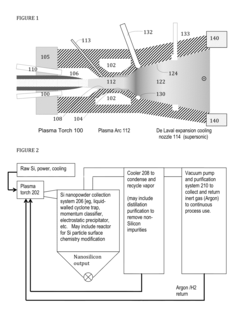
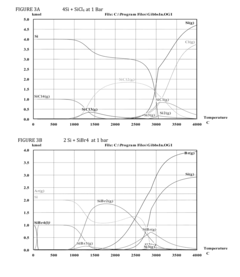
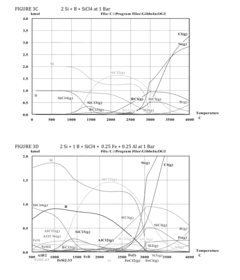
- The development of isentropic flash-quench silicon vapor processing and carbothermic reduction methods to produce high-purity silicon nanopowders with specific compositions, including boron, carbon, and other elements, which enhance energetic properties and stability.

Environmental Impact of Graphene Oxide Production and Use
The production and use of graphene oxide have significant environmental implications that warrant careful consideration. The synthesis of graphene oxide typically involves the oxidation of graphite using strong oxidizing agents, such as potassium permanganate and sulfuric acid, in a process known as the Hummers method. This process generates hazardous waste and potentially toxic byproducts, including heavy metals and acidic solutions, which require proper treatment and disposal to prevent environmental contamination.
The energy-intensive nature of graphene oxide production also contributes to its environmental footprint. The high temperatures and prolonged reaction times required for synthesis result in substantial energy consumption, often derived from fossil fuel sources. This energy demand indirectly leads to increased greenhouse gas emissions and contributes to climate change concerns.
Water usage is another critical environmental factor in graphene oxide production. The synthesis and purification processes require large volumes of water, potentially straining local water resources in areas of production. Additionally, the wastewater generated during these processes may contain trace amounts of graphene oxide nanoparticles, which could pose risks to aquatic ecosystems if not properly treated.
The use of graphene oxide in various applications presents both environmental challenges and opportunities. On one hand, the nanomaterial's potential to improve energy storage devices, water purification systems, and lightweight materials could lead to more efficient and environmentally friendly technologies. For instance, graphene oxide-based membranes have shown promise in desalination and water treatment applications, potentially reducing energy consumption in these processes.
However, the release of graphene oxide nanoparticles into the environment during product use or disposal raises concerns about their potential ecological impacts. The small size and unique properties of these particles may allow them to interact with living organisms in ways that are not yet fully understood. Studies have suggested potential toxicity to certain aquatic organisms and the ability of graphene oxide to accumulate in food chains.
Recycling and end-of-life management of graphene oxide-containing products present additional environmental challenges. The integration of graphene oxide into complex materials may complicate recycling processes and increase the likelihood of improper disposal. This could lead to the accumulation of nanomaterials in landfills or their release into natural ecosystems.
To address these environmental concerns, ongoing research is focused on developing more sustainable production methods for graphene oxide, such as electrochemical exfoliation and green reduction techniques. These approaches aim to reduce the use of harsh chemicals and minimize waste generation. Additionally, efforts are being made to improve the recyclability of graphene oxide-based products and to establish proper disposal protocols to mitigate potential environmental risks.
Scalability and Cost-effectiveness Analysis
The scalability and cost-effectiveness of graphene oxide (GO) in enhancing electromagnetic performance are critical factors for its widespread adoption in various applications. The production of GO has seen significant advancements in recent years, moving from laboratory-scale synthesis to industrial-scale manufacturing. Large-scale production methods, such as modified Hummers' method and chemical vapor deposition (CVD), have been developed to meet the growing demand for GO-based materials.
However, challenges remain in achieving consistent quality and properties across large batches of GO. The oxidation process, which is crucial for GO production, can be difficult to control precisely at scale, leading to variations in the final product's electromagnetic properties. This inconsistency can impact the performance of GO-based devices and materials, potentially limiting their applicability in high-precision electromagnetic applications.
Cost-effectiveness is another key consideration in the scalability of GO for electromagnetic performance enhancement. While the raw material, graphite, is relatively inexpensive, the production process of GO involves multiple steps and requires specialized equipment and chemicals. The purification and functionalization stages, in particular, can be resource-intensive and time-consuming, contributing significantly to the overall cost.
Recent research has focused on developing more efficient and economical production methods. For instance, environmentally friendly approaches using less hazardous chemicals and lower energy consumption have been proposed. These methods not only reduce production costs but also align with sustainable manufacturing practices, potentially making GO more attractive for large-scale industrial applications.
The integration of GO into existing manufacturing processes for electromagnetic devices presents both opportunities and challenges. On one hand, GO's unique properties allow for the enhancement of electromagnetic performance without significant changes to existing product designs. On the other hand, the incorporation of GO may require modifications to manufacturing equipment and processes, which could incur additional costs.
As the demand for high-performance electromagnetic materials continues to grow, economies of scale are expected to play a crucial role in improving the cost-effectiveness of GO production. Increased production volumes could lead to more efficient use of resources, streamlined processes, and ultimately, lower costs per unit. This trend could make GO-enhanced electromagnetic devices more competitive in the market, potentially accelerating their adoption across various industries.
In conclusion, while challenges exist in scaling up GO production for electromagnetic applications, ongoing research and technological advancements are paving the way for more efficient and cost-effective manufacturing processes. The successful resolution of these scalability and cost issues will be crucial in realizing the full potential of GO in pushing electromagnetic performance to new heights.