Integrating Machine Learning In X-ray Diffraction Processing
FEB 27, 202610 MIN READ
Generate Your Research Report Instantly with AI Agent
PatSnap Eureka helps you evaluate technical feasibility & market potential.
ML-XRD Integration Background and Technical Objectives
X-ray diffraction has served as a cornerstone analytical technique in materials science, crystallography, and structural biology for over a century since its discovery by Max von Laue in 1912. The technique exploits the wave nature of X-rays to probe atomic-scale structures, providing invaluable insights into crystal lattices, phase compositions, and molecular arrangements. Traditional XRD processing has relied heavily on established mathematical frameworks including Bragg's law, Rietveld refinement, and Fourier transform methods to extract structural information from diffraction patterns.
The evolution of XRD technology has progressed through distinct phases, beginning with photographic detection methods in the early 20th century, advancing to electronic detectors in the 1960s, and culminating in modern high-throughput synchrotron and laboratory-based systems capable of generating massive datasets. Contemporary XRD instruments can produce thousands of diffraction patterns daily, creating unprecedented data volumes that challenge conventional analysis approaches.
Machine learning emerged as a transformative force across scientific disciplines in the 21st century, demonstrating remarkable capabilities in pattern recognition, predictive modeling, and automated decision-making. The convergence of ML with XRD processing represents a natural evolution driven by the increasing complexity of materials systems and the exponential growth in data generation rates. Early applications focused on phase identification and peak fitting, but the scope has rapidly expanded to encompass structure prediction, property estimation, and real-time analysis.
The integration of machine learning into XRD processing addresses several critical limitations of traditional methods. Conventional approaches often require extensive manual intervention, expert knowledge for pattern interpretation, and significant computational time for complex refinements. These constraints become particularly problematic when dealing with multi-phase systems, nanocrystalline materials, or time-resolved measurements where rapid analysis is essential.
The primary technical objectives of ML-XRD integration encompass multiple dimensions of analytical enhancement. Automated phase identification represents a fundamental goal, enabling rapid classification of crystalline phases without extensive database searches or expert interpretation. Advanced pattern recognition algorithms can identify subtle features in diffraction data that might escape human analysis, particularly in cases involving overlapping peaks or weak reflections.
Structure refinement acceleration constitutes another critical objective, where machine learning algorithms can optimize fitting parameters more efficiently than traditional least-squares methods. This capability is particularly valuable for complex structures with numerous refinable parameters or when processing large datasets requiring consistent analysis protocols.
Predictive modeling capabilities aim to establish direct relationships between diffraction patterns and material properties, bypassing traditional structure-property correlations. This approach could enable rapid screening of materials for specific applications based solely on their diffraction signatures, significantly accelerating materials discovery workflows.
Real-time analysis integration represents an ambitious objective targeting in-situ and operando studies where immediate feedback is crucial for process control or experimental optimization. Machine learning models trained on extensive datasets could provide instantaneous structural insights during dynamic processes, enabling adaptive experimental strategies and improved process understanding.
The evolution of XRD technology has progressed through distinct phases, beginning with photographic detection methods in the early 20th century, advancing to electronic detectors in the 1960s, and culminating in modern high-throughput synchrotron and laboratory-based systems capable of generating massive datasets. Contemporary XRD instruments can produce thousands of diffraction patterns daily, creating unprecedented data volumes that challenge conventional analysis approaches.
Machine learning emerged as a transformative force across scientific disciplines in the 21st century, demonstrating remarkable capabilities in pattern recognition, predictive modeling, and automated decision-making. The convergence of ML with XRD processing represents a natural evolution driven by the increasing complexity of materials systems and the exponential growth in data generation rates. Early applications focused on phase identification and peak fitting, but the scope has rapidly expanded to encompass structure prediction, property estimation, and real-time analysis.
The integration of machine learning into XRD processing addresses several critical limitations of traditional methods. Conventional approaches often require extensive manual intervention, expert knowledge for pattern interpretation, and significant computational time for complex refinements. These constraints become particularly problematic when dealing with multi-phase systems, nanocrystalline materials, or time-resolved measurements where rapid analysis is essential.
The primary technical objectives of ML-XRD integration encompass multiple dimensions of analytical enhancement. Automated phase identification represents a fundamental goal, enabling rapid classification of crystalline phases without extensive database searches or expert interpretation. Advanced pattern recognition algorithms can identify subtle features in diffraction data that might escape human analysis, particularly in cases involving overlapping peaks or weak reflections.
Structure refinement acceleration constitutes another critical objective, where machine learning algorithms can optimize fitting parameters more efficiently than traditional least-squares methods. This capability is particularly valuable for complex structures with numerous refinable parameters or when processing large datasets requiring consistent analysis protocols.
Predictive modeling capabilities aim to establish direct relationships between diffraction patterns and material properties, bypassing traditional structure-property correlations. This approach could enable rapid screening of materials for specific applications based solely on their diffraction signatures, significantly accelerating materials discovery workflows.
Real-time analysis integration represents an ambitious objective targeting in-situ and operando studies where immediate feedback is crucial for process control or experimental optimization. Machine learning models trained on extensive datasets could provide instantaneous structural insights during dynamic processes, enabling adaptive experimental strategies and improved process understanding.
Market Demand for AI-Enhanced XRD Analysis Solutions
The global X-ray diffraction market is experiencing unprecedented growth driven by increasing demand for advanced analytical capabilities across multiple industries. Traditional XRD analysis methods, while reliable, face significant limitations in processing speed, pattern interpretation accuracy, and handling complex multi-phase materials. These challenges have created substantial market opportunities for AI-enhanced solutions that can automate phase identification, reduce analysis time, and improve measurement precision.
Pharmaceutical and biotechnology sectors represent the largest demand segment for AI-enhanced XRD solutions. Drug development processes require rapid polymorph screening and crystalline structure analysis, where machine learning algorithms can significantly accelerate compound characterization and quality control procedures. The growing emphasis on personalized medicine and novel drug formulations has intensified the need for sophisticated analytical tools capable of handling complex crystallographic data.
Materials science and engineering applications constitute another major market driver. Advanced manufacturing industries, including aerospace, automotive, and electronics, require precise material characterization for quality assurance and product development. AI-enhanced XRD systems can provide real-time analysis of material properties, enabling faster decision-making in production environments and reducing costly material failures.
The semiconductor industry presents substantial growth potential for AI-integrated XRD solutions. As device miniaturization continues and new materials are introduced, traditional analysis methods struggle with thin film characterization and strain analysis. Machine learning algorithms can enhance sensitivity and provide automated defect detection capabilities essential for maintaining manufacturing yields.
Academic and research institutions drive demand for comprehensive AI-enhanced XRD platforms. Universities and national laboratories require versatile systems capable of handling diverse research applications, from geological sample analysis to novel material discovery. The integration of machine learning enables researchers to process larger datasets and identify subtle patterns that might be overlooked through conventional analysis methods.
Emerging markets in Asia-Pacific and Latin America show increasing adoption rates for advanced XRD technologies. Government investments in research infrastructure and growing industrial sectors create opportunities for AI-enhanced solutions. Local manufacturers seek competitive advantages through improved analytical capabilities, driving demand for cost-effective yet sophisticated XRD systems.
The market trend toward automation and digitalization across industries further amplifies demand for AI-enhanced XRD solutions. Companies seek to reduce dependence on specialized personnel while maintaining analytical accuracy, making machine learning integration an attractive proposition for operational efficiency improvements.
Pharmaceutical and biotechnology sectors represent the largest demand segment for AI-enhanced XRD solutions. Drug development processes require rapid polymorph screening and crystalline structure analysis, where machine learning algorithms can significantly accelerate compound characterization and quality control procedures. The growing emphasis on personalized medicine and novel drug formulations has intensified the need for sophisticated analytical tools capable of handling complex crystallographic data.
Materials science and engineering applications constitute another major market driver. Advanced manufacturing industries, including aerospace, automotive, and electronics, require precise material characterization for quality assurance and product development. AI-enhanced XRD systems can provide real-time analysis of material properties, enabling faster decision-making in production environments and reducing costly material failures.
The semiconductor industry presents substantial growth potential for AI-integrated XRD solutions. As device miniaturization continues and new materials are introduced, traditional analysis methods struggle with thin film characterization and strain analysis. Machine learning algorithms can enhance sensitivity and provide automated defect detection capabilities essential for maintaining manufacturing yields.
Academic and research institutions drive demand for comprehensive AI-enhanced XRD platforms. Universities and national laboratories require versatile systems capable of handling diverse research applications, from geological sample analysis to novel material discovery. The integration of machine learning enables researchers to process larger datasets and identify subtle patterns that might be overlooked through conventional analysis methods.
Emerging markets in Asia-Pacific and Latin America show increasing adoption rates for advanced XRD technologies. Government investments in research infrastructure and growing industrial sectors create opportunities for AI-enhanced solutions. Local manufacturers seek competitive advantages through improved analytical capabilities, driving demand for cost-effective yet sophisticated XRD systems.
The market trend toward automation and digitalization across industries further amplifies demand for AI-enhanced XRD solutions. Companies seek to reduce dependence on specialized personnel while maintaining analytical accuracy, making machine learning integration an attractive proposition for operational efficiency improvements.
Current XRD Processing Limitations and ML Opportunities
Traditional X-ray diffraction processing faces significant computational bottlenecks that limit its effectiveness in modern research and industrial applications. Conventional peak identification algorithms often struggle with overlapping peaks, background noise, and complex multi-phase materials, requiring extensive manual intervention and expert interpretation. The process typically involves time-consuming iterative refinement procedures that can take hours or days for complex samples, creating substantial delays in materials characterization workflows.
Phase identification represents another critical limitation in current XRD processing methodologies. Standard database matching approaches rely on simplified pattern recognition that frequently fails when dealing with solid solutions, nanocrystalline materials, or samples with preferred orientation. The accuracy of quantitative phase analysis remains heavily dependent on the quality of reference patterns and the operator's expertise, leading to inconsistent results across different laboratories and analysts.
Data quality issues further compound these challenges, as traditional processing methods struggle to effectively handle noisy datasets, instrumental artifacts, and systematic errors. Current denoising techniques often result in loss of critical structural information, while artifact correction requires manual parameter adjustment that varies significantly between different instrument configurations and sample types.
Machine learning presents transformative opportunities to address these fundamental limitations through advanced pattern recognition capabilities. Deep learning algorithms can automatically identify complex peak patterns and phase relationships that exceed human analytical capabilities, potentially revolutionizing phase identification accuracy and speed. Neural networks trained on extensive XRD databases can recognize subtle spectral features and correlations that traditional algorithms miss entirely.
Automated data preprocessing represents another significant ML opportunity, where algorithms can intelligently remove noise, correct baseline drift, and compensate for instrumental effects without manual intervention. Machine learning models can learn optimal preprocessing parameters from training data, ensuring consistent and reproducible results across different experimental conditions and instrument configurations.
Predictive modeling capabilities offer perhaps the most exciting prospects, enabling ML systems to predict material properties directly from XRD patterns without requiring complete structural refinement. This approach could dramatically accelerate materials discovery workflows by providing rapid property screening capabilities that bypass traditional time-intensive analysis procedures, opening new possibilities for high-throughput materials characterization and automated quality control in industrial applications.
Phase identification represents another critical limitation in current XRD processing methodologies. Standard database matching approaches rely on simplified pattern recognition that frequently fails when dealing with solid solutions, nanocrystalline materials, or samples with preferred orientation. The accuracy of quantitative phase analysis remains heavily dependent on the quality of reference patterns and the operator's expertise, leading to inconsistent results across different laboratories and analysts.
Data quality issues further compound these challenges, as traditional processing methods struggle to effectively handle noisy datasets, instrumental artifacts, and systematic errors. Current denoising techniques often result in loss of critical structural information, while artifact correction requires manual parameter adjustment that varies significantly between different instrument configurations and sample types.
Machine learning presents transformative opportunities to address these fundamental limitations through advanced pattern recognition capabilities. Deep learning algorithms can automatically identify complex peak patterns and phase relationships that exceed human analytical capabilities, potentially revolutionizing phase identification accuracy and speed. Neural networks trained on extensive XRD databases can recognize subtle spectral features and correlations that traditional algorithms miss entirely.
Automated data preprocessing represents another significant ML opportunity, where algorithms can intelligently remove noise, correct baseline drift, and compensate for instrumental effects without manual intervention. Machine learning models can learn optimal preprocessing parameters from training data, ensuring consistent and reproducible results across different experimental conditions and instrument configurations.
Predictive modeling capabilities offer perhaps the most exciting prospects, enabling ML systems to predict material properties directly from XRD patterns without requiring complete structural refinement. This approach could dramatically accelerate materials discovery workflows by providing rapid property screening capabilities that bypass traditional time-intensive analysis procedures, opening new possibilities for high-throughput materials characterization and automated quality control in industrial applications.
Existing ML Algorithms for XRD Pattern Analysis
01 X-ray diffraction data acquisition and detection systems
Advanced detection systems and methods for acquiring X-ray diffraction data have been developed to improve the quality and efficiency of diffraction measurements. These systems incorporate specialized detectors, optimized geometries, and enhanced signal processing capabilities to capture diffraction patterns with higher resolution and sensitivity. The technology enables better characterization of crystalline materials and structures through improved data collection methods.- X-ray diffraction data acquisition and detection systems: Advanced detection systems and methods for acquiring X-ray diffraction data have been developed to improve the quality and efficiency of diffraction measurements. These systems incorporate specialized detectors, optimized geometries, and enhanced signal processing capabilities to capture diffraction patterns with higher resolution and sensitivity. The technology enables better characterization of crystalline materials and structures through improved data collection methods.
- X-ray diffraction pattern analysis and processing algorithms: Computational methods and algorithms have been developed for processing and analyzing X-ray diffraction patterns to extract structural information. These techniques involve sophisticated data processing approaches including peak identification, background subtraction, pattern matching, and phase analysis. The methods enable automated interpretation of diffraction data and determination of crystallographic parameters with improved accuracy and speed.
- X-ray diffraction imaging and visualization techniques: Imaging technologies have been developed to visualize and map X-ray diffraction data in two or three dimensions. These techniques allow for spatial mapping of crystalline phases, orientation analysis, and strain distribution measurements. The methods combine diffraction measurements with scanning or imaging capabilities to provide comprehensive structural characterization across sample areas.
- X-ray diffraction instrumentation and apparatus design: Novel instrument designs and apparatus configurations have been developed for X-ray diffraction measurements. These innovations include optimized source-sample-detector geometries, specialized sample stages, environmental control systems, and compact or portable diffraction systems. The designs aim to enhance measurement capabilities, expand application ranges, and improve ease of use for various analytical requirements.
- X-ray diffraction applications for material characterization: Specialized X-ray diffraction methods have been developed for characterizing specific types of materials and structures. These applications include thin film analysis, powder diffraction, texture analysis, residual stress measurement, and in-situ studies under various conditions. The techniques are tailored to address specific analytical challenges in materials science, quality control, and research applications.
02 X-ray diffraction pattern analysis and interpretation methods
Computational methods and algorithms have been developed for analyzing and interpreting X-ray diffraction patterns to extract structural information from materials. These techniques involve processing diffraction data to identify crystal structures, determine lattice parameters, and characterize material properties. Advanced software tools enable automated pattern recognition, phase identification, and quantitative analysis of diffraction results.Expand Specific Solutions03 X-ray diffraction imaging and mapping techniques
Imaging techniques utilizing X-ray diffraction enable spatial mapping of crystallographic properties across samples. These methods combine diffraction analysis with scanning capabilities to create two-dimensional or three-dimensional maps showing variations in crystal structure, orientation, and composition. The technology is particularly useful for studying heterogeneous materials and identifying spatial distributions of different phases.Expand Specific Solutions04 X-ray diffraction apparatus and instrumentation design
Specialized apparatus and instrumentation configurations have been designed to optimize X-ray diffraction measurements for various applications. These designs incorporate innovative geometries, beam conditioning elements, sample stages, and environmental control systems. The instrumentation improvements enable measurements under diverse conditions and enhance the versatility of diffraction analysis for different sample types and research requirements.Expand Specific Solutions05 X-ray diffraction data processing and correction algorithms
Sophisticated data processing algorithms have been developed to correct artifacts, reduce noise, and enhance the accuracy of X-ray diffraction measurements. These methods address various sources of error including background subtraction, absorption corrections, geometric distortions, and instrumental effects. The processing techniques improve the reliability of structural determinations and enable more precise quantitative analysis of diffraction data.Expand Specific Solutions
Key Players in ML-XRD Integration Market
The competitive landscape for integrating machine learning in X-ray diffraction processing represents a rapidly evolving market at the intersection of traditional analytical instrumentation and advanced AI technologies. The industry is transitioning from a mature, hardware-centric phase to an emerging software-enhanced era, with market growth driven by increasing demand for automated materials analysis and faster data interpretation. Technology maturity varies significantly across players, with established X-ray equipment manufacturers like Rigaku Corp., Bruker AXS, JEOL Ltd., and Shimadzu Corp. leveraging their domain expertise to integrate ML capabilities into existing platforms. Healthcare imaging giants including Siemens Healthineers, Philips, and Canon Medical Systems are applying their AI experience to diffraction applications. Meanwhile, specialized companies like Xnovo Technology and research institutions such as Chinese Academy of Sciences are pioneering novel ML-enhanced diffraction techniques. Tech leaders like NVIDIA provide essential computational infrastructure, while Adobe contributes advanced image processing algorithms, creating a diverse ecosystem spanning hardware manufacturers, software developers, and research organizations.
Rigaku Corp.
Technical Solution: Rigaku has developed advanced machine learning algorithms integrated into their X-ray diffraction systems, particularly focusing on automated phase identification and quantitative analysis. Their SmartLab Guidance system incorporates AI-driven measurement planning and real-time data optimization. The company's ML approach includes pattern recognition algorithms that can automatically identify crystal phases from diffraction patterns, reducing analysis time from hours to minutes. Their neural network-based approach enhances peak detection accuracy and handles complex overlapping peaks in multi-phase materials. The system also features predictive maintenance capabilities using ML to monitor instrument performance and predict potential issues before they affect data quality.
Strengths: Industry-leading expertise in XRD instrumentation with comprehensive ML integration, strong automated phase identification capabilities. Weaknesses: High cost of implementation, requires significant computational resources for complex analyses.
Shimadzu Corp.
Technical Solution: Shimadzu has developed ML-enhanced X-ray diffraction analysis systems that focus on materials characterization and quality control applications. Their approach integrates machine learning algorithms for automated phase identification in industrial materials, particularly in steel and ceramic industries. The system employs support vector machines and random forest algorithms for classification of diffraction patterns, enabling rapid quality assessment in manufacturing environments. Their ML models are trained on extensive databases of industrial materials, providing high accuracy in identifying common phases and detecting anomalies. The company's solution includes real-time monitoring capabilities that can detect phase transformations during heat treatment processes, providing immediate feedback for process optimization in manufacturing settings.
Strengths: Strong industrial applications focus, real-time monitoring capabilities, extensive materials database integration. Weaknesses: Limited research-grade capabilities compared to specialized XRD companies, narrower scope of ML applications.
Core ML Innovations in Crystallographic Data Processing
Information processing system, information processing method and program
PatentPendingUS20250076225A1
Innovation
- An information processing system that includes a data group acquisition unit, a subclass setting unit, a crystalline phase selection unit, and a profile generation unit, which reduces the number of combinations of crystalline phase information by setting them into subclasses, thereby accelerating the learning process for neural networks.


System and method for x-ray diffraction mineral composition analysis based on machine learning using domain knowledge
PatentWO2025009653A1
Innovation
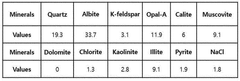
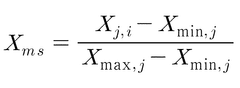
- A machine learning-based system using a clustering model and mineral composition analysis model to classify and estimate sediment X-ray diffraction data, employing preprocessing techniques like min-max scaling, and deep learning to automate the classification and analysis of X-ray diffraction data, allowing for the identification of general and specific composition data.

Data Privacy and Security in ML-XRD Systems
The integration of machine learning algorithms in X-ray diffraction processing systems introduces significant data privacy and security challenges that require comprehensive consideration. XRD data often contains sensitive information about material compositions, crystal structures, and proprietary research findings, making it a valuable target for industrial espionage and intellectual property theft.
Data encryption represents the first line of defense in ML-XRD systems. Both data at rest and data in transit must be protected using advanced encryption standards such as AES-256. This includes raw diffraction patterns, processed datasets, trained model parameters, and analytical results. Cloud-based ML-XRD platforms face additional challenges as data traverses multiple network layers and storage systems, requiring end-to-end encryption protocols.
Access control mechanisms must be implemented with role-based permissions to ensure that only authorized personnel can access specific datasets and analytical functions. Multi-factor authentication and zero-trust security models are becoming standard practices in enterprise ML-XRD deployments. Additionally, audit trails must track all data access, model training activities, and result exports to maintain compliance with regulatory requirements.
Federated learning approaches offer promising solutions for collaborative XRD research while preserving data privacy. This technique allows multiple institutions to train shared ML models without directly sharing their proprietary diffraction datasets. Each participant trains the model locally and only shares model updates, significantly reducing privacy risks while enabling broader scientific collaboration.
Data anonymization and differential privacy techniques are crucial for protecting sensitive research information. These methods add controlled noise to datasets or remove identifying characteristics while preserving the statistical properties necessary for effective machine learning. However, implementing these techniques in XRD data requires careful consideration of how modifications might affect peak positions, intensities, and phase identification accuracy.
Secure model deployment presents additional challenges, particularly when ML-XRD systems operate in distributed environments or edge computing scenarios. Model parameters themselves can reveal information about training data, necessitating techniques such as homomorphic encryption or secure multi-party computation for sensitive applications. Regular security assessments and penetration testing are essential to identify vulnerabilities in these complex systems.
Data encryption represents the first line of defense in ML-XRD systems. Both data at rest and data in transit must be protected using advanced encryption standards such as AES-256. This includes raw diffraction patterns, processed datasets, trained model parameters, and analytical results. Cloud-based ML-XRD platforms face additional challenges as data traverses multiple network layers and storage systems, requiring end-to-end encryption protocols.
Access control mechanisms must be implemented with role-based permissions to ensure that only authorized personnel can access specific datasets and analytical functions. Multi-factor authentication and zero-trust security models are becoming standard practices in enterprise ML-XRD deployments. Additionally, audit trails must track all data access, model training activities, and result exports to maintain compliance with regulatory requirements.
Federated learning approaches offer promising solutions for collaborative XRD research while preserving data privacy. This technique allows multiple institutions to train shared ML models without directly sharing their proprietary diffraction datasets. Each participant trains the model locally and only shares model updates, significantly reducing privacy risks while enabling broader scientific collaboration.
Data anonymization and differential privacy techniques are crucial for protecting sensitive research information. These methods add controlled noise to datasets or remove identifying characteristics while preserving the statistical properties necessary for effective machine learning. However, implementing these techniques in XRD data requires careful consideration of how modifications might affect peak positions, intensities, and phase identification accuracy.
Secure model deployment presents additional challenges, particularly when ML-XRD systems operate in distributed environments or edge computing scenarios. Model parameters themselves can reveal information about training data, necessitating techniques such as homomorphic encryption or secure multi-party computation for sensitive applications. Regular security assessments and penetration testing are essential to identify vulnerabilities in these complex systems.
Standardization Challenges for ML-XRD Integration
The integration of machine learning with X-ray diffraction processing faces significant standardization challenges that impede widespread adoption and interoperability across different platforms and institutions. The absence of unified data formats represents one of the most pressing issues, as XRD data is currently stored in numerous proprietary formats that vary between instrument manufacturers and software vendors. This fragmentation creates substantial barriers for developing universal ML models that can process data from diverse sources without extensive preprocessing and format conversion procedures.
Data quality and preprocessing standards constitute another critical challenge area. XRD measurements are highly sensitive to experimental conditions, sample preparation methods, and instrumental parameters. Without standardized protocols for data collection, noise reduction, and baseline correction, ML models trained on datasets from one laboratory may perform poorly when applied to data from different facilities. The lack of consensus on essential metadata requirements further complicates model reproducibility and transferability.
Model validation and performance metrics present additional standardization hurdles. The XRD community currently lacks agreed-upon benchmarks and evaluation criteria for assessing ML model performance across different applications such as phase identification, quantitative analysis, and structure refinement. This absence of standardized validation protocols makes it difficult to compare different ML approaches objectively and establish best practices for model development and deployment.
Interoperability between existing XRD software ecosystems and emerging ML frameworks remains problematic. Most traditional XRD analysis software packages were not designed with ML integration in mind, leading to compatibility issues and workflow disruptions. The development of standardized APIs and communication protocols is essential for seamless integration of ML capabilities into established XRD analysis pipelines.
Training data standardization poses unique challenges due to the diversity of XRD applications and sample types. Creating comprehensive, well-annotated datasets that represent the full spectrum of crystallographic systems and experimental conditions requires coordinated efforts across multiple institutions. The establishment of data sharing protocols and quality assurance standards is crucial for building robust ML models with broad applicability.
Addressing these standardization challenges requires collaborative efforts from instrument manufacturers, software developers, research institutions, and international crystallographic organizations to establish comprehensive guidelines and protocols that facilitate effective ML-XRD integration while maintaining scientific rigor and reproducibility.
Data quality and preprocessing standards constitute another critical challenge area. XRD measurements are highly sensitive to experimental conditions, sample preparation methods, and instrumental parameters. Without standardized protocols for data collection, noise reduction, and baseline correction, ML models trained on datasets from one laboratory may perform poorly when applied to data from different facilities. The lack of consensus on essential metadata requirements further complicates model reproducibility and transferability.
Model validation and performance metrics present additional standardization hurdles. The XRD community currently lacks agreed-upon benchmarks and evaluation criteria for assessing ML model performance across different applications such as phase identification, quantitative analysis, and structure refinement. This absence of standardized validation protocols makes it difficult to compare different ML approaches objectively and establish best practices for model development and deployment.
Interoperability between existing XRD software ecosystems and emerging ML frameworks remains problematic. Most traditional XRD analysis software packages were not designed with ML integration in mind, leading to compatibility issues and workflow disruptions. The development of standardized APIs and communication protocols is essential for seamless integration of ML capabilities into established XRD analysis pipelines.
Training data standardization poses unique challenges due to the diversity of XRD applications and sample types. Creating comprehensive, well-annotated datasets that represent the full spectrum of crystallographic systems and experimental conditions requires coordinated efforts across multiple institutions. The establishment of data sharing protocols and quality assurance standards is crucial for building robust ML models with broad applicability.
Addressing these standardization challenges requires collaborative efforts from instrument manufacturers, software developers, research institutions, and international crystallographic organizations to establish comprehensive guidelines and protocols that facilitate effective ML-XRD integration while maintaining scientific rigor and reproducibility.
Unlock deeper insights with PatSnap Eureka Quick Research — get a full tech report to explore trends and direct your research. Try now!
Generate Your Research Report Instantly with AI Agent
Supercharge your innovation with PatSnap Eureka AI Agent Platform!