Optimizing X-ray Diffraction For Thermoelectric Material Studies
FEB 27, 20269 MIN READ
Generate Your Research Report Instantly with AI Agent
PatSnap Eureka helps you evaluate technical feasibility & market potential.
X-ray Diffraction in Thermoelectric Research Background and Goals
X-ray diffraction has emerged as a cornerstone analytical technique in thermoelectric materials research, evolving from its initial crystallographic applications in the early 20th century to become an indispensable tool for understanding structure-property relationships in energy conversion materials. The technique's ability to provide detailed atomic-scale structural information makes it particularly valuable for investigating the complex crystal structures that govern thermoelectric performance.
The historical development of XRD in thermoelectric research can be traced back to the 1950s when researchers first began systematically studying the crystal structures of bismuth telluride and lead telluride compounds. Over subsequent decades, advances in X-ray instrumentation, including the development of high-resolution diffractometers and synchrotron radiation sources, have dramatically expanded the technique's capabilities for thermoelectric material characterization.
Modern thermoelectric research demands increasingly sophisticated structural analysis capabilities to address the complex challenges of optimizing the thermoelectric figure of merit ZT. The intricate relationship between crystal structure, phonon transport, and electronic properties requires precise determination of lattice parameters, atomic positions, thermal displacement parameters, and defect structures. Traditional powder diffraction methods, while valuable, often lack the resolution and sensitivity needed to detect subtle structural features that significantly impact thermoelectric performance.
The primary technical objectives for optimizing XRD in thermoelectric studies encompass several critical areas. Enhanced resolution and sensitivity are essential for detecting minor phase impurities, structural distortions, and compositional variations that can dramatically affect material properties. Temperature-dependent measurements require specialized sample environments and data collection strategies to capture structural evolution across operating temperature ranges.
Advanced data analysis methodologies represent another crucial optimization target. Rietveld refinement techniques must be adapted to handle the complex structural models typical of thermoelectric materials, including anharmonic thermal motion, disorder, and incommensurate modulations. Integration with complementary characterization techniques, such as electron microscopy and neutron scattering, demands sophisticated data correlation and interpretation frameworks.
The ultimate goal involves establishing standardized protocols for XRD-based thermoelectric material evaluation that can reliably predict performance characteristics from structural parameters. This requires developing quantitative structure-property relationships that account for the multiscale nature of thermoelectric transport phenomena, from atomic-level defects to mesoscale grain boundaries and interfaces.
The historical development of XRD in thermoelectric research can be traced back to the 1950s when researchers first began systematically studying the crystal structures of bismuth telluride and lead telluride compounds. Over subsequent decades, advances in X-ray instrumentation, including the development of high-resolution diffractometers and synchrotron radiation sources, have dramatically expanded the technique's capabilities for thermoelectric material characterization.
Modern thermoelectric research demands increasingly sophisticated structural analysis capabilities to address the complex challenges of optimizing the thermoelectric figure of merit ZT. The intricate relationship between crystal structure, phonon transport, and electronic properties requires precise determination of lattice parameters, atomic positions, thermal displacement parameters, and defect structures. Traditional powder diffraction methods, while valuable, often lack the resolution and sensitivity needed to detect subtle structural features that significantly impact thermoelectric performance.
The primary technical objectives for optimizing XRD in thermoelectric studies encompass several critical areas. Enhanced resolution and sensitivity are essential for detecting minor phase impurities, structural distortions, and compositional variations that can dramatically affect material properties. Temperature-dependent measurements require specialized sample environments and data collection strategies to capture structural evolution across operating temperature ranges.
Advanced data analysis methodologies represent another crucial optimization target. Rietveld refinement techniques must be adapted to handle the complex structural models typical of thermoelectric materials, including anharmonic thermal motion, disorder, and incommensurate modulations. Integration with complementary characterization techniques, such as electron microscopy and neutron scattering, demands sophisticated data correlation and interpretation frameworks.
The ultimate goal involves establishing standardized protocols for XRD-based thermoelectric material evaluation that can reliably predict performance characteristics from structural parameters. This requires developing quantitative structure-property relationships that account for the multiscale nature of thermoelectric transport phenomena, from atomic-level defects to mesoscale grain boundaries and interfaces.
Market Demand for Advanced Thermoelectric Materials
The global thermoelectric materials market is experiencing unprecedented growth driven by increasing demand for sustainable energy solutions and waste heat recovery applications. Industries across automotive, aerospace, electronics, and power generation sectors are actively seeking advanced thermoelectric materials to improve energy efficiency and reduce carbon footprints. This surge in demand directly correlates with the need for sophisticated characterization techniques, particularly optimized X-ray diffraction methods, to accelerate material development and quality control processes.
Automotive manufacturers represent one of the largest market segments, pursuing thermoelectric generators for exhaust heat recovery systems to enhance fuel efficiency. The transition toward electric vehicles has further intensified interest in thermoelectric cooling systems for battery thermal management. These applications require materials with precisely controlled crystal structures and phase compositions, necessitating advanced XRD optimization techniques for comprehensive structural analysis.
The electronics industry demonstrates substantial demand for miniaturized thermoelectric devices in thermal management applications. Consumer electronics, data centers, and telecommunications equipment increasingly rely on thermoelectric coolers for precise temperature control. Market requirements emphasize materials with enhanced figure-of-merit values, achievable only through detailed understanding of structure-property relationships that optimized XRD techniques can provide.
Industrial waste heat recovery presents another significant market opportunity, with manufacturing facilities seeking cost-effective thermoelectric solutions to convert waste heat into usable electricity. Power plants, steel mills, and chemical processing facilities are investing in large-scale thermoelectric systems, creating demand for high-performance materials with consistent quality and reliability.
The renewable energy sector is driving demand for thermoelectric materials in solar thermal applications and geothermal energy harvesting. These applications require materials capable of operating under extreme conditions while maintaining structural integrity, emphasizing the critical role of advanced characterization methods in material development.
Market growth is further accelerated by government initiatives promoting clean energy technologies and energy efficiency standards. Regulatory frameworks worldwide are encouraging adoption of thermoelectric solutions, creating sustained demand for advanced materials and corresponding analytical techniques. This regulatory support ensures continued investment in research and development activities focused on next-generation thermoelectric materials.
Automotive manufacturers represent one of the largest market segments, pursuing thermoelectric generators for exhaust heat recovery systems to enhance fuel efficiency. The transition toward electric vehicles has further intensified interest in thermoelectric cooling systems for battery thermal management. These applications require materials with precisely controlled crystal structures and phase compositions, necessitating advanced XRD optimization techniques for comprehensive structural analysis.
The electronics industry demonstrates substantial demand for miniaturized thermoelectric devices in thermal management applications. Consumer electronics, data centers, and telecommunications equipment increasingly rely on thermoelectric coolers for precise temperature control. Market requirements emphasize materials with enhanced figure-of-merit values, achievable only through detailed understanding of structure-property relationships that optimized XRD techniques can provide.
Industrial waste heat recovery presents another significant market opportunity, with manufacturing facilities seeking cost-effective thermoelectric solutions to convert waste heat into usable electricity. Power plants, steel mills, and chemical processing facilities are investing in large-scale thermoelectric systems, creating demand for high-performance materials with consistent quality and reliability.
The renewable energy sector is driving demand for thermoelectric materials in solar thermal applications and geothermal energy harvesting. These applications require materials capable of operating under extreme conditions while maintaining structural integrity, emphasizing the critical role of advanced characterization methods in material development.
Market growth is further accelerated by government initiatives promoting clean energy technologies and energy efficiency standards. Regulatory frameworks worldwide are encouraging adoption of thermoelectric solutions, creating sustained demand for advanced materials and corresponding analytical techniques. This regulatory support ensures continued investment in research and development activities focused on next-generation thermoelectric materials.
Current XRD Limitations in Thermoelectric Material Analysis
X-ray diffraction analysis of thermoelectric materials faces significant challenges related to the complex crystallographic structures inherent to these compounds. Many high-performance thermoelectric materials, such as skutterudites, clathrates, and half-Heusler alloys, exhibit intricate unit cells with multiple atomic sites and varying occupancies. Traditional XRD systems often struggle to resolve overlapping diffraction peaks, particularly in materials with similar d-spacings or when dealing with solid solutions where compositional variations create peak broadening and shifting.
Temperature-dependent measurements present another critical limitation in current XRD methodologies for thermoelectric research. Since thermoelectric performance is fundamentally temperature-dependent, understanding structural evolution across operating temperature ranges is essential. However, conventional high-temperature XRD chambers suffer from thermal gradients, sample oxidation issues, and limited temperature stability. These factors introduce systematic errors that compromise the accuracy of thermal expansion coefficients and phase transition temperature determinations.
Sample preparation challenges significantly impact data quality in thermoelectric XRD analysis. Many thermoelectric materials are air-sensitive or prone to surface oxidation, requiring specialized handling protocols. Additionally, the polycrystalline nature of most thermoelectric samples can lead to preferred orientation effects, where certain crystallographic planes are overrepresented in the diffraction pattern. This orientation bias distorts intensity ratios and complicates quantitative phase analysis, particularly problematic when studying multiphase thermoelectric composites.
Resolution limitations of standard laboratory XRD systems pose substantial constraints when analyzing thermoelectric materials with subtle structural features. The ability to detect minor secondary phases, which can dramatically affect thermoelectric properties, is often compromised by insufficient angular resolution and peak overlap. Furthermore, the detection of nanoscale precipitates or coherent interfaces, which are crucial for phonon scattering enhancement, requires advanced techniques beyond conventional powder diffraction capabilities.
Data interpretation complexity represents a fundamental challenge in thermoelectric XRD analysis. The relationship between structural parameters and thermoelectric performance requires sophisticated analysis methods that go beyond standard Rietveld refinement. Current limitations include inadequate software tools for correlating crystallographic data with transport properties, insufficient databases for thermoelectric-specific phases, and limited automated analysis capabilities for high-throughput screening applications essential for materials discovery programs.
Temperature-dependent measurements present another critical limitation in current XRD methodologies for thermoelectric research. Since thermoelectric performance is fundamentally temperature-dependent, understanding structural evolution across operating temperature ranges is essential. However, conventional high-temperature XRD chambers suffer from thermal gradients, sample oxidation issues, and limited temperature stability. These factors introduce systematic errors that compromise the accuracy of thermal expansion coefficients and phase transition temperature determinations.
Sample preparation challenges significantly impact data quality in thermoelectric XRD analysis. Many thermoelectric materials are air-sensitive or prone to surface oxidation, requiring specialized handling protocols. Additionally, the polycrystalline nature of most thermoelectric samples can lead to preferred orientation effects, where certain crystallographic planes are overrepresented in the diffraction pattern. This orientation bias distorts intensity ratios and complicates quantitative phase analysis, particularly problematic when studying multiphase thermoelectric composites.
Resolution limitations of standard laboratory XRD systems pose substantial constraints when analyzing thermoelectric materials with subtle structural features. The ability to detect minor secondary phases, which can dramatically affect thermoelectric properties, is often compromised by insufficient angular resolution and peak overlap. Furthermore, the detection of nanoscale precipitates or coherent interfaces, which are crucial for phonon scattering enhancement, requires advanced techniques beyond conventional powder diffraction capabilities.
Data interpretation complexity represents a fundamental challenge in thermoelectric XRD analysis. The relationship between structural parameters and thermoelectric performance requires sophisticated analysis methods that go beyond standard Rietveld refinement. Current limitations include inadequate software tools for correlating crystallographic data with transport properties, insufficient databases for thermoelectric-specific phases, and limited automated analysis capabilities for high-throughput screening applications essential for materials discovery programs.
Existing XRD Optimization Methods for Thermoelectric Studies
01 X-ray diffraction characterization of thermoelectric material crystal structure
X-ray diffraction techniques are employed to analyze and characterize the crystal structure, phase composition, and crystallographic properties of thermoelectric materials. This characterization method helps determine lattice parameters, grain orientation, and structural defects that influence thermoelectric performance. The diffraction patterns provide essential information about the material's atomic arrangement and phase purity, which are critical for optimizing thermoelectric efficiency.- X-ray diffraction characterization of thermoelectric material crystal structure: X-ray diffraction techniques are employed to analyze and characterize the crystal structure, phase composition, and crystallographic properties of thermoelectric materials. This characterization method helps determine lattice parameters, grain orientation, and structural defects that influence thermoelectric performance. The diffraction patterns provide essential information about the material's atomic arrangement and phase purity, which are critical for optimizing thermoelectric efficiency.
- Synthesis and fabrication methods for thermoelectric materials: Various synthesis and fabrication techniques are utilized to produce thermoelectric materials with desired properties. These methods include powder metallurgy, sintering processes, and controlled crystallization techniques. The manufacturing processes are optimized to achieve specific microstructures and compositions that enhance thermoelectric performance. Process parameters such as temperature, pressure, and atmosphere control are carefully managed to produce materials with optimal electrical and thermal properties.
- Composition optimization and doping strategies for thermoelectric materials: The composition of thermoelectric materials is systematically optimized through strategic doping and alloying approaches to enhance their figure of merit. Various dopants and compositional modifications are investigated to improve electrical conductivity while maintaining low thermal conductivity. The optimization process involves balancing carrier concentration, mobility, and Seebeck coefficient to achieve maximum thermoelectric conversion efficiency.
- Nanostructuring and microstructure engineering of thermoelectric materials: Nanostructuring techniques and microstructure engineering are applied to thermoelectric materials to reduce thermal conductivity through phonon scattering while preserving electrical properties. These approaches include creating nanocomposites, introducing grain boundaries, and developing hierarchical structures. The engineered microstructures effectively scatter heat-carrying phonons at multiple length scales, leading to improved thermoelectric performance through reduced lattice thermal conductivity.
- Performance evaluation and testing methods for thermoelectric materials: Comprehensive testing and evaluation methods are employed to assess the thermoelectric properties and performance of materials. These methods include measurements of electrical conductivity, Seebeck coefficient, thermal conductivity, and figure of merit across various temperature ranges. Standardized testing protocols ensure accurate characterization of thermoelectric properties and enable comparison between different materials and processing conditions.
02 Synthesis and fabrication methods for thermoelectric materials
Various synthesis and fabrication techniques are utilized to produce thermoelectric materials with desired properties. These methods include powder metallurgy, sintering processes, and controlled crystallization techniques. The manufacturing processes are optimized to achieve specific microstructures and compositions that enhance thermoelectric performance. Process parameters such as temperature, pressure, and atmosphere control are carefully managed to produce materials with optimal electrical and thermal properties.Expand Specific Solutions03 Composition optimization and doping strategies for thermoelectric materials
The composition of thermoelectric materials is systematically optimized through doping and alloying strategies to enhance their figure of merit. Various dopants and compositional modifications are investigated to improve electrical conductivity while reducing thermal conductivity. The optimization process involves careful selection of elements and their concentrations to achieve the best balance between Seebeck coefficient, electrical conductivity, and thermal conductivity for maximum thermoelectric efficiency.Expand Specific Solutions04 Nanostructuring and microstructure engineering of thermoelectric materials
Nanostructuring techniques are applied to thermoelectric materials to enhance their performance through phonon scattering and quantum confinement effects. Microstructure engineering involves creating specific grain sizes, interfaces, and nanostructures that reduce thermal conductivity while maintaining electrical conductivity. These approaches include the formation of nanocomposites, superlattices, and grain boundary engineering to optimize the thermoelectric properties at multiple length scales.Expand Specific Solutions05 Performance testing and property measurement of thermoelectric materials
Comprehensive testing methods are employed to evaluate the thermoelectric properties including Seebeck coefficient, electrical conductivity, thermal conductivity, and figure of merit. Measurement techniques involve temperature-dependent characterization across operating ranges to assess material performance under various conditions. Testing protocols also include stability assessments, mechanical property evaluations, and long-term performance monitoring to ensure reliability and durability of thermoelectric materials in practical applications.Expand Specific Solutions
Key Players in XRD Equipment and Thermoelectric Research
The X-ray diffraction optimization for thermoelectric materials represents a mature yet rapidly evolving field driven by growing energy conversion demands. The market demonstrates significant scale with established players like Rigaku Corp., Hitachi Ltd., and FUJIFILM Corp. providing comprehensive analytical instrumentation, while specialized companies such as Excillum AB and Xnovo Technology ApS advance cutting-edge diffraction technologies. Technology maturity varies across segments, with traditional XRD systems being well-established through companies like Carl Zeiss SMT GmbH and Varian Medical Systems, while emerging nanofocus and synchrotron-based approaches from firms like Prismatic Sensors AB and collaborations with institutions like Paul Scherrer Institut represent frontier developments. The competitive landscape spans from large multinational corporations offering integrated solutions to innovative startups developing specialized X-ray sources and detection systems, indicating a dynamic market with both established foundations and significant innovation potential for thermoelectric material characterization applications.
Panalytical, Inc.
Technical Solution: PANalytical (now part of Malvern Panalytical) has developed specialized X-ray diffraction solutions for thermoelectric material research, including the Empyrean multipurpose diffractometer with advanced sample environments for high-temperature and controlled-atmosphere measurements. Their systems feature specialized sample holders and heating stages that can reach temperatures up to 1200°C under various atmospheric conditions, essential for studying thermoelectric materials like bismuth telluride and lead telluride compounds. The company's HighScore Plus software includes dedicated databases and analysis routines for thermoelectric phases, enabling rapid identification of desired thermoelectric compounds and detection of unwanted secondary phases that can degrade thermoelectric performance.
Strengths: Comprehensive software solutions with specialized thermoelectric material databases and excellent high-temperature measurement capabilities. Weaknesses: Limited availability of ultra-high temperature options above 1200°C and relatively complex system setup procedures.
Hitachi High-Tech Science Corp.
Technical Solution: Hitachi High-Tech Science has developed compact X-ray diffraction systems optimized for thermoelectric material analysis, featuring the MiniFlex series with specialized high-temperature attachments capable of reaching 1000°C. Their systems incorporate advanced detector technology and optimized X-ray optics for enhanced sensitivity to detect trace phases in thermoelectric materials. The company's solutions include automated sample changers and specialized software for quantitative phase analysis of complex thermoelectric compositions, particularly useful for studying nanostructured thermoelectric materials and monitoring synthesis processes. Their benchtop systems offer cost-effective solutions for routine thermoelectric material characterization in both research and industrial settings.
Strengths: Cost-effective benchtop solutions with good automation capabilities and specialized software for thermoelectric applications. Weaknesses: Limited high-temperature range compared to larger systems and reduced measurement flexibility for complex sample geometries.
Core XRD Innovations for Thermoelectric Material Characterization
Thermoelectric material and thermoelectric device
PatentActiveUS7745720B2
Innovation
- The use of half-Heusler compounds with a MgAgAs crystal phase, specifically compositions represented by formulas (A) and (B), which incorporate multiple crystal phases with varying lattice constants and optimized X-ray diffraction peak intensity ratios, along with heat treatment and element substitutions to enhance Seebeck coefficient, electrical resistivity, and thermal conductivity.


Thermoelectric material and method for manufacturing the same
PatentActiveUS20070034838A1
Innovation
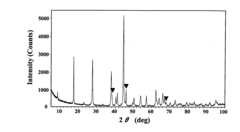
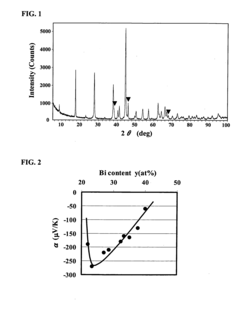
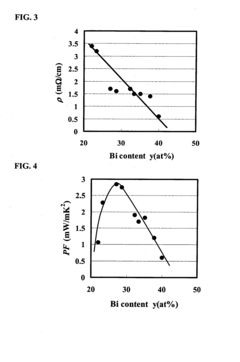
- Development of non-stoichiometric thermoelectric materials with a rhombohedral crystal structure, specifically RxBiyTe(100-x-y) composition, where R is a rare earth element, and optimized composition ratios of R, Bi, and Te to achieve high Seebeck coefficient and power factor, along with improved crystallinity and thermal conductivity, using methods like amorphous-nucleation and mechanical alloying to enhance thermoelectric performance.
Environmental Impact of Thermoelectric Material Development
The development of thermoelectric materials and the optimization of X-ray diffraction techniques for their characterization present significant environmental considerations that must be carefully evaluated. The synthesis and processing of thermoelectric materials often involve rare earth elements, heavy metals, and toxic compounds such as tellurides, selenides, and lead-based materials. These substances pose substantial risks to ecosystems and human health throughout their lifecycle, from extraction and processing to eventual disposal.
Mining operations for critical thermoelectric materials like bismuth, antimony, and rare earth elements generate considerable environmental disruption. The extraction processes typically require energy-intensive methods and produce substantial waste streams containing potentially hazardous byproducts. Additionally, the geographic concentration of these resources in specific regions creates supply chain vulnerabilities and environmental justice concerns for local communities.
The X-ray diffraction optimization process itself contributes to environmental impact through increased energy consumption and extended measurement times. Advanced synchrotron facilities and high-resolution laboratory instruments require substantial electrical power, contributing to carbon emissions. The pursuit of enhanced characterization precision often necessitates longer exposure times and multiple measurement cycles, amplifying energy consumption patterns.
Manufacturing processes for thermoelectric devices frequently involve high-temperature synthesis, mechanical alloying, and chemical vapor deposition techniques that consume significant energy and may release volatile organic compounds. The optimization of crystal structures through controlled atmosphere processing and annealing procedures further increases the carbon footprint of material development activities.
However, the environmental impact assessment must consider the long-term benefits of thermoelectric technology deployment. Waste heat recovery applications in industrial processes and automotive systems can significantly reduce overall energy consumption and greenhouse gas emissions. The development of more efficient thermoelectric materials through optimized X-ray diffraction characterization ultimately contributes to sustainable energy solutions.
Mitigation strategies include implementing green chemistry principles in material synthesis, developing lead-free alternatives, establishing comprehensive recycling programs for thermoelectric devices, and utilizing renewable energy sources for characterization facilities. The integration of machine learning approaches in X-ray diffraction analysis can also reduce measurement times and associated energy consumption while maintaining characterization quality.
Mining operations for critical thermoelectric materials like bismuth, antimony, and rare earth elements generate considerable environmental disruption. The extraction processes typically require energy-intensive methods and produce substantial waste streams containing potentially hazardous byproducts. Additionally, the geographic concentration of these resources in specific regions creates supply chain vulnerabilities and environmental justice concerns for local communities.
The X-ray diffraction optimization process itself contributes to environmental impact through increased energy consumption and extended measurement times. Advanced synchrotron facilities and high-resolution laboratory instruments require substantial electrical power, contributing to carbon emissions. The pursuit of enhanced characterization precision often necessitates longer exposure times and multiple measurement cycles, amplifying energy consumption patterns.
Manufacturing processes for thermoelectric devices frequently involve high-temperature synthesis, mechanical alloying, and chemical vapor deposition techniques that consume significant energy and may release volatile organic compounds. The optimization of crystal structures through controlled atmosphere processing and annealing procedures further increases the carbon footprint of material development activities.
However, the environmental impact assessment must consider the long-term benefits of thermoelectric technology deployment. Waste heat recovery applications in industrial processes and automotive systems can significantly reduce overall energy consumption and greenhouse gas emissions. The development of more efficient thermoelectric materials through optimized X-ray diffraction characterization ultimately contributes to sustainable energy solutions.
Mitigation strategies include implementing green chemistry principles in material synthesis, developing lead-free alternatives, establishing comprehensive recycling programs for thermoelectric devices, and utilizing renewable energy sources for characterization facilities. The integration of machine learning approaches in X-ray diffraction analysis can also reduce measurement times and associated energy consumption while maintaining characterization quality.
Safety Standards for High-Temperature XRD Analysis
High-temperature X-ray diffraction analysis of thermoelectric materials presents unique safety challenges that require comprehensive protocols and specialized equipment considerations. The elevated operating temperatures, typically ranging from 300°C to 1200°C for thermoelectric material characterization, introduce multiple hazard categories including thermal burns, equipment failure risks, and potential material degradation byproducts.
Primary safety protocols mandate the implementation of multi-level thermal protection systems. These include high-temperature resistant sample holders constructed from materials such as platinum or specialized ceramics, thermal barriers to prevent heat transfer to sensitive XRD components, and emergency cooling systems capable of rapid temperature reduction. Personnel protection requires heat-resistant gloves rated for temperatures exceeding the maximum operating range, protective eyewear designed for high-temperature applications, and appropriate laboratory ventilation systems to manage thermal convection currents.
Equipment safety standards emphasize the critical importance of temperature monitoring and control systems. Redundant temperature sensors must be integrated throughout the heating chamber, with automatic shutdown mechanisms triggered by temperature excursions beyond predetermined safety thresholds. The XRD detector systems require thermal shielding to prevent damage from radiant heat, while maintaining optimal positioning for accurate diffraction pattern collection.
Material-specific safety considerations address the unique properties of thermoelectric compounds, many of which contain elements such as tellurium, bismuth, or lead that may produce toxic vapors at elevated temperatures. Sealed sample environments with inert gas purging capabilities are essential to prevent oxidation and minimize vapor release. Additionally, proper waste disposal protocols must account for both the chemical composition of spent samples and any degradation products formed during high-temperature exposure.
Facility infrastructure requirements include dedicated high-temperature XRD laboratories with enhanced electrical safety systems, emergency power cutoffs, and fire suppression systems specifically designed for high-temperature equipment. Regular calibration and maintenance schedules for all safety-critical components ensure continued protection throughout extended measurement campaigns typical of thermoelectric material optimization studies.
Primary safety protocols mandate the implementation of multi-level thermal protection systems. These include high-temperature resistant sample holders constructed from materials such as platinum or specialized ceramics, thermal barriers to prevent heat transfer to sensitive XRD components, and emergency cooling systems capable of rapid temperature reduction. Personnel protection requires heat-resistant gloves rated for temperatures exceeding the maximum operating range, protective eyewear designed for high-temperature applications, and appropriate laboratory ventilation systems to manage thermal convection currents.
Equipment safety standards emphasize the critical importance of temperature monitoring and control systems. Redundant temperature sensors must be integrated throughout the heating chamber, with automatic shutdown mechanisms triggered by temperature excursions beyond predetermined safety thresholds. The XRD detector systems require thermal shielding to prevent damage from radiant heat, while maintaining optimal positioning for accurate diffraction pattern collection.
Material-specific safety considerations address the unique properties of thermoelectric compounds, many of which contain elements such as tellurium, bismuth, or lead that may produce toxic vapors at elevated temperatures. Sealed sample environments with inert gas purging capabilities are essential to prevent oxidation and minimize vapor release. Additionally, proper waste disposal protocols must account for both the chemical composition of spent samples and any degradation products formed during high-temperature exposure.
Facility infrastructure requirements include dedicated high-temperature XRD laboratories with enhanced electrical safety systems, emergency power cutoffs, and fire suppression systems specifically designed for high-temperature equipment. Regular calibration and maintenance schedules for all safety-critical components ensure continued protection throughout extended measurement campaigns typical of thermoelectric material optimization studies.
Unlock deeper insights with PatSnap Eureka Quick Research — get a full tech report to explore trends and direct your research. Try now!
Generate Your Research Report Instantly with AI Agent
Supercharge your innovation with PatSnap Eureka AI Agent Platform!