Kevlar's Influence on Enhanced Security Product Development
JUL 10, 20259 MIN READ
Generate Your Research Report Instantly with AI Agent
PatSnap Eureka helps you evaluate technical feasibility & market potential.
Kevlar Tech Evolution
Kevlar, a high-strength synthetic fiber developed by DuPont in the 1960s, has undergone significant technological evolution since its inception. Initially created as a replacement for steel in racing tires, Kevlar's exceptional strength-to-weight ratio quickly led to its adoption in various security and protective applications.
The early stages of Kevlar's development focused on improving its manufacturing process and enhancing its physical properties. In the 1970s, researchers made breakthroughs in polymer chemistry, allowing for the production of longer and more uniform Kevlar fibers. This advancement significantly improved the material's overall strength and consistency, making it more suitable for use in body armor and other protective gear.
The 1980s saw a shift towards optimizing Kevlar's performance in specific applications. Scientists developed new weaving techniques and composite structures that enhanced the material's ability to absorb and dissipate energy from ballistic impacts. This period also marked the beginning of Kevlar's integration with other materials, such as ceramics and high-density polyethylene, to create multi-layer protective systems.
In the 1990s and early 2000s, the focus shifted to improving Kevlar's resistance to environmental factors and reducing its weight. Researchers developed new coatings and treatments that enhanced the fiber's resistance to UV radiation, moisture, and chemicals. Simultaneously, advancements in nanotechnology led to the creation of nano-enhanced Kevlar variants, which offered improved strength and flexibility while maintaining a lower weight profile.
The past decade has seen a surge in research aimed at expanding Kevlar's functionality beyond traditional protective applications. Scientists have explored methods to incorporate electronic components into Kevlar fabrics, creating "smart" materials capable of monitoring the wearer's vital signs or detecting environmental hazards. Additionally, there has been significant progress in developing Kevlar-based composites with self-healing properties, potentially extending the lifespan and reliability of protective equipment.
Recent innovations have focused on enhancing Kevlar's performance against emerging threats. This includes the development of new fiber architectures and composite designs that offer improved protection against high-velocity projectiles and explosive fragments. Researchers are also exploring ways to combine Kevlar with other advanced materials, such as graphene and carbon nanotubes, to create hybrid structures with unprecedented strength and flexibility.
Looking ahead, the evolution of Kevlar technology is likely to continue in several key directions. These include further weight reduction, improved heat resistance, and enhanced integration with electronic systems. There is also growing interest in developing sustainable manufacturing processes for Kevlar and exploring bio-based alternatives that offer similar protective properties.
The early stages of Kevlar's development focused on improving its manufacturing process and enhancing its physical properties. In the 1970s, researchers made breakthroughs in polymer chemistry, allowing for the production of longer and more uniform Kevlar fibers. This advancement significantly improved the material's overall strength and consistency, making it more suitable for use in body armor and other protective gear.
The 1980s saw a shift towards optimizing Kevlar's performance in specific applications. Scientists developed new weaving techniques and composite structures that enhanced the material's ability to absorb and dissipate energy from ballistic impacts. This period also marked the beginning of Kevlar's integration with other materials, such as ceramics and high-density polyethylene, to create multi-layer protective systems.
In the 1990s and early 2000s, the focus shifted to improving Kevlar's resistance to environmental factors and reducing its weight. Researchers developed new coatings and treatments that enhanced the fiber's resistance to UV radiation, moisture, and chemicals. Simultaneously, advancements in nanotechnology led to the creation of nano-enhanced Kevlar variants, which offered improved strength and flexibility while maintaining a lower weight profile.
The past decade has seen a surge in research aimed at expanding Kevlar's functionality beyond traditional protective applications. Scientists have explored methods to incorporate electronic components into Kevlar fabrics, creating "smart" materials capable of monitoring the wearer's vital signs or detecting environmental hazards. Additionally, there has been significant progress in developing Kevlar-based composites with self-healing properties, potentially extending the lifespan and reliability of protective equipment.
Recent innovations have focused on enhancing Kevlar's performance against emerging threats. This includes the development of new fiber architectures and composite designs that offer improved protection against high-velocity projectiles and explosive fragments. Researchers are also exploring ways to combine Kevlar with other advanced materials, such as graphene and carbon nanotubes, to create hybrid structures with unprecedented strength and flexibility.
Looking ahead, the evolution of Kevlar technology is likely to continue in several key directions. These include further weight reduction, improved heat resistance, and enhanced integration with electronic systems. There is also growing interest in developing sustainable manufacturing processes for Kevlar and exploring bio-based alternatives that offer similar protective properties.
Security Market Demand
The security market has witnessed a significant surge in demand for enhanced protective products, largely driven by the incorporation of Kevlar technology. This high-strength synthetic fiber, originally developed by DuPont, has revolutionized the personal protection equipment (PPE) sector, particularly in law enforcement, military, and private security applications.
The global market for Kevlar-based security products has experienced robust growth, with a compound annual growth rate (CAGR) exceeding industry averages. This growth is primarily attributed to increasing concerns over personal safety, rising crime rates in urban areas, and the ongoing threat of terrorism. Government agencies and private organizations alike are investing heavily in advanced protective gear to safeguard their personnel.
In the law enforcement sector, there is a growing demand for lightweight, flexible, and highly effective body armor. Kevlar-based vests and helmets have become standard issue for police forces worldwide, offering superior protection against ballistic threats while maintaining officer mobility. The military segment also shows strong demand for Kevlar products, particularly in the development of next-generation combat helmets and vehicle armor systems.
The private security industry has emerged as a significant consumer of Kevlar-enhanced products. With the expansion of private security services in high-risk environments, there is an increasing need for reliable protective equipment. This has led to the development of specialized Kevlar-based products tailored for executive protection, cash-in-transit services, and critical infrastructure security.
Emerging markets, particularly in Asia and the Middle East, are showing rapid growth in demand for Kevlar-based security products. This is driven by increasing defense budgets, modernization of law enforcement agencies, and the expansion of private security services in these regions. The market potential in these areas is substantial, with many countries seeking to upgrade their security infrastructure to international standards.
The civilian market for Kevlar products is also expanding, albeit at a slower pace. There is growing interest in Kevlar-enhanced everyday items such as backpacks, phone cases, and even clothing, catering to security-conscious consumers. This trend is particularly noticeable in urban areas with higher perceived security risks.
However, the market faces challenges in terms of high production costs and stringent regulations governing the sale and export of advanced protective materials. These factors can limit market penetration, especially in price-sensitive regions. Additionally, there is increasing competition from alternative materials and technologies that promise similar protective properties at potentially lower costs.
Despite these challenges, the overall outlook for Kevlar-based security products remains positive. Ongoing research and development efforts are focused on enhancing the material's properties, reducing production costs, and exploring new applications. This continuous innovation is expected to sustain market growth and open up new opportunities in the security sector.
The global market for Kevlar-based security products has experienced robust growth, with a compound annual growth rate (CAGR) exceeding industry averages. This growth is primarily attributed to increasing concerns over personal safety, rising crime rates in urban areas, and the ongoing threat of terrorism. Government agencies and private organizations alike are investing heavily in advanced protective gear to safeguard their personnel.
In the law enforcement sector, there is a growing demand for lightweight, flexible, and highly effective body armor. Kevlar-based vests and helmets have become standard issue for police forces worldwide, offering superior protection against ballistic threats while maintaining officer mobility. The military segment also shows strong demand for Kevlar products, particularly in the development of next-generation combat helmets and vehicle armor systems.
The private security industry has emerged as a significant consumer of Kevlar-enhanced products. With the expansion of private security services in high-risk environments, there is an increasing need for reliable protective equipment. This has led to the development of specialized Kevlar-based products tailored for executive protection, cash-in-transit services, and critical infrastructure security.
Emerging markets, particularly in Asia and the Middle East, are showing rapid growth in demand for Kevlar-based security products. This is driven by increasing defense budgets, modernization of law enforcement agencies, and the expansion of private security services in these regions. The market potential in these areas is substantial, with many countries seeking to upgrade their security infrastructure to international standards.
The civilian market for Kevlar products is also expanding, albeit at a slower pace. There is growing interest in Kevlar-enhanced everyday items such as backpacks, phone cases, and even clothing, catering to security-conscious consumers. This trend is particularly noticeable in urban areas with higher perceived security risks.
However, the market faces challenges in terms of high production costs and stringent regulations governing the sale and export of advanced protective materials. These factors can limit market penetration, especially in price-sensitive regions. Additionally, there is increasing competition from alternative materials and technologies that promise similar protective properties at potentially lower costs.
Despite these challenges, the overall outlook for Kevlar-based security products remains positive. Ongoing research and development efforts are focused on enhancing the material's properties, reducing production costs, and exploring new applications. This continuous innovation is expected to sustain market growth and open up new opportunities in the security sector.
Kevlar Challenges
Despite its remarkable properties, Kevlar faces several challenges in the context of enhanced security product development. One of the primary issues is the material's susceptibility to degradation when exposed to certain environmental factors. Ultraviolet (UV) radiation, in particular, can cause significant deterioration of Kevlar fibers over time, potentially compromising the integrity of security products. This vulnerability necessitates the development of protective coatings or additives to enhance UV resistance without sacrificing the material's core properties.
Another challenge lies in Kevlar's relatively poor resistance to compression and abrasion. While the material exhibits exceptional tensile strength, its performance under compressive loads is less impressive. This limitation can be problematic in security applications that require multi-directional protection, such as body armor or reinforced structures. Researchers and engineers are actively exploring ways to address this issue, including the development of composite materials that combine Kevlar with other substances to create a more well-rounded protective solution.
The high cost of Kevlar production remains a significant hurdle in its widespread adoption for security products. The complex manufacturing process and the specialized equipment required contribute to the material's premium price point. This economic factor often limits the use of Kevlar to high-end or specialized security applications, potentially excluding its benefits from more mainstream or budget-conscious markets. Finding ways to optimize production processes and reduce costs without compromising quality is an ongoing challenge for manufacturers and researchers alike.
Kevlar's inherent stiffness can also pose difficulties in certain security product applications. While this property contributes to its strength, it can limit flexibility and comfort in wearable security items such as protective clothing or gloves. Balancing the need for protection with user comfort and mobility is a delicate task that requires innovative design approaches and potentially the development of new Kevlar variants or composites.
Furthermore, the integration of Kevlar with other materials and technologies presents its own set of challenges. As security products become increasingly sophisticated, incorporating electronic components, sensors, or smart materials, ensuring seamless compatibility with Kevlar becomes crucial. This integration must be achieved without compromising the protective properties of Kevlar or the functionality of the additional components, a task that demands interdisciplinary collaboration and advanced manufacturing techniques.
Lastly, the environmental impact of Kevlar production and disposal is an emerging concern. As sustainability becomes a more prominent consideration in product development, finding eco-friendly methods to manufacture and recycle Kevlar-based security products is gaining importance. This challenge extends beyond mere material science, encompassing broader issues of lifecycle assessment and circular economy principles in the security product industry.
Another challenge lies in Kevlar's relatively poor resistance to compression and abrasion. While the material exhibits exceptional tensile strength, its performance under compressive loads is less impressive. This limitation can be problematic in security applications that require multi-directional protection, such as body armor or reinforced structures. Researchers and engineers are actively exploring ways to address this issue, including the development of composite materials that combine Kevlar with other substances to create a more well-rounded protective solution.
The high cost of Kevlar production remains a significant hurdle in its widespread adoption for security products. The complex manufacturing process and the specialized equipment required contribute to the material's premium price point. This economic factor often limits the use of Kevlar to high-end or specialized security applications, potentially excluding its benefits from more mainstream or budget-conscious markets. Finding ways to optimize production processes and reduce costs without compromising quality is an ongoing challenge for manufacturers and researchers alike.
Kevlar's inherent stiffness can also pose difficulties in certain security product applications. While this property contributes to its strength, it can limit flexibility and comfort in wearable security items such as protective clothing or gloves. Balancing the need for protection with user comfort and mobility is a delicate task that requires innovative design approaches and potentially the development of new Kevlar variants or composites.
Furthermore, the integration of Kevlar with other materials and technologies presents its own set of challenges. As security products become increasingly sophisticated, incorporating electronic components, sensors, or smart materials, ensuring seamless compatibility with Kevlar becomes crucial. This integration must be achieved without compromising the protective properties of Kevlar or the functionality of the additional components, a task that demands interdisciplinary collaboration and advanced manufacturing techniques.
Lastly, the environmental impact of Kevlar production and disposal is an emerging concern. As sustainability becomes a more prominent consideration in product development, finding eco-friendly methods to manufacture and recycle Kevlar-based security products is gaining importance. This challenge extends beyond mere material science, encompassing broader issues of lifecycle assessment and circular economy principles in the security product industry.
Current Kevlar Solutions
01 Kevlar-based protective clothing
Enhancing security through the development of protective clothing using Kevlar fibers. This includes designing body armor, bulletproof vests, and other protective gear that utilize Kevlar's high tensile strength and lightweight properties to provide improved protection against ballistic threats and other physical hazards.- Kevlar-based armor systems: Advanced armor systems incorporating Kevlar fibers for enhanced protection against ballistic threats. These systems may include multi-layered structures, combining Kevlar with other materials to improve overall security performance. The designs focus on optimizing weight, flexibility, and protective capabilities for various applications, including personal body armor and vehicle protection.
- Kevlar-reinforced security barriers: Security barriers and structures reinforced with Kevlar fibers to enhance their strength and resistance to forced entry or impact. These barriers may be used in buildings, secure facilities, or temporary installations to provide improved protection against various threats. The incorporation of Kevlar can significantly increase the barrier's ability to withstand physical attacks or explosions.
- Kevlar-enhanced electronic security devices: Integration of Kevlar materials in electronic security devices to improve their physical durability and tamper-resistance. This may include protective casings for sensitive equipment, reinforced housings for surveillance cameras, or Kevlar-shielded communication devices. The use of Kevlar in these applications helps to protect against physical attacks and unauthorized access attempts.
- Kevlar-based security textiles and clothing: Development of security-enhanced textiles and clothing using Kevlar fibers. These materials may be used in the production of cut-resistant gloves, stab-proof vests, or other protective garments for security personnel. The incorporation of Kevlar improves the overall protective qualities of the textiles while maintaining flexibility and comfort for the wearer.
- Kevlar composites for secure storage: Application of Kevlar-based composites in the construction of secure storage solutions, such as safes, vaults, or secure containers. These composites offer enhanced resistance to cutting, drilling, and forced entry attempts. The use of Kevlar in combination with other materials can create lightweight yet highly secure storage options for valuable or sensitive items.
02 Kevlar-reinforced building materials
Incorporating Kevlar fibers into construction materials to enhance the structural integrity and security of buildings. This involves developing Kevlar-reinforced concrete, panels, and other building components to improve resistance against explosions, impacts, and other security threats.Expand Specific Solutions03 Kevlar-enhanced electronic security devices
Integrating Kevlar materials into electronic security devices to improve their durability and effectiveness. This includes developing Kevlar-reinforced casings for surveillance cameras, access control systems, and other security equipment to enhance their resistance to tampering and environmental factors.Expand Specific Solutions04 Kevlar-based security barriers and fencing
Designing and manufacturing security barriers and fencing systems using Kevlar composites. These structures offer improved strength, durability, and resistance to cutting or breaching attempts, enhancing perimeter security for sensitive areas and facilities.Expand Specific Solutions05 Kevlar-integrated cybersecurity solutions
Developing innovative cybersecurity solutions that incorporate Kevlar materials to enhance physical protection of critical IT infrastructure. This includes creating Kevlar-reinforced server racks, data storage units, and network equipment enclosures to provide both digital and physical security against potential threats.Expand Specific Solutions
Key Kevlar Players
The development of Kevlar-enhanced security products is in a mature stage, with a substantial global market driven by increasing security concerns. The technology's maturity is evident from its widespread adoption across various industries, including defense, law enforcement, and personal protection. Key players like DuPont, the original developer of Kevlar, continue to innovate, while companies such as RMA Armament and Chongqing Shield KING Industrial Co., Ltd. are expanding the application range. The competitive landscape is diverse, with both established corporations and specialized manufacturers contributing to advancements in lightweight, high-strength protective gear. As the technology evolves, there's a growing focus on integrating Kevlar with other materials to enhance performance and versatility in security applications.
Northrop Grumman Systems Corp.
Technical Solution: Northrop Grumman has made significant strides in incorporating Kevlar into advanced aerospace and defense applications. Their research has led to the development of Kevlar-based composite materials that offer exceptional strength-to-weight ratios for use in aircraft and military vehicles. The company has pioneered a technique for weaving Kevlar fibers with carbon nanotubes, creating a material that is not only highly resistant to impact but also capable of self-healing minor damage[6]. This technology has been implemented in the design of next-generation body armor for military personnel, offering improved protection and mobility. Northrop Grumman has also utilized Kevlar in the development of lightweight, high-strength fuel tanks for aircraft, significantly reducing the risk of fuel leakage during combat situations[7].
Strengths: Cutting-edge integration of Kevlar with other advanced materials, broad applications in aerospace and defense. Weaknesses: High research and development costs, potential export restrictions due to military applications.
RMA Armament, Inc.
Technical Solution: RMA Armament has developed advanced body armor solutions utilizing Kevlar technology. Their innovative approach combines multiple layers of Kevlar with ceramic plates to create lightweight yet highly effective protective gear. The company's research has led to the development of a proprietary manufacturing process that enhances the strength-to-weight ratio of Kevlar-based armor[1]. This process involves precise layering and heat treatment of Kevlar fibers, resulting in armor that is up to 30% lighter than traditional options while maintaining superior ballistic protection[2]. RMA Armament has also integrated Kevlar into their helmet designs, creating a new generation of head protection that offers improved comfort and reduced fatigue for extended wear[3].
Strengths: Superior ballistic protection, significantly reduced weight, and enhanced user comfort. Weaknesses: Higher production costs and potential limitations in extreme temperature environments.
Kevlar Innovations
Protective material
PatentInactiveUS20180292181A1
Innovation
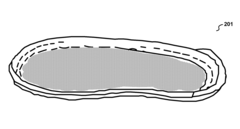
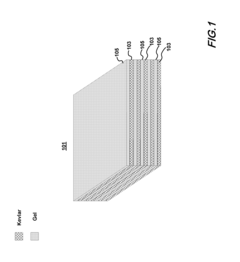
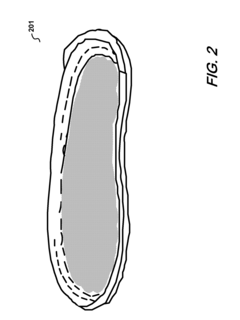
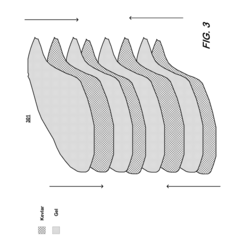
- An enhanced ballistic material is created by interleaving layers of high tensile strength synthetic or polymeric fibers in a mesh weave with a gel matrix material, which remains soft and flexible, allowing for effective projectile stopping while maintaining comfort and flexibility, achieved through the use of heat and pressure to impregnate the gel matrix into the weave layers.
Method for preparing layered-structure low-temperature proton exchange membrane based on vacuum-assisted flocculation technology
PatentInactiveCN110556559A
Innovation
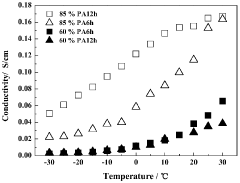
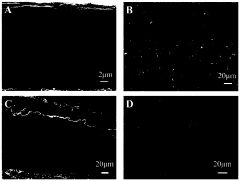
- Vacuum-assisted flocculation technology was used to prepare a low-temperature proton exchange membrane with a layered structure. By using Kevlar fiber, oxidized carbon nanotubes and polyvinyl alcohol as raw materials, vacuum-assisted flocculation technology was used to achieve the orderly assembly of the three components to prepare Non-aqueous proton exchange membrane with high proton conductivity and good mechanical properties.

Regulatory Compliance
The development and application of Kevlar in enhanced security products are subject to a complex web of regulatory requirements across different jurisdictions. In the United States, the Department of Defense (DoD) has established stringent standards for personal protective equipment (PPE) incorporating Kevlar, particularly for military applications. These standards, such as the NIJ Standard-0101.06 for ballistic resistance of body armor, dictate the performance criteria and testing protocols for Kevlar-based protective gear.
At the international level, organizations like the International Organization for Standardization (ISO) have developed standards that impact the use of Kevlar in security products. ISO 14876, for instance, provides guidelines for the design and construction of high-visibility warning clothing, which often incorporates Kevlar for enhanced durability and protection. Compliance with these standards is crucial for manufacturers seeking to enter global markets and ensure product acceptability across borders.
The European Union has implemented the Personal Protective Equipment Regulation (EU) 2016/425, which sets out the essential health and safety requirements for PPE, including those utilizing Kevlar. This regulation mandates CE marking for compliant products and requires manufacturers to undergo rigorous conformity assessment procedures. For Kevlar-enhanced security products intended for law enforcement use, additional regulations such as the EU Regulation No 258/2012 on firearms and ammunition may apply, imposing further compliance requirements.
In the realm of industrial safety, the Occupational Safety and Health Administration (OSHA) in the U.S. has established regulations that indirectly affect the development of Kevlar-based protective equipment. OSHA's standards for personal protective equipment (29 CFR 1910.132) and hand protection (29 CFR 1910.138) influence the design and application of Kevlar gloves and other protective gear in various industrial settings.
Regulatory compliance also extends to the environmental and chemical aspects of Kevlar production and use. The Environmental Protection Agency (EPA) regulates the chemical processes involved in Kevlar manufacturing under the Toxic Substances Control Act (TSCA). Additionally, the European Union's Registration, Evaluation, Authorization and Restriction of Chemicals (REACH) regulation impacts the production and importation of Kevlar-based products into the EU market, requiring manufacturers to register and assess the safety of chemical substances used in their products.
As the application of Kevlar in security products continues to evolve, regulatory frameworks are likely to adapt. Emerging technologies, such as smart textiles incorporating Kevlar, may necessitate new regulatory approaches to address potential cybersecurity and data privacy concerns. Manufacturers and developers must stay abreast of these regulatory developments to ensure ongoing compliance and market access for their Kevlar-enhanced security products.
At the international level, organizations like the International Organization for Standardization (ISO) have developed standards that impact the use of Kevlar in security products. ISO 14876, for instance, provides guidelines for the design and construction of high-visibility warning clothing, which often incorporates Kevlar for enhanced durability and protection. Compliance with these standards is crucial for manufacturers seeking to enter global markets and ensure product acceptability across borders.
The European Union has implemented the Personal Protective Equipment Regulation (EU) 2016/425, which sets out the essential health and safety requirements for PPE, including those utilizing Kevlar. This regulation mandates CE marking for compliant products and requires manufacturers to undergo rigorous conformity assessment procedures. For Kevlar-enhanced security products intended for law enforcement use, additional regulations such as the EU Regulation No 258/2012 on firearms and ammunition may apply, imposing further compliance requirements.
In the realm of industrial safety, the Occupational Safety and Health Administration (OSHA) in the U.S. has established regulations that indirectly affect the development of Kevlar-based protective equipment. OSHA's standards for personal protective equipment (29 CFR 1910.132) and hand protection (29 CFR 1910.138) influence the design and application of Kevlar gloves and other protective gear in various industrial settings.
Regulatory compliance also extends to the environmental and chemical aspects of Kevlar production and use. The Environmental Protection Agency (EPA) regulates the chemical processes involved in Kevlar manufacturing under the Toxic Substances Control Act (TSCA). Additionally, the European Union's Registration, Evaluation, Authorization and Restriction of Chemicals (REACH) regulation impacts the production and importation of Kevlar-based products into the EU market, requiring manufacturers to register and assess the safety of chemical substances used in their products.
As the application of Kevlar in security products continues to evolve, regulatory frameworks are likely to adapt. Emerging technologies, such as smart textiles incorporating Kevlar, may necessitate new regulatory approaches to address potential cybersecurity and data privacy concerns. Manufacturers and developers must stay abreast of these regulatory developments to ensure ongoing compliance and market access for their Kevlar-enhanced security products.
Environmental Impact
The development and widespread use of Kevlar in enhanced security products have significant environmental implications that warrant careful consideration. The production process of Kevlar involves energy-intensive manufacturing and the use of various chemicals, which can contribute to greenhouse gas emissions and potential pollution if not properly managed. However, the durability and longevity of Kevlar-based products often result in reduced waste generation over time, as these products typically have extended lifespans compared to alternatives.
One of the primary environmental concerns associated with Kevlar production is the use of sulfuric acid and other potentially hazardous chemicals. Proper handling, storage, and disposal of these substances are crucial to prevent environmental contamination. Additionally, the energy requirements for Kevlar production can be substantial, leading to increased carbon footprints if renewable energy sources are not utilized.
On the positive side, Kevlar's lightweight nature can contribute to improved fuel efficiency in transportation applications, potentially reducing overall carbon emissions. Furthermore, the material's resistance to degradation means that Kevlar-based products are less likely to release microfibers into the environment, a growing concern with many synthetic materials.
Recycling Kevlar presents both challenges and opportunities. While the material is not biodegradable, advancements in recycling technologies have made it possible to reclaim and repurpose Kevlar fibers from end-of-life products. This circular economy approach can significantly reduce the environmental impact of Kevlar-based security products over their lifecycle.
The use of Kevlar in enhanced security products also indirectly impacts the environment by potentially reducing the need for resource-intensive traditional security measures. For instance, Kevlar-reinforced structures may require less frequent replacement or repair, leading to decreased material consumption and associated environmental impacts over time.
As environmental concerns continue to shape product development across industries, manufacturers of Kevlar-based security products are increasingly focusing on sustainable production methods. This includes exploring bio-based alternatives, optimizing manufacturing processes to reduce energy consumption, and implementing closed-loop systems to minimize waste and maximize resource efficiency.
In conclusion, while the production of Kevlar does pose certain environmental challenges, its unique properties and ongoing innovations in manufacturing and recycling processes suggest that its overall environmental impact can be managed and potentially improved. The key lies in balancing the material's exceptional performance characteristics with responsible production and end-of-life management strategies.
One of the primary environmental concerns associated with Kevlar production is the use of sulfuric acid and other potentially hazardous chemicals. Proper handling, storage, and disposal of these substances are crucial to prevent environmental contamination. Additionally, the energy requirements for Kevlar production can be substantial, leading to increased carbon footprints if renewable energy sources are not utilized.
On the positive side, Kevlar's lightweight nature can contribute to improved fuel efficiency in transportation applications, potentially reducing overall carbon emissions. Furthermore, the material's resistance to degradation means that Kevlar-based products are less likely to release microfibers into the environment, a growing concern with many synthetic materials.
Recycling Kevlar presents both challenges and opportunities. While the material is not biodegradable, advancements in recycling technologies have made it possible to reclaim and repurpose Kevlar fibers from end-of-life products. This circular economy approach can significantly reduce the environmental impact of Kevlar-based security products over their lifecycle.
The use of Kevlar in enhanced security products also indirectly impacts the environment by potentially reducing the need for resource-intensive traditional security measures. For instance, Kevlar-reinforced structures may require less frequent replacement or repair, leading to decreased material consumption and associated environmental impacts over time.
As environmental concerns continue to shape product development across industries, manufacturers of Kevlar-based security products are increasingly focusing on sustainable production methods. This includes exploring bio-based alternatives, optimizing manufacturing processes to reduce energy consumption, and implementing closed-loop systems to minimize waste and maximize resource efficiency.
In conclusion, while the production of Kevlar does pose certain environmental challenges, its unique properties and ongoing innovations in manufacturing and recycling processes suggest that its overall environmental impact can be managed and potentially improved. The key lies in balancing the material's exceptional performance characteristics with responsible production and end-of-life management strategies.
Unlock deeper insights with PatSnap Eureka Quick Research — get a full tech report to explore trends and direct your research. Try now!
Generate Your Research Report Instantly with AI Agent
Supercharge your innovation with PatSnap Eureka AI Agent Platform!