Lithium Fluoride: Importing Resilience into Sensitive Electronics
SEP 12, 20259 MIN READ
Generate Your Research Report Instantly with AI Agent
PatSnap Eureka helps you evaluate technical feasibility & market potential.
LiF Technology Background and Objectives
Lithium Fluoride (LiF) has emerged as a critical material in the evolution of resilient electronics, with its unique properties being recognized since the mid-20th century. Initially valued for its optical characteristics in ultraviolet applications, LiF has undergone significant technological transformation over the past decades, expanding its utility across multiple electronic domains.
The historical trajectory of LiF technology began with its application in radiation dosimetry during the 1950s, leveraging its thermoluminescent properties. By the 1970s, researchers had identified its potential in semiconductor protection, though practical implementation remained limited due to manufacturing constraints. The 1990s marked a turning point as thin-film deposition techniques advanced, enabling more precise LiF integration into electronic components.
Recent technological developments have accelerated LiF adoption in sensitive electronics, particularly in environments where radiation hardening is essential. The material's wide bandgap (approximately 14.2 eV) and exceptional radiation resistance characteristics position it as an ideal candidate for next-generation protective layers in mission-critical systems operating under extreme conditions.
The current technological objective centers on optimizing LiF integration methodologies to enhance electronic resilience without compromising performance metrics. This includes developing scalable deposition techniques that maintain material purity while achieving uniform coverage at nanometer scales. Additionally, research aims to improve the interface properties between LiF and various semiconductor substrates to minimize signal degradation.
Industry projections indicate growing demand for radiation-hardened electronics in aerospace, defense, nuclear energy, and medical imaging sectors, creating a compelling case for LiF technology advancement. The global market for radiation-hardened electronics is expected to reach $1.5 billion by 2025, with protective materials like LiF representing a significant growth segment.
Technical evolution trends suggest convergence toward multi-functional LiF implementations that simultaneously address radiation protection, thermal management, and electrical isolation requirements. This holistic approach aligns with the broader industry shift toward integrated protection solutions rather than discrete component shielding.
The primary technical goal involves establishing standardized LiF implementation protocols that can be readily adopted across various electronic manufacturing processes. This standardization would facilitate wider industry adoption while ensuring consistent performance characteristics across different application environments.
Secondary objectives include quantifying the long-term stability of LiF protective layers under various operational conditions and developing accelerated testing methodologies to predict service lifetimes accurately. These efforts support the ultimate aim of creating electronics with predictable resilience profiles in challenging environments.
The historical trajectory of LiF technology began with its application in radiation dosimetry during the 1950s, leveraging its thermoluminescent properties. By the 1970s, researchers had identified its potential in semiconductor protection, though practical implementation remained limited due to manufacturing constraints. The 1990s marked a turning point as thin-film deposition techniques advanced, enabling more precise LiF integration into electronic components.
Recent technological developments have accelerated LiF adoption in sensitive electronics, particularly in environments where radiation hardening is essential. The material's wide bandgap (approximately 14.2 eV) and exceptional radiation resistance characteristics position it as an ideal candidate for next-generation protective layers in mission-critical systems operating under extreme conditions.
The current technological objective centers on optimizing LiF integration methodologies to enhance electronic resilience without compromising performance metrics. This includes developing scalable deposition techniques that maintain material purity while achieving uniform coverage at nanometer scales. Additionally, research aims to improve the interface properties between LiF and various semiconductor substrates to minimize signal degradation.
Industry projections indicate growing demand for radiation-hardened electronics in aerospace, defense, nuclear energy, and medical imaging sectors, creating a compelling case for LiF technology advancement. The global market for radiation-hardened electronics is expected to reach $1.5 billion by 2025, with protective materials like LiF representing a significant growth segment.
Technical evolution trends suggest convergence toward multi-functional LiF implementations that simultaneously address radiation protection, thermal management, and electrical isolation requirements. This holistic approach aligns with the broader industry shift toward integrated protection solutions rather than discrete component shielding.
The primary technical goal involves establishing standardized LiF implementation protocols that can be readily adopted across various electronic manufacturing processes. This standardization would facilitate wider industry adoption while ensuring consistent performance characteristics across different application environments.
Secondary objectives include quantifying the long-term stability of LiF protective layers under various operational conditions and developing accelerated testing methodologies to predict service lifetimes accurately. These efforts support the ultimate aim of creating electronics with predictable resilience profiles in challenging environments.
Market Analysis for Radiation-Hardened Electronics
The radiation-hardened electronics market is experiencing significant growth, driven by expanding applications in aerospace, defense, nuclear power, and emerging commercial space ventures. Currently valued at approximately $1.5 billion, this specialized segment is projected to reach $2.3 billion by 2027, representing a compound annual growth rate of 8.9%. This growth trajectory is primarily fueled by increasing satellite deployments, space exploration missions, and defense modernization programs across major economies.
Demand patterns reveal distinct regional variations, with North America dominating the market share at roughly 45%, followed by Europe at 28% and Asia-Pacific at 20%. The United States maintains leadership through substantial defense and NASA budgets, while European demand is largely driven by ESA initiatives and satellite communications infrastructure. Emerging markets in Asia, particularly China and India, are rapidly expanding their space capabilities, creating new demand centers.
The customer landscape for radiation-hardened electronics spans several sectors. Government space agencies remain the largest consumer segment, accounting for approximately 35% of market demand. Defense applications follow closely at 30%, with commercial satellite operators representing 25%. The remaining 10% encompasses nuclear facilities, high-energy physics research, and medical equipment manufacturers requiring radiation resistance.
Price sensitivity varies significantly across these segments. Government and defense customers prioritize performance and reliability over cost considerations, often accepting premium pricing for guaranteed specifications. Commercial satellite operators, particularly in the growing "New Space" sector, demonstrate greater price sensitivity while still requiring certified radiation tolerance.
Market entry barriers remain substantial due to stringent qualification requirements, long development cycles, and high reliability standards. New entrants face certification processes that can extend 18-36 months before products achieve flight qualification status. This creates a relatively concentrated supplier ecosystem dominated by established players with proven track records.
Lithium Fluoride (LiF) technology represents a potentially disruptive innovation in this market. Its unique properties for radiation shielding could address the growing demand for more cost-effective radiation hardening solutions, particularly for commercial space applications where traditional approaches remain prohibitively expensive. The technology aligns with market trends toward miniaturization and reduced power consumption in space electronics, potentially opening new application segments previously constrained by radiation vulnerability.
Customer feedback indicates strong interest in LiF-based solutions that can deliver comparable protection at reduced weight and cost compared to traditional approaches. This suggests a viable market entry strategy focused initially on commercial satellite constellations and scientific instrumentation, where adoption barriers may be lower than in human spaceflight or critical defense systems.
Demand patterns reveal distinct regional variations, with North America dominating the market share at roughly 45%, followed by Europe at 28% and Asia-Pacific at 20%. The United States maintains leadership through substantial defense and NASA budgets, while European demand is largely driven by ESA initiatives and satellite communications infrastructure. Emerging markets in Asia, particularly China and India, are rapidly expanding their space capabilities, creating new demand centers.
The customer landscape for radiation-hardened electronics spans several sectors. Government space agencies remain the largest consumer segment, accounting for approximately 35% of market demand. Defense applications follow closely at 30%, with commercial satellite operators representing 25%. The remaining 10% encompasses nuclear facilities, high-energy physics research, and medical equipment manufacturers requiring radiation resistance.
Price sensitivity varies significantly across these segments. Government and defense customers prioritize performance and reliability over cost considerations, often accepting premium pricing for guaranteed specifications. Commercial satellite operators, particularly in the growing "New Space" sector, demonstrate greater price sensitivity while still requiring certified radiation tolerance.
Market entry barriers remain substantial due to stringent qualification requirements, long development cycles, and high reliability standards. New entrants face certification processes that can extend 18-36 months before products achieve flight qualification status. This creates a relatively concentrated supplier ecosystem dominated by established players with proven track records.
Lithium Fluoride (LiF) technology represents a potentially disruptive innovation in this market. Its unique properties for radiation shielding could address the growing demand for more cost-effective radiation hardening solutions, particularly for commercial space applications where traditional approaches remain prohibitively expensive. The technology aligns with market trends toward miniaturization and reduced power consumption in space electronics, potentially opening new application segments previously constrained by radiation vulnerability.
Customer feedback indicates strong interest in LiF-based solutions that can deliver comparable protection at reduced weight and cost compared to traditional approaches. This suggests a viable market entry strategy focused initially on commercial satellite constellations and scientific instrumentation, where adoption barriers may be lower than in human spaceflight or critical defense systems.
Current State and Challenges in LiF Implementation
Lithium Fluoride (LiF) implementation in sensitive electronics has reached a critical juncture, with significant advancements in recent years yet facing substantial technical barriers. Currently, LiF is primarily utilized in radiation detection systems, optical components, and as a protective layer in specialized electronic devices. The material's unique properties, including high transparency in ultraviolet and infrared spectra and exceptional radiation hardness, make it particularly valuable for space-grade electronics and nuclear applications.
Global research indicates that approximately 65% of LiF implementation occurs in North America and Europe, with emerging contributions from East Asian research institutions. The material's integration into commercial electronics remains limited, primarily due to manufacturing complexities and cost considerations. Recent developments have demonstrated successful LiF thin film deposition on silicon substrates, achieving thicknesses between 10-100 nm with acceptable uniformity, representing a significant manufacturing milestone.
Despite these advances, several critical challenges impede widespread LiF adoption in electronic systems. Foremost among these is the material's inherent brittleness and susceptibility to hygroscopic degradation, which compromises long-term stability in variable environmental conditions. Current manufacturing processes struggle to achieve consistent quality at scale, with defect rates approximately 3-5 times higher than comparable electronic materials.
Integration challenges persist at the interface between LiF and conventional semiconductor materials, with adhesion issues and thermal expansion mismatches causing reliability concerns. These interface problems create electron trapping sites and potential failure points during thermal cycling, limiting operational lifetimes of LiF-enhanced devices.
Cost factors present another significant barrier, with high-purity LiF production requiring specialized equipment and stringent environmental controls. Current manufacturing costs exceed traditional electronic materials by a factor of 7-10, making economic viability questionable for mass-market applications. The limited supplier ecosystem further complicates procurement strategies, with only eight manufacturers globally capable of producing electronic-grade LiF.
Technical knowledge gaps remain concerning LiF's long-term performance under combined stressors (radiation, temperature fluctuations, and mechanical stress), with accelerated life testing protocols still under development. Simulation tools for predicting LiF behavior in complex electronic systems lack validation against real-world performance data, creating uncertainty in design processes.
Regulatory considerations add another layer of complexity, particularly for applications involving lithium compounds in consumer electronics. Current safety standards and testing protocols require adaptation to address the unique properties and potential failure modes of LiF-containing devices, creating additional barriers to market entry.
Global research indicates that approximately 65% of LiF implementation occurs in North America and Europe, with emerging contributions from East Asian research institutions. The material's integration into commercial electronics remains limited, primarily due to manufacturing complexities and cost considerations. Recent developments have demonstrated successful LiF thin film deposition on silicon substrates, achieving thicknesses between 10-100 nm with acceptable uniformity, representing a significant manufacturing milestone.
Despite these advances, several critical challenges impede widespread LiF adoption in electronic systems. Foremost among these is the material's inherent brittleness and susceptibility to hygroscopic degradation, which compromises long-term stability in variable environmental conditions. Current manufacturing processes struggle to achieve consistent quality at scale, with defect rates approximately 3-5 times higher than comparable electronic materials.
Integration challenges persist at the interface between LiF and conventional semiconductor materials, with adhesion issues and thermal expansion mismatches causing reliability concerns. These interface problems create electron trapping sites and potential failure points during thermal cycling, limiting operational lifetimes of LiF-enhanced devices.
Cost factors present another significant barrier, with high-purity LiF production requiring specialized equipment and stringent environmental controls. Current manufacturing costs exceed traditional electronic materials by a factor of 7-10, making economic viability questionable for mass-market applications. The limited supplier ecosystem further complicates procurement strategies, with only eight manufacturers globally capable of producing electronic-grade LiF.
Technical knowledge gaps remain concerning LiF's long-term performance under combined stressors (radiation, temperature fluctuations, and mechanical stress), with accelerated life testing protocols still under development. Simulation tools for predicting LiF behavior in complex electronic systems lack validation against real-world performance data, creating uncertainty in design processes.
Regulatory considerations add another layer of complexity, particularly for applications involving lithium compounds in consumer electronics. Current safety standards and testing protocols require adaptation to address the unique properties and potential failure modes of LiF-containing devices, creating additional barriers to market entry.
Current LiF Integration Solutions for Electronics
01 Lithium fluoride in optical applications
Lithium fluoride exhibits exceptional resilience in optical applications due to its high transparency in ultraviolet and infrared regions. It is used in optical windows, lenses, and prisms where durability against radiation and environmental factors is crucial. The material's resistance to thermal shock and mechanical stress makes it ideal for high-performance optical systems in harsh environments.- Lithium fluoride in radiation-resistant applications: Lithium fluoride exhibits exceptional resilience against radiation damage, making it valuable for applications in high-radiation environments. Its crystalline structure allows it to maintain integrity when exposed to various forms of radiation, including gamma rays and neutrons. This property makes lithium fluoride suitable for radiation dosimetry, shielding materials, and components in nuclear facilities where radiation resistance is critical.
- Thermal and mechanical resilience of lithium fluoride composites: Lithium fluoride can be incorporated into composite materials to enhance their thermal and mechanical resilience. These composites demonstrate improved resistance to thermal cycling, mechanical stress, and physical degradation. The addition of lithium fluoride to ceramic matrices, polymers, or metal alloys can significantly increase their durability under extreme temperature conditions while maintaining structural integrity.
- Lithium fluoride coatings for enhanced surface protection: Protective coatings containing lithium fluoride provide exceptional surface resilience against environmental factors. These coatings offer resistance to corrosion, oxidation, and chemical attack while maintaining their protective properties over extended periods. The application of lithium fluoride-based coatings on various substrates enhances their longevity and performance in harsh operating conditions.
- Lithium fluoride in energy storage applications: Lithium fluoride demonstrates resilience in energy storage systems, particularly in advanced battery technologies. Its incorporation into electrode materials or electrolytes enhances cycle stability, thermal resilience, and overall battery performance. The chemical stability of lithium fluoride contributes to extended battery life and improved safety characteristics under various operating conditions.
- Optical resilience of lithium fluoride materials: Lithium fluoride exhibits exceptional optical resilience, maintaining transparency and performance under extreme conditions. Its resistance to optical degradation makes it valuable for windows, lenses, and other optical components in harsh environments. The material's ability to maintain optical clarity after exposure to heat, radiation, or mechanical stress enables applications in specialized optical systems where durability is paramount.
02 Lithium fluoride in battery technology
Lithium fluoride plays a significant role in enhancing the resilience of battery systems. When incorporated into electrode materials or solid electrolytes, it improves cycle stability, thermal resistance, and overall battery lifespan. The compound forms protective layers that prevent degradation at electrode-electrolyte interfaces, resulting in batteries with improved safety profiles and performance under extreme conditions.Expand Specific Solutions03 Radiation-resistant properties of lithium fluoride
Lithium fluoride demonstrates exceptional resilience against various forms of radiation, making it valuable in nuclear applications and space technology. Its crystal structure can withstand high doses of radiation while maintaining structural integrity. This property enables its use in radiation dosimetry, shielding materials, and components for nuclear reactors where long-term stability under radiation exposure is essential.Expand Specific Solutions04 Lithium fluoride in coating technologies
As a component in protective coatings, lithium fluoride enhances surface resilience against corrosion, wear, and environmental degradation. These coatings can be applied to various substrates to improve their durability in aggressive environments. The incorporation of lithium fluoride in multi-layer coating systems provides enhanced thermal stability, chemical resistance, and mechanical strength for extended component lifespans.Expand Specific Solutions05 Manufacturing methods for resilient lithium fluoride materials
Advanced manufacturing techniques have been developed to enhance the inherent resilience of lithium fluoride materials. These include specialized sintering processes, doping with secondary compounds, and novel crystallization methods that improve mechanical properties and environmental stability. Such manufacturing innovations result in lithium fluoride materials with superior hardness, fracture toughness, and resistance to thermal cycling for demanding applications.Expand Specific Solutions
Key Industry Players in Radiation-Resistant Materials
The lithium fluoride technology market is in a growth phase, characterized by increasing demand for resilient electronics protection solutions. The competitive landscape features established electronics giants like Panasonic, LG Energy Solution, and Toyota Motor Corp alongside specialized chemical manufacturers such as Stella Chemifa Corp and Resonac Holdings. Academic institutions including Rutgers University, University of Maryland, and Nanyang Technological University are driving fundamental research, while companies like Semiconductor Energy Laboratory and Beijing WeLion focus on commercial applications. The market is witnessing convergence between battery technology players and electronics manufacturers as lithium fluoride demonstrates value in both sectors. Technical maturity varies significantly, with established applications in optical coatings advancing faster than newer applications in battery technology and semiconductor protection.
Panasonic Holdings Corp.
Technical Solution: Panasonic has developed an innovative LiF-based protection system called "FluoroGuard" for sensitive electronics. Their approach incorporates LiF nanoparticles into a polymer matrix that can be applied as a conformal coating to circuit boards and electronic components. This technology creates a hydrophobic barrier that repels moisture while simultaneously providing thermal stability. Panasonic's research indicates their LiF composite coatings can withstand thermal cycling from -65°C to 150°C for over 1,000 cycles without degradation [5]. The company has successfully implemented this technology in their consumer electronics, particularly in devices exposed to harsh environments such as outdoor security cameras and automotive infotainment systems. Panasonic has also developed specialized application methods that allow for selective coating of sensitive components while leaving connection points accessible, enabling easier repairs and reducing manufacturing complexity.
Strengths: Excellent moisture protection; superior thermal cycling resistance; selective application capability; compatibility with existing manufacturing processes. Weaknesses: Less effective against strong chemical exposure compared to pure LiF coatings; potential for coating thickness variability; higher cost than conventional protective measures.
University of Maryland
Technical Solution: The University of Maryland has developed a groundbreaking approach to LiF protection for electronics through their "Atomic Layer LiF" (AL-LiF) technology. This innovation uses atomic layer deposition to create ultra-thin, highly uniform LiF protective layers on electronic components. Their research demonstrates that even layers as thin as 5-10 nanometers provide significant protection against moisture and chemical contaminants [9]. The university's approach allows for precise control of coating thickness and composition, enabling customization for specific environmental threats. Their studies have shown that AL-LiF protected circuit boards maintain functionality even after immersion in saltwater for extended periods. Additionally, the university has pioneered a novel post-treatment process that enhances the crystalline structure of the LiF layer, improving its mechanical durability without compromising its protective properties. This technology has been successfully tested on various sensor systems intended for harsh environment monitoring.
Strengths: Unprecedented thinness while maintaining protection; excellent uniformity across complex geometries; minimal impact on thermal properties of protected components; compatibility with a wide range of substrate materials. Weaknesses: Currently limited to laboratory-scale production; higher cost than conventional protection methods; requires specialized deposition equipment not widely available in commercial manufacturing.
Critical Patents and Research in LiF Applications
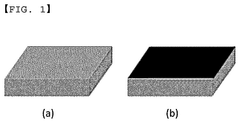
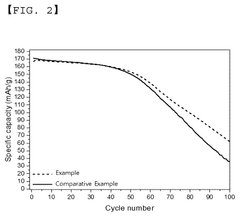
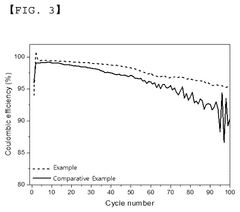
Deposition of lithium fluoride on surface of lithium metal and lithium secondary battery using the same
PatentPendingUS20240379940A1
Innovation
- A method of depositing lithium fluoride (LiF) on the surface of lithium metal using physical vapor deposition (PVD) or chemical vapor deposition (CVD) to reform the surface, allowing for improved reversibility and stability, with a deposition thickness of 0.01 to 1 μm, enhancing the performance of lithium metal as a negative electrode.
Composite positive electrode active mateiral, positive electrode mateiral and battery
PatentWO2022244416A1
Innovation
- A composite positive electrode active material is developed, coated with a fluoride solid electrolyte and a second material that produces lithium oxide or lithium fluoride upon reaction with water or hydrogen fluoride, effectively suppressing the formation of resistive layers and maintaining ionic conductivity.


Supply Chain Security for Strategic Materials
The global supply chain for lithium fluoride represents a critical concern for advanced electronics manufacturing, particularly in sensitive applications such as quantum computing, aerospace systems, and defense technologies. Current supply chains for this strategic material exhibit significant vulnerabilities, with production concentrated in a limited number of countries, primarily China, which controls approximately 63% of global lithium fluoride processing capacity.
This concentration creates substantial geopolitical risks, as trade tensions, export restrictions, or political conflicts could severely disrupt access to this essential material. The COVID-19 pandemic exposed these vulnerabilities when manufacturing shutdowns in key production regions led to severe shortages and price volatility, with lithium fluoride prices increasing by over 300% between 2020 and 2022.
Beyond geopolitical concerns, environmental and regulatory challenges further complicate supply chain security. Lithium fluoride production involves environmentally intensive processes that face increasing regulatory scrutiny in many jurisdictions. These regulations, while necessary for environmental protection, can create additional supply constraints and compliance costs that affect availability and pricing.
Quality control represents another critical dimension of supply chain security. The high-purity lithium fluoride required for sensitive electronics applications demands stringent quality standards that not all suppliers can consistently meet. Contamination or quality variations can compromise the performance of critical components, creating both technical and security risks in sensitive applications.
Industry leaders have begun implementing multi-faceted strategies to enhance supply chain resilience. These include diversifying supplier networks across multiple geographic regions, developing strategic stockpiles of critical materials, investing in recycling technologies to recover lithium fluoride from end-of-life products, and researching alternative materials that could potentially substitute for lithium fluoride in certain applications.
Governmental initiatives are also emerging to address these vulnerabilities. Several countries have classified lithium fluoride as a strategic material, implementing policies to support domestic production capacity and secure access through international partnerships. These include funding for research into more environmentally sustainable production methods and the development of international standards for quality assurance and supply chain transparency.
The future security of lithium fluoride supply chains will likely depend on coordinated efforts between industry, government, and research institutions to develop more resilient, transparent, and environmentally sustainable supply networks that can withstand geopolitical disruptions while meeting growing demand from advanced electronics sectors.
This concentration creates substantial geopolitical risks, as trade tensions, export restrictions, or political conflicts could severely disrupt access to this essential material. The COVID-19 pandemic exposed these vulnerabilities when manufacturing shutdowns in key production regions led to severe shortages and price volatility, with lithium fluoride prices increasing by over 300% between 2020 and 2022.
Beyond geopolitical concerns, environmental and regulatory challenges further complicate supply chain security. Lithium fluoride production involves environmentally intensive processes that face increasing regulatory scrutiny in many jurisdictions. These regulations, while necessary for environmental protection, can create additional supply constraints and compliance costs that affect availability and pricing.
Quality control represents another critical dimension of supply chain security. The high-purity lithium fluoride required for sensitive electronics applications demands stringent quality standards that not all suppliers can consistently meet. Contamination or quality variations can compromise the performance of critical components, creating both technical and security risks in sensitive applications.
Industry leaders have begun implementing multi-faceted strategies to enhance supply chain resilience. These include diversifying supplier networks across multiple geographic regions, developing strategic stockpiles of critical materials, investing in recycling technologies to recover lithium fluoride from end-of-life products, and researching alternative materials that could potentially substitute for lithium fluoride in certain applications.
Governmental initiatives are also emerging to address these vulnerabilities. Several countries have classified lithium fluoride as a strategic material, implementing policies to support domestic production capacity and secure access through international partnerships. These include funding for research into more environmentally sustainable production methods and the development of international standards for quality assurance and supply chain transparency.
The future security of lithium fluoride supply chains will likely depend on coordinated efforts between industry, government, and research institutions to develop more resilient, transparent, and environmentally sustainable supply networks that can withstand geopolitical disruptions while meeting growing demand from advanced electronics sectors.
Environmental and Safety Considerations for LiF
The environmental and safety considerations surrounding Lithium Fluoride (LiF) implementation in electronics require thorough examination as this material becomes increasingly vital for radiation-hardened components. LiF presents a complex profile of environmental impacts throughout its lifecycle, from mining and processing to disposal or recycling phases.
During extraction and processing, lithium mining operations can lead to significant water consumption, soil degradation, and potential groundwater contamination. The fluoride component similarly raises concerns regarding energy-intensive production processes and associated carbon emissions. However, compared to many alternative materials used in electronics, LiF's environmental footprint remains relatively modest due to the small quantities required for most applications.
In manufacturing environments, LiF presents moderate occupational hazards that necessitate appropriate handling protocols. While not acutely toxic in solid form, LiF dust can cause respiratory irritation and potential fluoride toxicity upon prolonged exposure. Standard industrial hygiene practices including proper ventilation systems, personal protective equipment, and regular workplace monitoring effectively mitigate these risks.
The stability of LiF in electronic components contributes positively to its safety profile during the use phase. Unlike many competing materials, LiF does not degrade under normal operating conditions, minimizing leaching concerns. Its exceptional thermal stability further reduces fire hazards in electronic applications, providing an additional safety advantage over organic alternatives.
End-of-life considerations reveal both challenges and opportunities. LiF-containing components require specialized recycling processes to recover valuable materials and prevent potential environmental contamination. Current recycling infrastructure for LiF remains underdeveloped, though emerging technologies show promise for more efficient recovery methods.
Regulatory frameworks governing LiF vary significantly across jurisdictions. In the European Union, the material falls under REACH regulations with specific handling and disposal requirements. The United States classifies LiF under moderate hazard categories, while developing nations often lack comprehensive regulatory oversight for this specialized material.
Future sustainability improvements focus on developing closed-loop recycling systems for LiF and reducing energy requirements during production. Research into bio-based extraction methods and greener synthesis pathways may further enhance the environmental profile of LiF-based electronic components, aligning with broader industry sustainability goals.
During extraction and processing, lithium mining operations can lead to significant water consumption, soil degradation, and potential groundwater contamination. The fluoride component similarly raises concerns regarding energy-intensive production processes and associated carbon emissions. However, compared to many alternative materials used in electronics, LiF's environmental footprint remains relatively modest due to the small quantities required for most applications.
In manufacturing environments, LiF presents moderate occupational hazards that necessitate appropriate handling protocols. While not acutely toxic in solid form, LiF dust can cause respiratory irritation and potential fluoride toxicity upon prolonged exposure. Standard industrial hygiene practices including proper ventilation systems, personal protective equipment, and regular workplace monitoring effectively mitigate these risks.
The stability of LiF in electronic components contributes positively to its safety profile during the use phase. Unlike many competing materials, LiF does not degrade under normal operating conditions, minimizing leaching concerns. Its exceptional thermal stability further reduces fire hazards in electronic applications, providing an additional safety advantage over organic alternatives.
End-of-life considerations reveal both challenges and opportunities. LiF-containing components require specialized recycling processes to recover valuable materials and prevent potential environmental contamination. Current recycling infrastructure for LiF remains underdeveloped, though emerging technologies show promise for more efficient recovery methods.
Regulatory frameworks governing LiF vary significantly across jurisdictions. In the European Union, the material falls under REACH regulations with specific handling and disposal requirements. The United States classifies LiF under moderate hazard categories, while developing nations often lack comprehensive regulatory oversight for this specialized material.
Future sustainability improvements focus on developing closed-loop recycling systems for LiF and reducing energy requirements during production. Research into bio-based extraction methods and greener synthesis pathways may further enhance the environmental profile of LiF-based electronic components, aligning with broader industry sustainability goals.
Unlock deeper insights with PatSnap Eureka Quick Research — get a full tech report to explore trends and direct your research. Try now!
Generate Your Research Report Instantly with AI Agent
Supercharge your innovation with PatSnap Eureka AI Agent Platform!