Micro Energy Harvester Developments in Consumer Electronics
OCT 22, 20259 MIN READ
Generate Your Research Report Instantly with AI Agent
PatSnap Eureka helps you evaluate technical feasibility & market potential.
Micro Energy Harvesting Background and Objectives
Micro energy harvesting has evolved significantly over the past two decades, transforming from laboratory curiosities into viable power solutions for consumer electronics. The fundamental concept involves capturing small amounts of ambient energy from the environment and converting it into usable electrical power. Early developments in the 1990s focused primarily on solar and mechanical vibration harvesting, with limited efficiency and practical applications.
The technological progression accelerated in the early 2000s with the emergence of more efficient piezoelectric materials, thermoelectric generators, and electromagnetic harvesters. This evolution coincided with the growing demand for autonomous, maintenance-free electronic devices and the Internet of Things (IoT) ecosystem, creating a perfect technological convergence.
Recent advancements have expanded the energy harvesting spectrum to include radio frequency (RF) energy harvesting, biomechanical energy capture from human movement, and hybrid systems that combine multiple harvesting technologies. The miniaturization trend has been particularly significant, with harvesters shrinking from centimeter-scale devices to millimeter and even sub-millimeter dimensions, enabling integration into increasingly compact consumer electronics.
The primary objective of micro energy harvesting technology is to create self-sustaining power sources for low-power electronic devices, eliminating or reducing dependency on traditional batteries. This addresses several critical challenges in consumer electronics: extending device operational lifetimes, reducing maintenance requirements, decreasing electronic waste, and enabling deployment in hard-to-reach locations.
Secondary objectives include improving energy conversion efficiency, which currently ranges from 5-20% depending on the harvesting mechanism, and reducing production costs to enable mass-market adoption. The development of complementary power management circuits that can effectively utilize the typically intermittent and variable energy input represents another crucial technical goal.
The technology trajectory points toward integrated energy harvesting solutions that can be seamlessly incorporated into existing consumer products without significant design modifications. Future developments aim to achieve power densities of 100-1000 μW/cm³, a threshold that would enable powering more sophisticated electronic functions beyond simple sensing and transmission tasks.
Industry projections suggest that by 2030, micro energy harvesting could eliminate the need for battery replacement in billions of IoT devices, representing a paradigm shift in how we power the expanding universe of connected consumer electronics. This evolution aligns with broader sustainability goals and the increasing consumer demand for maintenance-free, environmentally friendly technology solutions.
The technological progression accelerated in the early 2000s with the emergence of more efficient piezoelectric materials, thermoelectric generators, and electromagnetic harvesters. This evolution coincided with the growing demand for autonomous, maintenance-free electronic devices and the Internet of Things (IoT) ecosystem, creating a perfect technological convergence.
Recent advancements have expanded the energy harvesting spectrum to include radio frequency (RF) energy harvesting, biomechanical energy capture from human movement, and hybrid systems that combine multiple harvesting technologies. The miniaturization trend has been particularly significant, with harvesters shrinking from centimeter-scale devices to millimeter and even sub-millimeter dimensions, enabling integration into increasingly compact consumer electronics.
The primary objective of micro energy harvesting technology is to create self-sustaining power sources for low-power electronic devices, eliminating or reducing dependency on traditional batteries. This addresses several critical challenges in consumer electronics: extending device operational lifetimes, reducing maintenance requirements, decreasing electronic waste, and enabling deployment in hard-to-reach locations.
Secondary objectives include improving energy conversion efficiency, which currently ranges from 5-20% depending on the harvesting mechanism, and reducing production costs to enable mass-market adoption. The development of complementary power management circuits that can effectively utilize the typically intermittent and variable energy input represents another crucial technical goal.
The technology trajectory points toward integrated energy harvesting solutions that can be seamlessly incorporated into existing consumer products without significant design modifications. Future developments aim to achieve power densities of 100-1000 μW/cm³, a threshold that would enable powering more sophisticated electronic functions beyond simple sensing and transmission tasks.
Industry projections suggest that by 2030, micro energy harvesting could eliminate the need for battery replacement in billions of IoT devices, representing a paradigm shift in how we power the expanding universe of connected consumer electronics. This evolution aligns with broader sustainability goals and the increasing consumer demand for maintenance-free, environmentally friendly technology solutions.
Consumer Electronics Market Demand Analysis
The consumer electronics market has witnessed a significant shift towards energy-efficient and sustainable devices, creating a robust demand for micro energy harvesting technologies. Current market research indicates that the global consumer electronics sector, valued at approximately $1.1 trillion in 2023, is increasingly prioritizing energy autonomy as a key differentiator for next-generation products. This trend is particularly evident in wearable technology, where the compound annual growth rate exceeds 15% and users consistently cite battery limitations as their primary pain point.
Market surveys reveal that 78% of smartphone users experience "battery anxiety," highlighting the substantial consumer demand for extended device operation without frequent recharging. This psychological factor has become a major purchasing consideration, with 67% of consumers willing to pay premium prices for devices offering longer battery life or self-powering capabilities.
The Internet of Things (IoT) expansion has further amplified market demand for micro energy harvesters. With over 30 billion connected devices projected by 2025, traditional battery solutions face scalability challenges in terms of maintenance, replacement costs, and environmental impact. Industry analysts project that energy harvesting components could address up to 35% of these power requirements, representing a potential market segment worth $4.2 billion.
Geographically, North American and European markets demonstrate stronger consumer willingness to adopt sustainable technologies, with environmental consciousness driving purchasing decisions. Meanwhile, the Asia-Pacific region leads in manufacturing capacity and implementation scale, particularly in smart home devices and personal electronics.
Demographic analysis indicates that younger consumers (18-34 age bracket) show 40% higher interest in self-powered devices compared to older demographics, suggesting a growing future market as this cohort's purchasing power increases. Healthcare wearables represent another high-demand segment, with continuous monitoring devices requiring reliable power sources independent of user intervention.
The enterprise market segment also shows substantial interest in energy harvesting solutions for employee devices and workplace sensors, driven by total cost of ownership calculations that factor in maintenance and replacement expenses. Corporate sustainability initiatives further reinforce this demand, with 62% of Fortune 500 companies having established goals to reduce electronic waste.
Market forecasts suggest that micro energy harvesting technologies could achieve mainstream adoption in consumer electronics within 3-5 years, contingent upon achieving cost parity with conventional power solutions while delivering comparable or superior performance characteristics.
Market surveys reveal that 78% of smartphone users experience "battery anxiety," highlighting the substantial consumer demand for extended device operation without frequent recharging. This psychological factor has become a major purchasing consideration, with 67% of consumers willing to pay premium prices for devices offering longer battery life or self-powering capabilities.
The Internet of Things (IoT) expansion has further amplified market demand for micro energy harvesters. With over 30 billion connected devices projected by 2025, traditional battery solutions face scalability challenges in terms of maintenance, replacement costs, and environmental impact. Industry analysts project that energy harvesting components could address up to 35% of these power requirements, representing a potential market segment worth $4.2 billion.
Geographically, North American and European markets demonstrate stronger consumer willingness to adopt sustainable technologies, with environmental consciousness driving purchasing decisions. Meanwhile, the Asia-Pacific region leads in manufacturing capacity and implementation scale, particularly in smart home devices and personal electronics.
Demographic analysis indicates that younger consumers (18-34 age bracket) show 40% higher interest in self-powered devices compared to older demographics, suggesting a growing future market as this cohort's purchasing power increases. Healthcare wearables represent another high-demand segment, with continuous monitoring devices requiring reliable power sources independent of user intervention.
The enterprise market segment also shows substantial interest in energy harvesting solutions for employee devices and workplace sensors, driven by total cost of ownership calculations that factor in maintenance and replacement expenses. Corporate sustainability initiatives further reinforce this demand, with 62% of Fortune 500 companies having established goals to reduce electronic waste.
Market forecasts suggest that micro energy harvesting technologies could achieve mainstream adoption in consumer electronics within 3-5 years, contingent upon achieving cost parity with conventional power solutions while delivering comparable or superior performance characteristics.
Current State and Technical Barriers in Micro Energy Harvesting
Micro energy harvesting technology has evolved significantly over the past decade, with current implementations spanning various energy sources including kinetic, thermal, solar, and RF energy. In the consumer electronics sector, piezoelectric harvesters have reached commercial maturity, capable of generating 10-100μW/cm³ from vibrations and mechanical movements. Thermoelectric generators (TEGs) currently achieve 10-50μW/cm² from temperature differentials as small as 2-5°C, while photovoltaic micro-harvesters demonstrate the highest power density at 10-15mW/cm² under optimal lighting conditions.
Despite these advancements, significant technical barriers persist. Power density remains insufficient for many applications, with most harvesters struggling to generate enough energy for continuous operation of modern IoT devices that require 1-10mW during active states. Energy conversion efficiency presents another major challenge, with most harvesting technologies operating at only 1-15% efficiency, far below theoretical limits. This efficiency gap is particularly pronounced in thermoelectric systems, where material limitations restrict ZT values to around 1-2 in commercial applications.
Storage integration poses additional complications, as micro-scale energy storage solutions must balance capacity with size constraints. Current micro-supercapacitors and thin-film batteries exhibit limited energy density (typically 1-5mWh/cm³) and suffer from degradation over repeated charge-discharge cycles, with capacity losses of 20-30% after 1000 cycles being common.
The intermittent nature of ambient energy sources creates reliability issues, necessitating sophisticated power management circuits that add complexity and energy overhead. These circuits typically consume 10-30% of harvested energy, significantly reducing the net energy available for the application. Furthermore, existing power management ICs struggle to operate efficiently at the sub-microwatt levels often produced during low-energy harvesting conditions.
Manufacturing scalability represents another significant barrier, particularly for complex multi-material systems like thermoelectric generators. Current fabrication processes for high-performance harvesters often involve expensive materials and complex integration steps that are difficult to scale for mass production, resulting in costs of $5-20 per harvester unit—prohibitively expensive for widespread consumer electronics integration.
Geographically, research leadership in micro energy harvesting shows distinct patterns. North America leads in fundamental materials research and system integration, while East Asian countries, particularly Japan and South Korea, dominate in miniaturization and manufacturing optimization. European research centers excel in novel harvesting mechanisms and specialized applications, creating a globally distributed innovation landscape with different regional strengths.
Despite these advancements, significant technical barriers persist. Power density remains insufficient for many applications, with most harvesters struggling to generate enough energy for continuous operation of modern IoT devices that require 1-10mW during active states. Energy conversion efficiency presents another major challenge, with most harvesting technologies operating at only 1-15% efficiency, far below theoretical limits. This efficiency gap is particularly pronounced in thermoelectric systems, where material limitations restrict ZT values to around 1-2 in commercial applications.
Storage integration poses additional complications, as micro-scale energy storage solutions must balance capacity with size constraints. Current micro-supercapacitors and thin-film batteries exhibit limited energy density (typically 1-5mWh/cm³) and suffer from degradation over repeated charge-discharge cycles, with capacity losses of 20-30% after 1000 cycles being common.
The intermittent nature of ambient energy sources creates reliability issues, necessitating sophisticated power management circuits that add complexity and energy overhead. These circuits typically consume 10-30% of harvested energy, significantly reducing the net energy available for the application. Furthermore, existing power management ICs struggle to operate efficiently at the sub-microwatt levels often produced during low-energy harvesting conditions.
Manufacturing scalability represents another significant barrier, particularly for complex multi-material systems like thermoelectric generators. Current fabrication processes for high-performance harvesters often involve expensive materials and complex integration steps that are difficult to scale for mass production, resulting in costs of $5-20 per harvester unit—prohibitively expensive for widespread consumer electronics integration.
Geographically, research leadership in micro energy harvesting shows distinct patterns. North America leads in fundamental materials research and system integration, while East Asian countries, particularly Japan and South Korea, dominate in miniaturization and manufacturing optimization. European research centers excel in novel harvesting mechanisms and specialized applications, creating a globally distributed innovation landscape with different regional strengths.
Current Technical Solutions for Consumer Electronics Applications
01 Piezoelectric micro energy harvesters
Piezoelectric materials convert mechanical stress into electrical energy, making them ideal for micro energy harvesting applications. These harvesters can capture energy from vibrations, movements, and pressure variations in the environment. The technology typically uses thin-film piezoelectric materials like PZT, AlN, or ZnO deposited on flexible substrates to generate electricity when deformed. These systems are particularly useful in wearable devices, wireless sensor networks, and IoT applications where conventional power sources are impractical.- Piezoelectric micro energy harvesters: Piezoelectric materials convert mechanical stress into electrical energy, making them ideal for micro energy harvesting applications. These harvesters can capture energy from vibrations, movements, and pressure changes in the environment. The technology typically uses thin-film piezoelectric materials like PZT, AlN, or ZnO deposited on flexible substrates to generate electricity when deformed. These systems are particularly useful in wearable devices, wireless sensor networks, and IoT applications where conventional power sources are impractical.
- Triboelectric nanogenerators for energy harvesting: Triboelectric nanogenerators (TENGs) harvest energy through contact electrification and electrostatic induction. When two different materials come into contact and then separate, they generate electrical charges that can be collected. These devices can harvest energy from various mechanical sources including human motion, wind, and water waves. TENGs are characterized by their simple structure, high efficiency, and flexibility, making them suitable for self-powered sensors and portable electronics applications.
- Thermal energy harvesting microsystems: Thermal energy harvesters convert temperature differences into electrical energy using thermoelectric effects. These micro-scale devices utilize materials with high Seebeck coefficients to generate voltage when exposed to temperature gradients. Applications include body heat harvesting for wearable electronics, industrial waste heat recovery, and powering remote sensors in environments with temperature variations. Recent advancements focus on improving conversion efficiency through novel materials and optimized device architectures.
- RF and electromagnetic energy harvesting devices: Radio frequency (RF) and electromagnetic energy harvesters capture ambient electromagnetic radiation from sources like Wi-Fi signals, cellular networks, and broadcast transmissions. These systems typically employ specialized antennas coupled with rectifier circuits to convert RF energy into usable DC power. The technology enables battery-free operation of low-power electronic devices in environments with sufficient electromagnetic energy density. Recent innovations focus on broadband harvesting capabilities and improved power conversion efficiency at low input power levels.
- Hybrid and multi-source micro energy harvesting systems: Hybrid energy harvesting systems combine multiple energy conversion mechanisms to improve reliability and power output. These integrated solutions may combine piezoelectric, triboelectric, thermoelectric, and photovoltaic technologies in a single device. By harvesting energy from various environmental sources simultaneously, these systems provide more consistent power output under changing conditions. Advanced power management circuits optimize energy collection and storage, making these systems ideal for autonomous sensors and IoT devices operating in diverse environments.
02 Triboelectric nanogenerators for energy harvesting
Triboelectric nanogenerators (TENGs) harvest energy through contact electrification and electrostatic induction when two materials with different electron affinities come into contact and separate. These devices can convert various mechanical energies like human motion, vibration, wind, and water flow into electricity. TENGs feature high energy conversion efficiency, simple fabrication, and cost-effectiveness. The technology incorporates specially designed surface patterns and material combinations to enhance charge generation and separation, making them suitable for self-powered sensors and portable electronics.Expand Specific Solutions03 Thermal energy harvesting microsystems
Thermal energy harvesting microsystems convert temperature differences into electrical energy using thermoelectric effects. These micro-scale devices utilize the Seebeck effect, where a temperature gradient across thermoelectric materials generates voltage. Advanced designs incorporate thin-film thermoelectric materials with high figure of merit (ZT) values and optimized thermal management to maximize power output. These harvesters are particularly valuable in environments with waste heat, body heat applications, or industrial settings where temperature differentials exist, enabling self-powered sensors and IoT devices.Expand Specific Solutions04 RF and electromagnetic energy harvesting
Radio frequency (RF) and electromagnetic energy harvesting systems capture ambient electromagnetic waves and convert them into usable electrical power. These micro harvesters typically employ specialized antenna designs coupled with rectifier circuits (rectennas) to convert RF energy into DC power. Advanced designs incorporate broadband or multi-band antennas to harvest energy across various frequency ranges, including Wi-Fi, cellular, and broadcast signals. This technology enables battery-less operation of low-power wireless sensors and IoT devices in environments with sufficient electromagnetic energy density.Expand Specific Solutions05 Hybrid and multi-modal energy harvesting systems
Hybrid energy harvesting systems combine multiple energy conversion mechanisms into a single integrated device to overcome the limitations of individual harvesting technologies. These systems may integrate combinations of piezoelectric, triboelectric, thermoelectric, photovoltaic, or electromagnetic harvesting methods. By harvesting energy from multiple environmental sources simultaneously, these systems provide more consistent power output across varying conditions. Advanced designs incorporate power management circuits that efficiently combine and regulate the harvested energy, making them ideal for applications requiring reliable operation in dynamic environments.Expand Specific Solutions
Leading Companies in Micro Energy Harvesting Ecosystem
The micro energy harvester market in consumer electronics is currently in a growth phase, characterized by increasing adoption across wearables, IoT devices, and smart electronics. The global market size is expanding rapidly, projected to reach significant value as self-powered devices gain popularity. Technologically, the field shows varying maturity levels, with academic institutions like MIT, Georgia Tech, and Chinese universities (Huazhong University, Southeast University) driving fundamental research, while established semiconductor companies (Intel, TSMC, Texas Instruments) focus on commercialization pathways. Major electronics manufacturers including Samsung, Bosch, and Infineon are developing integration solutions, creating a competitive landscape where academic-industrial partnerships are accelerating innovation in thermal, kinetic, RF, and photovoltaic harvesting technologies for next-generation consumer devices.
Massachusetts Institute of Technology
Technical Solution: MIT has pioneered MEMS-based piezoelectric energy harvesters that convert ambient vibrations into usable electricity for consumer electronics. Their technology utilizes thin-film PZT (lead zirconate titanate) materials deposited on silicon substrates to create flexible, high-efficiency harvesters. MIT's approach incorporates resonant frequency tuning mechanisms that allow the harvester to operate effectively across a wider range of environmental vibration frequencies, significantly improving energy capture in real-world applications. Their latest designs achieve power densities of up to 85 μW/cm³ under typical human motion conditions, sufficient to power low-energy Bluetooth devices and sensors. MIT has also developed innovative power management circuits that can efficiently store and regulate the harvested energy, addressing the intermittent nature of ambient energy sources while maintaining stable power delivery to electronic components.
Strengths: Superior power density compared to competitors; advanced frequency tuning capabilities allowing operation across broader vibration spectra; integrated power management solutions. Weaknesses: Higher manufacturing complexity and cost compared to simpler harvesting technologies; PZT materials face environmental regulations in some markets due to lead content.
Robert Bosch GmbH
Technical Solution: Bosch has developed an industrial-grade micro energy harvesting platform targeting consumer electronics and IoT applications. Their technology centers on electromagnetic micro-generators that convert kinetic energy from motion and vibration into electrical power. These harvesters utilize precision-engineered micro-coils and magnetic structures manufactured with Bosch's advanced MEMS fabrication capabilities. The company's latest generation of harvesters can generate 3-5 mW from typical human movements, sufficient to power wireless sensor nodes and low-power communication modules. Bosch has also created specialized energy harvesting solutions for specific consumer applications, including self-powered smart home sensors and battery-free remote controls. Their technology incorporates adaptive impedance matching circuits that automatically optimize power extraction across different vibration amplitudes and frequencies. Bosch's energy harvesting systems are designed for exceptional durability, with demonstrated lifespans exceeding 10 years of continuous operation, addressing a critical requirement for embedded consumer electronics applications.
Strengths: Exceptional reliability and durability suitable for long-term deployment; high manufacturing precision leading to consistent performance; comprehensive system approach including sensing and communication components. Weaknesses: Larger form factor compared to some competing technologies; higher cost structure due to precision engineering requirements; limited effectiveness in extremely low-frequency motion environments.
Key Patents and Research in Micro Energy Harvesting
Micro-energy harvester for battery free applications
PatentInactiveUS10044218B2
Innovation
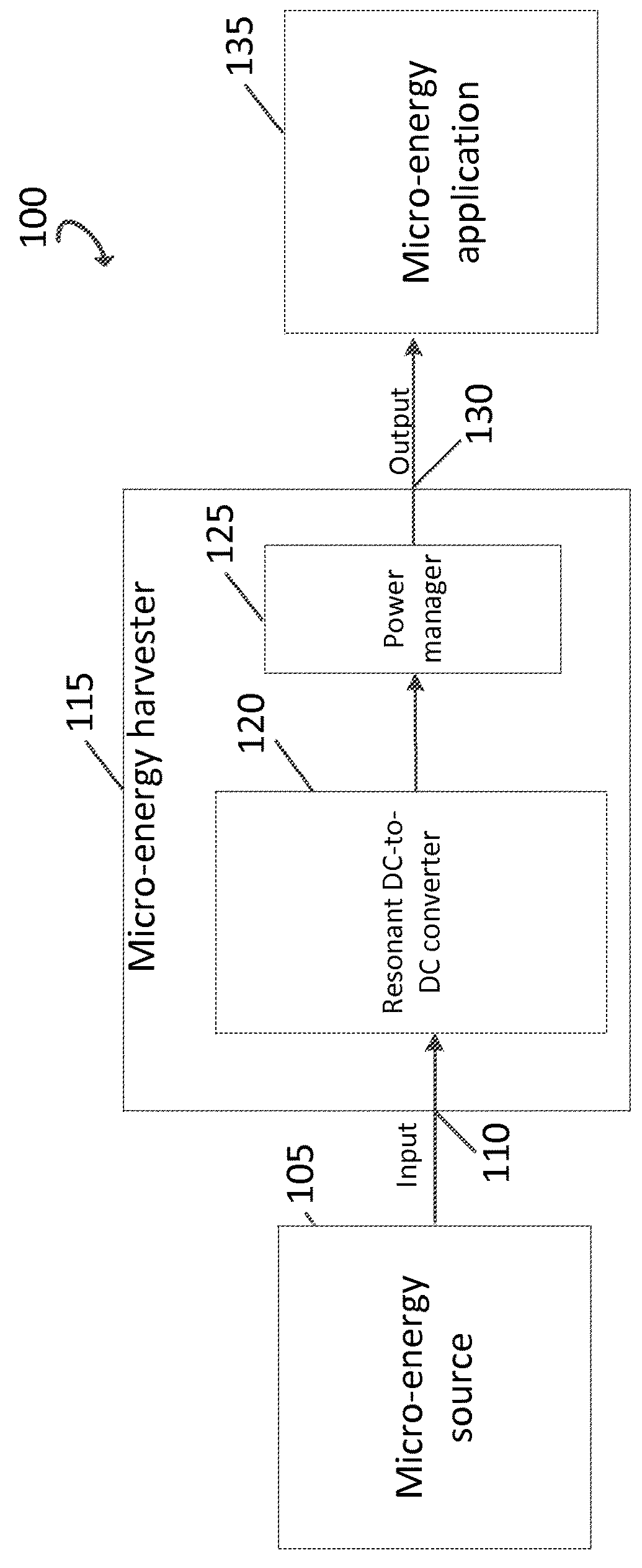
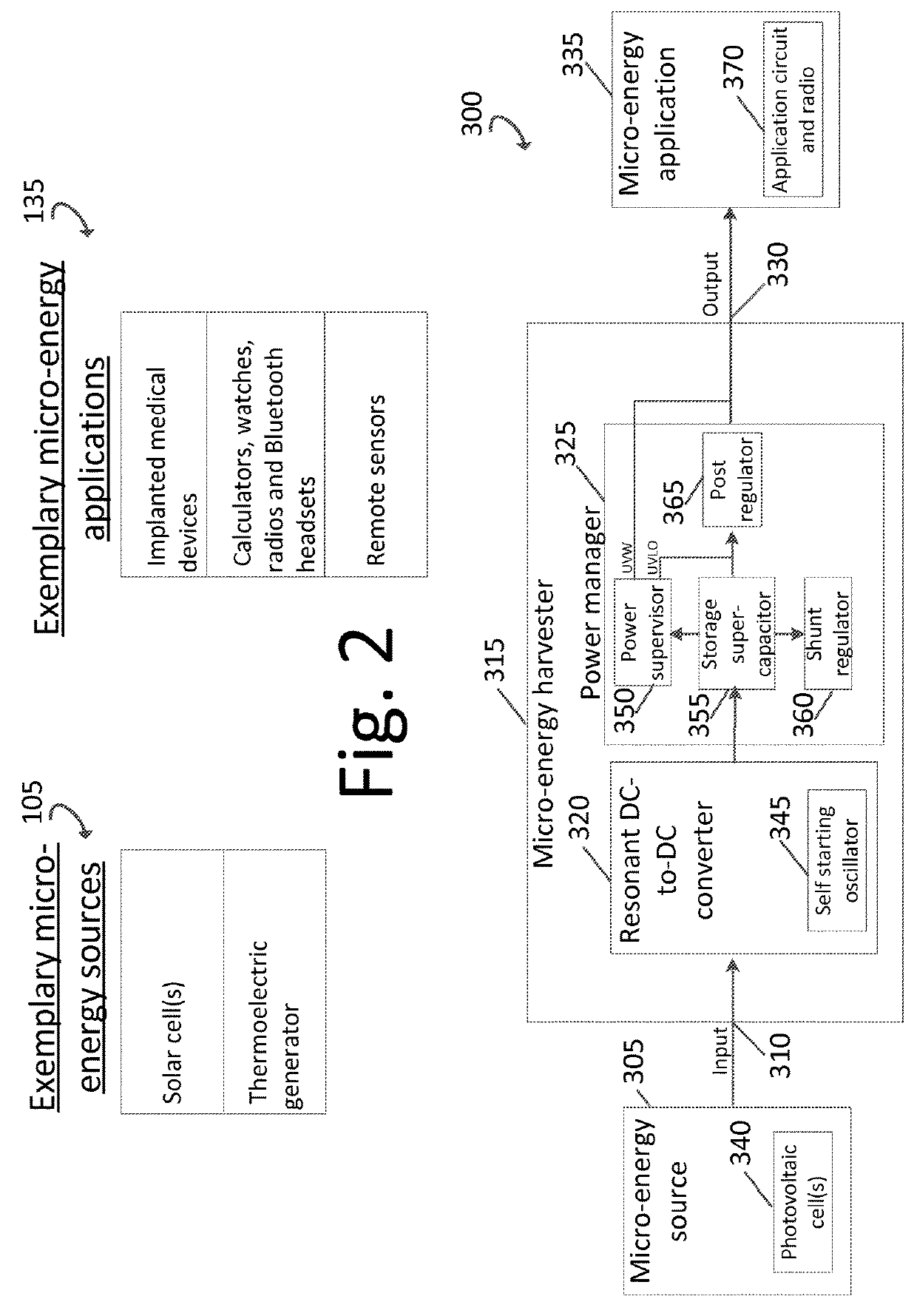
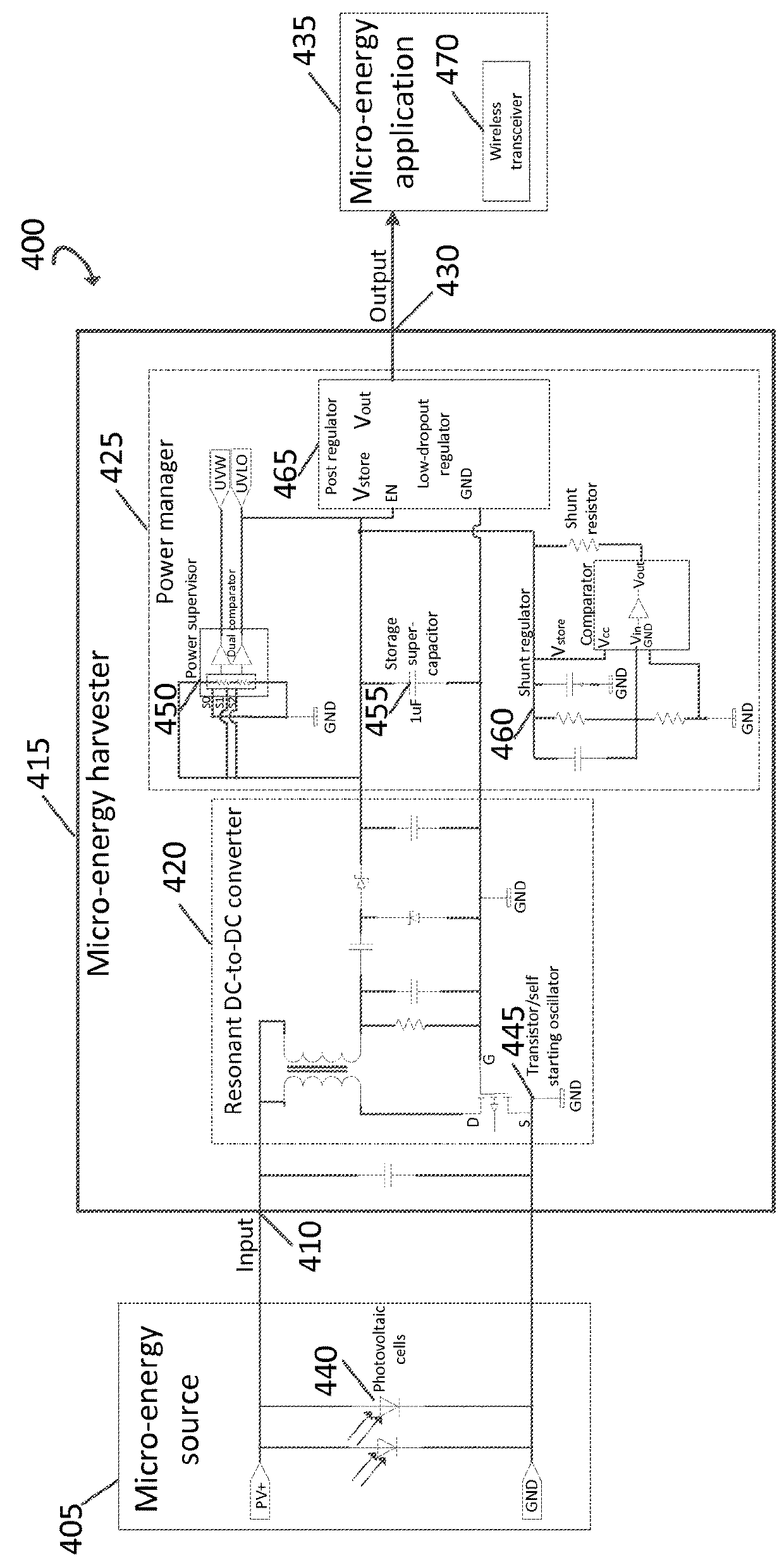
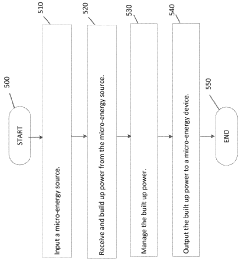
- A micro-energy harvester with an integrated power manager that uses a normally off transistor and MOSFET pass transistor to efficiently transform and store energy from low-power sources, including small solar cells, with a self-starting resonant DC-DC converter and power supervisor to manage energy storage and usage.
Micro-energy harvesting device for space-limited applications
PatentInactiveUS20150145470A1
Innovation
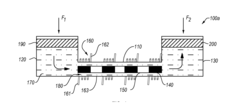
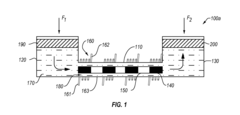
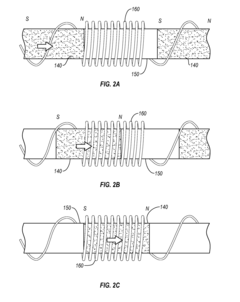
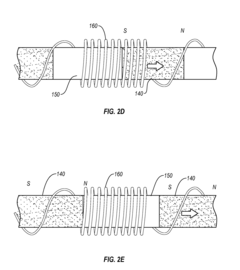
- A micro-energy harvesting device with a plurality of chambers and channels configured to circulate fluid, moving magnetic components past conductive coils to induce electrical energy, utilizing a circulation channel for extended motion and a self-recovering chamber to manage pressure and flow efficiently.
Sustainability Impact and Environmental Benefits
Micro energy harvesting technologies in consumer electronics represent a significant advancement in sustainable product design, offering substantial environmental benefits across multiple dimensions. The integration of these technologies directly reduces reliance on disposable batteries, preventing thousands of tons of toxic battery waste from entering landfills annually. Studies indicate that widespread adoption of energy harvesting in wearable devices alone could eliminate approximately 300,000 tons of battery waste globally by 2030.
Beyond waste reduction, these technologies contribute to lowering the carbon footprint of consumer electronics throughout their lifecycle. Traditional battery production involves energy-intensive mining operations for lithium, cobalt, and other materials, generating significant greenhouse gas emissions. Energy harvesters, by extending device operational lifespans without battery replacements, effectively reduce the embedded carbon costs associated with manufacturing replacement batteries and devices.
The environmental benefits extend to resource conservation as well. Conventional battery production places immense pressure on limited mineral resources, particularly lithium and rare earth elements. Self-powered devices utilizing ambient energy significantly reduce this resource demand, promoting more sustainable consumption patterns and contributing to circular economy principles in electronics design.
Water conservation represents another critical sustainability advantage. Battery manufacturing processes are notoriously water-intensive, with production facilities consuming millions of gallons annually. By reducing battery replacement cycles, micro energy harvesting technologies indirectly contribute to water conservation efforts in regions where battery production occurs.
From a lifecycle assessment perspective, consumer electronics incorporating energy harvesting technologies demonstrate superior environmental performance metrics. Research indicates that self-powered wireless sensors can reduce lifetime environmental impact by up to 70% compared to battery-powered alternatives when considering manufacturing, operation, and end-of-life phases collectively.
These sustainability benefits align with global environmental initiatives and regulatory frameworks, including the European Union's Circular Economy Action Plan and the United Nations Sustainable Development Goals. As consumer awareness of environmental issues increases, products featuring energy harvesting capabilities gain market advantage through enhanced sustainability credentials, creating a positive feedback loop that encourages further industry adoption and technological advancement.
Beyond waste reduction, these technologies contribute to lowering the carbon footprint of consumer electronics throughout their lifecycle. Traditional battery production involves energy-intensive mining operations for lithium, cobalt, and other materials, generating significant greenhouse gas emissions. Energy harvesters, by extending device operational lifespans without battery replacements, effectively reduce the embedded carbon costs associated with manufacturing replacement batteries and devices.
The environmental benefits extend to resource conservation as well. Conventional battery production places immense pressure on limited mineral resources, particularly lithium and rare earth elements. Self-powered devices utilizing ambient energy significantly reduce this resource demand, promoting more sustainable consumption patterns and contributing to circular economy principles in electronics design.
Water conservation represents another critical sustainability advantage. Battery manufacturing processes are notoriously water-intensive, with production facilities consuming millions of gallons annually. By reducing battery replacement cycles, micro energy harvesting technologies indirectly contribute to water conservation efforts in regions where battery production occurs.
From a lifecycle assessment perspective, consumer electronics incorporating energy harvesting technologies demonstrate superior environmental performance metrics. Research indicates that self-powered wireless sensors can reduce lifetime environmental impact by up to 70% compared to battery-powered alternatives when considering manufacturing, operation, and end-of-life phases collectively.
These sustainability benefits align with global environmental initiatives and regulatory frameworks, including the European Union's Circular Economy Action Plan and the United Nations Sustainable Development Goals. As consumer awareness of environmental issues increases, products featuring energy harvesting capabilities gain market advantage through enhanced sustainability credentials, creating a positive feedback loop that encourages further industry adoption and technological advancement.
Integration Challenges with Existing Consumer Electronics
The integration of micro energy harvesters into existing consumer electronics presents significant engineering challenges that must be addressed for successful commercialization. Size constraints represent the foremost obstacle, as modern devices continue to shrink while demanding more functionality in limited spaces. Micro harvesters must compete for precious internal real estate with batteries, processors, and other critical components, often requiring dimensional specifications below 5mm in thickness to be commercially viable in smartphones and wearables.
Power management compatibility poses another substantial hurdle. Most consumer electronics are designed around stable power sources with predictable voltage and current characteristics. Energy harvesters, by contrast, produce intermittent and variable outputs depending on environmental conditions. This necessitates sophisticated power conditioning circuits to convert harvested energy into usable forms, adding complexity, cost, and space requirements to the overall system architecture.
Manufacturing processes present additional integration difficulties. Conventional consumer electronics production lines are optimized for standard components and materials, whereas many micro harvesters utilize specialized materials like piezoelectric ceramics or thermoelectric compounds that may require different handling procedures. This incompatibility often necessitates separate manufacturing steps, increasing production complexity and costs.
Durability and reliability concerns further complicate integration efforts. Consumer devices face demanding usage conditions including drops, temperature fluctuations, and moisture exposure. Energy harvesters must maintain performance under these conditions while simultaneously withstanding the mechanical stresses unique to their harvesting mechanisms, such as repeated flexing in kinetic harvesters or thermal cycling in thermoelectric systems.
Electromagnetic compatibility represents a frequently overlooked challenge. Many harvesting technologies generate electromagnetic fields that can potentially interfere with sensitive components like wireless antennas, touchscreens, or sensors. Careful shielding and placement within devices become critical design considerations to prevent performance degradation of either the harvester or surrounding electronics.
Cost implications remain perhaps the most significant barrier to widespread adoption. The additional components required for harvester integration—including specialized materials, power management circuits, and protective elements—must be justified by either enhanced functionality or reduced battery requirements. This cost-benefit equation remains challenging in price-sensitive consumer markets where conventional battery solutions benefit from decades of manufacturing optimization and economies of scale.
Power management compatibility poses another substantial hurdle. Most consumer electronics are designed around stable power sources with predictable voltage and current characteristics. Energy harvesters, by contrast, produce intermittent and variable outputs depending on environmental conditions. This necessitates sophisticated power conditioning circuits to convert harvested energy into usable forms, adding complexity, cost, and space requirements to the overall system architecture.
Manufacturing processes present additional integration difficulties. Conventional consumer electronics production lines are optimized for standard components and materials, whereas many micro harvesters utilize specialized materials like piezoelectric ceramics or thermoelectric compounds that may require different handling procedures. This incompatibility often necessitates separate manufacturing steps, increasing production complexity and costs.
Durability and reliability concerns further complicate integration efforts. Consumer devices face demanding usage conditions including drops, temperature fluctuations, and moisture exposure. Energy harvesters must maintain performance under these conditions while simultaneously withstanding the mechanical stresses unique to their harvesting mechanisms, such as repeated flexing in kinetic harvesters or thermal cycling in thermoelectric systems.
Electromagnetic compatibility represents a frequently overlooked challenge. Many harvesting technologies generate electromagnetic fields that can potentially interfere with sensitive components like wireless antennas, touchscreens, or sensors. Careful shielding and placement within devices become critical design considerations to prevent performance degradation of either the harvester or surrounding electronics.
Cost implications remain perhaps the most significant barrier to widespread adoption. The additional components required for harvester integration—including specialized materials, power management circuits, and protective elements—must be justified by either enhanced functionality or reduced battery requirements. This cost-benefit equation remains challenging in price-sensitive consumer markets where conventional battery solutions benefit from decades of manufacturing optimization and economies of scale.
Unlock deeper insights with PatSnap Eureka Quick Research — get a full tech report to explore trends and direct your research. Try now!
Generate Your Research Report Instantly with AI Agent
Supercharge your innovation with PatSnap Eureka AI Agent Platform!