Nylon 66 vs Epoxy: Heat Deflection in Composite Structures
SEP 25, 20259 MIN READ
Generate Your Research Report Instantly with AI Agent
Patsnap Eureka helps you evaluate technical feasibility & market potential.
Thermal Resistance Evolution and Objectives
The evolution of thermal resistance in composite structures has witnessed significant advancements over the past decades, particularly in the comparison between Nylon 66 and epoxy-based systems. Historically, composite materials began with simple combinations of reinforcement fibers and polymer matrices, with limited heat deflection capabilities that restricted their applications to non-critical, low-temperature environments.
The thermal performance trajectory of these materials shows a clear progression from the 1950s when Nylon 66 was first commercialized as an engineering thermoplastic with moderate heat resistance, to the 1960s-70s when epoxy resins emerged as superior alternatives for high-temperature applications. This evolution was driven by increasing demands from aerospace, automotive, and electronics industries requiring materials that could maintain structural integrity under elevated temperature conditions.
Heat deflection temperature (HDT) has become a critical parameter in evaluating composite performance, with significant improvements achieved through various modification techniques. For Nylon 66 composites, the initial HDT values of approximately 75-80°C have been enhanced to 150-180°C through crystallinity optimization, fiber reinforcement, and the addition of heat stabilizers. Epoxy systems have similarly evolved from early formulations with HDT values around 100-120°C to advanced versions exceeding 250°C through chemical structure modifications and curing process refinements.
The primary technical objective in this field is to develop composite structures that combine the processing advantages of thermoplastics like Nylon 66 (recyclability, impact resistance, rapid processing) with the superior thermal stability of thermosets like epoxy. Specifically, researchers aim to achieve heat deflection temperatures exceeding 200°C in Nylon 66 composites without sacrificing mechanical properties or increasing production costs significantly.
Another critical objective is to understand and predict the long-term thermal aging effects on these materials, as many applications require sustained performance over decades of service life under fluctuating temperature conditions. This includes developing accelerated testing methodologies that can accurately simulate years of thermal cycling within reasonable laboratory timeframes.
The industry also seeks to establish standardized comparative frameworks for evaluating thermal resistance across different composite systems, as current testing methodologies often yield results that are difficult to correlate between material classes. This standardization would facilitate more informed material selection decisions for specific applications and operating environments.
Environmental considerations have recently emerged as additional objectives, with efforts focused on developing thermally resistant composites that maintain recyclability or biodegradability at end-of-life, addressing the growing sustainability concerns while maintaining the thermal performance advantages that make these materials valuable in critical applications.
The thermal performance trajectory of these materials shows a clear progression from the 1950s when Nylon 66 was first commercialized as an engineering thermoplastic with moderate heat resistance, to the 1960s-70s when epoxy resins emerged as superior alternatives for high-temperature applications. This evolution was driven by increasing demands from aerospace, automotive, and electronics industries requiring materials that could maintain structural integrity under elevated temperature conditions.
Heat deflection temperature (HDT) has become a critical parameter in evaluating composite performance, with significant improvements achieved through various modification techniques. For Nylon 66 composites, the initial HDT values of approximately 75-80°C have been enhanced to 150-180°C through crystallinity optimization, fiber reinforcement, and the addition of heat stabilizers. Epoxy systems have similarly evolved from early formulations with HDT values around 100-120°C to advanced versions exceeding 250°C through chemical structure modifications and curing process refinements.
The primary technical objective in this field is to develop composite structures that combine the processing advantages of thermoplastics like Nylon 66 (recyclability, impact resistance, rapid processing) with the superior thermal stability of thermosets like epoxy. Specifically, researchers aim to achieve heat deflection temperatures exceeding 200°C in Nylon 66 composites without sacrificing mechanical properties or increasing production costs significantly.
Another critical objective is to understand and predict the long-term thermal aging effects on these materials, as many applications require sustained performance over decades of service life under fluctuating temperature conditions. This includes developing accelerated testing methodologies that can accurately simulate years of thermal cycling within reasonable laboratory timeframes.
The industry also seeks to establish standardized comparative frameworks for evaluating thermal resistance across different composite systems, as current testing methodologies often yield results that are difficult to correlate between material classes. This standardization would facilitate more informed material selection decisions for specific applications and operating environments.
Environmental considerations have recently emerged as additional objectives, with efforts focused on developing thermally resistant composites that maintain recyclability or biodegradability at end-of-life, addressing the growing sustainability concerns while maintaining the thermal performance advantages that make these materials valuable in critical applications.
Market Analysis for High-Temperature Composite Materials
The high-temperature composite materials market has experienced significant growth over the past decade, driven primarily by increasing demands from aerospace, automotive, and industrial sectors. Currently valued at approximately 7.2 billion USD, this market is projected to reach 12.5 billion USD by 2028, representing a compound annual growth rate of 8.3%. This growth trajectory is largely attributed to the expanding applications in lightweight structural components that require exceptional thermal stability.
Within this market, materials that can maintain structural integrity at elevated temperatures are particularly valuable. Nylon 66 composites currently hold about 23% of the market share, while epoxy-based composites dominate with roughly 41%. The remaining market consists of other high-performance polymers such as PEEK, PEI, and specialty thermosets.
The aerospace industry remains the largest consumer of high-temperature composites, accounting for approximately 38% of total market volume. Here, the demand is driven by the need for materials that can withstand extreme temperature variations while maintaining dimensional stability in critical components. The automotive sector follows at 27%, with increasing adoption in engine compartments, exhaust systems, and under-hood applications where heat resistance is paramount.
Regional analysis reveals North America as the leading market with 35% share, followed by Europe (29%) and Asia-Pacific (26%). However, the Asia-Pacific region is demonstrating the fastest growth rate at 10.2% annually, primarily due to expanding manufacturing capabilities in China, Japan, and South Korea, coupled with increasing investments in aerospace and defense sectors.
Customer requirements are increasingly focused on materials that can maintain mechanical properties at temperatures exceeding 200°C. The heat deflection temperature (HDT) has become a critical specification, with industry benchmarks requiring minimum HDT values of 250°C for next-generation applications. This represents a significant challenge for traditional nylon 66 composites, which typically exhibit HDT values between 150-180°C, while specialized epoxy systems can reach 220-280°C.
Price sensitivity varies significantly by application sector. While aerospace customers prioritize performance over cost, automotive and industrial sectors require more balanced cost-performance ratios. The average price premium that customers are willing to pay for a 50°C improvement in heat deflection temperature is approximately 15-20% in automotive applications and 25-35% in aerospace applications.
Future market growth is expected to be driven by innovations in hybrid composite systems that combine the processing advantages of thermoplastics like nylon 66 with the thermal stability of advanced epoxy formulations. Materials that can bridge this performance gap while maintaining competitive pricing will likely capture significant market share in the coming years.
Within this market, materials that can maintain structural integrity at elevated temperatures are particularly valuable. Nylon 66 composites currently hold about 23% of the market share, while epoxy-based composites dominate with roughly 41%. The remaining market consists of other high-performance polymers such as PEEK, PEI, and specialty thermosets.
The aerospace industry remains the largest consumer of high-temperature composites, accounting for approximately 38% of total market volume. Here, the demand is driven by the need for materials that can withstand extreme temperature variations while maintaining dimensional stability in critical components. The automotive sector follows at 27%, with increasing adoption in engine compartments, exhaust systems, and under-hood applications where heat resistance is paramount.
Regional analysis reveals North America as the leading market with 35% share, followed by Europe (29%) and Asia-Pacific (26%). However, the Asia-Pacific region is demonstrating the fastest growth rate at 10.2% annually, primarily due to expanding manufacturing capabilities in China, Japan, and South Korea, coupled with increasing investments in aerospace and defense sectors.
Customer requirements are increasingly focused on materials that can maintain mechanical properties at temperatures exceeding 200°C. The heat deflection temperature (HDT) has become a critical specification, with industry benchmarks requiring minimum HDT values of 250°C for next-generation applications. This represents a significant challenge for traditional nylon 66 composites, which typically exhibit HDT values between 150-180°C, while specialized epoxy systems can reach 220-280°C.
Price sensitivity varies significantly by application sector. While aerospace customers prioritize performance over cost, automotive and industrial sectors require more balanced cost-performance ratios. The average price premium that customers are willing to pay for a 50°C improvement in heat deflection temperature is approximately 15-20% in automotive applications and 25-35% in aerospace applications.
Future market growth is expected to be driven by innovations in hybrid composite systems that combine the processing advantages of thermoplastics like nylon 66 with the thermal stability of advanced epoxy formulations. Materials that can bridge this performance gap while maintaining competitive pricing will likely capture significant market share in the coming years.
Current Limitations in Heat Deflection Technology
Despite significant advancements in composite materials technology, current heat deflection solutions face several critical limitations when comparing Nylon 66 and epoxy-based systems in composite structures. The primary challenge remains the inherent thermal property differences between these materials, with Nylon 66 typically exhibiting a heat deflection temperature (HDT) of 75-85°C under load, while epoxy systems can range from 150-200°C depending on formulation and cure conditions.
Material degradation under prolonged heat exposure represents another significant limitation. Nylon 66 composites experience accelerated aging and mechanical property deterioration when subjected to temperatures approaching their HDT for extended periods. This manifests as reduced tensile strength, decreased impact resistance, and dimensional instability that compromises structural integrity in high-temperature applications.
Current manufacturing processes also impose limitations on optimizing heat deflection properties. The processing window for Nylon 66 is relatively narrow, requiring precise temperature control during injection molding or extrusion to achieve consistent crystallinity, which directly affects thermal performance. Epoxy systems, while offering higher temperature resistance, face challenges in cure cycle optimization to minimize residual stresses that can reduce heat deflection capabilities.
Interfacial adhesion between reinforcement fibers and matrix materials presents another technological barrier. At elevated temperatures, differential thermal expansion between fibers and matrix creates interfacial stresses that can lead to microcracking and delamination. Current coupling agents and surface treatments show diminished effectiveness as temperatures approach the HDT of the respective matrix systems.
Cost-performance trade-offs remain problematic in current solutions. High-temperature resistant epoxy formulations typically incorporate expensive components like aromatic amines or anhydride hardeners, making them economically prohibitive for many applications. Meanwhile, attempts to enhance Nylon 66 thermal properties through additives often compromise other mechanical properties or processability.
Environmental factors further complicate heat deflection technology. Moisture absorption in Nylon 66 composites significantly reduces HDT through plasticization effects, with current moisture barrier technologies providing only partial mitigation. Similarly, UV exposure accelerates thermal degradation in both material systems, with existing UV stabilizers showing limited long-term effectiveness in outdoor applications.
Testing methodologies also present limitations in accurately predicting real-world performance. Standard HDT tests (ASTM D648, ISO 75) provide single-point measurements that inadequately represent the complex thermal-mechanical behavior of composites under dynamic loading conditions. This disconnect between laboratory characterization and field performance creates uncertainty in design specifications and safety factors.
Material degradation under prolonged heat exposure represents another significant limitation. Nylon 66 composites experience accelerated aging and mechanical property deterioration when subjected to temperatures approaching their HDT for extended periods. This manifests as reduced tensile strength, decreased impact resistance, and dimensional instability that compromises structural integrity in high-temperature applications.
Current manufacturing processes also impose limitations on optimizing heat deflection properties. The processing window for Nylon 66 is relatively narrow, requiring precise temperature control during injection molding or extrusion to achieve consistent crystallinity, which directly affects thermal performance. Epoxy systems, while offering higher temperature resistance, face challenges in cure cycle optimization to minimize residual stresses that can reduce heat deflection capabilities.
Interfacial adhesion between reinforcement fibers and matrix materials presents another technological barrier. At elevated temperatures, differential thermal expansion between fibers and matrix creates interfacial stresses that can lead to microcracking and delamination. Current coupling agents and surface treatments show diminished effectiveness as temperatures approach the HDT of the respective matrix systems.
Cost-performance trade-offs remain problematic in current solutions. High-temperature resistant epoxy formulations typically incorporate expensive components like aromatic amines or anhydride hardeners, making them economically prohibitive for many applications. Meanwhile, attempts to enhance Nylon 66 thermal properties through additives often compromise other mechanical properties or processability.
Environmental factors further complicate heat deflection technology. Moisture absorption in Nylon 66 composites significantly reduces HDT through plasticization effects, with current moisture barrier technologies providing only partial mitigation. Similarly, UV exposure accelerates thermal degradation in both material systems, with existing UV stabilizers showing limited long-term effectiveness in outdoor applications.
Testing methodologies also present limitations in accurately predicting real-world performance. Standard HDT tests (ASTM D648, ISO 75) provide single-point measurements that inadequately represent the complex thermal-mechanical behavior of composites under dynamic loading conditions. This disconnect between laboratory characterization and field performance creates uncertainty in design specifications and safety factors.
Comparative Analysis of Nylon 66 and Epoxy Systems
01 Heat deflection temperature improvement in nylon 66 and epoxy composites
Various methods can be employed to enhance the heat deflection temperature of nylon 66 and epoxy resin composites. These include the incorporation of specific fillers, reinforcing agents, and modifiers that can significantly improve thermal stability. The improved formulations show higher resistance to deformation under heat and load, making them suitable for high-temperature applications in automotive and electronic industries.- Heat deflection temperature improvement in nylon 66 and epoxy composites: Various methods can be employed to enhance the heat deflection temperature of nylon 66 and epoxy resin composites. These include incorporating specific fillers, reinforcing agents, and modifiers that can significantly improve thermal stability and resistance to deformation under heat. The improved heat deflection properties make these composites suitable for high-temperature applications in automotive, electronics, and industrial sectors.
- Fiber reinforcement techniques for improved thermal properties: Fiber reinforcement, particularly using glass fibers, carbon fibers, or aramid fibers, can substantially enhance the heat deflection temperature of both nylon 66 and epoxy resin systems. These reinforcements create a more rigid molecular structure that maintains dimensional stability at elevated temperatures. The type, orientation, and concentration of fibers play crucial roles in determining the final thermal performance of the composite material.
- Chemical modification approaches for enhanced heat resistance: Chemical modifications to the polymer structure of nylon 66 and epoxy resins can significantly improve their heat deflection properties. These modifications include cross-linking agents, chain extenders, and reactive additives that alter the molecular architecture, resulting in higher glass transition temperatures and improved resistance to thermal deformation. Such chemically modified polymers maintain their structural integrity at temperatures where conventional formulations would fail.
- Nanocomposite formulations for superior thermal stability: Incorporating nanomaterials such as nanoclays, carbon nanotubes, or metal oxide nanoparticles into nylon 66 and epoxy resin systems creates nanocomposites with exceptionally high heat deflection temperatures. These nanofillers create strong interfacial interactions with the polymer matrix, restricting chain mobility and enhancing thermal stability. The resulting nanocomposites exhibit superior mechanical properties even at elevated temperatures compared to conventional formulations.
- Blending and alloying techniques for optimized heat performance: Blending nylon 66 with other high-performance polymers or modifying epoxy resins with specialized hardeners and curing agents can create alloys with synergistic thermal properties. These polymer blends combine the beneficial characteristics of multiple materials to achieve optimized heat deflection performance. Compatibilizers and processing aids are often incorporated to ensure proper phase morphology and maximize the thermal resistance of the final composite material.
02 Fiber-reinforced nylon 66 and epoxy systems for enhanced thermal properties
Fiber reinforcement, particularly glass and carbon fibers, can be incorporated into nylon 66 and epoxy resin systems to significantly improve heat deflection temperature. These reinforcing materials create a more rigid three-dimensional network within the polymer matrix, resulting in composites with superior dimensional stability at elevated temperatures. The fiber-reinforced systems demonstrate reduced thermal expansion and improved mechanical properties at high temperatures.Expand Specific Solutions03 Chemical modification of nylon 66 and epoxy resins for thermal stability
Chemical modifications to the molecular structure of nylon 66 and epoxy resins can enhance their heat deflection properties. These modifications include cross-linking agents, chain extenders, and reactive additives that alter the polymer network. By increasing the cross-link density or introducing thermally stable chemical bonds, the modified polymers exhibit improved resistance to thermal deformation and higher heat deflection temperatures.Expand Specific Solutions04 Nanocomposite formulations for improved heat resistance
Incorporating nanomaterials such as nanoclays, carbon nanotubes, and metal oxide nanoparticles into nylon 66 and epoxy resin systems can significantly enhance heat deflection temperature. These nanofillers create a tortuous path for heat transfer and restrict polymer chain mobility at elevated temperatures. The resulting nanocomposites demonstrate superior thermal stability, increased stiffness at high temperatures, and improved heat deflection properties compared to conventional formulations.Expand Specific Solutions05 Blending and alloying techniques for optimized thermal performance
Blending nylon 66 with other high-performance polymers or creating alloys with modified epoxy resins can result in materials with enhanced heat deflection properties. These polymer blends often exhibit synergistic effects where the resulting material has superior thermal performance compared to the individual components. Compatibilizers and coupling agents are frequently used to ensure good interfacial adhesion between the different polymer phases, resulting in homogeneous blends with improved heat resistance.Expand Specific Solutions
Leading Manufacturers in Advanced Composite Materials
The heat deflection comparison between Nylon 66 and Epoxy in composite structures represents a mature technical field currently experiencing moderate growth. The market is in a consolidation phase with established players like Kingfa Sci. & Tech. Co. and its subsidiaries dominating the Asian market, while Mitsui Chemicals and Dow provide strong competition globally. Chinese academic institutions (Xiangtan University, Zhejiang University of Technology) are actively collaborating with industry to advance thermal performance characteristics. Technical maturity is high for traditional applications, but innovation continues in specialized high-temperature composite applications, with companies like CGN Juner and Zhejiang Xinli developing proprietary formulations to address thermal deflection challenges in demanding environments.
Mitsui Chemicals, Inc.
Technical Solution: Mitsui Chemicals has pioneered a "Dual-Phase Nylon 66 Composite System" specifically engineered to compete with epoxy in high-temperature structural applications. Their technology incorporates a proprietary blend of crystalline and amorphous nylon phases with precisely controlled molecular weight distribution, achieving heat deflection temperatures up to 240°C. The company's innovation includes a specialized heat treatment process that optimizes crystallinity levels (typically 40-45%) to balance rigidity and impact resistance. Their composites utilize a unique compatibilizer system that allows for higher loading of specialized mineral fillers (up to 55% by weight) while maintaining processability. This results in exceptional dimensional stability under thermal stress, with testing showing less than 0.2% dimensional change after 500 hours at 200°C. Mitsui's technology also incorporates proprietary flame retardants that achieve UL94 V-0 ratings without compromising mechanical properties, making these composites suitable for electrical components and transportation applications where fire safety and heat resistance are critical requirements.
Strengths: Excellent balance of heat resistance and processability; superior dimensional stability under thermal cycling; good electrical insulation properties. Weaknesses: Higher material cost compared to standard engineering plastics; requires specialized processing equipment; limited color options due to stabilizer package.
Kingfa Sci. & Tech. Co., Ltd.
Technical Solution: Kingfa has developed a proprietary technology called "Thermal-Resistant Nylon 66 Composite System" that addresses heat deflection challenges in structural applications. Their approach involves incorporating specialized nano-fillers and glass fiber reinforcements at precise ratios (typically 30-45% glass fiber content) into the Nylon 66 matrix. This creates a three-dimensional network structure that significantly enhances heat deflection temperature (HDT) from standard 180°C to over 260°C while maintaining mechanical integrity. The company has also pioneered a unique processing technique that improves the interfacial bonding between the nylon matrix and reinforcement materials, resulting in superior thermal stability compared to conventional epoxy systems. Their testing demonstrates that these composites retain over 85% of their mechanical properties after 1000 hours of exposure to 200°C environments, making them suitable for demanding automotive and industrial applications where both structural integrity and heat resistance are critical.
Strengths: Superior thermal stability while maintaining mechanical properties; excellent chemical resistance compared to epoxy; better processability with shorter cycle times in injection molding. Weaknesses: Higher material cost than standard nylon formulations; more sensitive to moisture absorption which can affect dimensional stability in certain applications.
Critical Patents in Heat-Resistant Composite Structures
Nylon 66/montmorillonite nano composite material and preparing method thereof
PatentInactiveCN1235975C
Innovation
- Using intercalated ion exchangers and modifiers, through cation exchange reaction and modification treatment, the thermal decomposition temperature of montmorillonite is increased, and the montmorillonite is evenly mixed with nylon 66 particles at the water bath temperature, and granulated through a twin-screw extruder. Preparation of nylon 66/montmorillonite nanocomposites.


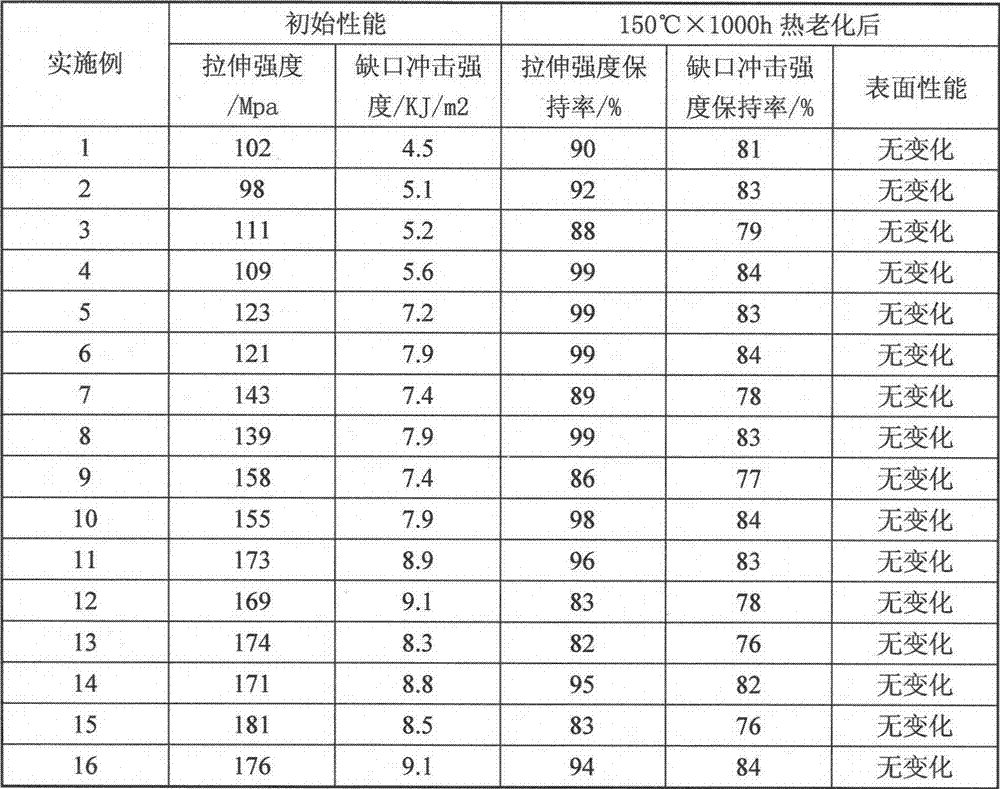
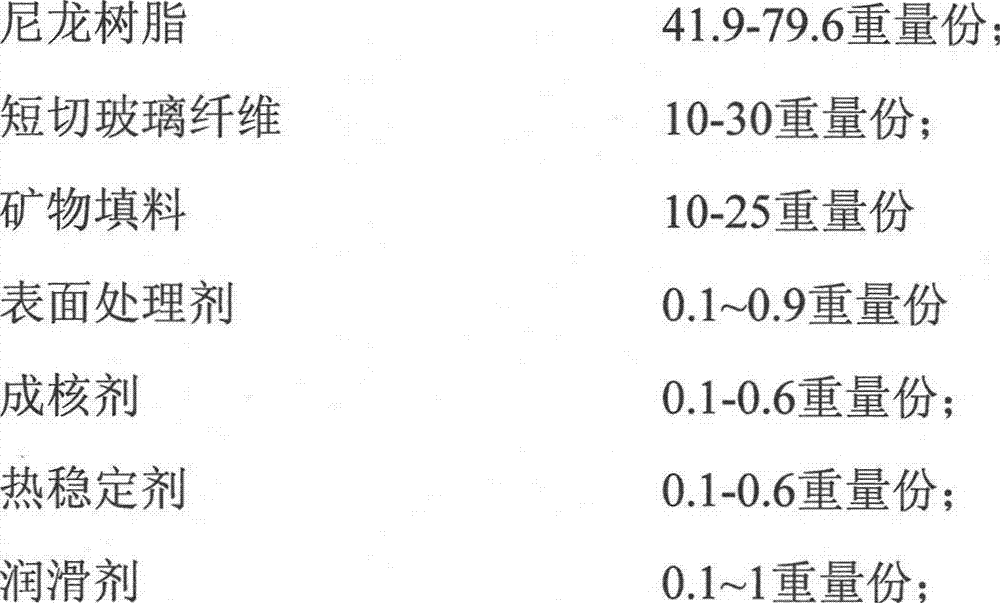
High heat resistance and low warping nylon 66 composite and preparation method thereof
PatentActiveCN103030972A
Innovation
- Using the composite filling method of glass fiber and mineral, adding heat stabilizer, nucleating agent and lubricant, surface treatment of mineral powder and glass fiber to improve the interface bonding performance, using a twin-screw extruder for granulation, to prepare a product with excellent size Nylon 66 composite material with excellent stability and long-term thermal and oxidative aging resistance.
Environmental Impact and Sustainability Considerations
The environmental footprint of composite materials has become increasingly significant in material selection decisions across industries. When comparing Nylon 66 and epoxy systems in composite structures, their environmental impact profiles differ substantially throughout their lifecycle stages. Nylon 66 production typically requires less energy than epoxy resin manufacturing, with studies indicating approximately 20-30% lower carbon emissions during the raw material extraction and processing phases.
Recyclability represents a critical advantage for Nylon 66 composites. These thermoplastic-based structures can be melted and reformed multiple times without significant degradation of mechanical properties, enabling closed-loop recycling systems. In contrast, thermoset epoxy composites present considerable end-of-life challenges, as their cross-linked molecular structure prevents conventional recycling, often resulting in landfill disposal or energy recovery through incineration.
Water consumption metrics also favor Nylon 66, which requires approximately 40% less water during manufacturing processes compared to epoxy systems. However, epoxy composites generally demonstrate superior durability and longer service life in high-temperature applications, potentially offsetting their higher initial environmental impact through reduced replacement frequency and associated resource consumption.
Chemical emissions during manufacturing and use phases present another environmental consideration. Epoxy systems often contain bisphenol A (BPA) and volatile organic compounds (VOCs) that pose potential environmental and health risks. Recent regulatory frameworks, including REACH in Europe and similar initiatives globally, have increasingly restricted these substances, driving manufacturers toward greener formulations with reduced toxicity profiles.
Biodegradability remains challenging for both materials, though recent innovations in bio-based nylon variants show promise. These alternatives, derived partially from renewable resources like castor oil, can reduce fossil fuel dependency by 30-60% compared to conventional petroleum-based nylon or epoxy systems. Similarly, bio-based epoxy resins utilizing plant oils have emerged as sustainable alternatives, though their heat deflection properties often remain inferior to traditional formulations.
Carbon footprint assessments across full product lifecycles indicate that material selection between Nylon 66 and epoxy should consider application-specific requirements. For applications requiring frequent high-temperature exposure, the superior thermal stability of epoxy may result in lower lifetime environmental impact despite higher initial production emissions. Conversely, for applications with moderate temperature requirements and potential for recycling, Nylon 66 composites generally present the more sustainable option.
Recyclability represents a critical advantage for Nylon 66 composites. These thermoplastic-based structures can be melted and reformed multiple times without significant degradation of mechanical properties, enabling closed-loop recycling systems. In contrast, thermoset epoxy composites present considerable end-of-life challenges, as their cross-linked molecular structure prevents conventional recycling, often resulting in landfill disposal or energy recovery through incineration.
Water consumption metrics also favor Nylon 66, which requires approximately 40% less water during manufacturing processes compared to epoxy systems. However, epoxy composites generally demonstrate superior durability and longer service life in high-temperature applications, potentially offsetting their higher initial environmental impact through reduced replacement frequency and associated resource consumption.
Chemical emissions during manufacturing and use phases present another environmental consideration. Epoxy systems often contain bisphenol A (BPA) and volatile organic compounds (VOCs) that pose potential environmental and health risks. Recent regulatory frameworks, including REACH in Europe and similar initiatives globally, have increasingly restricted these substances, driving manufacturers toward greener formulations with reduced toxicity profiles.
Biodegradability remains challenging for both materials, though recent innovations in bio-based nylon variants show promise. These alternatives, derived partially from renewable resources like castor oil, can reduce fossil fuel dependency by 30-60% compared to conventional petroleum-based nylon or epoxy systems. Similarly, bio-based epoxy resins utilizing plant oils have emerged as sustainable alternatives, though their heat deflection properties often remain inferior to traditional formulations.
Carbon footprint assessments across full product lifecycles indicate that material selection between Nylon 66 and epoxy should consider application-specific requirements. For applications requiring frequent high-temperature exposure, the superior thermal stability of epoxy may result in lower lifetime environmental impact despite higher initial production emissions. Conversely, for applications with moderate temperature requirements and potential for recycling, Nylon 66 composites generally present the more sustainable option.
Cost-Performance Analysis of Competing Materials
When evaluating Nylon 66 and epoxy resins for composite structures, cost-performance analysis reveals significant economic implications that extend beyond initial material expenses. Nylon 66 typically costs between $2.50-$4.00 per pound, while epoxy resins range from $3.00-$7.00 per pound, with specialized high-temperature formulations commanding premium prices of $10.00 or more per pound.
Manufacturing processes contribute substantially to overall costs. Nylon 66 composites benefit from established injection molding techniques with cycle times of 30-60 seconds, enabling high-volume production with relatively low labor requirements. Conversely, epoxy composites often demand more labor-intensive processes including hand lay-up, vacuum bagging, or autoclave curing, with cycle times extending from hours to days depending on complexity and performance requirements.
Lifecycle cost analysis demonstrates that while epoxy systems generally require higher initial investment, they often deliver superior long-term value in high-temperature applications. Epoxy composites typically maintain structural integrity at temperatures 50-75°C higher than Nylon 66 counterparts before experiencing heat deflection, resulting in extended service life under thermal stress conditions and reduced replacement frequency.
Performance degradation metrics indicate that Nylon 66 composites experience approximately 40% reduction in tensile strength when operating continuously at 150°C, whereas properly formulated epoxy systems may retain up to 85% of original mechanical properties at the same temperature. This performance differential translates directly to maintenance costs, with Nylon 66 components in high-temperature environments requiring replacement 2-3 times more frequently than comparable epoxy structures.
Energy consumption analysis reveals that while Nylon 66 processing requires higher temperatures (270-290°C) compared to typical epoxy curing (120-180°C), the shorter cycle times result in comparable or lower energy costs per unit. However, this advantage diminishes in applications where heat deflection resistance is paramount, as the performance limitations necessitate more frequent replacement and consequently higher lifetime energy expenditure.
Market research indicates a growing trend toward value-engineered hybrid solutions that strategically employ both materials within the same structure, placing cost-effective Nylon 66 in lower-temperature zones while utilizing epoxy composites only where high-temperature performance justifies the premium cost. This approach has demonstrated cost reductions of 15-30% compared to all-epoxy designs while maintaining critical performance parameters.
Manufacturing processes contribute substantially to overall costs. Nylon 66 composites benefit from established injection molding techniques with cycle times of 30-60 seconds, enabling high-volume production with relatively low labor requirements. Conversely, epoxy composites often demand more labor-intensive processes including hand lay-up, vacuum bagging, or autoclave curing, with cycle times extending from hours to days depending on complexity and performance requirements.
Lifecycle cost analysis demonstrates that while epoxy systems generally require higher initial investment, they often deliver superior long-term value in high-temperature applications. Epoxy composites typically maintain structural integrity at temperatures 50-75°C higher than Nylon 66 counterparts before experiencing heat deflection, resulting in extended service life under thermal stress conditions and reduced replacement frequency.
Performance degradation metrics indicate that Nylon 66 composites experience approximately 40% reduction in tensile strength when operating continuously at 150°C, whereas properly formulated epoxy systems may retain up to 85% of original mechanical properties at the same temperature. This performance differential translates directly to maintenance costs, with Nylon 66 components in high-temperature environments requiring replacement 2-3 times more frequently than comparable epoxy structures.
Energy consumption analysis reveals that while Nylon 66 processing requires higher temperatures (270-290°C) compared to typical epoxy curing (120-180°C), the shorter cycle times result in comparable or lower energy costs per unit. However, this advantage diminishes in applications where heat deflection resistance is paramount, as the performance limitations necessitate more frequent replacement and consequently higher lifetime energy expenditure.
Market research indicates a growing trend toward value-engineered hybrid solutions that strategically employ both materials within the same structure, placing cost-effective Nylon 66 in lower-temperature zones while utilizing epoxy composites only where high-temperature performance justifies the premium cost. This approach has demonstrated cost reductions of 15-30% compared to all-epoxy designs while maintaining critical performance parameters.
Unlock deeper insights with Patsnap Eureka Quick Research — get a full tech report to explore trends and direct your research. Try now!
Generate Your Research Report Instantly with AI Agent
Supercharge your innovation with Patsnap Eureka AI Agent Platform!