Optimize Antenna Design in Fixed Satellite Systems
MAR 18, 20269 MIN READ
Generate Your Research Report Instantly with AI Agent
Patsnap Eureka helps you evaluate technical feasibility & market potential.
Satellite Antenna Technology Background and Objectives
Satellite antenna technology has undergone remarkable evolution since the inception of satellite communications in the 1960s. Early fixed satellite systems relied on large parabolic reflectors with basic feed systems, primarily serving point-to-point communication links. The progression from analog to digital transmission, coupled with advances in materials science and electromagnetic theory, has fundamentally transformed antenna design paradigms. Modern satellite antennas now incorporate sophisticated beamforming capabilities, multi-band operations, and adaptive polarization control.
The technological landscape has shifted dramatically with the emergence of high-throughput satellites (HTS) and the proliferation of Ka-band and Ku-band services. Contemporary fixed satellite systems demand antennas capable of handling increased data rates, supporting multiple simultaneous beams, and maintaining consistent performance across varying atmospheric conditions. The integration of phased array technology and electronically steerable antennas has opened new possibilities for dynamic beam management and interference mitigation.
Current market drivers emphasize the need for cost-effective solutions that deliver superior performance while minimizing physical footprint. The growing demand for broadband connectivity in remote areas, maritime communications, and enterprise networks has intensified focus on antenna efficiency optimization. Regulatory constraints regarding interference levels and spectrum utilization further compound the complexity of modern antenna design requirements.
The primary objective of optimizing antenna design in fixed satellite systems centers on maximizing gain-to-noise temperature ratio while maintaining acceptable sidelobe levels. This involves achieving optimal aperture efficiency through precise feed positioning, reflector surface accuracy, and polarization purity. Secondary objectives include reducing manufacturing costs, enhancing environmental resilience, and enabling rapid deployment capabilities.
Advanced objectives encompass the development of adaptive antenna systems capable of real-time performance optimization based on link conditions and traffic demands. The integration of artificial intelligence and machine learning algorithms for predictive maintenance and automated beam optimization represents the frontier of next-generation satellite antenna technology. These innovations aim to deliver unprecedented levels of spectral efficiency and operational flexibility in fixed satellite communication systems.
The technological landscape has shifted dramatically with the emergence of high-throughput satellites (HTS) and the proliferation of Ka-band and Ku-band services. Contemporary fixed satellite systems demand antennas capable of handling increased data rates, supporting multiple simultaneous beams, and maintaining consistent performance across varying atmospheric conditions. The integration of phased array technology and electronically steerable antennas has opened new possibilities for dynamic beam management and interference mitigation.
Current market drivers emphasize the need for cost-effective solutions that deliver superior performance while minimizing physical footprint. The growing demand for broadband connectivity in remote areas, maritime communications, and enterprise networks has intensified focus on antenna efficiency optimization. Regulatory constraints regarding interference levels and spectrum utilization further compound the complexity of modern antenna design requirements.
The primary objective of optimizing antenna design in fixed satellite systems centers on maximizing gain-to-noise temperature ratio while maintaining acceptable sidelobe levels. This involves achieving optimal aperture efficiency through precise feed positioning, reflector surface accuracy, and polarization purity. Secondary objectives include reducing manufacturing costs, enhancing environmental resilience, and enabling rapid deployment capabilities.
Advanced objectives encompass the development of adaptive antenna systems capable of real-time performance optimization based on link conditions and traffic demands. The integration of artificial intelligence and machine learning algorithms for predictive maintenance and automated beam optimization represents the frontier of next-generation satellite antenna technology. These innovations aim to deliver unprecedented levels of spectral efficiency and operational flexibility in fixed satellite communication systems.
Market Demand for Enhanced Satellite Communication Systems
The global satellite communication market is experiencing unprecedented growth driven by increasing demand for high-speed internet connectivity, particularly in underserved and remote regions. Traditional terrestrial infrastructure limitations have created substantial opportunities for satellite-based solutions to bridge the digital divide. This demand surge is particularly evident in developing nations where geographical challenges make conventional network deployment economically unfeasible.
Enterprise applications represent a significant growth segment, with businesses requiring reliable, global connectivity for operations spanning multiple continents. Industries such as maritime, aviation, oil and gas exploration, and emergency services depend heavily on satellite communications for mission-critical operations. The reliability and coverage advantages of satellite systems make them indispensable for these sectors, creating sustained demand for enhanced performance capabilities.
The emergence of Internet of Things applications has generated new market requirements for satellite communication systems. Smart agriculture, environmental monitoring, asset tracking, and autonomous vehicle communications require low-latency, high-reliability connections that can only be achieved through optimized satellite infrastructure. These applications demand more sophisticated antenna designs capable of handling diverse signal requirements and maintaining consistent performance across varying operational conditions.
Consumer broadband services via satellite have gained significant traction, particularly following recent technological advances in low Earth orbit constellation deployments. Rural and suburban markets previously underserved by fiber optic networks now represent substantial revenue opportunities. The competitive landscape has intensified as satellite internet services challenge traditional broadband providers, driving demand for improved system performance and cost efficiency.
Government and defense sectors continue to drive substantial demand for enhanced satellite communication capabilities. National security applications, disaster response coordination, and military operations require robust, secure communication channels with global reach. These applications often demand specialized antenna configurations optimized for specific operational requirements, including mobility, stealth characteristics, and resistance to interference.
The growing emphasis on 5G network backhaul applications has created additional market opportunities for satellite communication systems. Telecommunications providers are increasingly utilizing satellite links to extend 5G coverage to remote areas where terrestrial backhaul infrastructure is impractical. This application requires antenna systems capable of supporting high-frequency bands and maintaining the low latency requirements essential for 5G performance standards.
Market demand is also being shaped by increasing requirements for bandwidth efficiency and spectrum utilization optimization. Regulatory pressures and spectrum scarcity are driving the need for more sophisticated antenna designs that can maximize throughput while minimizing interference with adjacent systems and services.
Enterprise applications represent a significant growth segment, with businesses requiring reliable, global connectivity for operations spanning multiple continents. Industries such as maritime, aviation, oil and gas exploration, and emergency services depend heavily on satellite communications for mission-critical operations. The reliability and coverage advantages of satellite systems make them indispensable for these sectors, creating sustained demand for enhanced performance capabilities.
The emergence of Internet of Things applications has generated new market requirements for satellite communication systems. Smart agriculture, environmental monitoring, asset tracking, and autonomous vehicle communications require low-latency, high-reliability connections that can only be achieved through optimized satellite infrastructure. These applications demand more sophisticated antenna designs capable of handling diverse signal requirements and maintaining consistent performance across varying operational conditions.
Consumer broadband services via satellite have gained significant traction, particularly following recent technological advances in low Earth orbit constellation deployments. Rural and suburban markets previously underserved by fiber optic networks now represent substantial revenue opportunities. The competitive landscape has intensified as satellite internet services challenge traditional broadband providers, driving demand for improved system performance and cost efficiency.
Government and defense sectors continue to drive substantial demand for enhanced satellite communication capabilities. National security applications, disaster response coordination, and military operations require robust, secure communication channels with global reach. These applications often demand specialized antenna configurations optimized for specific operational requirements, including mobility, stealth characteristics, and resistance to interference.
The growing emphasis on 5G network backhaul applications has created additional market opportunities for satellite communication systems. Telecommunications providers are increasingly utilizing satellite links to extend 5G coverage to remote areas where terrestrial backhaul infrastructure is impractical. This application requires antenna systems capable of supporting high-frequency bands and maintaining the low latency requirements essential for 5G performance standards.
Market demand is also being shaped by increasing requirements for bandwidth efficiency and spectrum utilization optimization. Regulatory pressures and spectrum scarcity are driving the need for more sophisticated antenna designs that can maximize throughput while minimizing interference with adjacent systems and services.
Current Antenna Design Challenges in Fixed Satellite Systems
Fixed satellite systems face numerous antenna design challenges that significantly impact system performance, cost-effectiveness, and operational reliability. These challenges stem from the demanding requirements of maintaining consistent communication links between ground stations and geostationary satellites positioned approximately 36,000 kilometers above Earth.
One of the primary challenges is achieving optimal gain-to-noise temperature ratio (G/T) while maintaining reasonable antenna dimensions. Traditional parabolic reflector antennas require substantial physical apertures to achieve high gain, creating constraints for installations with limited space or weight restrictions. This becomes particularly problematic for mobile satellite terminals and urban deployments where space is at a premium.
Beam steering and tracking accuracy present another significant challenge. Fixed satellite systems must maintain precise pointing toward geostationary satellites despite environmental factors such as wind loading, thermal expansion, and structural settling. Mechanical tracking systems introduce complexity and potential failure points, while electronic beam steering solutions face limitations in steering range and efficiency degradation at extreme scan angles.
Interference mitigation represents a growing concern as the electromagnetic spectrum becomes increasingly congested. Modern antenna designs must incorporate advanced sidelobe suppression techniques and cross-polarization isolation to minimize interference from adjacent satellites and terrestrial sources. This requirement often conflicts with cost optimization and manufacturing simplicity.
Weather resilience poses substantial challenges, particularly for higher frequency bands such as Ka-band and Q/V-band systems. Rain fade, snow accumulation, and ice formation can severely degrade antenna performance. Traditional radome solutions add cost and complexity while potentially introducing insertion losses and pattern distortion.
Manufacturing precision and cost control create ongoing tensions in antenna design. High-performance antennas require tight mechanical tolerances and surface accuracy, particularly for higher frequency operations. Achieving these specifications while maintaining cost-effectiveness for commercial applications remains a persistent challenge.
Multi-band and multi-beam capabilities are increasingly demanded but introduce significant design complexity. Supporting multiple frequency bands simultaneously requires careful feed design and may compromise performance in individual bands. Similarly, implementing multiple beam capabilities while maintaining isolation and minimizing mutual coupling presents substantial engineering challenges.
Thermal management affects both electrical performance and mechanical stability. Temperature variations cause dimensional changes that can detune antenna elements and degrade pointing accuracy. Effective thermal design must balance performance requirements with cost and complexity constraints.
One of the primary challenges is achieving optimal gain-to-noise temperature ratio (G/T) while maintaining reasonable antenna dimensions. Traditional parabolic reflector antennas require substantial physical apertures to achieve high gain, creating constraints for installations with limited space or weight restrictions. This becomes particularly problematic for mobile satellite terminals and urban deployments where space is at a premium.
Beam steering and tracking accuracy present another significant challenge. Fixed satellite systems must maintain precise pointing toward geostationary satellites despite environmental factors such as wind loading, thermal expansion, and structural settling. Mechanical tracking systems introduce complexity and potential failure points, while electronic beam steering solutions face limitations in steering range and efficiency degradation at extreme scan angles.
Interference mitigation represents a growing concern as the electromagnetic spectrum becomes increasingly congested. Modern antenna designs must incorporate advanced sidelobe suppression techniques and cross-polarization isolation to minimize interference from adjacent satellites and terrestrial sources. This requirement often conflicts with cost optimization and manufacturing simplicity.
Weather resilience poses substantial challenges, particularly for higher frequency bands such as Ka-band and Q/V-band systems. Rain fade, snow accumulation, and ice formation can severely degrade antenna performance. Traditional radome solutions add cost and complexity while potentially introducing insertion losses and pattern distortion.
Manufacturing precision and cost control create ongoing tensions in antenna design. High-performance antennas require tight mechanical tolerances and surface accuracy, particularly for higher frequency operations. Achieving these specifications while maintaining cost-effectiveness for commercial applications remains a persistent challenge.
Multi-band and multi-beam capabilities are increasingly demanded but introduce significant design complexity. Supporting multiple frequency bands simultaneously requires careful feed design and may compromise performance in individual bands. Similarly, implementing multiple beam capabilities while maintaining isolation and minimizing mutual coupling presents substantial engineering challenges.
Thermal management affects both electrical performance and mechanical stability. Temperature variations cause dimensional changes that can detune antenna elements and degrade pointing accuracy. Effective thermal design must balance performance requirements with cost and complexity constraints.
Current Antenna Optimization Solutions for Satellite Systems
01 Multi-band and broadband antenna structures
Antenna designs that operate across multiple frequency bands or wide frequency ranges to support various communication standards. These structures utilize techniques such as multiple radiating elements, parasitic elements, or complex feeding networks to achieve broadband characteristics. The designs enable simultaneous operation in different frequency bands including cellular, WiFi, and other wireless communication frequencies.- Multi-band and broadband antenna structures: Antenna designs that operate across multiple frequency bands or wide frequency ranges to support various communication standards. These structures utilize specific geometric configurations, coupling mechanisms, and resonant elements to achieve broadband characteristics. The designs enable simultaneous operation across different frequency bands, improving versatility and reducing the need for multiple separate antennas in communication devices.
- Compact and miniaturized antenna configurations: Antenna designs focused on reducing physical dimensions while maintaining performance characteristics. These configurations employ techniques such as meandering structures, folded elements, and high-permittivity materials to achieve size reduction. The compact designs are particularly suitable for integration into space-constrained devices such as mobile phones, wearables, and IoT devices.
- Antenna arrays and beamforming systems: Multiple antenna element arrangements designed to provide directional radiation patterns and beam steering capabilities. These systems utilize phase control, amplitude adjustment, and spatial diversity to enhance signal quality and coverage. The array configurations enable adaptive beamforming, spatial multiplexing, and improved signal-to-noise ratios for advanced wireless communication applications.
- Integrated antenna designs for mobile devices: Antenna structures specifically designed for integration into mobile communication devices, addressing challenges such as ground plane effects, user interaction, and component proximity. These designs incorporate techniques to mitigate detuning effects, optimize placement within device housings, and maintain performance across various operating conditions. The solutions balance electrical performance with industrial design requirements.
- Reconfigurable and tunable antenna technologies: Antenna designs incorporating active or passive tuning mechanisms to dynamically adjust operating characteristics such as frequency, polarization, or radiation pattern. These technologies employ switches, varactors, or mechanical adjustments to enable frequency agility and adaptive performance. The reconfigurable nature allows a single antenna to serve multiple functions and adapt to changing communication requirements.
02 Compact and miniaturized antenna configurations
Antenna designs focused on reducing physical dimensions while maintaining performance characteristics suitable for integration into space-constrained devices. These configurations employ techniques such as meandering structures, folded elements, chip antennas, or planar inverted-F antenna topologies. The compact designs are particularly suitable for mobile devices, wearables, and IoT applications where size constraints are critical.Expand Specific Solutions03 Antenna arrays and beamforming systems
Multiple antenna element arrangements configured to provide directional radiation patterns and beam steering capabilities. These systems utilize phased array techniques, MIMO configurations, or adaptive beamforming to enhance signal quality, increase gain, and improve spatial selectivity. The array designs are applicable to base stations, radar systems, and advanced wireless communication systems requiring enhanced coverage and capacity.Expand Specific Solutions04 Integrated antenna and device housing designs
Antenna structures that are integrated into or form part of the device enclosure, utilizing conductive portions of the housing or frame as radiating elements. These designs optimize space utilization by incorporating antenna functionality into structural components, bezels, or chassis elements. The integration approach addresses aesthetic requirements while maintaining antenna performance in consumer electronics and mobile devices.Expand Specific Solutions05 Reconfigurable and tunable antenna mechanisms
Antenna designs incorporating switching elements, variable capacitors, or mechanical adjustments to dynamically modify operating characteristics such as frequency, polarization, or radiation pattern. These mechanisms enable adaptation to changing communication requirements, frequency band selection, or impedance matching optimization. The reconfigurable approach provides flexibility for multi-standard operation and performance optimization across varying conditions.Expand Specific Solutions
Major Players in Satellite Antenna and Communication Industry
The fixed satellite antenna design optimization market represents a mature yet evolving competitive landscape driven by increasing demand for high-throughput satellite communications and 5G integration. The industry is in a consolidation phase with established aerospace giants like Airbus SE, Thales SA, and Northrop Grumman dominating large-scale satellite infrastructure, while telecommunications leaders including Huawei Technologies, Qualcomm, and NTT leverage advanced signal processing capabilities. Technology maturity varies significantly across segments, with companies like Hughes Network Systems and ViaSat demonstrating proven VSAT solutions, whereas emerging players such as Beijing Guodian High Tech and Shenzhen Xindun focus on specialized applications. The market exhibits strong growth potential, particularly in IoT and mobile satellite services, where traditional antenna manufacturers like KATHREIN-Werke collaborate with semiconductor innovators to develop next-generation beamforming and adaptive antenna technologies for enhanced satellite system performance.
Huawei Technologies Co., Ltd.
Technical Solution: Huawei has developed advanced antenna optimization solutions for fixed satellite systems, focusing on multi-beam antenna arrays with adaptive beamforming capabilities. Their technology incorporates AI-driven optimization algorithms that can dynamically adjust antenna parameters based on satellite positioning and signal conditions. The company's approach includes phased array antennas with electronic beam steering, enabling precise tracking of geostationary and non-geostationary satellites. Their solutions feature integrated RF front-end modules with low-noise amplifiers and advanced filtering systems to minimize interference. Huawei's antenna designs also incorporate weather-resistant materials and thermal management systems for reliable outdoor operation in various environmental conditions.
Strengths: Strong R&D capabilities, comprehensive system integration, AI-driven optimization. Weaknesses: Limited market access due to geopolitical restrictions, higher complexity in implementation.
Hughes Network Systems
Technical Solution: Hughes Network Systems specializes in satellite antenna optimization with focus on broadband communication applications. Their technology includes adaptive coding and modulation (ACM) systems that optimize antenna performance based on link conditions. The company develops multi-beam antennas with spot beam technology that enables frequency reuse and increased system capacity. Hughes incorporates advanced tracking algorithms that maintain optimal pointing accuracy even in challenging weather conditions. Their solutions feature integrated network management systems that monitor antenna performance and automatically adjust parameters for optimal throughput. The company also develops cost-effective antenna solutions for residential and enterprise markets, including compact flat-panel antennas with electronic steering capabilities for easier installation and maintenance.
Strengths: Market leadership in satellite broadband, cost-effective solutions, strong customer support. Weaknesses: Limited innovation in advanced antenna technologies, dependency on traditional satellite operators.
Core Patents in Advanced Satellite Antenna Design
Architectures and Methods for Novel Antenna Radiation Optimization via Feed Repositioning
PatentActiveUS20110032173A1
Innovation
- The use of dynamic antenna array systems with feed repositioning capabilities, employing amplitude tapering and phase-shifting to form beams with desired radiation patterns, allowing for the creation of beam peaks at desired satellite directions and nulls at interfering satellite directions, thereby enabling spatial isolation and full spectrum utilization by multiple satellites simultaneously.
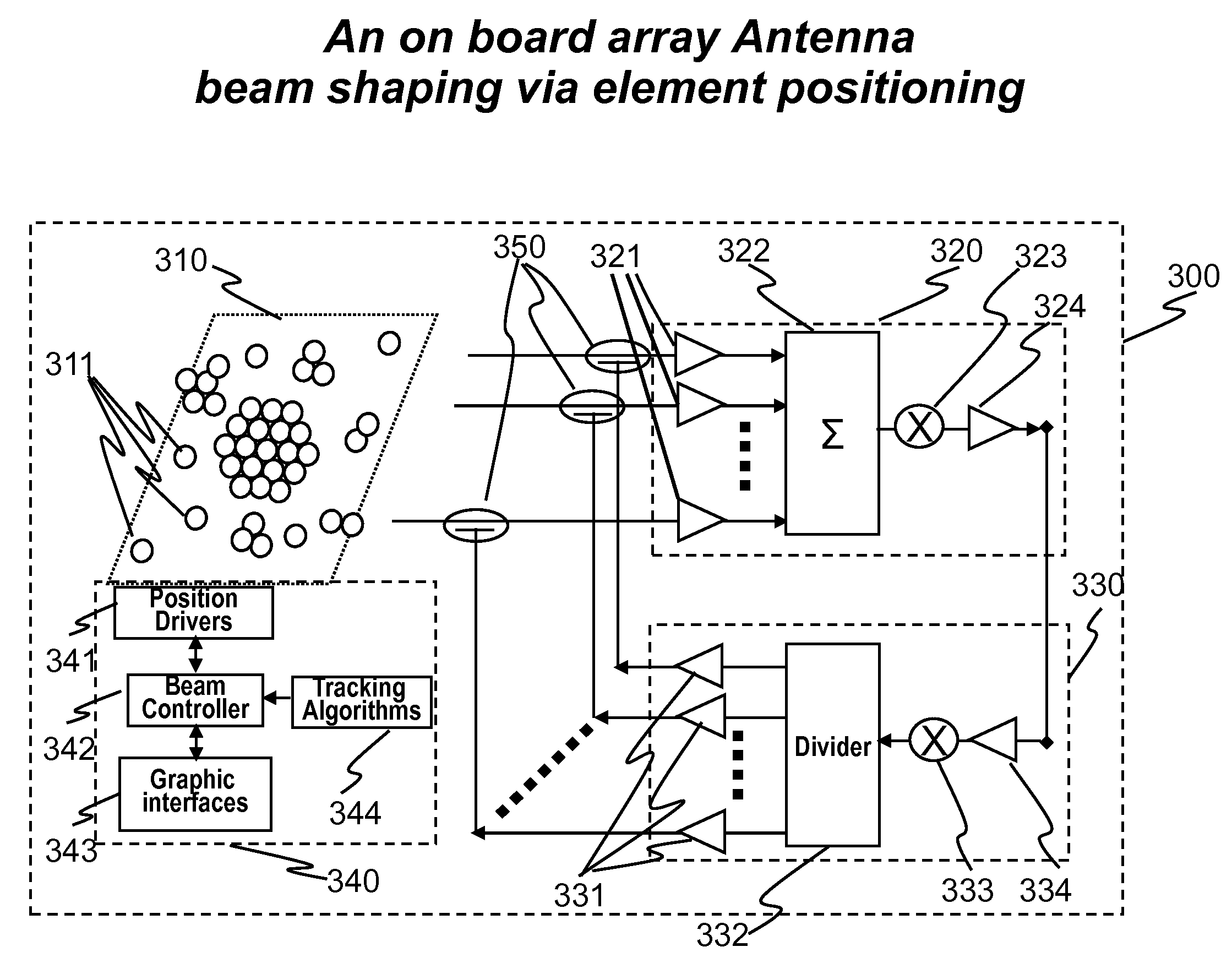
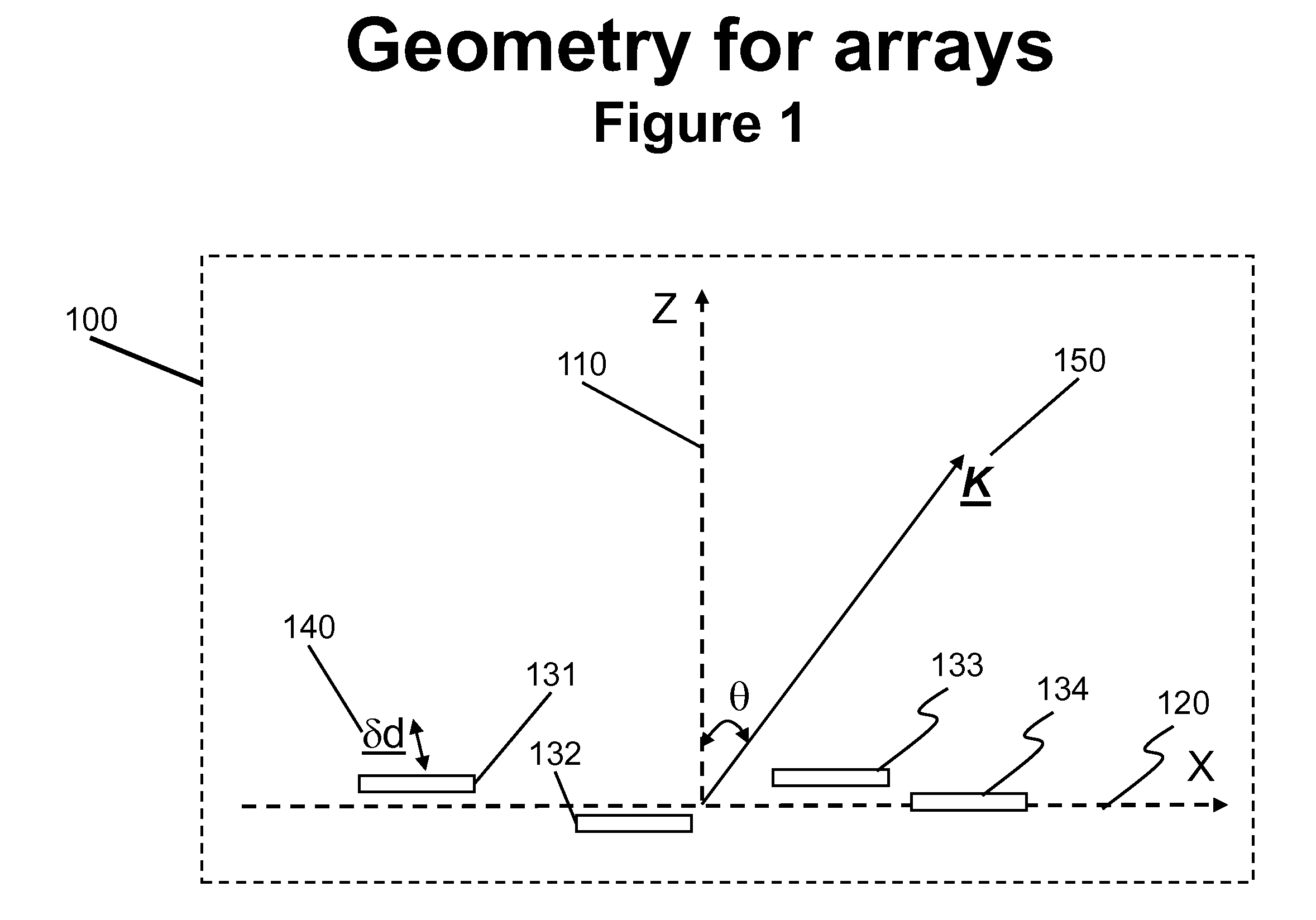
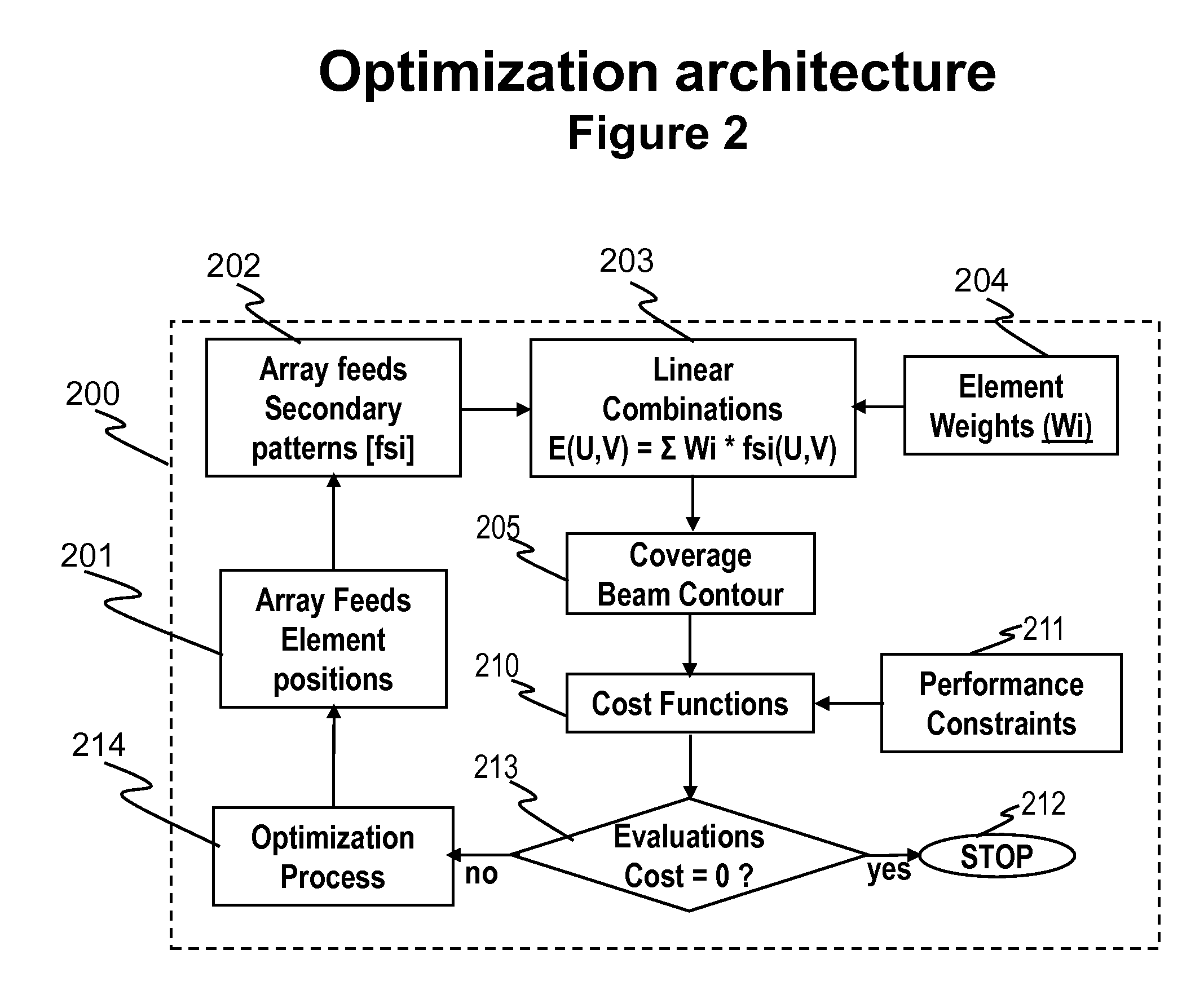

Systems and methods for reconfigurable faceted reflector antennas
PatentActiveUS20190190145A1
Innovation
- A reconfigurable reflector system composed of independently adjustable facets, which can be controlled pre-launch or on-orbit using actuators to adapt to different coverage areas and orbital positions, allowing for dynamic compensation of thermal distortions and other dynamic effects.


Spectrum Allocation and Regulatory Framework
The spectrum allocation framework for fixed satellite systems operates under the jurisdiction of the International Telecommunication Union (ITU), which divides the radio frequency spectrum into specific bands designated for satellite communications. The primary frequency bands allocated for fixed satellite services include C-band (3.7-4.2 GHz downlink, 5.925-6.425 GHz uplink), Ku-band (10.7-12.7 GHz downlink, 14.0-14.5 GHz uplink), and Ka-band (17.7-21.2 GHz downlink, 27.5-30.0 GHz uplink). These allocations directly influence antenna design parameters, as different frequency bands require distinct aperture sizes, feed configurations, and polarization schemes to achieve optimal performance.
Regional regulatory bodies such as the Federal Communications Commission in the United States, the European Communications Committee in Europe, and similar organizations worldwide implement ITU recommendations while addressing local spectrum management needs. These regulatory frameworks establish technical standards for antenna performance, including minimum gain requirements, sidelobe suppression levels, and cross-polarization discrimination ratios that antenna designers must meet to ensure interference mitigation and spectrum efficiency.
The coordination process for satellite networks involves complex orbital slot assignments and frequency coordination procedures that significantly impact antenna design specifications. Geostationary satellite operators must demonstrate compliance with ITU Radio Regulations, particularly regarding antenna radiation patterns and off-axis emission limits. These requirements drive the development of high-performance antenna systems with precise beam shaping capabilities and enhanced directivity characteristics.
Emerging regulatory challenges include spectrum sharing initiatives between satellite and terrestrial services, particularly in the C-band and Ka-band frequencies. The recent C-band clearing process in the United States exemplifies how regulatory decisions can reshape antenna design requirements, forcing operators to implement more sophisticated filtering and interference rejection techniques. Additionally, the proliferation of non-geostationary satellite constellations has introduced new coordination complexities that influence fixed satellite system antenna specifications.
Future regulatory developments are expected to emphasize spectrum efficiency and interference mitigation, potentially requiring adaptive antenna technologies and dynamic spectrum management capabilities. These evolving requirements will likely drive innovation in antenna design toward more flexible, software-defined solutions that can adapt to changing regulatory environments and spectrum availability conditions.
Regional regulatory bodies such as the Federal Communications Commission in the United States, the European Communications Committee in Europe, and similar organizations worldwide implement ITU recommendations while addressing local spectrum management needs. These regulatory frameworks establish technical standards for antenna performance, including minimum gain requirements, sidelobe suppression levels, and cross-polarization discrimination ratios that antenna designers must meet to ensure interference mitigation and spectrum efficiency.
The coordination process for satellite networks involves complex orbital slot assignments and frequency coordination procedures that significantly impact antenna design specifications. Geostationary satellite operators must demonstrate compliance with ITU Radio Regulations, particularly regarding antenna radiation patterns and off-axis emission limits. These requirements drive the development of high-performance antenna systems with precise beam shaping capabilities and enhanced directivity characteristics.
Emerging regulatory challenges include spectrum sharing initiatives between satellite and terrestrial services, particularly in the C-band and Ka-band frequencies. The recent C-band clearing process in the United States exemplifies how regulatory decisions can reshape antenna design requirements, forcing operators to implement more sophisticated filtering and interference rejection techniques. Additionally, the proliferation of non-geostationary satellite constellations has introduced new coordination complexities that influence fixed satellite system antenna specifications.
Future regulatory developments are expected to emphasize spectrum efficiency and interference mitigation, potentially requiring adaptive antenna technologies and dynamic spectrum management capabilities. These evolving requirements will likely drive innovation in antenna design toward more flexible, software-defined solutions that can adapt to changing regulatory environments and spectrum availability conditions.
Environmental Impact of Satellite Infrastructure
The deployment and operation of fixed satellite systems present significant environmental challenges that extend beyond the immediate technological considerations of antenna optimization. The manufacturing phase of satellite infrastructure generates substantial carbon emissions through the production of specialized materials, including rare earth elements required for high-performance antenna components. These materials often involve energy-intensive extraction and processing methods, contributing to the overall environmental footprint of satellite systems.
Space debris represents one of the most pressing environmental concerns in satellite infrastructure development. Failed satellites, spent rocket stages, and fragmented components create an increasingly congested orbital environment that poses risks to both existing and future satellite missions. The accumulation of debris in geostationary and low Earth orbits threatens the long-term sustainability of space-based communications infrastructure, potentially limiting future deployment opportunities for optimized antenna systems.
Ground-based infrastructure supporting fixed satellite systems also contributes to environmental impact through land use requirements and energy consumption. Large-scale satellite ground stations and antenna arrays require significant physical footprints, often affecting local ecosystems and wildlife habitats. The continuous operation of these facilities demands substantial electrical power, contributing to ongoing carbon emissions depending on the energy sources utilized.
The lifecycle assessment of satellite systems reveals additional environmental considerations, including the disposal challenges at end-of-life. Unlike terrestrial infrastructure, decommissioned satellites cannot be easily recycled or repurposed, leading to permanent orbital pollution. This creates a cumulative environmental burden that grows with each satellite deployment, emphasizing the need for sustainable design approaches in antenna optimization.
Emerging regulatory frameworks are beginning to address these environmental concerns through mandatory debris mitigation measures and end-of-life disposal requirements. These regulations influence antenna design optimization by imposing constraints on satellite mass, operational lifetime, and deorbiting capabilities, ultimately shaping the technical parameters that must be considered in next-generation satellite systems.
Space debris represents one of the most pressing environmental concerns in satellite infrastructure development. Failed satellites, spent rocket stages, and fragmented components create an increasingly congested orbital environment that poses risks to both existing and future satellite missions. The accumulation of debris in geostationary and low Earth orbits threatens the long-term sustainability of space-based communications infrastructure, potentially limiting future deployment opportunities for optimized antenna systems.
Ground-based infrastructure supporting fixed satellite systems also contributes to environmental impact through land use requirements and energy consumption. Large-scale satellite ground stations and antenna arrays require significant physical footprints, often affecting local ecosystems and wildlife habitats. The continuous operation of these facilities demands substantial electrical power, contributing to ongoing carbon emissions depending on the energy sources utilized.
The lifecycle assessment of satellite systems reveals additional environmental considerations, including the disposal challenges at end-of-life. Unlike terrestrial infrastructure, decommissioned satellites cannot be easily recycled or repurposed, leading to permanent orbital pollution. This creates a cumulative environmental burden that grows with each satellite deployment, emphasizing the need for sustainable design approaches in antenna optimization.
Emerging regulatory frameworks are beginning to address these environmental concerns through mandatory debris mitigation measures and end-of-life disposal requirements. These regulations influence antenna design optimization by imposing constraints on satellite mass, operational lifetime, and deorbiting capabilities, ultimately shaping the technical parameters that must be considered in next-generation satellite systems.
Unlock deeper insights with Patsnap Eureka Quick Research — get a full tech report to explore trends and direct your research. Try now!
Generate Your Research Report Instantly with AI Agent
Supercharge your innovation with Patsnap Eureka AI Agent Platform!