Optimize Power Efficiency in Fixed Satellite Services
MAR 18, 20269 MIN READ
Generate Your Research Report Instantly with AI Agent
PatSnap Eureka helps you evaluate technical feasibility & market potential.
Satellite Power System Background and Efficiency Goals
Fixed Satellite Services (FSS) have evolved significantly since the launch of the first commercial geostationary satellite in the 1960s. Initially, satellite power systems relied on basic solar panel arrays with limited efficiency, typically achieving 10-15% conversion rates. The evolution progressed through multiple generations, incorporating advanced photovoltaic technologies, improved battery systems, and sophisticated power management architectures.
Modern FSS satellites operate in increasingly demanding environments, requiring continuous power delivery for extended mission lifespans often exceeding 15 years. The power subsystem represents one of the most critical components, directly impacting satellite payload capacity, operational reliability, and overall mission economics. Contemporary satellites utilize multi-junction solar cells achieving efficiencies above 30%, coupled with lithium-ion battery systems for eclipse period operations.
The technological progression has been driven by the fundamental challenge of maximizing power generation while minimizing mass and volume constraints. Early satellites generated hundreds of watts, while current large FSS platforms can produce over 20 kilowatts of electrical power. This dramatic increase reflects both improved component efficiency and larger deployable solar array structures.
Power efficiency optimization encompasses multiple subsystem interactions, including solar array design, power conditioning electronics, thermal management, and load distribution strategies. The integration of these elements determines overall system performance and directly influences satellite operational capabilities and commercial viability.
Current efficiency goals target achieving end-to-end power system efficiencies exceeding 85%, representing significant improvements over legacy systems operating at 70-75% efficiency levels. These targets encompass solar energy conversion, power processing, distribution losses, and payload power utilization. Advanced power management techniques, including dynamic load balancing and adaptive power allocation, are essential for meeting these ambitious efficiency benchmarks.
The industry recognizes that power efficiency improvements directly translate to enhanced payload capacity, extended operational lifetimes, and reduced launch costs per unit of delivered service. Achieving these efficiency goals requires coordinated advances across photovoltaic technologies, power electronics, energy storage systems, and intelligent power management algorithms, establishing power optimization as a fundamental driver of next-generation FSS satellite competitiveness.
Modern FSS satellites operate in increasingly demanding environments, requiring continuous power delivery for extended mission lifespans often exceeding 15 years. The power subsystem represents one of the most critical components, directly impacting satellite payload capacity, operational reliability, and overall mission economics. Contemporary satellites utilize multi-junction solar cells achieving efficiencies above 30%, coupled with lithium-ion battery systems for eclipse period operations.
The technological progression has been driven by the fundamental challenge of maximizing power generation while minimizing mass and volume constraints. Early satellites generated hundreds of watts, while current large FSS platforms can produce over 20 kilowatts of electrical power. This dramatic increase reflects both improved component efficiency and larger deployable solar array structures.
Power efficiency optimization encompasses multiple subsystem interactions, including solar array design, power conditioning electronics, thermal management, and load distribution strategies. The integration of these elements determines overall system performance and directly influences satellite operational capabilities and commercial viability.
Current efficiency goals target achieving end-to-end power system efficiencies exceeding 85%, representing significant improvements over legacy systems operating at 70-75% efficiency levels. These targets encompass solar energy conversion, power processing, distribution losses, and payload power utilization. Advanced power management techniques, including dynamic load balancing and adaptive power allocation, are essential for meeting these ambitious efficiency benchmarks.
The industry recognizes that power efficiency improvements directly translate to enhanced payload capacity, extended operational lifetimes, and reduced launch costs per unit of delivered service. Achieving these efficiency goals requires coordinated advances across photovoltaic technologies, power electronics, energy storage systems, and intelligent power management algorithms, establishing power optimization as a fundamental driver of next-generation FSS satellite competitiveness.
Market Demand for Energy-Efficient Satellite Services
The global satellite services market is experiencing unprecedented growth driven by increasing demand for high-speed internet connectivity, particularly in underserved and remote regions. Traditional terrestrial infrastructure limitations have created substantial opportunities for fixed satellite services to bridge the digital divide. However, the escalating operational costs associated with power consumption have become a critical concern for satellite operators, making energy efficiency a paramount market requirement.
Commercial enterprises across various sectors are increasingly prioritizing sustainable and cost-effective satellite solutions. Telecommunications companies, broadcasting networks, and internet service providers are actively seeking satellite systems that can deliver reliable performance while minimizing operational expenditures. The growing emphasis on environmental sustainability and carbon footprint reduction has further amplified the demand for power-efficient satellite technologies.
The maritime and aviation industries represent significant market segments driving demand for energy-efficient fixed satellite services. These sectors require continuous, reliable connectivity for safety communications, passenger services, and operational efficiency. Power optimization directly translates to extended service availability and reduced operational costs, making it a crucial competitive differentiator in these markets.
Government and defense applications constitute another substantial demand driver for power-efficient satellite services. Military communications, disaster response systems, and remote monitoring applications require robust satellite connectivity with minimal power consumption to ensure mission-critical operations. The need for extended operational periods without maintenance access makes power efficiency essential for these applications.
The emerging Internet of Things ecosystem and machine-to-machine communications are creating new market opportunities for energy-efficient satellite services. These applications often involve remote sensors and devices with limited power sources, necessitating satellite systems optimized for low-power operations while maintaining reliable data transmission capabilities.
Financial pressures on satellite operators have intensified the focus on operational efficiency. Launch costs, insurance premiums, and maintenance expenses continue to rise, making power optimization a strategic imperative for maintaining competitive pricing and profitability. Market participants are increasingly evaluating satellite service providers based on their ability to deliver cost-effective solutions through improved power efficiency.
Commercial enterprises across various sectors are increasingly prioritizing sustainable and cost-effective satellite solutions. Telecommunications companies, broadcasting networks, and internet service providers are actively seeking satellite systems that can deliver reliable performance while minimizing operational expenditures. The growing emphasis on environmental sustainability and carbon footprint reduction has further amplified the demand for power-efficient satellite technologies.
The maritime and aviation industries represent significant market segments driving demand for energy-efficient fixed satellite services. These sectors require continuous, reliable connectivity for safety communications, passenger services, and operational efficiency. Power optimization directly translates to extended service availability and reduced operational costs, making it a crucial competitive differentiator in these markets.
Government and defense applications constitute another substantial demand driver for power-efficient satellite services. Military communications, disaster response systems, and remote monitoring applications require robust satellite connectivity with minimal power consumption to ensure mission-critical operations. The need for extended operational periods without maintenance access makes power efficiency essential for these applications.
The emerging Internet of Things ecosystem and machine-to-machine communications are creating new market opportunities for energy-efficient satellite services. These applications often involve remote sensors and devices with limited power sources, necessitating satellite systems optimized for low-power operations while maintaining reliable data transmission capabilities.
Financial pressures on satellite operators have intensified the focus on operational efficiency. Launch costs, insurance premiums, and maintenance expenses continue to rise, making power optimization a strategic imperative for maintaining competitive pricing and profitability. Market participants are increasingly evaluating satellite service providers based on their ability to deliver cost-effective solutions through improved power efficiency.
Current Power Challenges in Fixed Satellite Operations
Fixed satellite services face mounting power efficiency challenges that significantly impact operational costs, system reliability, and service quality. The primary power constraints stem from the fundamental limitations of space-based power generation and the harsh operating environment of geostationary orbit. Solar panel degradation over the typical 15-year satellite lifespan reduces power generation capacity by approximately 0.5% annually, while battery systems experience capacity fade due to repeated charge-discharge cycles and radiation exposure.
Thermal management represents another critical power challenge in satellite operations. The extreme temperature variations between sunlight and eclipse periods create substantial thermal stress on electronic components, requiring active thermal control systems that consume significant power. Power amplifiers, particularly those operating in Ka-band and higher frequencies, generate considerable heat while achieving lower efficiency rates, typically ranging from 30-45% for traveling wave tube amplifiers.
The increasing demand for higher data throughput and broader coverage areas has intensified power consumption requirements. Modern high-throughput satellites require substantially more power to support multiple spot beams, advanced signal processing, and higher-order modulation schemes. This growing power demand often exceeds the available power budget, forcing operators to implement complex power management strategies and payload duty cycling.
Power distribution inefficiencies compound these challenges, as traditional satellite power systems experience losses through multiple conversion stages, from solar arrays through battery charge regulators to payload power conditioning units. These cumulative losses can reduce overall system efficiency by 15-25%, representing significant operational constraints.
Eclipse period operations present particularly acute challenges, as satellites must rely entirely on battery power for up to 72 minutes during equinox seasons. Battery aging and capacity reduction directly impact the available power during these critical periods, often requiring payload power reduction or service interruption to maintain essential satellite functions.
The integration of electric propulsion systems for station-keeping has introduced additional power competition, as these systems require substantial power during operation while providing fuel efficiency benefits. Balancing propulsion power requirements with payload operations creates complex scheduling challenges that impact service availability and operational flexibility.
Thermal management represents another critical power challenge in satellite operations. The extreme temperature variations between sunlight and eclipse periods create substantial thermal stress on electronic components, requiring active thermal control systems that consume significant power. Power amplifiers, particularly those operating in Ka-band and higher frequencies, generate considerable heat while achieving lower efficiency rates, typically ranging from 30-45% for traveling wave tube amplifiers.
The increasing demand for higher data throughput and broader coverage areas has intensified power consumption requirements. Modern high-throughput satellites require substantially more power to support multiple spot beams, advanced signal processing, and higher-order modulation schemes. This growing power demand often exceeds the available power budget, forcing operators to implement complex power management strategies and payload duty cycling.
Power distribution inefficiencies compound these challenges, as traditional satellite power systems experience losses through multiple conversion stages, from solar arrays through battery charge regulators to payload power conditioning units. These cumulative losses can reduce overall system efficiency by 15-25%, representing significant operational constraints.
Eclipse period operations present particularly acute challenges, as satellites must rely entirely on battery power for up to 72 minutes during equinox seasons. Battery aging and capacity reduction directly impact the available power during these critical periods, often requiring payload power reduction or service interruption to maintain essential satellite functions.
The integration of electric propulsion systems for station-keeping has introduced additional power competition, as these systems require substantial power during operation while providing fuel efficiency benefits. Balancing propulsion power requirements with payload operations creates complex scheduling challenges that impact service availability and operational flexibility.
Existing Power Optimization Solutions for FSS
01 Power amplifier efficiency optimization techniques
Techniques for improving power amplifier efficiency in satellite communication systems through advanced amplifier designs, linearization methods, and adaptive power control. These approaches help reduce power consumption while maintaining signal quality and coverage requirements. Implementation includes digital predistortion, envelope tracking, and dynamic biasing to optimize amplifier performance across varying operating conditions.- Power amplifier efficiency optimization techniques: Various techniques are employed to optimize power amplifier efficiency in satellite communication systems. These include adaptive power control, linearization methods, and advanced amplifier architectures such as Doherty amplifiers or envelope tracking systems. By improving amplifier efficiency, overall power consumption can be reduced while maintaining signal quality and transmission performance. These techniques are particularly important for satellite transponders where power resources are limited.
- Beam forming and antenna array optimization: Beam forming technologies and optimized antenna array configurations enhance power efficiency by directing transmission energy more precisely toward intended coverage areas. This includes phased array antennas, adaptive beam forming algorithms, and multi-beam antenna systems that allow for dynamic resource allocation. These approaches minimize wasted transmission power and improve the signal-to-noise ratio at receiving terminals, thereby increasing overall system efficiency.
- Modulation and coding scheme optimization: Advanced modulation and coding schemes are implemented to maximize spectral efficiency and reduce required transmission power. These include adaptive coding and modulation techniques that adjust parameters based on channel conditions, higher-order modulation schemes, and forward error correction methods. By optimizing these parameters, satellite systems can transmit more data using less power while maintaining acceptable error rates.
- Resource allocation and frequency reuse strategies: Efficient resource allocation algorithms and frequency reuse patterns are critical for maximizing power efficiency across satellite networks. These strategies include dynamic bandwidth allocation, interference management techniques, and spatial frequency reuse schemes that allow multiple beams to use the same frequency bands. By intelligently managing spectrum resources and minimizing interference, these approaches reduce the power requirements for achieving desired coverage and capacity.
- Satellite payload power management systems: Comprehensive power management systems for satellite payloads incorporate various technologies to optimize overall power consumption. These include solar panel efficiency improvements, battery management systems, power distribution networks, and intelligent switching mechanisms that allocate power based on demand. Such systems ensure that available power is utilized most effectively across all satellite subsystems, extending operational lifetime and improving service quality.
02 Beam forming and antenna array optimization
Methods for enhancing power efficiency through intelligent beam forming and phased array antenna systems that concentrate transmitted power toward intended coverage areas. These techniques enable dynamic beam shaping and steering to maximize signal strength at target locations while minimizing wasted power. Advanced algorithms optimize antenna element configurations and phase relationships to achieve optimal power distribution patterns.Expand Specific Solutions03 Frequency and bandwidth management
Strategies for improving power efficiency through optimal frequency allocation, bandwidth utilization, and spectrum management in fixed satellite services. These approaches include adaptive modulation and coding schemes that adjust transmission parameters based on link conditions to minimize required transmit power. Techniques also encompass frequency reuse patterns and interference mitigation methods that enable more efficient use of available spectrum resources.Expand Specific Solutions04 Link budget optimization and adaptive transmission
Methods for optimizing satellite link budgets through adaptive transmission power control, error correction coding, and modulation scheme selection. These techniques dynamically adjust transmission parameters in response to atmospheric conditions, rain fade, and other propagation effects to maintain service quality while minimizing power consumption. Implementation includes closed-loop power control systems and predictive algorithms that anticipate link degradation.Expand Specific Solutions05 Payload architecture and resource allocation
Innovations in satellite payload design and resource management that enhance overall power efficiency through optimized transponder configurations, flexible bandwidth allocation, and intelligent power distribution among multiple beams or channels. These solutions include reconfigurable payloads that adapt to traffic demands and advanced switching matrices that route signals efficiently. Power management systems coordinate resource allocation to maximize throughput per watt of consumed power.Expand Specific Solutions
Key Players in Satellite Power and FSS Industry
The fixed satellite services power efficiency optimization market is experiencing significant growth driven by increasing demand for sustainable space communications and operational cost reduction. The industry is in a mature development stage with established players like Hughes Network Systems, Gilat Satellite Networks, and ViaSat leading commercial satellite services, while aerospace giants including Lockheed Martin, Boeing, and Northrop Grumman dominate the defense and infrastructure segments. Technology maturity varies across segments, with companies like Huawei, Samsung Electronics, and Ericsson bringing advanced terrestrial power management expertise to satellite applications. Chinese entities including China Academy of Space Technology, DFH Satellite, and Galaxy Aerospace are rapidly advancing indigenous capabilities. The market shows strong consolidation trends with established satellite operators focusing on next-generation power-efficient systems, while emerging players like Skylo Technologies and AST & Science introduce innovative approaches to satellite power optimization and management.
Huawei Technologies Co., Ltd.
Technical Solution: Huawei has developed advanced power management solutions for satellite communications through their integrated approach combining hardware optimization and intelligent software algorithms. Their technology focuses on dynamic power allocation systems that can adjust transmission power based on real-time channel conditions and traffic demands. The company implements advanced beamforming techniques and energy-efficient amplifier designs that reduce overall power consumption by up to 30% compared to traditional systems. Their solutions include adaptive coding and modulation schemes that optimize the trade-off between data throughput and power efficiency, particularly beneficial for fixed satellite services operating in challenging environments.
Strengths: Strong R&D capabilities in telecommunications, integrated hardware-software solutions, proven track record in power optimization. Weaknesses: Limited presence in traditional satellite manufacturing, regulatory challenges in some markets.
Hughes Network Systems
Technical Solution: Hughes has pioneered power-efficient satellite communication technologies through their JUPITER system architecture, which incorporates advanced spot beam technology and adaptive power control mechanisms. Their approach utilizes sophisticated ground-based processing combined with satellite-based switching to minimize power requirements while maintaining high-quality service delivery. The company's power optimization strategy includes implementing variable coding and modulation techniques, intelligent bandwidth allocation, and energy-efficient terminal designs that can reduce power consumption by approximately 25-40% in typical fixed satellite service applications. Their solutions are specifically designed for broadband satellite networks serving residential and enterprise customers.
Strengths: Extensive experience in satellite broadband services, proven power-efficient architectures, strong market presence in North America. Weaknesses: Limited global satellite constellation coverage, dependency on geostationary satellite infrastructure.
Core Innovations in Satellite Power Efficiency Tech
Microwave variable power solid state power amplifier (SSPA) with constant efficiency and linearity
PatentActiveUS8237504B1
Innovation
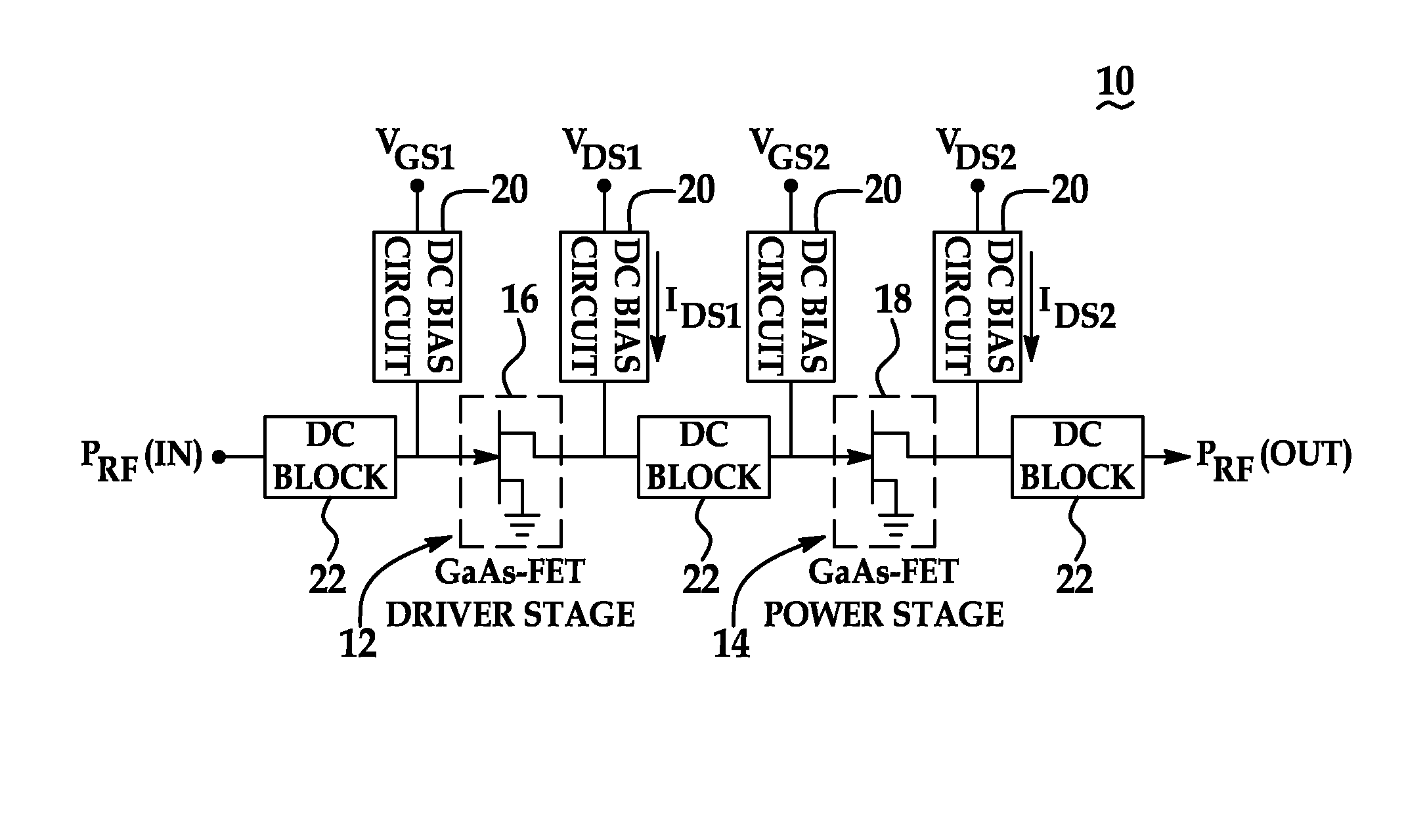
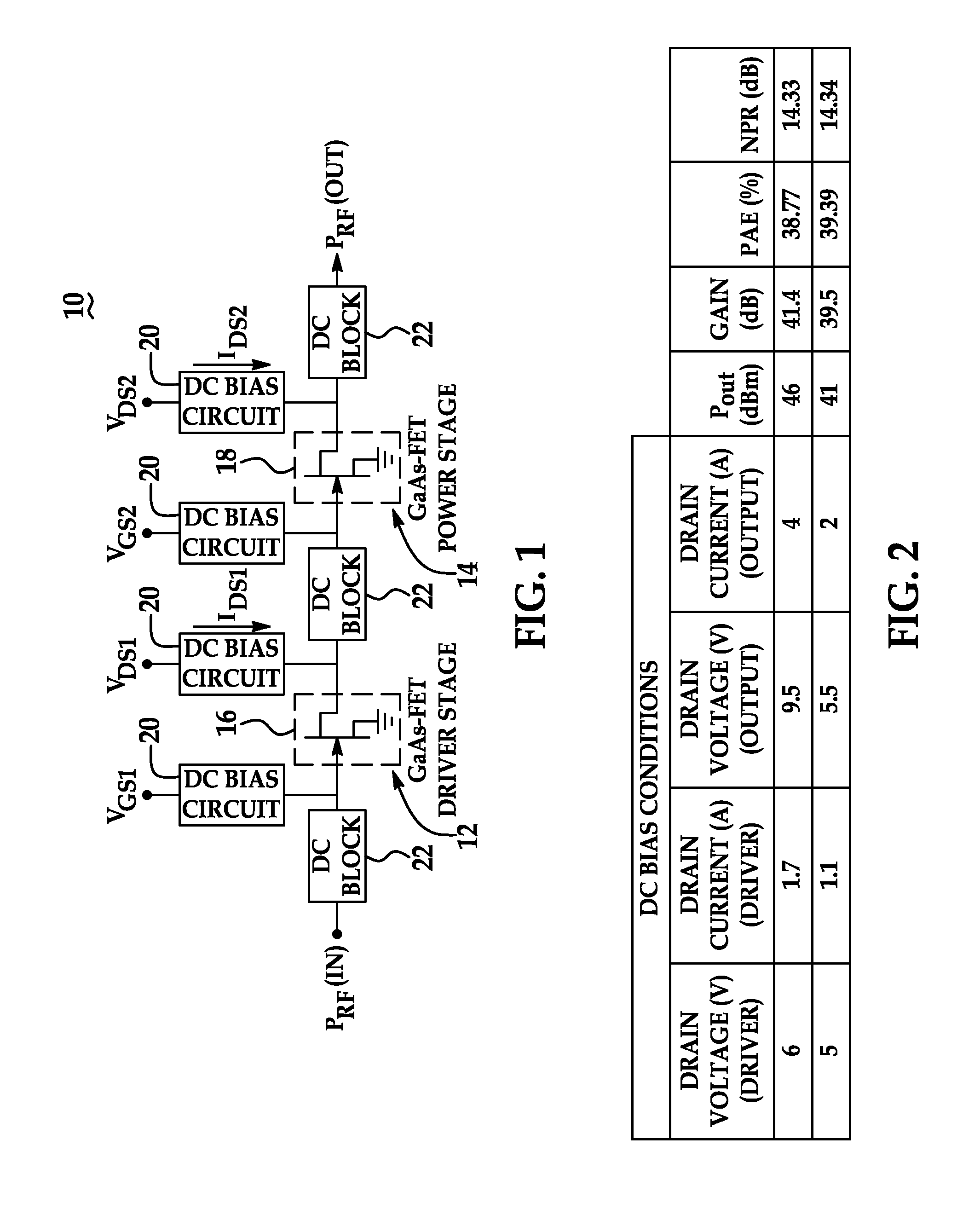
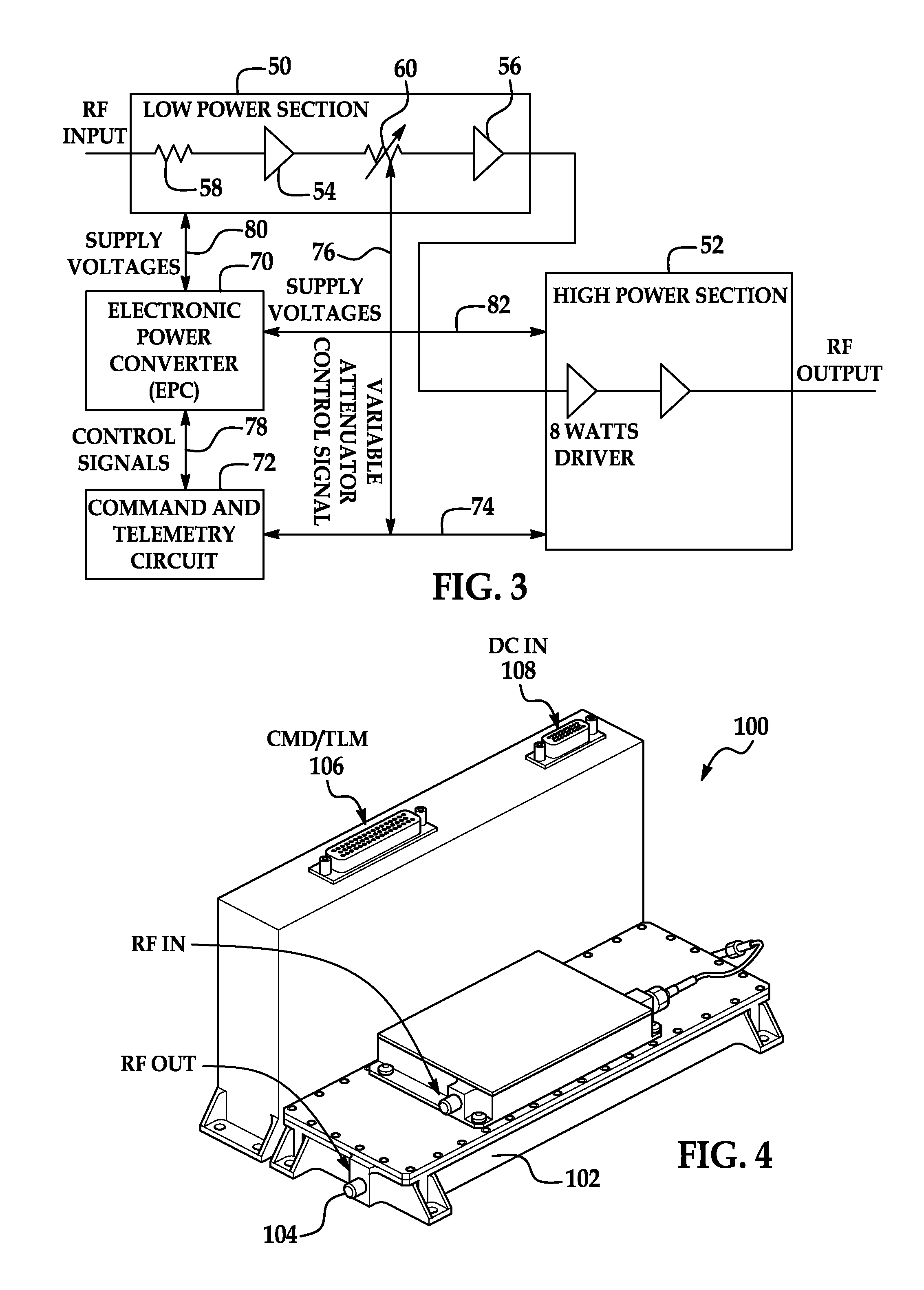
- A solid-state power amplifier (SSPA) configuration that couples two transistor devices with adjustable DC biasing conditions, including drain and gate biasing, to maintain consistent PAE and linearity over a range of output power levels, using a power converter to set predetermined biasing conditions based on input power levels.

System and method for gain control of individual narrowband channels using a wideband power measurement
PatentInactiveEP1796290B1
Innovation
- A method and system for controlling open loop gain input into an antenna and adjusting the gain of individual sub-beams within a beam using a variable gain amplifier, with power measurements and open loop commands to optimize power usage, ensuring efficient power distribution and tracking to maintain quality service and reduce costs.


Space Debris Mitigation and Power System Impact
Space debris poses an increasingly critical threat to fixed satellite services (FSS), with direct implications for power system design and operational efficiency. The proliferation of orbital debris, ranging from defunct satellites to micrometeorites, creates a complex operational environment where power systems must maintain reliability while accommodating protective measures and potential damage scenarios.
Current debris mitigation strategies significantly influence satellite power architecture decisions. Shielding requirements add substantial mass to spacecraft, directly impacting power-to-weight ratios and overall system efficiency. Advanced Whipple shields and multi-layer insulation systems, while essential for component protection, can increase satellite mass by 15-25%, necessitating more powerful propulsion systems and larger solar arrays to maintain operational capabilities.
The implementation of collision avoidance maneuvers presents unique power management challenges. These orbital adjustments require rapid power redistribution to thruster systems, often demanding peak power outputs that exceed normal operational parameters. Modern FSS platforms incorporate dedicated power reserves and fast-switching power management units to accommodate emergency maneuvers without compromising primary communication functions.
Debris impact scenarios directly affect power system redundancy requirements. Critical power components, including solar panels, batteries, and power conditioning units, must incorporate fault-tolerant designs to maintain service continuity following minor debris strikes. This redundancy typically increases power system complexity by 30-40% compared to debris-free environment designs.
Emerging active debris removal technologies create new power efficiency opportunities for FSS operators. Satellites equipped with debris capture mechanisms or laser ablation systems can contribute to orbital cleanup while generating revenue streams. However, these systems require significant power allocations, with laser-based debris removal consuming 2-5 kW per engagement cycle.
Future power system designs increasingly integrate debris-aware operational modes, automatically adjusting power distribution based on real-time debris tracking data. These adaptive systems optimize power efficiency by reducing unnecessary shielding activation and preemptively managing power reserves during high-risk orbital periods, representing a paradigm shift toward intelligent, debris-responsive satellite operations.
Current debris mitigation strategies significantly influence satellite power architecture decisions. Shielding requirements add substantial mass to spacecraft, directly impacting power-to-weight ratios and overall system efficiency. Advanced Whipple shields and multi-layer insulation systems, while essential for component protection, can increase satellite mass by 15-25%, necessitating more powerful propulsion systems and larger solar arrays to maintain operational capabilities.
The implementation of collision avoidance maneuvers presents unique power management challenges. These orbital adjustments require rapid power redistribution to thruster systems, often demanding peak power outputs that exceed normal operational parameters. Modern FSS platforms incorporate dedicated power reserves and fast-switching power management units to accommodate emergency maneuvers without compromising primary communication functions.
Debris impact scenarios directly affect power system redundancy requirements. Critical power components, including solar panels, batteries, and power conditioning units, must incorporate fault-tolerant designs to maintain service continuity following minor debris strikes. This redundancy typically increases power system complexity by 30-40% compared to debris-free environment designs.
Emerging active debris removal technologies create new power efficiency opportunities for FSS operators. Satellites equipped with debris capture mechanisms or laser ablation systems can contribute to orbital cleanup while generating revenue streams. However, these systems require significant power allocations, with laser-based debris removal consuming 2-5 kW per engagement cycle.
Future power system designs increasingly integrate debris-aware operational modes, automatically adjusting power distribution based on real-time debris tracking data. These adaptive systems optimize power efficiency by reducing unnecessary shielding activation and preemptively managing power reserves during high-risk orbital periods, representing a paradigm shift toward intelligent, debris-responsive satellite operations.
Sustainability Standards for Satellite Operations
The satellite industry is experiencing unprecedented pressure to adopt comprehensive sustainability standards as environmental concerns and regulatory requirements intensify globally. Fixed satellite services operators are increasingly recognizing that power efficiency optimization must align with broader sustainability frameworks to ensure long-term operational viability and regulatory compliance.
Current sustainability standards for satellite operations encompass multiple dimensions beyond power consumption, including orbital debris mitigation, end-of-life disposal protocols, and carbon footprint reduction throughout the satellite lifecycle. The International Telecommunication Union (ITU) and the Inter-Agency Space Debris Coordination Committee (IADC) have established foundational guidelines that directly impact power system design decisions. These standards mandate specific operational parameters that influence power allocation strategies and efficiency optimization approaches.
The European Space Agency's Clean Space initiative and NASA's Orbital Debris Mitigation Standard Practices represent leading frameworks that integrate power efficiency requirements with environmental responsibility. These standards require operators to demonstrate measurable improvements in energy utilization while maintaining compliance with space traffic management protocols and debris mitigation measures.
Emerging sustainability certifications, such as the Space Sustainability Rating system, are creating market incentives for operators to exceed minimum power efficiency thresholds. These rating systems evaluate satellite missions across environmental impact categories, with power efficiency serving as a critical scoring component. Operators achieving higher sustainability ratings often secure preferential insurance rates and regulatory approvals, creating direct business value from enhanced power optimization.
The convergence of sustainability standards with power efficiency optimization is driving innovation in satellite design methodologies. Standards now require comprehensive lifecycle assessments that quantify energy consumption patterns from launch through deorbit, compelling operators to implement advanced power management systems that adapt to changing regulatory requirements.
Future sustainability frameworks are expected to incorporate real-time power efficiency monitoring requirements, mandating continuous reporting of energy utilization metrics to regulatory bodies. This evolution will necessitate sophisticated power management architectures capable of demonstrating compliance with increasingly stringent environmental performance standards while maintaining service quality and operational reliability.
Current sustainability standards for satellite operations encompass multiple dimensions beyond power consumption, including orbital debris mitigation, end-of-life disposal protocols, and carbon footprint reduction throughout the satellite lifecycle. The International Telecommunication Union (ITU) and the Inter-Agency Space Debris Coordination Committee (IADC) have established foundational guidelines that directly impact power system design decisions. These standards mandate specific operational parameters that influence power allocation strategies and efficiency optimization approaches.
The European Space Agency's Clean Space initiative and NASA's Orbital Debris Mitigation Standard Practices represent leading frameworks that integrate power efficiency requirements with environmental responsibility. These standards require operators to demonstrate measurable improvements in energy utilization while maintaining compliance with space traffic management protocols and debris mitigation measures.
Emerging sustainability certifications, such as the Space Sustainability Rating system, are creating market incentives for operators to exceed minimum power efficiency thresholds. These rating systems evaluate satellite missions across environmental impact categories, with power efficiency serving as a critical scoring component. Operators achieving higher sustainability ratings often secure preferential insurance rates and regulatory approvals, creating direct business value from enhanced power optimization.
The convergence of sustainability standards with power efficiency optimization is driving innovation in satellite design methodologies. Standards now require comprehensive lifecycle assessments that quantify energy consumption patterns from launch through deorbit, compelling operators to implement advanced power management systems that adapt to changing regulatory requirements.
Future sustainability frameworks are expected to incorporate real-time power efficiency monitoring requirements, mandating continuous reporting of energy utilization metrics to regulatory bodies. This evolution will necessitate sophisticated power management architectures capable of demonstrating compliance with increasingly stringent environmental performance standards while maintaining service quality and operational reliability.
Unlock deeper insights with PatSnap Eureka Quick Research — get a full tech report to explore trends and direct your research. Try now!
Generate Your Research Report Instantly with AI Agent
Supercharge your innovation with PatSnap Eureka AI Agent Platform!