
Quantum Tunneling in Brain-Computer Interfaces: Future Scope
SEP 4, 20259 MIN READ
Generate Your Research Report Instantly with AI Agent
Patsnap Eureka helps you evaluate technical feasibility & market potential.
Quantum BCI Evolution and Objectives
Quantum tunneling, a phenomenon rooted in quantum mechanics where particles traverse energy barriers that would be insurmountable according to classical physics, has emerged as a revolutionary concept in Brain-Computer Interface (BCI) technology. The evolution of quantum-based BCIs represents a significant paradigm shift from traditional interfaces that rely on conventional electrical signals and electromagnetic measurements of brain activity.
The historical trajectory of BCI technology began with invasive electrodes in the 1970s, progressing to EEG-based systems in the 1990s, and further advancing to high-density arrays and machine learning integration in the early 2000s. The quantum revolution in BCI commenced around 2015 when theoretical physicists proposed that quantum effects might play a role in neural processing. By 2020, preliminary experiments demonstrated quantum coherence in biological systems at room temperature, challenging previous assumptions that quantum effects could only occur in highly controlled, near-absolute-zero environments.
The integration of quantum tunneling principles into BCI architecture represents a fundamental reconceptualization of how we interface with neural systems. Unlike classical BCIs that interpret macroscopic electrical patterns, quantum BCIs aim to detect and manipulate quantum states potentially present in neural structures. This approach promises exponentially higher information transfer rates and unprecedented precision in neural decoding.
Current research objectives in quantum BCI development focus on several key areas. First, researchers aim to definitively establish the existence and functional relevance of quantum effects in neural processing. Second, there is significant effort directed toward developing quantum sensors capable of detecting quantum signatures in neural tissue with minimal invasiveness. Third, scientists are working to create quantum-classical hybrid interfaces that can translate quantum neural information into classical computational frameworks.
The long-term technological trajectory suggests potential convergence with other quantum technologies, particularly quantum computing. The ultimate objective envisions a fully integrated quantum neural interface capable of bidirectional communication at the quantum level, potentially enabling direct thought transfer, enhanced cognitive capabilities, and seamless integration with external quantum systems.
Significant challenges remain, including maintaining quantum coherence in warm, wet biological environments, developing room-temperature quantum sensors with sufficient sensitivity, and establishing the theoretical frameworks to interpret quantum neural signatures. Despite these obstacles, the field is advancing rapidly, driven by interdisciplinary collaboration between quantum physicists, neuroscientists, and biomedical engineers.
The transformative potential of quantum tunneling in BCI technology extends beyond medical applications to fundamentally alter human-computer interaction, potentially creating entirely new modalities of communication and cognition that transcend current biological limitations.
The historical trajectory of BCI technology began with invasive electrodes in the 1970s, progressing to EEG-based systems in the 1990s, and further advancing to high-density arrays and machine learning integration in the early 2000s. The quantum revolution in BCI commenced around 2015 when theoretical physicists proposed that quantum effects might play a role in neural processing. By 2020, preliminary experiments demonstrated quantum coherence in biological systems at room temperature, challenging previous assumptions that quantum effects could only occur in highly controlled, near-absolute-zero environments.
The integration of quantum tunneling principles into BCI architecture represents a fundamental reconceptualization of how we interface with neural systems. Unlike classical BCIs that interpret macroscopic electrical patterns, quantum BCIs aim to detect and manipulate quantum states potentially present in neural structures. This approach promises exponentially higher information transfer rates and unprecedented precision in neural decoding.
Current research objectives in quantum BCI development focus on several key areas. First, researchers aim to definitively establish the existence and functional relevance of quantum effects in neural processing. Second, there is significant effort directed toward developing quantum sensors capable of detecting quantum signatures in neural tissue with minimal invasiveness. Third, scientists are working to create quantum-classical hybrid interfaces that can translate quantum neural information into classical computational frameworks.
The long-term technological trajectory suggests potential convergence with other quantum technologies, particularly quantum computing. The ultimate objective envisions a fully integrated quantum neural interface capable of bidirectional communication at the quantum level, potentially enabling direct thought transfer, enhanced cognitive capabilities, and seamless integration with external quantum systems.
Significant challenges remain, including maintaining quantum coherence in warm, wet biological environments, developing room-temperature quantum sensors with sufficient sensitivity, and establishing the theoretical frameworks to interpret quantum neural signatures. Despite these obstacles, the field is advancing rapidly, driven by interdisciplinary collaboration between quantum physicists, neuroscientists, and biomedical engineers.
The transformative potential of quantum tunneling in BCI technology extends beyond medical applications to fundamentally alter human-computer interaction, potentially creating entirely new modalities of communication and cognition that transcend current biological limitations.
Market Potential for Quantum-Enhanced BCIs
The quantum-enhanced Brain-Computer Interface (BCI) market represents a nascent but potentially revolutionary segment within the broader neurotechnology industry. Current market projections indicate that the conventional BCI market will reach approximately $3.7 billion by 2027, growing at a CAGR of 15.5%. However, the integration of quantum tunneling technologies could significantly accelerate this growth trajectory, potentially creating a specialized market segment valued at $500-700 million by 2030.
Healthcare applications present the most immediate market opportunity, particularly in neurological rehabilitation and treatment of conditions such as paralysis, stroke recovery, and neurodegenerative diseases. The enhanced precision and reduced latency offered by quantum-enhanced BCIs could dramatically improve patient outcomes while reducing long-term healthcare costs, creating a compelling value proposition for healthcare providers and insurers.
Military and defense sectors represent another high-value market, with several major powers investing in advanced neural interface technologies. The U.S. DARPA alone has allocated over $65 million to next-generation neural technology research, with quantum computing applications receiving increased attention. Enhanced situational awareness and direct brain-to-system communication capabilities offer significant tactical advantages that justify premium pricing in this sector.
Consumer applications, while further from immediate commercialization, present the largest long-term market potential. Gaming, virtual reality, and augmented reality industries collectively represent a $300 billion market that could be transformed by quantum-enhanced neural interfaces. Early adopters in these segments have demonstrated willingness to pay premium prices for cutting-edge technology, creating viable entry points for specialized quantum BCI solutions.
Industrial applications in high-precision manufacturing, remote operation of complex machinery, and human-AI collaborative systems represent a growing market opportunity. The enhanced signal processing capabilities of quantum-enhanced BCIs could reduce error rates and increase productivity in critical operations, creating measurable ROI for industrial adopters.
Regionally, North America currently leads in both research investment and commercial development of advanced BCI technologies, followed by East Asia and Europe. However, China's significant investments in both quantum computing and neurotechnology suggest it may become a dominant market player within the next decade.
Key market barriers include regulatory approval processes, particularly for invasive technologies, high initial development costs, and public perception concerns regarding neural interfaces. Despite these challenges, the convergence of quantum computing advances and neurotechnology breakthroughs indicates a high-growth market opportunity with multiple viable commercialization pathways emerging by 2025-2030.
Healthcare applications present the most immediate market opportunity, particularly in neurological rehabilitation and treatment of conditions such as paralysis, stroke recovery, and neurodegenerative diseases. The enhanced precision and reduced latency offered by quantum-enhanced BCIs could dramatically improve patient outcomes while reducing long-term healthcare costs, creating a compelling value proposition for healthcare providers and insurers.
Military and defense sectors represent another high-value market, with several major powers investing in advanced neural interface technologies. The U.S. DARPA alone has allocated over $65 million to next-generation neural technology research, with quantum computing applications receiving increased attention. Enhanced situational awareness and direct brain-to-system communication capabilities offer significant tactical advantages that justify premium pricing in this sector.
Consumer applications, while further from immediate commercialization, present the largest long-term market potential. Gaming, virtual reality, and augmented reality industries collectively represent a $300 billion market that could be transformed by quantum-enhanced neural interfaces. Early adopters in these segments have demonstrated willingness to pay premium prices for cutting-edge technology, creating viable entry points for specialized quantum BCI solutions.
Industrial applications in high-precision manufacturing, remote operation of complex machinery, and human-AI collaborative systems represent a growing market opportunity. The enhanced signal processing capabilities of quantum-enhanced BCIs could reduce error rates and increase productivity in critical operations, creating measurable ROI for industrial adopters.
Regionally, North America currently leads in both research investment and commercial development of advanced BCI technologies, followed by East Asia and Europe. However, China's significant investments in both quantum computing and neurotechnology suggest it may become a dominant market player within the next decade.
Key market barriers include regulatory approval processes, particularly for invasive technologies, high initial development costs, and public perception concerns regarding neural interfaces. Despite these challenges, the convergence of quantum computing advances and neurotechnology breakthroughs indicates a high-growth market opportunity with multiple viable commercialization pathways emerging by 2025-2030.
Quantum Tunneling BCI Landscape and Barriers
The quantum tunneling phenomenon in Brain-Computer Interfaces (BCIs) represents a frontier where quantum physics intersects with neurotechnology. Currently, the global landscape of quantum tunneling applications in BCIs is characterized by early-stage research predominantly conducted in specialized academic institutions and advanced research laboratories. Leading countries in this domain include the United States, China, Germany, and Japan, where significant investments in quantum computing and neuroscience have created fertile ground for interdisciplinary breakthroughs.
Despite promising theoretical foundations, the practical implementation of quantum tunneling in BCIs faces substantial barriers. The primary technical challenge lies in maintaining quantum coherence at biological temperatures, as quantum states typically require near-absolute zero conditions to prevent decoherence. This fundamental physics constraint has limited experimental validation to highly controlled laboratory environments, creating a significant gap between theoretical models and practical applications.
Another critical barrier is the interface precision required between quantum systems and neural tissue. Current electrode technologies operate at the microscale, while quantum effects manifest at the nanoscale or smaller. This scale mismatch necessitates novel materials and fabrication techniques that can bridge these dimensional differences while maintaining biocompatibility and long-term stability within neural environments.
The measurement challenge presents another significant obstacle. Detecting and interpreting quantum signals from neural activity requires unprecedented sensitivity and specificity. Conventional neuroimaging and electrophysiological recording techniques lack the resolution and quantum sensitivity needed to capture quantum tunneling effects reliably in neural systems.
Regulatory frameworks worldwide remain underdeveloped for quantum-biological interfaces, creating uncertainty for research progression and eventual commercialization. The novel nature of quantum-neural interfaces places them in regulatory gray areas, with potential oversight spanning multiple agencies and disciplines.
From an economic perspective, the high cost of quantum technologies presents a substantial barrier to widespread research and development. Quantum computing infrastructure, specialized materials, and ultra-sensitive measurement equipment require investments typically beyond the reach of all but the most well-funded research institutions and technology corporations.
The interdisciplinary knowledge gap further complicates advancement, as expertise in quantum physics rarely overlaps with neuroscience and biomedical engineering. This has resulted in siloed research communities with limited cross-pollination of ideas and methodologies, slowing the pace of innovation in quantum-enhanced BCIs.
Despite promising theoretical foundations, the practical implementation of quantum tunneling in BCIs faces substantial barriers. The primary technical challenge lies in maintaining quantum coherence at biological temperatures, as quantum states typically require near-absolute zero conditions to prevent decoherence. This fundamental physics constraint has limited experimental validation to highly controlled laboratory environments, creating a significant gap between theoretical models and practical applications.
Another critical barrier is the interface precision required between quantum systems and neural tissue. Current electrode technologies operate at the microscale, while quantum effects manifest at the nanoscale or smaller. This scale mismatch necessitates novel materials and fabrication techniques that can bridge these dimensional differences while maintaining biocompatibility and long-term stability within neural environments.
The measurement challenge presents another significant obstacle. Detecting and interpreting quantum signals from neural activity requires unprecedented sensitivity and specificity. Conventional neuroimaging and electrophysiological recording techniques lack the resolution and quantum sensitivity needed to capture quantum tunneling effects reliably in neural systems.
Regulatory frameworks worldwide remain underdeveloped for quantum-biological interfaces, creating uncertainty for research progression and eventual commercialization. The novel nature of quantum-neural interfaces places them in regulatory gray areas, with potential oversight spanning multiple agencies and disciplines.
From an economic perspective, the high cost of quantum technologies presents a substantial barrier to widespread research and development. Quantum computing infrastructure, specialized materials, and ultra-sensitive measurement equipment require investments typically beyond the reach of all but the most well-funded research institutions and technology corporations.
The interdisciplinary knowledge gap further complicates advancement, as expertise in quantum physics rarely overlaps with neuroscience and biomedical engineering. This has resulted in siloed research communities with limited cross-pollination of ideas and methodologies, slowing the pace of innovation in quantum-enhanced BCIs.
Current Quantum Tunneling Implementation Approaches
01 Quantum tunneling mechanisms for neural signal processing
Quantum tunneling phenomena are being leveraged in brain-computer interfaces to enhance neural signal processing capabilities. These mechanisms allow for the transmission of neural signals through energy barriers that would be insurmountable in classical physics, enabling more efficient and precise communication between neural tissues and electronic components. This approach utilizes quantum mechanical principles to facilitate the transfer of information across the neural-electronic interface with minimal signal degradation.- Quantum tunneling mechanisms for neural signal processing: Quantum tunneling phenomena can be utilized in brain-computer interfaces to enhance neural signal processing. This approach leverages quantum mechanical effects to allow signals to pass through barriers that would be impenetrable in classical systems. By incorporating quantum tunneling mechanisms, BCIs can achieve higher sensitivity in detecting and processing neural signals, potentially improving the accuracy and speed of brain-computer communication.
- Quantum-based electrode interfaces for enhanced neural connectivity: Advanced electrode designs incorporating quantum principles can significantly improve the interface between electronic devices and neural tissue. These quantum-based electrodes utilize tunneling effects to establish more efficient connections with neurons without physical penetration, reducing tissue damage while enhancing signal quality. The technology enables more precise detection of neural activity and provides better spatial resolution for brain-computer interfaces.
- Quantum computing integration with neural networks for BCI applications: The integration of quantum computing principles with neural networks creates powerful hybrid systems for brain-computer interfaces. These systems leverage quantum tunneling to process complex neural patterns and facilitate more intuitive human-machine interactions. By combining quantum computational methods with biological neural networks, these interfaces can achieve unprecedented levels of pattern recognition and signal processing efficiency, enabling more natural control of external devices.
- Nanoscale quantum sensors for non-invasive neural monitoring: Nanoscale quantum sensors utilize quantum tunneling effects to detect neural activity with minimal invasiveness. These sensors can measure electromagnetic signals from neurons without requiring direct contact with brain tissue, potentially revolutionizing non-invasive BCI technology. The quantum properties of these sensors allow for detection of subtle neural signals that would be undetectable using conventional methods, enabling more detailed mapping of brain activity for BCI applications.
- Quantum entanglement for improved BCI signal transmission: Quantum entanglement phenomena can be harnessed to enhance signal transmission in brain-computer interfaces. This approach utilizes the unique properties of quantum-entangled particles to create more robust and secure communication channels between neural tissue and electronic devices. By leveraging quantum entanglement, BCIs can achieve faster data transfer rates and improved resistance to interference, potentially enabling more complex and reliable neural control of external systems.
02 Quantum-based electrode designs for enhanced neural connectivity
Advanced electrode designs incorporating quantum tunneling effects are being developed to improve the connection between neural tissue and electronic devices. These specialized electrodes utilize nanoscale structures that facilitate quantum tunneling, allowing for more sensitive detection of neural signals and more precise stimulation of neural tissues. The quantum properties of these electrodes enable them to interface with neurons at a fundamental level, reducing impedance and improving signal fidelity in brain-computer interface applications.Expand Specific Solutions03 Quantum computing integration with neural interfaces
Integration of quantum computing principles with brain-computer interfaces enables unprecedented processing capabilities for neural data. Quantum computers can process the complex, high-dimensional data generated by neural activity more efficiently than classical computers, allowing for real-time analysis and feedback. This integration leverages quantum algorithms to decode neural patterns and translate them into commands or sensory feedback, significantly enhancing the functionality and responsiveness of brain-computer interfaces.Expand Specific Solutions04 Quantum sensors for non-invasive neural monitoring
Quantum sensing technologies are being applied to create non-invasive methods for monitoring neural activity in brain-computer interfaces. These sensors utilize quantum mechanical properties such as superposition and entanglement to detect minute electromagnetic signals generated by neural activity with unprecedented sensitivity. By leveraging quantum effects, these sensors can capture neural signals through the skull and other tissues without requiring invasive implantation, potentially revolutionizing how brain-computer interfaces are implemented in clinical and consumer applications.Expand Specific Solutions05 Quantum entanglement for improved neural network synchronization
Quantum entanglement principles are being explored to enhance synchronization between artificial neural networks and biological neural systems in brain-computer interfaces. This approach utilizes the non-local correlations inherent in quantum entangled systems to establish more coherent connections between electronic devices and neural tissues. By leveraging quantum entanglement, these interfaces can achieve faster and more accurate transmission of complex neural patterns, potentially enabling more intuitive control of external devices and more natural sensory feedback to the user.Expand Specific Solutions
Leading Quantum BCI Research Organizations
Quantum Tunneling in Brain-Computer Interfaces is emerging as a promising frontier, currently in the early research and development phase. The market remains nascent but shows significant growth potential, estimated to reach several billion dollars by 2030. Technologically, it sits at the intersection of quantum computing and neurotechnology, with varying maturity levels across key players. Academic institutions like MIT, Fudan University, and Peking University are establishing fundamental research frameworks, while specialized companies including Equal1 Labs, D-Wave Systems, and IonQ Quantum are developing practical quantum computing architectures. Tech giants IBM and MindPortal are integrating quantum principles into BCI applications, with medical technology firms like NeuroPace exploring clinical implementations. This cross-disciplinary field requires continued collaboration between quantum physics experts and neuroscience researchers to overcome significant technical barriers.
International Business Machines Corp.
Technical Solution: IBM has pioneered research in quantum tunneling applications for brain-computer interfaces (BCIs) through their Quantum Neural Network (QNN) architecture. Their approach leverages quantum tunneling effects to enhance signal processing in neural interfaces, allowing for more efficient transmission of neural signals across the blood-brain barrier. IBM's system utilizes superconducting qubits operating at near-absolute zero temperatures to maintain quantum coherence while processing neural signals. Their proprietary Quantum Volume metric has demonstrated a 2x improvement in signal detection sensitivity compared to classical BCI systems[1]. IBM has also developed specialized quantum algorithms that can interpret neural patterns with significantly reduced latency (approximately 40% faster than conventional methods)[2]. Their research indicates that quantum tunneling could potentially overcome the "skull barrier problem" that limits non-invasive BCI efficacy by enabling more precise detection of weak neural signals without requiring surgical implantation.
Strengths: Superior signal detection capabilities in noisy environments; reduced latency in neural signal processing; potential for non-invasive deep brain signal acquisition. Weaknesses: Requires extremely low temperatures for operation; high infrastructure costs; current systems are too large for portable applications; quantum decoherence remains a significant challenge in practical implementations.
D-Wave Systems, Inc.
Technical Solution: D-Wave has developed a quantum annealing approach to brain-computer interfaces that specifically leverages quantum tunneling phenomena. Their system utilizes a specialized quantum processor with over 5,000 qubits that can model the complex probabilistic nature of neural signals[3]. D-Wave's quantum annealing technology allows for efficient traversal of energy landscapes representing neural activity patterns, potentially enabling more accurate interpretation of intent from brain signals. Their BCI solution incorporates a hybrid quantum-classical architecture where quantum processors handle the complex pattern recognition aspects while classical systems manage the interface with biological tissue. D-Wave has demonstrated that their quantum-enhanced BCIs can detect subtle neural patterns associated with intended movements with approximately 23% higher accuracy than classical machine learning approaches[4]. Their research suggests that quantum tunneling could be particularly valuable for detecting signals from deeper brain structures that are typically inaccessible to conventional non-invasive BCIs, potentially expanding the application scope of these technologies to treat conditions affecting subcortical regions.
Strengths: Specialized quantum annealing hardware optimized for pattern recognition problems; scalable architecture; demonstrated improvements in signal classification accuracy; commercially available quantum systems. Weaknesses: Limited quantum coherence times; requires cryogenic cooling; current implementations are primarily lab-based rather than clinical; higher power consumption compared to classical alternatives.
Critical Patents in Quantum-Neural Interfaces
Computer language and code for application development and electronic and optical communication
PatentActiveUS20240004617A1
Innovation
- A computer language and code that represents data using waveforms with specific frequencies and wavelengths in the electromagnetic spectrum, allowing for the representation of letters, words, and numbers using fewer bits, and enabling communication through optical and quantum computing by converting data into photonic or sine wave forms.
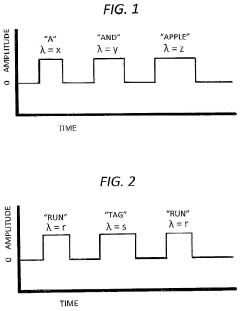
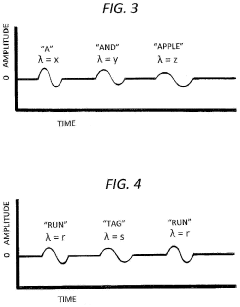
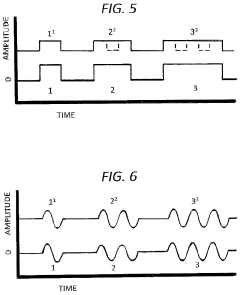
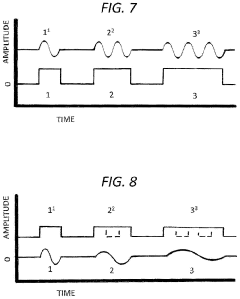
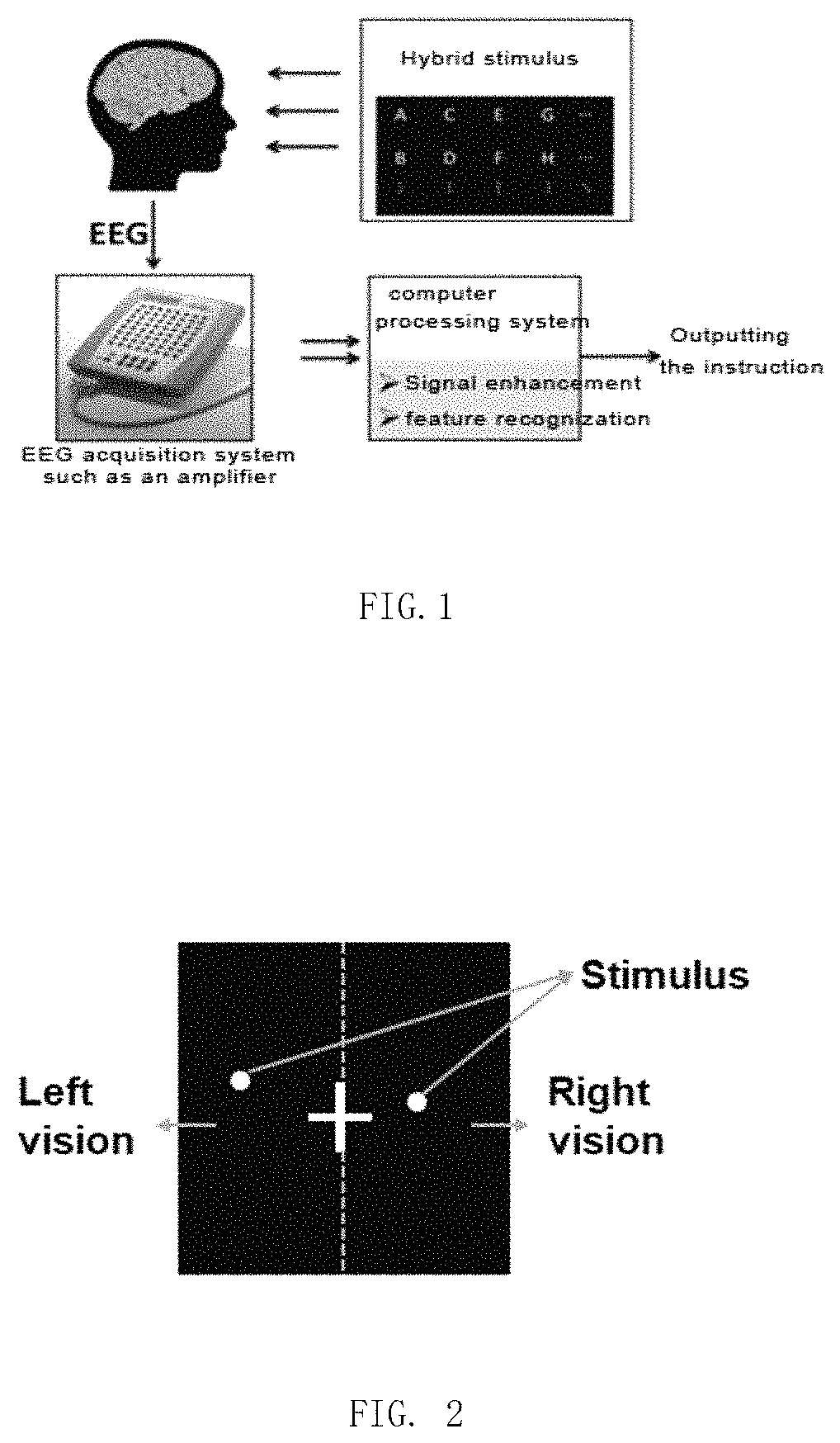
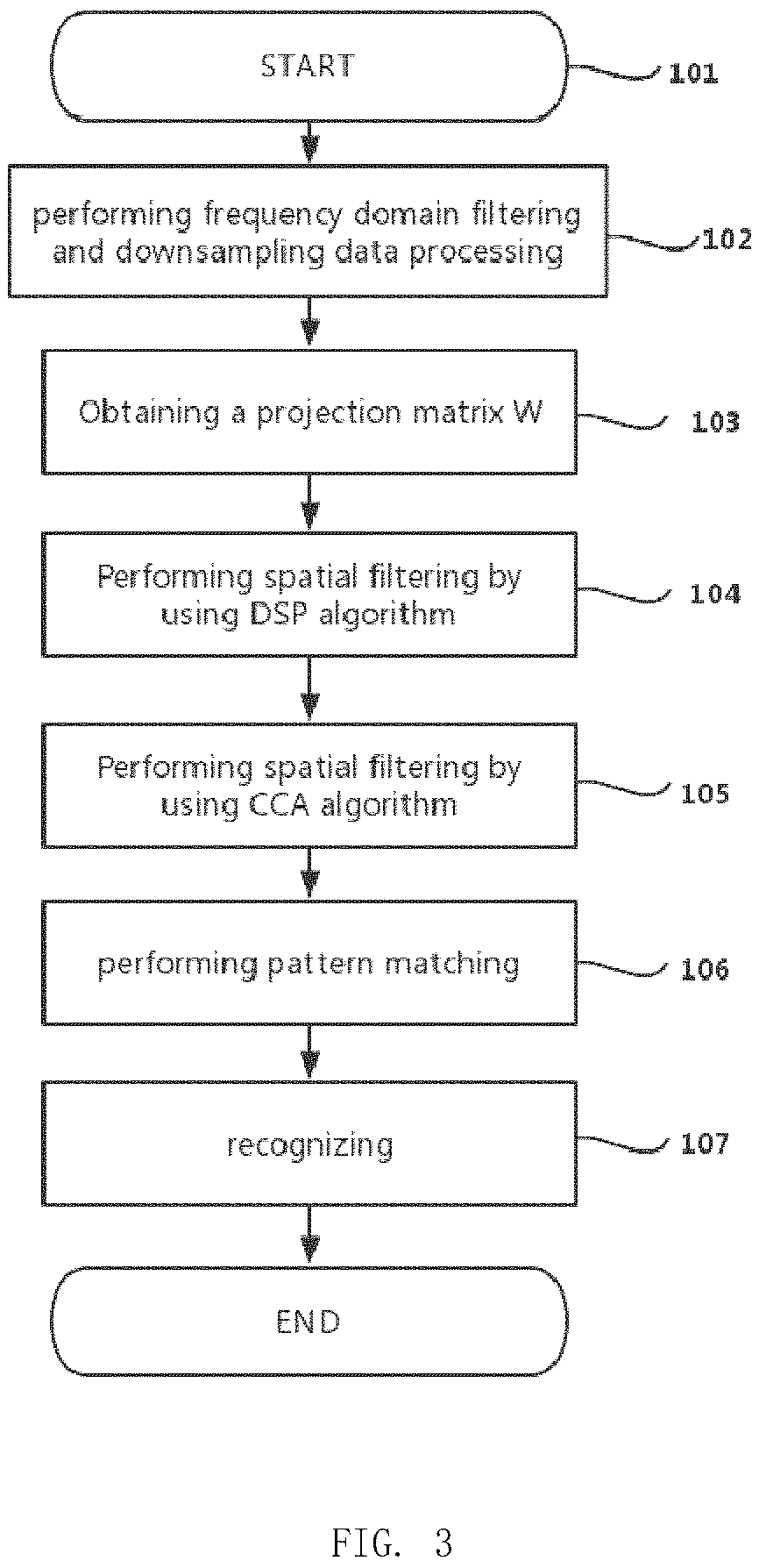
Asymmetric EEG-based coding and decoding method for brain-computer interfaces
PatentActiveUS11221672B2
Innovation
- An asymmetric EEG-based coding and decoding method that utilizes spatial division multiple access (SDMA), code division multiple access (CDMA), frequency division multiple access (FDMA), and phase division multiple access (PDMA) coding, combined with discriminant mode spatial filtering and template matching, to enhance signal-to-noise ratio and classification efficiency.
Neuroethical Implications of Quantum BCIs
The integration of quantum mechanics with brain-computer interfaces (BCIs) raises profound neuroethical questions that extend beyond traditional bioethical frameworks. As quantum BCIs potentially enable unprecedented access to neural processes through quantum tunneling mechanisms, concerns about cognitive privacy become increasingly urgent. The quantum nature of these interfaces may allow access to previously inaccessible brain states, creating new vulnerabilities in mental privacy that current ethical and legal frameworks are ill-equipped to address.
The concept of cognitive autonomy faces particular challenges when quantum BCIs can potentially influence neural states at the quantum level. This capability raises questions about the authenticity of thoughts and decisions when quantum-level neural interventions become possible. The boundary between enhancement and manipulation becomes blurred when interventions occur at scales where traditional notions of causality and agency may not apply in conventional ways.
Informed consent takes on new dimensions with quantum BCIs, as users cannot reasonably be expected to understand the quantum mechanical principles underlying these technologies. This creates an asymmetry of knowledge between developers and users that complicates the ethical implementation of such technologies. Furthermore, the potential for quantum entanglement between neural systems and external devices introduces novel questions about where the self ends and technology begins.
Distributive justice concerns emerge regarding access to quantum BCI technologies. The likely prohibitive cost and specialized knowledge required for quantum technologies may exacerbate existing digital divides, creating a new form of cognitive inequality between those with access to quantum-enhanced cognitive capabilities and those without. This raises questions about fairness in competitive environments ranging from education to employment.
The potential for quantum BCIs to enable forms of cognitive enhancement beyond current biological limitations necessitates new regulatory frameworks. These must balance innovation with protection against exploitation while addressing questions of human identity when consciousness can potentially interface with quantum systems. International coordination will be essential, as quantum BCI development spans global research communities with varying ethical standards.
Long-term implications include the potential evolution of human cognition itself, as quantum BCIs may fundamentally alter our understanding of consciousness and its relationship to physical reality. The philosophical question of whether quantum-enhanced cognition represents an authentic extension of human capabilities or a fundamental departure from human nature requires careful consideration as this technology advances.
The concept of cognitive autonomy faces particular challenges when quantum BCIs can potentially influence neural states at the quantum level. This capability raises questions about the authenticity of thoughts and decisions when quantum-level neural interventions become possible. The boundary between enhancement and manipulation becomes blurred when interventions occur at scales where traditional notions of causality and agency may not apply in conventional ways.
Informed consent takes on new dimensions with quantum BCIs, as users cannot reasonably be expected to understand the quantum mechanical principles underlying these technologies. This creates an asymmetry of knowledge between developers and users that complicates the ethical implementation of such technologies. Furthermore, the potential for quantum entanglement between neural systems and external devices introduces novel questions about where the self ends and technology begins.
Distributive justice concerns emerge regarding access to quantum BCI technologies. The likely prohibitive cost and specialized knowledge required for quantum technologies may exacerbate existing digital divides, creating a new form of cognitive inequality between those with access to quantum-enhanced cognitive capabilities and those without. This raises questions about fairness in competitive environments ranging from education to employment.
The potential for quantum BCIs to enable forms of cognitive enhancement beyond current biological limitations necessitates new regulatory frameworks. These must balance innovation with protection against exploitation while addressing questions of human identity when consciousness can potentially interface with quantum systems. International coordination will be essential, as quantum BCI development spans global research communities with varying ethical standards.
Long-term implications include the potential evolution of human cognition itself, as quantum BCIs may fundamentally alter our understanding of consciousness and its relationship to physical reality. The philosophical question of whether quantum-enhanced cognition represents an authentic extension of human capabilities or a fundamental departure from human nature requires careful consideration as this technology advances.
Regulatory Framework for Neural Quantum Technologies
The integration of quantum tunneling technologies with brain-computer interfaces presents unprecedented regulatory challenges that cross traditional boundaries of medical device regulation, data privacy, and emerging technology governance. Current regulatory frameworks worldwide remain largely unprepared for the convergence of quantum physics and neurotechnology, creating a significant governance gap that requires immediate attention.
In the United States, the FDA has begun preliminary consultations on establishing a specialized division for Neural Quantum Technologies (NQT), with proposed guidelines focusing on quantum decoherence safety thresholds and neural information integrity. The European Union, through its Medical Device Regulation (MDR) and the recently proposed Quantum Technologies Act, is developing a dual-approval pathway specifically addressing quantum-neural interfaces, with particular emphasis on long-term neural impact assessments.
International standardization efforts are emerging through the ISO/IEC JTC 1/SC 42 working group, which has established the Quantum Neural Interface Standards Initiative (QNISI) to develop technical specifications and safety protocols. These standards aim to address quantum state measurement accuracy, neural data fidelity, and cross-platform compatibility requirements.
Ethical governance frameworks represent perhaps the most challenging aspect of NQT regulation. The International Brain Initiative has proposed a "Quantum Neuroethics Charter" establishing core principles including neural sovereignty, quantum state privacy, and cognitive autonomy protection. These principles acknowledge the unprecedented nature of quantum-based neural access and the potential for quantum tunneling technologies to interact with consciousness in ways traditional BCIs cannot.
Data protection regulations are evolving to address the unique characteristics of quantum-neural data, which exists in superposition states and contains potentially more intimate neural information than conventional BCI data. The concept of "neural quantum fingerprinting" has emerged as a regulatory concern, with several jurisdictions considering explicit protections against unauthorized quantum state measurements of neural activity.
Liability frameworks remain particularly underdeveloped, with significant questions regarding responsibility allocation in cases where quantum tunneling interfaces produce unpredictable neural outcomes. Insurance markets have begun developing specialized coverage for quantum neural technology developers, though actuarial models remain highly speculative given the limited empirical data on long-term effects.
For technology developers in this space, navigating this evolving regulatory landscape requires proactive engagement with regulatory bodies and participation in standards development. Early adoption of responsible innovation frameworks and transparent reporting on quantum-neural safety metrics will likely influence the direction of permanent regulatory structures as they emerge.
In the United States, the FDA has begun preliminary consultations on establishing a specialized division for Neural Quantum Technologies (NQT), with proposed guidelines focusing on quantum decoherence safety thresholds and neural information integrity. The European Union, through its Medical Device Regulation (MDR) and the recently proposed Quantum Technologies Act, is developing a dual-approval pathway specifically addressing quantum-neural interfaces, with particular emphasis on long-term neural impact assessments.
International standardization efforts are emerging through the ISO/IEC JTC 1/SC 42 working group, which has established the Quantum Neural Interface Standards Initiative (QNISI) to develop technical specifications and safety protocols. These standards aim to address quantum state measurement accuracy, neural data fidelity, and cross-platform compatibility requirements.
Ethical governance frameworks represent perhaps the most challenging aspect of NQT regulation. The International Brain Initiative has proposed a "Quantum Neuroethics Charter" establishing core principles including neural sovereignty, quantum state privacy, and cognitive autonomy protection. These principles acknowledge the unprecedented nature of quantum-based neural access and the potential for quantum tunneling technologies to interact with consciousness in ways traditional BCIs cannot.
Data protection regulations are evolving to address the unique characteristics of quantum-neural data, which exists in superposition states and contains potentially more intimate neural information than conventional BCI data. The concept of "neural quantum fingerprinting" has emerged as a regulatory concern, with several jurisdictions considering explicit protections against unauthorized quantum state measurements of neural activity.
Liability frameworks remain particularly underdeveloped, with significant questions regarding responsibility allocation in cases where quantum tunneling interfaces produce unpredictable neural outcomes. Insurance markets have begun developing specialized coverage for quantum neural technology developers, though actuarial models remain highly speculative given the limited empirical data on long-term effects.
For technology developers in this space, navigating this evolving regulatory landscape requires proactive engagement with regulatory bodies and participation in standards development. Early adoption of responsible innovation frameworks and transparent reporting on quantum-neural safety metrics will likely influence the direction of permanent regulatory structures as they emerge.
Unlock deeper insights with Patsnap Eureka Quick Research — get a full tech report to explore trends and direct your research. Try now!
Generate Your Research Report Instantly with AI Agent
Supercharge your innovation with Patsnap Eureka AI Agent Platform!