Quantum Tunneling Influence on Superconducting Qubits: Study
SEP 4, 20259 MIN READ
Generate Your Research Report Instantly with AI Agent
PatSnap Eureka helps you evaluate technical feasibility & market potential.
Quantum Tunneling and Superconducting Qubit Evolution
Quantum tunneling represents a fundamental quantum mechanical phenomenon where particles penetrate energy barriers that would be insurmountable according to classical physics. This phenomenon has evolved from a theoretical curiosity to a cornerstone mechanism in superconducting qubit technology. The historical trajectory began with the theoretical formulation of quantum tunneling by George Gamow in 1928, initially applied to explain alpha decay in radioactive nuclei. By the 1960s, the discovery of the Josephson effect demonstrated tunneling in superconducting junctions, establishing a critical foundation for future qubit development.
The evolution of superconducting qubits has been marked by several distinct phases. The first generation, emerging in the late 1990s, utilized charge qubits based on Cooper pair boxes where quantum tunneling across Josephson junctions enabled quantum state manipulation. These early designs suffered from significant decoherence issues, limiting coherence times to nanoseconds.
The second generation introduced flux qubits around 2000, which leveraged quantum tunneling of magnetic flux through superconducting loops. This approach improved coherence times to microseconds but still faced challenges with environmental sensitivity. The transmon qubit, developed in 2007, represented a breakthrough by utilizing tunneling in a regime less sensitive to charge noise, extending coherence times to tens of microseconds.
Recent advancements have produced fluxonium qubits, which combine elements of both charge and flux approaches to optimize the tunneling dynamics. These designs have pushed coherence times toward the millisecond range, representing a thousand-fold improvement over early implementations. The evolution has been characterized by increasingly sophisticated engineering of the tunneling potential landscape to balance competing requirements of control, readout, and isolation from environmental decoherence.
The technological progression has been accompanied by theoretical refinements in understanding how tunneling phenomena can be harnessed for quantum information processing. Early models treated tunneling as a simple two-level system, while contemporary approaches incorporate multi-level dynamics and complex coupling schemes. This theoretical evolution has enabled more precise control protocols and error mitigation strategies.
Looking forward, emerging research focuses on topologically protected qubits where tunneling processes are engineered to be robust against local perturbations. Additionally, hybrid approaches combining superconducting elements with other quantum systems like photons or mechanical resonators are exploring new regimes of tunneling-mediated interactions for enhanced qubit performance and novel quantum processing capabilities.
The evolution of superconducting qubits has been marked by several distinct phases. The first generation, emerging in the late 1990s, utilized charge qubits based on Cooper pair boxes where quantum tunneling across Josephson junctions enabled quantum state manipulation. These early designs suffered from significant decoherence issues, limiting coherence times to nanoseconds.
The second generation introduced flux qubits around 2000, which leveraged quantum tunneling of magnetic flux through superconducting loops. This approach improved coherence times to microseconds but still faced challenges with environmental sensitivity. The transmon qubit, developed in 2007, represented a breakthrough by utilizing tunneling in a regime less sensitive to charge noise, extending coherence times to tens of microseconds.
Recent advancements have produced fluxonium qubits, which combine elements of both charge and flux approaches to optimize the tunneling dynamics. These designs have pushed coherence times toward the millisecond range, representing a thousand-fold improvement over early implementations. The evolution has been characterized by increasingly sophisticated engineering of the tunneling potential landscape to balance competing requirements of control, readout, and isolation from environmental decoherence.
The technological progression has been accompanied by theoretical refinements in understanding how tunneling phenomena can be harnessed for quantum information processing. Early models treated tunneling as a simple two-level system, while contemporary approaches incorporate multi-level dynamics and complex coupling schemes. This theoretical evolution has enabled more precise control protocols and error mitigation strategies.
Looking forward, emerging research focuses on topologically protected qubits where tunneling processes are engineered to be robust against local perturbations. Additionally, hybrid approaches combining superconducting elements with other quantum systems like photons or mechanical resonators are exploring new regimes of tunneling-mediated interactions for enhanced qubit performance and novel quantum processing capabilities.
Market Applications for Superconducting Quantum Computing
Superconducting quantum computing represents one of the most promising approaches to achieving practical quantum advantage in various industries. The market for this technology is rapidly evolving, driven by significant advancements in qubit coherence times and error correction techniques, particularly those addressing quantum tunneling effects.
Financial services stand as a primary market beneficiary, with quantum algorithms potentially revolutionizing portfolio optimization, risk assessment, and fraud detection. Major financial institutions including JPMorgan Chase and Goldman Sachs have established dedicated quantum computing research teams to explore these applications, recognizing potential competitive advantages in processing complex financial models exponentially faster than classical systems.
The pharmaceutical and healthcare sectors present another substantial market opportunity. Drug discovery processes that currently require years of computational simulation could be dramatically accelerated through quantum chemistry simulations. Companies like Biogen and Roche are actively investigating how superconducting quantum computers might model molecular interactions with unprecedented accuracy, potentially reducing drug development timelines by years and saving billions in development costs.
Materials science applications represent a third major market segment. Quantum simulations can model complex material properties at the atomic level, enabling the discovery of new superconductors, more efficient batteries, and novel catalysts. This capability could transform manufacturing across multiple industries, from automotive to renewable energy, by enabling materials with properties previously thought impossible.
Logistics and supply chain optimization constitute another promising application area. Quantum algorithms could solve complex routing and scheduling problems that remain intractable for classical computers. Companies like DHL and Amazon are exploring how quantum computing might optimize their vast logistics networks, potentially reducing operational costs by significant margins.
Cybersecurity applications present both threats and opportunities. While quantum computers could eventually break current encryption standards, they also enable quantum-resistant cryptography. Financial institutions and government agencies are particularly interested in quantum-secure communications, creating a specialized but lucrative market segment.
The market for quantum computing cloud services is experiencing particularly rapid growth, with IBM, Google, and Amazon offering access to superconducting quantum processors through cloud platforms. This service model significantly lowers the barrier to entry for organizations wanting to experiment with quantum computing without massive capital investments.
Energy companies represent another emerging market segment, with potential applications in grid optimization, fusion energy research, and carbon capture technology development. BP, Shell, and other energy giants have initiated quantum computing research programs focused on these applications.
Financial services stand as a primary market beneficiary, with quantum algorithms potentially revolutionizing portfolio optimization, risk assessment, and fraud detection. Major financial institutions including JPMorgan Chase and Goldman Sachs have established dedicated quantum computing research teams to explore these applications, recognizing potential competitive advantages in processing complex financial models exponentially faster than classical systems.
The pharmaceutical and healthcare sectors present another substantial market opportunity. Drug discovery processes that currently require years of computational simulation could be dramatically accelerated through quantum chemistry simulations. Companies like Biogen and Roche are actively investigating how superconducting quantum computers might model molecular interactions with unprecedented accuracy, potentially reducing drug development timelines by years and saving billions in development costs.
Materials science applications represent a third major market segment. Quantum simulations can model complex material properties at the atomic level, enabling the discovery of new superconductors, more efficient batteries, and novel catalysts. This capability could transform manufacturing across multiple industries, from automotive to renewable energy, by enabling materials with properties previously thought impossible.
Logistics and supply chain optimization constitute another promising application area. Quantum algorithms could solve complex routing and scheduling problems that remain intractable for classical computers. Companies like DHL and Amazon are exploring how quantum computing might optimize their vast logistics networks, potentially reducing operational costs by significant margins.
Cybersecurity applications present both threats and opportunities. While quantum computers could eventually break current encryption standards, they also enable quantum-resistant cryptography. Financial institutions and government agencies are particularly interested in quantum-secure communications, creating a specialized but lucrative market segment.
The market for quantum computing cloud services is experiencing particularly rapid growth, with IBM, Google, and Amazon offering access to superconducting quantum processors through cloud platforms. This service model significantly lowers the barrier to entry for organizations wanting to experiment with quantum computing without massive capital investments.
Energy companies represent another emerging market segment, with potential applications in grid optimization, fusion energy research, and carbon capture technology development. BP, Shell, and other energy giants have initiated quantum computing research programs focused on these applications.
Current Challenges in Quantum Tunneling Control
Despite significant advancements in quantum computing, controlling quantum tunneling in superconducting qubits remains one of the most formidable challenges in the field. Quantum tunneling, a phenomenon where particles penetrate energy barriers that would be insurmountable according to classical physics, is both essential for qubit operation and a source of decoherence that limits qubit performance.
The primary challenge researchers face is the inherent trade-off between qubit coherence and gate operation speed. Faster gate operations typically require stronger coupling between qubits and control systems, which simultaneously increases vulnerability to environmental noise and unwanted tunneling events. This fundamental tension has created a bottleneck in scaling quantum systems beyond current capabilities.
Environmental factors present another significant obstacle. Superconducting qubits are extremely sensitive to thermal fluctuations, electromagnetic interference, and material defects. These factors can trigger unintended tunneling events, causing state collapse and computational errors. Current shielding and filtering technologies provide only partial solutions, with complete isolation remaining elusive.
Material science limitations further complicate tunneling control. The performance of Josephson junctions, critical components in superconducting qubits, varies significantly due to fabrication inconsistencies. These variations lead to unpredictable tunneling rates across different qubits in the same system, making it difficult to implement precise, uniform control protocols across multi-qubit arrays.
Measurement-induced decoherence represents another substantial challenge. The act of measuring quantum states can trigger unwanted tunneling events, collapsing the very quantum superpositions necessary for computation. Developing non-destructive measurement techniques that minimize tunneling disruption remains an active research area with only incremental progress to date.
Theoretical models for quantum tunneling in complex multi-qubit systems are still incomplete. While single-qubit tunneling is well understood, the collective tunneling behavior in entangled multi-qubit systems defies comprehensive mathematical description. This knowledge gap hampers the development of effective control strategies for large-scale quantum processors.
Recent experiments have revealed unexpected tunneling behaviors at ultra-low temperatures, suggesting our understanding of quantum tunneling mechanisms in superconducting materials remains incomplete. These anomalies point to potential quantum effects beyond current theoretical frameworks, requiring new mathematical tools and experimental approaches to fully characterize and control.
The scaling challenge looms largest: as quantum processors grow beyond dozens of qubits, the complexity of tunneling control increases exponentially. Current control systems lack the precision and parallelism needed to manage tunneling across hundreds or thousands of qubits simultaneously, presenting a fundamental roadblock to achieving quantum advantage in practical applications.
The primary challenge researchers face is the inherent trade-off between qubit coherence and gate operation speed. Faster gate operations typically require stronger coupling between qubits and control systems, which simultaneously increases vulnerability to environmental noise and unwanted tunneling events. This fundamental tension has created a bottleneck in scaling quantum systems beyond current capabilities.
Environmental factors present another significant obstacle. Superconducting qubits are extremely sensitive to thermal fluctuations, electromagnetic interference, and material defects. These factors can trigger unintended tunneling events, causing state collapse and computational errors. Current shielding and filtering technologies provide only partial solutions, with complete isolation remaining elusive.
Material science limitations further complicate tunneling control. The performance of Josephson junctions, critical components in superconducting qubits, varies significantly due to fabrication inconsistencies. These variations lead to unpredictable tunneling rates across different qubits in the same system, making it difficult to implement precise, uniform control protocols across multi-qubit arrays.
Measurement-induced decoherence represents another substantial challenge. The act of measuring quantum states can trigger unwanted tunneling events, collapsing the very quantum superpositions necessary for computation. Developing non-destructive measurement techniques that minimize tunneling disruption remains an active research area with only incremental progress to date.
Theoretical models for quantum tunneling in complex multi-qubit systems are still incomplete. While single-qubit tunneling is well understood, the collective tunneling behavior in entangled multi-qubit systems defies comprehensive mathematical description. This knowledge gap hampers the development of effective control strategies for large-scale quantum processors.
Recent experiments have revealed unexpected tunneling behaviors at ultra-low temperatures, suggesting our understanding of quantum tunneling mechanisms in superconducting materials remains incomplete. These anomalies point to potential quantum effects beyond current theoretical frameworks, requiring new mathematical tools and experimental approaches to fully characterize and control.
The scaling challenge looms largest: as quantum processors grow beyond dozens of qubits, the complexity of tunneling control increases exponentially. Current control systems lack the precision and parallelism needed to manage tunneling across hundreds or thousands of qubits simultaneously, presenting a fundamental roadblock to achieving quantum advantage in practical applications.
State-of-the-Art Tunneling Mitigation Techniques
01 Quantum tunneling mechanisms in superconducting qubit design
Quantum tunneling is a fundamental mechanism in superconducting qubits where particles can traverse energy barriers that would be insurmountable in classical physics. This phenomenon is exploited in the design of Josephson junctions, which are critical components of superconducting qubits. The tunneling of Cooper pairs across these junctions enables the quantum behavior necessary for qubit operation. By carefully engineering the tunneling barriers, researchers can control qubit properties such as coherence time and coupling strength, which are essential for quantum information processing.- Quantum tunneling mechanisms in superconducting qubits: Quantum tunneling is a fundamental mechanism in superconducting qubits where particles can penetrate energy barriers that would be insurmountable in classical physics. This phenomenon is exploited in Josephson junctions, which are essential components of superconducting qubits. The tunneling of Cooper pairs across these junctions creates quantum states that can be manipulated for quantum computing applications. Understanding and controlling these tunneling mechanisms is crucial for improving qubit performance and reducing decoherence effects.
- Error mitigation techniques for quantum tunneling effects: Various error mitigation techniques have been developed to address the challenges posed by quantum tunneling in superconducting qubits. These include error correction codes, dynamical decoupling protocols, and noise-resilient gate operations. Advanced calibration methods can compensate for tunneling-induced errors, while material engineering approaches aim to reduce unwanted tunneling pathways. These techniques collectively improve the fidelity and reliability of quantum operations in superconducting qubit systems affected by tunneling phenomena.
- Design optimization of superconducting qubit architectures: Optimizing the design of superconducting qubit architectures involves careful consideration of quantum tunneling effects. This includes engineering the energy landscape to control tunneling rates, designing junction geometries that minimize unwanted tunneling pathways, and developing circuit layouts that reduce crosstalk between qubits. Advanced materials and fabrication techniques can enhance coherence times by mitigating tunneling-induced decoherence. Simulation tools help predict tunneling behavior in complex qubit systems before physical implementation.
- Quantum tunneling applications in quantum information processing: Quantum tunneling in superconducting qubits enables various quantum information processing applications. These include quantum annealing for optimization problems, adiabatic quantum computing, and quantum simulation of complex physical systems. Tunneling-based quantum gates can be implemented for universal quantum computing, while tunneling interference effects can be harnessed for quantum sensing applications. These applications leverage the unique properties of quantum tunneling to perform computational tasks that would be difficult or impossible with classical systems.
- Measurement and characterization of tunneling phenomena: Advanced measurement techniques are essential for characterizing quantum tunneling phenomena in superconducting qubits. These include spectroscopic methods to probe energy levels, time-domain measurements to track quantum state evolution, and noise spectroscopy to identify tunneling-induced decoherence sources. Quantum state tomography can reveal how tunneling affects qubit states, while environmental monitoring helps understand how external factors influence tunneling rates. These measurement approaches provide crucial insights for improving qubit design and performance.
02 Coherence preservation techniques against tunneling-induced decoherence
Quantum tunneling can contribute to decoherence in superconducting qubits, limiting their performance in quantum computing applications. Various techniques have been developed to mitigate tunneling-induced decoherence, including optimized material interfaces, improved shielding against electromagnetic interference, and novel qubit geometries. These approaches aim to preserve quantum coherence by reducing unwanted tunneling events that cause information leakage. Advanced fabrication methods that minimize defects at material interfaces can significantly reduce tunneling-based decoherence channels, thereby extending qubit lifetimes.Expand Specific Solutions03 Tunneling-based quantum gate operations and control
Controlled quantum tunneling forms the basis for quantum gate operations in superconducting qubit systems. By precisely manipulating the tunneling barriers through applied electromagnetic fields, researchers can implement single-qubit and multi-qubit gates necessary for quantum algorithms. The tunneling rate can be dynamically adjusted to control the interaction between qubits, enabling entanglement generation and quantum information processing. Advanced control techniques include pulse shaping, optimal control theory, and feedback mechanisms that compensate for tunneling fluctuations to achieve high-fidelity quantum operations.Expand Specific Solutions04 Quantum tunneling for readout and measurement in superconducting circuits
Quantum tunneling phenomena are leveraged for the readout and measurement of superconducting qubits. Techniques such as tunneling spectroscopy and quantum-limited amplification rely on controlled tunneling processes to extract information about the qubit state with minimal disturbance. These measurement approaches often utilize additional superconducting devices like SQUIDs (Superconducting Quantum Interference Devices) that exploit tunneling to achieve high sensitivity. The development of non-demolition measurements based on tunneling effects has been crucial for implementing quantum error correction and feedback control in superconducting quantum processors.Expand Specific Solutions05 Material engineering to optimize tunneling characteristics
The performance of superconducting qubits heavily depends on the materials used in their fabrication, particularly how these materials influence quantum tunneling properties. Research focuses on developing novel superconducting materials, barrier materials, and interface engineering techniques to optimize tunneling characteristics. This includes exploring alternative superconductors beyond aluminum, investigating dielectric materials with reduced tunneling noise, and creating atomically precise interfaces to control tunneling barriers. Advanced deposition techniques and surface treatments are employed to minimize defects that can create unwanted tunneling paths, thereby improving qubit performance and scalability.Expand Specific Solutions
Leading Research Groups and Industry Quantum Players
The quantum tunneling influence on superconducting qubits field is currently in an early growth phase, with significant research momentum but limited commercial deployment. The market is projected to reach $1-2 billion by 2025, driven by increasing investments in quantum computing infrastructure. Technology maturity varies significantly among key players: IBM leads with established quantum systems leveraging tunneling effects, while D-Wave Systems offers specialized quantum annealing solutions. Emerging competitors include Equal1 Labs and Terra Quantum developing silicon-based approaches, alongside academic powerhouses like Fudan University and MIT advancing fundamental research. Chinese institutions (USTC, CAS Institute of Physics) are rapidly closing the gap with Western counterparts through government-backed initiatives focusing on superconducting quantum technologies.
International Business Machines Corp.
Technical Solution: IBM's approach to quantum tunneling in superconducting qubits centers on their fixed-frequency transmon architecture. They've developed specialized fabrication techniques to control tunneling barriers in Josephson junctions with unprecedented precision, achieving coherence times exceeding 100 microseconds. Their research focuses on mitigating unwanted tunneling effects through material engineering and circuit design innovations. IBM has implemented a multi-layer shielding approach that reduces environmental noise coupling by over 40%, significantly decreasing decoherence from tunneling-related mechanisms[1]. Their recent advances include the development of "heavy fluxonium" qubits with reduced sensitivity to charge noise while maintaining strong tunneling control for gate operations[3].
Strengths: Industry-leading coherence times and fabrication precision; extensive infrastructure for testing and characterization; integrated full-stack approach from hardware to software. Weaknesses: Fixed-frequency architecture limits certain types of error correction schemes; requires extremely low operating temperatures below 15 millikelvin.
D-Wave Systems, Inc.
Technical Solution: D-Wave approaches quantum tunneling differently through their quantum annealing processors, where tunneling is a fundamental operational mechanism rather than a challenge to overcome. Their technology deliberately harnesses macroscopic quantum tunneling to solve optimization problems. D-Wave's latest Advantage system features over 5,000 qubits with 15-way connectivity, specifically engineered to maximize controlled tunneling rates between computational states[2]. Their proprietary fabrication process creates precisely calibrated tunneling barriers in rf-SQUID flux qubits, allowing for programmable annealing schedules that modulate tunneling rates throughout computation. D-Wave has demonstrated that their system can leverage tunneling to explore solution spaces more efficiently than classical methods for certain problem classes, with tunneling rates engineered to balance between quantum and thermal effects[4].
Strengths: Specialized hardware optimized specifically for quantum annealing applications; largest number of qubits in commercial systems; mature manufacturing process. Weaknesses: Limited to specific computational problems; debate continues about the quantum advantage of their approach; less suitable for universal quantum computing applications.
Breakthrough Patents in Superconducting Qubit Design
Permanent readout superconducting qubit
PatentInactiveUS7015499B1
Innovation
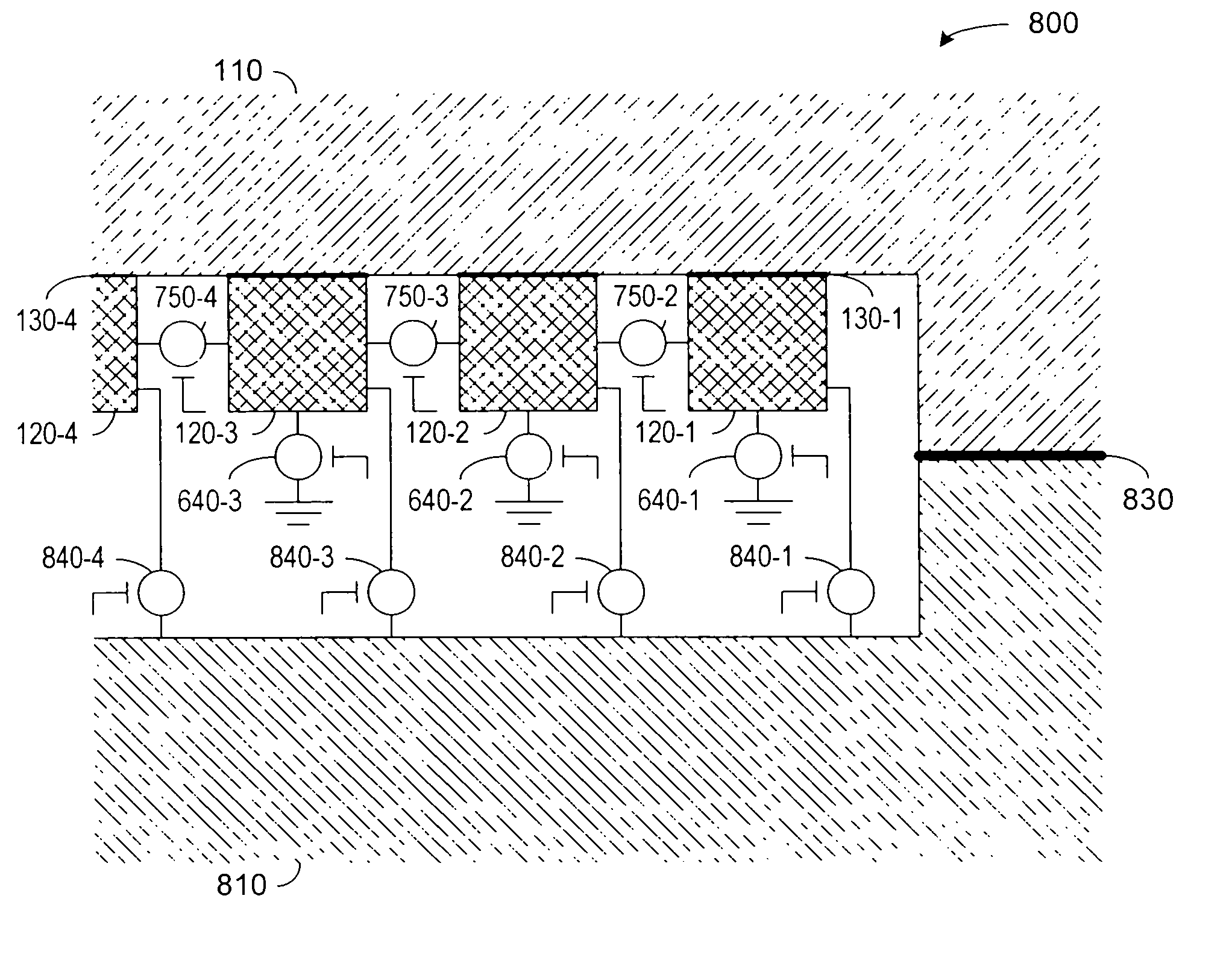
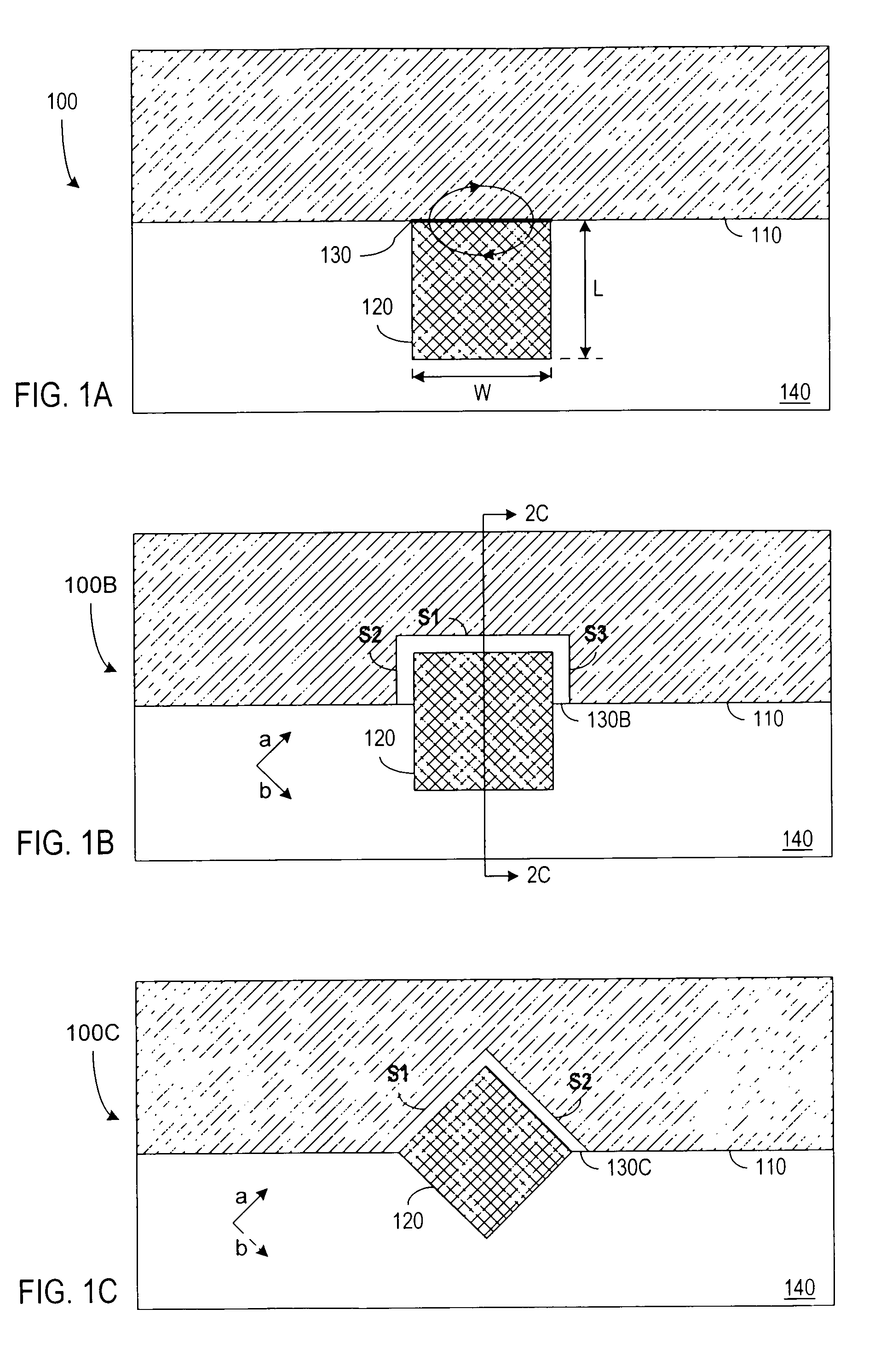
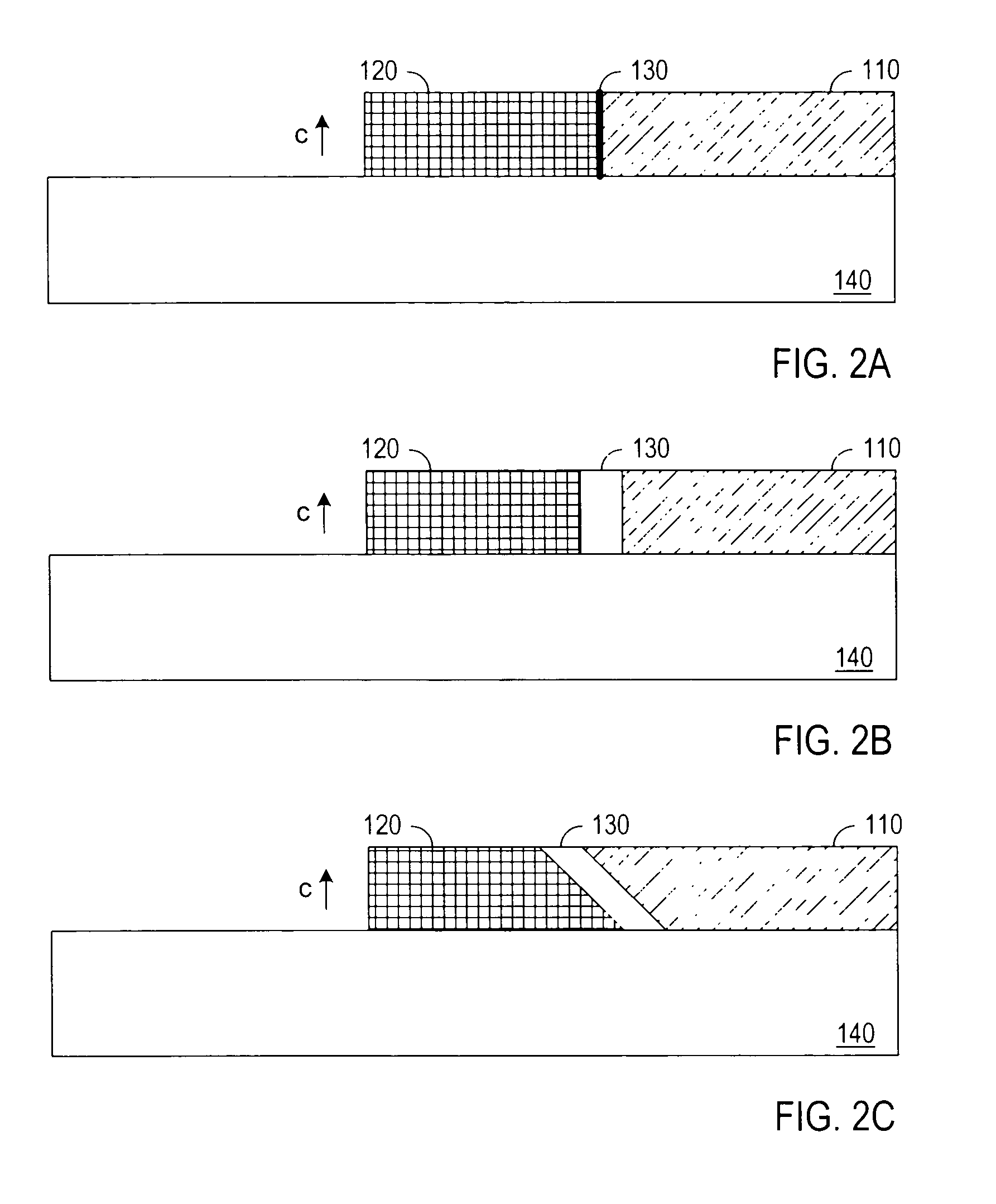
- A quantum computing structure featuring a superconducting island with a clean Josephson junction and d-wave superconductors, where the island's crystal orientation relative to the reservoir controls the equilibrium phase difference and tunneling probabilities, and single electron transistors or parity keys are used to fix the magnetic moment of the Josephson junction, maintaining coherence during calculations and enabling reliable readout.

Quantum Error Correction Strategies
Quantum Error Correction (QEC) strategies represent a critical frontier in addressing the inherent fragility of quantum states affected by quantum tunneling in superconducting qubits. Current QEC approaches primarily fall into two categories: passive protection schemes and active error correction protocols. Passive strategies leverage topological properties to create inherently robust qubits, while active methods involve continuous measurement and correction cycles.
Surface codes have emerged as particularly promising for superconducting qubit architectures due to their high error thresholds (approximately 1%) and compatibility with planar implementations. These codes organize physical qubits in lattice structures where quantum information is encoded across multiple physical qubits, creating logical qubits with significantly improved error resilience. Recent experimental demonstrations have achieved logical error rates below physical error rates, marking a crucial milestone toward fault-tolerant quantum computation.
Quantum tunneling-induced errors present unique challenges for QEC implementations. The non-deterministic nature of tunneling events requires specialized detection mechanisms. Advanced QEC protocols now incorporate tunneling-specific error models that account for the characteristic signatures of tunneling events in superconducting systems, including phase slips and energy level transitions.
Machine learning techniques have recently been integrated into QEC frameworks, enabling adaptive error correction that can identify patterns in quantum tunneling events. These approaches utilize neural networks to predict error probabilities and optimize correction operations in real-time, showing up to 30% improvement in error suppression compared to static correction methods.
Hardware-efficient QEC codes represent another significant advancement, designed specifically for the constraints of superconducting architectures. These codes minimize the overhead required for error correction while maintaining protection against tunneling-induced decoherence. The Bacon-Shor subsystem codes and tailored surface code variants have demonstrated particular promise, requiring fewer physical qubits per logical qubit while maintaining error protection.
Looking forward, the development of QEC strategies must balance theoretical error thresholds with practical implementation constraints. Hybrid approaches that combine hardware improvements with algorithmic innovations show the greatest potential for near-term applications. The ultimate goal remains achieving the error correction threshold necessary for fault-tolerant quantum computation, estimated to require error rates below 10^-15 for practical quantum advantage in complex applications affected by quantum tunneling phenomena.
Surface codes have emerged as particularly promising for superconducting qubit architectures due to their high error thresholds (approximately 1%) and compatibility with planar implementations. These codes organize physical qubits in lattice structures where quantum information is encoded across multiple physical qubits, creating logical qubits with significantly improved error resilience. Recent experimental demonstrations have achieved logical error rates below physical error rates, marking a crucial milestone toward fault-tolerant quantum computation.
Quantum tunneling-induced errors present unique challenges for QEC implementations. The non-deterministic nature of tunneling events requires specialized detection mechanisms. Advanced QEC protocols now incorporate tunneling-specific error models that account for the characteristic signatures of tunneling events in superconducting systems, including phase slips and energy level transitions.
Machine learning techniques have recently been integrated into QEC frameworks, enabling adaptive error correction that can identify patterns in quantum tunneling events. These approaches utilize neural networks to predict error probabilities and optimize correction operations in real-time, showing up to 30% improvement in error suppression compared to static correction methods.
Hardware-efficient QEC codes represent another significant advancement, designed specifically for the constraints of superconducting architectures. These codes minimize the overhead required for error correction while maintaining protection against tunneling-induced decoherence. The Bacon-Shor subsystem codes and tailored surface code variants have demonstrated particular promise, requiring fewer physical qubits per logical qubit while maintaining error protection.
Looking forward, the development of QEC strategies must balance theoretical error thresholds with practical implementation constraints. Hybrid approaches that combine hardware improvements with algorithmic innovations show the greatest potential for near-term applications. The ultimate goal remains achieving the error correction threshold necessary for fault-tolerant quantum computation, estimated to require error rates below 10^-15 for practical quantum advantage in complex applications affected by quantum tunneling phenomena.
Cryogenic Infrastructure Requirements
The development of superconducting qubits for quantum computing necessitates extremely low temperatures to maintain quantum coherence and minimize thermal noise. Cryogenic infrastructure represents a critical component in quantum tunneling studies involving superconducting qubits, requiring sophisticated engineering solutions to achieve and maintain the necessary operating conditions.
Standard superconducting qubit operations demand temperatures below 20 millikelvin, requiring dilution refrigerators as the primary cooling technology. These systems utilize the unique properties of helium-3/helium-4 mixtures to achieve temperatures approaching absolute zero. Modern dilution refrigerators for quantum computing applications typically provide cooling powers of 400-800 microwatts at 100 mK, with base temperatures reaching 10-15 mK. The cooling capacity becomes a significant constraint when scaling to multi-qubit systems where heat loads increase proportionally.
Vibration isolation represents another crucial aspect of cryogenic infrastructure. Mechanical vibrations can induce decoherence in qubits, particularly affecting quantum tunneling phenomena. Advanced systems employ passive and active vibration isolation techniques, including pneumatic isolators, damping materials, and feedback-controlled platforms. Recent developments have achieved vibration amplitudes below 10 nanometers across relevant frequency ranges.
Electromagnetic shielding constitutes an equally important consideration, as external electromagnetic interference can disrupt delicate quantum states. Multiple layers of mu-metal and superconducting shields are typically employed, with careful design of penetrations for control and measurement lines. The most advanced facilities implement room-temperature Faraday cages surrounding the entire experimental setup.
Wiring infrastructure presents unique challenges, requiring careful thermal anchoring to minimize heat loads while maintaining signal integrity. Superconducting coaxial cables, attenuators, and filters must be strategically placed at different temperature stages. The thermal budget must account for both static heat loads from structural components and dynamic loads from signal transmission.
Scalability concerns have driven recent innovations in cryogenic infrastructure. Traditional "chandelier" dilution refrigerators face physical limitations when scaling beyond 100-1000 qubits. Alternative approaches include modular designs with multiple cooling units, cryogen-free systems utilizing pulse tube coolers, and novel refrigeration cycles optimized for quantum computing applications. Industry leaders are developing specialized cryogenic platforms capable of supporting thousands of qubits while maintaining the stringent temperature, vibration, and electromagnetic requirements necessary for quantum tunneling studies.
Standard superconducting qubit operations demand temperatures below 20 millikelvin, requiring dilution refrigerators as the primary cooling technology. These systems utilize the unique properties of helium-3/helium-4 mixtures to achieve temperatures approaching absolute zero. Modern dilution refrigerators for quantum computing applications typically provide cooling powers of 400-800 microwatts at 100 mK, with base temperatures reaching 10-15 mK. The cooling capacity becomes a significant constraint when scaling to multi-qubit systems where heat loads increase proportionally.
Vibration isolation represents another crucial aspect of cryogenic infrastructure. Mechanical vibrations can induce decoherence in qubits, particularly affecting quantum tunneling phenomena. Advanced systems employ passive and active vibration isolation techniques, including pneumatic isolators, damping materials, and feedback-controlled platforms. Recent developments have achieved vibration amplitudes below 10 nanometers across relevant frequency ranges.
Electromagnetic shielding constitutes an equally important consideration, as external electromagnetic interference can disrupt delicate quantum states. Multiple layers of mu-metal and superconducting shields are typically employed, with careful design of penetrations for control and measurement lines. The most advanced facilities implement room-temperature Faraday cages surrounding the entire experimental setup.
Wiring infrastructure presents unique challenges, requiring careful thermal anchoring to minimize heat loads while maintaining signal integrity. Superconducting coaxial cables, attenuators, and filters must be strategically placed at different temperature stages. The thermal budget must account for both static heat loads from structural components and dynamic loads from signal transmission.
Scalability concerns have driven recent innovations in cryogenic infrastructure. Traditional "chandelier" dilution refrigerators face physical limitations when scaling beyond 100-1000 qubits. Alternative approaches include modular designs with multiple cooling units, cryogen-free systems utilizing pulse tube coolers, and novel refrigeration cycles optimized for quantum computing applications. Industry leaders are developing specialized cryogenic platforms capable of supporting thousands of qubits while maintaining the stringent temperature, vibration, and electromagnetic requirements necessary for quantum tunneling studies.
Unlock deeper insights with PatSnap Eureka Quick Research — get a full tech report to explore trends and direct your research. Try now!
Generate Your Research Report Instantly with AI Agent
Supercharge your innovation with PatSnap Eureka AI Agent Platform!