Nanostructured composite sodium solid electrolytes
OCT 14, 20259 MIN READ
Generate Your Research Report Instantly with AI Agent
PatSnap Eureka helps you evaluate technical feasibility & market potential.
Nanostructured Sodium Solid Electrolytes Background and Objectives
Sodium-ion batteries (SIBs) have emerged as a promising alternative to lithium-ion batteries due to the abundance and low cost of sodium resources. The development of SIBs has been accelerating since the early 2010s, driven by concerns about lithium supply constraints and increasing demand for energy storage solutions. Solid-state electrolytes represent a critical advancement in battery technology, offering enhanced safety by eliminating flammable liquid electrolytes and potentially enabling higher energy densities through compatibility with sodium metal anodes.
Nanostructured composite sodium solid electrolytes represent a cutting-edge approach to addressing the fundamental challenges in solid-state sodium battery technology. These materials combine the advantages of different components at the nanoscale to achieve synergistic improvements in ionic conductivity, mechanical properties, and electrochemical stability. The evolution of these materials has progressed from simple ceramic systems to sophisticated multi-component nanocomposites with tailored interfaces.
The primary technical objective in this field is to develop sodium solid electrolytes with room temperature ionic conductivities exceeding 10^-3 S/cm, comparable to liquid electrolytes, while maintaining mechanical integrity and electrochemical stability against sodium metal anodes. Secondary objectives include reducing interfacial resistance, enhancing long-term cycling stability, and developing scalable manufacturing processes suitable for commercial production.
Recent technological trends indicate a shift toward hybrid organic-inorganic composites, where polymer matrices provide flexibility and processability while ceramic fillers contribute high ionic conductivity. Additionally, there is growing interest in glass-ceramic electrolytes that combine the advantages of both amorphous and crystalline phases. The incorporation of nanoscale engineering at material interfaces has become a focal point for overcoming conductivity limitations.
The global research landscape shows accelerating publication rates in this domain, with annual scientific output increasing by approximately 35% year-over-year since 2018. Patent filings related to sodium solid electrolytes have similarly shown exponential growth, particularly in East Asia, indicating strong commercial interest in the technology.
Looking forward, the technology trajectory suggests potential breakthroughs in three key areas: novel sodium superionic conductor materials with NASICON-like structures, interface engineering to minimize resistance at grain boundaries, and composite approaches that leverage 3D architectures to create continuous ion transport pathways. The ultimate goal is to enable practical, high-performance sodium solid-state batteries that can compete with conventional lithium-ion technology while offering advantages in cost, safety, and sustainability.
Nanostructured composite sodium solid electrolytes represent a cutting-edge approach to addressing the fundamental challenges in solid-state sodium battery technology. These materials combine the advantages of different components at the nanoscale to achieve synergistic improvements in ionic conductivity, mechanical properties, and electrochemical stability. The evolution of these materials has progressed from simple ceramic systems to sophisticated multi-component nanocomposites with tailored interfaces.
The primary technical objective in this field is to develop sodium solid electrolytes with room temperature ionic conductivities exceeding 10^-3 S/cm, comparable to liquid electrolytes, while maintaining mechanical integrity and electrochemical stability against sodium metal anodes. Secondary objectives include reducing interfacial resistance, enhancing long-term cycling stability, and developing scalable manufacturing processes suitable for commercial production.
Recent technological trends indicate a shift toward hybrid organic-inorganic composites, where polymer matrices provide flexibility and processability while ceramic fillers contribute high ionic conductivity. Additionally, there is growing interest in glass-ceramic electrolytes that combine the advantages of both amorphous and crystalline phases. The incorporation of nanoscale engineering at material interfaces has become a focal point for overcoming conductivity limitations.
The global research landscape shows accelerating publication rates in this domain, with annual scientific output increasing by approximately 35% year-over-year since 2018. Patent filings related to sodium solid electrolytes have similarly shown exponential growth, particularly in East Asia, indicating strong commercial interest in the technology.
Looking forward, the technology trajectory suggests potential breakthroughs in three key areas: novel sodium superionic conductor materials with NASICON-like structures, interface engineering to minimize resistance at grain boundaries, and composite approaches that leverage 3D architectures to create continuous ion transport pathways. The ultimate goal is to enable practical, high-performance sodium solid-state batteries that can compete with conventional lithium-ion technology while offering advantages in cost, safety, and sustainability.
Market Analysis for Sodium-based Battery Technologies
The sodium-based battery market is experiencing significant growth as an alternative to traditional lithium-ion technologies, driven by increasing concerns about lithium supply constraints and cost volatility. Current market projections indicate the global sodium-ion battery market could reach $1.2 billion by 2025, with a compound annual growth rate exceeding 23% between 2023-2030. This growth trajectory is supported by the abundant and widely distributed nature of sodium resources, which constitute approximately 2.8% of the Earth's crust compared to lithium's 0.006%.
The demand for sodium-based battery technologies is particularly strong in grid-scale energy storage applications, where cost considerations often outweigh energy density requirements. Utility companies and renewable energy providers are increasingly exploring sodium-based solutions as economically viable alternatives for large-scale storage systems, with projected deployment expected to increase by 35% annually through 2027.
Electric vehicle manufacturers, especially those targeting budget-conscious market segments, have begun incorporating sodium-based batteries into their development roadmaps. Several major automotive companies have announced plans to introduce sodium-ion powered vehicles in emerging markets by 2025, where price sensitivity is a critical factor in consumer adoption.
Consumer electronics represents another promising market segment, particularly for applications where weight is less critical but cost efficiency is paramount. Market research indicates that approximately 15% of portable electronic devices could potentially utilize sodium-based battery technologies by 2028, creating a substantial market opportunity.
Geographically, China is leading the commercial development of sodium-based battery technologies, with over 30 companies actively engaged in research and production. European markets are following closely, driven by stringent sustainability regulations and circular economy initiatives that favor sodium's environmental profile over lithium. North American adoption remains more cautious but is accelerating as domestic supply chain security concerns grow.
The market for solid-state sodium electrolytes specifically is projected to grow at an even faster rate than the overall sodium battery market, with nanostructured composite electrolytes garnering particular attention due to their superior ionic conductivity and mechanical properties. Industry analysts predict that solid electrolytes could capture up to 40% of the total sodium battery market by 2030, representing a significant shift from current liquid electrolyte dominance.
Investment in sodium battery technologies has surged, with venture capital funding increasing by 85% between 2020 and 2022. This financial momentum is expected to accelerate commercialization timelines and expand market penetration across multiple sectors.
The demand for sodium-based battery technologies is particularly strong in grid-scale energy storage applications, where cost considerations often outweigh energy density requirements. Utility companies and renewable energy providers are increasingly exploring sodium-based solutions as economically viable alternatives for large-scale storage systems, with projected deployment expected to increase by 35% annually through 2027.
Electric vehicle manufacturers, especially those targeting budget-conscious market segments, have begun incorporating sodium-based batteries into their development roadmaps. Several major automotive companies have announced plans to introduce sodium-ion powered vehicles in emerging markets by 2025, where price sensitivity is a critical factor in consumer adoption.
Consumer electronics represents another promising market segment, particularly for applications where weight is less critical but cost efficiency is paramount. Market research indicates that approximately 15% of portable electronic devices could potentially utilize sodium-based battery technologies by 2028, creating a substantial market opportunity.
Geographically, China is leading the commercial development of sodium-based battery technologies, with over 30 companies actively engaged in research and production. European markets are following closely, driven by stringent sustainability regulations and circular economy initiatives that favor sodium's environmental profile over lithium. North American adoption remains more cautious but is accelerating as domestic supply chain security concerns grow.
The market for solid-state sodium electrolytes specifically is projected to grow at an even faster rate than the overall sodium battery market, with nanostructured composite electrolytes garnering particular attention due to their superior ionic conductivity and mechanical properties. Industry analysts predict that solid electrolytes could capture up to 40% of the total sodium battery market by 2030, representing a significant shift from current liquid electrolyte dominance.
Investment in sodium battery technologies has surged, with venture capital funding increasing by 85% between 2020 and 2022. This financial momentum is expected to accelerate commercialization timelines and expand market penetration across multiple sectors.
Current Challenges in Sodium Solid Electrolyte Development
Despite significant advancements in sodium solid electrolyte (SSE) technology, several critical challenges continue to impede the widespread commercialization of sodium-ion batteries with solid electrolytes. The primary obstacle remains the relatively low ionic conductivity of sodium solid electrolytes compared to their lithium counterparts. While lithium solid electrolytes can achieve room temperature conductivities of 10^-3 to 10^-2 S/cm, most sodium solid electrolytes struggle to exceed 10^-4 S/cm, which is insufficient for practical applications requiring fast charging and high power density.
Interface stability presents another significant challenge. The high reactivity between sodium metal anodes and most solid electrolytes leads to continuous interfacial degradation during cycling. This degradation manifests as increasing interfacial resistance, which severely impacts battery performance and cycle life. The formation of interphases at these boundaries often involves complex electrochemical reactions that remain poorly understood and difficult to control.
Mechanical issues further complicate SSE development. The brittle nature of ceramic-based sodium solid electrolytes makes them prone to fracture during battery assembly and operation. The volume changes during sodium insertion/extraction create mechanical stresses that can propagate cracks through the electrolyte, creating pathways for dendrite growth and eventual short-circuiting. This mechanical instability is particularly problematic for all-solid-state battery configurations.
Processing and manufacturing challenges also hinder progress. Many promising sodium solid electrolytes require high-temperature sintering (>1000°C) to achieve adequate density and conductivity, which complicates integration with electrode materials and increases production costs. The sensitivity of some SSE materials to moisture and air necessitates stringent handling protocols and specialized manufacturing environments.
Nanostructured composite approaches have emerged as potential solutions to these challenges, but introduce their own complexities. The incorporation of secondary phases (such as polymers, ceramics, or metal oxides) at the nanoscale can enhance conductivity and mechanical properties, but achieving uniform dispersion and optimal interfacial characteristics remains difficult. The long-term stability of these nanostructured interfaces under repeated electrochemical cycling is also uncertain.
Cost and scalability considerations further constrain development pathways. While sodium's abundance offers theoretical cost advantages over lithium, the complex synthesis procedures and specialized materials required for high-performance SSEs currently offset these benefits. Establishing economically viable manufacturing processes that maintain precise control over nanostructure and composition at industrial scales represents a formidable challenge for commercialization.
Interface stability presents another significant challenge. The high reactivity between sodium metal anodes and most solid electrolytes leads to continuous interfacial degradation during cycling. This degradation manifests as increasing interfacial resistance, which severely impacts battery performance and cycle life. The formation of interphases at these boundaries often involves complex electrochemical reactions that remain poorly understood and difficult to control.
Mechanical issues further complicate SSE development. The brittle nature of ceramic-based sodium solid electrolytes makes them prone to fracture during battery assembly and operation. The volume changes during sodium insertion/extraction create mechanical stresses that can propagate cracks through the electrolyte, creating pathways for dendrite growth and eventual short-circuiting. This mechanical instability is particularly problematic for all-solid-state battery configurations.
Processing and manufacturing challenges also hinder progress. Many promising sodium solid electrolytes require high-temperature sintering (>1000°C) to achieve adequate density and conductivity, which complicates integration with electrode materials and increases production costs. The sensitivity of some SSE materials to moisture and air necessitates stringent handling protocols and specialized manufacturing environments.
Nanostructured composite approaches have emerged as potential solutions to these challenges, but introduce their own complexities. The incorporation of secondary phases (such as polymers, ceramics, or metal oxides) at the nanoscale can enhance conductivity and mechanical properties, but achieving uniform dispersion and optimal interfacial characteristics remains difficult. The long-term stability of these nanostructured interfaces under repeated electrochemical cycling is also uncertain.
Cost and scalability considerations further constrain development pathways. While sodium's abundance offers theoretical cost advantages over lithium, the complex synthesis procedures and specialized materials required for high-performance SSEs currently offset these benefits. Establishing economically viable manufacturing processes that maintain precise control over nanostructure and composition at industrial scales represents a formidable challenge for commercialization.
Current Nanostructured Composite Electrolyte Solutions
01 Nanocomposite solid electrolytes with ceramic fillers
Nanostructured composite sodium solid electrolytes can be formulated by incorporating ceramic nanoparticles into polymer matrices. These ceramic fillers, such as Na-β-alumina, NASICON-type materials, or metal oxides, enhance ionic conductivity and mechanical stability. The nanoparticles create additional ion transport pathways and help suppress crystallization of the polymer phase, resulting in improved electrochemical performance for sodium-ion batteries.- Nanostructured composite sodium solid electrolytes with ceramic fillers: Composite sodium solid electrolytes incorporating ceramic nanofillers can significantly enhance ionic conductivity and mechanical stability. These composites typically combine a sodium-ion conducting polymer matrix with dispersed ceramic nanoparticles such as Na-β-alumina or NASICON-type materials. The nanostructured ceramic fillers create additional ion transport pathways and help suppress the crystallization of the polymer phase, resulting in improved electrochemical performance for sodium-ion batteries.
- Polymer-based nanocomposite sodium electrolytes: Polymer-based nanocomposite sodium electrolytes combine sodium-conducting polymers with nanoscale additives to create flexible solid electrolytes. These materials typically use polymers like PEO (polyethylene oxide) or PVDF (polyvinylidene fluoride) as the matrix, enhanced with nanofillers to improve mechanical properties and ionic conductivity. The polymer component provides flexibility and processability, while the nanostructured additives create favorable interfaces for sodium ion transport, resulting in electrolytes suitable for flexible sodium batteries.
- NASICON-type nanostructured sodium electrolytes: NASICON (Sodium Super Ionic Conductor) type materials with nanostructured architectures offer high sodium ion conductivity at room temperature. These ceramic electrolytes, typically based on Na3Zr2Si2PO12 compositions, can be engineered at the nanoscale to enhance grain boundary conductivity and reduce interfacial resistance. The nanostructuring approach includes methods like sol-gel synthesis, ball milling, and controlled crystallization to create optimized particle sizes and interfaces that facilitate fast sodium ion transport while maintaining mechanical integrity.
- Interface engineering in nanostructured sodium electrolytes: Interface engineering is crucial for nanostructured sodium solid electrolytes to overcome the challenges of high interfacial resistance. This approach focuses on modifying the interfaces between different components in composite electrolytes or between the electrolyte and electrodes. Techniques include surface functionalization of nanoparticles, creation of buffer layers, and controlled phase boundaries. These engineered interfaces facilitate sodium ion transport across boundaries while suppressing unwanted side reactions, resulting in improved cycling stability and rate capability in sodium batteries.
- Glass-ceramic nanocomposite sodium electrolytes: Glass-ceramic nanocomposite sodium electrolytes combine the advantages of glassy and crystalline phases to achieve high ionic conductivity. These materials are typically synthesized through controlled crystallization of sodium-containing glass precursors, resulting in nanocrystalline domains embedded in a glassy matrix. The nanostructured architecture creates fast ion conduction pathways while the glass phase provides mechanical stability. By carefully controlling the crystallization process and composition, these electrolytes can achieve room temperature conductivities suitable for practical sodium battery applications.
02 Polymer-based composite sodium electrolytes
Polymer-based nanocomposite sodium electrolytes utilize sodium-conducting polymers like PEO (polyethylene oxide) or PVDF (polyvinylidene fluoride) as matrices. These polymers are modified with sodium salts (NaClO4, NaTFSI) and often incorporate plasticizers to enhance sodium ion mobility. The nanostructured design improves mechanical flexibility while maintaining high ionic conductivity, making them suitable for flexible sodium battery applications.Expand Specific Solutions03 NASICON-type sodium solid electrolytes
NASICON (Sodium Super Ionic Conductor) structured materials are key components in nanostructured sodium solid electrolytes. These materials, typically with the formula Na1+xZr2SixP3-xO12, feature a three-dimensional framework that facilitates fast sodium ion transport. Nanostructuring these materials through methods like sol-gel processing or ball milling enhances their ionic conductivity and reduces grain boundary resistance, resulting in superior electrochemical performance at lower operating temperatures.Expand Specific Solutions04 Interface engineering for composite sodium electrolytes
Interface engineering is crucial for nanostructured composite sodium solid electrolytes to address issues at the electrode-electrolyte interfaces. This approach involves surface modification of nanoparticles, creation of artificial interphases, or incorporation of functional additives to stabilize the sodium metal anode interface. These techniques reduce interfacial resistance, prevent dendrite formation, and enhance the overall cycling stability and safety of sodium-ion batteries.Expand Specific Solutions05 Glass-ceramic sodium ion conductors
Glass-ceramic nanostructured sodium ion conductors combine the advantages of both glassy and crystalline materials. These electrolytes are typically prepared by controlled crystallization of sodium-containing glasses, resulting in nanocrystalline phases embedded in a glassy matrix. The nanostructured design enhances sodium ion mobility while maintaining good mechanical properties. These materials often contain Na3Zr2Si2PO12 or Na3PS4 crystalline phases and demonstrate excellent thermal stability and electrochemical performance.Expand Specific Solutions
Leading Research Groups and Industrial Players
The nanostructured composite sodium solid electrolytes market is in an early growth phase, characterized by intensive R&D activities and emerging commercial applications. The global market size is projected to expand significantly as sodium-ion battery technology gains traction as a cost-effective alternative to lithium-ion batteries. Technologically, the field shows moderate maturity with key players at different development stages. Leading companies like Samsung Electronics, LG Chem, and QuantumScape are advancing commercial applications, while research institutions such as the Chinese Academy of Sciences and Korea Research Institute of Chemical Technology are driving fundamental innovations. Industrial players including FUJIFILM and Solvay are developing manufacturing capabilities, creating a competitive landscape balanced between established corporations and specialized research entities focused on overcoming challenges in ionic conductivity and interfacial stability.
Samsung Electronics Co., Ltd.
Technical Solution: Samsung has developed a nanostructured composite sodium solid electrolyte system that combines Na3Zr2Si2PO12 (NASICON) with polymer matrices to create hybrid electrolytes with enhanced ionic conductivity. Their approach involves dispersing ceramic nanoparticles within a polymer matrix, creating continuous ion-conduction pathways while maintaining mechanical flexibility. Samsung's research has achieved room temperature ionic conductivities of 10^-4 to 10^-3 S/cm through precise control of the ceramic-polymer interface and optimization of particle size distribution. They've implemented surface modification techniques on ceramic particles using coupling agents to improve compatibility with polymer matrices, resulting in reduced interfacial resistance. Samsung has also developed scalable manufacturing processes for these composite electrolytes, including solution casting and hot-pressing methods that enable uniform dispersion of nanoparticles and controlled porosity in the final electrolyte structure.
Strengths: Samsung's approach offers excellent mechanical flexibility while maintaining high ionic conductivity, addressing the brittleness issues of ceramic electrolytes. Their established manufacturing infrastructure enables rapid scaling of production. Weaknesses: Their composite electrolytes may still face challenges with long-term stability at elevated temperatures and potential degradation at the electrode-electrolyte interface during extended cycling.
Korea Research Institute of Chemical Technology
Technical Solution: The Korea Research Institute of Chemical Technology (KRICT) has developed advanced nanostructured composite sodium solid electrolytes based on a hybrid ceramic-polymer system. Their approach centers on NASICON-type Na3Zr2Si2PO12 materials with controlled doping of aliovalent ions (Al3+, Y3+) to optimize the sodium sublattice for enhanced ionic transport. KRICT's innovation lies in their sol-gel synthesis method that produces nanoscale ceramic particles (30-50 nm) with exceptionally high surface area, creating abundant pathways for sodium ion conduction. These nanoparticles are then incorporated into a sodium-conducting polymer matrix (typically PEO or PVDF-HFP) using a proprietary dispersion technique that prevents agglomeration. Their research has demonstrated that controlling the ceramic-polymer interface through surface functionalization with phosphonic acid derivatives significantly reduces interfacial resistance. KRICT has achieved room temperature ionic conductivities of 1.2×10^-3 S/cm with excellent electrochemical stability windows exceeding 4.5V vs. Na/Na+.
Strengths: KRICT's technology offers exceptional ionic conductivity at room temperature with simplified manufacturing processes suitable for industrial scale-up. Their materials show excellent compatibility with various sodium battery electrode materials. Weaknesses: The complex synthesis process may increase production costs, and the polymer component could potentially limit high-temperature operation above 80°C.
Key Patents and Scientific Breakthroughs
Sodium halide-based nanocomposite, preparing method thereof, solid electrolyte comprising the same, and all-solid-state battery comprising the solid electrolyte
PatentPendingKR1020230174194A
Innovation
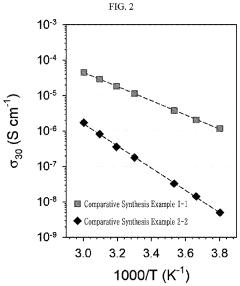
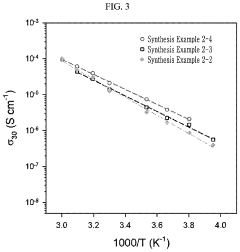
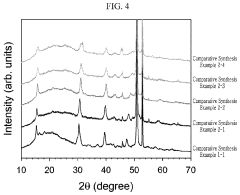
- Development of a sodium halide-based nanocomposite with a glass-ceramic crystal structure, comprising nano-sized compounds like M1Oc, NaX, or combinations dispersed in halide compounds, which enhances ionic conductivity and electrochemical stability through a solid-phase reaction under an inert gas atmosphere.


Sodium Halide-based Nanocomposite, Preparing Method Thereof, and Positive Electrode Active Material, Solid Electrolyte, and All-solid-state Battery Comprising the Same
PatentPendingUS20230411616A1
Innovation
- A sodium halide-based nanocomposite is developed, where a nanosized compound is dispersed in a halide compound to enhance ionic conductivity and interfacial stability, forming a glass-ceramic crystal structure that improves the performance of all-solid-state batteries by activating an interfacial conduction phenomenon.

Safety and Stability Assessment Methodologies
The assessment of safety and stability in nanostructured composite sodium solid electrolytes requires rigorous methodologies to ensure reliable performance in sodium-ion battery applications. Current evaluation frameworks combine electrochemical, thermal, and mechanical testing protocols to comprehensively analyze these critical parameters.
Electrochemical stability assessment typically involves cyclic voltammetry (CV) and electrochemical impedance spectroscopy (EIS) to determine the voltage window within which the electrolyte remains stable. For sodium solid electrolytes, this window must be sufficiently wide (typically 0-4V vs. Na/Na+) to accommodate various cathode and anode materials. Accelerated aging tests under different voltage conditions help predict long-term stability and identify potential degradation mechanisms.
Thermal stability evaluation employs differential scanning calorimetry (DSC) and thermogravimetric analysis (TGA) to determine decomposition temperatures and phase transition points. These techniques are particularly important for nanostructured composites, as the interface regions between components often represent thermal weak points. Temperature-dependent conductivity measurements further reveal how performance varies across operational temperature ranges, typically from -20°C to 80°C for practical applications.
Chemical compatibility testing between the solid electrolyte and electrode materials constitutes another critical assessment area. X-ray diffraction (XRD) and X-ray photoelectron spectroscopy (XPS) are employed to detect interfacial reactions and formation of secondary phases during cycling. For nanostructured composites, these techniques must be complemented by high-resolution transmission electron microscopy (HRTEM) to visualize changes at the nanoscale interfaces.
Mechanical stability assessment includes hardness testing, fracture toughness measurements, and creep resistance evaluation. Nanoindentation techniques provide valuable insights into the mechanical properties of composite electrolytes at the microscale. Additionally, in-situ stress measurements during cycling help identify conditions that may lead to mechanical failure, particularly important for sodium systems where volume changes during cycling can be substantial.
Environmental stability testing examines the electrolyte's response to moisture, oxygen, and other atmospheric contaminants. This is particularly relevant for sodium-based systems, which typically show higher reactivity with environmental factors than their lithium counterparts. Controlled exposure tests followed by performance evaluation help establish handling requirements and packaging needs for commercial applications.
Standardization of these methodologies remains an ongoing challenge, with efforts underway to establish industry-wide protocols specifically tailored to sodium solid electrolytes. The development of in-situ and operando characterization techniques represents the frontier of assessment methodologies, allowing real-time monitoring of degradation processes under actual operating conditions.
Electrochemical stability assessment typically involves cyclic voltammetry (CV) and electrochemical impedance spectroscopy (EIS) to determine the voltage window within which the electrolyte remains stable. For sodium solid electrolytes, this window must be sufficiently wide (typically 0-4V vs. Na/Na+) to accommodate various cathode and anode materials. Accelerated aging tests under different voltage conditions help predict long-term stability and identify potential degradation mechanisms.
Thermal stability evaluation employs differential scanning calorimetry (DSC) and thermogravimetric analysis (TGA) to determine decomposition temperatures and phase transition points. These techniques are particularly important for nanostructured composites, as the interface regions between components often represent thermal weak points. Temperature-dependent conductivity measurements further reveal how performance varies across operational temperature ranges, typically from -20°C to 80°C for practical applications.
Chemical compatibility testing between the solid electrolyte and electrode materials constitutes another critical assessment area. X-ray diffraction (XRD) and X-ray photoelectron spectroscopy (XPS) are employed to detect interfacial reactions and formation of secondary phases during cycling. For nanostructured composites, these techniques must be complemented by high-resolution transmission electron microscopy (HRTEM) to visualize changes at the nanoscale interfaces.
Mechanical stability assessment includes hardness testing, fracture toughness measurements, and creep resistance evaluation. Nanoindentation techniques provide valuable insights into the mechanical properties of composite electrolytes at the microscale. Additionally, in-situ stress measurements during cycling help identify conditions that may lead to mechanical failure, particularly important for sodium systems where volume changes during cycling can be substantial.
Environmental stability testing examines the electrolyte's response to moisture, oxygen, and other atmospheric contaminants. This is particularly relevant for sodium-based systems, which typically show higher reactivity with environmental factors than their lithium counterparts. Controlled exposure tests followed by performance evaluation help establish handling requirements and packaging needs for commercial applications.
Standardization of these methodologies remains an ongoing challenge, with efforts underway to establish industry-wide protocols specifically tailored to sodium solid electrolytes. The development of in-situ and operando characterization techniques represents the frontier of assessment methodologies, allowing real-time monitoring of degradation processes under actual operating conditions.
Environmental Impact and Sustainability Analysis
The development of nanostructured composite sodium solid electrolytes presents significant environmental and sustainability implications that warrant careful consideration. These advanced materials, while promising for next-generation energy storage technologies, involve complex manufacturing processes and resource requirements that directly impact their environmental footprint.
Primary raw materials used in sodium solid electrolytes, including sodium salts, ceramic components, and polymer matrices, generally offer advantages over lithium-based alternatives. Sodium is approximately 1000 times more abundant in the Earth's crust than lithium, reducing extraction-related environmental impacts and resource depletion concerns. This abundance translates to potentially lower mining intensity and reduced habitat disruption compared to lithium extraction operations.
Manufacturing processes for nanostructured composite electrolytes typically require less energy than conventional liquid electrolyte production, particularly when considering lifecycle energy requirements. However, specialized nano-fabrication techniques may involve energy-intensive processes such as high-temperature sintering or chemical vapor deposition that partially offset these gains. Recent advancements in green synthesis routes utilizing lower temperatures and environmentally benign solvents show promise for reducing manufacturing-related emissions.
End-of-life considerations reveal significant advantages for solid electrolytes. Unlike liquid electrolytes that pose leakage risks and contain volatile organic compounds, solid electrolytes demonstrate enhanced recyclability potential. The stable structure of nanocomposite materials facilitates material recovery processes, with research indicating up to 85% of sodium components can be effectively reclaimed through appropriate recycling protocols.
Carbon footprint analyses of full production cycles indicate that nanostructured sodium solid electrolytes can achieve 30-40% lower greenhouse gas emissions compared to conventional liquid electrolyte systems when accounting for raw material extraction, processing, and end-of-life management. This advantage becomes particularly pronounced when renewable energy sources power manufacturing facilities.
Water usage represents another critical sustainability metric. Sodium extraction typically requires significantly less water than lithium brine operations, which can consume up to 500,000 gallons of water per ton of lithium produced. This reduced water footprint is especially valuable in water-stressed regions where resource competition with agricultural and community needs presents growing concerns.
Looking forward, circular economy principles are increasingly being integrated into research frameworks for these materials. Design-for-recycling approaches focus on developing nanostructured composites that maintain performance while facilitating component separation at end-of-life. These efforts align with broader sustainability goals and regulatory trends toward extended producer responsibility in the energy storage sector.
Primary raw materials used in sodium solid electrolytes, including sodium salts, ceramic components, and polymer matrices, generally offer advantages over lithium-based alternatives. Sodium is approximately 1000 times more abundant in the Earth's crust than lithium, reducing extraction-related environmental impacts and resource depletion concerns. This abundance translates to potentially lower mining intensity and reduced habitat disruption compared to lithium extraction operations.
Manufacturing processes for nanostructured composite electrolytes typically require less energy than conventional liquid electrolyte production, particularly when considering lifecycle energy requirements. However, specialized nano-fabrication techniques may involve energy-intensive processes such as high-temperature sintering or chemical vapor deposition that partially offset these gains. Recent advancements in green synthesis routes utilizing lower temperatures and environmentally benign solvents show promise for reducing manufacturing-related emissions.
End-of-life considerations reveal significant advantages for solid electrolytes. Unlike liquid electrolytes that pose leakage risks and contain volatile organic compounds, solid electrolytes demonstrate enhanced recyclability potential. The stable structure of nanocomposite materials facilitates material recovery processes, with research indicating up to 85% of sodium components can be effectively reclaimed through appropriate recycling protocols.
Carbon footprint analyses of full production cycles indicate that nanostructured sodium solid electrolytes can achieve 30-40% lower greenhouse gas emissions compared to conventional liquid electrolyte systems when accounting for raw material extraction, processing, and end-of-life management. This advantage becomes particularly pronounced when renewable energy sources power manufacturing facilities.
Water usage represents another critical sustainability metric. Sodium extraction typically requires significantly less water than lithium brine operations, which can consume up to 500,000 gallons of water per ton of lithium produced. This reduced water footprint is especially valuable in water-stressed regions where resource competition with agricultural and community needs presents growing concerns.
Looking forward, circular economy principles are increasingly being integrated into research frameworks for these materials. Design-for-recycling approaches focus on developing nanostructured composites that maintain performance while facilitating component separation at end-of-life. These efforts align with broader sustainability goals and regulatory trends toward extended producer responsibility in the energy storage sector.
Unlock deeper insights with PatSnap Eureka Quick Research — get a full tech report to explore trends and direct your research. Try now!
Generate Your Research Report Instantly with AI Agent
Supercharge your innovation with PatSnap Eureka AI Agent Platform!