
Neuromorphic Systems for Adaptive Signal Processing
MAR 11, 202610 MIN READ
Generate Your Research Report Instantly with AI Agent
Patsnap Eureka helps you evaluate technical feasibility & market potential.
Neuromorphic Systems Background and Adaptive Processing Goals
Neuromorphic systems represent a paradigm shift in computing architecture, drawing inspiration from the structure and function of biological neural networks. These systems emerged from the recognition that traditional von Neumann architectures face fundamental limitations in processing efficiency, particularly for tasks requiring real-time adaptation and learning. The field originated in the 1980s with Carver Mead's pioneering work on analog VLSI implementations of neural functions, establishing the foundation for brain-inspired computing systems that could potentially overcome the memory wall and power consumption challenges of conventional processors.
The evolution of neuromorphic systems has been driven by advances in semiconductor technology, neuroscience understanding, and the growing demand for intelligent edge computing. Early implementations focused on simple neural network functions using analog circuits, but modern neuromorphic systems incorporate sophisticated spiking neural networks, event-driven processing, and adaptive learning mechanisms. These systems utilize specialized hardware architectures that co-locate memory and processing elements, enabling massively parallel computation with significantly reduced power consumption compared to traditional digital processors.
Adaptive signal processing represents a critical application domain for neuromorphic systems, addressing the need for real-time processing of dynamic, non-stationary signals in resource-constrained environments. Traditional digital signal processing approaches often struggle with adaptive requirements due to their sequential processing nature and high power consumption. The integration of neuromorphic principles with signal processing aims to create systems capable of learning and adapting to changing signal characteristics without explicit reprogramming.
The primary technical objectives for neuromorphic adaptive signal processing systems include achieving real-time learning capabilities, maintaining low power consumption suitable for edge deployment, and providing robust performance across varying signal conditions. These systems must demonstrate superior adaptability compared to conventional approaches while maintaining computational efficiency. Key performance targets include sub-millisecond adaptation times, power consumption below 1 watt for portable applications, and the ability to handle multiple signal modalities simultaneously.
Current research focuses on developing neuromorphic architectures that can implement adaptive filtering, pattern recognition, and signal classification tasks with biological-level efficiency. The ultimate goal is to create systems that exhibit emergent intelligence, capable of autonomous adaptation to new signal environments without human intervention, thereby enabling next-generation applications in autonomous systems, biomedical devices, and intelligent sensor networks.
The evolution of neuromorphic systems has been driven by advances in semiconductor technology, neuroscience understanding, and the growing demand for intelligent edge computing. Early implementations focused on simple neural network functions using analog circuits, but modern neuromorphic systems incorporate sophisticated spiking neural networks, event-driven processing, and adaptive learning mechanisms. These systems utilize specialized hardware architectures that co-locate memory and processing elements, enabling massively parallel computation with significantly reduced power consumption compared to traditional digital processors.
Adaptive signal processing represents a critical application domain for neuromorphic systems, addressing the need for real-time processing of dynamic, non-stationary signals in resource-constrained environments. Traditional digital signal processing approaches often struggle with adaptive requirements due to their sequential processing nature and high power consumption. The integration of neuromorphic principles with signal processing aims to create systems capable of learning and adapting to changing signal characteristics without explicit reprogramming.
The primary technical objectives for neuromorphic adaptive signal processing systems include achieving real-time learning capabilities, maintaining low power consumption suitable for edge deployment, and providing robust performance across varying signal conditions. These systems must demonstrate superior adaptability compared to conventional approaches while maintaining computational efficiency. Key performance targets include sub-millisecond adaptation times, power consumption below 1 watt for portable applications, and the ability to handle multiple signal modalities simultaneously.
Current research focuses on developing neuromorphic architectures that can implement adaptive filtering, pattern recognition, and signal classification tasks with biological-level efficiency. The ultimate goal is to create systems that exhibit emergent intelligence, capable of autonomous adaptation to new signal environments without human intervention, thereby enabling next-generation applications in autonomous systems, biomedical devices, and intelligent sensor networks.
Market Demand for Neuromorphic Adaptive Signal Processing
The global demand for neuromorphic adaptive signal processing systems is experiencing unprecedented growth, driven by the convergence of artificial intelligence, edge computing, and Internet of Things applications. Traditional digital signal processing architectures face increasing limitations in power efficiency and real-time processing capabilities, creating substantial market opportunities for brain-inspired computing solutions.
Healthcare and biomedical applications represent one of the most promising market segments for neuromorphic signal processing. The growing prevalence of wearable health monitoring devices, implantable medical systems, and real-time diagnostic equipment requires ultra-low power consumption while maintaining high processing accuracy. Neuromorphic systems offer significant advantages in processing biosignals such as electroencephalograms, electrocardiograms, and neural interfaces, where adaptive filtering and pattern recognition are essential.
The autonomous vehicle industry presents another substantial market opportunity, with increasing demand for real-time sensor fusion and adaptive signal processing capabilities. Neuromorphic systems can efficiently process multiple data streams from cameras, LiDAR, and radar sensors while adapting to changing environmental conditions. The ability to perform edge computing with minimal power consumption makes these systems particularly attractive for automotive applications.
Industrial automation and smart manufacturing sectors are increasingly adopting neuromorphic solutions for predictive maintenance, quality control, and adaptive process optimization. The demand for intelligent systems capable of learning from sensor data and adapting to changing operational conditions continues to expand as Industry 4.0 initiatives gain momentum globally.
Telecommunications infrastructure modernization, particularly with the deployment of 5G and future 6G networks, creates significant demand for adaptive signal processing solutions. Neuromorphic systems can provide efficient beamforming, interference cancellation, and dynamic spectrum management capabilities while reducing energy consumption in base stations and network equipment.
The defense and aerospace sectors represent high-value market segments with specific requirements for robust, adaptive signal processing in challenging environments. Applications include radar signal processing, electronic warfare systems, and satellite communications, where neuromorphic architectures offer advantages in power efficiency and real-time adaptation capabilities.
Consumer electronics markets are increasingly demanding intelligent, power-efficient devices capable of adaptive signal processing for applications such as noise cancellation, speech recognition, and augmented reality. The proliferation of edge AI applications in smartphones, smart speakers, and wearable devices creates substantial opportunities for neuromorphic signal processing solutions.
Healthcare and biomedical applications represent one of the most promising market segments for neuromorphic signal processing. The growing prevalence of wearable health monitoring devices, implantable medical systems, and real-time diagnostic equipment requires ultra-low power consumption while maintaining high processing accuracy. Neuromorphic systems offer significant advantages in processing biosignals such as electroencephalograms, electrocardiograms, and neural interfaces, where adaptive filtering and pattern recognition are essential.
The autonomous vehicle industry presents another substantial market opportunity, with increasing demand for real-time sensor fusion and adaptive signal processing capabilities. Neuromorphic systems can efficiently process multiple data streams from cameras, LiDAR, and radar sensors while adapting to changing environmental conditions. The ability to perform edge computing with minimal power consumption makes these systems particularly attractive for automotive applications.
Industrial automation and smart manufacturing sectors are increasingly adopting neuromorphic solutions for predictive maintenance, quality control, and adaptive process optimization. The demand for intelligent systems capable of learning from sensor data and adapting to changing operational conditions continues to expand as Industry 4.0 initiatives gain momentum globally.
Telecommunications infrastructure modernization, particularly with the deployment of 5G and future 6G networks, creates significant demand for adaptive signal processing solutions. Neuromorphic systems can provide efficient beamforming, interference cancellation, and dynamic spectrum management capabilities while reducing energy consumption in base stations and network equipment.
The defense and aerospace sectors represent high-value market segments with specific requirements for robust, adaptive signal processing in challenging environments. Applications include radar signal processing, electronic warfare systems, and satellite communications, where neuromorphic architectures offer advantages in power efficiency and real-time adaptation capabilities.
Consumer electronics markets are increasingly demanding intelligent, power-efficient devices capable of adaptive signal processing for applications such as noise cancellation, speech recognition, and augmented reality. The proliferation of edge AI applications in smartphones, smart speakers, and wearable devices creates substantial opportunities for neuromorphic signal processing solutions.
Current State and Challenges in Neuromorphic Computing
Neuromorphic computing has emerged as a transformative paradigm that mimics the neural structures and processing mechanisms of biological brains. Current implementations primarily utilize spiking neural networks (SNNs) and memristive devices to achieve brain-inspired computation. Leading neuromorphic processors include Intel's Loihi, IBM's TrueNorth, and SpiNNaker, which demonstrate varying degrees of biological fidelity and computational efficiency. These systems typically feature event-driven processing, distributed memory architectures, and ultra-low power consumption characteristics that distinguish them from conventional von Neumann architectures.
The integration of neuromorphic principles with adaptive signal processing represents a rapidly evolving frontier. Contemporary neuromorphic systems demonstrate remarkable capabilities in pattern recognition, sensory processing, and real-time adaptation tasks. Research institutions and technology companies have successfully implemented neuromorphic solutions for applications ranging from autonomous navigation to biomedical signal analysis. However, the field remains fragmented across different hardware platforms, software frameworks, and algorithmic approaches.
Despite significant progress, several fundamental challenges persist in neuromorphic computing development. Hardware limitations include device variability in memristive components, limited precision in analog computations, and scalability constraints in current fabrication technologies. The lack of standardized programming models and development tools creates barriers for widespread adoption. Additionally, the translation of theoretical neuromorphic algorithms into practical hardware implementations often encounters significant performance gaps.
Software ecosystem challenges compound hardware limitations. Current neuromorphic programming frameworks lack maturity compared to conventional machine learning toolchains. The absence of comprehensive benchmarking standards makes it difficult to evaluate and compare different neuromorphic approaches objectively. Furthermore, the integration between neuromorphic processors and existing computing infrastructure remains complex and often requires specialized expertise.
Training methodologies for neuromorphic systems present another significant challenge. Traditional backpropagation algorithms are incompatible with spiking neural networks, necessitating alternative learning approaches such as spike-timing-dependent plasticity or evolutionary algorithms. These methods often exhibit slower convergence rates and require extensive parameter tuning. The temporal dynamics inherent in neuromorphic systems add complexity to both training procedures and performance evaluation metrics.
Manufacturing and commercialization barriers further impede neuromorphic technology advancement. Current production costs remain prohibitively high for many applications, while yield rates for neuromorphic chips lag behind conventional semiconductor manufacturing. The specialized nature of neuromorphic hardware limits economies of scale, creating a circular dependency between market adoption and cost reduction. Additionally, the interdisciplinary nature of neuromorphic research requires collaboration between neuroscientists, computer scientists, and engineers, which can slow development cycles.
The integration of neuromorphic principles with adaptive signal processing represents a rapidly evolving frontier. Contemporary neuromorphic systems demonstrate remarkable capabilities in pattern recognition, sensory processing, and real-time adaptation tasks. Research institutions and technology companies have successfully implemented neuromorphic solutions for applications ranging from autonomous navigation to biomedical signal analysis. However, the field remains fragmented across different hardware platforms, software frameworks, and algorithmic approaches.
Despite significant progress, several fundamental challenges persist in neuromorphic computing development. Hardware limitations include device variability in memristive components, limited precision in analog computations, and scalability constraints in current fabrication technologies. The lack of standardized programming models and development tools creates barriers for widespread adoption. Additionally, the translation of theoretical neuromorphic algorithms into practical hardware implementations often encounters significant performance gaps.
Software ecosystem challenges compound hardware limitations. Current neuromorphic programming frameworks lack maturity compared to conventional machine learning toolchains. The absence of comprehensive benchmarking standards makes it difficult to evaluate and compare different neuromorphic approaches objectively. Furthermore, the integration between neuromorphic processors and existing computing infrastructure remains complex and often requires specialized expertise.
Training methodologies for neuromorphic systems present another significant challenge. Traditional backpropagation algorithms are incompatible with spiking neural networks, necessitating alternative learning approaches such as spike-timing-dependent plasticity or evolutionary algorithms. These methods often exhibit slower convergence rates and require extensive parameter tuning. The temporal dynamics inherent in neuromorphic systems add complexity to both training procedures and performance evaluation metrics.
Manufacturing and commercialization barriers further impede neuromorphic technology advancement. Current production costs remain prohibitively high for many applications, while yield rates for neuromorphic chips lag behind conventional semiconductor manufacturing. The specialized nature of neuromorphic hardware limits economies of scale, creating a circular dependency between market adoption and cost reduction. Additionally, the interdisciplinary nature of neuromorphic research requires collaboration between neuroscientists, computer scientists, and engineers, which can slow development cycles.
Existing Neuromorphic Adaptive Processing Solutions
01 Neuromorphic hardware architectures for signal processing
Neuromorphic systems utilize specialized hardware architectures that mimic biological neural networks to perform adaptive signal processing. These architectures incorporate artificial neurons and synapses implemented in silicon or other substrates, enabling parallel processing and low-power computation. The hardware designs support real-time adaptation and learning capabilities for processing various signal types including audio, visual, and sensor data.- Neuromorphic hardware architectures for signal processing: Neuromorphic systems utilize specialized hardware architectures that mimic biological neural networks to perform adaptive signal processing. These architectures incorporate artificial neurons and synapses implemented in silicon or other substrates, enabling parallel processing and low-power computation. The hardware designs support real-time adaptation and learning capabilities for processing various signal types including audio, visual, and sensor data.
- Adaptive learning algorithms for neuromorphic systems: Adaptive signal processing in neuromorphic systems employs bio-inspired learning algorithms that enable continuous adjustment of system parameters based on input signals. These algorithms include spike-timing-dependent plasticity, unsupervised learning methods, and reinforcement learning techniques that allow the system to adapt to changing signal characteristics without explicit reprogramming. The learning mechanisms enable pattern recognition, feature extraction, and signal classification with improved accuracy over time.
- Spiking neural networks for temporal signal processing: Spiking neural networks represent a key approach in neuromorphic systems for processing temporal signals through event-driven computation. These networks encode information in the timing and frequency of discrete spikes, enabling efficient processing of time-varying signals. The temporal dynamics of spiking neurons allow for natural handling of sequential data and real-time signal adaptation with minimal computational overhead.
- Energy-efficient adaptive processing circuits: Neuromorphic systems implement energy-efficient circuits specifically designed for adaptive signal processing applications. These circuits utilize asynchronous operation, event-driven computation, and local memory to minimize power consumption while maintaining high processing performance. The designs incorporate adaptive threshold mechanisms and dynamic resource allocation to optimize energy usage based on signal complexity and processing requirements.
- Multi-modal sensor integration and fusion: Neuromorphic systems enable adaptive processing of signals from multiple sensor modalities through integrated fusion architectures. These systems combine inputs from various sources such as visual, auditory, and tactile sensors, performing real-time adaptation and cross-modal learning. The integration allows for robust signal interpretation and enhanced decision-making capabilities by leveraging complementary information from different sensing domains.
02 Adaptive learning algorithms for neuromorphic systems
Adaptive learning mechanisms enable neuromorphic systems to adjust their processing parameters in response to changing input signals. These algorithms implement spike-timing-dependent plasticity, reinforcement learning, and other bio-inspired learning rules that allow the system to optimize signal processing performance over time. The adaptive capabilities enable the system to handle non-stationary signals and improve accuracy through continuous learning.Expand Specific Solutions03 Spiking neural networks for temporal signal processing
Spiking neural networks process temporal information through precisely timed spike events, making them particularly suitable for time-varying signal processing tasks. These networks encode information in the timing and frequency of spikes rather than continuous values, enabling efficient processing of temporal patterns in signals. The spike-based approach provides advantages in power efficiency and temporal resolution for adaptive signal processing applications.Expand Specific Solutions04 Integration of neuromorphic processors with sensor systems
Neuromorphic signal processing systems can be directly integrated with various sensor modalities to enable edge computing and real-time adaptive processing. This integration allows for immediate processing of sensor data using neuromorphic principles, reducing latency and power consumption. The combined sensor-processor systems support applications in robotics, autonomous systems, and intelligent sensing where adaptive signal processing is critical.Expand Specific Solutions05 Reconfigurable neuromorphic architectures for multi-modal signal processing
Reconfigurable neuromorphic systems provide flexibility to adapt their architecture and connectivity patterns for processing different types of signals and performing various signal processing tasks. These systems support dynamic reconfiguration of neural network topology, synaptic weights, and processing parameters to optimize performance for specific signal processing applications. The reconfigurability enables a single neuromorphic platform to handle diverse adaptive signal processing requirements across multiple domains.Expand Specific Solutions
Key Players in Neuromorphic Computing Industry
The neuromorphic systems for adaptive signal processing field represents an emerging technology sector transitioning from early research to commercial viability, with significant growth potential driven by AI and edge computing demands. The market remains nascent but shows promising expansion as organizations seek energy-efficient alternatives to traditional processors. Technology maturity varies considerably across players, with established semiconductor giants like IBM, Samsung Electronics, Intel, and Taiwan Semiconductor Manufacturing leading foundational research and development efforts. These companies leverage extensive R&D capabilities and manufacturing infrastructure to advance neuromorphic chip architectures. Specialized firms such as Innatera Nanosystems and HRL Laboratories focus on breakthrough innovations in ultra-low power neural processing, while academic institutions including Tsinghua University, KAIST, and University of Electronic Science & Technology of China contribute fundamental research. The competitive landscape features a hybrid ecosystem where traditional tech corporations collaborate with research institutions and emerging startups to accelerate technological advancement and commercial applications.
International Business Machines Corp.
Technical Solution: IBM has developed TrueNorth neuromorphic chip architecture featuring 1 million programmable neurons and 256 million synapses on a single chip. The system operates with ultra-low power consumption of 70mW during active processing and implements event-driven computation paradigms. Their neuromorphic approach enables real-time adaptive signal processing through spike-based neural networks that can dynamically reconfigure based on input patterns. The architecture supports parallel processing of multiple signal streams while maintaining temporal precision for time-critical applications. IBM's research focuses on bio-inspired learning algorithms that allow the system to adapt and optimize signal processing parameters without external supervision.
Strengths: Ultra-low power consumption, massive parallel processing capability, real-time adaptation. Weaknesses: Limited programming flexibility, complex development tools, restricted to specific neural network topologies.
Samsung Electronics Co., Ltd.
Technical Solution: Samsung has developed neuromorphic memory solutions using resistive RAM (ReRAM) and phase-change memory (PCM) technologies for adaptive signal processing applications. Their approach integrates memory and computation in a single device, enabling in-memory computing that significantly reduces data movement overhead. The neuromorphic system implements synaptic plasticity through analog memory states, allowing real-time learning and adaptation in signal processing tasks. Samsung's architecture supports both supervised and unsupervised learning algorithms, with particular emphasis on audio and visual signal processing applications. The system demonstrates energy efficiency improvements of up to 100x compared to traditional digital signal processors while maintaining high processing accuracy.
Strengths: High energy efficiency, integrated memory-computation architecture, scalable manufacturing process. Weaknesses: Limited precision in analog computations, susceptibility to process variations, relatively early development stage.
Core Innovations in Neuromorphic Adaptive Algorithms
Neuromorphic architecture with multiple coupled neurons using internal state neuron information
PatentActiveUS20170372194A1
Innovation
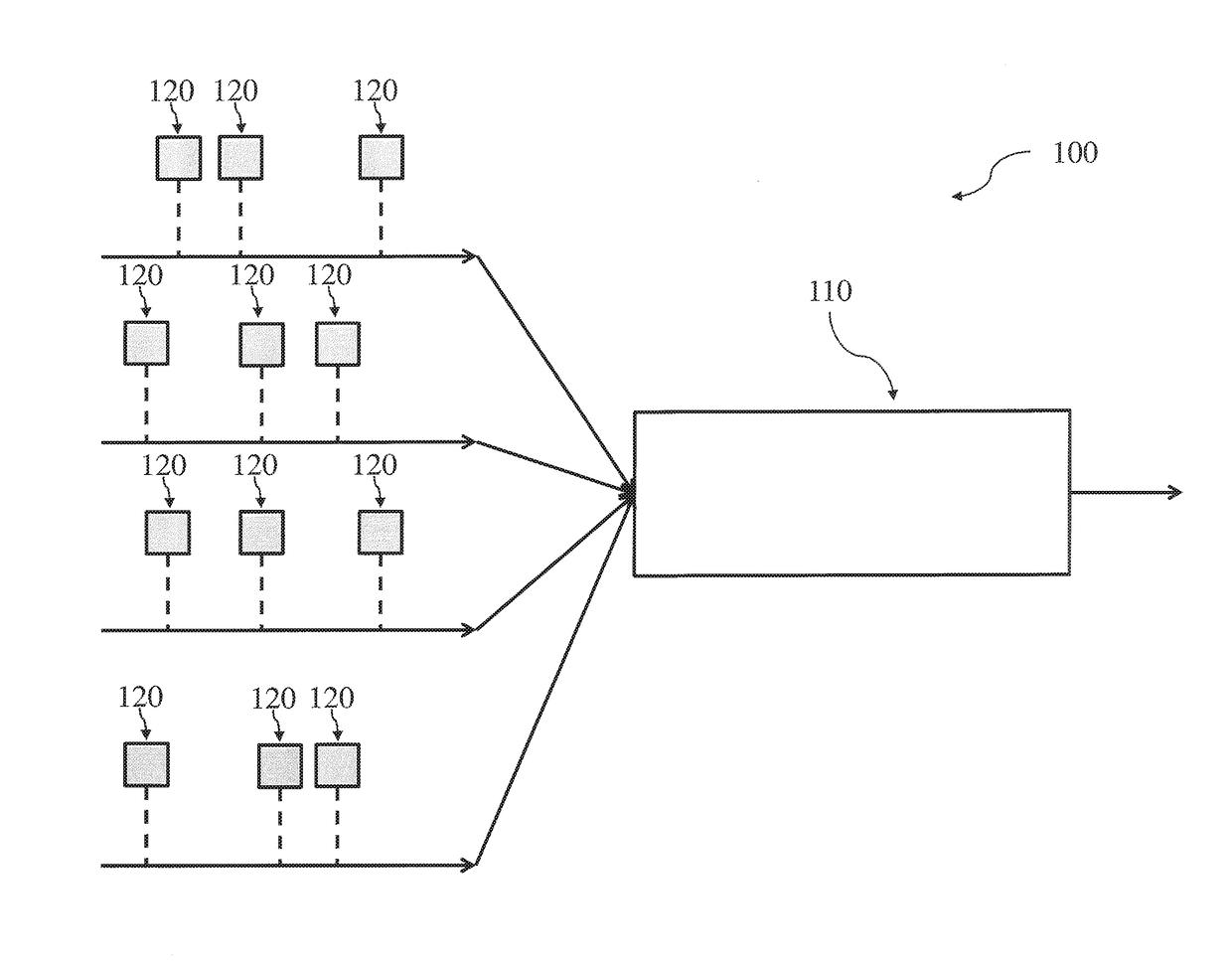
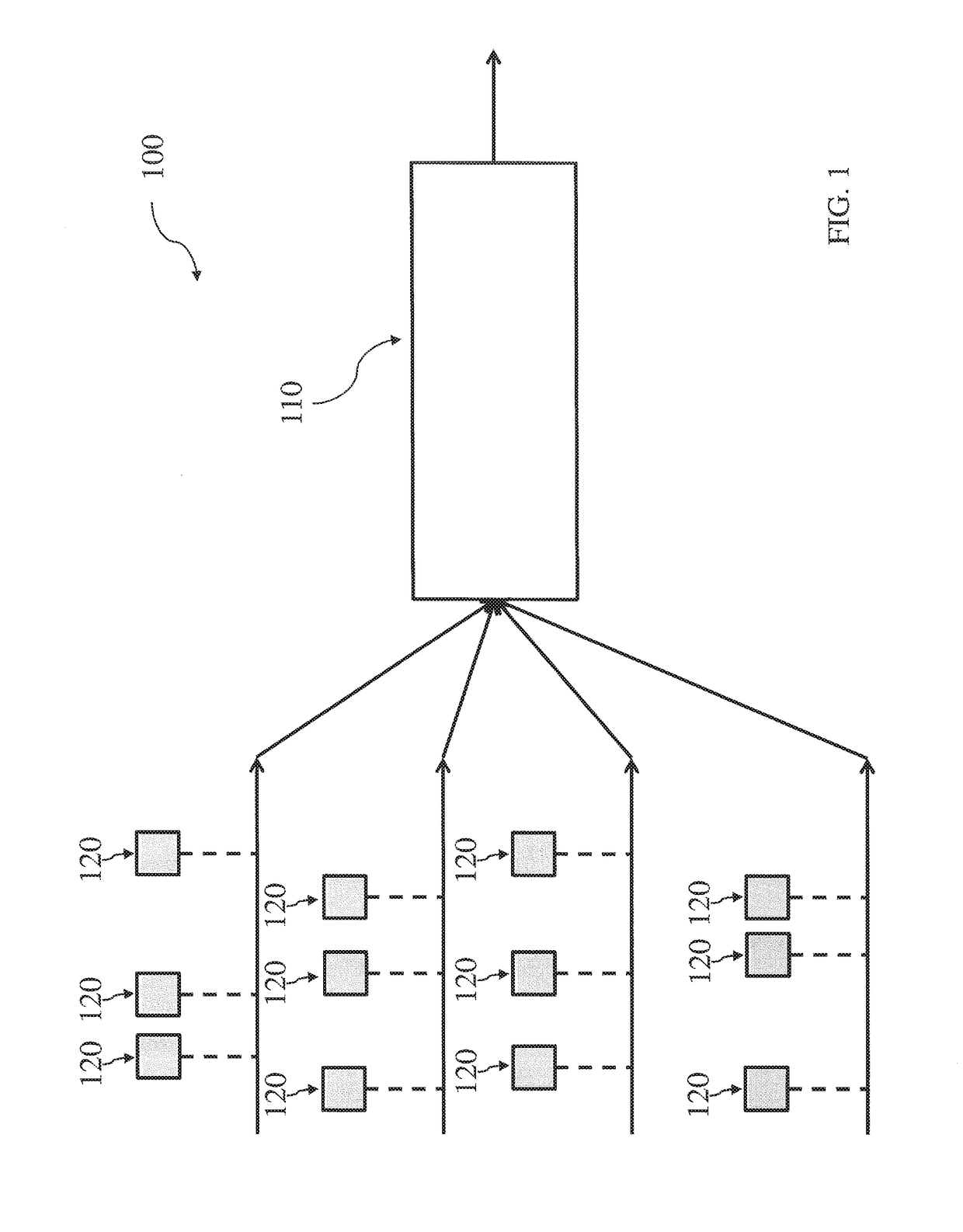
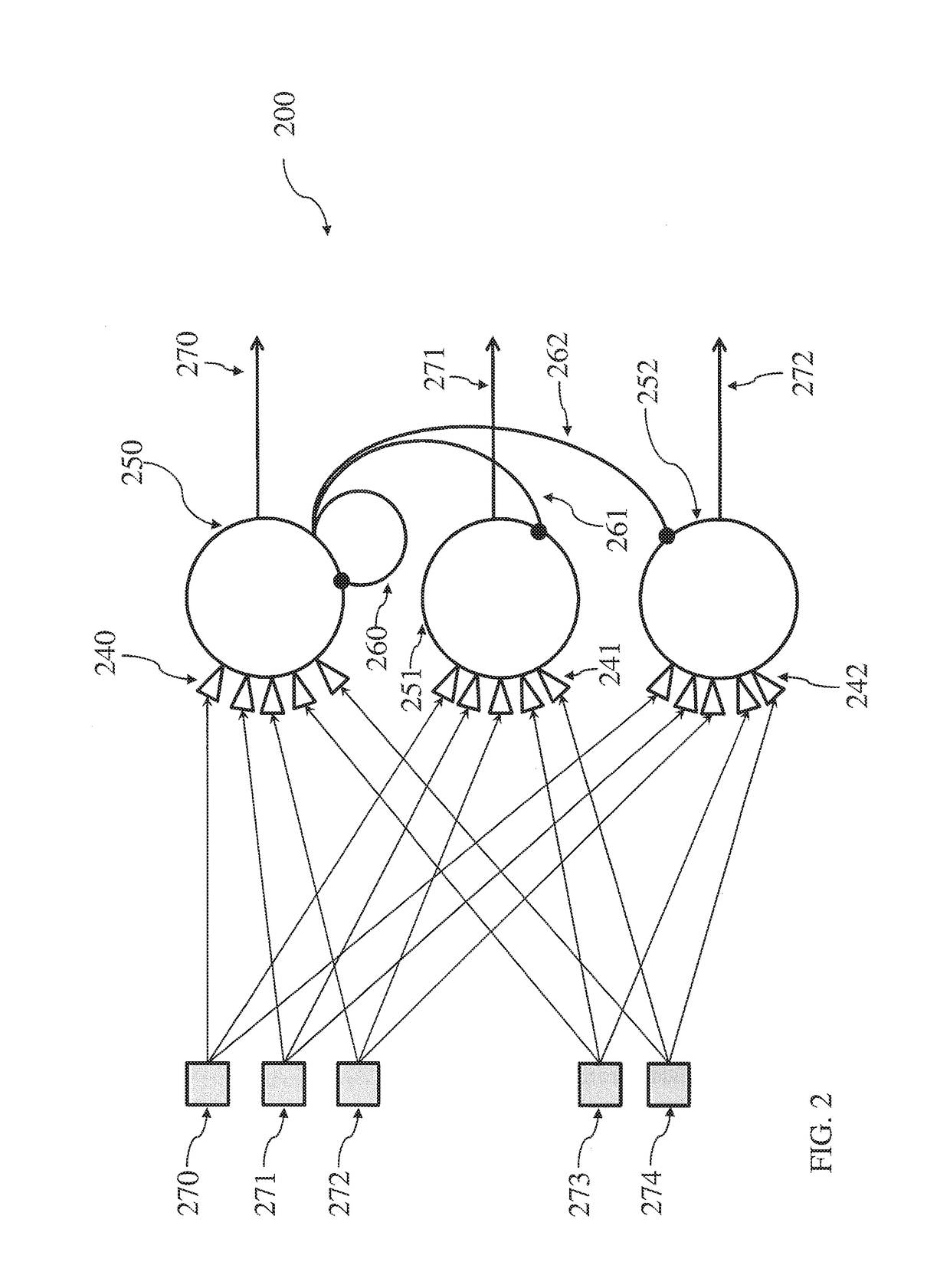
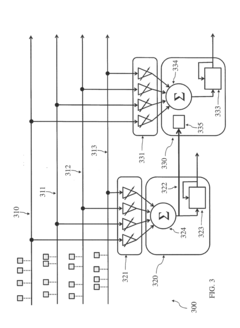
- A neuromorphic architecture featuring interconnected neurons with internal state information links, allowing for the transmission of internal state information across layers to modify the operation of other neurons, enhancing the system's performance and capability in data processing, pattern recognition, and correlation detection.
Adaptive state space signal separation, discrimination and recovery
PatentInactiveUS6691073B1
Innovation
- The development of adaptive systems that use update laws to minimize mutual information and maximize output entropy, enabling blind separation and recovery of mixed signals in changing interference environments with minimal assumptions about the original signals, including the use of neural networks and dynamic systems to handle non-linear and time-varying mixing processes.


Hardware-Software Co-design for Neuromorphic Systems
Hardware-software co-design represents a fundamental paradigm shift in neuromorphic system development, where traditional boundaries between computational hardware and algorithmic software dissolve into an integrated design methodology. This approach recognizes that neuromorphic systems for adaptive signal processing require intimate coordination between physical substrate properties and computational algorithms to achieve optimal performance characteristics.
The co-design methodology begins with simultaneous consideration of hardware constraints and software requirements during the initial system architecture phase. Unlike conventional digital systems where hardware provides a fixed computational platform, neuromorphic systems leverage the inherent dynamics of analog and mixed-signal circuits to implement neural computations directly in silicon. This necessitates careful orchestration between circuit-level phenomena such as device mismatch, noise characteristics, and temporal dynamics with high-level algorithmic requirements for learning, adaptation, and signal processing accuracy.
Memory hierarchy optimization emerges as a critical co-design challenge, particularly given the distributed nature of synaptic storage in neuromorphic architectures. The design must balance local synaptic memory density with global connectivity requirements while ensuring efficient data movement patterns that minimize energy consumption. Hardware designers must work closely with algorithm developers to determine optimal precision requirements, update frequencies, and access patterns that align with the physical constraints of emerging memory technologies.
Real-time processing capabilities demand sophisticated coordination between hardware timing characteristics and software scheduling algorithms. Neuromorphic processors often operate in event-driven modes where computational activities are triggered by input spikes rather than clock cycles. This asynchronous operation requires co-design of hardware event handling mechanisms with software frameworks that can efficiently manage temporal dependencies and maintain system responsiveness under varying input loads.
Power management strategies represent another crucial co-design dimension, where hardware power gating capabilities must align with software-controlled adaptive mechanisms. The system must dynamically adjust computational resources based on signal processing demands while maintaining learning capabilities and preserving critical synaptic states. This requires integrated design of hardware power domains with software algorithms that can predict and respond to varying computational workloads.
Verification and validation methodologies for co-designed neuromorphic systems present unique challenges requiring specialized tools and techniques that can simultaneously validate hardware functionality and software correctness across multiple abstraction levels, ensuring robust system operation in diverse signal processing environments.
The co-design methodology begins with simultaneous consideration of hardware constraints and software requirements during the initial system architecture phase. Unlike conventional digital systems where hardware provides a fixed computational platform, neuromorphic systems leverage the inherent dynamics of analog and mixed-signal circuits to implement neural computations directly in silicon. This necessitates careful orchestration between circuit-level phenomena such as device mismatch, noise characteristics, and temporal dynamics with high-level algorithmic requirements for learning, adaptation, and signal processing accuracy.
Memory hierarchy optimization emerges as a critical co-design challenge, particularly given the distributed nature of synaptic storage in neuromorphic architectures. The design must balance local synaptic memory density with global connectivity requirements while ensuring efficient data movement patterns that minimize energy consumption. Hardware designers must work closely with algorithm developers to determine optimal precision requirements, update frequencies, and access patterns that align with the physical constraints of emerging memory technologies.
Real-time processing capabilities demand sophisticated coordination between hardware timing characteristics and software scheduling algorithms. Neuromorphic processors often operate in event-driven modes where computational activities are triggered by input spikes rather than clock cycles. This asynchronous operation requires co-design of hardware event handling mechanisms with software frameworks that can efficiently manage temporal dependencies and maintain system responsiveness under varying input loads.
Power management strategies represent another crucial co-design dimension, where hardware power gating capabilities must align with software-controlled adaptive mechanisms. The system must dynamically adjust computational resources based on signal processing demands while maintaining learning capabilities and preserving critical synaptic states. This requires integrated design of hardware power domains with software algorithms that can predict and respond to varying computational workloads.
Verification and validation methodologies for co-designed neuromorphic systems present unique challenges requiring specialized tools and techniques that can simultaneously validate hardware functionality and software correctness across multiple abstraction levels, ensuring robust system operation in diverse signal processing environments.
Energy Efficiency and Scalability in Neuromorphic Architectures
Energy efficiency represents a fundamental design imperative for neuromorphic architectures implementing adaptive signal processing systems. Unlike traditional von Neumann architectures that consume substantial power through continuous data movement between memory and processing units, neuromorphic systems leverage event-driven computation paradigms that activate only when meaningful signal changes occur. This sparse activation pattern dramatically reduces power consumption, with some implementations achieving energy efficiencies several orders of magnitude better than conventional digital signal processors.
The inherent parallelism of neuromorphic architectures enables distributed processing across thousands of artificial neurons and synapses, eliminating the bottlenecks associated with sequential processing. Advanced neuromorphic chips utilize analog and mixed-signal circuits that perform multiply-accumulate operations directly in memory, reducing energy overhead typically associated with data transfers. Recent developments in memristive devices and phase-change materials further enhance energy efficiency by providing non-volatile synaptic weights that retain information without continuous power supply.
Scalability challenges in neuromorphic architectures primarily stem from interconnect complexity and routing overhead as network sizes increase. Traditional crossbar architectures face quadratic scaling issues, where connection density grows exponentially with neuron count. Modern solutions employ hierarchical routing schemes and clustered architectures that maintain local connectivity while providing selective long-range connections through specialized routing networks.
Silicon area efficiency becomes critical when scaling neuromorphic systems to handle complex adaptive signal processing tasks. Advanced fabrication techniques enable integration of analog processing elements with digital control circuits on single chips, optimizing both performance and footprint. Three-dimensional integration technologies show promise for achieving higher neuron densities while maintaining acceptable power dissipation levels.
Network partitioning strategies address scalability by distributing computational loads across multiple processing cores or chips. These approaches require sophisticated load balancing algorithms that consider both computational complexity and communication overhead. Dynamic reconfiguration capabilities allow neuromorphic systems to adapt their architecture based on signal processing requirements, optimizing resource utilization while maintaining real-time performance constraints essential for adaptive applications.
The inherent parallelism of neuromorphic architectures enables distributed processing across thousands of artificial neurons and synapses, eliminating the bottlenecks associated with sequential processing. Advanced neuromorphic chips utilize analog and mixed-signal circuits that perform multiply-accumulate operations directly in memory, reducing energy overhead typically associated with data transfers. Recent developments in memristive devices and phase-change materials further enhance energy efficiency by providing non-volatile synaptic weights that retain information without continuous power supply.
Scalability challenges in neuromorphic architectures primarily stem from interconnect complexity and routing overhead as network sizes increase. Traditional crossbar architectures face quadratic scaling issues, where connection density grows exponentially with neuron count. Modern solutions employ hierarchical routing schemes and clustered architectures that maintain local connectivity while providing selective long-range connections through specialized routing networks.
Silicon area efficiency becomes critical when scaling neuromorphic systems to handle complex adaptive signal processing tasks. Advanced fabrication techniques enable integration of analog processing elements with digital control circuits on single chips, optimizing both performance and footprint. Three-dimensional integration technologies show promise for achieving higher neuron densities while maintaining acceptable power dissipation levels.
Network partitioning strategies address scalability by distributing computational loads across multiple processing cores or chips. These approaches require sophisticated load balancing algorithms that consider both computational complexity and communication overhead. Dynamic reconfiguration capabilities allow neuromorphic systems to adapt their architecture based on signal processing requirements, optimizing resource utilization while maintaining real-time performance constraints essential for adaptive applications.
Unlock deeper insights with Patsnap Eureka Quick Research — get a full tech report to explore trends and direct your research. Try now!
Generate Your Research Report Instantly with AI Agent
Supercharge your innovation with Patsnap Eureka AI Agent Platform!