
Seamless Rate Adaptation for Efficient Traffic Management
MAR 2, 20269 MIN READ
Generate Your Research Report Instantly with AI Agent
Patsnap Eureka helps you evaluate technical feasibility & market potential.
Rate Adaptation Technology Background and Objectives
Rate adaptation technology has emerged as a critical component in modern network infrastructure, evolving from simple bandwidth allocation mechanisms to sophisticated traffic management systems. The fundamental concept originated in the early days of computer networking when researchers recognized the need to dynamically adjust data transmission rates based on network conditions. Initially, rate adaptation was primarily implemented in wireless communication systems to combat channel variations and interference.
The evolution of rate adaptation has been driven by the exponential growth of internet traffic and the increasing diversity of applications with varying quality of service requirements. Traditional static rate allocation methods proved inadequate for handling the dynamic nature of modern network traffic, leading to the development of adaptive algorithms that can respond to real-time network conditions. This technological progression has been particularly accelerated by the proliferation of multimedia streaming, cloud computing, and Internet of Things applications.
Contemporary rate adaptation systems face the challenge of managing heterogeneous traffic flows while maintaining optimal network utilization. The technology has expanded beyond simple rate control to encompass comprehensive traffic engineering solutions that consider factors such as latency sensitivity, bandwidth requirements, and application priorities. Modern implementations leverage machine learning algorithms and predictive analytics to anticipate traffic patterns and proactively adjust transmission rates.
The primary objective of seamless rate adaptation technology is to achieve optimal network resource utilization while ensuring quality of service guarantees for diverse applications. This involves developing algorithms that can rapidly detect network congestion, accurately estimate available bandwidth, and smoothly adjust transmission rates without causing service disruption. The seamless aspect is crucial as abrupt rate changes can lead to buffer underruns, increased latency, and degraded user experience.
Another key objective is to enhance network stability and fairness among competing flows. Effective rate adaptation mechanisms must prevent oscillatory behavior that can destabilize network performance while ensuring equitable bandwidth distribution among users. This requires sophisticated control algorithms that balance responsiveness with stability, adapting quickly to changing conditions while avoiding overreaction to transient network events.
The technology also aims to support emerging network paradigms such as software-defined networking and network function virtualization. Future rate adaptation systems must integrate seamlessly with programmable network infrastructures, enabling centralized traffic management policies while maintaining distributed decision-making capabilities for real-time responsiveness.
The evolution of rate adaptation has been driven by the exponential growth of internet traffic and the increasing diversity of applications with varying quality of service requirements. Traditional static rate allocation methods proved inadequate for handling the dynamic nature of modern network traffic, leading to the development of adaptive algorithms that can respond to real-time network conditions. This technological progression has been particularly accelerated by the proliferation of multimedia streaming, cloud computing, and Internet of Things applications.
Contemporary rate adaptation systems face the challenge of managing heterogeneous traffic flows while maintaining optimal network utilization. The technology has expanded beyond simple rate control to encompass comprehensive traffic engineering solutions that consider factors such as latency sensitivity, bandwidth requirements, and application priorities. Modern implementations leverage machine learning algorithms and predictive analytics to anticipate traffic patterns and proactively adjust transmission rates.
The primary objective of seamless rate adaptation technology is to achieve optimal network resource utilization while ensuring quality of service guarantees for diverse applications. This involves developing algorithms that can rapidly detect network congestion, accurately estimate available bandwidth, and smoothly adjust transmission rates without causing service disruption. The seamless aspect is crucial as abrupt rate changes can lead to buffer underruns, increased latency, and degraded user experience.
Another key objective is to enhance network stability and fairness among competing flows. Effective rate adaptation mechanisms must prevent oscillatory behavior that can destabilize network performance while ensuring equitable bandwidth distribution among users. This requires sophisticated control algorithms that balance responsiveness with stability, adapting quickly to changing conditions while avoiding overreaction to transient network events.
The technology also aims to support emerging network paradigms such as software-defined networking and network function virtualization. Future rate adaptation systems must integrate seamlessly with programmable network infrastructures, enabling centralized traffic management policies while maintaining distributed decision-making capabilities for real-time responsiveness.
Market Demand for Seamless Traffic Management Solutions
The global telecommunications and networking industry faces unprecedented challenges in managing exponentially growing data traffic volumes. Network operators worldwide struggle with bandwidth optimization, congestion management, and maintaining quality of service across diverse applications ranging from video streaming to IoT communications. Traditional static rate allocation methods prove inadequate for handling dynamic traffic patterns, creating substantial demand for adaptive solutions.
Enterprise networks represent a significant market segment driving demand for seamless traffic management solutions. Organizations require sophisticated bandwidth allocation systems to support remote work, cloud computing, and real-time collaboration tools. The shift toward hybrid work models has intensified the need for intelligent traffic prioritization that can automatically adjust to varying usage patterns throughout business cycles.
Telecommunications service providers constitute another major demand driver, seeking solutions to maximize network efficiency while minimizing infrastructure investments. Mobile network operators particularly require advanced rate adaptation technologies to handle peak traffic loads during events, emergencies, or high-usage periods. The deployment of 5G networks has amplified this need, as operators must efficiently manage diverse service classes with varying latency and throughput requirements.
The Internet of Things ecosystem generates substantial demand for granular traffic management capabilities. Smart cities, industrial automation, and connected vehicle networks require precise bandwidth allocation to ensure critical communications maintain priority over less time-sensitive data flows. This creates market opportunities for solutions that can seamlessly adapt rates based on application criticality and network conditions.
Cloud service providers and content delivery networks represent emerging market segments with specific requirements for dynamic rate adaptation. These organizations need solutions that can automatically scale bandwidth allocation based on user demand, geographic distribution, and content type. The growing popularity of streaming services and online gaming has intensified requirements for low-latency, high-throughput traffic management.
Regulatory pressures and sustainability concerns further drive market demand. Network operators face increasing requirements to demonstrate efficient spectrum and energy utilization, making adaptive traffic management solutions essential for compliance and operational optimization. The convergence of these factors creates a robust and expanding market for seamless rate adaptation technologies across multiple industry verticals.
Enterprise networks represent a significant market segment driving demand for seamless traffic management solutions. Organizations require sophisticated bandwidth allocation systems to support remote work, cloud computing, and real-time collaboration tools. The shift toward hybrid work models has intensified the need for intelligent traffic prioritization that can automatically adjust to varying usage patterns throughout business cycles.
Telecommunications service providers constitute another major demand driver, seeking solutions to maximize network efficiency while minimizing infrastructure investments. Mobile network operators particularly require advanced rate adaptation technologies to handle peak traffic loads during events, emergencies, or high-usage periods. The deployment of 5G networks has amplified this need, as operators must efficiently manage diverse service classes with varying latency and throughput requirements.
The Internet of Things ecosystem generates substantial demand for granular traffic management capabilities. Smart cities, industrial automation, and connected vehicle networks require precise bandwidth allocation to ensure critical communications maintain priority over less time-sensitive data flows. This creates market opportunities for solutions that can seamlessly adapt rates based on application criticality and network conditions.
Cloud service providers and content delivery networks represent emerging market segments with specific requirements for dynamic rate adaptation. These organizations need solutions that can automatically scale bandwidth allocation based on user demand, geographic distribution, and content type. The growing popularity of streaming services and online gaming has intensified requirements for low-latency, high-throughput traffic management.
Regulatory pressures and sustainability concerns further drive market demand. Network operators face increasing requirements to demonstrate efficient spectrum and energy utilization, making adaptive traffic management solutions essential for compliance and operational optimization. The convergence of these factors creates a robust and expanding market for seamless rate adaptation technologies across multiple industry verticals.
Current State and Challenges in Network Rate Adaptation
Network rate adaptation has emerged as a critical component in modern traffic management systems, yet current implementations face significant limitations in achieving truly seamless operation. Existing rate adaptation mechanisms primarily rely on reactive approaches that adjust transmission rates based on observed network conditions such as packet loss, delay variations, and bandwidth availability. These systems typically operate with discrete adjustment intervals, creating inherent gaps in responsiveness that can lead to suboptimal performance during rapid network state transitions.
Contemporary rate adaptation algorithms predominantly utilize feedback-based control systems, including TCP congestion control variants, adaptive bitrate streaming protocols, and quality-of-service management frameworks. However, these approaches suffer from fundamental latency issues, as they require time to detect network changes, process feedback information, and implement rate adjustments. This reactive nature creates a persistent lag between network condition changes and appropriate rate modifications, resulting in periods of inefficient resource utilization.
The challenge of prediction accuracy represents another significant obstacle in current rate adaptation systems. While machine learning approaches have been integrated into some advanced implementations, the dynamic and unpredictable nature of network traffic patterns makes accurate forecasting extremely difficult. Network conditions can change rapidly due to factors such as user mobility, competing traffic flows, infrastructure failures, and varying application demands, making it challenging to develop robust predictive models that maintain accuracy across diverse scenarios.
Scalability concerns pose additional constraints on existing rate adaptation solutions. Many current systems are designed for specific network architectures or application types, limiting their applicability in heterogeneous environments. The computational overhead required for real-time rate calculations and decision-making processes can become prohibitive in large-scale deployments, particularly in resource-constrained edge computing environments or high-density network scenarios.
Integration complexity with existing network infrastructure represents a persistent challenge for seamless rate adaptation implementation. Legacy systems often lack the necessary interfaces and protocols to support advanced rate adaptation mechanisms, requiring significant modifications or complete system overhauls. This integration barrier slows adoption and increases implementation costs, particularly for organizations with substantial existing network investments.
Cross-layer coordination difficulties further complicate the achievement of seamless rate adaptation. Effective traffic management requires coordination between physical layer capabilities, network layer routing decisions, transport layer congestion control, and application layer requirements. Current systems often operate in isolation at individual layers, missing opportunities for optimized cross-layer collaboration that could significantly improve overall performance and efficiency in dynamic network environments.
Contemporary rate adaptation algorithms predominantly utilize feedback-based control systems, including TCP congestion control variants, adaptive bitrate streaming protocols, and quality-of-service management frameworks. However, these approaches suffer from fundamental latency issues, as they require time to detect network changes, process feedback information, and implement rate adjustments. This reactive nature creates a persistent lag between network condition changes and appropriate rate modifications, resulting in periods of inefficient resource utilization.
The challenge of prediction accuracy represents another significant obstacle in current rate adaptation systems. While machine learning approaches have been integrated into some advanced implementations, the dynamic and unpredictable nature of network traffic patterns makes accurate forecasting extremely difficult. Network conditions can change rapidly due to factors such as user mobility, competing traffic flows, infrastructure failures, and varying application demands, making it challenging to develop robust predictive models that maintain accuracy across diverse scenarios.
Scalability concerns pose additional constraints on existing rate adaptation solutions. Many current systems are designed for specific network architectures or application types, limiting their applicability in heterogeneous environments. The computational overhead required for real-time rate calculations and decision-making processes can become prohibitive in large-scale deployments, particularly in resource-constrained edge computing environments or high-density network scenarios.
Integration complexity with existing network infrastructure represents a persistent challenge for seamless rate adaptation implementation. Legacy systems often lack the necessary interfaces and protocols to support advanced rate adaptation mechanisms, requiring significant modifications or complete system overhauls. This integration barrier slows adoption and increases implementation costs, particularly for organizations with substantial existing network investments.
Cross-layer coordination difficulties further complicate the achievement of seamless rate adaptation. Effective traffic management requires coordination between physical layer capabilities, network layer routing decisions, transport layer congestion control, and application layer requirements. Current systems often operate in isolation at individual layers, missing opportunities for optimized cross-layer collaboration that could significantly improve overall performance and efficiency in dynamic network environments.
Existing Rate Adaptation Solutions and Algorithms
01 Dynamic rate adaptation based on channel conditions
Rate adaptation mechanisms that dynamically adjust transmission rates based on real-time channel quality measurements and feedback. The system monitors signal strength, error rates, and other channel parameters to select optimal data rates that maximize throughput while maintaining acceptable error rates. This approach enables efficient spectrum utilization by adapting to varying wireless channel conditions.- Dynamic rate adaptation based on channel conditions: Rate adaptation mechanisms that dynamically adjust transmission rates based on real-time channel quality measurements and feedback. The system monitors signal strength, error rates, and other channel parameters to select optimal data rates that maximize throughput while maintaining acceptable error rates. This approach enables efficient spectrum utilization by adapting to varying channel conditions.
- Multi-rate transmission protocols: Implementation of communication protocols supporting multiple transmission rates with mechanisms for switching between different rate levels. The system includes rate selection algorithms that consider factors such as distance, interference, and quality of service requirements. Rate sets are defined with specific modulation and coding schemes for each supported rate level.
- Rate adaptation for wireless networks: Techniques for adapting data transmission rates in wireless communication systems including WiFi and cellular networks. The methods involve measuring link quality metrics, predicting channel behavior, and selecting appropriate rates from available rate tables. Adaptation algorithms balance throughput optimization with packet error rate constraints.
- Feedback-based rate control mechanisms: Rate adaptation systems utilizing feedback information from receivers to adjust transmission parameters. The approach includes acknowledgment-based rate adjustment, explicit rate feedback signaling, and statistical analysis of transmission success rates. Feedback mechanisms enable transmitters to respond to changing conditions and optimize performance.
- Rate adaptation for video streaming and multimedia: Adaptive rate control techniques specifically designed for multimedia content delivery and video streaming applications. The system adjusts encoding rates, resolution, and quality parameters based on available bandwidth and buffer status. Rate adaptation ensures smooth playback while maximizing video quality under varying network conditions.
02 Multi-rate transmission with fallback mechanisms
Implementation of multiple transmission rate options with automatic fallback capabilities when communication quality degrades. The system supports a range of data rates and can switch between them based on performance metrics such as packet loss, retransmission requirements, and acknowledgment reception. This ensures continuous connectivity by降级 to lower rates when necessary.Expand Specific Solutions03 Rate adaptation algorithms using statistical analysis
Advanced algorithms that employ statistical methods and historical data analysis to predict optimal transmission rates. These methods analyze patterns in channel behavior, success rates at different data rates, and temporal variations to make intelligent rate selection decisions. The algorithms may incorporate machine learning or probabilistic models to improve adaptation accuracy over time.Expand Specific Solutions04 Rate control for multimedia streaming applications
Specialized rate adaptation techniques designed for real-time multimedia content delivery that balance quality of service requirements with available bandwidth. These methods consider factors such as buffer occupancy, frame priorities, and latency constraints to adjust encoding rates and transmission parameters. The adaptation ensures smooth playback while optimizing bandwidth usage for video and audio streams.Expand Specific Solutions05 Cross-layer rate adaptation optimization
Integrated approaches that coordinate rate adaptation across multiple protocol layers, including physical, MAC, and application layers. These systems exchange information between layers to make coordinated decisions about transmission rates, modulation schemes, and resource allocation. The cross-layer optimization improves overall system performance by considering constraints and opportunities at different protocol stack levels.Expand Specific Solutions
Key Players in Network Traffic Management Industry
The seamless rate adaptation for efficient traffic management technology represents a rapidly evolving sector within the telecommunications and intelligent transportation systems industry. The market is experiencing significant growth driven by increasing demand for dynamic network optimization and smart traffic solutions. The competitive landscape features a diverse mix of established telecommunications giants like Huawei Technologies, ZTE Corp., Ericsson, and Siemens AG, alongside specialized technology providers such as Ciena Corp. and ECI Telecom. Technology maturity varies significantly across players, with companies like Intel Corp. and Tencent Technology leading in advanced algorithmic solutions, while automotive sector participants including Toyota Motor Corp. and Continental Automotive Technologies focus on vehicular applications. The presence of major research institutions and emerging players indicates strong innovation potential and continued technological advancement in adaptive rate management systems.
Huawei Technologies Co., Ltd.
Technical Solution: Huawei has developed comprehensive traffic management solutions incorporating AI-driven rate adaptation algorithms that dynamically adjust bandwidth allocation based on real-time network conditions. Their approach utilizes machine learning models to predict traffic patterns and automatically optimize data transmission rates across different network segments. The system employs intelligent Quality of Service (QoS) mechanisms that can seamlessly transition between different rate configurations without service interruption. Huawei's solution integrates with their 5G infrastructure to provide end-to-end traffic optimization, featuring adaptive modulation and coding schemes that respond to channel conditions in milliseconds.
Strengths: Market-leading 5G infrastructure integration, advanced AI algorithms for predictive traffic management, comprehensive end-to-end solutions. Weaknesses: Limited market access in some regions due to geopolitical concerns, high implementation complexity requiring specialized expertise.
Siemens AG
Technical Solution: Siemens has developed industrial-grade traffic management systems that incorporate seamless rate adaptation for critical infrastructure applications including smart city and industrial IoT deployments. Their solution combines edge computing capabilities with centralized management platforms to enable real-time traffic optimization. The system features robust security mechanisms and deterministic networking capabilities that ensure reliable rate adaptation even in harsh industrial environments. Siemens' approach integrates with their broader industrial automation portfolio, providing comprehensive traffic management that can adapt to varying operational conditions while maintaining strict performance and safety requirements for mission-critical applications.
Strengths: Strong industrial automation expertise, robust security features, proven reliability in critical infrastructure. Weaknesses: Limited focus on general telecommunications applications, higher costs for non-industrial use cases.
Core Innovations in Seamless Rate Control Mechanisms
Technology for rate adaptation in a multi-line data transmission system
PatentInactiveUS20080043624A1
Innovation
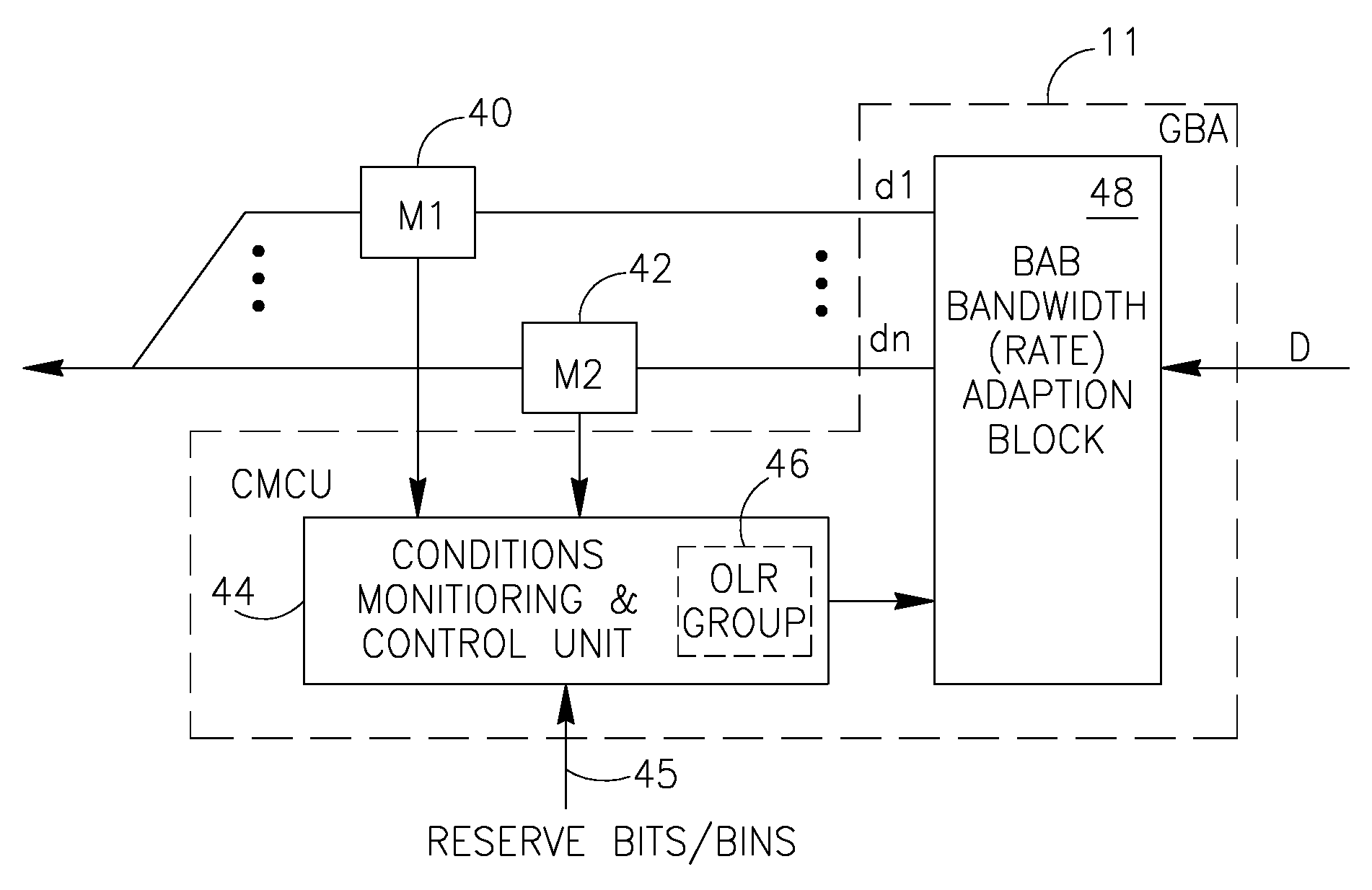
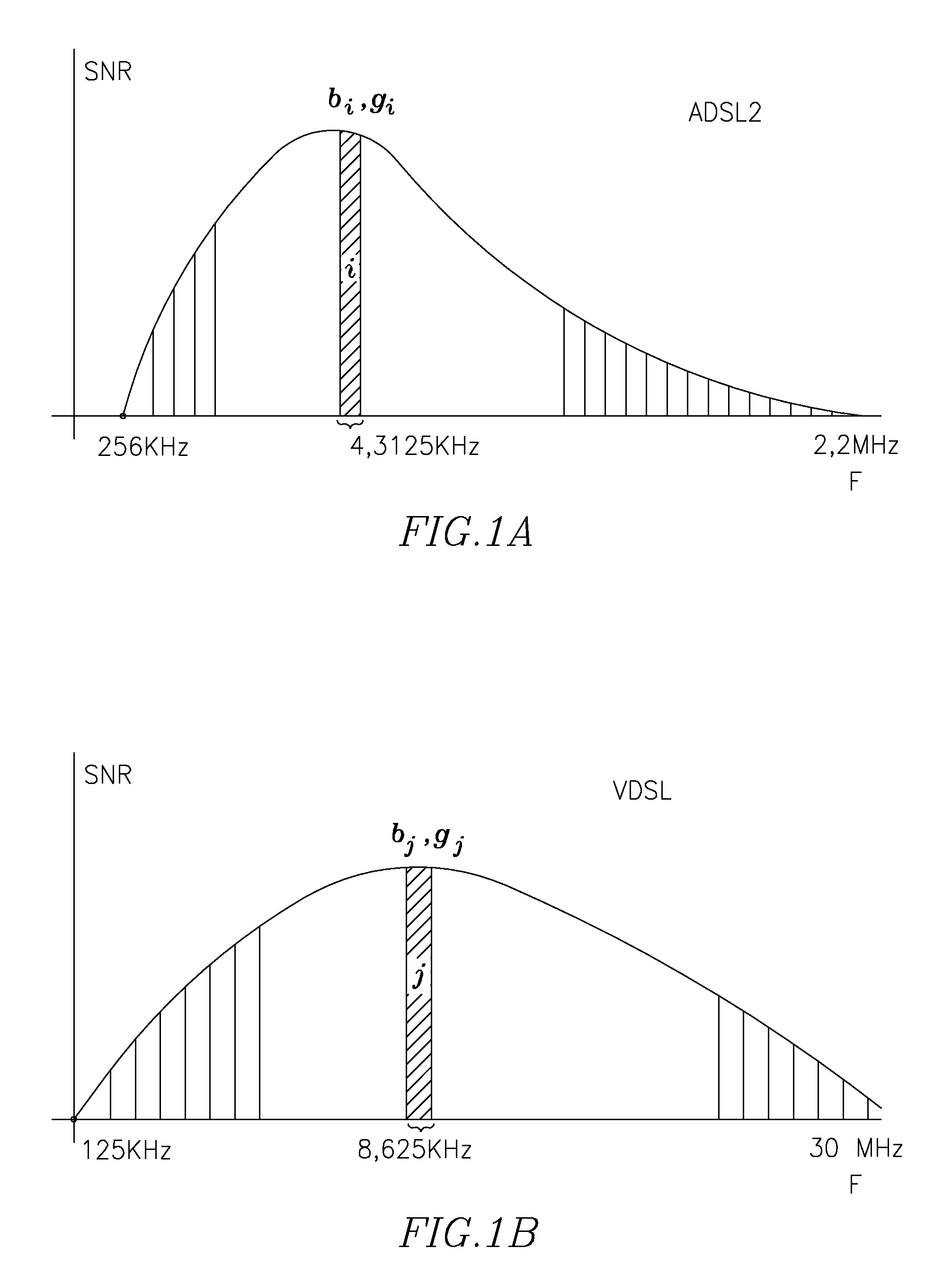
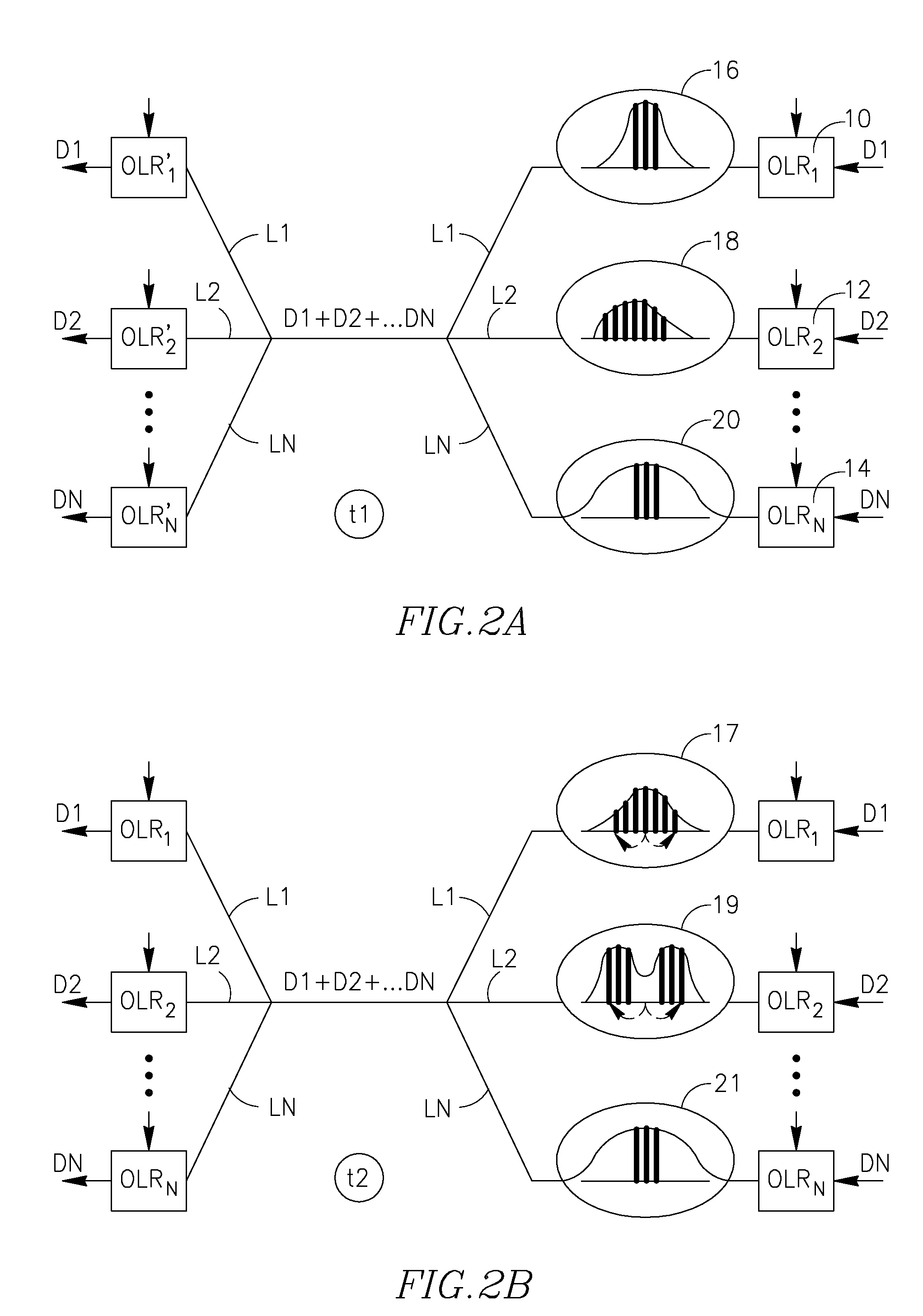
- A method for bit re-allocation between bonded transmission links, allowing for the reallocation of single bits across different links based on changing conditions like SNR, link quality, or user instructions, enabling seamless and dynamic rate adaptation by monitoring and reallocating bits between links to optimize bandwidth usage.

Error free dynamic rate change in a digital subscriber line DSL with constant delay
PatentActiveUS7457993B2
Innovation
- The method involves changing the interleaver depth proportionally with data rate changes to maintain constant delay, pausing transmission for a duration equal to the interleaver delay, and coordinating transmitter and receiver to prevent errors by flushing and refilling the interleaver, ensuring no interruption in service.


Network Standards and Protocol Compliance Requirements
Seamless rate adaptation for efficient traffic management operates within a complex ecosystem of network standards and protocols that govern modern telecommunications infrastructure. The implementation of adaptive rate control mechanisms must align with established IEEE 802.11 standards, particularly the amendments related to quality of service and traffic management. These standards define the fundamental framework for how wireless networks handle varying data rates and traffic prioritization schemes.
The Internet Engineering Task Force (IETF) protocols play a crucial role in defining the compliance landscape for rate adaptation systems. RFC specifications for congestion control, such as TCP congestion control algorithms and Real-time Transport Protocol (RTP) adaptive mechanisms, establish baseline requirements that any seamless rate adaptation solution must accommodate. Additionally, the emerging QUIC protocol introduces new considerations for rate adaptation at the transport layer, requiring compatibility with its built-in congestion control mechanisms.
Quality of Service (QoS) compliance represents a critical dimension of network standards adherence. Rate adaptation systems must integrate seamlessly with Differentiated Services (DiffServ) architectures and Traffic Engineering (TE) protocols. This includes proper handling of Type of Service (ToS) markings, adherence to Service Level Agreement (SLA) parameters, and compatibility with Multi-Protocol Label Switching (MPLS) traffic engineering capabilities.
Regulatory compliance frameworks impose additional constraints on rate adaptation implementations. Telecommunications regulatory bodies worldwide mandate specific performance metrics and fairness criteria that adaptive systems must satisfy. These requirements often include minimum guaranteed bandwidth allocations, maximum latency thresholds, and non-discriminatory traffic handling policies that directly impact the design of rate adaptation algorithms.
Interoperability standards ensure that seamless rate adaptation solutions can function across heterogeneous network environments. This encompasses compatibility with legacy systems, support for multiple vendor equipment, and adherence to standardized Application Programming Interfaces (APIs) for network management systems. The integration with Software-Defined Networking (SDN) and Network Function Virtualization (NFV) architectures requires compliance with OpenFlow specifications and ETSI NFV standards.
Security and privacy standards add another layer of compliance requirements for rate adaptation systems. Implementation must align with network security protocols, encryption standards, and data protection regulations while maintaining the dynamic nature of adaptive rate control mechanisms.
The Internet Engineering Task Force (IETF) protocols play a crucial role in defining the compliance landscape for rate adaptation systems. RFC specifications for congestion control, such as TCP congestion control algorithms and Real-time Transport Protocol (RTP) adaptive mechanisms, establish baseline requirements that any seamless rate adaptation solution must accommodate. Additionally, the emerging QUIC protocol introduces new considerations for rate adaptation at the transport layer, requiring compatibility with its built-in congestion control mechanisms.
Quality of Service (QoS) compliance represents a critical dimension of network standards adherence. Rate adaptation systems must integrate seamlessly with Differentiated Services (DiffServ) architectures and Traffic Engineering (TE) protocols. This includes proper handling of Type of Service (ToS) markings, adherence to Service Level Agreement (SLA) parameters, and compatibility with Multi-Protocol Label Switching (MPLS) traffic engineering capabilities.
Regulatory compliance frameworks impose additional constraints on rate adaptation implementations. Telecommunications regulatory bodies worldwide mandate specific performance metrics and fairness criteria that adaptive systems must satisfy. These requirements often include minimum guaranteed bandwidth allocations, maximum latency thresholds, and non-discriminatory traffic handling policies that directly impact the design of rate adaptation algorithms.
Interoperability standards ensure that seamless rate adaptation solutions can function across heterogeneous network environments. This encompasses compatibility with legacy systems, support for multiple vendor equipment, and adherence to standardized Application Programming Interfaces (APIs) for network management systems. The integration with Software-Defined Networking (SDN) and Network Function Virtualization (NFV) architectures requires compliance with OpenFlow specifications and ETSI NFV standards.
Security and privacy standards add another layer of compliance requirements for rate adaptation systems. Implementation must align with network security protocols, encryption standards, and data protection regulations while maintaining the dynamic nature of adaptive rate control mechanisms.
Quality of Service Impact Assessment and Optimization
Quality of Service (QoS) assessment in seamless rate adaptation systems requires comprehensive evaluation frameworks that measure the direct correlation between adaptive traffic management mechanisms and end-user experience metrics. The primary QoS indicators include latency variations, throughput consistency, packet loss rates, and jitter performance across different network conditions. These metrics must be continuously monitored and analyzed to understand how rate adaptation algorithms impact service delivery quality during dynamic traffic scenarios.
The assessment methodology involves establishing baseline performance measurements under static conditions, then comparing these against adaptive system performance during various traffic load scenarios. Critical evaluation parameters include response time to congestion events, accuracy of bandwidth estimation algorithms, and the smoothness of rate transitions. Real-time monitoring systems must capture granular data on application-layer performance, network-layer efficiency, and user-perceived quality degradation during adaptation cycles.
Optimization strategies focus on minimizing QoS disruption during rate adaptation processes through predictive algorithms and proactive adjustment mechanisms. Advanced optimization techniques employ machine learning models to anticipate traffic patterns and pre-emptively adjust transmission rates before congestion occurs. These systems utilize historical traffic data, current network state information, and application requirements to make intelligent adaptation decisions that preserve service quality while maximizing network efficiency.
Buffer management optimization plays a crucial role in maintaining QoS during rate transitions. Adaptive buffering strategies dynamically adjust buffer sizes based on current network conditions and application sensitivity requirements. This approach prevents buffer overflow during sudden traffic spikes while minimizing latency during low-traffic periods. The optimization algorithms must balance memory utilization, processing overhead, and quality maintenance objectives.
Multi-objective optimization frameworks address the inherent trade-offs between different QoS parameters during rate adaptation. These systems simultaneously optimize for multiple conflicting objectives such as maximizing throughput while minimizing latency and maintaining fairness across different traffic flows. Pareto-optimal solutions provide network administrators with flexible configuration options that align with specific service level agreements and business requirements.
The assessment methodology involves establishing baseline performance measurements under static conditions, then comparing these against adaptive system performance during various traffic load scenarios. Critical evaluation parameters include response time to congestion events, accuracy of bandwidth estimation algorithms, and the smoothness of rate transitions. Real-time monitoring systems must capture granular data on application-layer performance, network-layer efficiency, and user-perceived quality degradation during adaptation cycles.
Optimization strategies focus on minimizing QoS disruption during rate adaptation processes through predictive algorithms and proactive adjustment mechanisms. Advanced optimization techniques employ machine learning models to anticipate traffic patterns and pre-emptively adjust transmission rates before congestion occurs. These systems utilize historical traffic data, current network state information, and application requirements to make intelligent adaptation decisions that preserve service quality while maximizing network efficiency.
Buffer management optimization plays a crucial role in maintaining QoS during rate transitions. Adaptive buffering strategies dynamically adjust buffer sizes based on current network conditions and application sensitivity requirements. This approach prevents buffer overflow during sudden traffic spikes while minimizing latency during low-traffic periods. The optimization algorithms must balance memory utilization, processing overhead, and quality maintenance objectives.
Multi-objective optimization frameworks address the inherent trade-offs between different QoS parameters during rate adaptation. These systems simultaneously optimize for multiple conflicting objectives such as maximizing throughput while minimizing latency and maintaining fairness across different traffic flows. Pareto-optimal solutions provide network administrators with flexible configuration options that align with specific service level agreements and business requirements.
Unlock deeper insights with Patsnap Eureka Quick Research — get a full tech report to explore trends and direct your research. Try now!
Generate Your Research Report Instantly with AI Agent
Supercharge your innovation with Patsnap Eureka AI Agent Platform!